Sydney Mint Gold Sovereign and Half Sovereign Proof and Specimen Presentation Pieces (1855 - 1926)
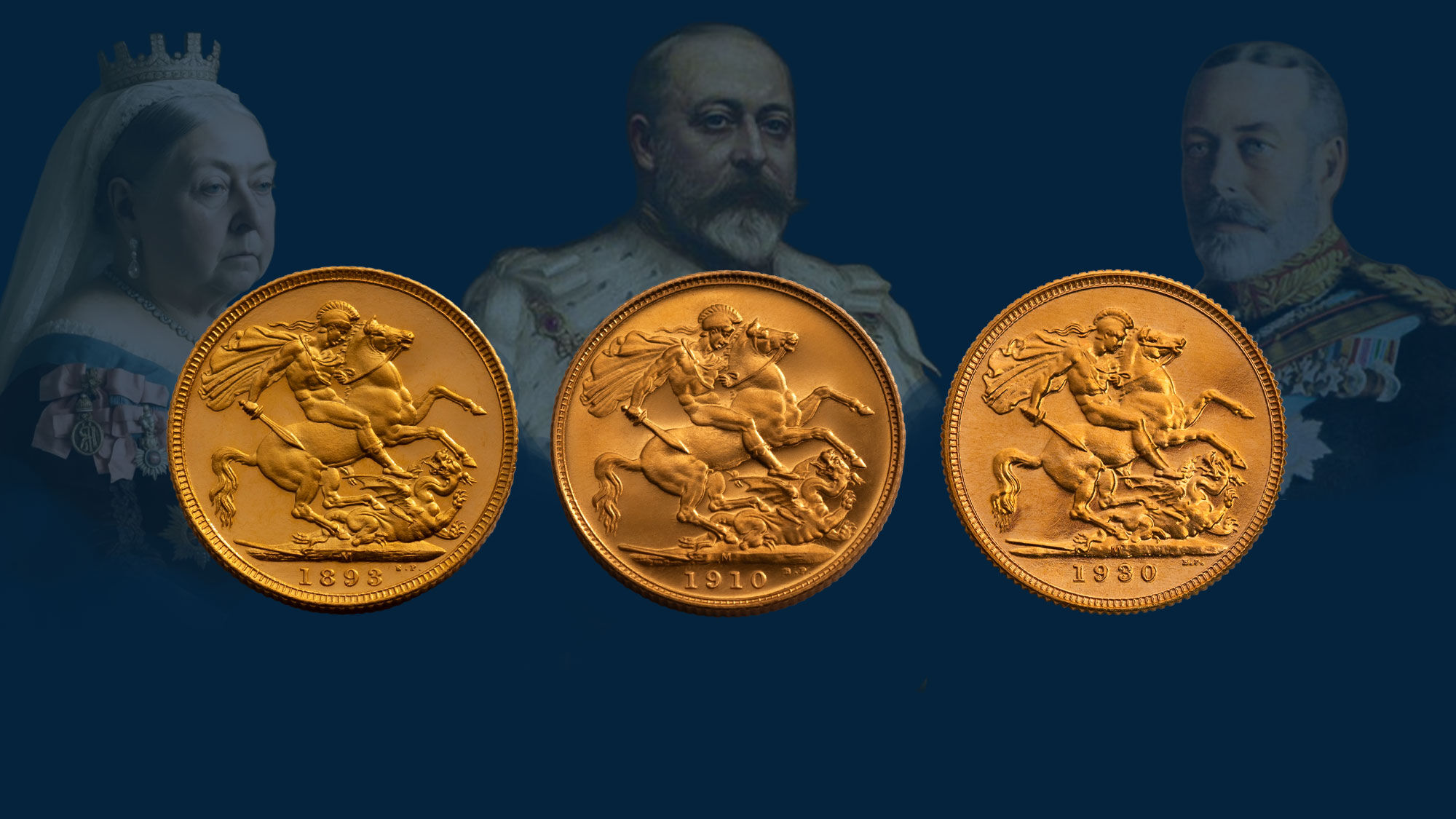
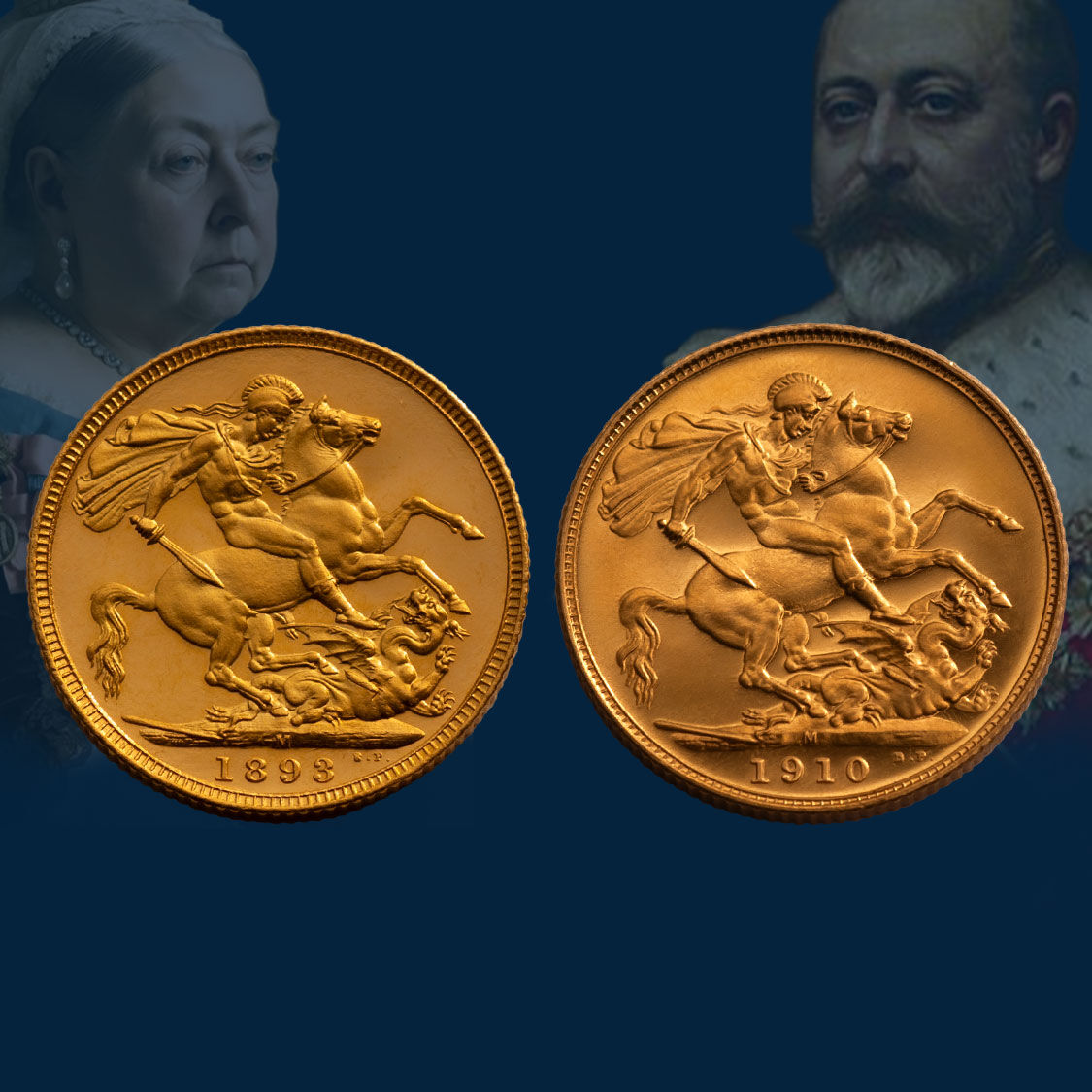
When the Royal Mint London or the British Museum requested a sovereign or half sovereign from an Australian Mint, they were never sent a circulation strike. They were sent a specially crafted presentation piece.
Nor would a circulation strike be presented to the monarch, gifted to a dignitary or sent to an influential collector. And a circulation strike would not be displayed at a Colonial Exhibition. Again, an individually crafted presentation piece would be specially created for the occasion.
The technical term for such a piece is 'Coin of Record'. A Coin of Record is an artistic interpretation of coinage, a strikingly beautiful coin beyond ordinary currency. Individually crafted to standards far exceeding that required of a circulating coin, minted with a proof or specimen finish and created using special coining techniques. Whereas production of circulating coinage was dictated by Government, Coins of Record were struck at the discretion of the mint master.
Coins of Record were not produced every year and, as they were individually crafted, the process was time consuming and the mintages minuscule. For gold proofs, generally ten pieces or less. There were several occasions when only a single coin was struck.
Coins of Record of Australia's sovereigns and half sovereigns are visually stunning, distinguished by brilliant golden-mirror surfaces. And it is their beauty and their ultra-exclusivity that drives demand.
The market for Australia's gold Coins of Record was effectively established in London, in 1903, and continues to this very day right across the globe.
Recent international auction results confirm their status as a globally traded commodity. The Coins of Record of Australia's proof sovereigns and proof half sovereigns are the crown jewels of coinage, adding glamour and exceptionality to any collection!
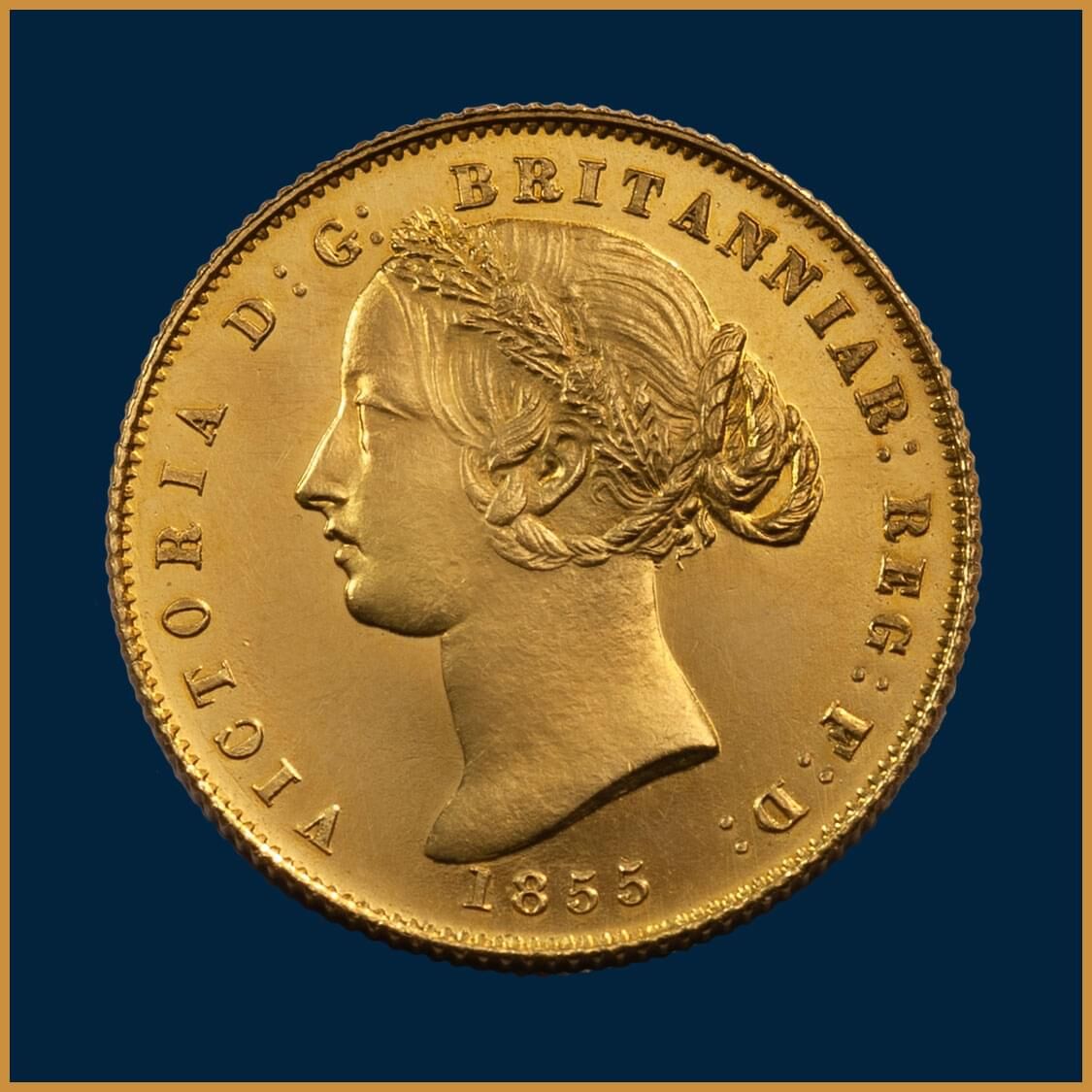
Coin of Record • 1855 Sovereign
Royal Mint
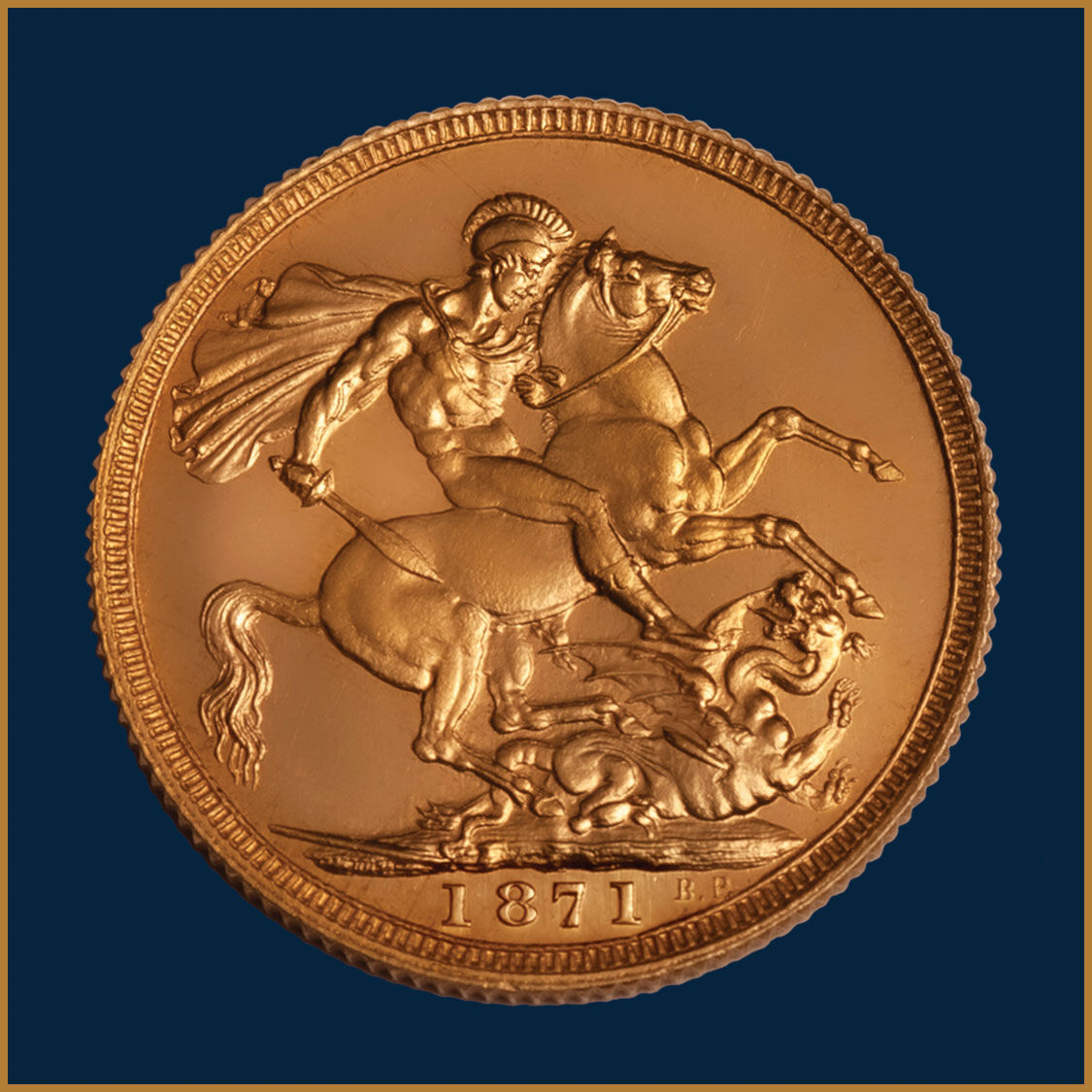
Coin of Record • 1871 Proof Sovereign
Sydney Mint
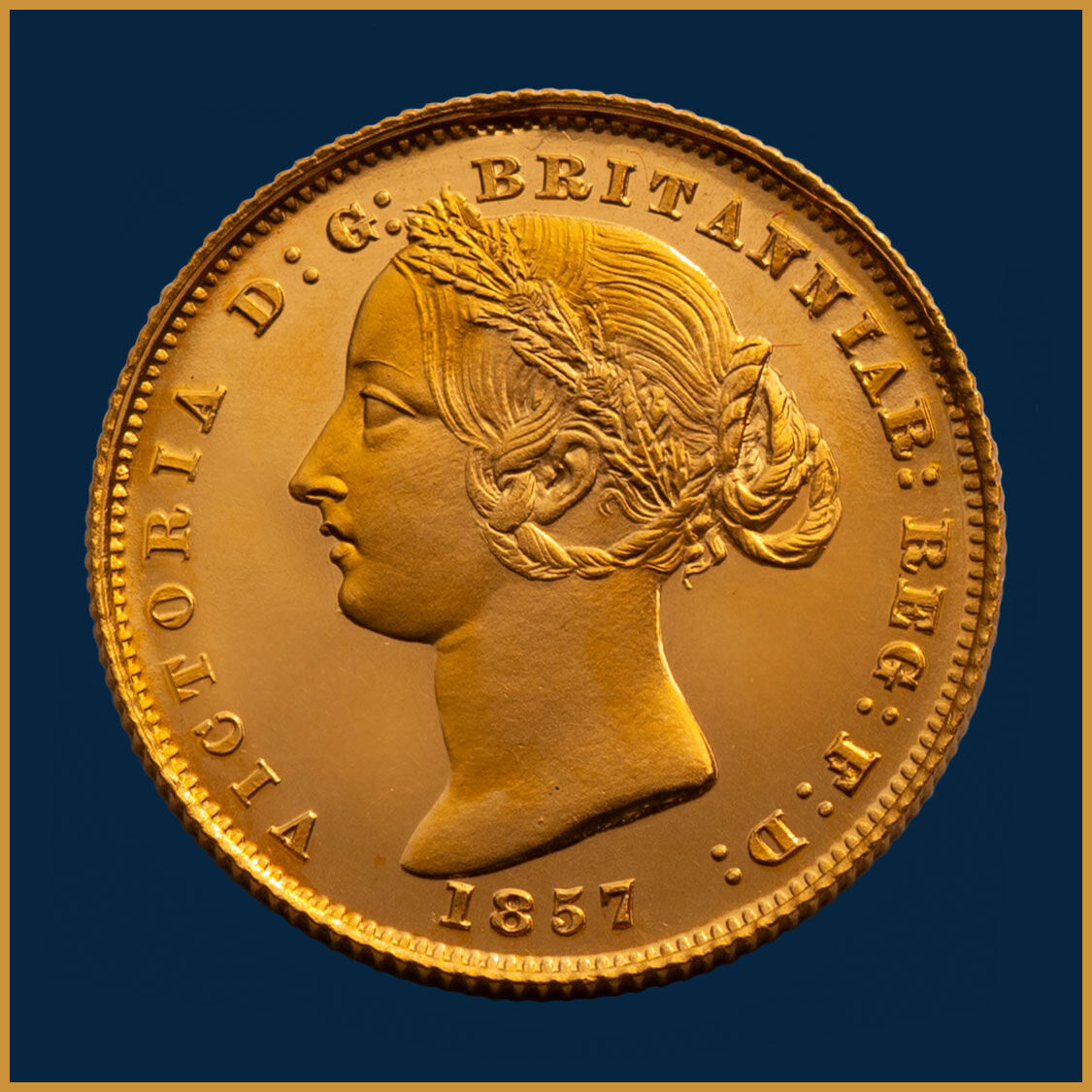
Coin of Record • 1893 Proof Sovereign
Sydney Mint
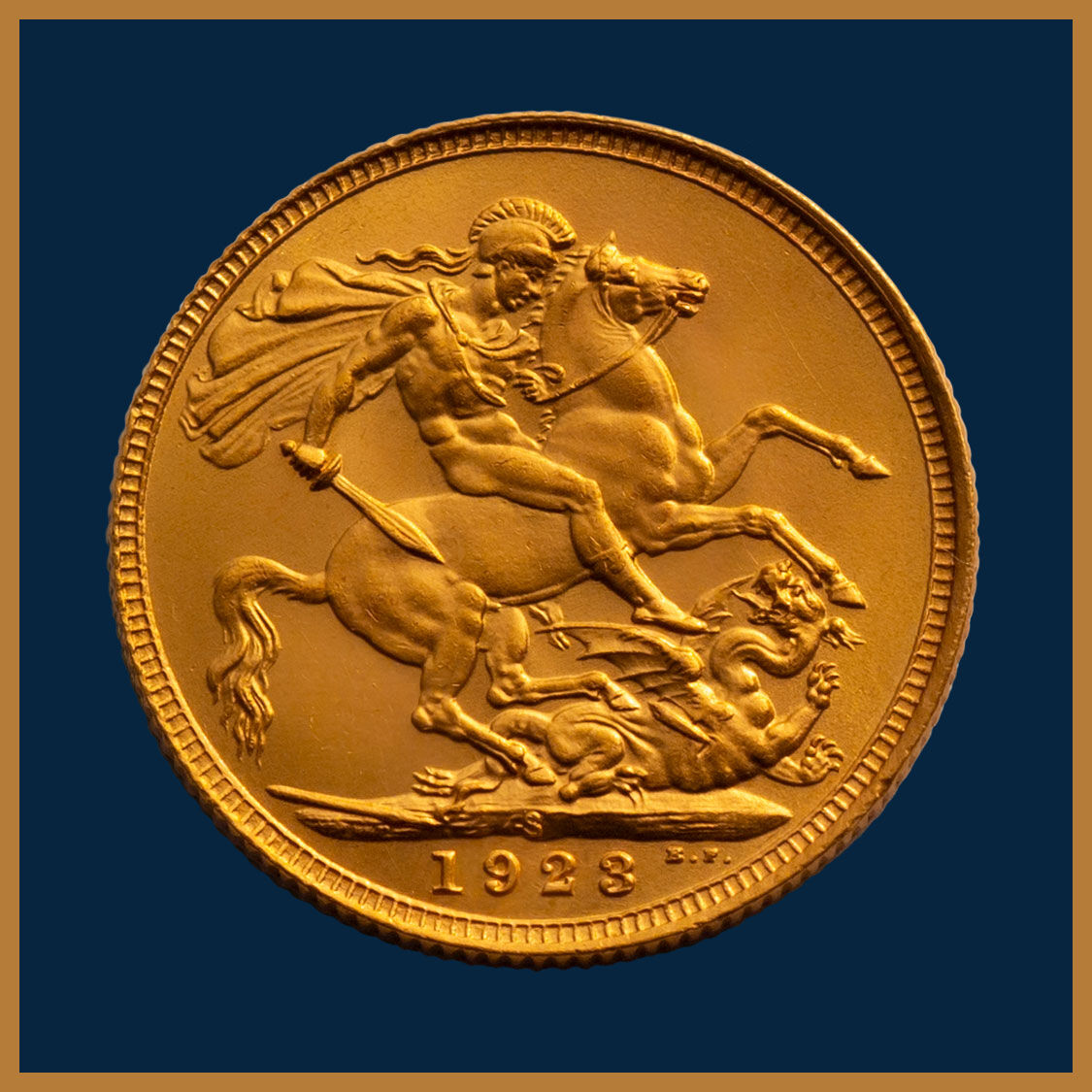
Coin of Record • 1923 Specimen Sovereign
Sydney Mint
The Melbourne Mint opened in 1872 as a branch of the Royal Mint London, its main function to produce gold sovereigns and half sovereigns. Its gold coin production ceased in 1931.
Three monarchs reigned between 1872 and 1931, Queen Victoria, King Edward VII and George V.
The Melbourne Mint struck Coins of Record sporadically. Of the record pieces that were produced, those of Edward VII are the least available for collectors. (Refer chart below.)
The Young Head era (1872 - 1887)
The Melbourne Mint struck its first Coin of Record in 1873. A brilliant proof sovereign featuring the St George reverse, it was retained by the mint. Only one coin is believed to have been struck. There are no other known examples in institutions or held by private collectors.
(On closure, coins from the Melbourne Mint were transferred to the Museum of Victoria.)
In his notes, Barrie Winsor records the existence of an 1874 and 1875 Specimen Sovereign, the former owned by Sydney politician, Henry Cary Dangar. In the years 1876 to 1880, the Melbourne Mint did not strike Coins of Record of its sovereigns or half sovereigns.
There are reports that a pair of 1881 Proof Sovereign and Proof Half Sovereign exists but it has never been recorded in official mint audits or seen in the collector market. It is noted that the mint 'had difficulties with the dies' for the 1881 circulation issue and it is questionable that the mint would strike proofs using dies that were problematic. There were no proof strikings in 1882.
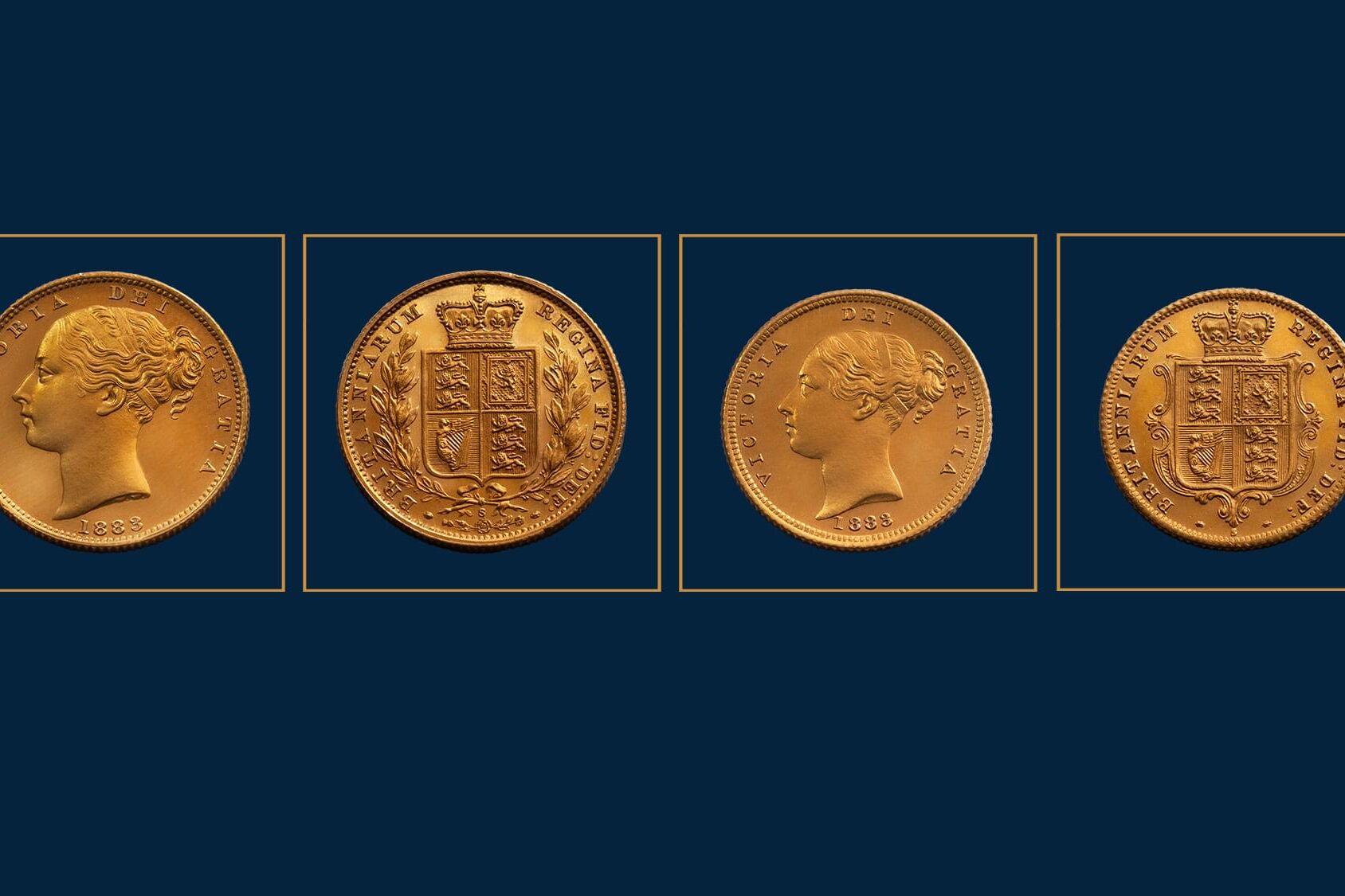
The mint struck two 1883 Proof Sovereigns, one featuring the Shield reverse, the other St George. The coins were retained within the mint, with no known examples in collector's hands.
By 1884, the Melbourne Mint had developed a firm relationship with international collectors. An 1884 St George Proof Sovereign was held by British collector Henry Garside, eventually donated to the British Museum (1924). And an 1884 Proof Half Sovereign was held by British collector John G. Murdoch, liquidated by Sotheby Wilkinson & Hodge in London in 1903. For the record, an 1884 Proof Half Sovereign was also struck and retained by the mint.
British collector John G. Murdoch maintained his influence in 1885 and 1886. He received two Shield 1885 Proof Sovereigns. And two St George 1886 Proof Sovereigns along with four 1886 Proof Half Sovereigns.
For conciseness, two Coins of Record were struck in 1886 and are today held in institutions, the Manchester Museum holding a Shield reverse Proof Sovereign. And the British Museum a Proof Half Sovereign courtesy of the 1935 Clarke-Thornhill bequest. (More than likely ex Murdoch.) While these coins are housed in museums and are not available to collectors, they are noted here for completion. They reflect the workings and protocols of the mint. And the institutions that became recipients of our coinage.
The Jubilee era (1887 - 1893)
The policy of striking proofs for John G. Murdoch continued in the Jubilee era. The mintages started to crank up. And so too the regularity of the issues.
John Sharples, former Curator of Australia's National Coin Collection records that the Melbourne MInt was effectively 'dealing' in proofs, selling to collectors, the profits directed towards a fund aimed at building the mint's own coin collection.
Murdoch held three examples of the 1887 Proof Half Sovereign in his collection. The Henry Cary Dangar collection also held an 1887 Proof Sovereign.
Production records of half sovereigns have been uncovered and confirm that ten proof half sovereigns of six dates were struck on 10 May 1893 (1888, 1889, 1890, 1891, 1892 and 1893). All dates used the same obverse die. Murdoch was sent two of each half sovereign, 1888, 1889, 1890, 1891, 1892 and 1893.
Production records of the Jubilee Proof Sovereigns have not been found. Proof sovereigns of the dates 1888 (3), 1889 (2) and 1893 (1) were provided to Murdoch, the numbers enclosed in brackets representing his order. There are no known examples of the 1890, 1891 and 1892 Proof Sovereigns in institutions or private hands suggesting a mintage was not undertaken.
Records in 1889 reveal that Jubilee Proof Sovereigns were struck with a plain and milled edge, the milled edge examples making their way into the collector market via Murdoch. the plain edged examples retained with the mint.
The limited availablity of the Jubilee proofs in today's market also suggests that the original mintage of ten was created to provide a pool from which perfect examples could be selected to fulfill Murdoch's orders. Proofs surplus to his requirements, and that of the mint, were most likely melted down.
The Veiled Head era (1893 - 1901)
The Veiled Head era again reflects the influence of British collector John G. Murdoch for with few exceptions, Murdoch held two pairs of proof sovereign and half sovereign of each year during the veiled head era.
It is noted that the Melbourne Mint only retained two pairs of 1893 Proof Sovereign and Proof Half Sovereign. And did not hold any of the other veiled head years (1894 to 1901).
A post script on John G. Murdoch
A market is created when buyers and sellers interact, driven by a mutual interest in exchanging goods. This interaction establishes a price based on supply and demand.
Without the involvement of John G. Murdoch, Australia's gold Coins of Record may never have seen the light of day, permanently stored in Government archives and out of reach of collectors.
Murdoch single-handedly created a market by taking Australian gold proofs into the buy/sell environment of collectors. And he struck a perfect balance with the market (then and today) with the quantities he held.
The coins moved onto the international stage when his collection was liquidated via Sotheby, Wilkinson & Hodge in London in 1903 following his passing in 1902.
The reputation of Australia's gold proof sovereigns and half sovereigns as an international commodity was set in stone in 1903, a widespread regard that holds to this very day, right across the globe. When an Australian proof gold piece comes up for sale, irrespective of the country in which it is offered, collectors the world over know about it.
The Edward VII era (1902 - 1910)
Circumstances create numismatic superstars and the circumstance of Murdoch's passing in 1902 had a huge impact on proof coining at the Melbourne Mint.
Technically, it fell of a cliff.
One Melbourne MInt 1902 Proof Sovereign is known. Formerly held by the South Africa Mint (a temporary branch of the Royal Mint, 1923 - 1941) it is now held by a private collector. No 1902 Proof Sovereigns are held in institutions including the Melbourne Mint. No 1902 Proof Half Sovereigns are known.
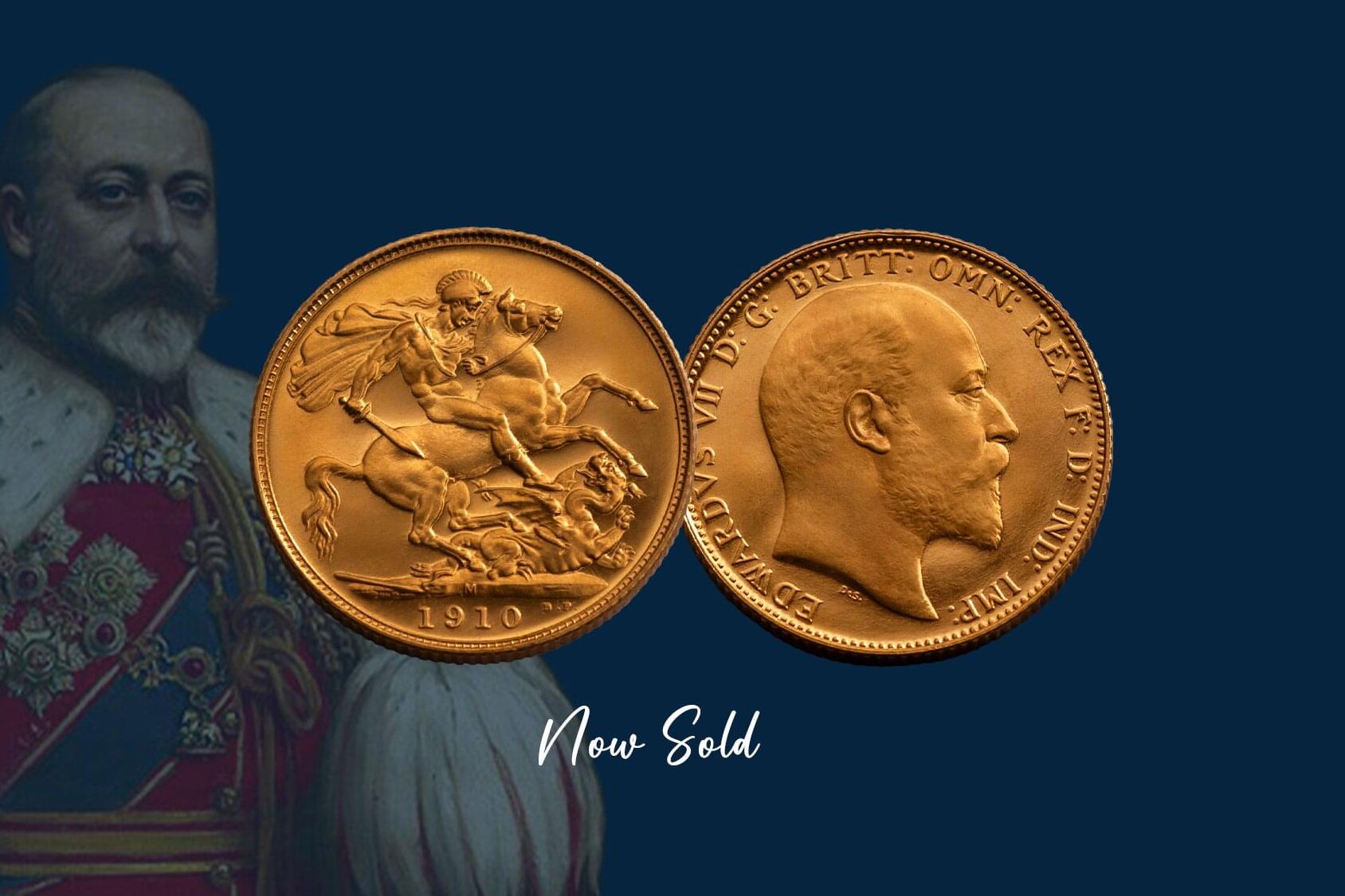
One example of the 1910 Proof Sovereign is privately held, formerly owned by Ross Pratley and Barrie Winsor, both leading gold coin specialists. For the record, a 1910 Proof Sovereign is held in the Museum of Victoria, the former property of the Melbourne MInt.
The proofs of Edward VII are characterised by extreme scarcity. Proofs were only struck in two years and of each, only one example is known.
The proofs of Edward VII are further characterised by extreme beauty. The Melbourne Mint reached its zenith in proof gold coining during the era of Edward VII, the depth of design of both the 1902 and 1910 Proof Sovereigns is magnificent, sculpted, three dimensional. The fields are like golden mirrors.
George V era (1911 - 1931)
The portrait of George V appeared on Australia’s sovereigns from 1911 to 1931.
The original portrait was modified in 1929 and remained until Australia struck its very last sovereign in 1931. The original design is referred to as the 'large head', the modified design the 'small head' portrait.
There are two known examples of the George V 1911 Proof Sovereign held by collectors, both of which have been offered at Australian auctions, the last sighting in March 1985. No further 'large head' proof sovereigns were struck at the Melbourne Mint.
The 'small head' portreait appeared in 1929, 1930 and 1931. Three examples of the 1929 Proof Sovereign have been offered at auction, the last appearance in 1998. Two examples of the 1930 Proof Sovereign are known and three of the 1931 Proof Sovereign.
Price Versus Rarity for Melbourne Mint Coins of Record
Valuing a gold proof coin gives consideration to two factors:
1. The rarity of the coin itself, how many coins of that date are available to collectors. For example the 1910 Proof Sovereign is unique. The 1929 Proof Sovereign is known by three coins.
2. The exclusivity of the coin, how many coins are available to collectors in that sector of the market. For example there is only two options in the Edward VII sector, 1902 and 1910. There are eighteen options for collectors looking to pursue a Veiled Head Proof Sovereign (1893 - 1901).
Below is simply a guide.
The range affords some flexibility with respect to quality. And acknowledges that some dates are more important than others.
The relativities are however very telling! You can clearly see which sectors are noted as the rarest. And are highly valued.
Veiled Head • $70,000 to $90,000
Jubilee Head • $70,000 to $90,000
Young Head • $100,000 - $130,000
Edward VII • $120,000 - $140,000
George V Large Head • $120,000 - $140,000
George V Small Head • $90,000 - $110,000
Four reasons why proof gold is worth owning
Nothing compares to the allure of gold.
Particularly when it comes in the form of an Australian sovereign or half sovereign struck to PROOF quality. The coins are visually stunning, distinguished by the sharpest of detail and brilliant golden-mirror surfaces. When you look at the proofs shown above, you can only but agree. Perfection in gold.
The coins have a wonderful connection to the past.
Proof sovereigns and proof half sovereigns are the story tellers, defining an era, or a year, like no other coin. The coins can also define an occasion. And a monarch. And they tend to have a connection to a prominent person, either a dignitary, a Mint Master or an influential collector.
The coins are genuinely rare
Irrespective of the year in which they were struck, and the mint at which they were produced, Australia's proof sovereigns and proof half sovereigns are 'extremely rare'. We would be lucky to sight one piece at auction annually.
And the reason for their incredible scarcity is that proofs were not struck every year. And of those dates that were struck as proofs, only one, perhaps two up to a maximum of three filtered their way out into the collector market.
It is estimated that there are perhaps forty five Melbourne mInt proof sovereigns available to collectors, covering the complete spectrum of dates from 1872 to 1931, a span of seventy-eight years. The estimate on proof half sovereigns (1853 to 1911) is thirty one coins.
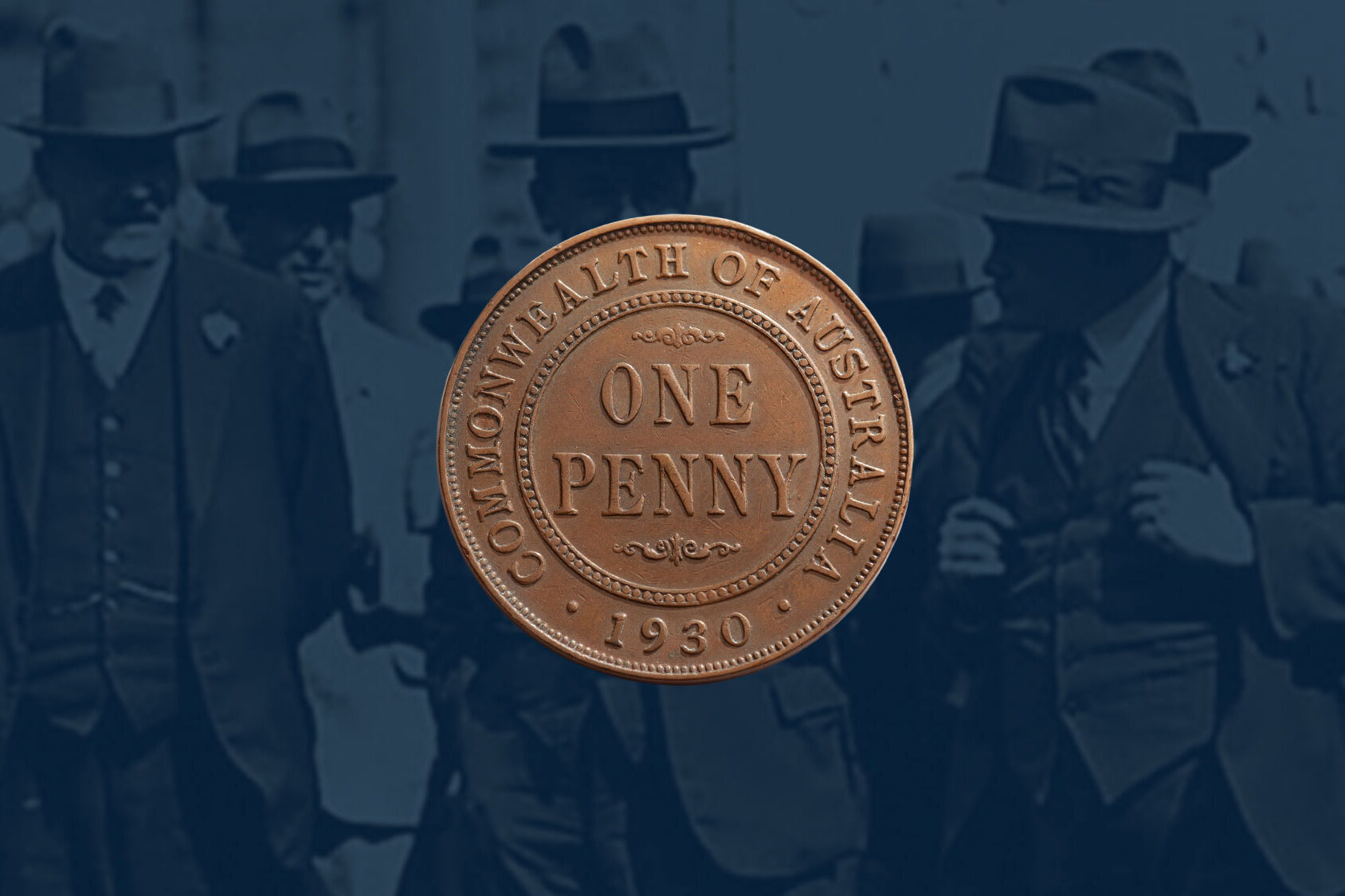
Compare their availability to our industry yardstick the 1930 Penny, where 1500 to 2000 examples are believed to exist. Or even a comparison to the Kookaburra Square Penny, struck between 1919 and 1921, where two hundred examples are believed available to collectors.
There are two other considerations that further limit their availability.
As proof sovereigns and proof half sovereigns shared the same design as those coins struck for commercial usage, some of the proofs have tragically filtered their way into circulation and have been grossly mishandled, thereby marring their quality. And reducing the pool of "as struck" proof gold coins. The 1855 Sydney Mint Proof Half Sovereign, an acknowledged proof that has accidentally circulated.
The second consideration is that great coins tend to be held for the long term. The owner of "The Madrid Collection of Australian Rare Coins" held onto his proof gold coins for more than twenty years. The Spalding family for even longer. So too Tom Hadley, of Quartermaster Collection fame.
The coins have strong collector/investor appeal.
Collectors that buy in this area are all but guaranteed that the market will never be flooded with examples. So it is a sector that offers financial stability and has been the hunting ground of investors for decades.
The sector also has strength because it has widespread support amongst the Australian market. And overseas coin markets.
1871 to 1887 – Young Head portrait
The Sydney Mint opened in 1855 as the first overseas branch of the Royal Mint London. The mint struck sovereigns and half sovereigns to exactly the weight and fineness of the Royal Mint coins but had their own unique colonial design.
The Melbourne MInt opened in 1872 as the second overseas branch of the Royal Mint. By the time the Melbourne Mint struck its first gold coin, London had revoked approval for New South Wales to produce sovereigns with the distinctive colonial design and the nation's sovereigns, on both obverse and reverse, took on a traditional British style.
The coins produced at the Melbourne Mint featured a new portrait of Queen Victoria referred to as the Young Head design. And two new reverse designs were in use on Ausrralia's sovereigns, the St George and the Dragon design of Benedetto Pistrucci and the Shield design of J. B. Merlen. The Shield reverse was the only design used on Australia's half sovereigns during the Young Head era.
Only two proof sovereigns featuring the Shield reverse / Young Head portrait combination are known. Two proof examples are found in the St George reverse / Young Head portrait combination and two struck to specimen quality. Only four proof half sovereigns featuring the Young Head portrait are known.
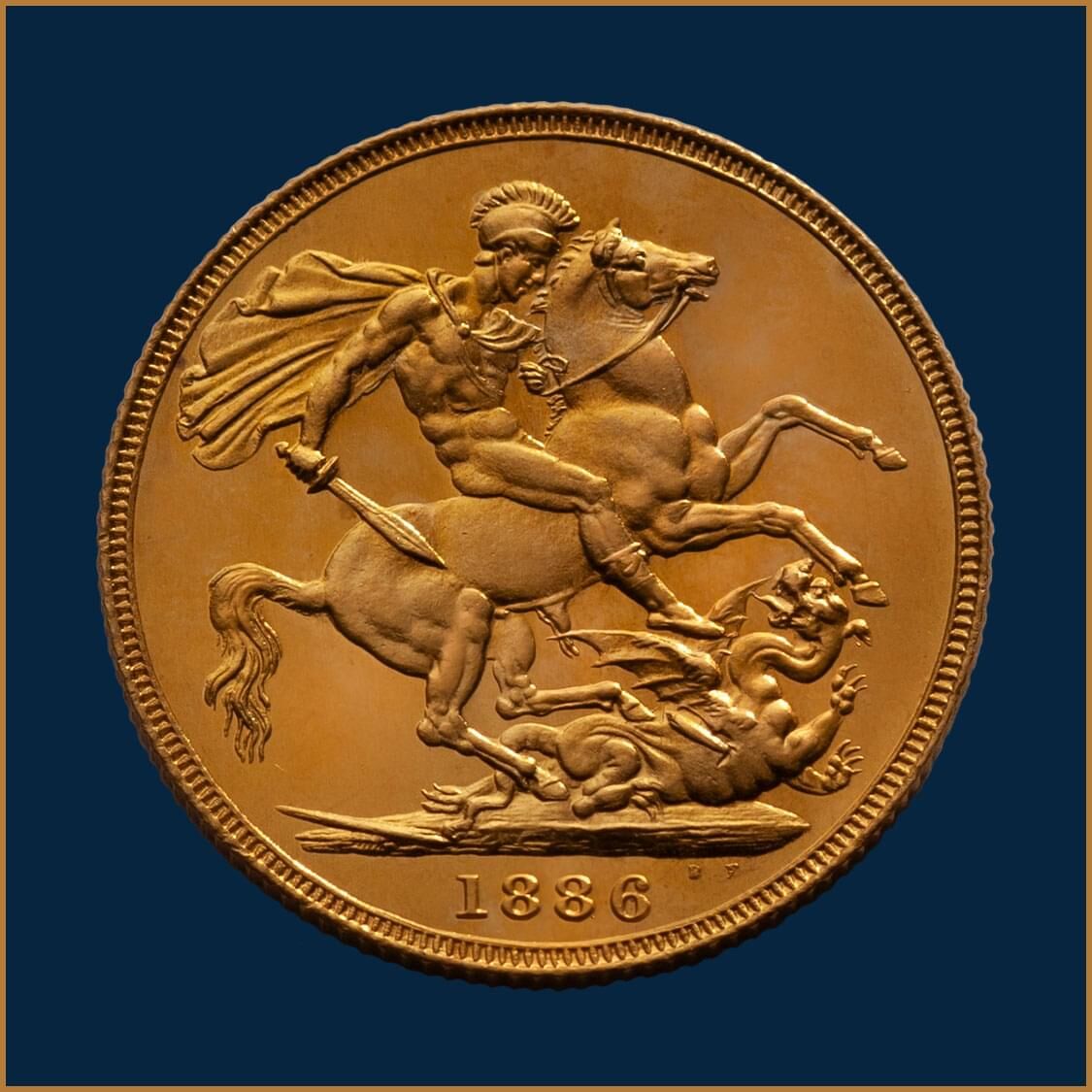
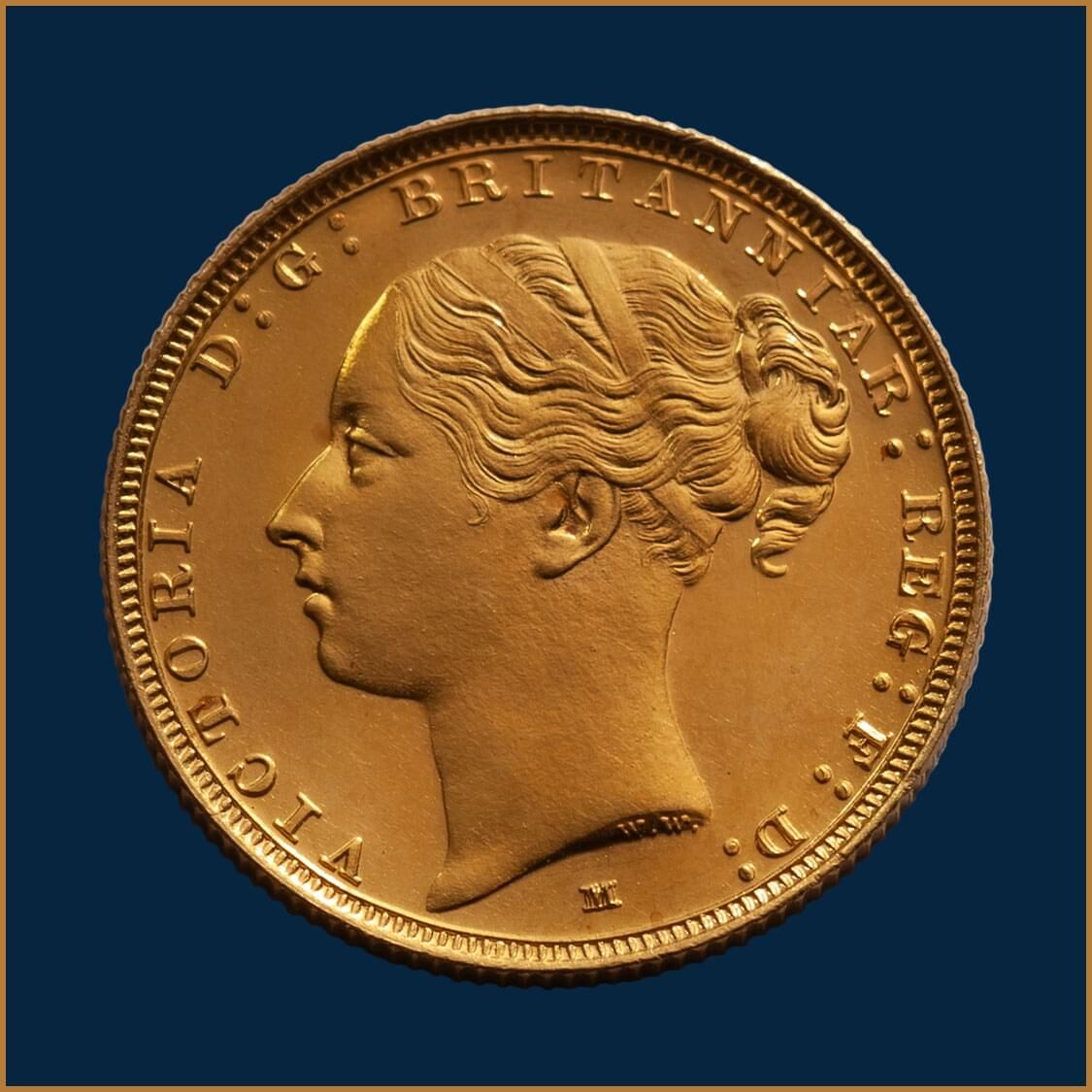
The 1886 Proof Sovereign struck at the Melbourne Mint with the Young Head portrait of Queen Victoria and the St George and the Dragon reverse.
1887 to 1893 - Jubilee Head portrait
Victoria became Queen of the British Empire on 20 June 1837 and her golden jubilee celebrated fifty years to the day, on 20 June 1887.
A new sovereign portrait was designed by (later Sir) Joseph Edgar Boehm to replace the Young Head portrait. The new design drew inordinate criticism for Victoria’s apparent scowling look and the precarious balancing of her crown. The design only lasted six years.
The year 1887 also saw the dropping of the Shield reverse on Australia's sovereigns. All Jubilee Head Proof Sovereigns were struck with only the St George and the Dragon reverse. The Shield reverse was however maintained on the half sovereign.
The Melbourne Mint opted out of striking proof sovereigns in 1890, 1891 and 1892 and, of the remaining years, minimal numbers of proof sovereigns are known.
Proof Half Sovereigns of the Melbourne Mint have been sighted in each of the years of the Jubilee era.
Our experiences attest to their scarcity. We have only sold two sovereigns from the Melbourne Mint, 1888 and 1889. And three half sovereigns from the Melbourne Mint, 1887, 1891 and 1893.
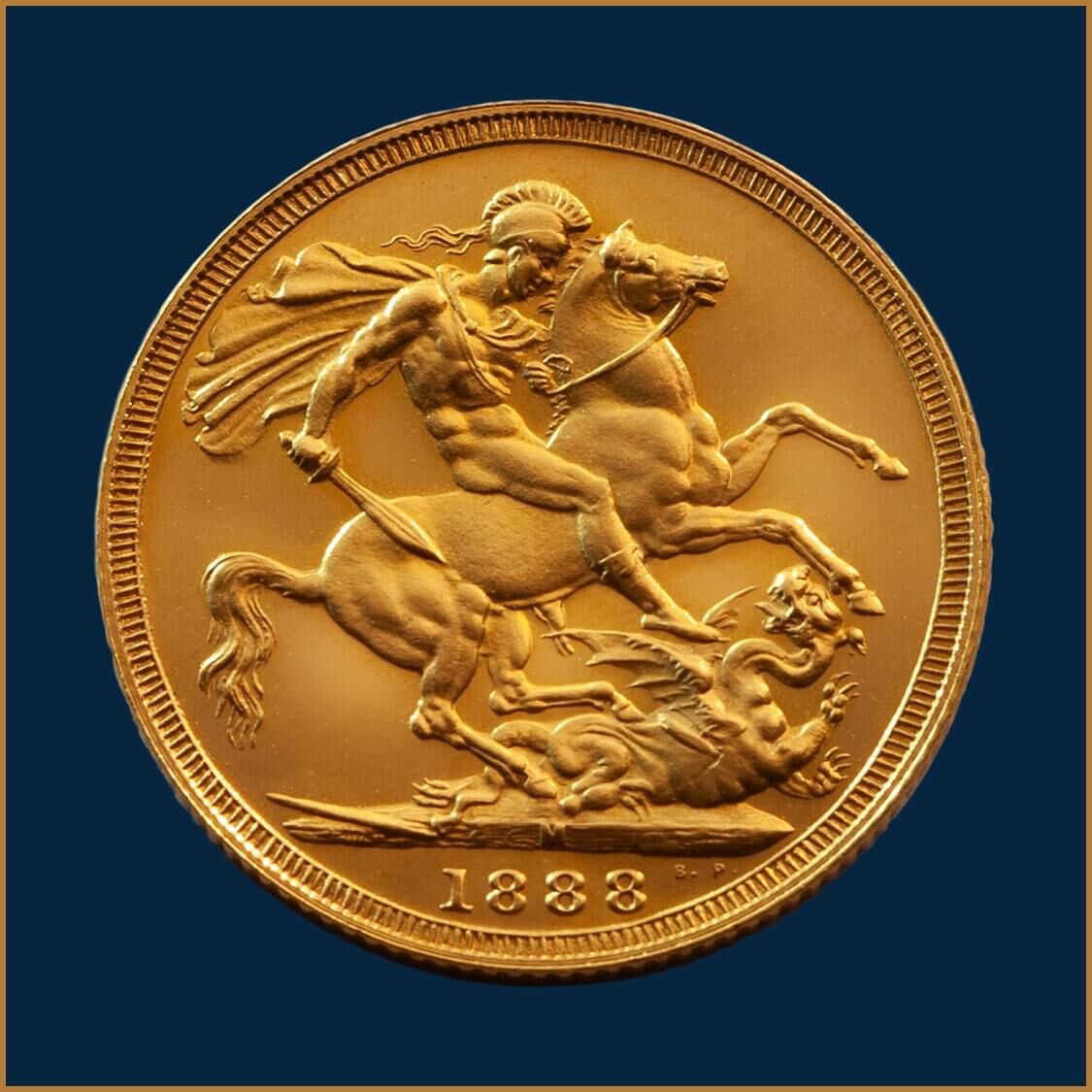
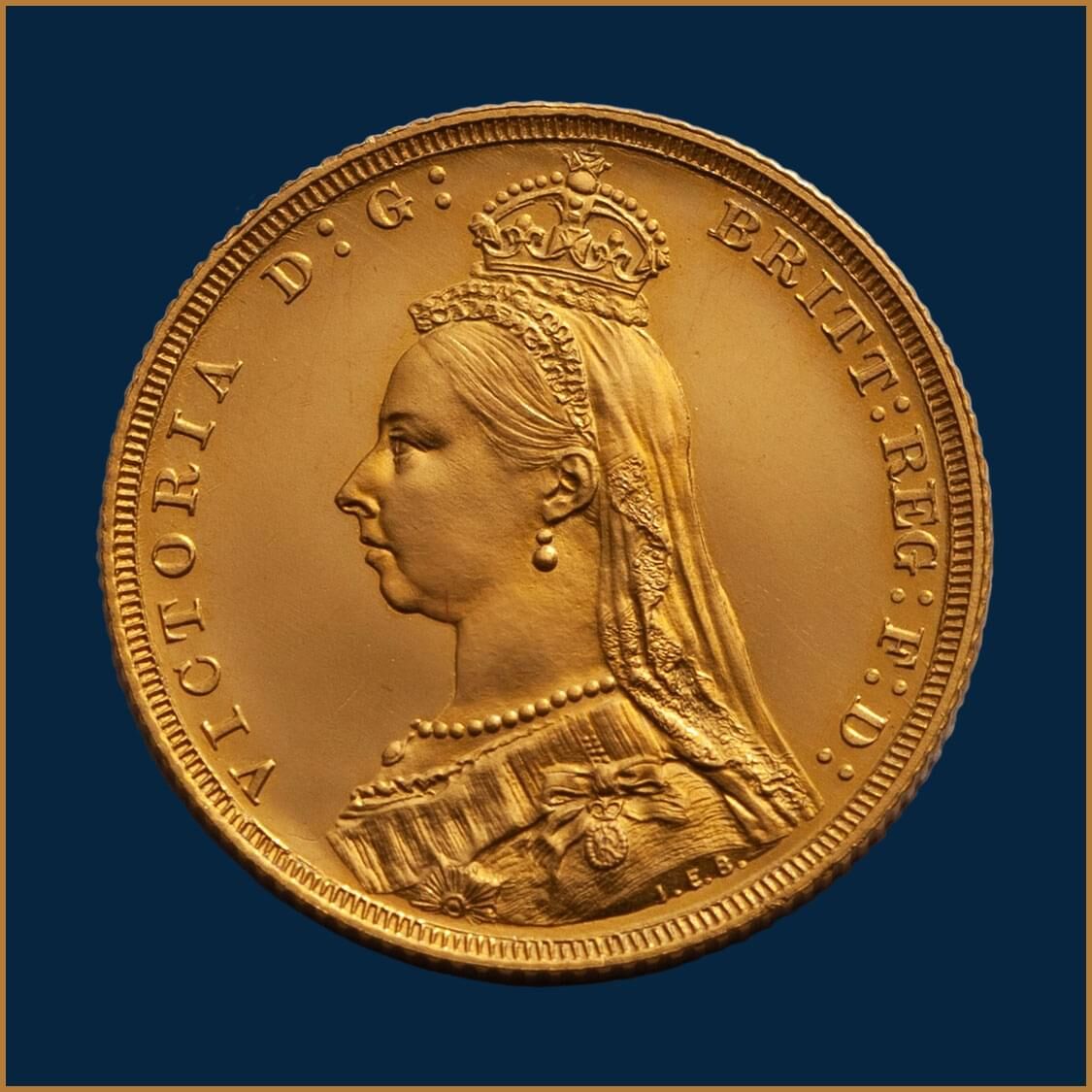
The 1888 Proof Sovereign struck at the Melbourne Mint with a milled edge.
1893 to 1901- Veiled Head portrait
The Veiled Head era again reflects the influence of British collector John G Murdoch for with few exceptions, Murdoch held two pairs of proof sovereign and half sovereign of each year during the veiled head era.
John Sharples, former Curator of Australia's National Coin Collection records that the Melbourne MInt was effectively 'dealing' in proofs, selling to collectors, the profits directed towards a fund aimed at building the mint's own coin collection.
It is said that he was even supplying his own gold coin blanks.
Thank you John G. Murdoch!
For if it was not for his involvement, proof gold coins out of this era would be almost unavailable to today's collector market.
The coins are a tad more available than other sectors ... but only a tad ... making the Veiled Head Proof Sovereigns and Half Sovereigns the perfect entry point for collectors seeking to acquire a piece of proof gold.
Realistically we might sight one Veiled Head Proof Sovereign (or Half Sovereign) on the market every one to two years.
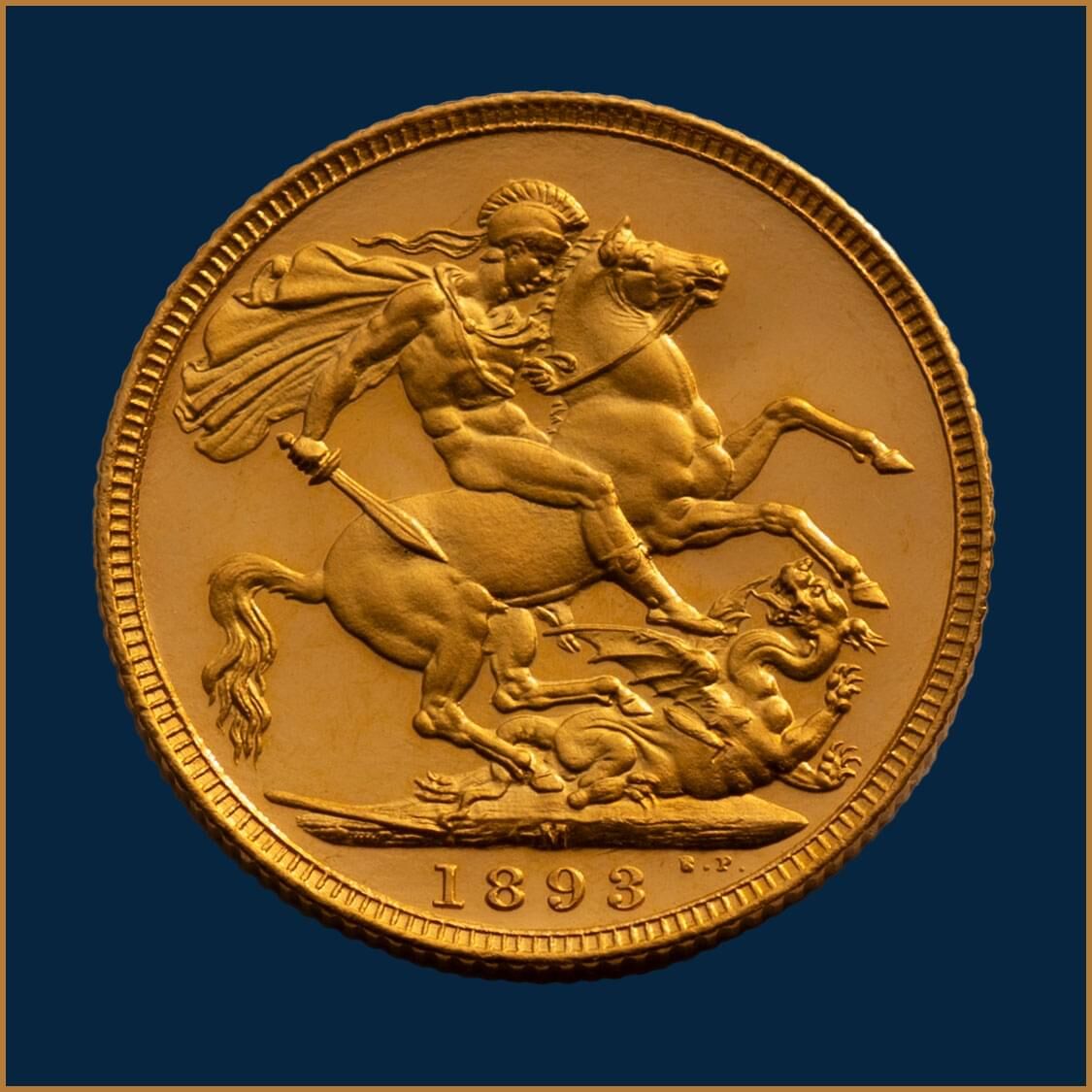
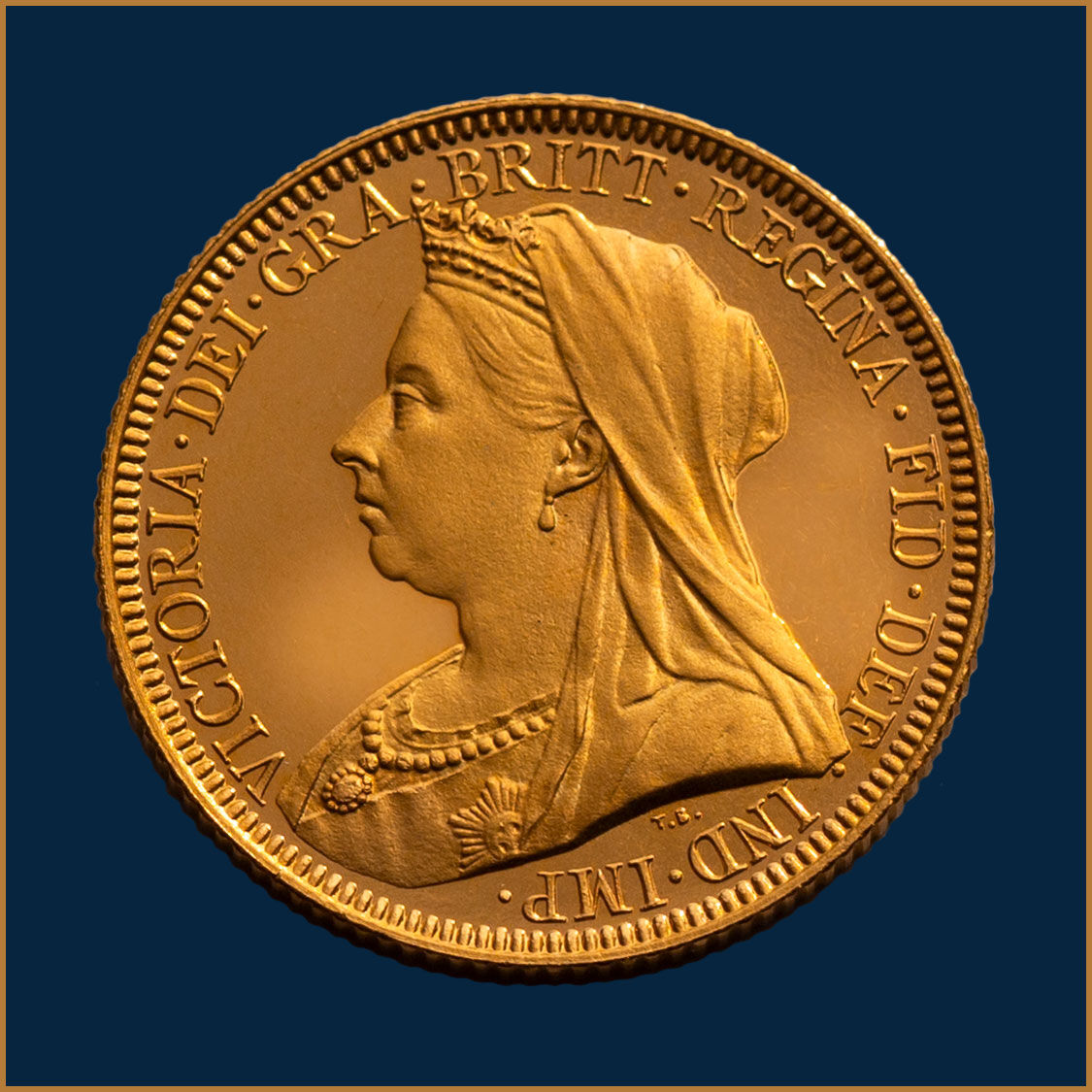
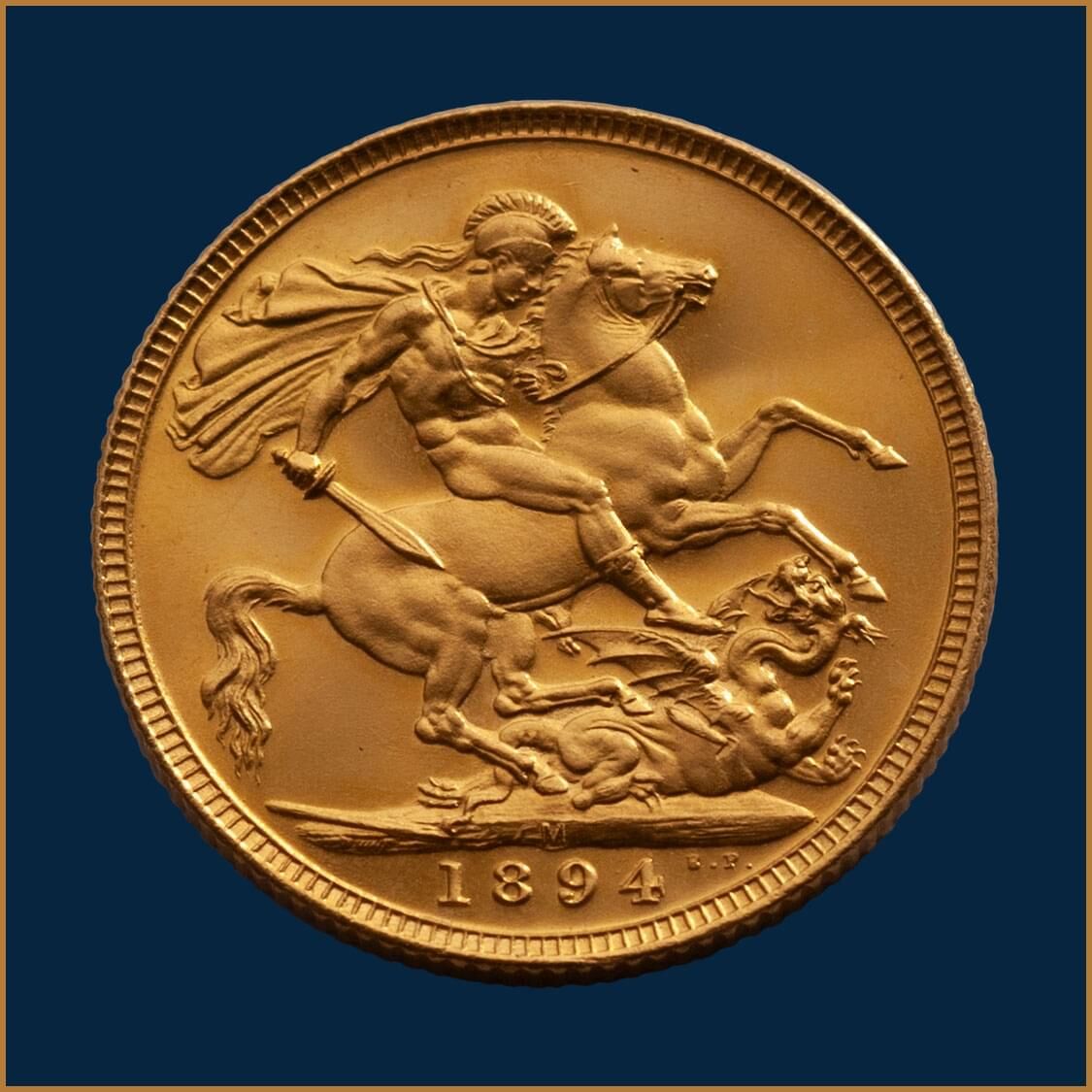
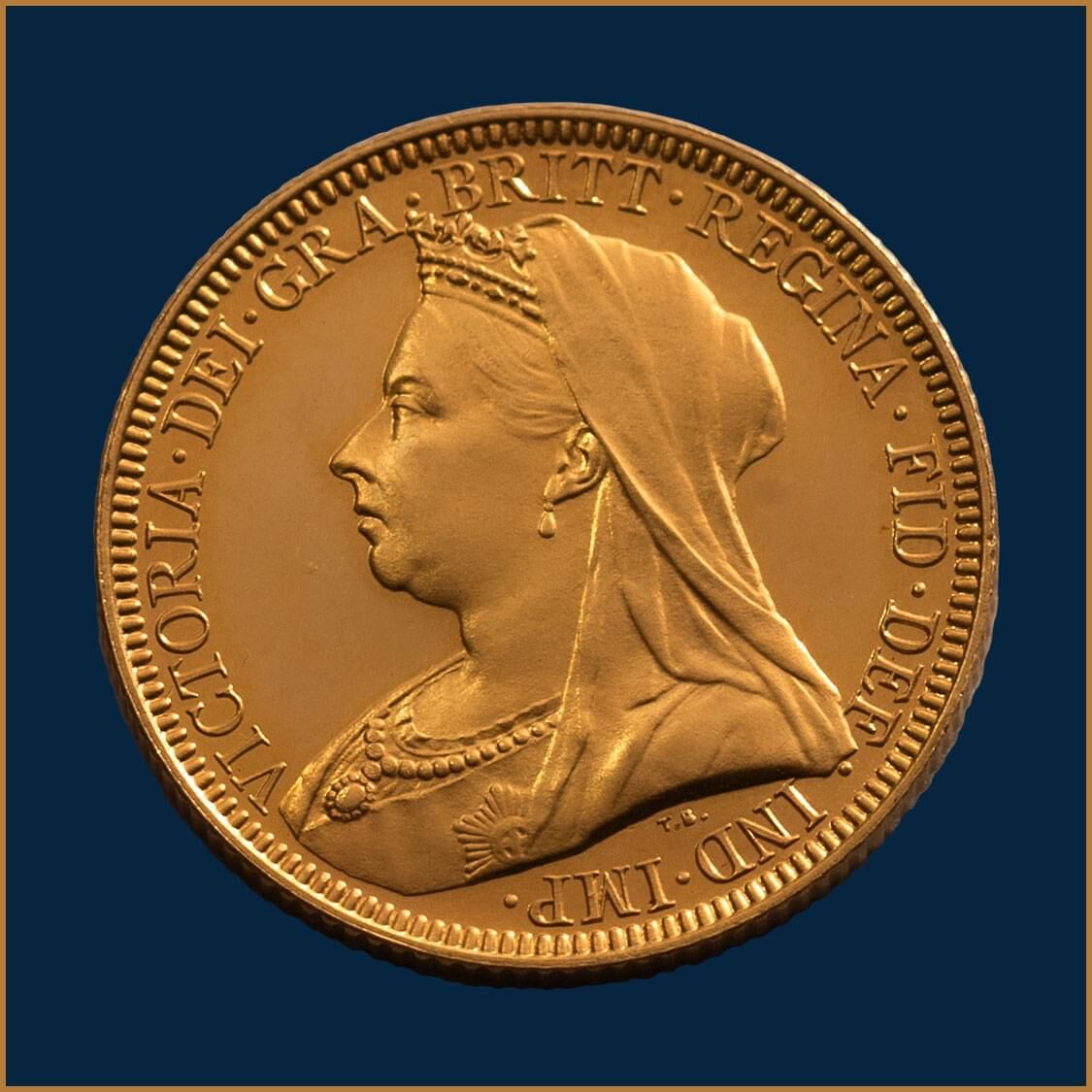
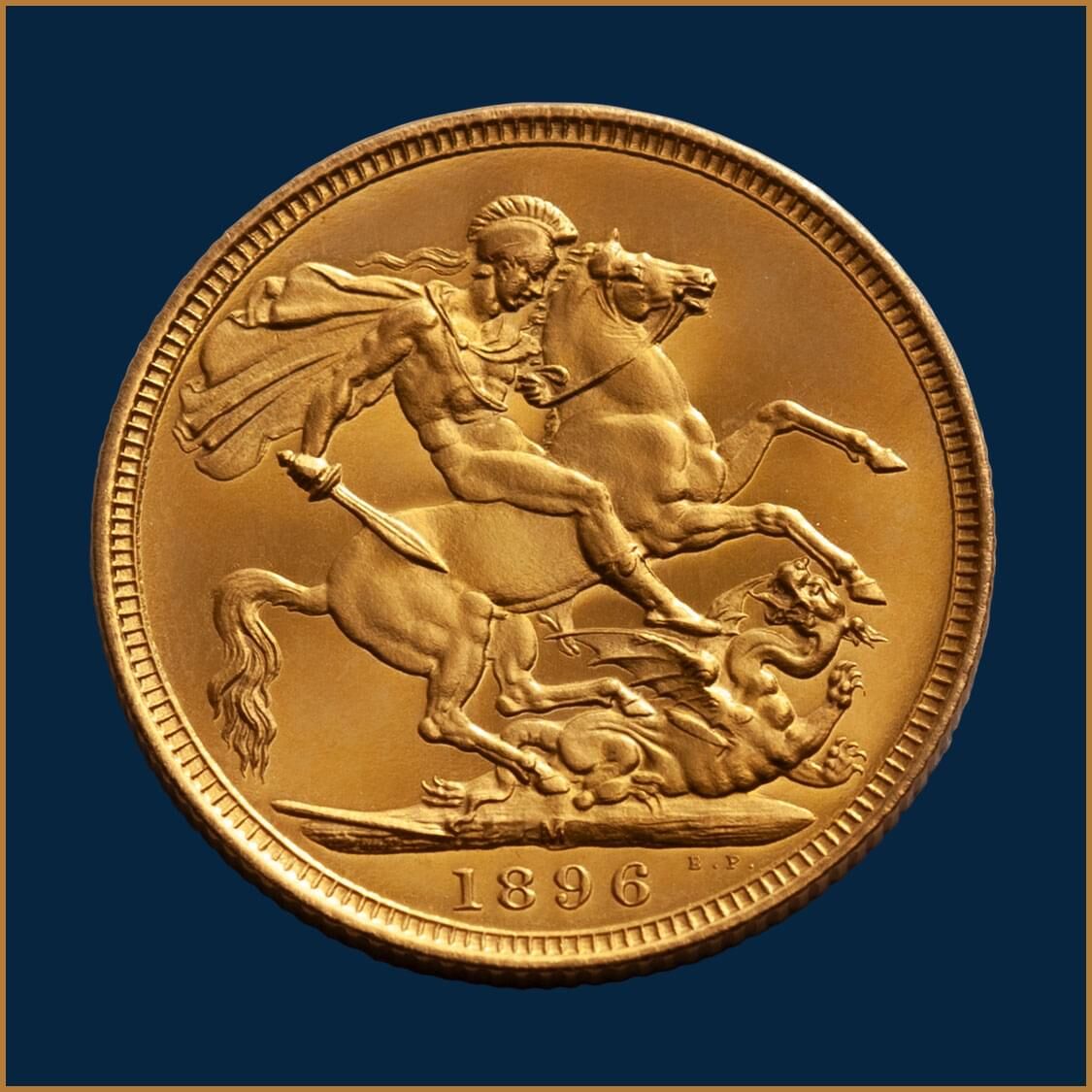
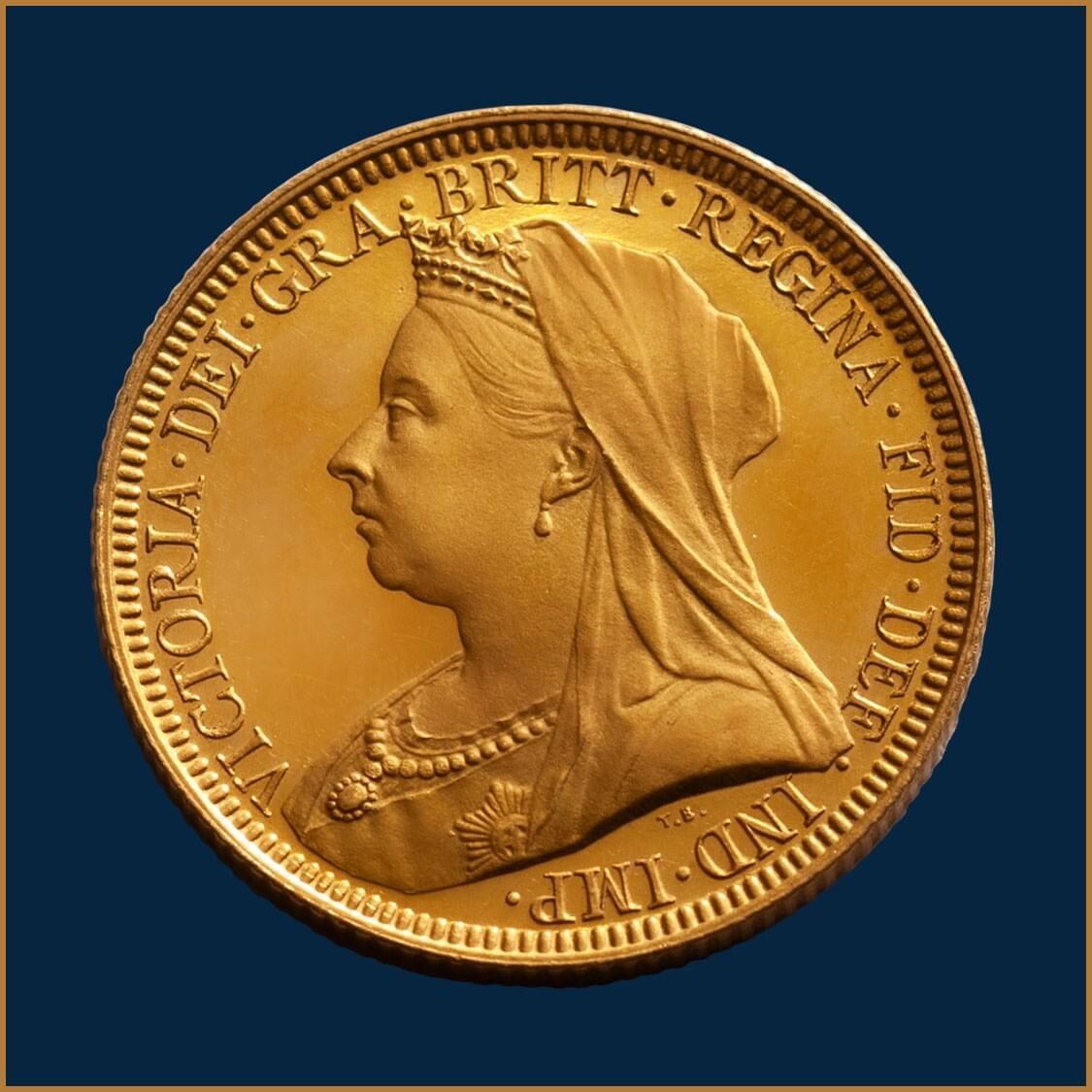
The 1893 Proof Sovereign struck at the Melbourne Mint with the Veiled Head obverse portrait of Queen Victoria and the St George and the Dragon reverse.
1902 to 1910 - Edward VII portrait
Circumstances create numismatic superstars and the circumstance of Murdoch's passing in 1902 had a huge impact on proof coining at the Melbourne Mint.
Technically, it fell of a cliff.
One Melbourne MInt 1902 Proof Sovereign is known. Formerly held by the South Africa Mint (a temporary branch of the Royal Mint, 1923 - 1941) it is now held by a private collector. No 1902 Proof Sovereigns are held in institutions including the Melbourne Mint. No 1902 Proof Half Sovereigns are known.
One example of the 1910 Proof Sovereign is privately held, formerly owned by Ross Pratley and Barrie Winsor, both leading gold coin specialists. For the record, a 1910 Proof Sovereign is held in the Museum of Victoria, the former property of the Melbourne MInt.
The proofs of Edward VII are characterised by extreme scarcity. Proofs were only struck in two years and of each, only one example is known.
The proofs of Edward VII are further characterised by extreme beauty. The Melbourne Mint reached its zenith in proof gold coining during the era of Edward VII, the design detail of both the 1902 and 1910 proof sovereigns is magnificent, sculpted, three dimensional. The fields are like golden mirrors.
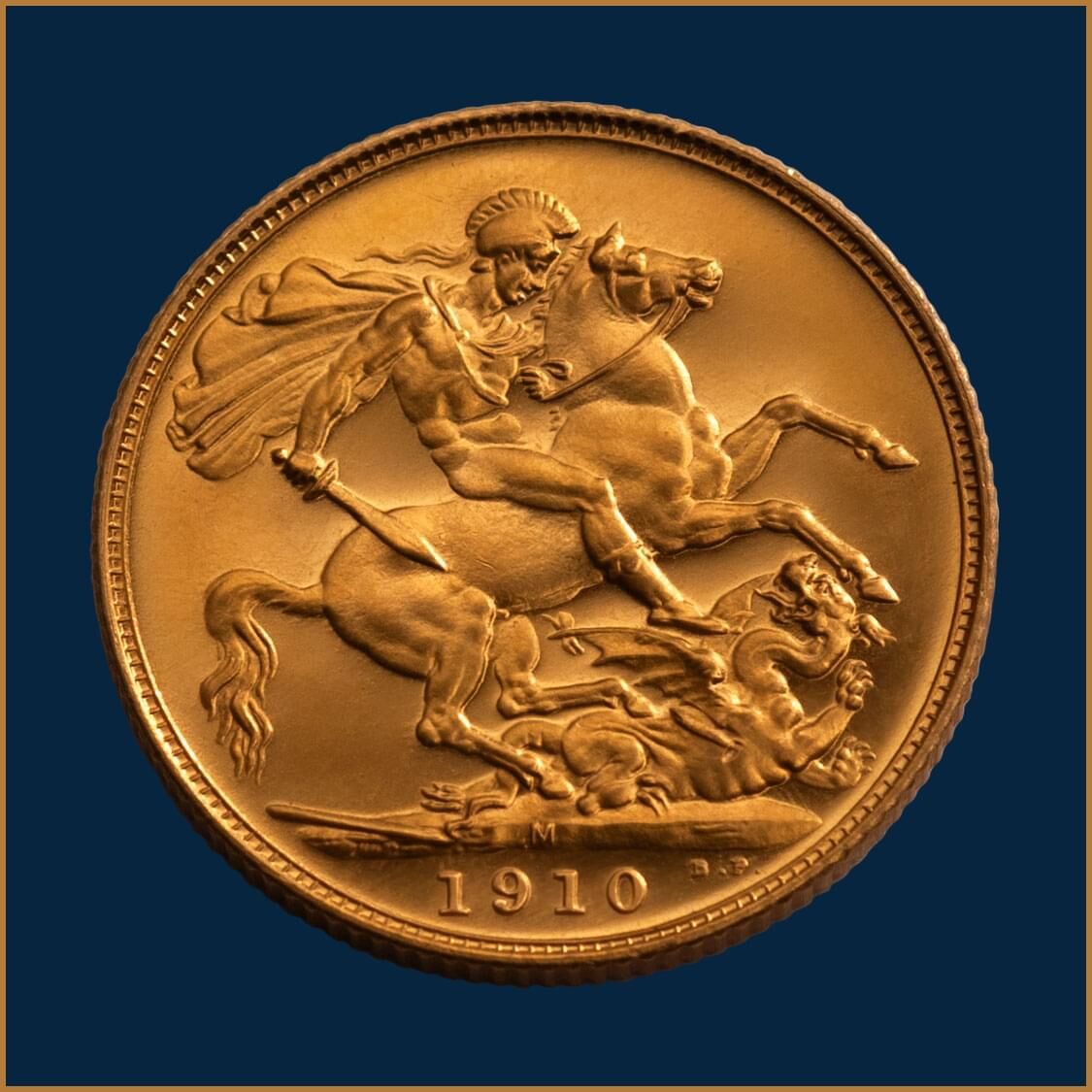
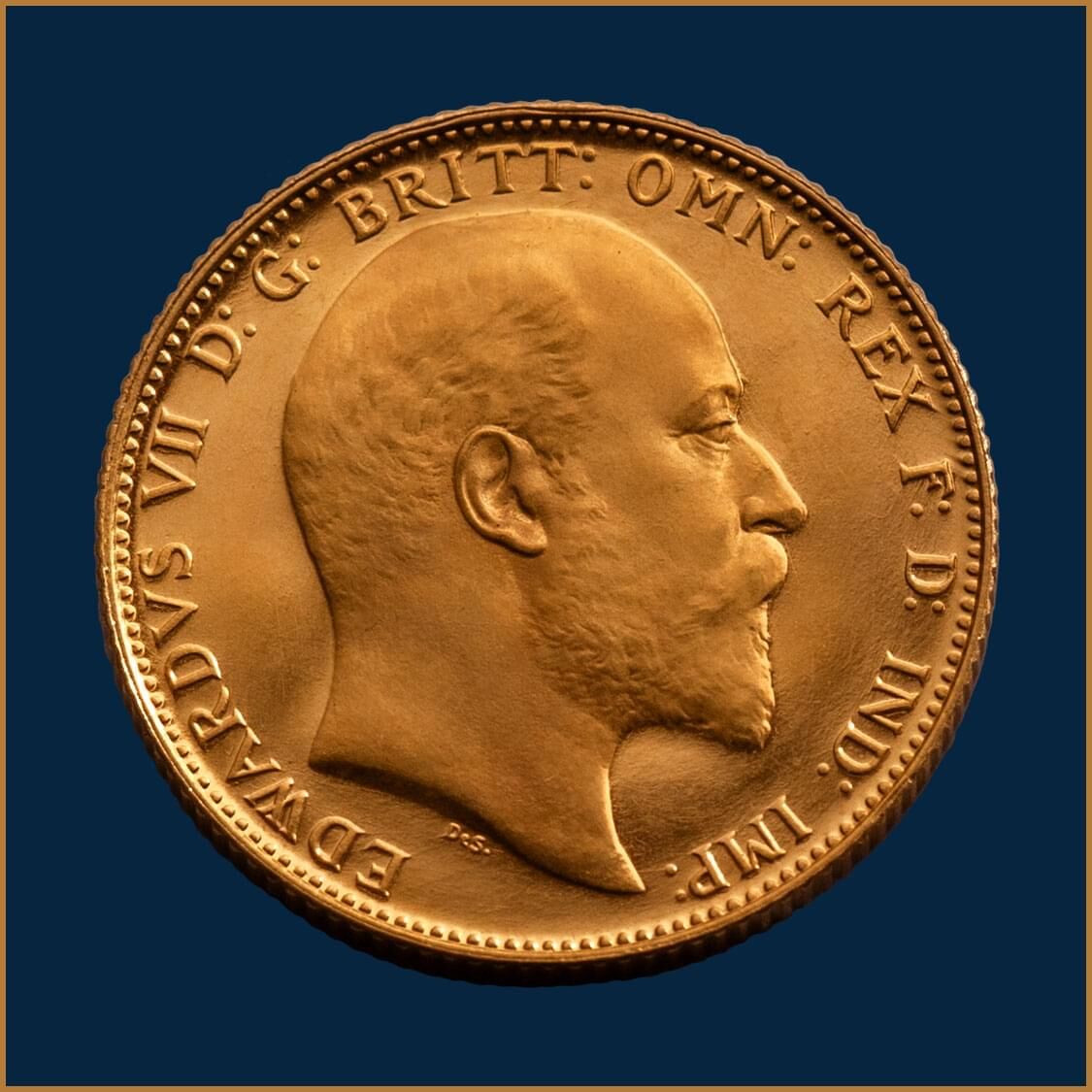
1910 Proof Sovereign struck at the Melbourne Mint, unique in collector's hands.
1911 to 1931 - George V portrait
The portrait of George V appeared on Australia’s sovereigns from 1911 to 1931.
The original portrait was modified in 1929 and remained until Australia struck its very last sovereign in 1931. The original design is referred to as the 'large head', the modified design the 'small head' portrait.
There are two known examples of the George V 1911 Proof Sovereign held by collectors, both of which have been offered at Australian auctions, the last sighting in March 1985.
No further 'large head' proof sovereigns were struck at the Melbourne Mint.
Three examples of the 1929 Proof Sovereign have been offered at auction, the last appearance in 1998. Two examples of the 1930 Proof Sovereign are known and three of the 1931 Proof Sovereign.
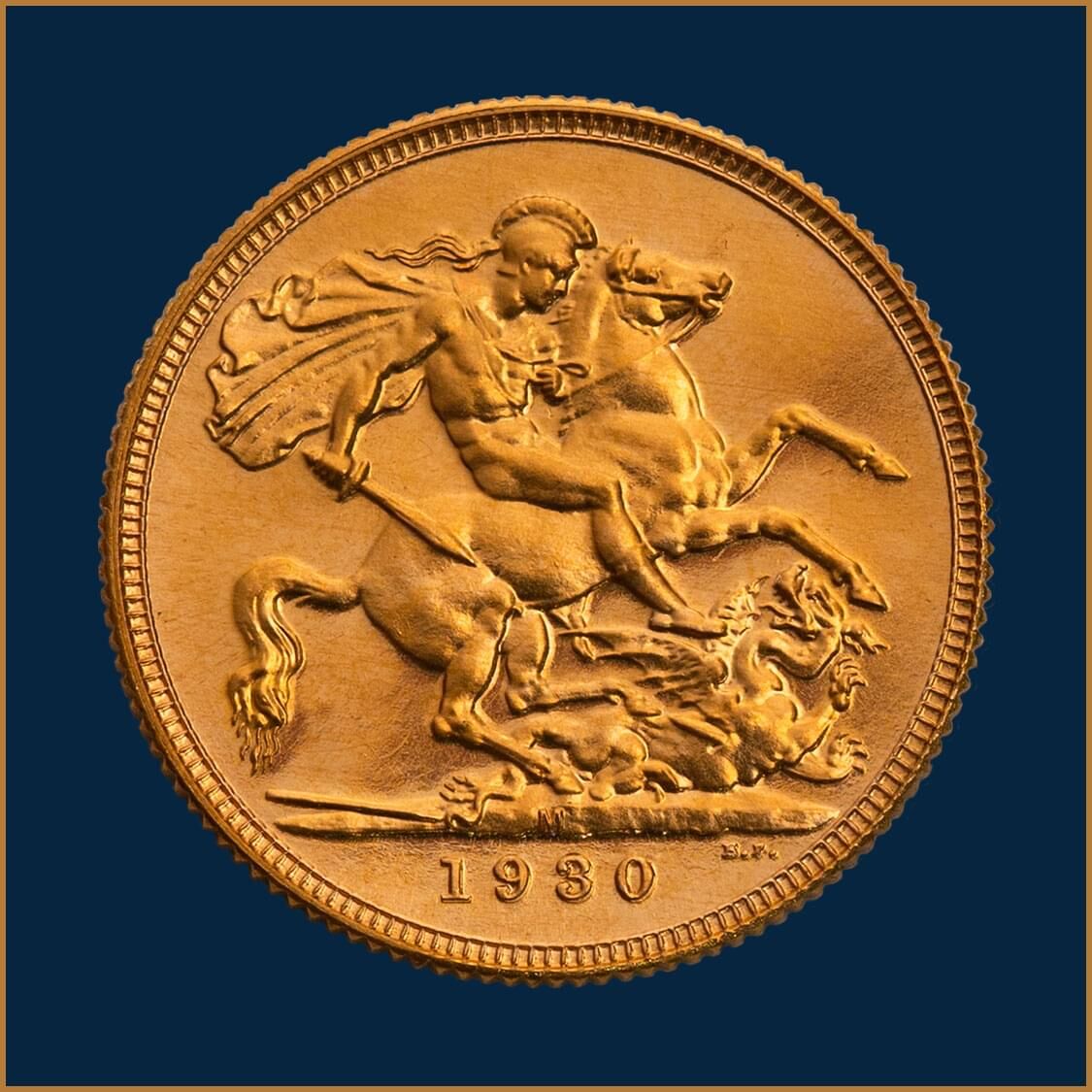
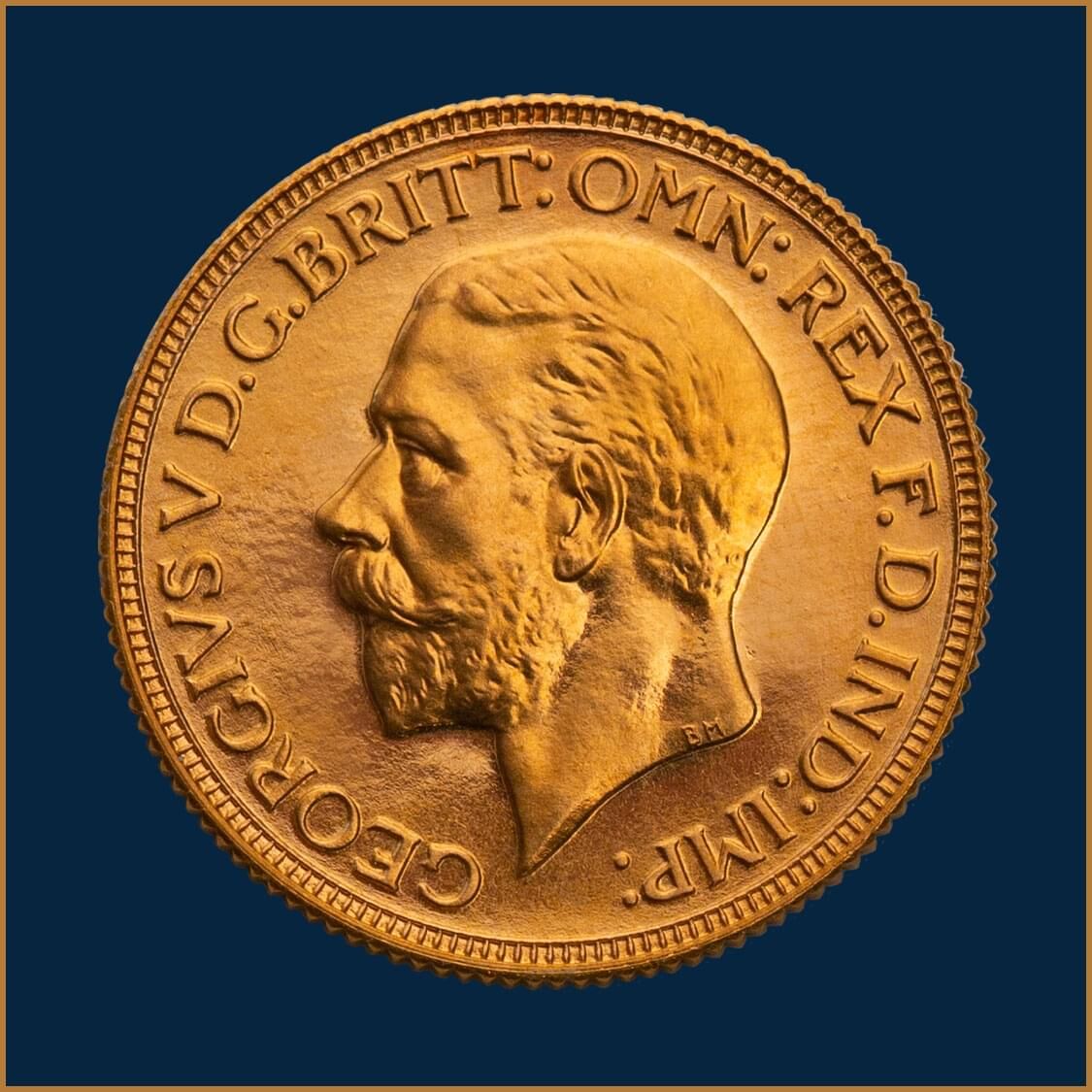
The 1930 Proof Sovereign struck at the Melbourne Mint and featuring the 'small head' portrait of George V. One of two known, the coin is compelling.
AUSTRALIA'S PROOF SOVEREIGNS - FAQ
What is a ‘PROOF’ sovereign? And how does it differ from a circulating sovereign?
Unless you are a professional numismatist, a photo of a PROOF sovereign and a CIRCULATING sovereign, will almost always look the same because they share the same design. And both coins are made from 22 carat gold. But there is a vast difference in the way in which they are produced. And under close scrutiny, they have characteristics that make them very different.
Coins are struck in two different styles and for two distinctly different purposes.
Coins are struck so that they can be used in every-day transactions. We call it circulating currency - coins that circulate. Circulating coins are mass-produced in the millions in what can only be described as a factory environment and distributed through the banks at their face value.
Coins can also be struck to PROOF quality. A proof coin is a specially made coin distinguished by sharpness of detail and usually with a brilliant mirror-like surface. A PROOF coin is never intended to be used.
Proof coins are struck in highly controlled environments. And while today’s production of proof coins has been made faster with innovative machinery, in the nineteenth and twentieth centuries creating a proof coin was a painstakingly slow process. Coin blanks were hand-selected and were polished to achieve a smooth mirror shine. The dies were also specially brushed to ensure the design was perfectly executed and crisp. Because the process was arduous, proof coins were always struck in limited numbers.
So while a brand new circulating sovereign just off the production-line may sparkle it will never have the highly polished mirror surfaces of a proof coin.
1910 Proof Sovereign struck at the Melbourne Mint as a Coin of Record.
Were proof sovereigns struck for collectors?
The answer to this question is NO. Proof sovereigns were not struck for the collector market.
Proofs were, in the main, struck for the mint's own archives. Or gifted to another mint. That proofs have made their way into the collector market simply reflects a mint’s decision to sell off surplus coins to fund up new acquisitions or simply improve their 'bottom-line'.
The mints struck proof sovereigns only when they felt so inclined and only then to please themselves. Or another mint. Or perhaps for a major Exhibition where they could expose their coining skills.
Proof coins were struck at the discretion of the Mint Master so there was no hard-fast rule about the regularity of the issues. Or how many were struck. The striking of proofs was very often influenced by the collecting zeal of the Mint Master. The more passionate the collecting habits of the Mint Master, the greater the chance of proofs being struck.
It is noted there were a few years in which private collectors financed the striking of proofs for their own personal collections. It is acknowledged that British collector John G. Murdoch financed the striking of gold proofs at the Melbourne Mint during the 1890s. It is said that he provided his own gold coin blanks to the mint.
There were times when proofs might also be struck for a close friend or colleague of the Mint Master. It was an accepted practice ... you just had to be well connected in numismatic circles.
1888 Proof Sovereign struck at the Melbourne Mint. as a Coin of Record.
Why were proof sovereigns struck?
The Sydney Mint, Melbourne Mint and Perth Mint were established as branches of the Royal Mint London. As such, they followed the traditions of their 'master' in striking proof coins.
When a mint struck a proof sovereign, its intention was to create a single, golden masterpiece. Coining perfection. Perfection in the design, highly detailed, expertly crafted. Perfection in the fields, achieved by hand selecting unblemished blanks, polished to create a mirror shine. Perfection in the edges to encase the design … exactly what a ‘picture frame does to a canvas’.
A proof coin was never intended to be used in every-day use, tucked away in a purse. Or popped into a pocket.
Proof coins were struck to be preserved in the mint's archives as a record of Australia’s coining history, time-capsuled for future generations.
Proof coins were also used to showcase a mint’s coining skills, to display at major worldwide Exhibitions or sent to other mint’s and public institutions.
1894 Proof Sovereign struck at the Melbourne Mint as a Coin of Record
Were there any rules regarding the striking of proofs?
Proof sovereigns were struck at the discretion of the Mint Master so there was no hard-fast rules about the regularity of the issues. Or the mintages.
The Mint Master decided if and when proof sovereigns would be struck and how many were to be struck.
The prime role of the mints was to convert gold into circulating sovereigns, the striking of proofs outside those parameters. Given that proof coining was also a very labour intensive and time consuming process, minimal numbers of proofs were struck.
It is noted that in many years, proof sovereigns were not struck.
It is also noticed that their striking was very often influenced by the collecting zeal of the Mint Master.
The more passionate the collecting habits of the Mint Master, the greater the chance of proofs being struck.
Unique Proof 1902 Sovereign struck at the Melbourne Mint with Edward VII obverse portrait and St George and the Dragon reverse.
Is proof gold always available?
While it is obvious that some designs appear to be more ‘readily available’ than others, there is no implication that they are popping up every year.
As professionals we can wait years to be in a position of offering a single proof gold sovereign.
The Veiled Head era offers collectors more opportunities than any other era and yet we note just how few examples we have sold.
In our view the offering of a proof sovereign is an opportunity, be it Veiled Head, Jubilee or otherwise.
Grab the coin and if something more appealing comes along a few years later, sell it back to make a substantial down-payment on the new acquisition.
Unique Proof 1902 Sovereign struck at the Melbourne Mint with Edward VII obverse portrait and St George and the Dragon reverse.
Shop Coinworks
© Copyright: Coinworks