The excessively rare Melbourne Mint 1920 Star Florin, Australia's rarest florin struck for circulation

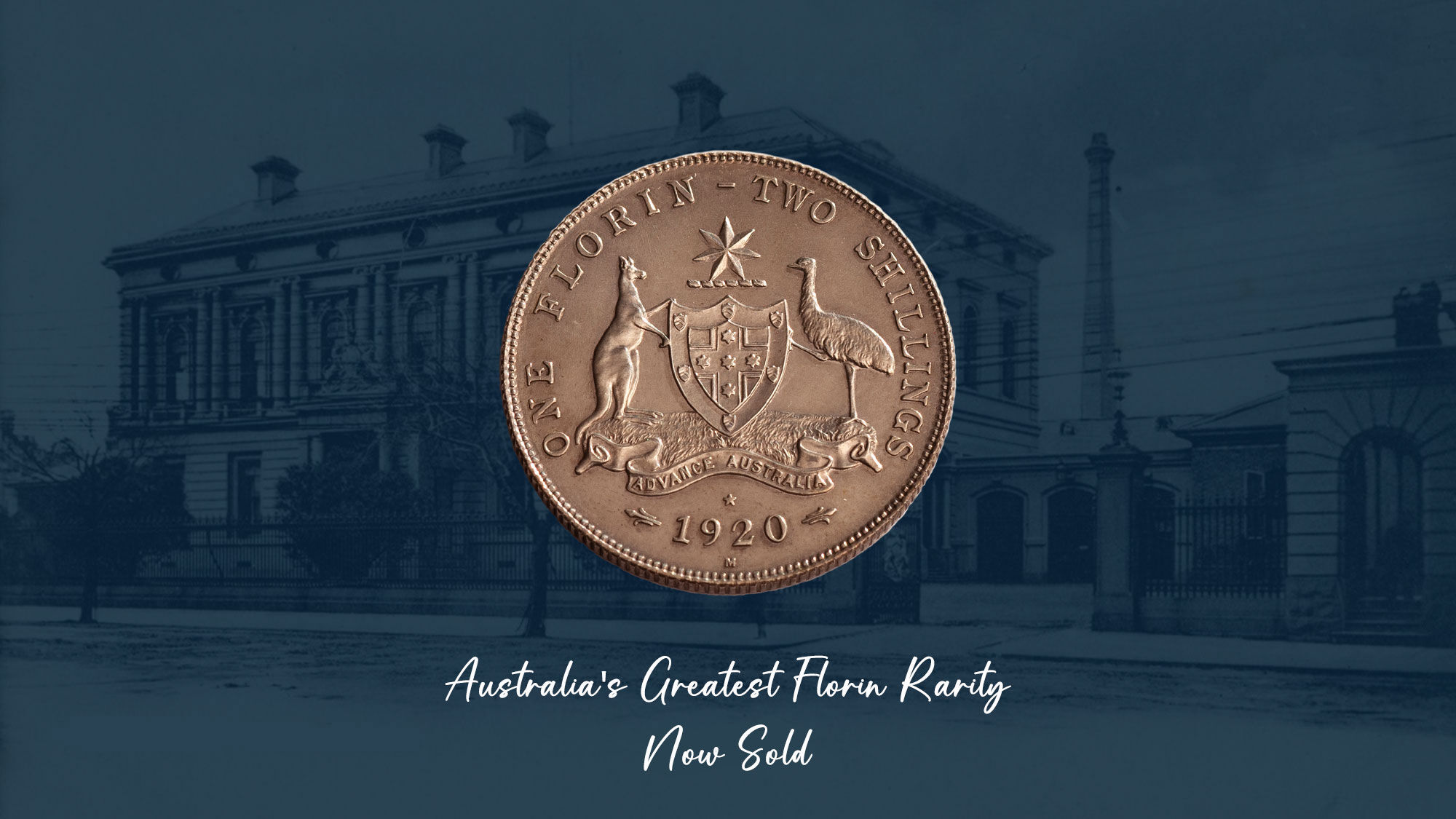
Sale number 24, conducted by Spink Auctions (Australia) in March 1988 was one of the company's most important auctions; a bicentennial celebration of all that was great in the Australian rare coin industry. The breadth and depth of excessively rare, high quality coins was compelling and overwhelming and was an event that is unlikely to be repeated. The auction made history! Out of the glittering array of esteemed rarities, a 1920 Star Florin was chosen to appear on the front cover of the catalogue. This is perhaps the simplest and easiest way of conveying the importance of the 1920 Star Florin to the industry. The coin is Australia's greatest florin rarity - the rarest florin struck for circulation. One of only seven produced at the Melbourne Mint as part of a specially controlled circulation strike, three of which are held by private collectors. And this example, one of the three ex Morton & Eden London, with superb detail and impressive satin surfaces.
Rarity and circumstance have made the 1920 Star Florin one of Australia's greatest coin rarities.
In 1920, no florins were struck for general circulation. Seven florins were however produced at the Melbourne Mint as part of a specially controlled circulation strike and each coin featured a star above the date.
Distribution of these prized pieces was heavily restricted. Influential collector Albert Le Souef, (a Deputy Master of the Melbourne Mint between 1921 and 1926), obtained one of the seven. Three examples were retained by the mint with three heading to London, the Royal Mint the main recipient.
Aside from the Le Souef's coin, a further two have since emerged in the private sector. This coin acquired out of London and the other, sold on behalf of the Melbourne Mint museum through an Australian auction house as part of a fundraising exercise, late in 1988.
As to why no circulation florins were struck in 1920. Wildly fluctuating silver prices posed a serious issue for Governments, such as Australia, that were striking their coins in sterling silver.
The possibility that the intrinsic value of a coin would exceed its face value was a real one. The Government pondered a debasement of its coinage to lower the costs.
As to why the star appeared above the date. The dies were re-worked just in case the Government changed its mind and decided to strike a mintage of circulating florins with a reduced silver content, the star to signify the debasement.
History records that only seven circulating florins were struck in 1920, this coin one of the seven.
It is Australia's greatest florin rarity - the rarest florin struck for circulation.
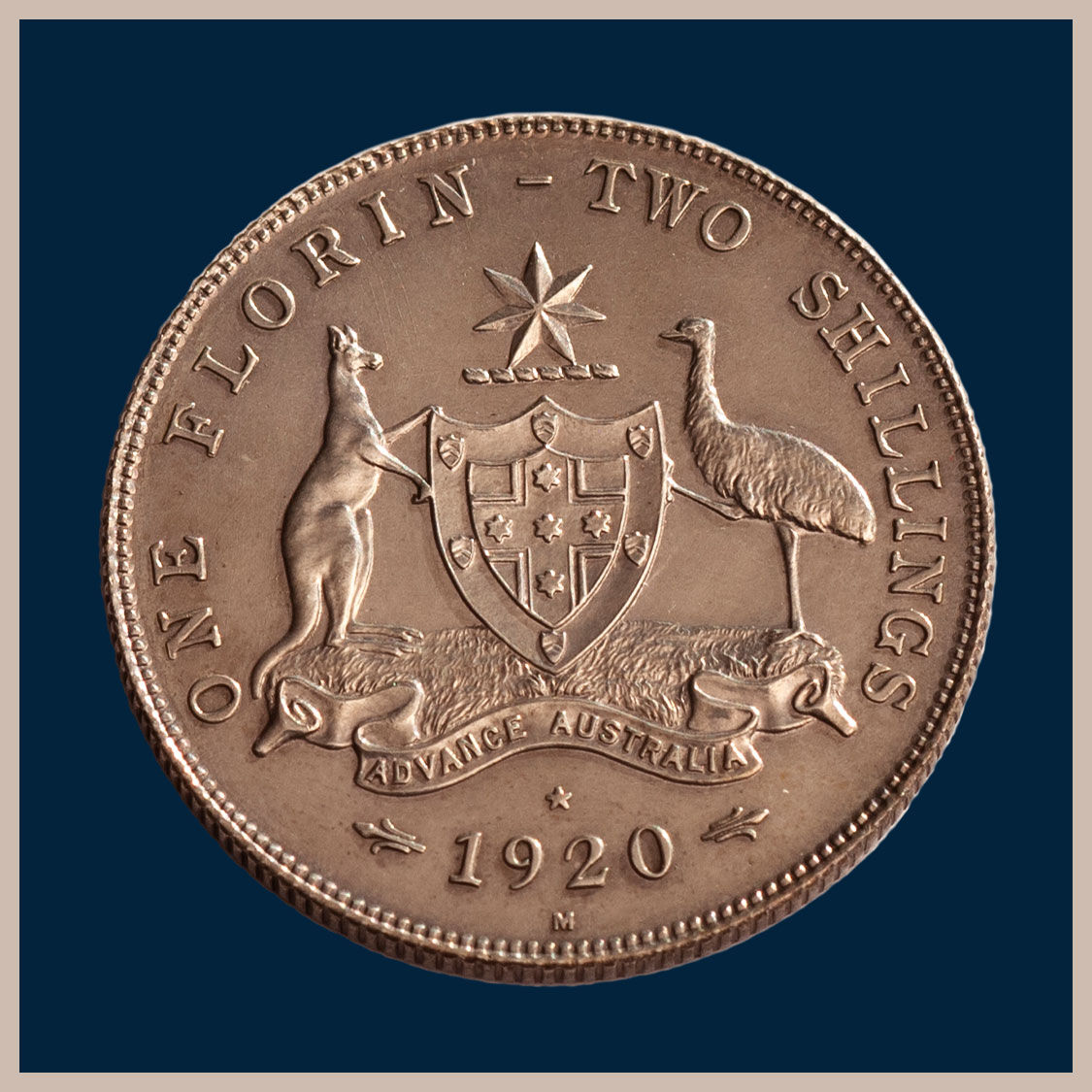
Melbourne Mint
1920 Star Florin
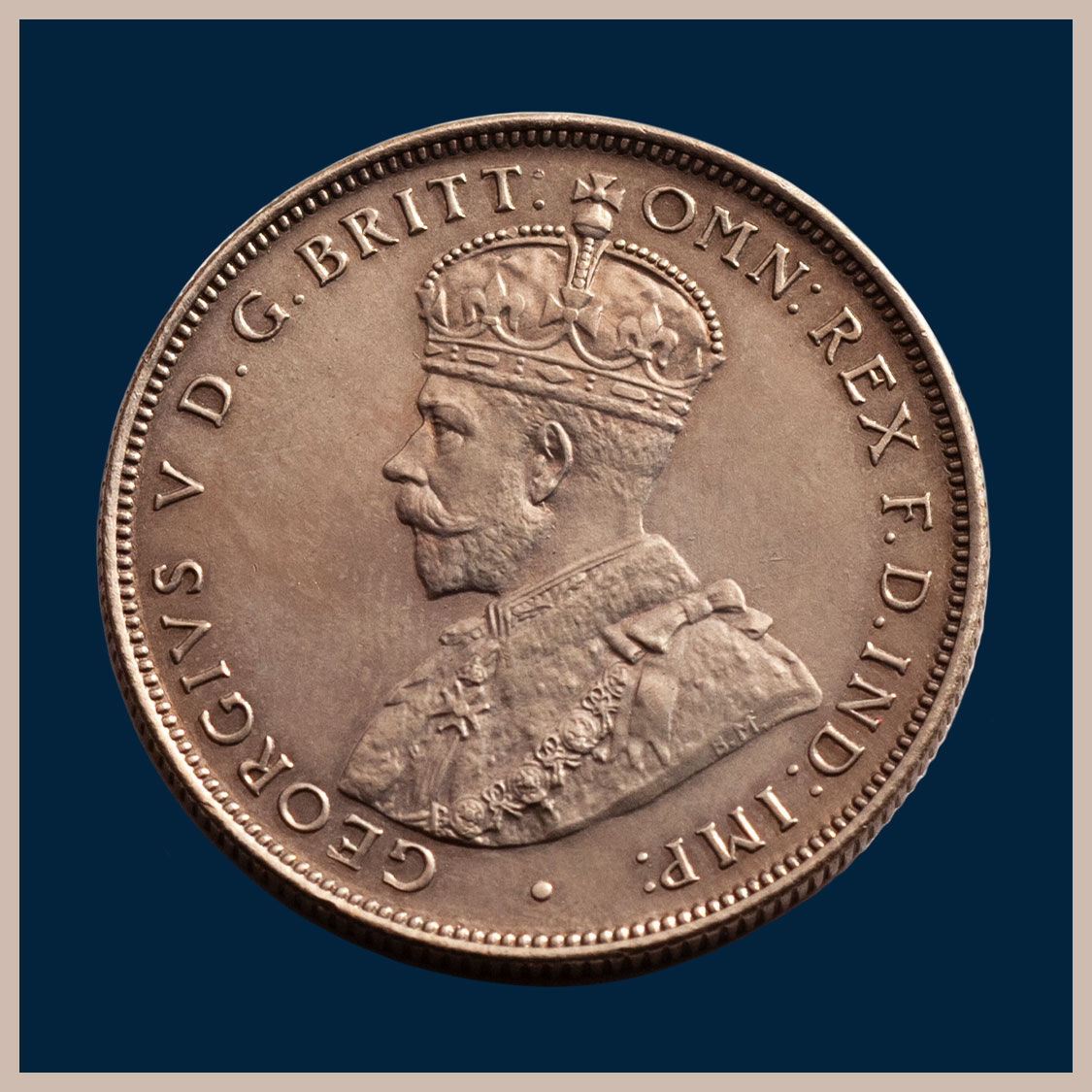
Melbourne Mint
1920 Star Florin
The 1920 florins, showing the star above the date, were prepared as a result of a sudden rise in the price of silver that caused Great Britain and many other countries to reassess the silver content of their respective currencies.
Britain abandoned around 800 years of tradition when it reduced the finesse of its Sterling silver (92.5% pure) coins to an alloy of 50%. Canada also moved from the 92.5% standard down to 80% while British West Africa dropped silver issues completely in 1920 in favour of nickel and nickel brass coins.
Australia considered a similar move but in a gesture which cynical taxpayers of today would find very refreshing, the government wanted the public to be completely aware that the new coins would contain less silver.
According to the former numismatic curator of the Museum of Victoria, John Sharples, the normal order for 1920 dies for the silver coins had been placed in July 1919. At that time the intrinsic worth of the silver was less than the face value of the respective denominations and so no special instructions were issued in respect to the dies being prepared by the Royal Mint in London.
However by March 1920 the situation had changed drastically. According to John it was decided to prepare new dies which featured smaller date figures to differentiate the debased coins from the earlier issues.
Judging from correspondence that came back from London, it would appear that the mint had already started work on the dies or was too busy with other projects. A suggestion came back that a star above the date would not only be more noticeable but could be produced more easily and quickly than reworking the date.
This change was accepted by Melbourne and working dies for 1920 and punches for 1921 were ordered with the star. By August 1920, the Melbourne Mint had received thirty pairs of working dies for the florin and shilling denomination.
By the time everything was in place the silver crisis had passed. The silver price dropped, and neither the reduction or a circulation version of the 1920 florin eventuated.
No 1920 dated florins were issued for circulation. Three other denominations were struck for circulation in 1920, the shilling, sixpence and threepence. None carried the star. On some of the 1920 shillings (and even the sixpences) a small indentation above the date can be seen in high-grade coins, where the star has been removed on the die.
Strangely enough, the 1921 shilling still carried the star, although the silver crisis had long passed.
The excessively rare Melbourne Mint 1920 Star Florin, FDC
Ex Morton & Eden London 2007
Price: $95,000
Sale number 24, conducted by Spink Auctions (Australia) in March 1988 was one of the company's most important auctions; a bicentennial celebration of all that was great in the Australian rare coin industry.
The breadth and depth of excessively rare, high quality coins was compelling and overwhelming and was an event that is unlikely ever to be repeated. The auction made history!
Out of the glittering array of esteemed rarities, a 1920 Star Florin was chosen to appear on the front cover of the catalogue.
This is perhaps the simplest and easiest way of conveying the importance of the 1920 Star Florin to the industry.
The coin is Australia's greatest florin rarity - the rarest florin struck for circulation. One of only seven struck at the Melbourne Mint, three of which are held by private collectors, and this example with superb detail and fabulous satin surfaces.
If further accolades are required. The Numismatic Association of Australia (NAA) issued their inaugural journal in July 1985, a publication that continues to this very day. The first edition featured the 1920 Star Florin on the front cover!
© Copyright: Coinworks