1813 Holey Dollar created from a Spanish Silver Dollar that had been struck at the Potosi Mint, Bolivia, in 1801

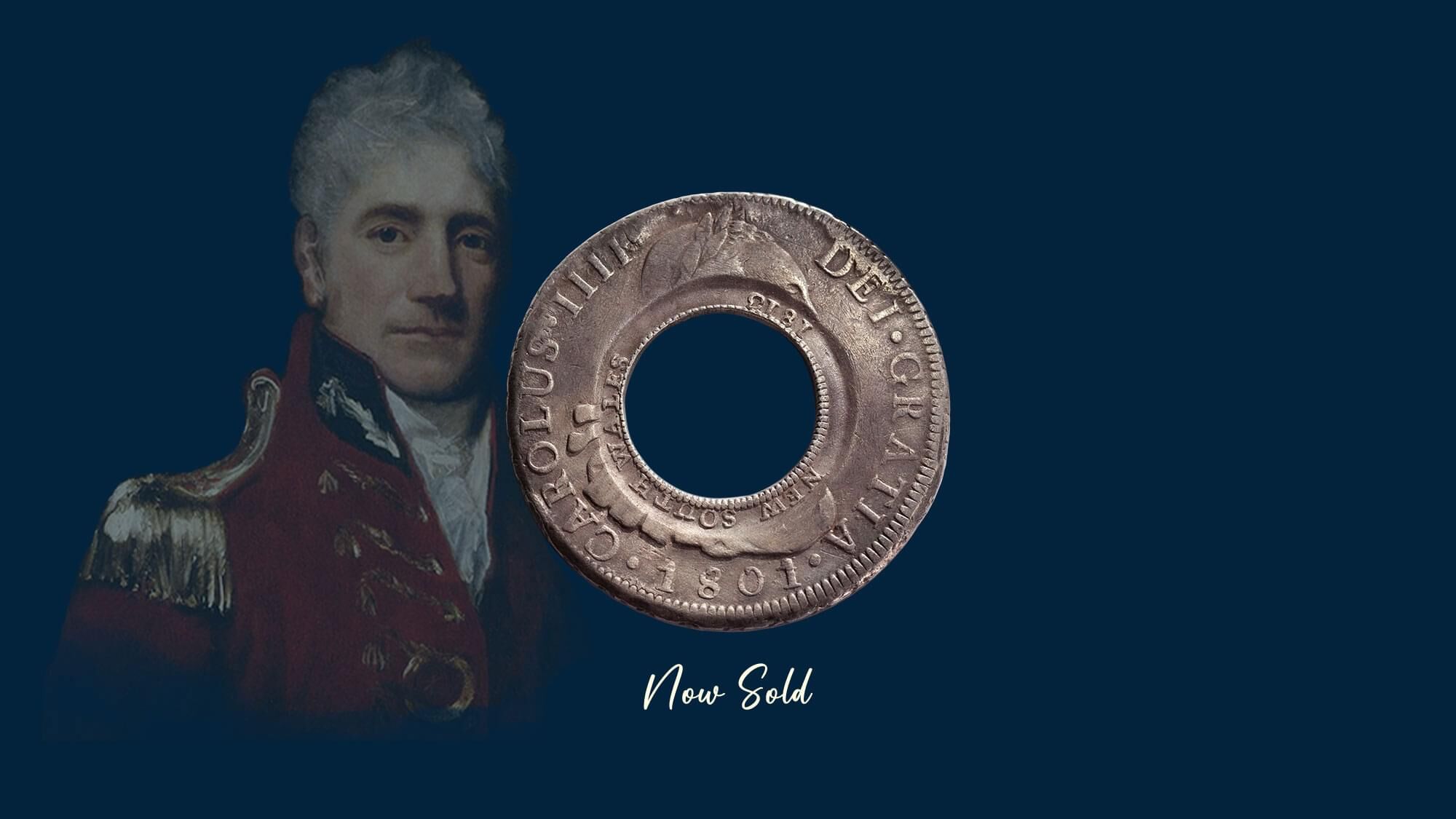
This 1813 Holey Dollar was created from a silver dollar that was minted at the Potosi Mint in Bolivia. 'Potosi' makes it a big deal! This is a mint that is very rarely seen.
Of the two hundred Holey Dollars available to collectors, only fifteen were converted from silver dollars struck at the Potosi Mint in Bolivia. And if you look closely at the fifteen, only five are known in the upper quality levels, of which this coin is one. (By comparison almost one hundred and fifty were created from silver dollars produced at the Mexico Mint, located in the silver-rich colony of Mexico.)
This Holey Dollar is high quality. And this Holey Dollar is extremely rare. Offered in Amsterdam in 1910, it is yet another top Holey Dollar that has returned to its country of origin from Europe over the last century.
A Holey Dollar that is extremely rare quality-wise.
Macquarie's order for Spanish Silver Dollars was fulfilled by the East India Company in Madras, and was not date specific or quality specific. Macquarie simply wanted coins.
An analysis of surviving examples confirms that the majority of Holey Dollars are well worn. The analysis also confirms that a Holey Dollar at Very Fine is a well above average example (refer chart).
We like the price point at which this Holey Dollar is offered. In our view, the range of $100,000 to $200,000 offers excellent value for your investment dollars.
At this price level, a Holey Dollar will look good to the naked eye, relatively untouched. And the major design detail will still be relatively sharp.
We particularly notice with this coin, there are no harsh knocks, gouges or weaknesses in the metal (which so often occurred when Henshall hammered out the hole).
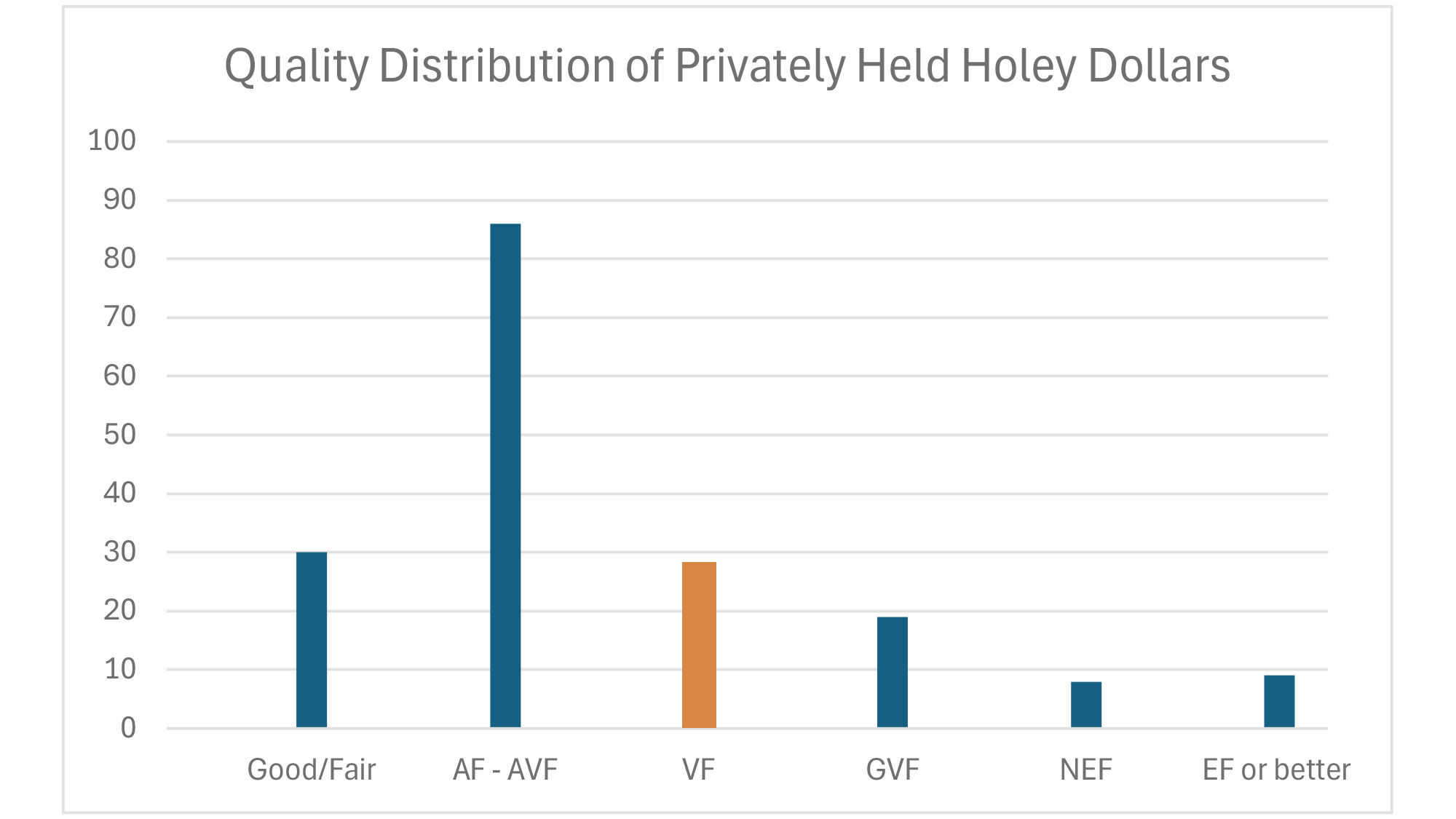
Good/Fair • Akin to a washer
AF - AVF • About Fine to About Very Fine
VF • Very Fine
GVF • Good Very Fine
NEF • Nearly Extremely Fine
EF or better • Extremely Fine to Uncirculated
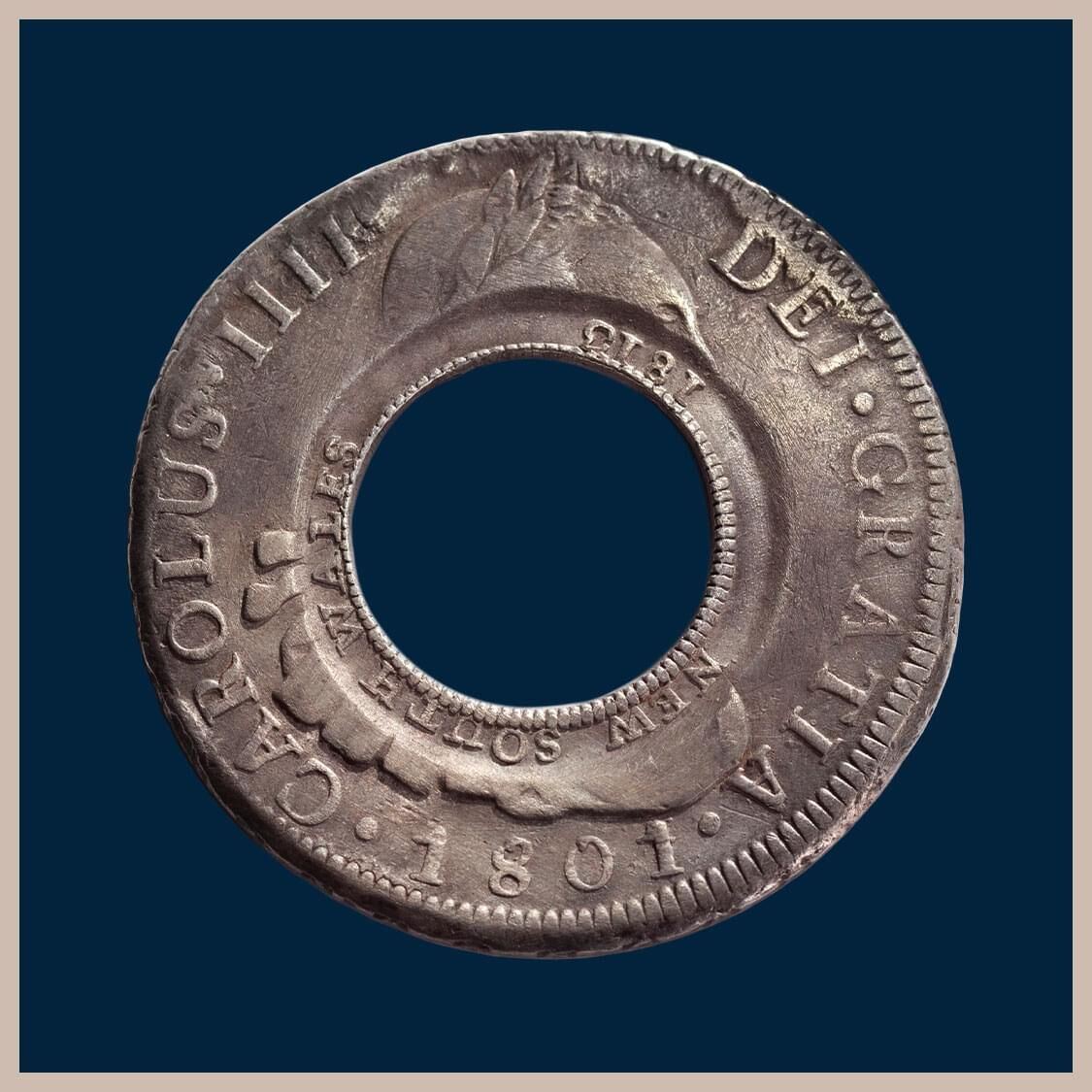
Quality of silver dollar: Very Fine
Quality counter stamps: Good Very Fine
Counter stamp dies: II/4: B/4
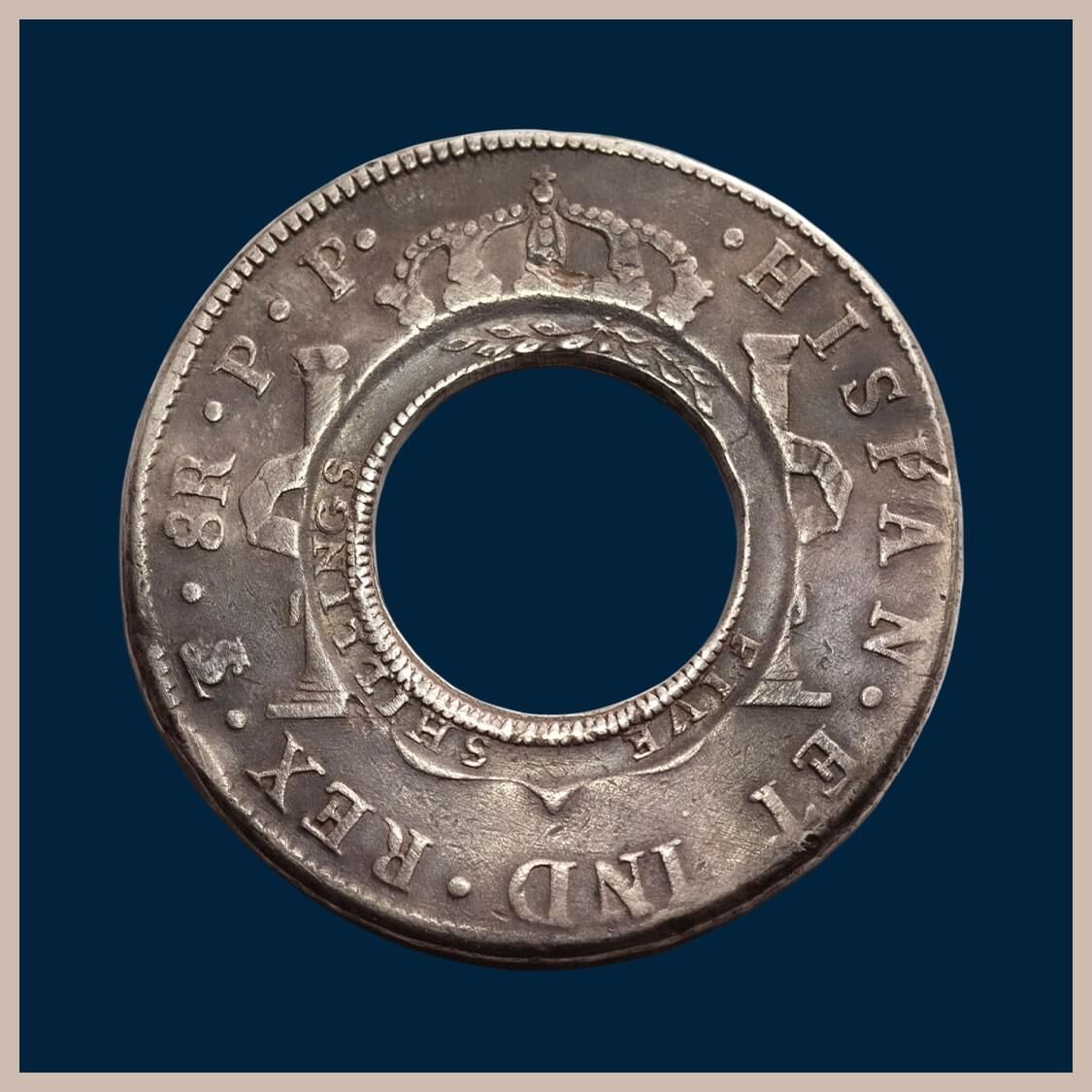
Potosi Mint, identified by the PTS monogram in the legend on the reverse said to be the inspiration of the '$' sign
The defining quality of this Holey Dollar is that it was created from a Spanish Silver Dollar that was struck at the Potosi Mint. The Potosi Mint being the key here.
Macquarie's order for Spanish Silver Dollars was fulfilled by the East India Company in Madras, and was not date or quality specific. No did he care which mint they came from. The dollars were sourced from various mints around the world, each with a different identifying mark. The percentage of Holey Dollars converted from the mints in Mexico, Lima, Potosi and Madrid are noted here.
• Holey Dollars converted from Mexico Mint dollars - 81 per cent
• Holey Dollars converted from Lima Mint dollars - 10 per cent
• Holey Dollars converted from Potosi Mint dollars - 8 per cent.
• Holey Dollars converted from Madrid Mint dollars - 1 per cent
1813 Holey Dollar created from a Spanish Silver Dollar that had been struck at the Potosi Mint, Bolivia, in 1801 (Mira/Noble 1801/5, Spalding 99).
Price: $165,000
Design type: 5 (Charles IV legend and portrait)
Date of the silver dollar: 1801
Reigning monarch: Charles IV (1788 - 1808)
Portrait: Charles IV
Legend: Carolus (Charles) IIII
Mint and mint mark: Potosi Mint, identified by the PTS monogram in the legend on the reverse said to be the inspiration of the '$' sign.
Quality of silver dollar: Very Fine
Quality counter stamps: Good Very Fine
Counter stamp dies: II/4: B/4
More information on the 1813 Holey Dollar
The Holey Dollar is the nation’s first coin, minted in 1813 by order of Governor Lachlan Macquarie. As Macquarie had no access to metal blanks to create his currency, he improvised and acquired 40,000 Spanish Silver Dollars as a substitute.
To make his new coinage unique to the colony, he employed emancipated convict William Henshall to cut a hole in each Spanish dollar. Each holed dollar was then over-stamped on both sides around the edge of the hole. On one side, the date 1813 and the issuing authority of New South Wales. And the other, the value of Five Shillings.
If you look at the entire process, the application of the counter stamps - the issuing authority of New South Wales, the date 1813 and the value of five shillings - is the point at which the 1813 Holey Dollar is created. Prior to that, it was just a Spanish dollar with a hole in it!
The 40,000 Spanish Silver Dollars came with different dates and different design details that reflected the reigning Spanish monarch. And they were sourced from various mints around the world, each mint with a different identifying mark. As the Spanish Dollar was an internationally traded coin, most of them came to Macquarie well used. (We know that because the majority of Holey Dollars are well worn.)
As the Holey Dollar was crafted from a Spanish Silver Dollar (and not a metal blank), assessing its value gives consideration to the original dollar. Its quality. And its rarity, for some are indeed rarer than others.
Consideration must also be given to the extent of circulation once the dollar was converted to an 1813 Holey Dollar by looking at the wear to the counterstamps.
Valuing a Holey Dollar is therefore a multi-faceted process that takes into account seven elements. The date, the monarch and the legend of the original silver dollar. The mint at which the dollar was issued. The quality of that dollar. Now we turn to the counter stamps applied by Henshall. Are they random or precise? And are they worn?
The brief summary above is intended to explain how and why vast price differences can occur with Holey Dollars.
Owning a Holey Dollar is about indulging in an experience, a fusion of history and prestige. And its about savouring the moment.
It has been the inspiration and aspiration of many. Think Macquarie Bank and its logo! Museums, the world over. Historians, collectors, investors, both local and international.
© Copyright: Coinworks