An unprecedented release. Five Holey Dollars offered for sale, across a broad range of prices, each with a respected provenance. A collaborative exercise between Coinworks and Barrie Winsor that has been many, many months in the planning. NOW SOLD.
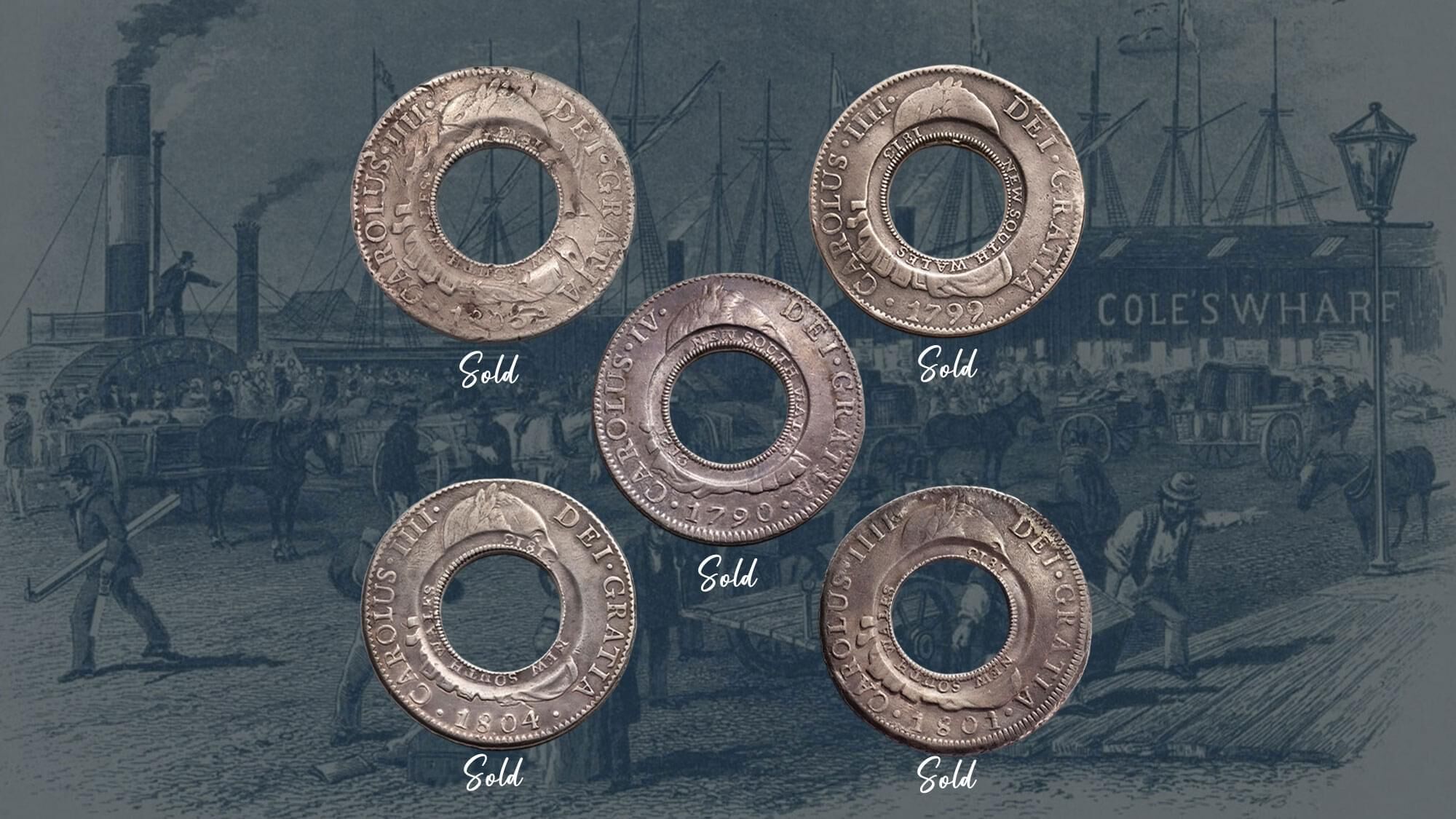
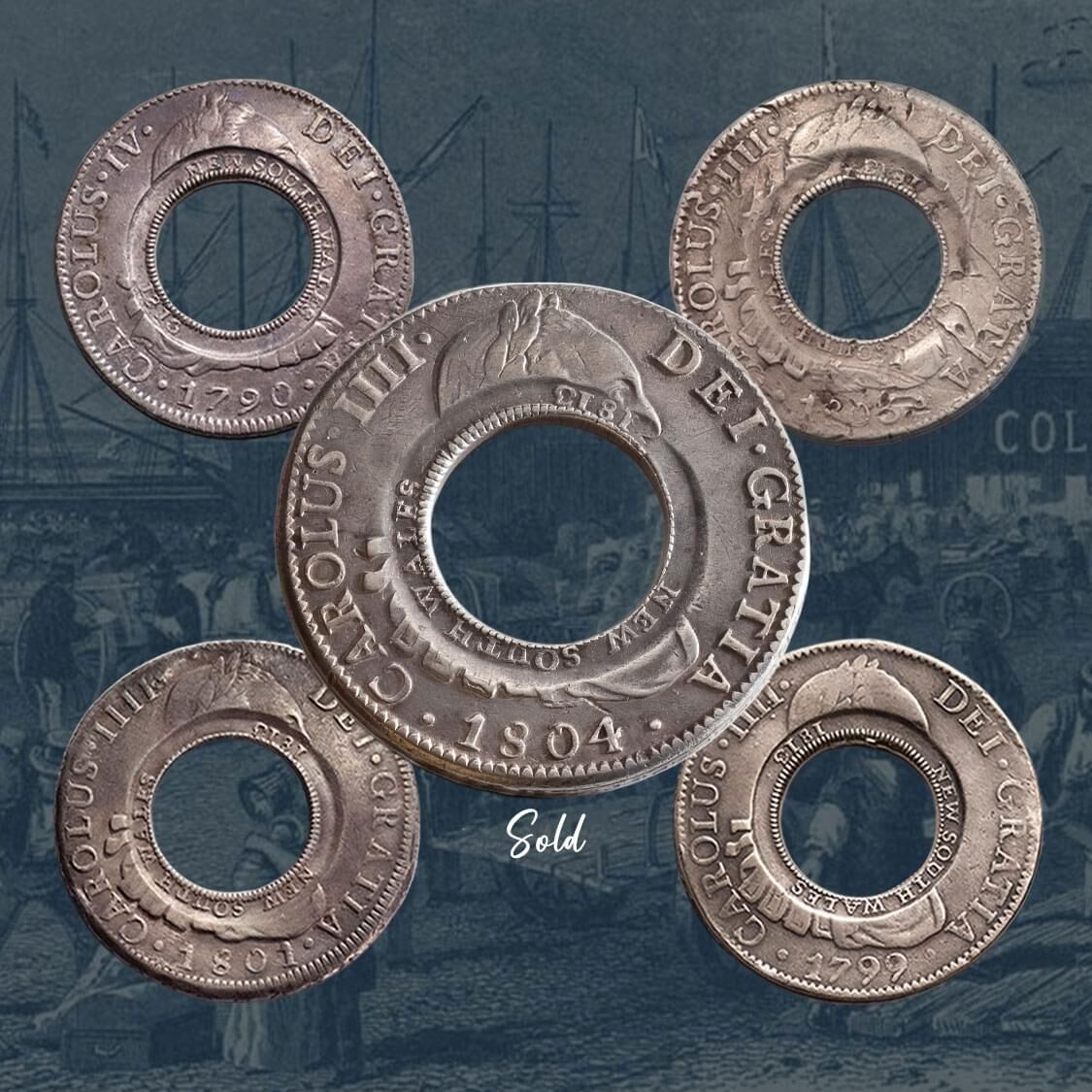
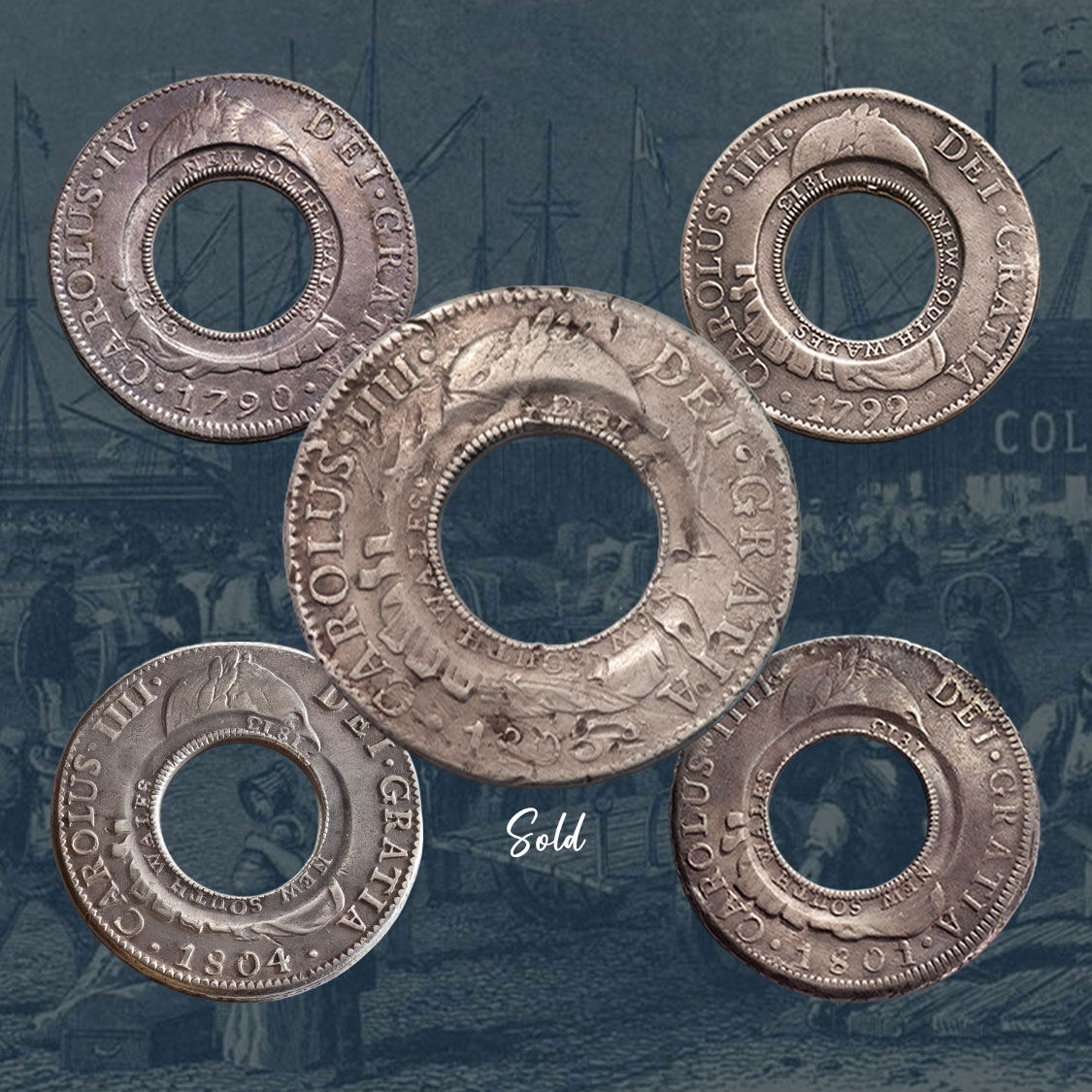
As the nation's first coin the 1813 Holey Dollar is a cultural and financial icon. Classic and enduring, the Holey Dollar will always remain relevant and desirable.
This offer of five Holey Dollars is about seizing the opportunity and selecting a Holey Dollar that is in sync with your aspirations.
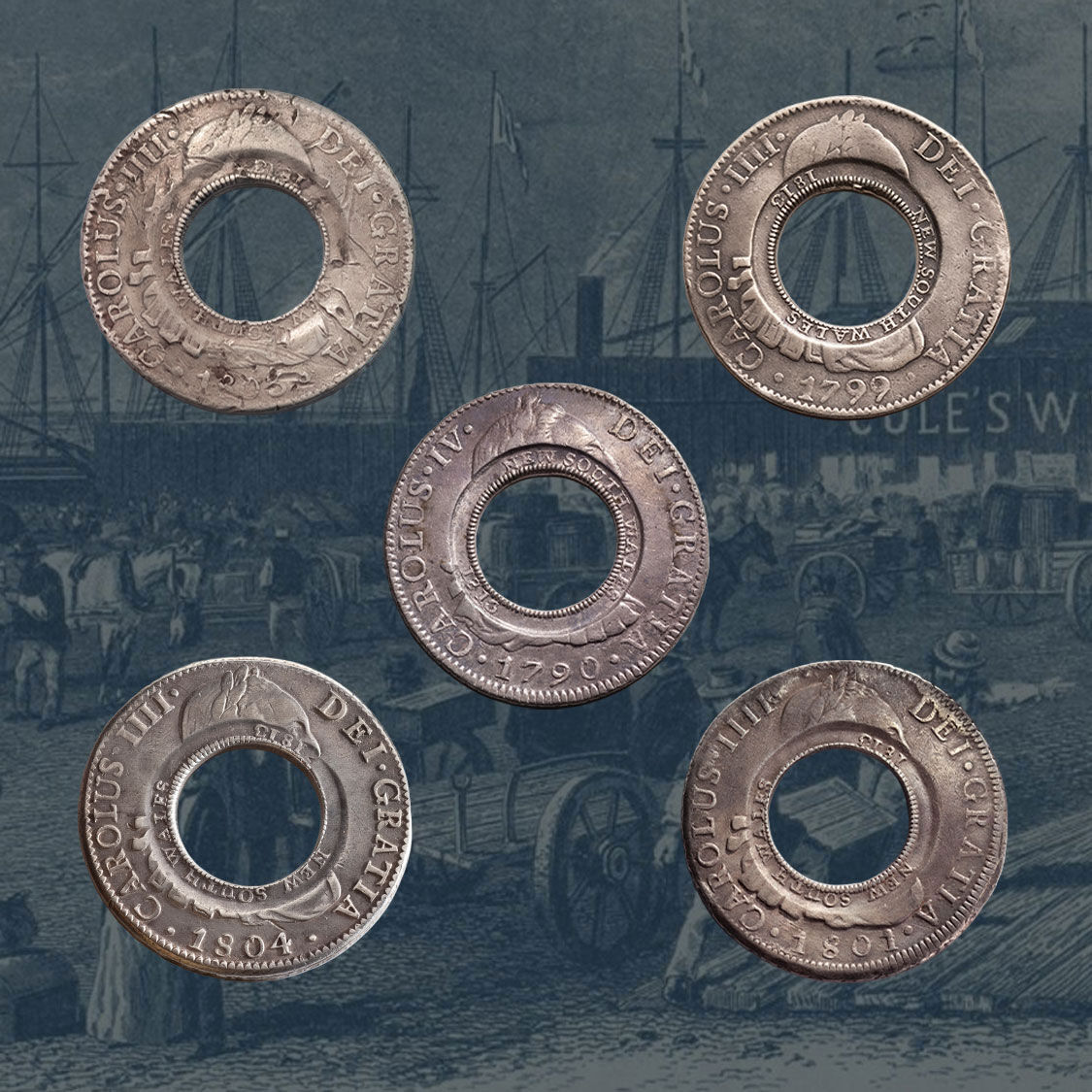
• The first coin is priced below $50,000.
• The second and third coins are priced at $105,000 and $165,000, the latter a rare Potosi Mint Holey Dollar.
• The fourth coin is a high quality Good Very Fine with fabulous eye appeal and is priced at $225,000.
• And the fifth and final coin is an elite piece. The best in its class, it has been exhibited twice in Australia. A rare type of Holey Dollar and this, the finest, priced at $450,000.
As a cultural and financial icon, the appeal of the Holey Dollar extends far beyond numismatics, driven by its immense historical significance and tangible connection to a foundational moment in Australian history ... when our first coinage was created.
And with less than two hundred available to collectors, the Holey Dollar has prestige value and investment value.
We have tapped into an extensive network to put this offer together, our aim to cater to the widest possible collector audience by offering five Holey Dollars at vastly different price points.
To this end we have worked closely with now retired numismatist, Barrie Winsor.
Its no secret in the industry that Barrie Winsor has been a guiding light to many coin professionals. And a mentor to prominent collectors such as Philip Spalding and Tom Hadley of Quartermaster fame, both relying on Winsor to source material.
It has been a pleasure rekindling our numismatic relationship with Barrie, working together to present this extraordinary offer. Both of us share a passion for Holey Dollars and an even stronger passion for the industry.
In a befitting presentation, each Holey Dollar will be housed in a bespoke case made from Australian timbers, designed and crafted by Anton Gerner. And an individual catalogue will be prepared for each coin, with photographs and detailed information.
Well priced.
Price: $35,000
SOLD
Superb counterstamps.
Price: $105,000
SOLD
Rare Potosi Mint.
Price: $165,000
SOLD
Outstanding quality.
Price: $225,000
SOLD
Best in its class!
Price: $450,000
SOLD
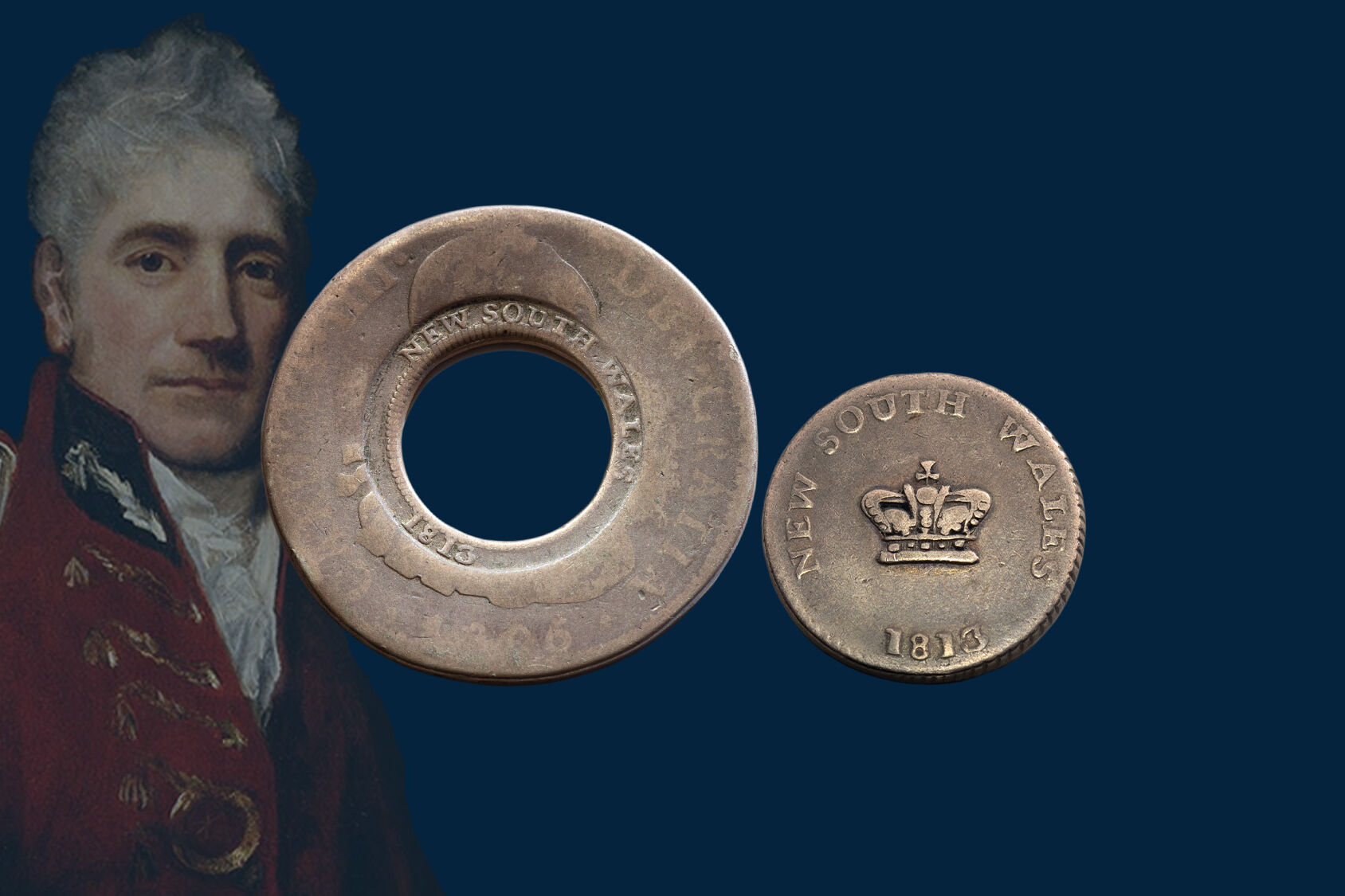
The Holey Dollar is the nation’s first coin, minted in 1813 by order of Governor Lachlan Macquarie. As Macquarie had no access to metal blanks to create his currency, he improvised and acquired 40,000 Spanish Silver Dollars as a substitute.
To make his new coinage unique to the colony, he employed emancipated convict William Henshall to cut a hole in each Spanish dollar. Each holed dollar was then over-stamped on both sides around the edge of the hole. On one side, the date 1813 and the issuing authority of New South Wales. And the other, the value of Five Shillings.
If you look at the entire process, the application of the counter stamps - the issuing authority of New South Wales, the date 1813 and the value of five shillings - is the point at which the 1813 Holey Dollar is created. Prior to that, it was just a Spanish dollar with a hole in it!
The 40,000 Spanish Silver Dollars came with different dates and different design details that reflected the reigning Spanish monarch. And they were sourced from various mints around the world, each mint with a different identifying mark. As the Spanish Dollar was an internationally traded coin, most of them came to Macquarie well used. (We know that because the majority of Holey Dollars are well worn.)
As the Holey Dollar was crafted from a Spanish Silver Dollar (and not a metal blank), assessing its value gives consideration to the original dollar. Its quality. And its rarity, for some are indeed rarer than others.
Consideration must also be given to the extent of circulation once the dollar was converted to an 1813 Holey Dollar by looking at the wear to the counterstamps.
Valuing a Holey Dollar is therefore a multi-faceted process that takes into account seven elements. The date, the monarch and the legend of the original silver dollar. The mint at which the dollar was issued. The quality of that dollar. Now we turn to the counter stamps applied by Henshall. Are they random or precise? And are they worn?
The brief summary above is intended to explain how and why vast price differences can occur with Holey Dollars. Why one can be priced at $35,000 and the other at $450,000.
Owning a Holey Dollar is about indulging in an experience, a fusion of history and prestige. And its about savouring the moment.
It has been the inspiration and aspiration of many. Think Macquarie Bank and its logo! Museums, the world over. Historians, collectors, investors, both local and international.
This offer is all about seizing the opportunity and selecting a Holey Dollar that is in sync with your aspirations.
Contact us if you would like to receive advice of upcoming Holey Dollar inventory.
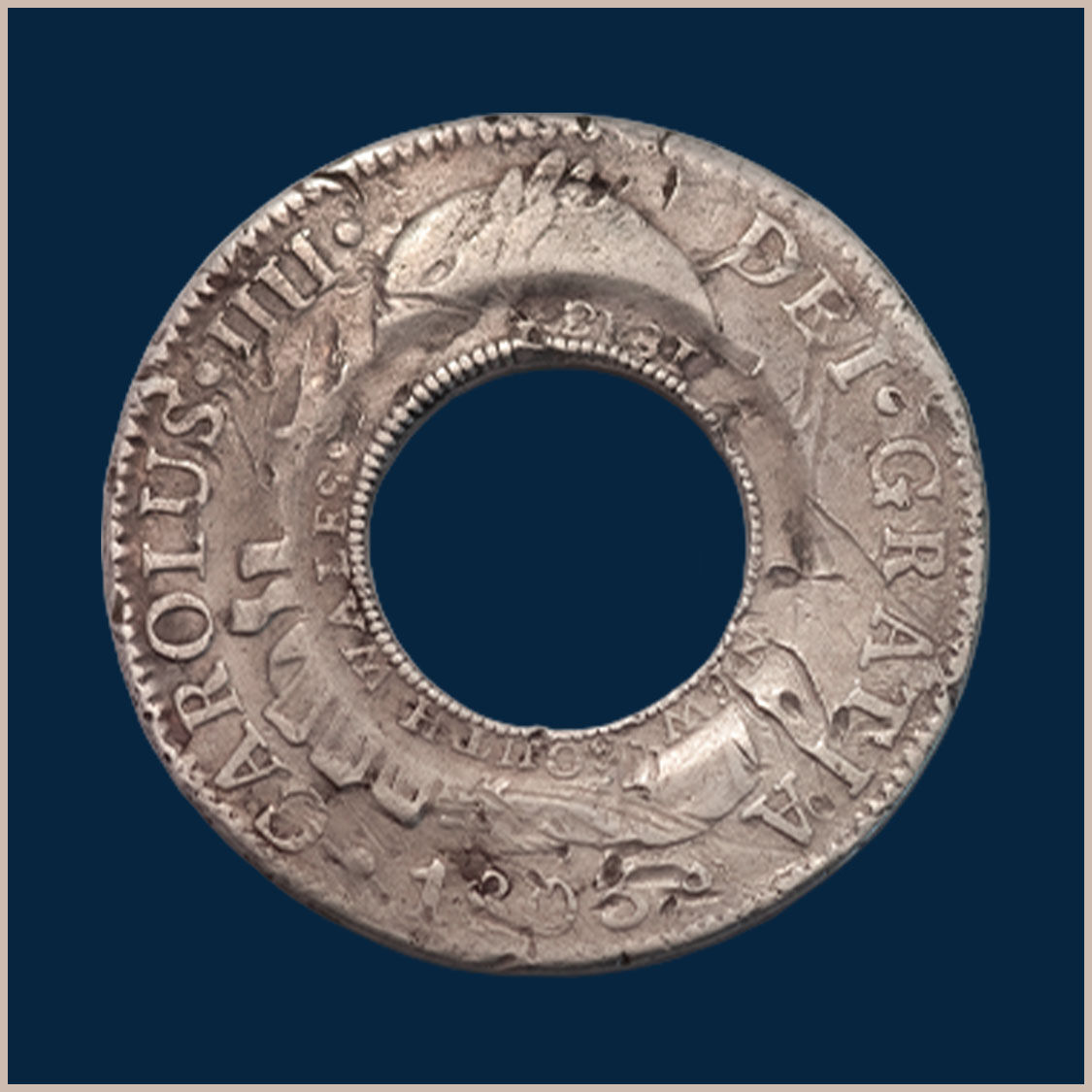
1813 Holey Dollar created from a Spanish Silver Dollar that had been struck at the Mexico Mint in 1803 (Mira/Noble 1803/7, Spalding 113).
Price: $35,000
SOLD
A Holey Dollar that has seen harsh treatment but still retains the important design details including the date, legend, mint mark. The counter stamps are also clear, the 'H' for Henshall visible. Ex Max Stern & Co (1971), then to Philip Spalding.
Design type: 5 (Charles IV legend and portrait)
Date of the silver dollar: 1803
Reigning monarch: Charles IV (1788 - 1808)
Portrait: Charles IV
Legend: Carolus (Charles) IIII
Mint and mint mark: Mexico Mint identified by the 'M' with a small circle above it in the legend on the reverse.
Quality of silver dollar : Fine
Quality counter stamps: About Very Fine
Counter stamp dies: II/4: B/4
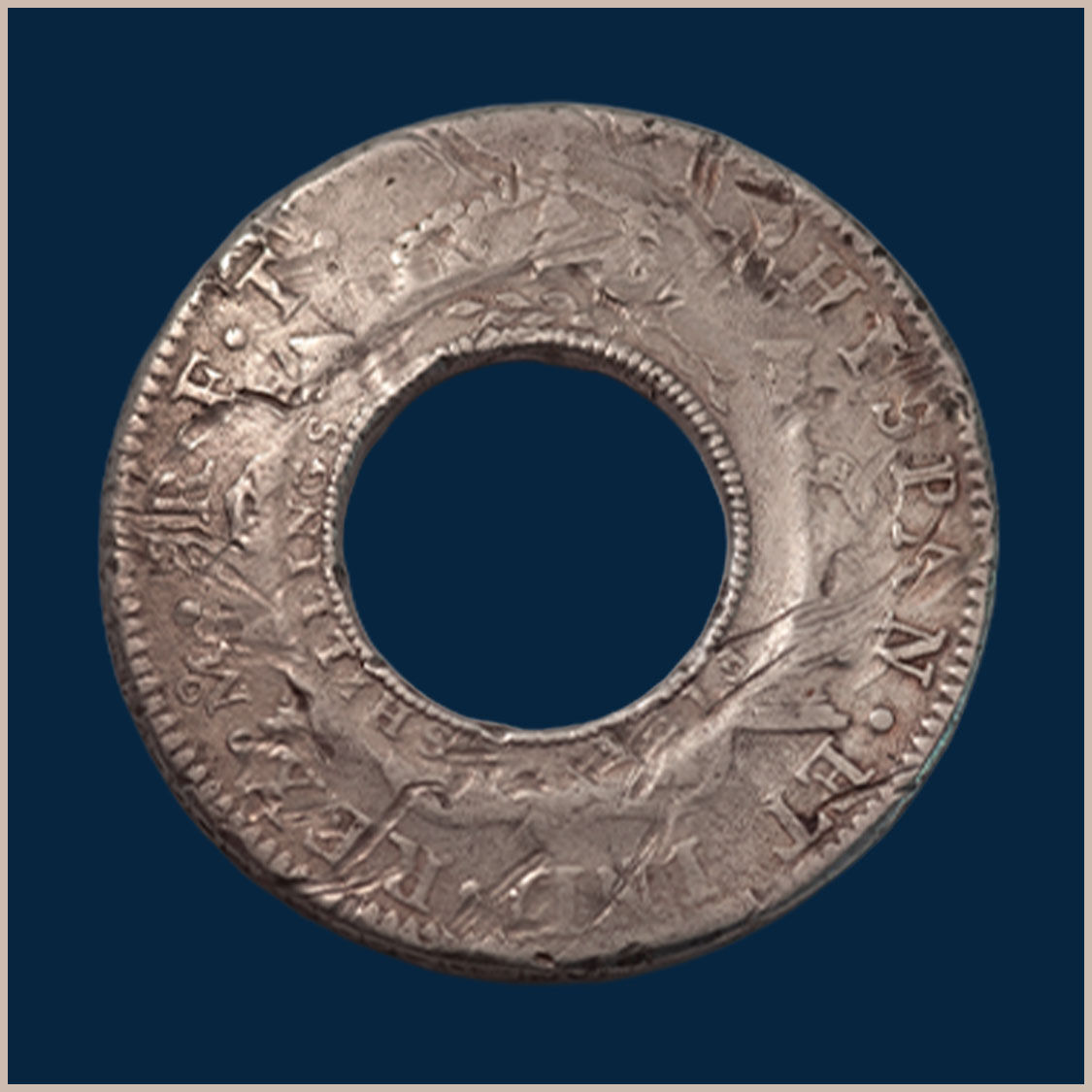
1813 Holey Dollar created from a Spanish Silver Dollar that had been struck at the Mexico Mint in 1803 (Mira/Noble 1803/7, Spalding 113).
Price: $35,000
SOLD
A Holey Dollar that has seen harsh treatment but still retains the important design details including the date, legend, mint mark. The counter stamps are also clear, the 'H' for Henshall visible. Ex Max Stern & Co (1971), then to Philip Spalding.
Design type: 5 (Charles IV legend and portrait)
Date of the silver dollar: 1803
Reigning monarch: Charles IV (1788 - 1808)
Portrait: Charles IV
Legend: Carolus (Charles) IIII
Mint and mint mark: Mexico Mint identified by the 'M' with a small circle above it in the legend on the reverse.
Quality of silver dollar : Fine
Quality counter stamps: About Very Fine
Counter stamp dies: II/4: B/4
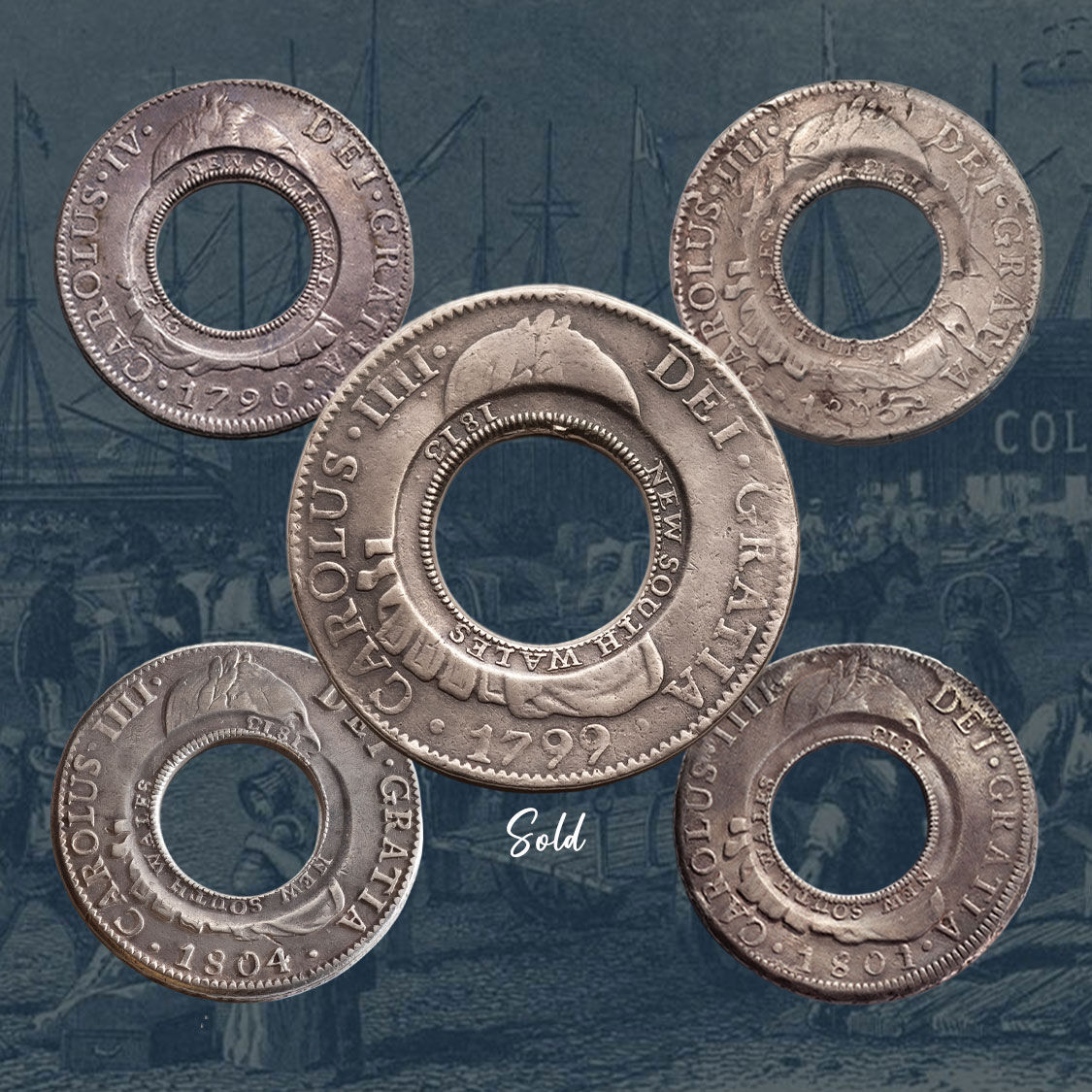
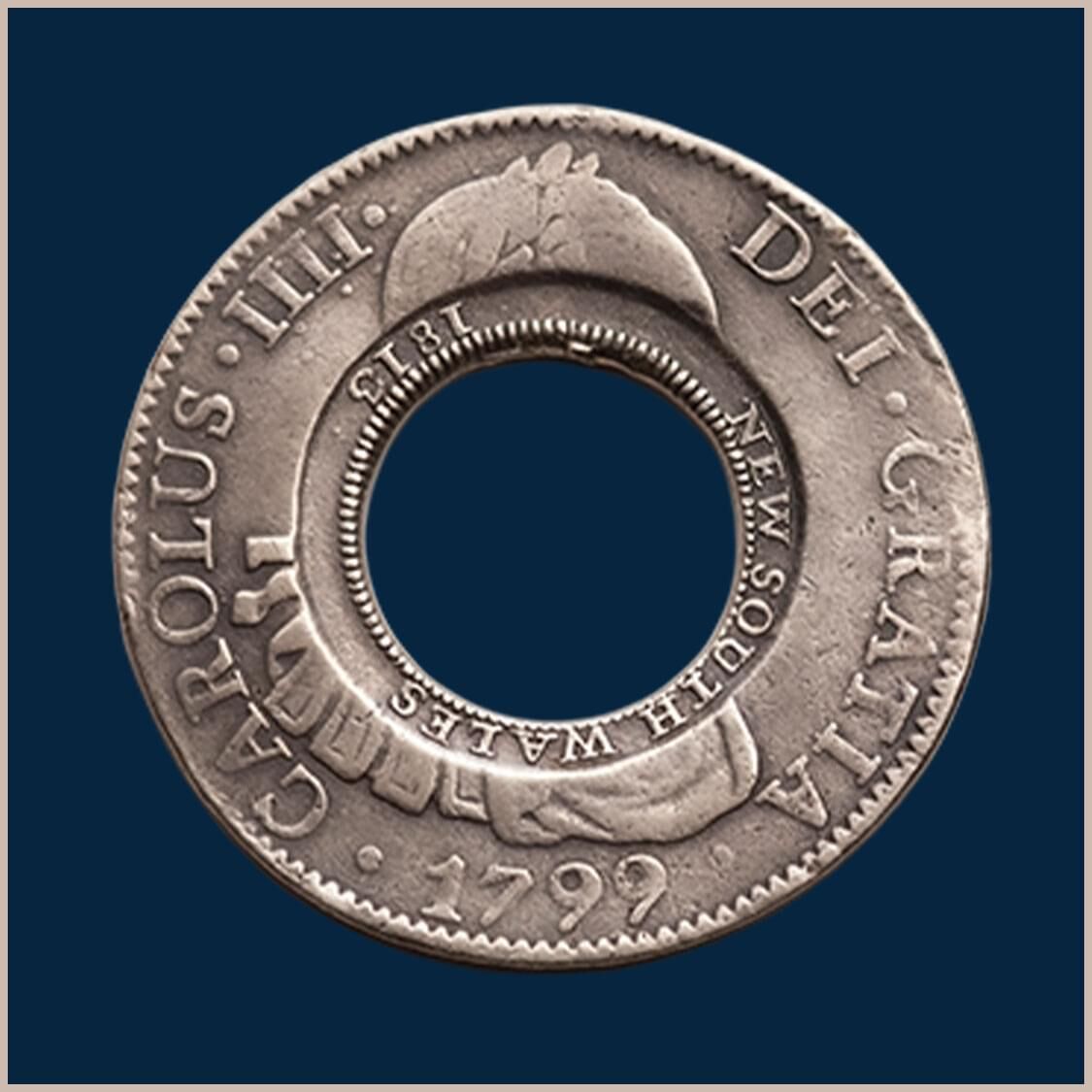
1813 Holey Dollar created from a Spanish Silver Dollar that had been struck at the Mexico Mint in 1799, the year that Napoleon rose to power. (Mira/Noble 1799/4, Spalding 78)
Price: $105,000
SOLD
The counter stamps of this Holey Dollar are outstanding. New South Wales and 1813 are well defined. And the Five Shillings with the fleur de lis, twigs and 'H' for Henshall, crisp. The original dollar design details are also clear. And we like the date '1799', the year that Napoleon rose to power. Ex Ron Stewart and Philip Spalding, both revered collectors.
Design type: 5 (Charles IV legend and portrait)
Date of the silver dollar: 1799
Reigning monarch: Charles IV (1788 - 1808)
Portrait: Charles IV
Legend: Carolus (Charles) IIII
Mint and mint mark: Mexico Mint identified by the 'M' with a small circle above it in the legend on the reverse.
Quality of silver dollar: About Very Fine
Quality counter stamps: About Extremely Fine
Counter stamp dies: I/2: A/5
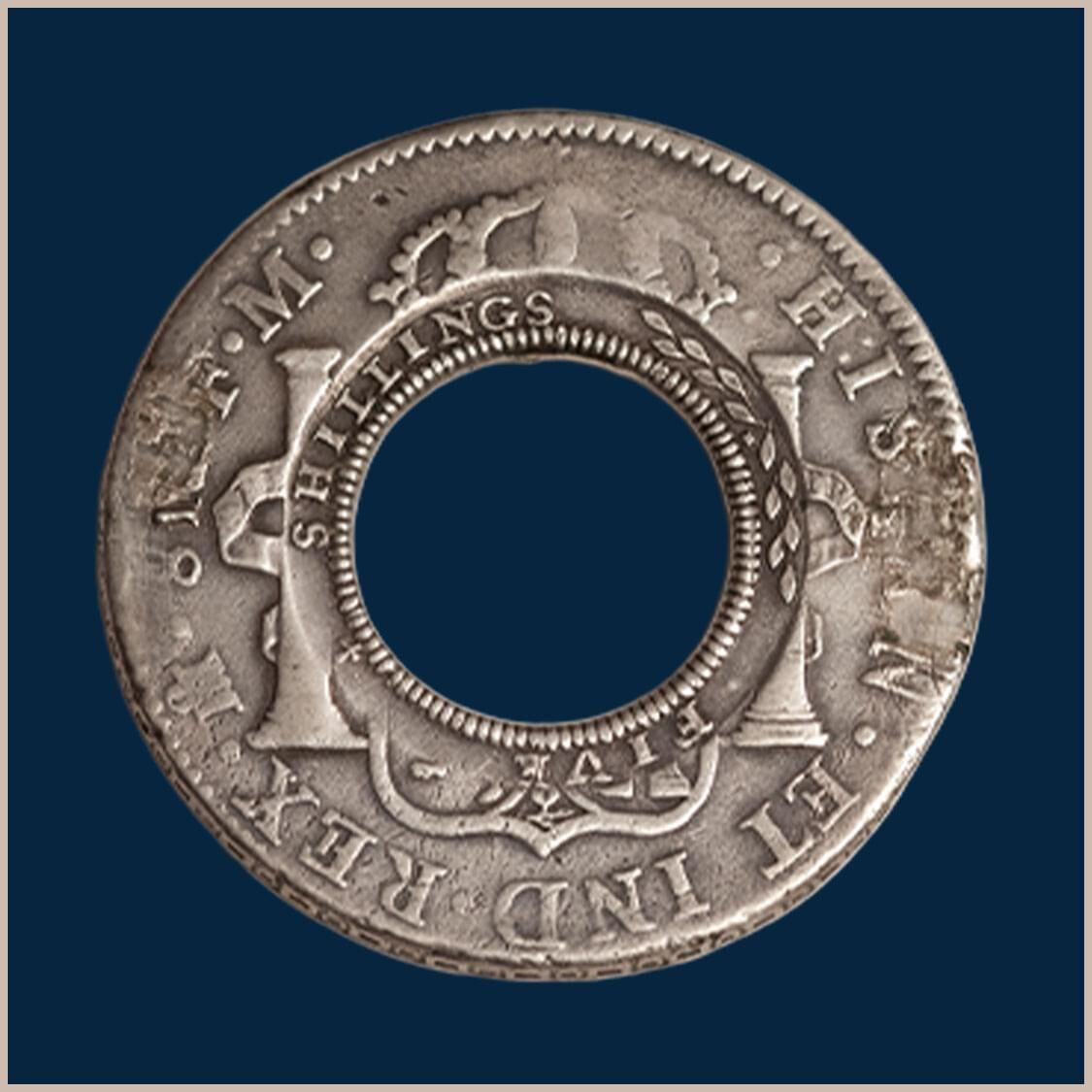
1813 Holey Dollar created from a Spanish Silver Dollar that had been struck at the Mexico Mint in 1799, the year Napoleon rose to power. (Mira/Noble 1799/4, Spalding 78)
Price: $105,000
SOLD
The counter stamps of this Holey Dollar are outstanding. New South Wales and 1813 are well defined. And the Five Shillings with the fleur de lis, twigs and 'H' for Henshall, crisp. The original dollar design details are also clear. And we like the date '1799', the year that Napoleon rose to power. Ex Ron Stewart and Philip Spalding, both revered collectors.
Design type: 5 (Charles IV legend and portrait)
Date of the silver dollar: 1799
Reigning monarch: Charles IV (1788 - 1808)
Portrait: Charles IV
Legend: Carolus (Charles) IIII
Mint and mint mark: Mexico Mint identified by the 'M' with a small circle above it in the legend on the reverse.
Quality of silver dollar: About Very Fine
Quality counter stamps: About Extremely Fine
Counter stamp dies: I/2: A/5
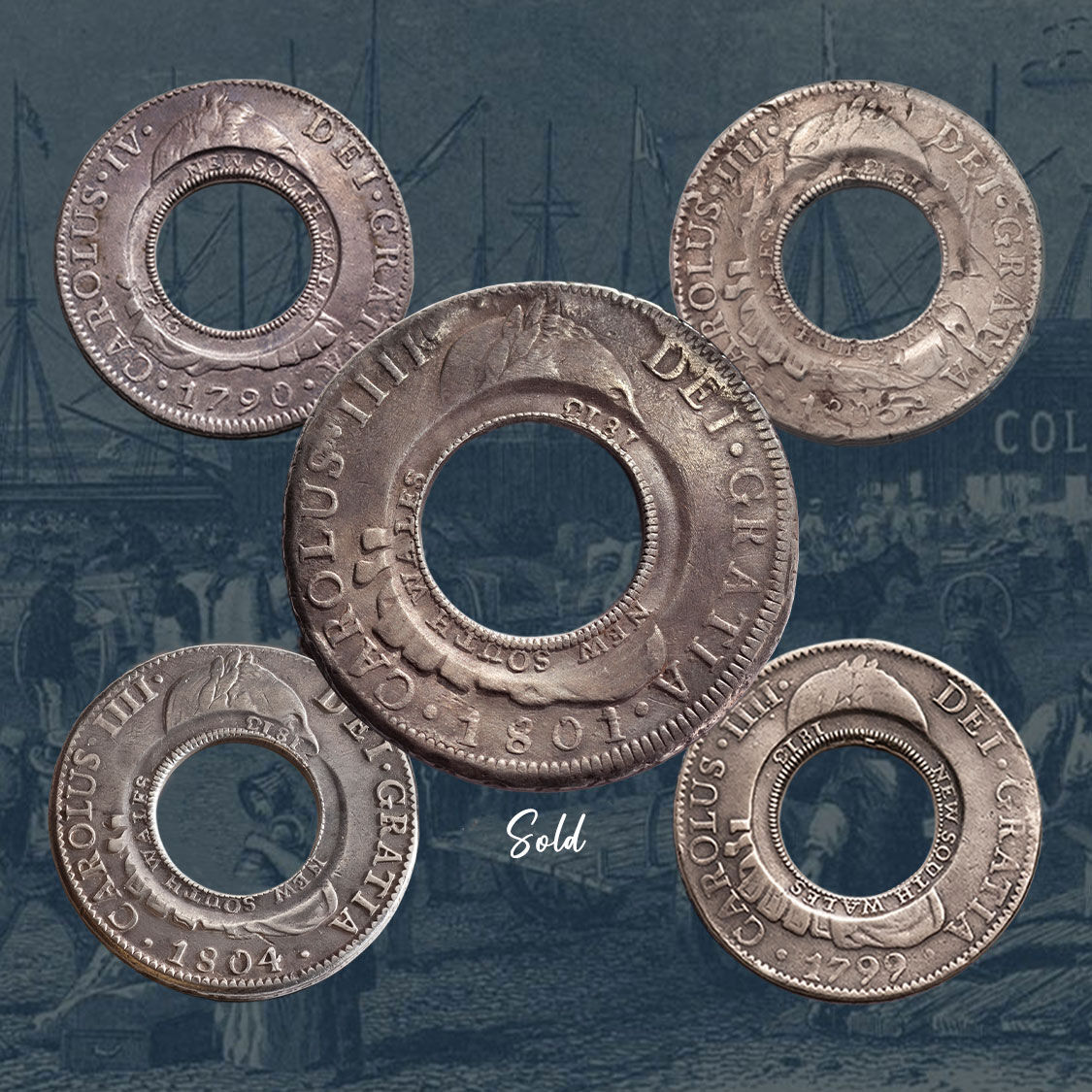
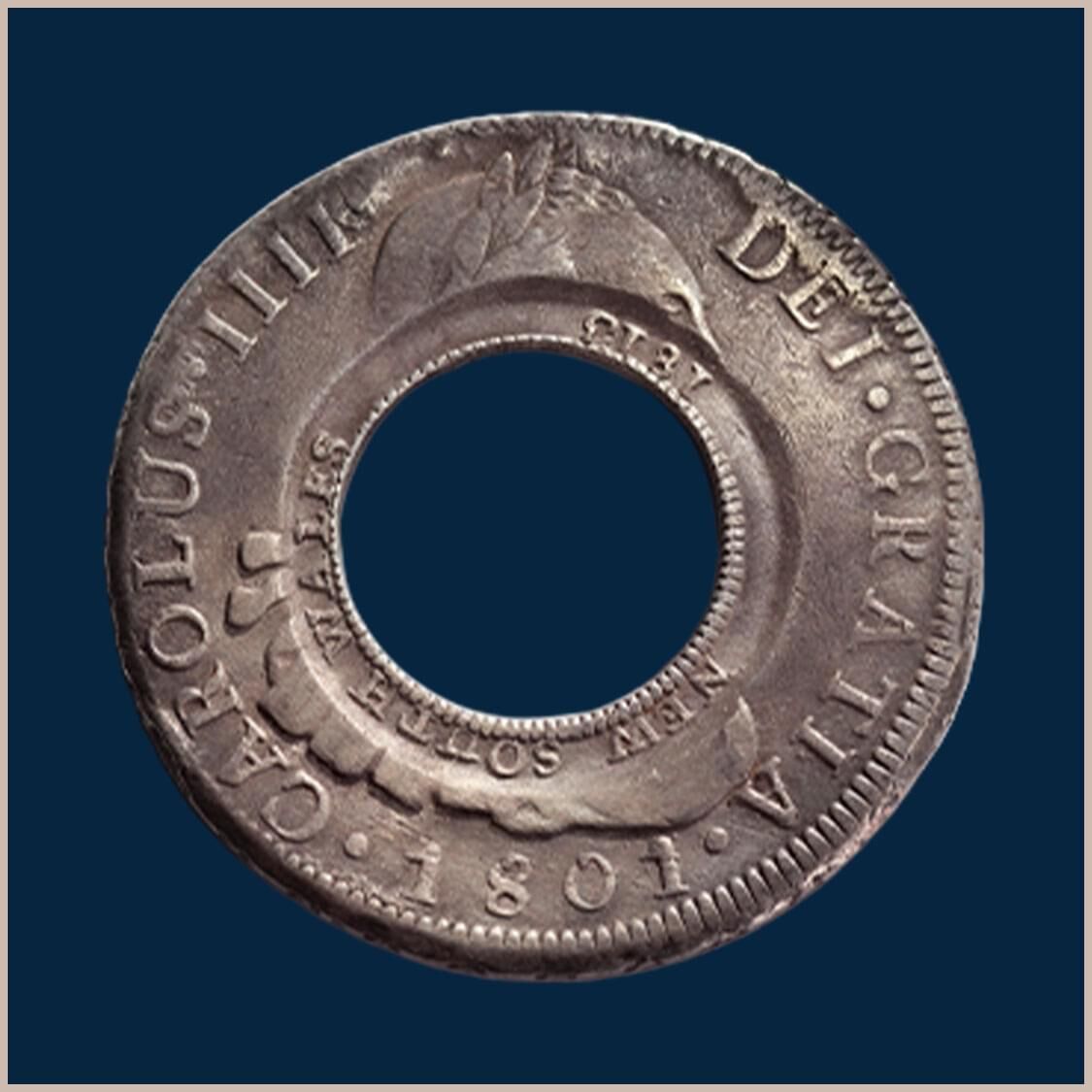
1813 Holey Dollar created from a Spanish Silver Dollar that had been struck at the Potosi Mint, Bolivia, in 1801 (Mira/Noble 1801/5, Spalding 99).
Price: $165,000
SOLD
This Holey Dollar is defined by the rare Potosi Mint and the 'Jacques Schulman' provenance. Of the two hundred Holey Dollars held by private collectors, perhaps fifteen have ties to the Potosi Mint which is why we say that while all Holey Dollars are rare, some types are far rarer than others. Yet another high quality Holey Dollar that surfaced more than a century ago in Europe, ex Jacques Schulman Sale, Amsterdam, 23 May 1910 (lot 2117).
Design type: 5 (Charles IV legend and portrait)
Date of the silver dollar: 1801
Reigning monarch: Charles IV (1788 - 1808)
Portrait: Charles IV
Legend: Carolus (Charles) IIII
Mint and mint mark: Potosi Mint, identified by the PTS monogram in the legend on the reverse said to be the inspiration of the '$' sign.
Quality of silver dollar: Very Fine
Quality counter stamps: Good Very Fine
Counter stamp dies: II/4: B/4
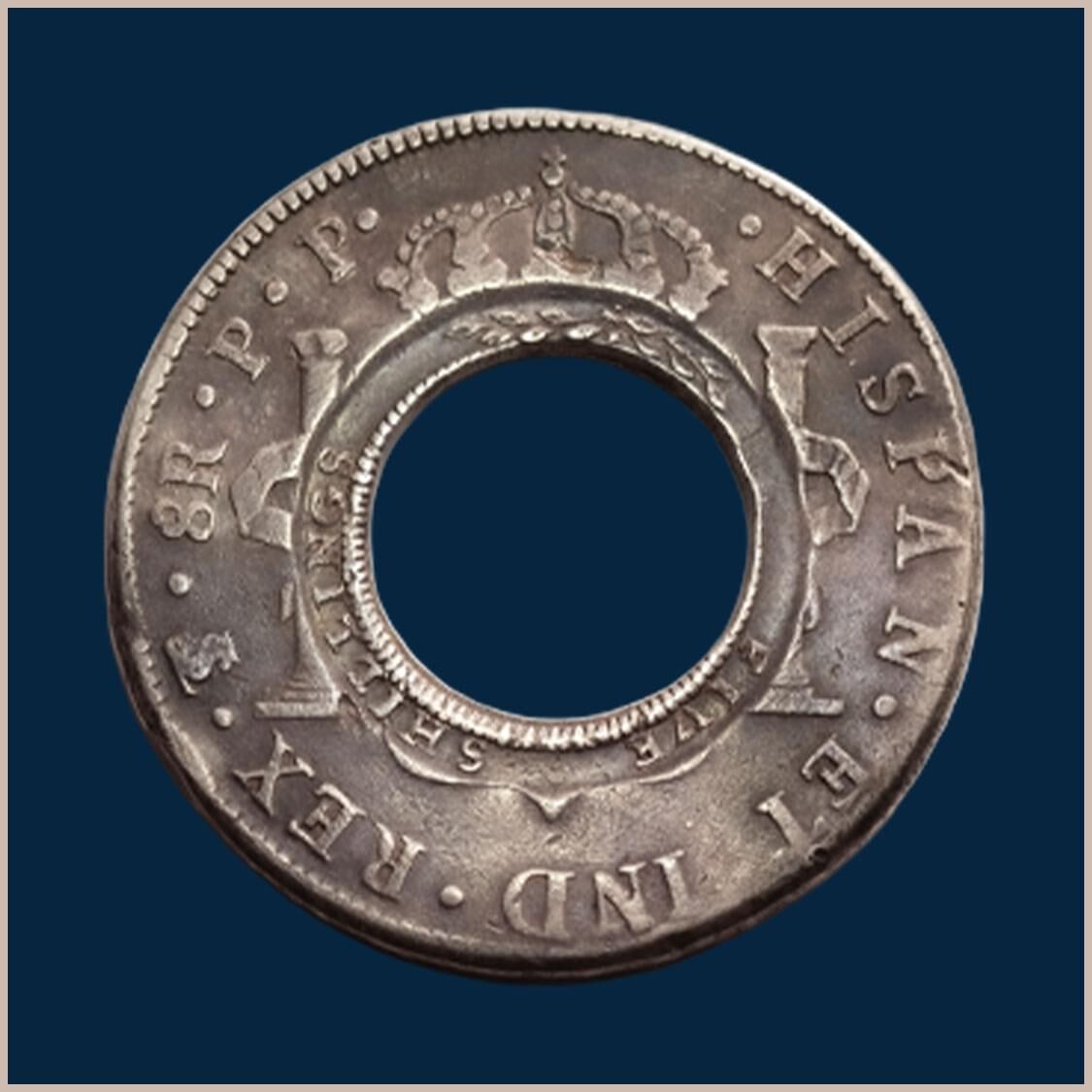
1813 Holey Dollar created from a Spanish Silver Dollar that had been struck at the Potosi Mint, Bolivia, in 1801 (Mira/Noble 1801/5, Spalding 99).
Price: $165,000
SOLD
This Holey Dollar is defined by the rare Potosi Mint and the 'Jacques Schulman' provenance. Of the two hundred Holey Dollars held by private collectors, perhaps fifteen have ties to the Potosi Mint which is why we say that while all Holey Dollars are rare, some types are far rarer than others. Yet another high quality Holey Dollar that surfaced more than a century ago in Europe, ex Jacques Schulman Sale, Amsterdam, 23 May 1910 (lot 2117).
Design type: 5 (Charles IV legend and portrait)
Date of the silver dollar: 1801
Reigning monarch: Charles IV (1788 - 1808)
Portrait: Charles IV
Legend: Carolus (Charles) IIII
Mint and mint mark: Potosi Mint, identified by the PTS monogram in the legend on the reverse said to be the inspiration of the '$' sign.
Quality of silver dollar: Very Fine
Quality counter stamps: Good Very Fine
Counter stamp dies: I/4: B/4
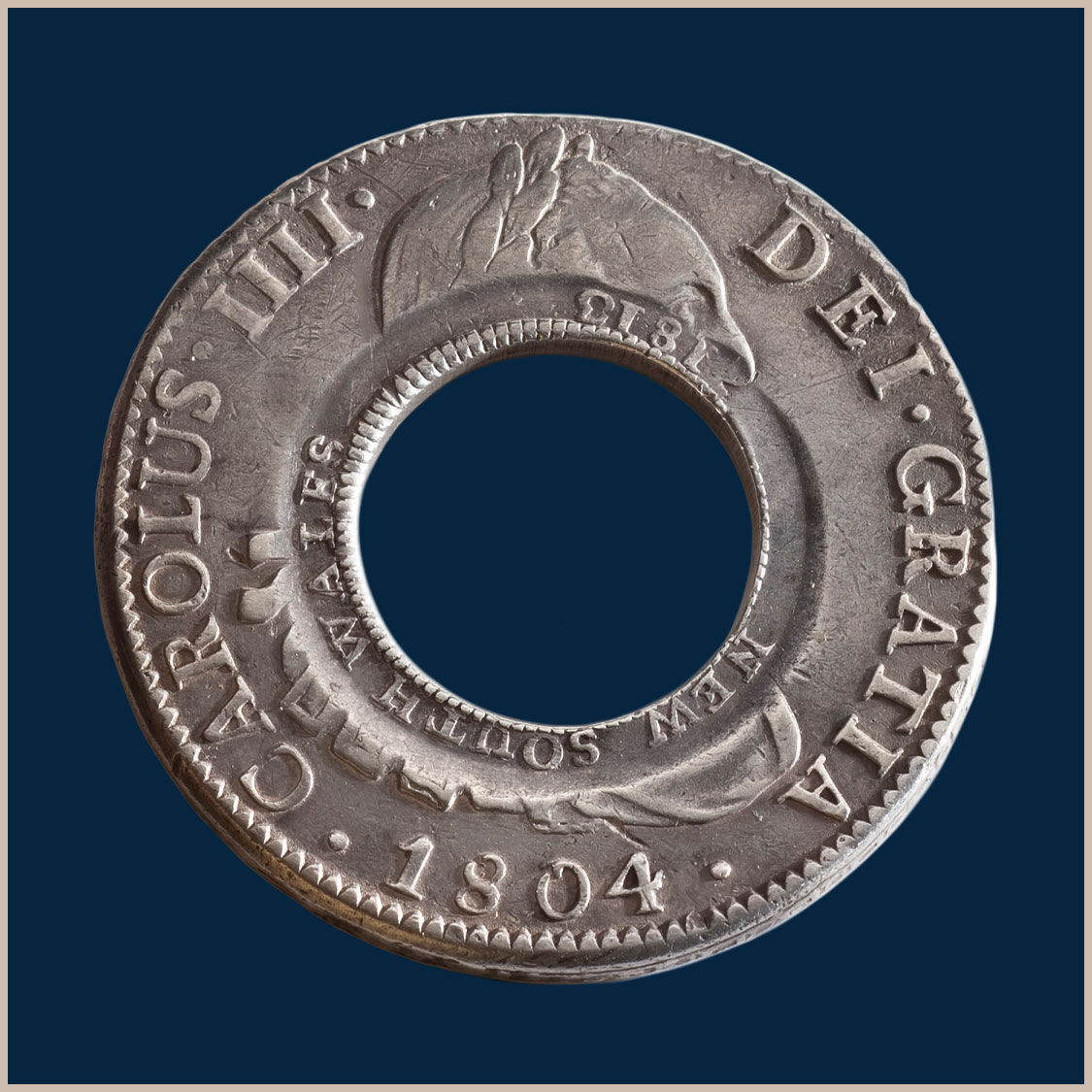
1813 Holey Dollar created from a Spanish Silver Dollar that had been struck at the Mexico Mint in 1804 (Reference Mira/Noble: 1804/8, Spalding 130).
Price: $225,000
SOLD
The purchaser of this Holey Dollar will join an 'honour roll' of former owners, Roy Farman, Ray Jewell and Philip Spalding.
A high quality Holey Dollar with exceptional eye appeal. As great force had to be exerted on the Spanish Silver Dollar to punch out the central hole. many Holey Dollars are found slightly dished and distorted. With this Holey Dollar, the silver dollar flan is flat and has not been distorted by the cutting process. This is simply a fabulous Holey Dollar, the even shape allowing the design details to be displayed to the max.
Design type: 5 (Charles IV legend and portrait)
Date of the silver dollar: 1804
Reigning monarch: Charles IV (1788 - 1808)
Portrait: Charles IV
Legend: Carolus (Charles) IIII
Mint and mint mark: Mexico Mint identified by the 'M' with a small circle above it in the legend on the reverse
Quality of silver dollar: Good Very Fine
Quality counter stamps: About Extremely Fine
Counter stamp dies: II/4: B/3
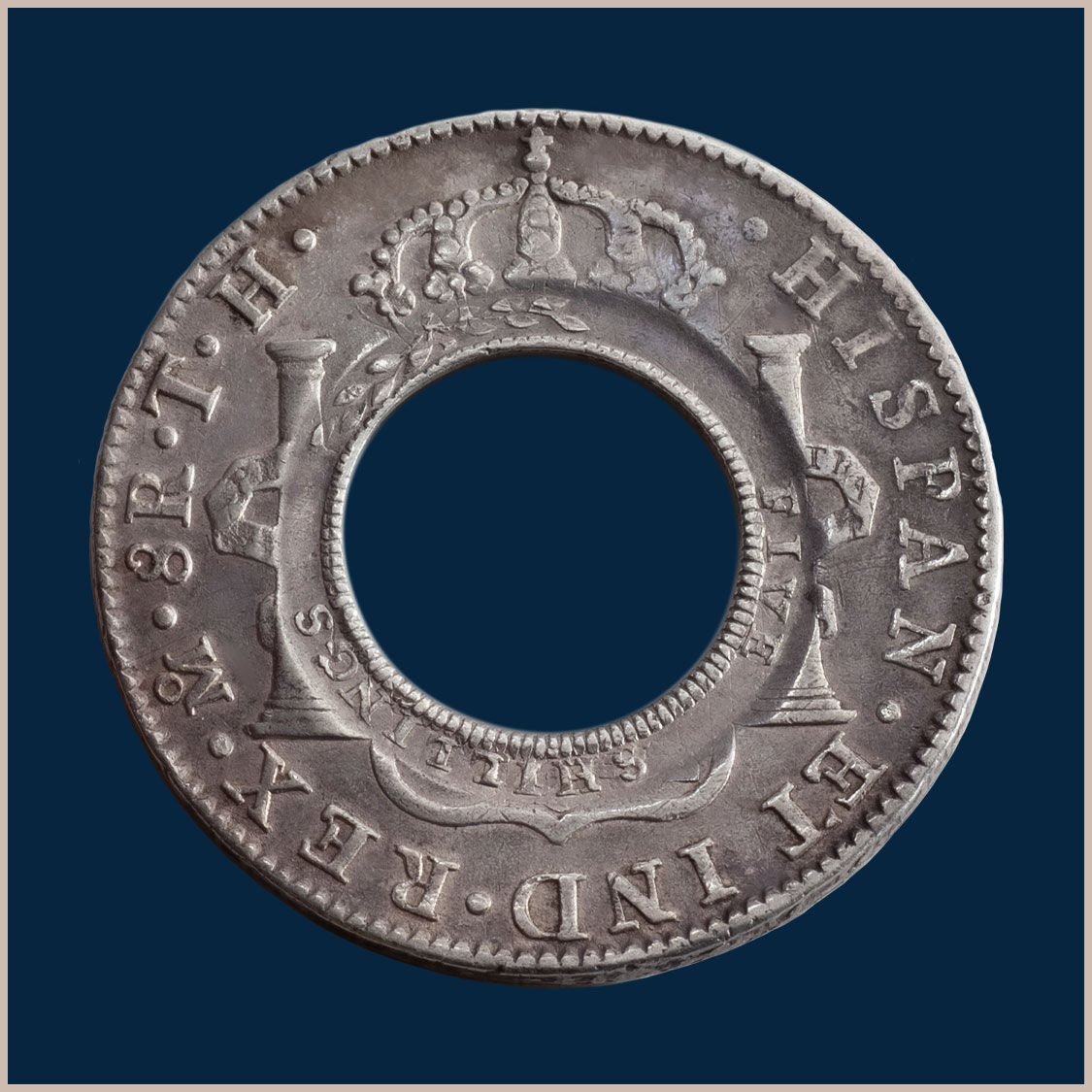
1813 Holey Dollar created from a Spanish Silver Dollar that had been struck at the Mexico Mint in 1804 (Reference Mira/Noble: 1804/8, Spalding 130).
Price: $225,000 SOLD
The purchaser of this Holey Dollar will join an 'honour roll' of former owners, Roy Farman, Ray Jewell and Philip Spalding.
A high quality Holey Dollar with exceptional eye appeal. As great force had to be exerted on the Spanish Silver Dollar to punch out the central hole. many Holey Dollars are found slightly dished and distorted. With this Holey Dollar, the silver dollar flan is flat and has not been distorted by the cutting process. This is simply a fabulous Holey Dollar, the even shape allowing the design details to be displayed to the max.
Design type: 5 (Charles IV legend and portrait)
Date of the silver dollar: 1804
Reigning monarch: Charles IV (1788 - 1808)
Portrait: Charles IV
Legend: Carolus (Charles) IIII
Mint and mint mark: Mexico Mint identified by the 'M' with a small circle above it in the legend on the reverse
Quality of silver dollar: Good Very Fine
Quality counter stamps: About Extremely Fine
Counter stamp dies: II/4: B/3
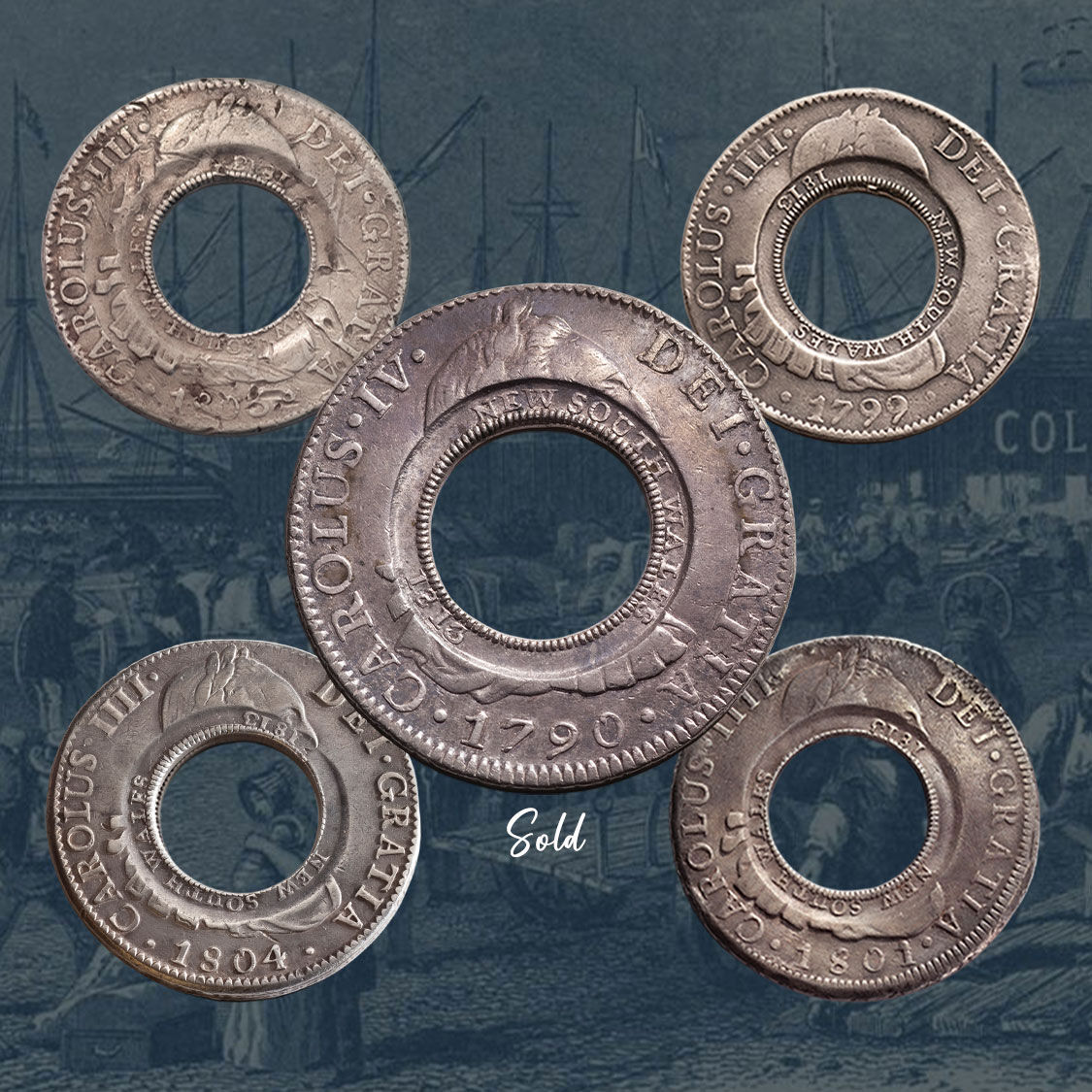
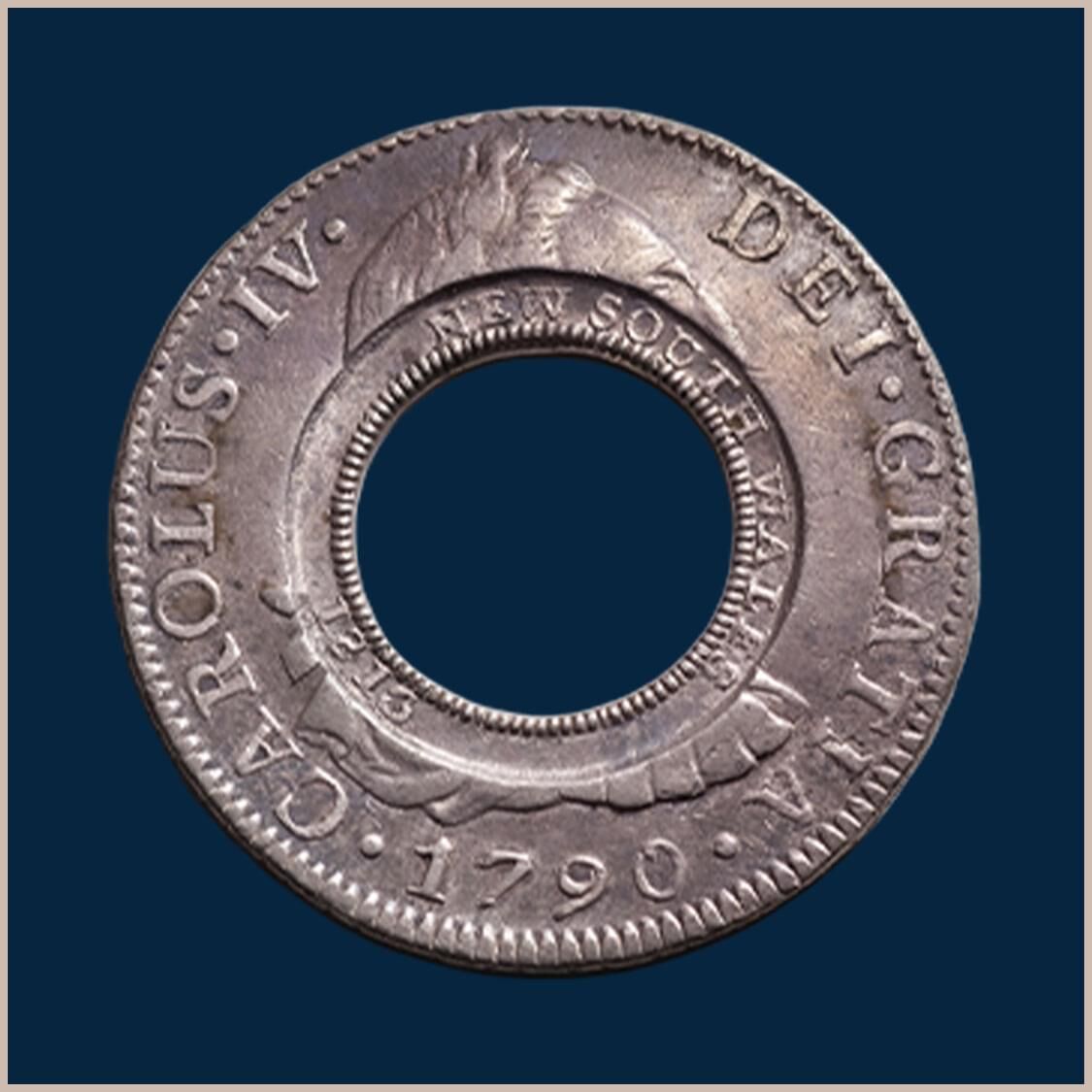
The extremely rare Charles III on Charles IV Holey Dollar created from a Spanish Silver Dollar that had been struck at the Mexico Mint in 1790 featuring the portrait of the deceased Charles III and the legend of his son, Carolus IV. And the finest of its type.
Price: $450,000
SOLD
This coin is the finest of eight privately held examples depicting the portrait of Charles III and the legend Carolus IV.
To ensure that the colonial mints could continue their coinage production uninterrupted following the death of King Charles III, a Royal decree granted the mints the right to amend the legend to Carolus IV to acknowledge the new monarch but continue striking coins with the portrait of the deceased king.
This Holey Dollar is a piece of significance and has been exhibited twice, at the Macquarie Bank, Sydney, 2013 and the Royal Australian Mint, Canberra, 2019. Yet another high quality Holey Dollar that surfaced overseas, ex Spink London privately from Andre de Clermont in 1989. Now held in a private collection in Perth.
Design type: 4 (Charles III on Charles IV Holey Dollar)
Date of the silver dollar: 1790
Reigning monarch: Charles IV (1788 - 1808)
Portrait: Charles III
Legend: Carolus (Charles) IV
Mint and mint mark: Mexico Mint identified by the 'M' with a small circle above it in the legend on the reverse.
Quality of silver dollar : Nearly Extremely Fine
Quality counter stamps: Extremely Fine
Counter stamp dies: I/11: A/7
Miraculous quality - the conundrum of this Holey Dollar. Read more!
The coin is in a miraculous state when you consider that the original silver dollar was minted in 1790, twenty-three years before it was imported into the colony of New South Wales by Governor Lachlan Macquarie.
More than two decades. Plenty of opportunities for wear. And plenty of opportunities for defects. None of which are evident. There is only a hint of wear to the high points.
The conundrum of this Holey Dollar is how the 1790 Spanish Silver Dollar escaped being used. How did it retain a pristine condition during the twenty-three years before it arrived in the colony and was grabbed out of a barrel by William Henshall and defaced by cutting a hole into it?
In the eighteenth-century Spain ruled the world and the Spanish Silver Dollar dominated trade. It was an international currency and medium of exchange the world over. The reason why most Holey Dollars are found today well worn.
If a Holey Dollar had been struck from a bright and shiny brand-new piece of silver, we would accept that some, maybe many, would survive today relatively unscathed.
The Holey Dollar, however, was struck from a Spanish Silver Dollar, a commodity that was far from shiny and brand-new. The coin was heavily traded worldwide with most well-used and worn.
The earlier the date of the Spanish Silver Dollar, the greater the period of circulation before it came into Henshall’s hands. So, the earlier the date, the more remarkable the occurrence of a top-quality Holey Dollar.
Which is why this coin is truly extraordinary!
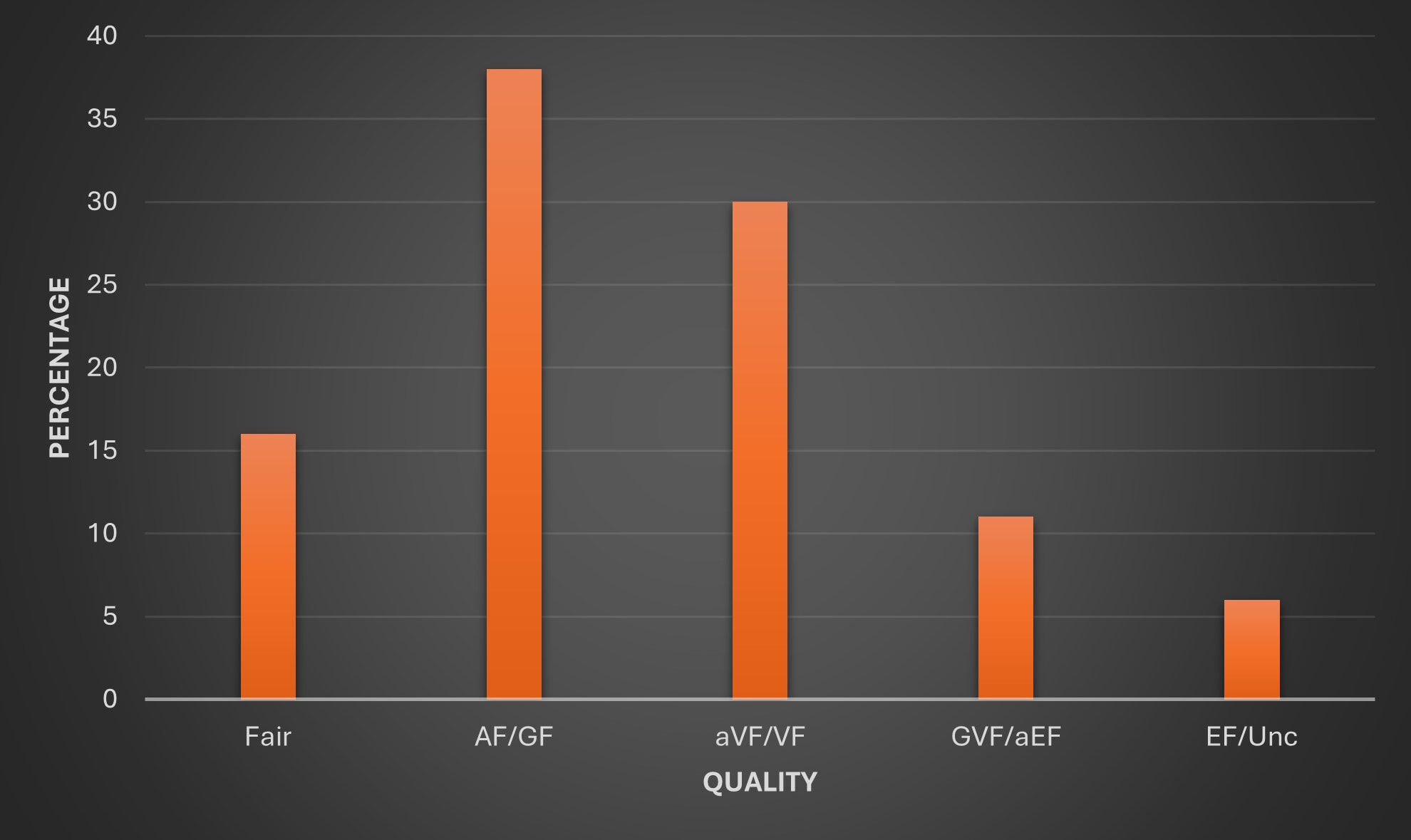
The chart above shows the percentage available to collectors at the various quality levels.
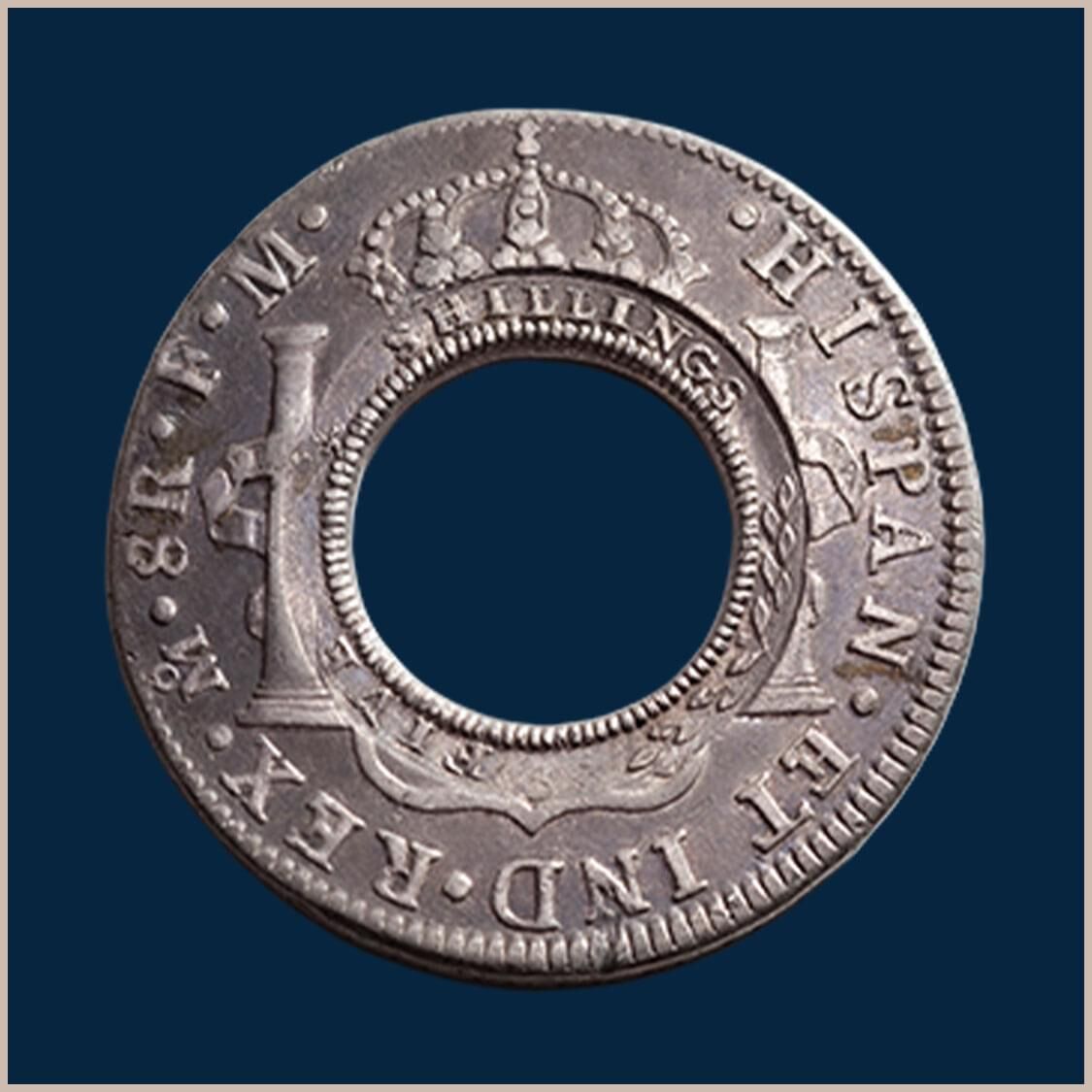
The extremely rare Charles III on Charles IV Holey Dollar created from a Spanish Silver Dollar that had been struck at the Mexico Mint in 1790 featuring the portrait of the deceased Charles III and the legend of his son, Carolus IV. And the finest of its type.
Price: $450,000
SOLD
This coin is the finest of eight privately held examples depicting the portrait of Charles III and the legend Carolus IV.
To ensure that the colonial mints could continue their coinage production uninterrupted following the death of King Charles III, a Royal decree granted the mints the right to amend the legend to Carolus IV to acknowledge the new monarch but continue striking coins with the portrait of the deceased king.
This Holey Dollar is a piece of significance and has been exhibited twice, at the Macquarie Bank, Sydney, 2013 and the Royal Australian Mint, Canberra, 2019. Yet another high quality Holey Dollar that surfaced overseas, ex Spink London privately from Andre de Clermont in 1989. Now held in a private collection in Perth.
Design type: 4 (Charles III on Charles IV Holey Dollar)
Date of the silver dollar: 1790
Reigning monarch: Charles IV (1788 - 1808)
Portrait: Charles III
Legend: Carolus (Charles) IV
Mint and mint mark: Mexico Mint identified by the 'M' with a small circle above it in the legend on the reverse.
Quality of silver dollar : Nearly Extremely Fine
Quality counter stamps: Extremely Fine
Counter stamp dies: I/11: A/7
Miraculous quality - the conundrum of this Holey Dollar. Read more!
The coin is in a miraculous state when you consider that the original silver dollar was minted in 1790, twenty-three years before it was imported into the colony of New South Wales by Governor Lachlan Macquarie.
More than two decades. Plenty of opportunities for wear. And plenty of opportunities for defects. None of which are evident. There is only a hint of wear to the high points.
The conundrum of this Holey Dollar is how the 1790 Spanish Silver Dollar escaped being used. How did it retain a pristine condition during the twenty-three years before it arrived in the colony and was grabbed out of a barrel by William Henshall and defaced by cutting a hole into it?
In the eighteenth-century Spain ruled the world and the Spanish Silver Dollar dominated trade. It was an international currency and medium of exchange the world over. The reason why most Holey Dollars are found today well worn.
If a Holey Dollar had been struck from a bright and shiny brand-new piece of silver, we would accept that some, maybe many, would survive today relatively unscathed.
The Holey Dollar, however, was struck from a Spanish Silver Dollar, a commodity that was far from shiny and brand-new. The coin was heavily traded worldwide with most well-used and worn.
The earlier the date of the Spanish Silver Dollar, the greater the period of circulation before it came into Henshall’s hands. So, the earlier the date, the more remarkable the occurrence of a top-quality Holey Dollar.
Which is why this coin is truly extraordinary!
The chart above shows the percentage available to collectors at the various quality levels.
Shop Coinworks
© Copyright: Coinworks