

Click here for more details on this Product
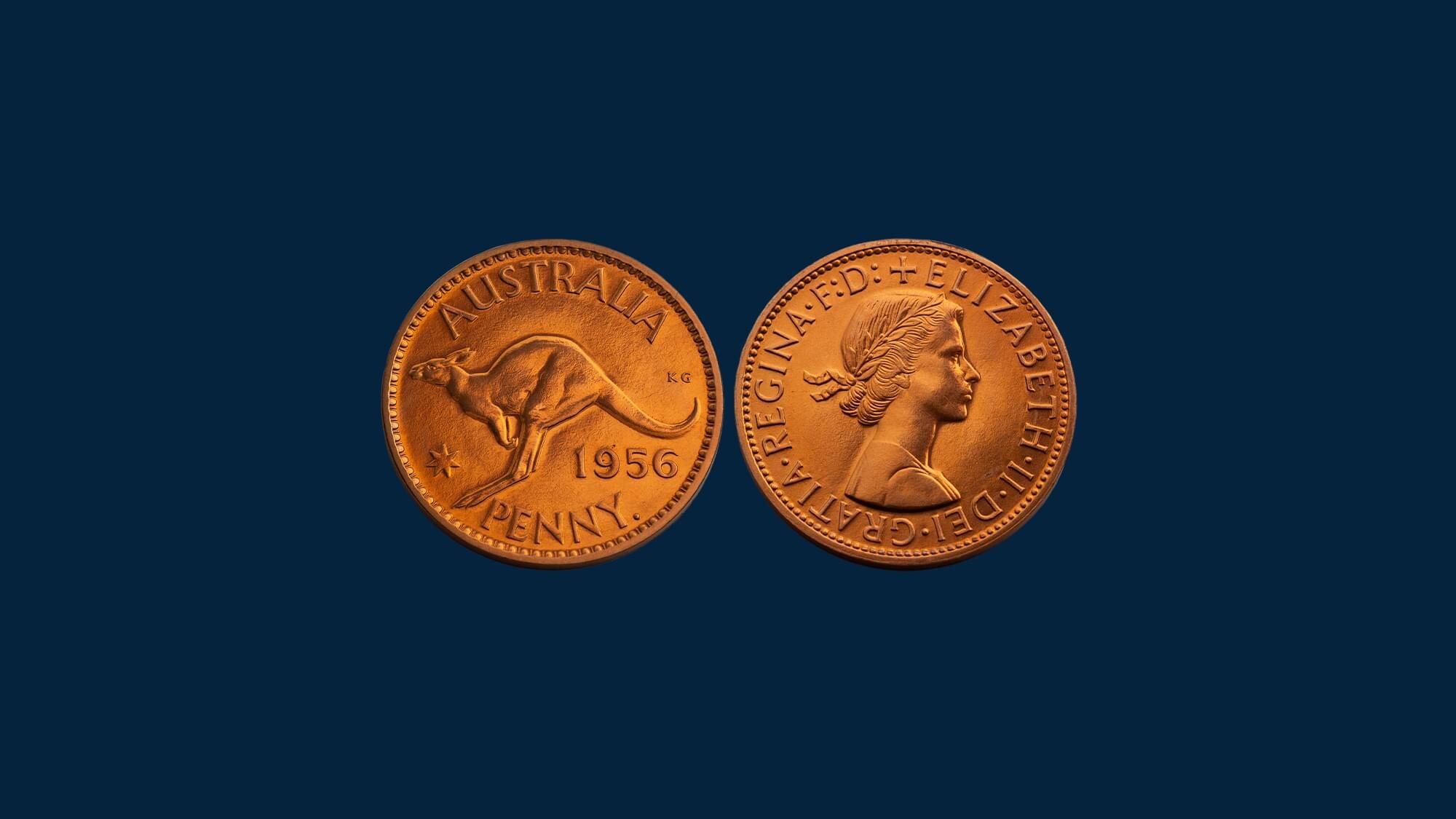
In an article published in the Journal of the Numismatic Association of Australia 2005, renowned numismatist Paul Holland contends that the Perth Mint copper proofs were created for unaided vision. The point here that a collector would not need a magnifying glass to appreciate their beauty.
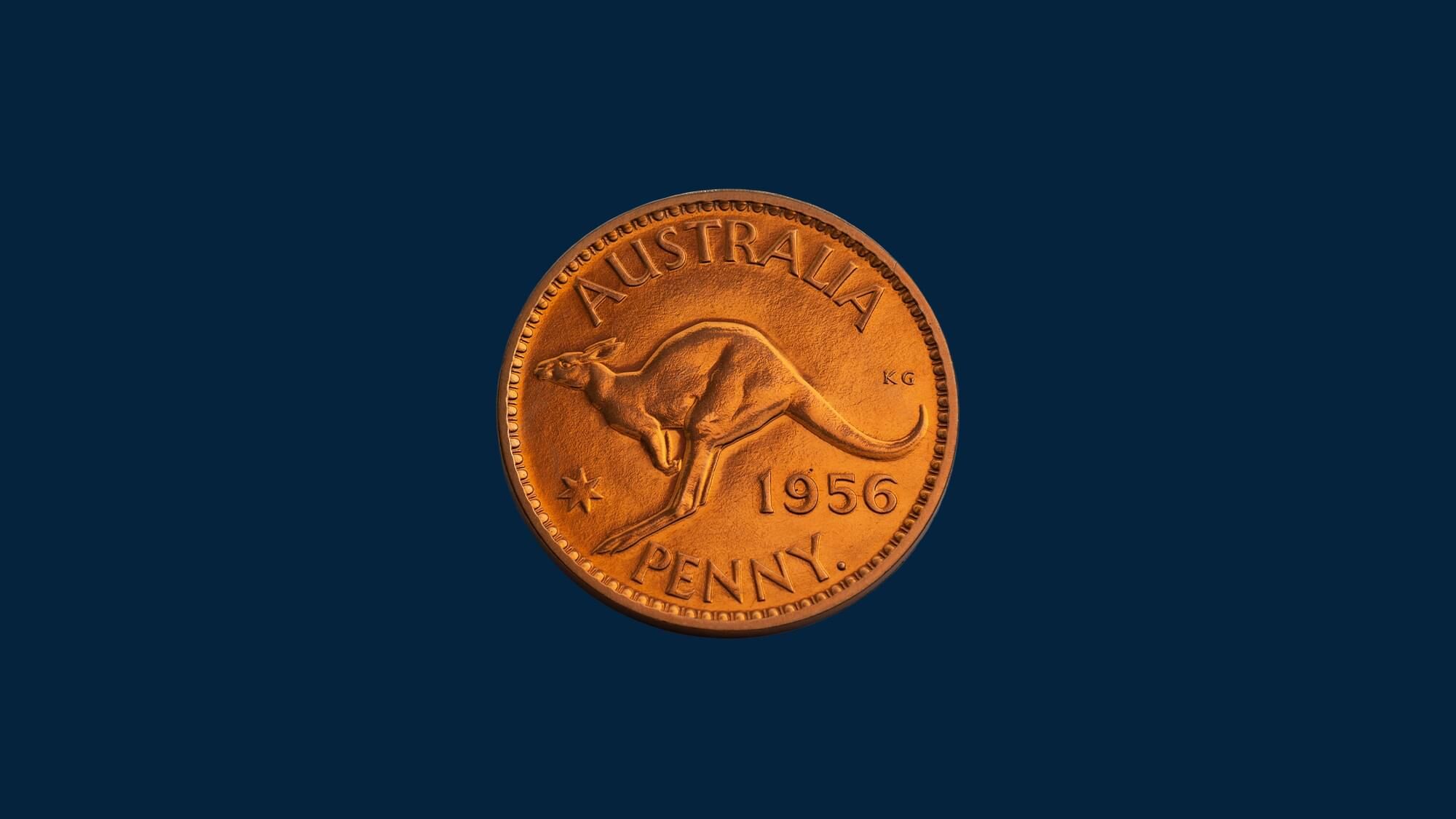
Looking at this 1956 Perth Mint Proof Penny you can only but agree!
Hollonds contends that the Perth Mint modelled their bronze proofs on the Royal Mint London’s 1951-PL proofs, for they, as a general rule, are stunning. Visually impactful.
Hollonds also comments that the Perth Mint went the extra yards with their production and ground the rims by hand to ensure they were high and squared-off.
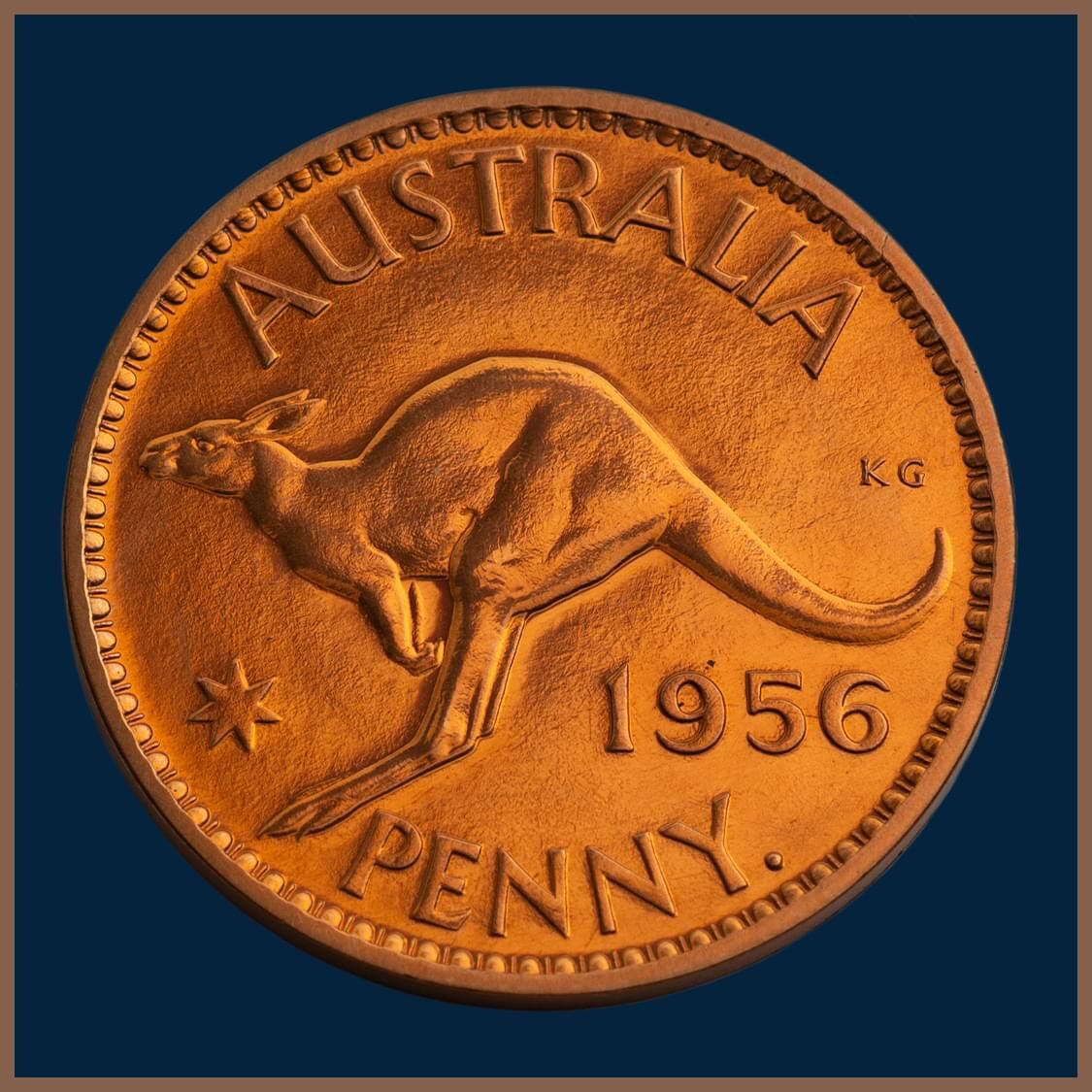
1956 Perth Mint Proof Penny
A rare and brilliant QEII proof
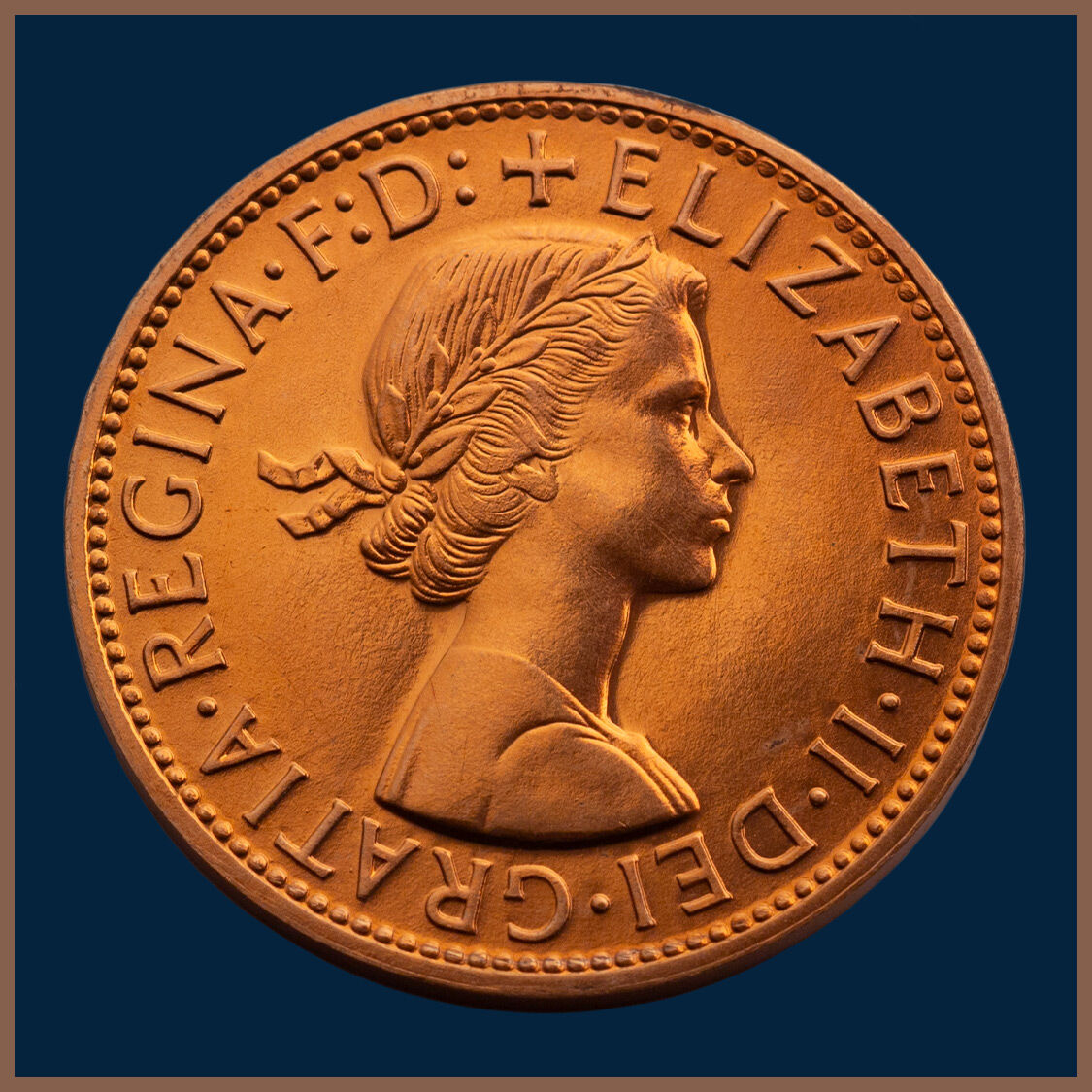
1956 Perth Mint Proof Penny
A rare and brilliant QEII proof
1956 Perth Mint Proof Penny
1956 Perth Mint Proof Penny
For collectors, the year 1955 is a key date. It was the first year the Perth Mint began a program of striking copper proofs in 'commercial quantities' to sell to collectors. The mintage in 1955 was 301.
The mintage in the second year, 1956, was 417. Also, a key date of the series. (And our experiences have shown that it is more difficult to acquire the 1956 issue in top quality, than it is the 1955 in comparable quality.)
By 1957, the series had really taken off and mintages increased to around the 1000+ level making the 1955 and 1956 coins the key coins, and the pick of the lot. The series ran until 1963, stopping just prior to decimal currency changeover.
The mintage of 417, makes the coin in today's market extremely rare.
(Compare it to the Royal Australian Mint's and Perth Mint's current proof coin mintages of 5000, 10,000 and 50,000!)
Natural attrition has taken its toll on the original mintage for the coins were not encased in fancy packaging but housed only in small cellophane holders and despatched to collectors in an envelope. Many of the coins have filtered their way into circulation. Others severely damaged through mishandling making an already small mintage even smaller.
This a supreme proof!
There is a perception amongst collectors new to the market that all proofs are created equal. And therefore, should be valued the same. The notion is that because a coin is struck to a proof finish it has to be good. Those perceptions are incorrect. Correct handling and storage is a critical issue to preserving the value of proof coins. And this coin has been brilliantly preserved.
It's a key coin in a very popular series.
The series of Perth Mint Proof Coins struck between 1955 and 1963 is an important series in our numismatic history: a catalyst for the introduction of the proof coining program introduced by the Royal Australian Mint, Canberra in 1966. It also is an affordable one, making it one of the most popular collecting series in the Australian coin market.
As the Perth Mint is still producing coins, its narrative has not been confined to history. The mint is an on-going story with a collecting audience that is expanding through the production and export of decimal collector coins. So, the ‘Perth Mint’ message always remains strong, underpinning future interest in its earlier historical issues.
The proof coins produced at the Perth Mint in 1955 were specially struck and sold to collectors under provision of the Commonwealth Treasury, the sale price a premium of two shillings above face value.
The face value was paid to Treasury and the premium went to the mint.
The Government placed only one restriction on the mint. Only those coins they were striking for circulation could be struck as proofs and sold to collectors.
As the Perth Mint was striking copper circulating coins for Treasury, it could strike only copper proof coins for collectors. (See table.)
The Perth Mint’s coins were minted to exacting standards - from the selection and polishing of blanks, the preparation of dies and ultimately the actual striking.
The Perth Mint went the extra yards with their production and ground the rims by hand to ensure they were high and squared-off, said to be emulating the superb quality that came out of the Royal Mint London in the production of Australia’s 1951 PL penny and halfpenny.
Quality is paramount in this series, for while all the coins in the series were struck as proofs, their state of preservation today (how they have been handled) is critical to preserving their value and underpinning future capital growth.
Modern packaging is a product of our decimal era. There was no fancy packaging in the 1950s and 1960s with coins sent by mail, housed in small cellophane envelopes.
As each proof issue is a stand-alone rarity, there is no pressure on buyers to complete the series. Nine year sets, each coin struck as proofs, fourteen proof coins in total.
Be assured the series does present challenges if the coins are to be procured in top quality. But a complete collection is achievable and can be obtained over time by buying progressively, year by year, set by set.
Year Components Mintage
1955 1d & 1/2d (2 coins) 301
1956 1d (1 coin) 417
1957 1d (1 coin) 1112
1958 1d (1 coin) 1028
1959 1d (1 coin) 1030
1960 1d & 1/2d (2 coins) 1030
1961 1d & 1/2d (2 coins) 1040
1962 1d & 1/2d (2 coins) 1064
1963 1d & 1/2d (2 coins) 1100

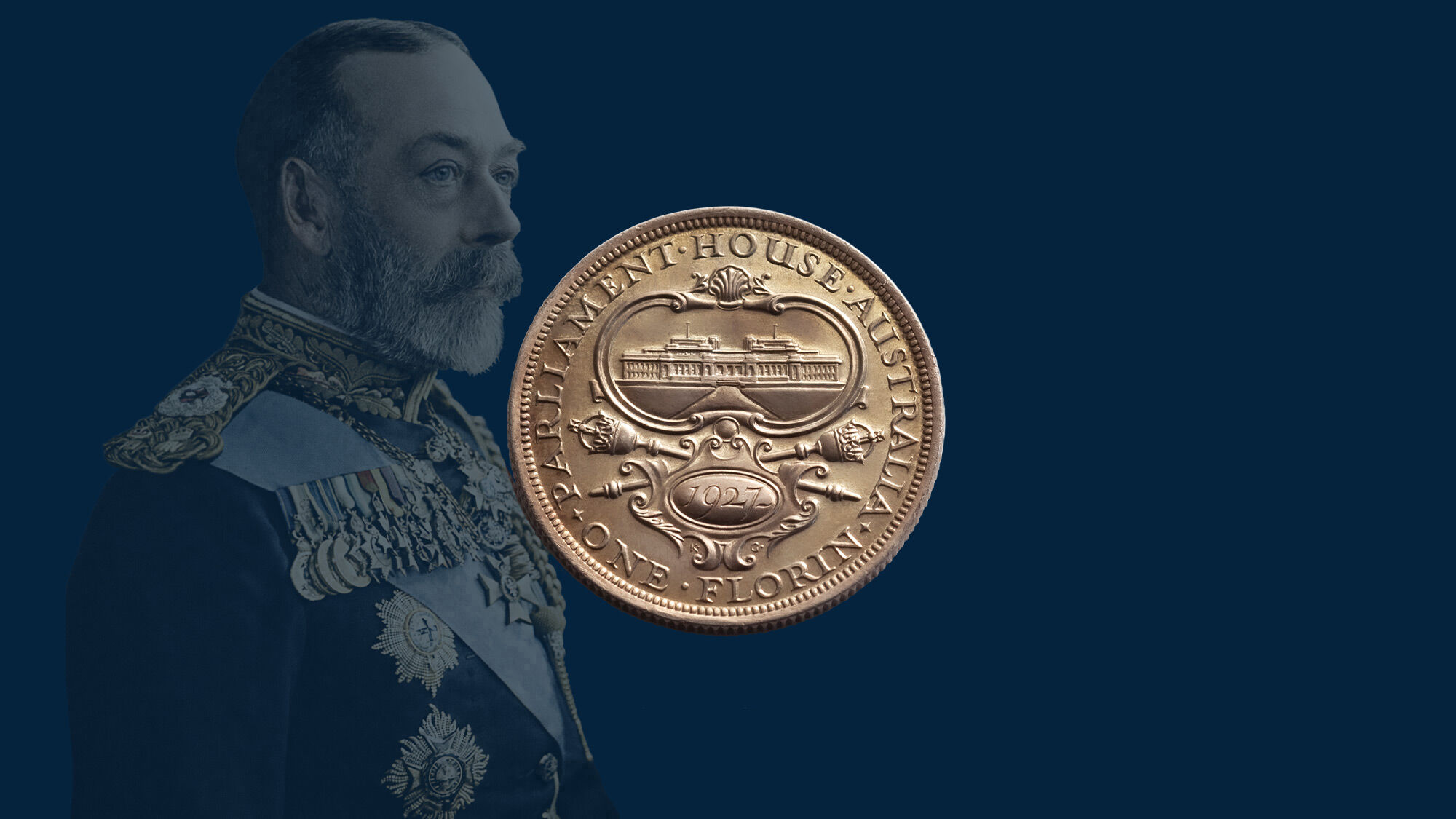
The physicality of rare coins has always been appealing, the notion that you can hold history in your hand. And have a direct and very intimate link to an event that occurred centuries earlier. The physicality of collectibles in general (and rare coins in particular) will become more attractive as the digital age gathers pace.
Collectors will simply seek 'time-out' from electronic technology and become grounded with a piece of art (a quality coin) that is physical, that connects them with history, is emotionally rousing and beautiful to look at.
Those words may well have been written for the 1927 Proof Canberra Florin. The coin has a deep connection to Australia's history: released by the Government in 1927 to celebrate the opening of the nation's first parliamentary buildings in Canberra. Exceedingly scarce, a coin with prestige value. Moreover, it is beautiful to look at!
Click here for more details on this Product
Ask a seasoned collector to name the top five most popular and recognised Australian rare coins, without doubt the 1930 Penny would be at the top of the list. But, the 1927 Proof Canberra Florin would, in all likelihood, be at position number two.
It is a coin that resonates with all Australians and for many collectors it's not a matter of 'if' I will buy a Proof Canberra Florin, it's 'when' I will buy a Proof Canberra.
The coin has genuine rarity. A scarcity that belies its recorded mintage of 400.
It is generally accepted that the issue did not sell-out, the proposed mintage far too optimistic for the size of the collector market at the time. The unsold coins were melted down, the mintage believed to be as small as 150.
The proofs were gifted to politicians and sold to the public without a case thereby introducing the possibility of mishandling. So, for the buyer that makes quality a priority, the pool of available examples is even smaller and the waiting time for a really nice 1927 Proof Canberra Florin, at least a year, maybe even two.
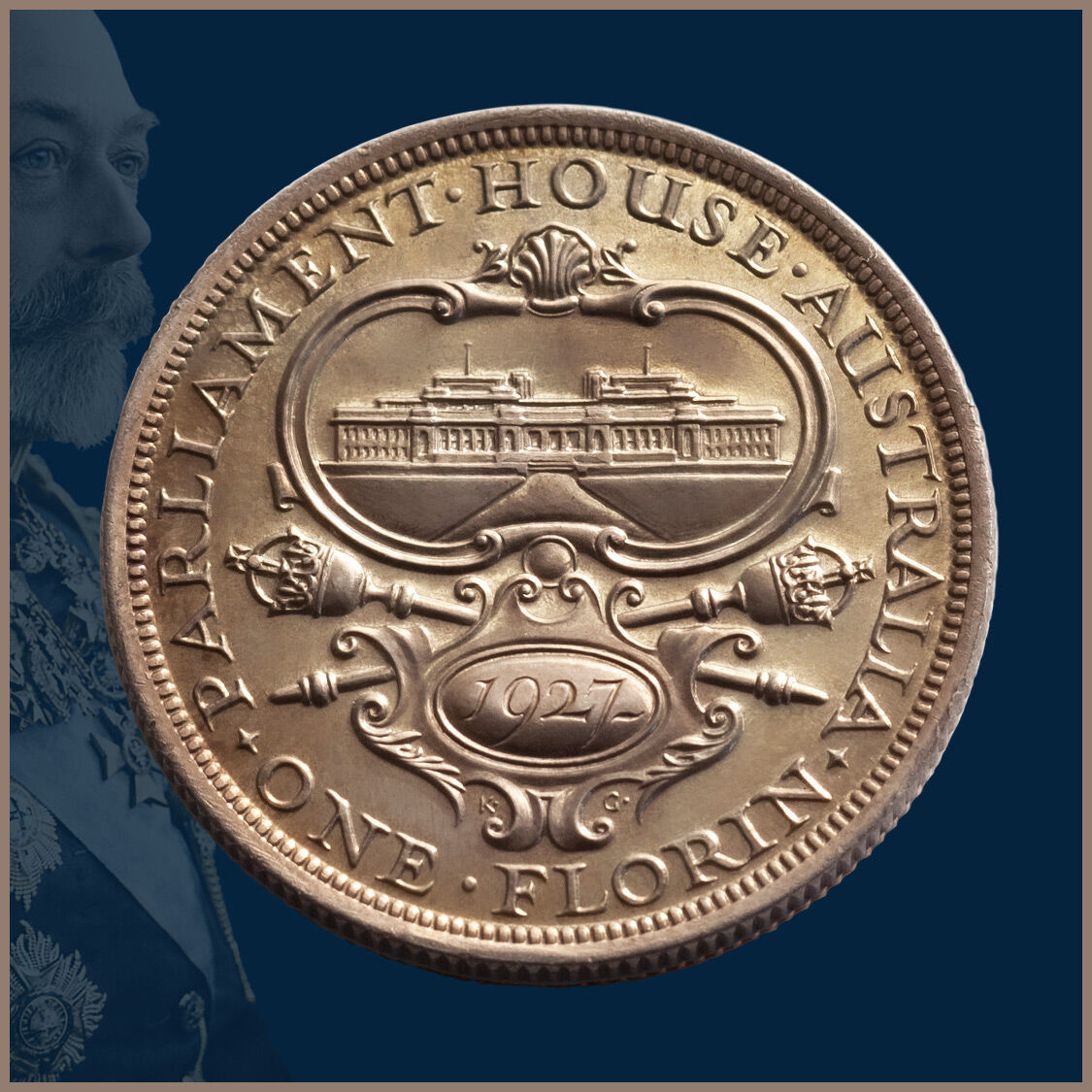
Brilliant mirror fields, antique gold toning on the periphery. Strong strike, with the three parliamentary steps!
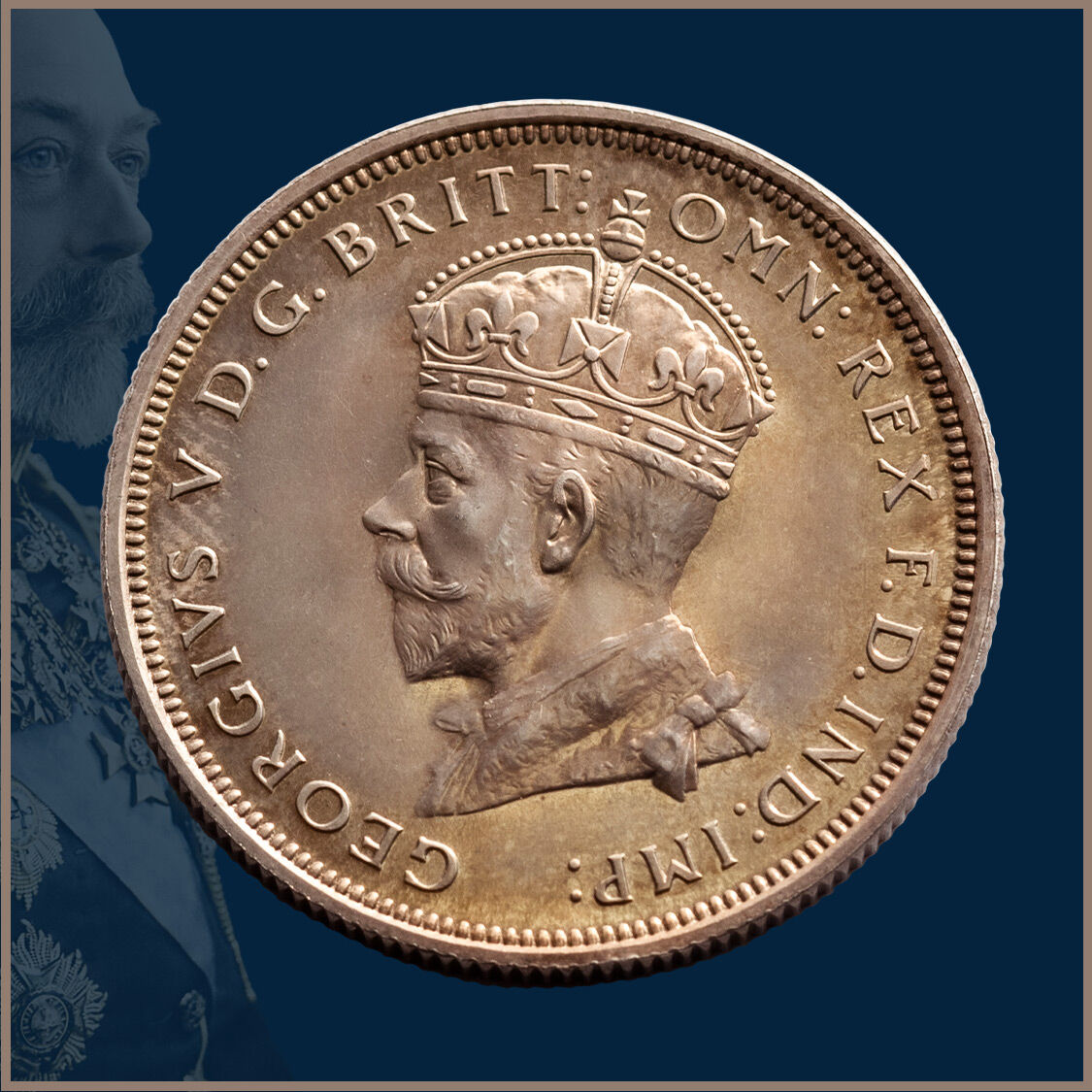
Brilliant mirror fields with solid striations and antique gold toning on the periphery.
Brilliant mirror fields, antique gold toning on the periphery. Strong strike, with the three parliamentary steps!
Brilliant mirror fields with solid striations and antique gold toning on the periphery.
The Proof Canberra is Australia's first commemorative coin, minted for one of the most significant events in Australia’s journey to nationhood. The opening of the nation’s first Parliamentary buildings in the national capital in 1927. The coin is distinguished by a unique obverse featuring an enlarged bust of King George V, designed by Sir Edgar Mackennal.
Furthermore, it has a design that resonates with all Australians. In an article published in the CAB Magazine, February 2007, author and respected numismatist Vince Verheyen declared the 1927 Proof Canberra Florin "arguably Australia's most attractive predecimal silver coin". We can only agree. The reverse of 'Old Parliament House' was designed by George Kruger-Gray.
The Proof Canberra Florin offers value and, over the long term, appreciating value.
An analysis of auction realisations over the past forty years, confirms the 1927 Proof Canberra Florin is extremely scarce. On average one pristine example is offered every few years. We also note the coin has enjoyed solid price growth. In the 1980s, a Proof 1927 Canberra Florin was selling for approximately $1000 - $1500 at auction. In the 1990s the coin was fetching betwen $4000 - $6000. Two decades later, top quality Proof Canberra Florins are commanding prices of $20,000 or more.
The Melbourne Mint was Australia’s second coining facility and opened in 1872 to strike gold sovereigns. The mint did not produce any presentation pieces to celebrate its opening in 1872, a missed opportunity for today's collectors.
In 1916 the Melbourne Mint welcomed in a new era and commenced striking silver coins for the newly formed Commonwealth of Australia. The numismatic shortcoming of not issuing specially struck celebratory issues in the year of its opening was addressed in 1916.
The Deputy Master of the Melbourne Mint authorised the production of sixty cased Presentation Sets, each set comprised of four 1916 dated silver coins, the florin, shilling, sixpence and threepence struck to a specimen finish. Each coin featured the Commonwealth Coat of Arms and showed the Melbourne mint mark ‘M’ below the date 1916.
The 1916 Sets were the very first 'commercial' issue to come out of an Australian Mint. A portion was earmarked to sell to collectors with a 2/-3d premium over face value. Others were gifted to dignitaries.
The Melbourne Mint continued to strike proof issues until it ceased minting operations in 1964. But the issues were struck sporadically, in only the years 1927, 1934, 1935, 1937, 1938, 1939 and 1953.
The Melbourne Mint's issues, especially struck for collectors, are extremely scarce and they are celebrated as critical points in Australia's numismatic history.
The table below indicates the collector issues that were struck between 1916 and 1953 and the suggested mintage: the figures determined from the mint's historical records including letters and sales ledgers and are shown in brackets.
You will note that the 1927 Proof Canberra Florin was the second 'commercial' coin issue produced by the Melbourne Mint and sold to collectors.
• 1916 Specimen Set ( 60 )
• 1927 Proof Canberra Florin ( 400 )
• 1934 Proof Set ( 50 )
• 1935 Proof Pair ( 125 )
• 1937 Proof Crown ( 100 )
• 1938 Proof Set ( 68 )
• 1938 Proof Crown ( 52 )
• 1939 Proof Halfpenny ( 40 )
• 1953 Specimen Set ( 12 )

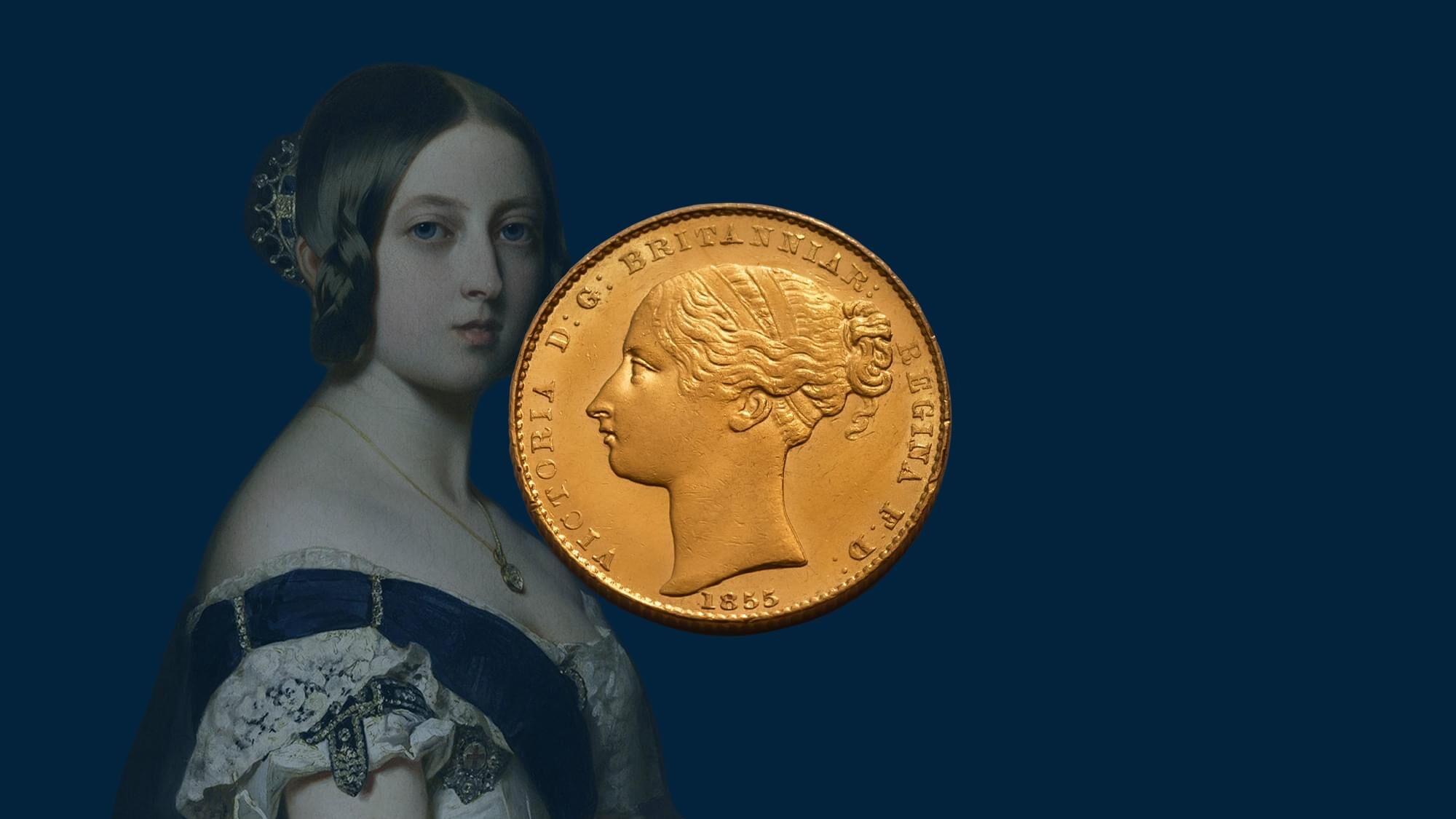
A high-quality 1855 Sydney Mint Sovereign is an extremely rare offering and might be sighted on the market every few years.
The Sydney Mint was the nation's first mint, opening in 1855; the mint striking its first gold coin, the sovereign, in June of that year. The 1855 Sydney Mint Sovereign is today a cultural and financial icon with prestige value. And investment value. And this coin is a prize, graded About Uncirculated, with original mint bloom.
While the appeal of the sovereign is enhanced by differing versions featuring different dates, 1855 through to 1931. And different effigies of monarchs Queen Victoria, Edward VII and George V, no coin is as popular as the very first Australian sovereign, the 1855 Sydney Mint Sovereign.
Click here for more details on this Product
Australians celebrate our founding coins, the Holey Dollar and the Dump, struck in 1813. And our founding gold coins, the Adelaide Pound issued in 1852, and the Sydney Mint Sovereign struck in 1855.
For Australia, each coin was the first of its kind. And an acknowledgement that the colonies were emerging as commercial hubs, requiring currency, the latter two reflecting the impact of the Gold Rush.
The Holey Dollar, Dump and Adelaide Pound were one-offs, struck in one year only as an interim measure to address a currency crisis. The coins fulfilled their purpose and are lauded for their history and the ingenuity of their creation.
The 1855 Sydney Mint Sovereign also was the first of its kind. But, it was not a one-off. The coin was introduced for the long term and became the mainstay of commerce, regulated by currency laws.
Australia issued sovereigns continuously between 1855 and 1931, the nation departing the gold standard in 1932.
While the appeal of the sovereign is enhanced by differing versions featuring different dates, 1855 through to 1931. And different effigies of monarchs Queen Victoria, Edward VII and George V, no coin is as popular as the very first Australian sovereign, the 1855 Sydney Mint Sovereign.
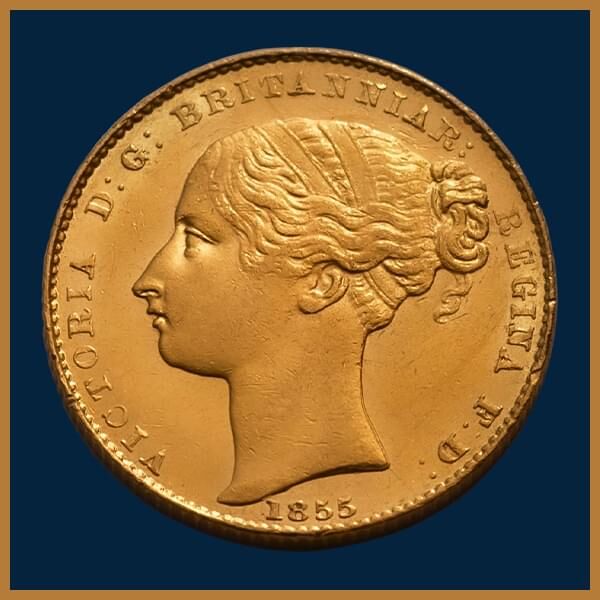
1855 Sydney Mint Sovereign, well struck, About Uncirculated
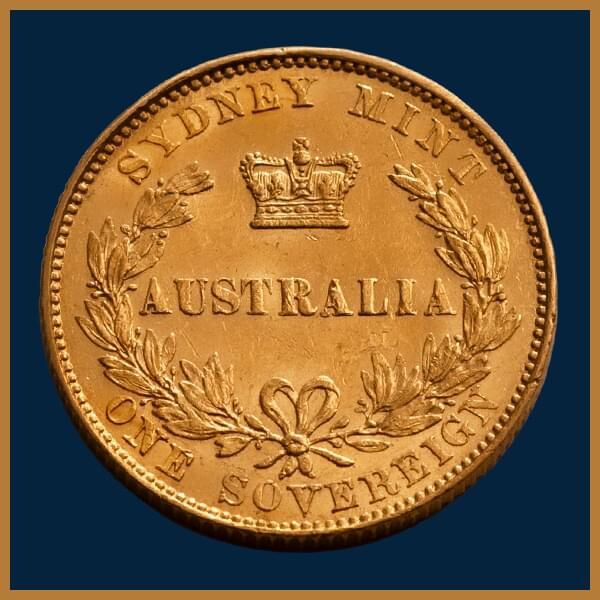
1855 Sydney Mint Sovereign, well struck, About Uncirculated
This 1855 Sydney Mint Sovereign is graded About Uncirculated, with some original mint bloom.
An 1855 Sovereign at this quality level might become available for sale every few years.
This coin is very pleasing to the naked eye, well struck on both obverse and reverse, and does not have the surface marks usually associated with coins of this metal.
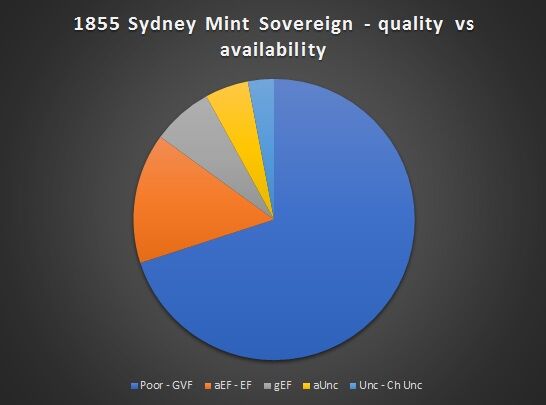
Every circulated coin has a grading level at which serious rarity kicks in. For the 1855 Sydney Mint Sovereign the level at which extreme rarity cuts in is ‘About Extremely Fine’.
At Very Good, the 1855 sovereign is virtually denuded of design. At Fine, the design is recognisable but most of the significant design elements have been worn away. At Good Very Fine, there are signs of wear and the high points are flattened. In a quality range of Very Good to Very Fine and even up to Good Very Fine, the 1855 Sydney Mint Sovereign is reasonably readily available.
It’s at the quality level of About Extremely Fine, through to Choice Uncirculated that the waiting time for an example to come onto the market is lengthy.
This coin at About Uncirculated occupies the yellow section of the pie chart.
In 1851, the Sydney Morning Herald published an editorial championing the establishment of a branch of the Royal Mint in Sydney to buy gold at full price and strike it into sovereigns and half sovereigns.
The plan for a branch of the Royal Mint received great support from the diggers. Solid opposition came from the banks and a prominent group of private individuals both of whom had become major buyers of gold on the fields at prices discounted well below the full London price. Profits were at stake! Both factions had earlier joined forces to quash a proposal for a Sydney Assay Office that would have also impacted negatively on their commercial interests.
While it is true that New South Wales had in 1851 formally petitioned the home office in London for a branch of the Royal Mint, the decision had already been made in the British Parliament to give the colonies greater autonomy and establish a branch mint to allow them to strike coins of the realm, the sovereign.
The Sydney Mint would strike sovereigns and half sovereigns to exactly the weight and fineness levels at the Royal Mint but they would have their own design. This was to protect the international reputation of the imperial gold coins in the event that Sydney was unable to meet the exacting standards demanded of the coin.
On the 19 August 1853 Queen Victoria gave formal approval to establish Australia’s very first mint at or near Sydney in New South Wales. In the same year, the Royal Mint London prepared designs of Australia’s first gold coinage and manufactured the dies.
The sovereign and half sovereign obverse design was a filleted bust of Victoria, only slightly different to that used on British sovereigns. The obverse quickly fell out of favour and James Wyon was ordered to engrave a new obverse that would be uniquely Australian to easily distinguish the colonial sovereigns from their British counterparts.
To this end, a new portrait was introduced in 1857 that featured Queen Victoria with a banksia wreath in her hair instead of the band.
The reverse design was based loosely around contemporary reverse designs of the British sixpence and shilling. Its strong point of difference to the British sovereigns was the inclusion of the words 'Australia' and 'Sydney Mint'.
The use of the word Australia, a fascination with historians. At the time the nation was operating as separate colonies. Australia did not operate under a single Government until Federation in 1901.
The first Deputy Master of the Sydney Mint was Captain Edward Wolstenholme Ward, a trained member of the Royal Engineers. Ward arrived in the colony in October 1854 on the ship Calcutta, along with other members of the Royal Engineers, a sergeant, three corporals and twelve privates. The group was deposited on Circular Quay with the bales and boxes of Sydney's new mint, along with the dies.
The Sydney Mint was established in a wing of the 'Rum Hospital' in Macquarie Street, Sydney. The mint began receiving gold on 14 May 1855 and issued its first gold sovereign soon after on June 23. In their infancy the Sydney Mint sovereigns and half sovereigns were legal tender only in the colony of New South Wales.
In January 1856, the British tested the quality of the colonial gold coins and the results showed that they had a higher intrinsic value than their British counterparts, primarily due to their 8.33% silver content. Once these facts became known, profiteers began melting them down.
The colonial gold coins became legal tender in Tasmania and Western Australia in 1856. South Australia and Victoria were reticent to enshrine the Sydney Mint as Australia's official mint as each colony had independently requested their own and were miffed at missing out. By 1857, the legal tender scope was widened to include all Australian colonies and Mauritius, Ceylon and Hong Kong. In 1868 the Sydney Mint Sovereigns and Half Sovereigns became legal tender throughout the British Empire.
The design of the Sydney Mint Sovereign lasted until 1870 and the Half Sovereign until 1866. It was the very last time the word Australia appeared on our gold sovereigns. From 1871, Australia's sovereigns and half sovereigns took on a traditional British design.

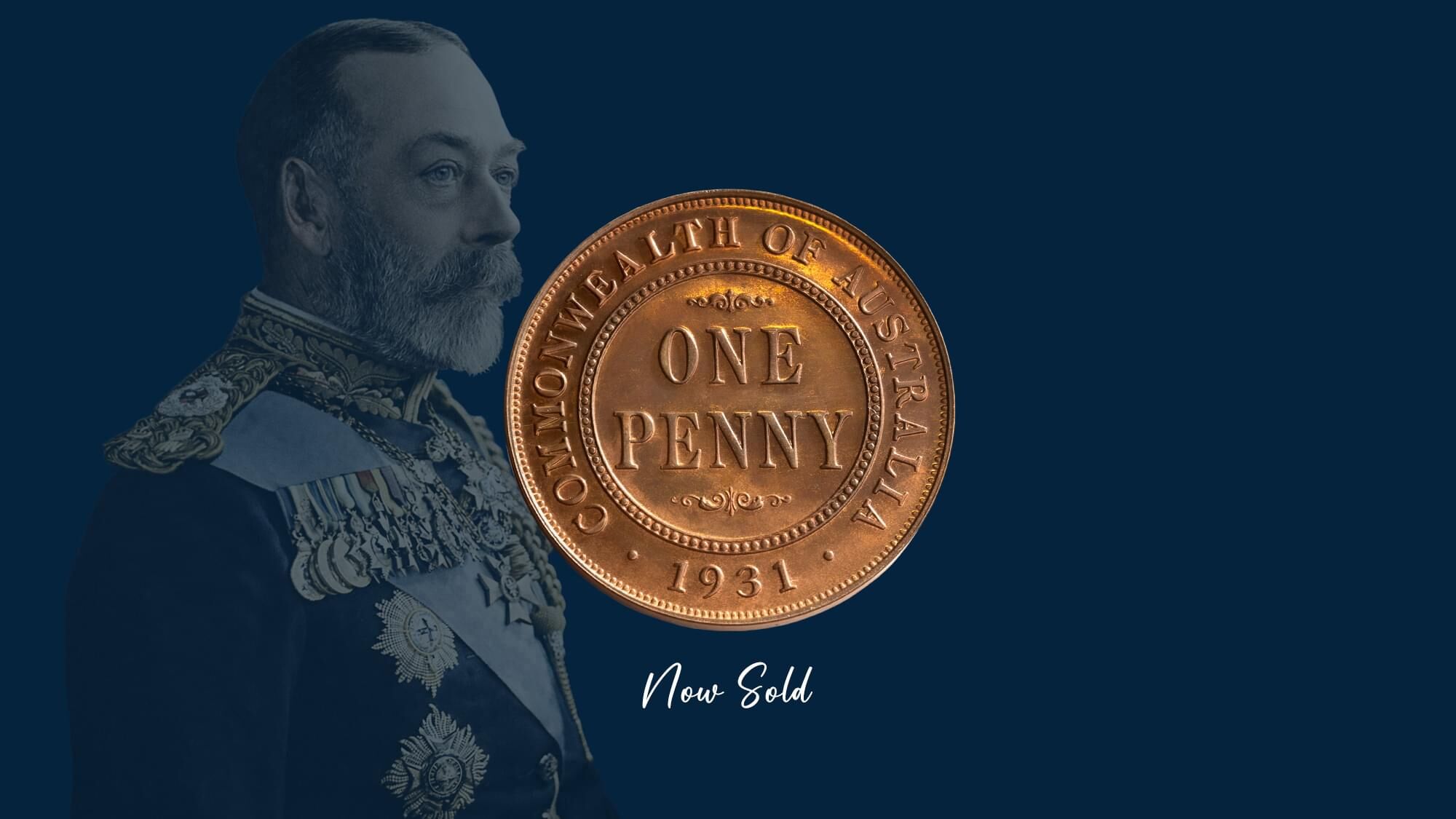
Proof coins are numismatic royalty. They are the pieces that are exhibited. They are the coins that are held with pride by museums. And as we saw recently with the Perth Mint's purchase of the 1899 Proof Half Sovereign, they are the coins that are acquired by institutions. They are also the coins that are lingered over and savoured by collectors, held as prized possessions for their quality and their rarity.
This Proof 1931 Penny is unequivocally, numismatic royalty.
Our photograph is good. But the camera lens cannot capture what you see in the flesh. Full brilliance on both obverse and reverse. It is as though you are looking at a copper mirror! The camera lens has however captured the strength of the design detail, the upper and lower scrolls, the inner beading and the edge denticles. And the king's portrait. Crisp, pristine.
This is a stunning coin.
Coins of this ilk tend to have a history; a narrative that involves a person that is numismatically influential, a VIP or a Government dignitary. A story that helps us understand why the quality is so extraordinary. And in the case of this Proof 1931 Penny the person is Roy Farman. It was acquired in the 1950s from Farman, the exceptional quality of the coin said to have been a consequence of his close relationship with Albert Le Souef, a former Deputy Master of the Melbourne Mint.
Click here for more details on this Product
This Proof 1931 Penny was housed in a small collection of George V copper proofs that was originally owned by Roy Farman.
The collection changed hands in the 1950s and was a half-century later sold at auction by Melbourne based Australian Coin Auctions (ACA). Proofs of the following dates were sold under the hammer, 1920, 1926, 1928, 1929, 1931, 1932 and 1936.
We attended each auction in which they were offered. The coins were extraordinary and to collectors and dealers alike, the quality was nothing like we had ever seen before. Bidding was frenetic, the industry abuzz.
We attended with Barrie Winsor noting that he referred to the coins as 'super-proofs', they were so superior to those normally seen.
The industry contends that the exceptional quality of these proofs was a consequence of Farman’s close relationship with Albert Le Souef, Deputy Master of the Melbourne Mint 1921 - 1926. Le Souef maintained a strong relationship with the mint even after his retirement. In the Farman/Le Souef era, Coins of Record were (theoretically) out of reach of collectors. You had to have a strong connection into minting circles to gain access to them. And if you did have that connection, you would almost certainly be guaranteed the best quality. You don't give a colleague or mate an inferior product. It was a matter of pride.
And it is important to note that, in this era, proofs had no commercial value over and above their face-value. They were simply collector's items and a Proof Penny could be exchanged for a penny to balance the mints books!
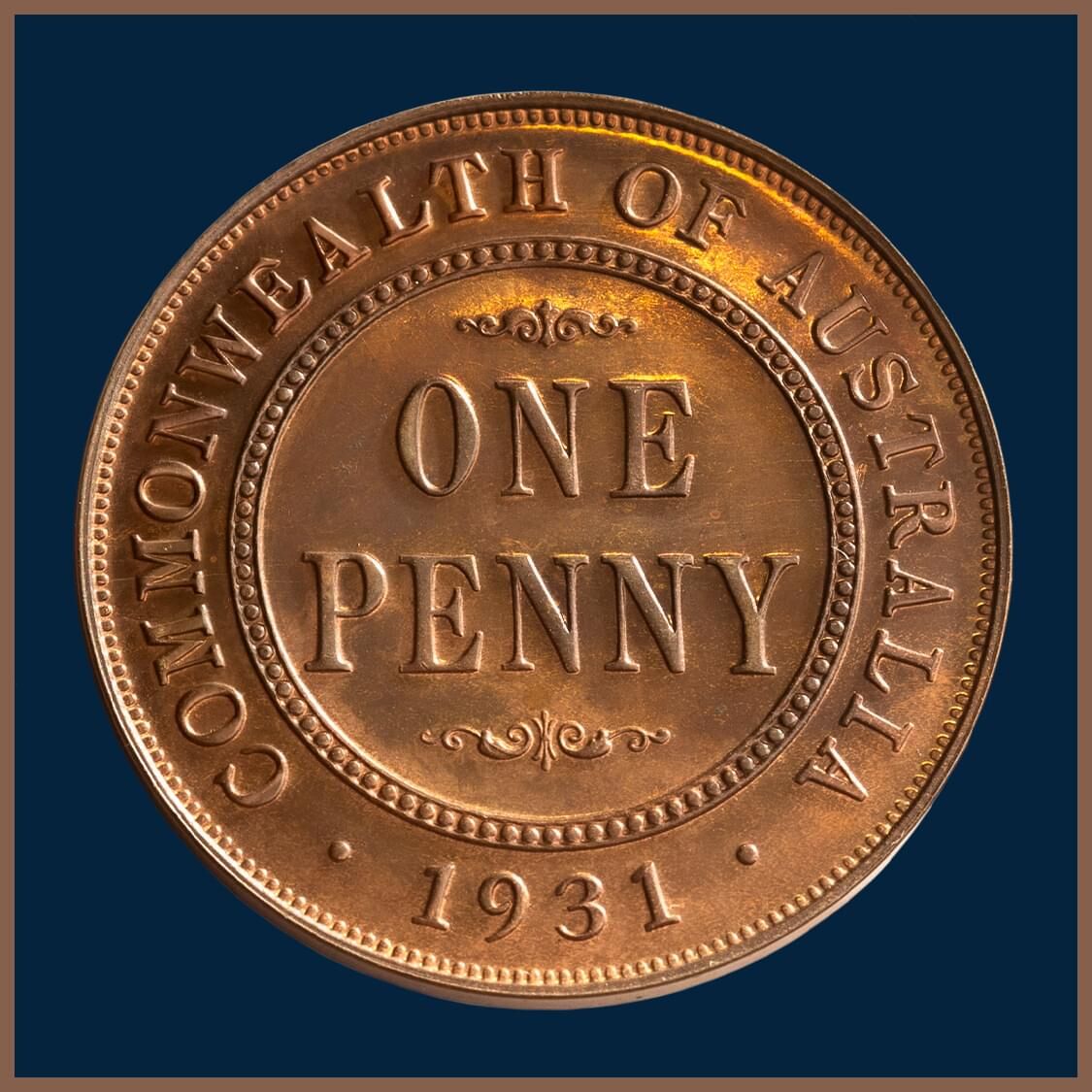
1931 Proof Penny
Extra0rdinary quality & strike
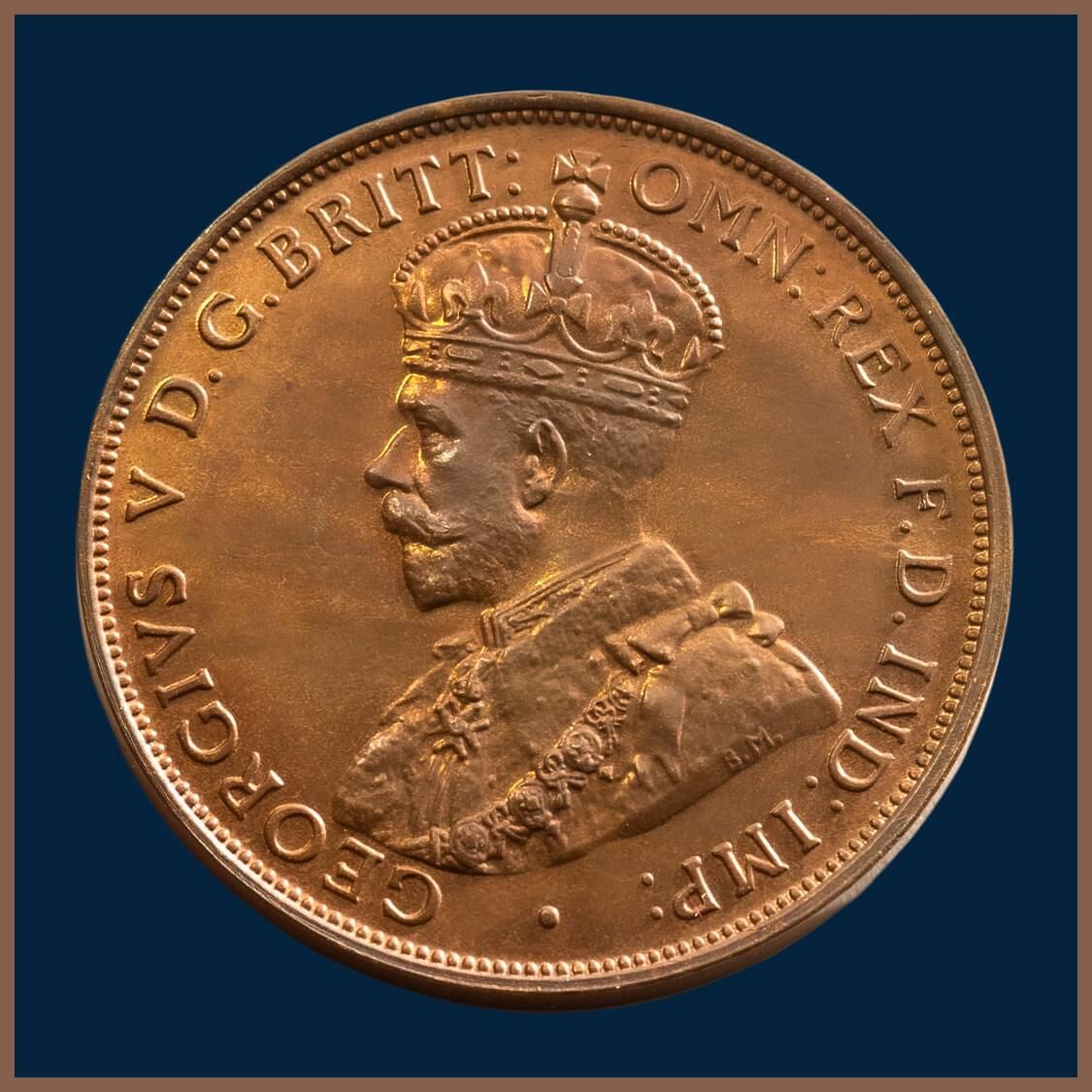
1931 Proof Penny
Extra0rdinary quality & strike
The 'Proof 1930' Club
The Proof 1930 Penny has reigned supreme as the King of Australian coin rarities for at least fifty-plus years. Loved and respected by collectors, dealers and the media, its appeal has only strengthened.
The reason for this adulation is that it is a proof striking of Australia’s rarest penny, the 1930 Penny. Two other proof pennies are also held in high regard, the Proof 1925 Penny and the Proof 1931 Penny, also minted at the Melbourne Mint.
During the George V era, the Melbourne Mint struck circulating pennies from 1919 through to 1936, annual mintages averaging 4.5 million coins. Three dates had well below average mintages, 1925, 1930 and 1931. They are collectively referred to as the rare-date or key-date pennies.
The proofs of these rare-date pennies have special significance to the industry.
Ranking #1 of the rare date pennies, the Proof 1930 Penny is at the 'top of the tree' for importance. It is a proof striking of Australia's rarest circulating penny, the industry contending that 1500 pennies were accidentally struck in 1930 and released into circulation. Three Proof 1930 Pennies are held by private collectors.
Ranking #2, and next in importance, the Proof 1925 Penny. A proof striking of Australia's second rarest circulating penny, the 1925 Penny, records indicating that 117,000 coins were struck and released into circulation. Three Proof 1925 Pennies are held by private collectors.
Ranking #3, and third in line for importance, the Proof 1931 Penny, records indicating that 474,000 pennies were struck in 1931 for circulation. Three Proof 1931 Pennies are held by private collectors, of which the coin offered above is the finest.
It is interesting to note that three examples are available to collectors of each of the rare-date proof pennies, 1930, 1925 and 1931.
Ultimately, there is another reason why these three coins are so highly valued. Australians just love their copper coins. The penny is an evocative coin, producing memories, ideas, emotions and responses. The humble penny is as Australian as you can get and people from all walks of life, and across all incomes, identify with our nation's copper coins.
The Melbourne Mint was established in 1872 as an overseas Branch of the Royal Mint London, the purpose to strike sovereigns and half sovereigns. In 1916, the Melbourne Mint diversified its coining repertoire. While continuing to strike the nation's gold coins, it also minted coins of the newly formed Commonwealth of Australia.
The Melbourne Mint ceased its coining operations in 1964.
In keeping with Royal Mint traditions, the Melbourne Mint struck proofs of those coins its was minting for circulation, be they gold, silver or copper. They are collectively referred to as Coins of Record.
The term, Coin of Record is to a large extent self-explanatory. It is a coin that has been minted to put on record a date. Or to record a design.
There was no commercial angle in the production of Coins of Record. The mints were not out to make money from the exercise. Quite the reverse, striking a proof coin in our pre-decimal era was a very labour intensive (and hence costly) exercise that would have dented the mints annual budget quite considerably.
A Coin of Record is an artistic interpretation of coinage, a strikingly beautiful coin beyond ordinary currency. Individually crafted to standards far exceeding that required of a circulating coin, using special coining techniques.
Perfection in the design, highly detailed, expertly crafted. Perfection in the fields, achieved by hand selecting unblemished blanks, polished to create a mirror shine. Perfection in the edges to encase the design … exactly what a ‘picture frame does to a canvass’.
Whereas production of circulating coinage was dictated by Government, Coins of Record were struck at the discretion of the mint master. They were not produced every year and, as they were individually crafted, the process was time consuming and the mintages minuscule. For Melbourne Mint copper proofs, generally four to six pieces or less. Forget the notion of striking five thousand (or more) proofs as collectors are accustomed to today.
For today’s collectors the Coins of Record offer a wonderful link to the past and are extremely rare, two reasons that make them so popular.
One of Australia’s most famous Coins of Record is the Proof 1930 Penny. Only six examples of the Proof 1930 Penny were struck, one of which was retained by the mint with one each being sent to the British Museum and the Art Gallery of South Australia, where they both still reside. How three examples out of the mintage of six ended up in collector’s hands is still unclear. The might of influential collectors, we suggest.
So, what happened to these Coins of Record? Where did they go? And if they were struck by the mints for their own use, how did they get into collector's hands?
In the main, Coins of Record ended up in the mint’s own archives, preserving its history for future generations.
Any Coins of Record that were surplus to a mint's requirements may also have been sent to a museum or public institution.
The Australian mints at Sydney, Melbourne and Perth were branches of the Royal Mint in London. To keep the mints in the Royal Mint circuit up to date it became common for the Australian mints to exchange Coins of Record with their London counterparts.
Coins of Record were also put on display at public Exhibitions. The two known examples of the Proof 1866 Sovereign and Proof 1866 Half Sovereign were especially struck to exhibit as ‘products of New South Wales’ as part of the Colonial Mints display at the International Colonial Exhibition of 1866 and the International Exposition in Paris, 1867. They were discovered in London in the early 1970s.
It is noted that many of the overseas mints have over time sold off Coins of Record that they considered excess to their requirements. The Royal Mint South Africa sold off several Australian gold proofs in the 1990s.
What is obvious when you look back through historical records is that influential collectors, those that were particularly close to a senior member of the mint’s personnel, were given limited access to Coins of Record.

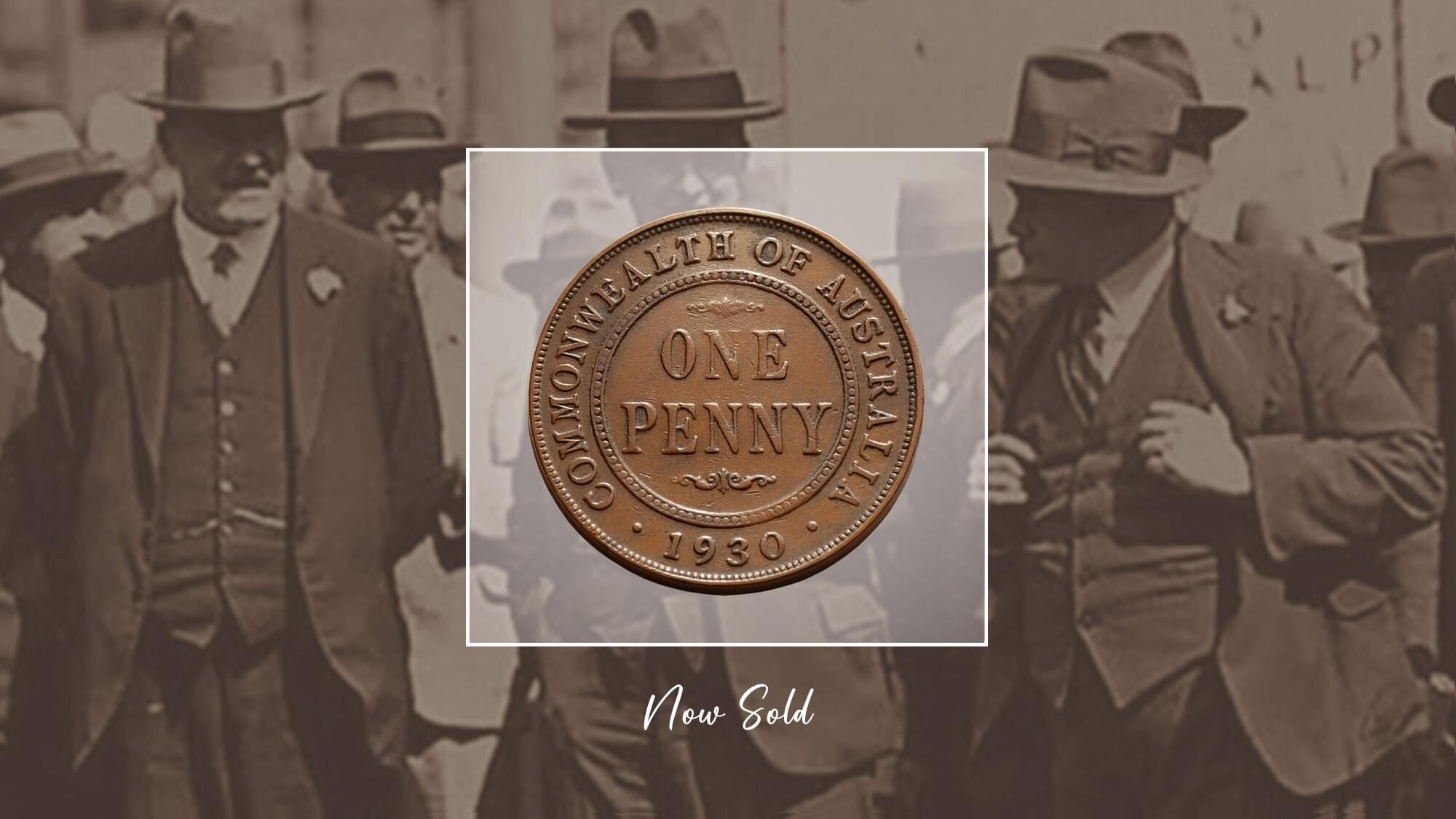
If you want to buy a 1930 Penny, then select a coin that is fabulous to look at. It's been our rule of thumb for decades.
A 1930 Penny such as this one!
Now that doesn't mean the coin has to be expensive. It just means that irrespective of the quality level, there are no unsightly gouges or edge knocks. And the toning is nice and even.
It is a fact that the 1930 Penny was not discovered until the 1940s, allowing at least a decade of circulation before collectors even knew of its existence. Which means that all 1930 Pennies have been handled and rattled around in change, with unfortunately many of them grossly mishandled, dropped, scratched or even worse.
The simple point - of acquiring a 1930 Penny that looks 'good' - really counts when, further down the track, it comes time for you to sell and realise on your investment. This point also ensures that you maximise the pleasure of ownership. For most collectors it is a great moment when you acquire a 1930 Penny, so you might as well enjoy it!
Click here for more details on this Product
We undertake three basic steps when considering a 1930 Penny.
The first step is to look at the coin in the flesh using just the naked eye. A truly great coin will always look good to the unaided eye. And this coin is impressive: evenly toned a handsome chocolate brown with very glossy surfaces. And because the surfaces are so glossy, the design details truly stand out.
The edges, an aspect that we value highly, are solid. (In our view the edges of a coin are akin to a frame around a work of art. And you wouldn't accept a painting if a piece of a frame was missing or badly damaged!)
Also solid, the date '1930', and the legend Commonwealth of Australia. The upper and lower scrolls, the inner beading are all in evidence.
The second step is to take up a magnifying glass and examine the coin in detail to assess and confirm its grade. The eye glass re-confirms what we have seen to the naked eye and much, much more. We have conservatively graded this coin About Very Fine on the obverse which indicates that there are two, nearly three sides of the central diamond and six plump pearls. The oval to the left of the diamond is three-quarter intact. The lower band of the crown is intact. The coin has minimal marks in the fields and no detracting gouges.
The final step is to re-visit the coin with the naked eye. Just to make sure that you have taken everything in. Start with the edges and work your way in looking at the design detail and the fields. The final assessment of this 1930 Penny is that it is a great coin and well-priced.
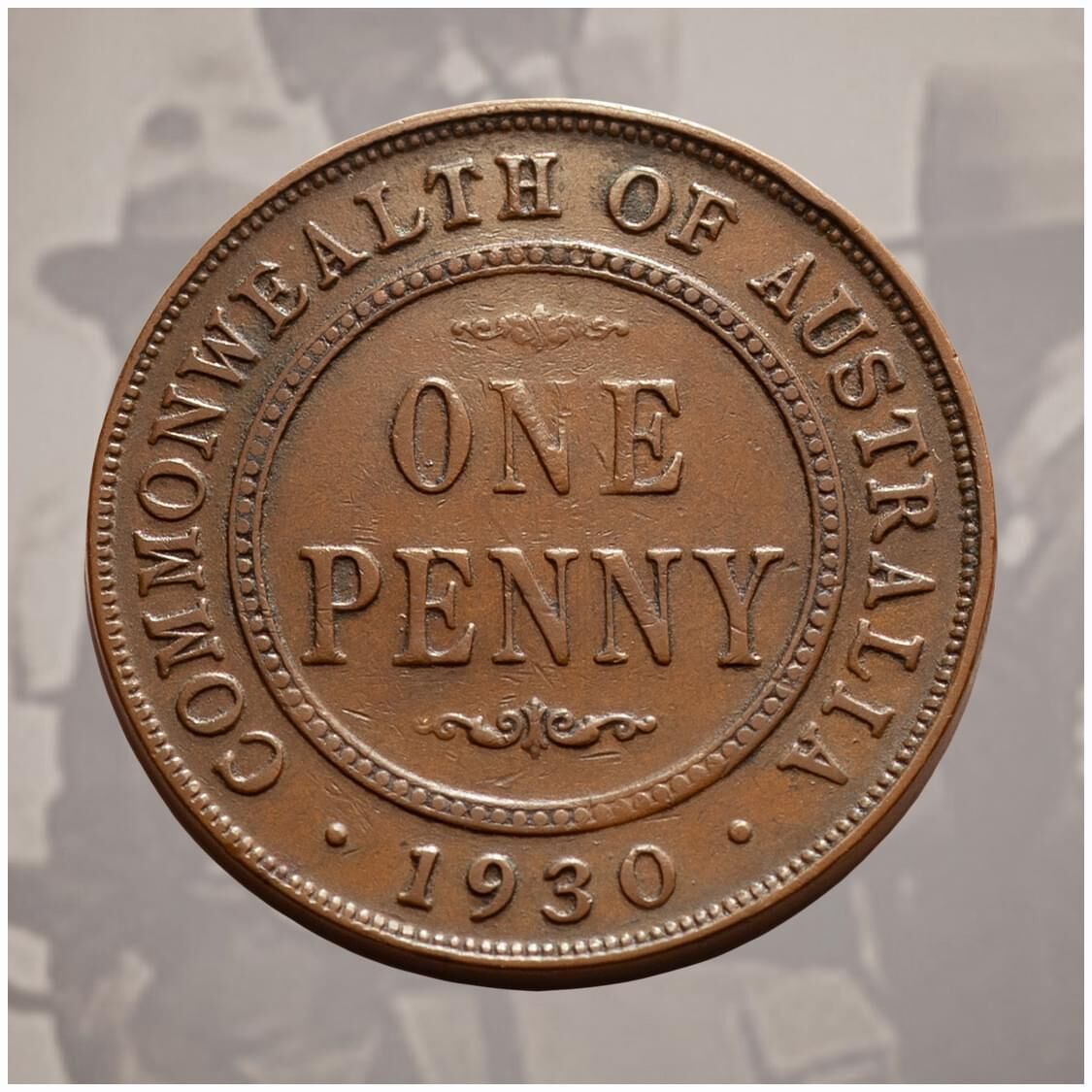
Commonwealth of Australia
1930 Penny
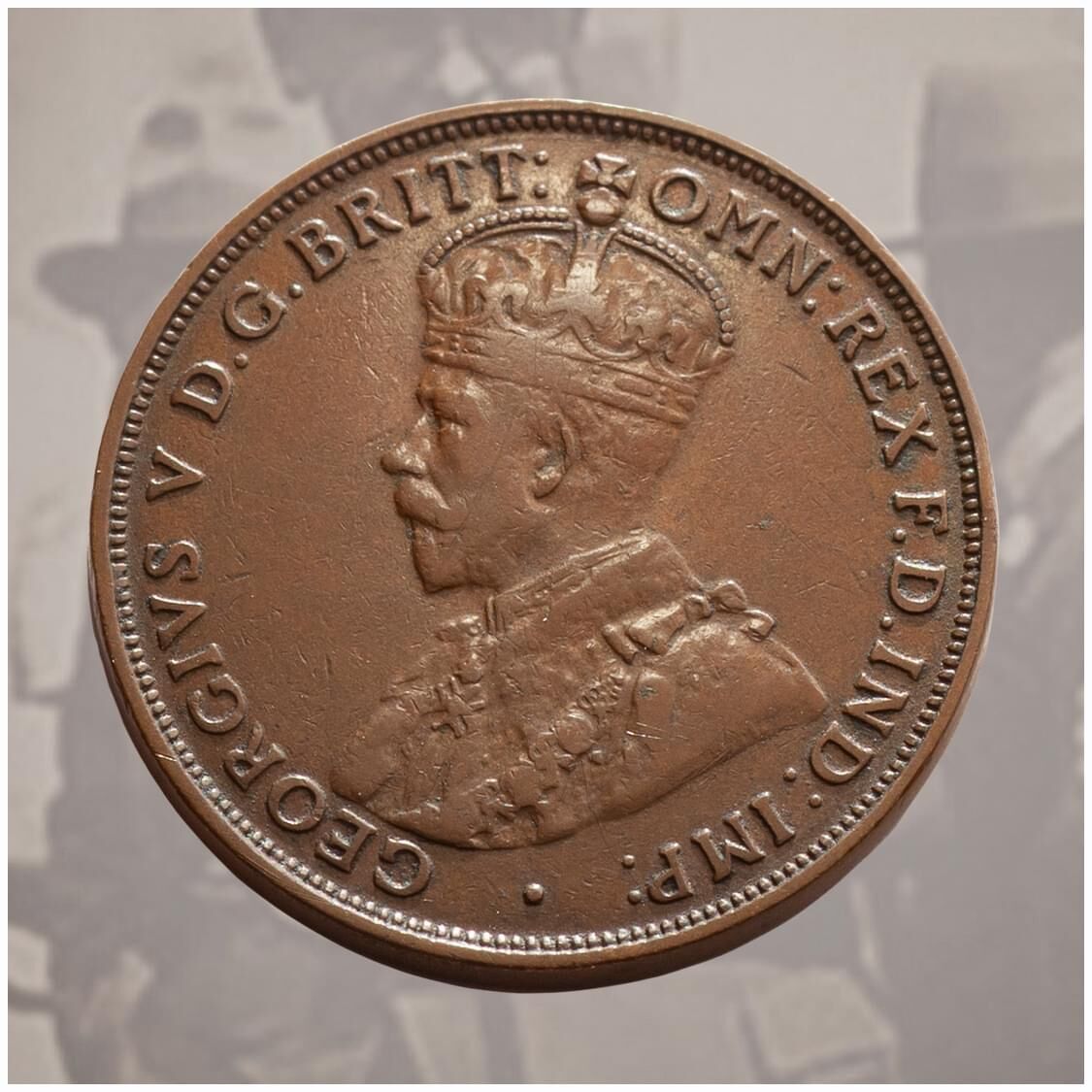
Commonwealth of Australia
1930 Penny
Commonwealth of Australia 1930 Penny
Commonwealth of Australia 1930 Penny
Acquiring a 1930 Penny is a proud moment for an Australian coin collector. It an occasion to be savoured and celebrated for the 1930 Penny is an Australian icon, a part of the nation's folklore. It is the coin that was borne out of the Great Depression, never meant to be struck with its origins shrouded in mystery and romance.
Acquiring a 1930 Penny doesn't happen every day simply because of its extreme rarity.
A meagre 1500 coins were believed struck.
When a 1930 Penny is passed on to a family member that person is being gifted an item of value and increasing value. And they are being passed an item that was particularly special to its owner evoking wonderful memories.
And this 1930 Penny is a well above average example.
There are many reasons why collectors love the 1930 Penny and one of the prime reasons is its financial reliability. It is a solid coin. And this genuinely counts. In fact, we would go one step further and say that over the long term the 1930 Penny has probably been one of our most consistent and trustworthy numismatic performers.
The second reason is that the 1930 Penny is as Australian as you can get. Struck during the Great Depression, the 1930 Penny is the nation’s glamour coin and is unrivalled for popularity, enjoying a constant stream of demand unmatched by any other numismatic rarity.
The third reason is that the 1930 Penny is sought after at all quality levels and all dollar levels. It is in many respects an industry phenomenon, for in a market that is quality focused the 1930 Penny is keenly sought irrespective of its quality ranking. And growth over the mid to long term has been significant across all quality levels. Well circulated (Fine) 1930 Pennies were selling for £50 in the 1950s. A decade later, by decimal changeover, the coins were fetching £255 ($510). By 1988, Australia's Bicentenary, a Fine 1930 Penny had reached $6000. The turn of the century saw 1930 Penny prices move to a minimum of $13,000. Twenty years later prices have more than doubled. And with a 100th anniversary just four years away, the push to acquire Australia’s favourite Penny is really on.


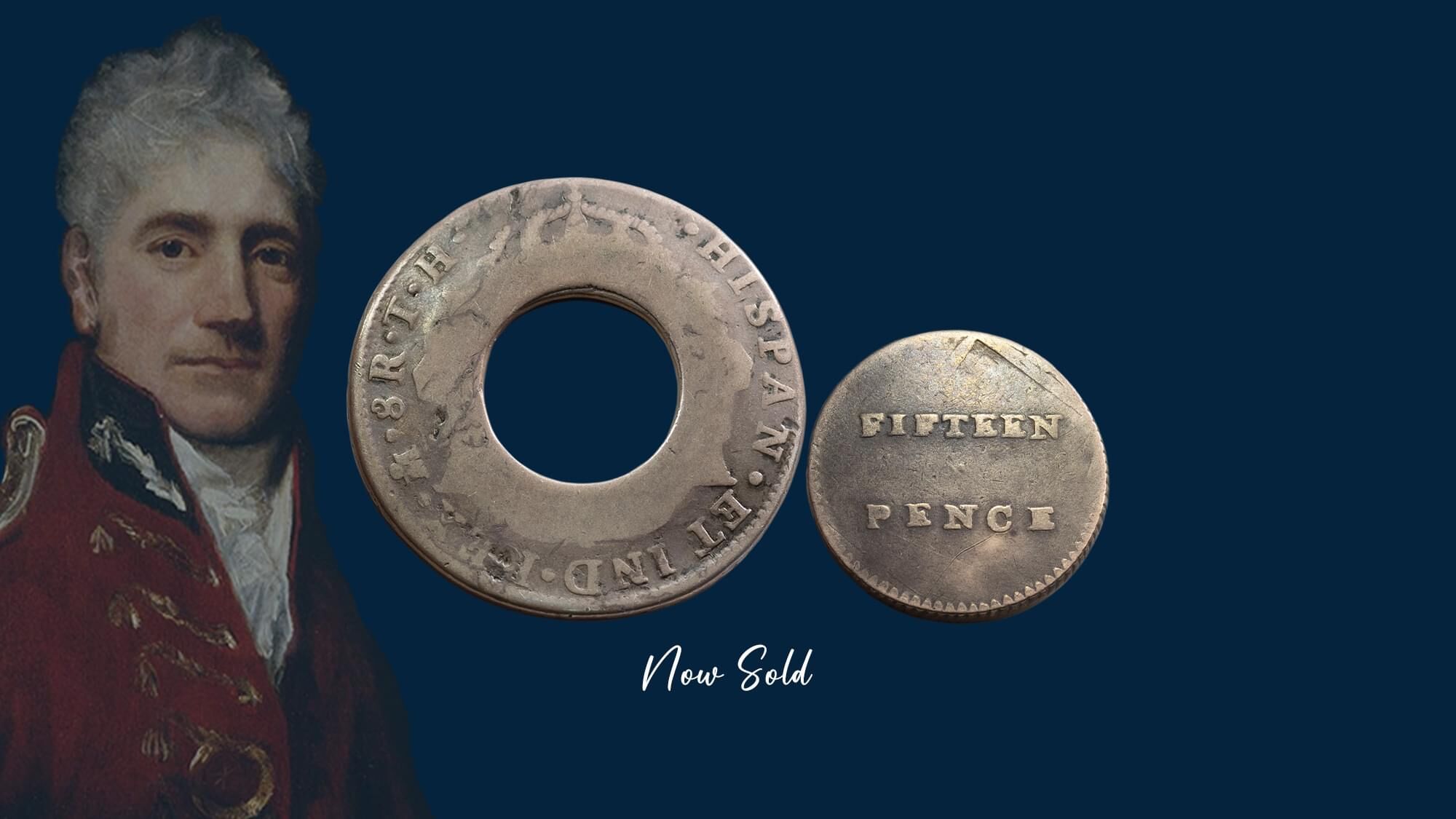
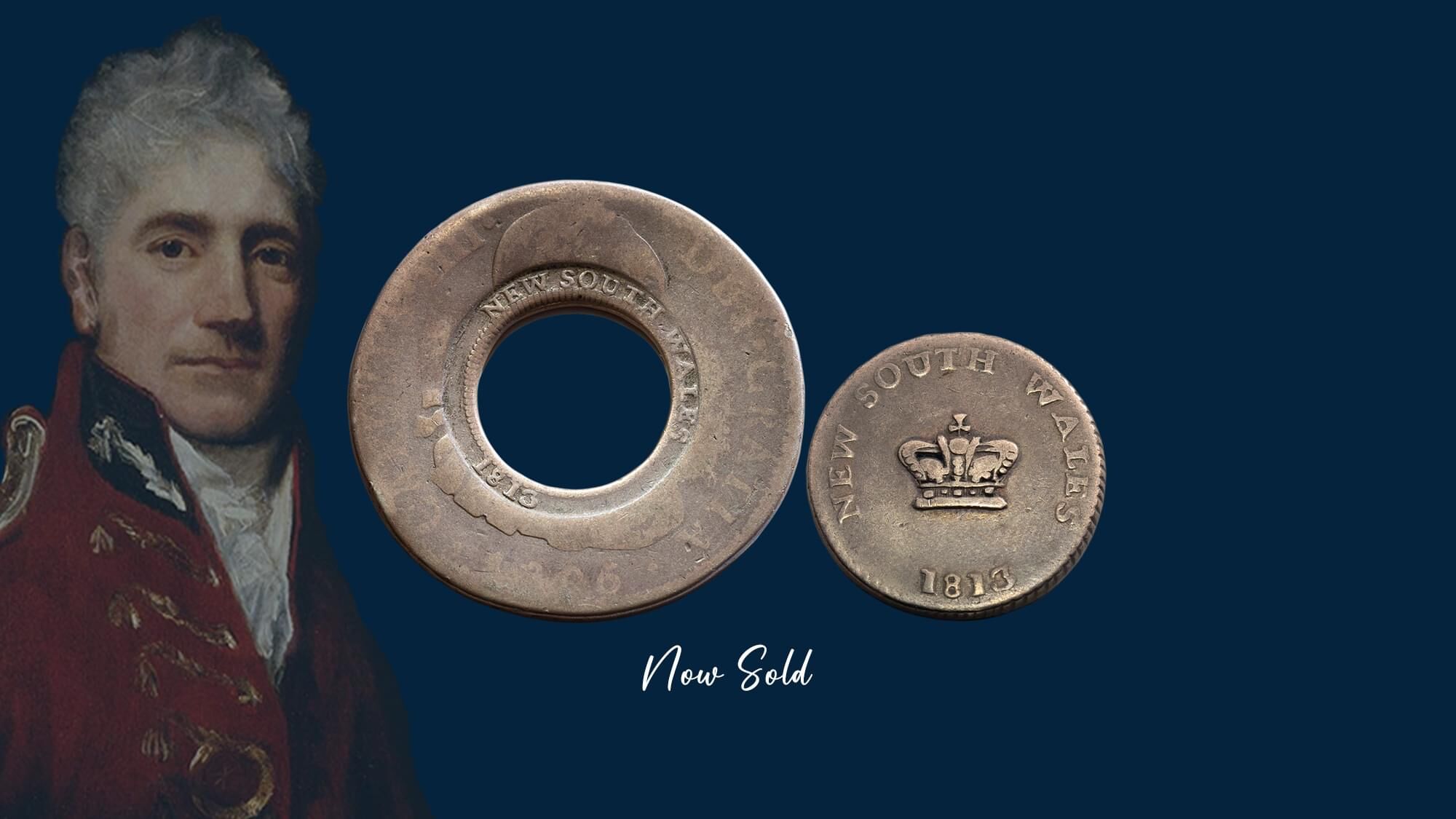
Coinworks has sold plenty of individual Holey Dollars in our time. And even more of the colonial Dump. But this is the second only occasion that we have had a well-matched pair of 1813 Holey Dollar and 1813 Dump to offer collectors.
What makes this offer even more special, the set is affordable. The sale price is $85,000, including the presentation case, hand-crafted from Australian timbers by award winning artisan, Anton Gerner.
The synergy between the two coins is profound for, despite their circulation, they are reasonably well matched tonally. And perfectly matched texturally. That's a rare occurrence. The surfaces are both smooth and highly reflective, there are no unsightly blemishes. Even rarer, the obverse Holey Dollar counter stamps are in the optimum position, displaying the issuing authority at the top of the hole and the date at the bottom. Mirroring the position of the issuing authority and date on the Dump.
The ultimate corporate gift? Family heirloom? Or the ultimate indulgence for the collector that is passionate about Australia's history. That both coins have circulated, has only made them more appealing by making them affordable and available to a wider collector audience.
Click here for more details on this Product
The 1813 Holey Dollar and the 1813 Dump are the nation's first coins. Joined at the hip by way of the process that created them, the two coins together represent the complete narrative of Australia's first local currency.
Unequivocally, collectors look for the complete story. Holey Dollar buyers eventually seek out a Dump. And Dump buyers look for a Holey Dollar. They just don't buy them at the same time! Mainly due to financial considerations, non-availability, or that the two coins do not aesthetically complement each other.
This is a well-matched pair of 1813 Holey Dollar and 1813 Dump. At an affordable price! (And the second only occasion that we have managed to put such an offer together.)
The sale price is $85,000, the two coins housed in a presentation case, hand-crafted from Australian timbers by award winning artisan, Anton Gerner.
The synergy between the two coins is profound for, despite their circulation, they are reasonably well matched tonally. And perfectly matched texturally. That's a rare occurrence. The surfaces are both smooth and highly reflective, there are no unsightly blemishes.
Even rarer, the obverse Holey Dollar counter stamps are in the optimum position, displaying the issuing authority at the top of the hole and the date at the bottom. Mirroring the position of the issuing authority and date on the Dump.
The ultimate corporate gift? Family heirloom? Or the ultimate indulgence for the collector that is passionate about Australia's history. That both coins have circulated, has only made them more appealing by making them affordable and available to a wider collector audience.
The Holey Dollar and Dump are the nation’s first coins, minted in 1813 by order of Governor Lachlan Macquarie. As the two coins were cut from one Spanish Silver Dollar, we know that the holed silver dollar and the circular disc that fell out of the hole were tonally and texturally, the same.
Once cut, the pieces would have been separated to embark upon their separate journeys, developing their own unique identifying characteristics.
The donut-like metal piece was over stamped around the edge of the hole to become the 1813 Holey Dollar. With a value of Five Shillings, the Holey Dollar underwent minimal usage and was primarily stored in the Bank of New South Wales, as records attest.
The metal disc that fell out of the hole went through a different process and was heated to remove the design elements of the original Spanish Dollar and was then over stamped to become the 1813 Dump. With a value of Fifteen Pence, the Dump was well used and became the work horse of the colony, introducing multi-opportunities for tonal changes and damage.
Today there are approximately two hundred Holey Dollars held by private collectors, and about eight hundred Dumps. You would think that with those numbers finding a Dump that is preserved in the same style and tone as a Holey Dollar would be a simple feat.
That could not be further from the truth.
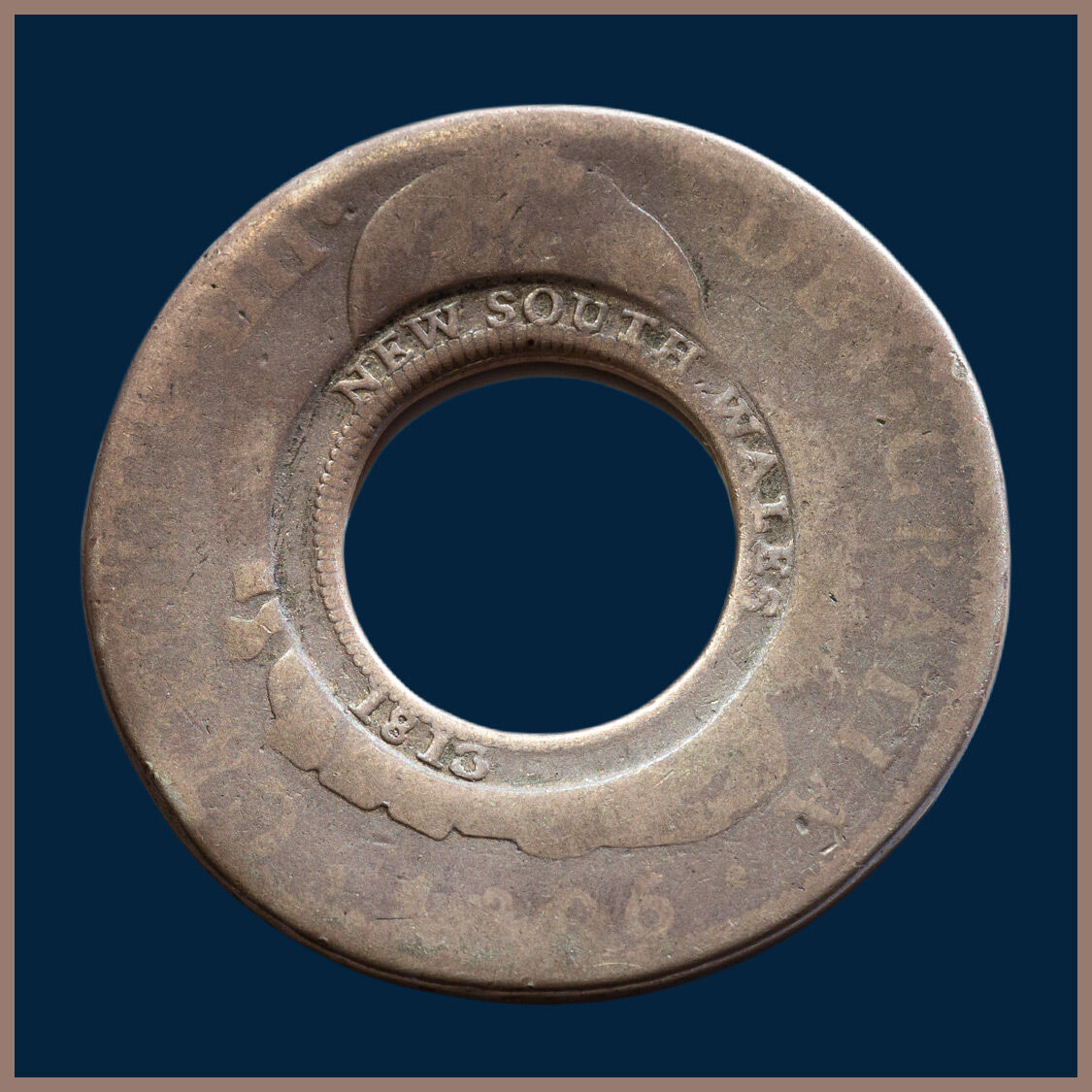
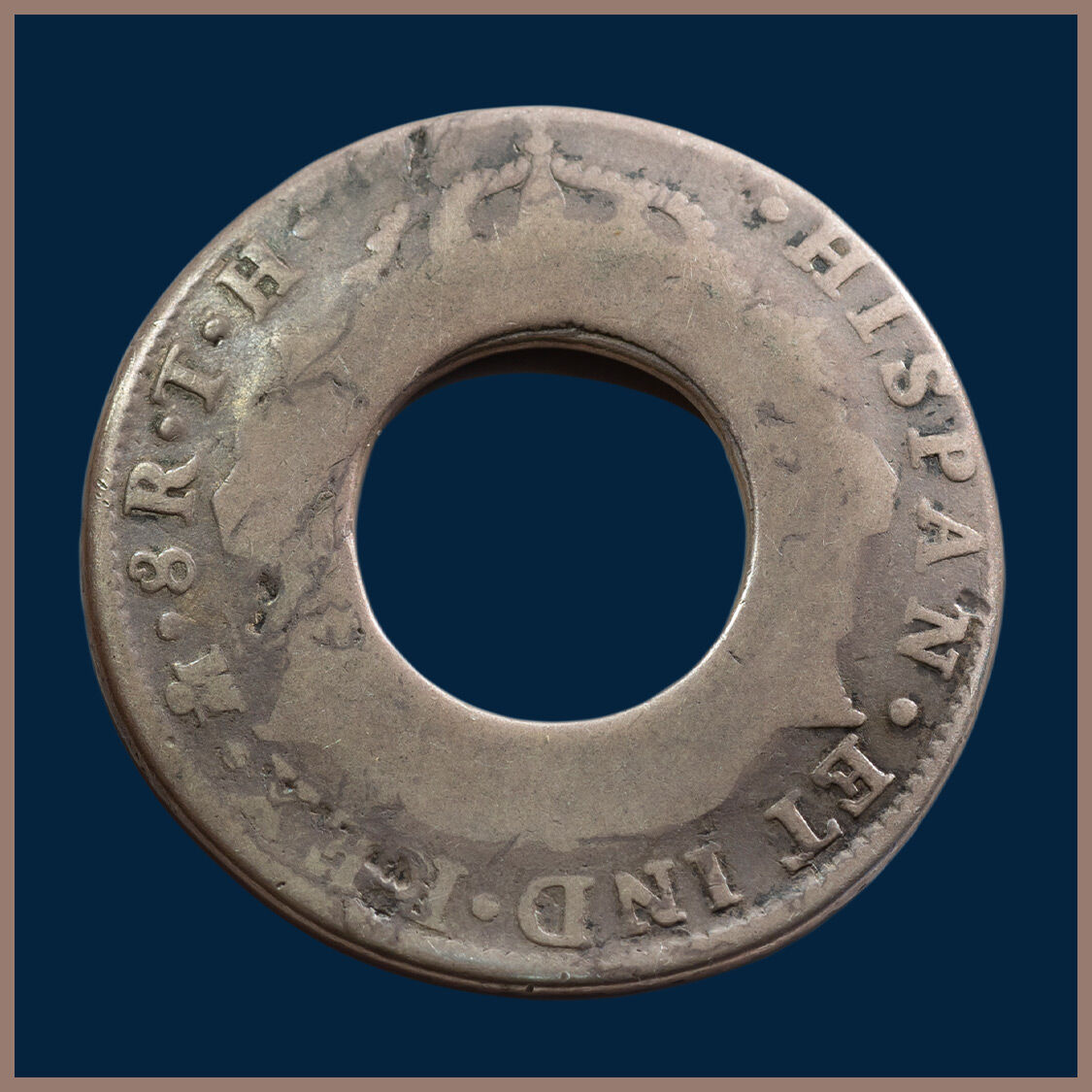
1813 Holey Dollar
Obverse
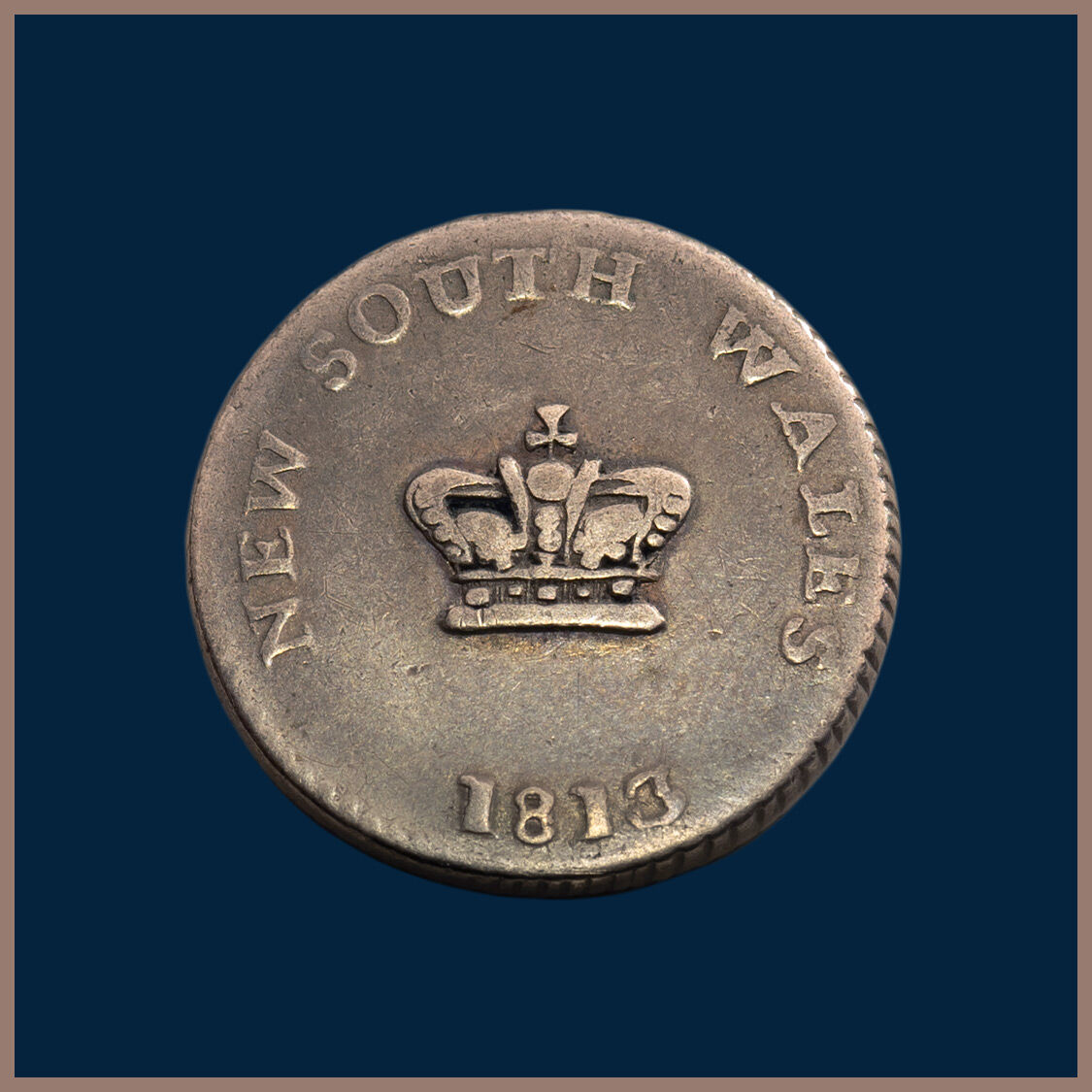
1813 Dump
Obverse
1813 Holey Dollar
Reverse
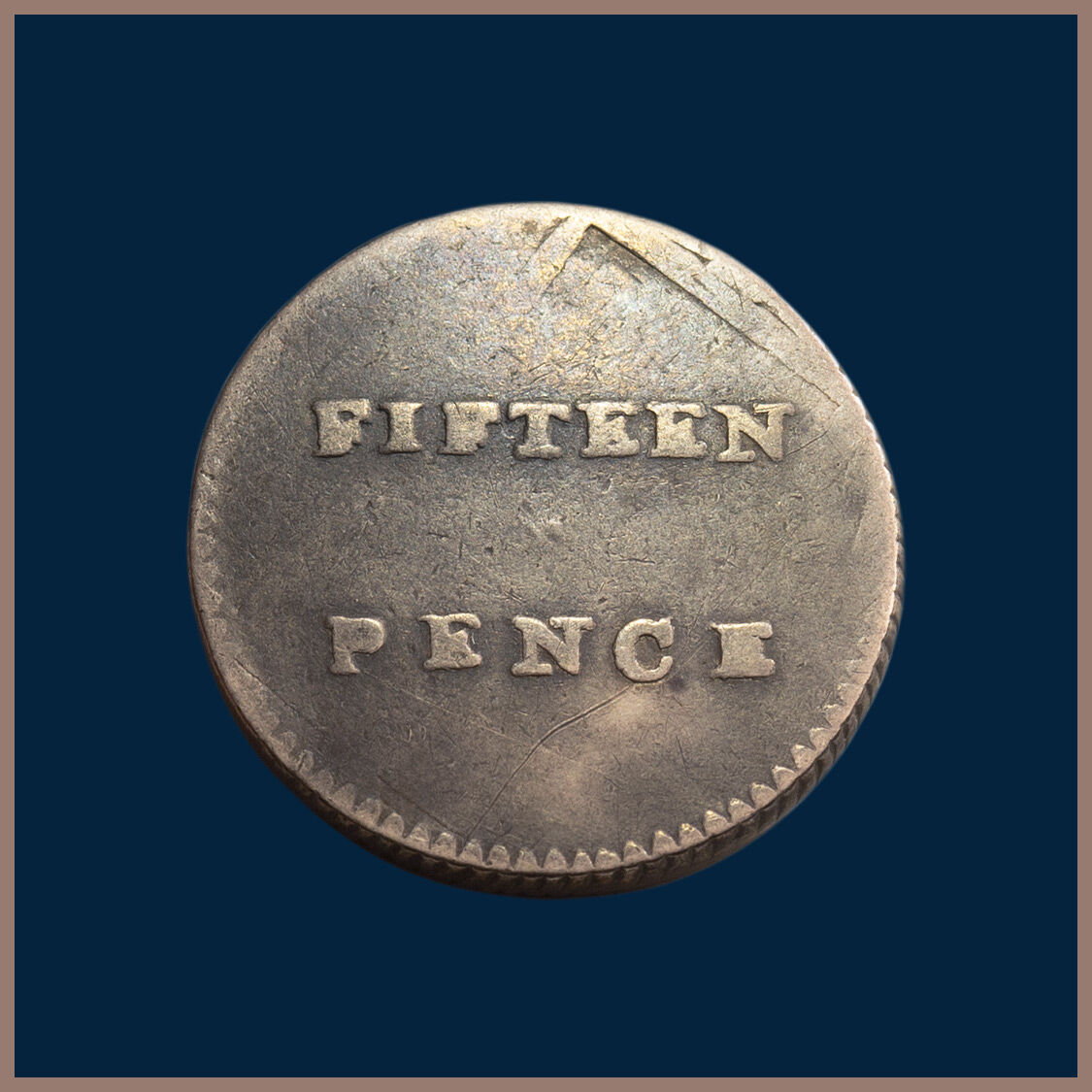
1813 Dump
Reverse
1813 Holey Dollar created from a Spanish Silver Dollar that had been struck at the Mexico Mint in 1806 (Mira/Noble reference 1806/4, Spalding reference 158). Ex A H Baldwin London, Spink Auctions March 1989, Lot 1412.
This Holey Dollar has one particular attribute that sets it apart from most others. The obverse counter stamps 'New South Wales' and '1813' are in the same vertical vista as the date of the silver dollar, '1806'. Only a handful of Holey Dollars exhibit such alignment. And it is a very impactful feature in this presentation, mirroring the position of the issuing authority and date on the Dump.
The application of the counterstamps is the point at which the holed silver dollar (and the circular disc) became the 1813 Holey Dollar (and 1813 Dump), the nation's first locally made coinage. Prior to that, they were just two pieces of metal. One like a donut. And the other a small metal disc.
A study of the surviving Holey Dollars reveals that Henshall's application of the counterstamps was wildly random, that the holed dollar was not placed in a particular position between the dies. And it obviously didn't matter which side of the holed dollar was facing up. The strike lacked a definite pattern or predictability.
Specifications of the Holey Dollar
Design type: 5
Date of the silver dollar: 1806
Reigning monarch: Charles IV (1788 - 1808)
Design of the silver dollar: colonial bust type
Portrait: Charles IV
Legend: Carolus (Charles) IIII
Counter stamp dies: I/11
Quality of silver dollar: Very Good
Quality counter stamps: About Fine / worn
1813 Dump struck with obverse die A and reverse die 1. Technically graded Good Fine, the design well centred.
This Dump has a design attribute that also sets it apart from other Dumps. The reverse shows extensive evidence of the original Spanish Dollar from which it was created, the area above the word 'FIFTEEN' particularly prominent.
While high temperatures were used to obliterate the original Spanish Dollar design from most examples, Dumps that retain their original dollar design elements and depict their origins are highly prized.
The Obverse Die 1 has the following characteristics: an imaginary line drawn along the base of the Crown cuts the 'N' of 'NEW' and passes above or through the top of the 'S' of 'WALES'. The cross is symmetrical and points between the 'T' and the 'H' of 'SOUTH'. The '3' in 1813 tilts to the left. Five jewels are detailed in the band, the left-most pearl touching the base of the band. The right-most jewel touching the top of the band.
The Reverse die 1 has the following characteristics: the upright stroke of 'F' in 'FIFTEEN' is to the left of the upright stroke of 'P' in 'PENCE. The vertical stroke of 'T' is over the centre of the 'N'. 'FIFTEEN' and 'PENCE' are 4.5mm apart.
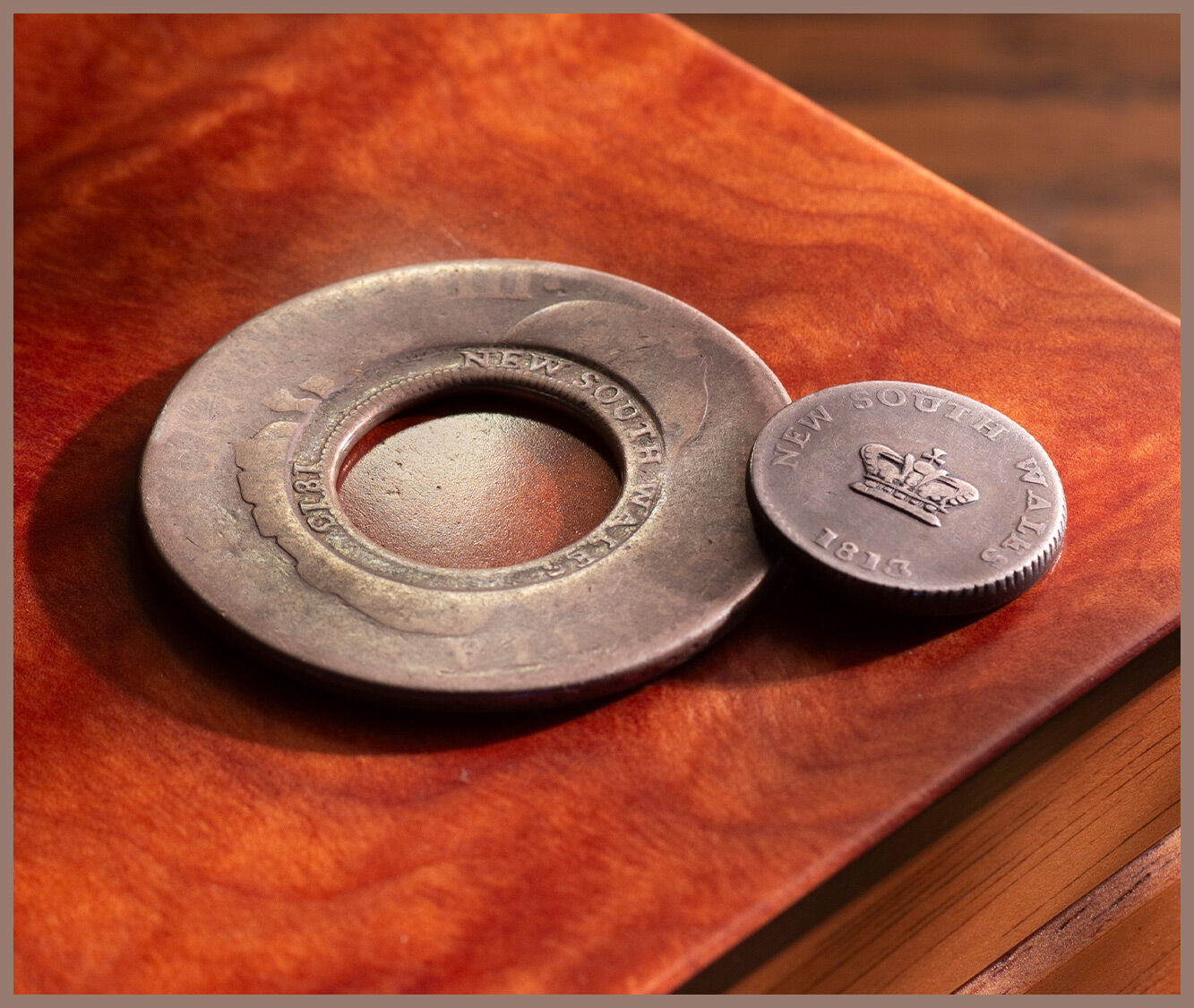
Australia's first coinage. Macquarie's vision.
The Holey Dollar is the nation’s first coin, minted in 1813 by order of Governor Lachlan Macquarie.
The issuing of Australia’s first coinage symbolised the changing dynamics of the penal colony of New South Wales. The colony had started out in 1788 as a jail, a repository for convicts, under the governorship of Captain Arthur Phillip. It had emerged some twenty-five years later as a thriving economy requiring a formal medium of exchange to support a burgeoning commercial hub.
As Macquarie had no access to metal blanks to create his currency, he improvised and acquired 40,000 Spanish Silver Dollars as a substitute. To make his new coinage unique to the colony, and to inhibit their export, he employed emancipated convict William Henshall to cut a hole in each silver dollar.
Each holed silver dollar was then counterstamped on both sides, around the edge of the hole. On one side, the date 1813 and the issuing authority of New South Wales. And on the other side, the value 'Five Shillings' with some decorative embellishments of a fleur de lis, a double twig of six leaves and a tiny 'H' for Henshall at the junction of the twigs (on some, not all dies).
The metal disc that fell out of the hole was counter stamped on one side with the date, the issuing authority and a crown. And the other, the value 'Fifteen Pence'. Henshall declared his involvement in the creation of the Dump by inserting his initial, an 'H' for Henshall, on some - but not all - of the reverse dies of the Dump.
The application of the counterstamps is the point at which the holed silver dollar became the 1813 Holey Dollar, and the metal disc, the 1813 Dump. Prior to that, they were just a Spanish coin with a hole in it and a metal disc that fell out of the hole!
While the original intention was to create 40,000 Holey Dollars and 40,000 Dumps from 40,000 silver dollars, spoilage and the despatch of samples back to Great Britain saw a slightly reduced number of Holey Dollars and Dumps - 39,910 of each - released into circulation.
Today there are approximately two hundred Holey Dollars held by private collectors and perhaps eight hundred Dumps. Both coins are cultural and financial icons, with an appeal that extends far beyond numismatics, driven by its immense historical significance and tangible connection to a foundational moment in Australian history ... the creation of our first coinage.
Owning a set of Holey Dollar and Dump is about indulging in an experience, a fusion of history and prestige. And it's about savouring the moment.

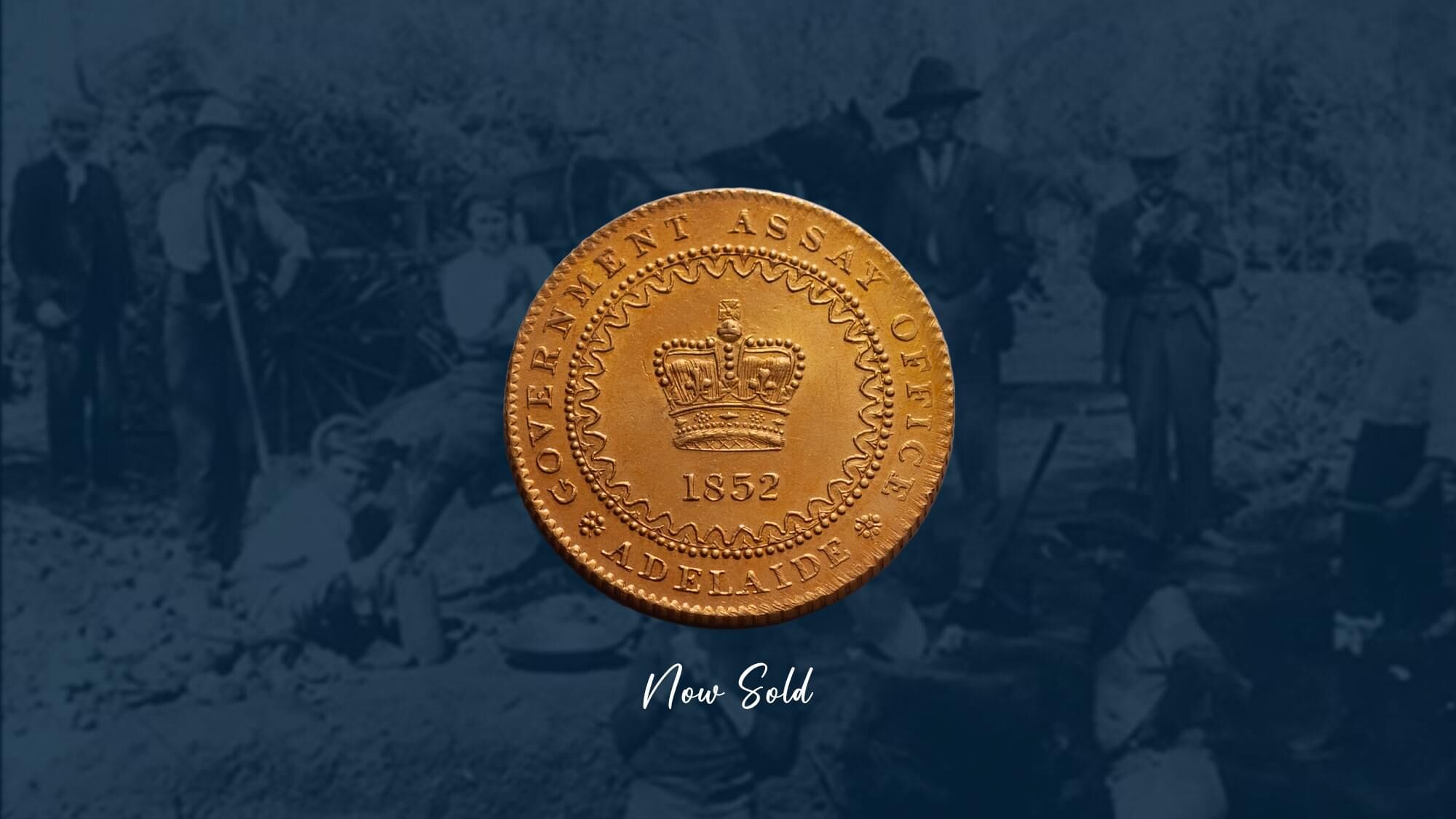
There is everything to like - and nothing to dislike - about this Uncirculated 1852 Adelaide Pound. Including the price.
We checked our records. It’s been years since we last offered an Adelaide Pound at this quality level. We have sold lesser quality examples, at Extremely Fine to Good Extremely Fine: coins that are reasonably readily available and that were priced at $30,000 to $35,000. We have also sold higher quality examples, Brilliant to Choice Uncirculated, priced at $70,000 to $75,000.
Uncirculated Type 2 Adelaide Pounds are rarely offered, very hard to find. And they have a seriously good price advantage in that they are available under $50,000.
We point out the following details of this Uncirculated Adelaide Pound. The cross on the orb at the top of the crown is untouched: so too the two fleur de lis. The pleats in the cloth that back the fleur de lis are evident as are the black flecks in the ermine on the lower band. We also note the proof like surfaces (particularly on the reverse) and the strength in the edges (on the obverse) all the way round.
This Adelaide Pound is presented in an Uncirculated state and available now.
Click here for more details on this Product
The Adelaide One Pound is the nation’s first gold coin, struck in 1852 at the South Australian Government Assay Office, Adelaide.
Local jeweler and engraver Joshua Payne created the dies for the nation's first gold coins. The obverse declared the issuing authority, Government Assay Office Adelaide, encircling a crown and the date, 1852, the design used continuously throughout production. The reverse declared the fineness and weight encircling it's value.
With its fine design detail, the Adelaide Pound is compelling and a piece of significance, its status as the nation's first gold coin ensuring that it will never be forgotten.
And it is extremely rare with less than forty examples surviving from the first production run and perhaps two hundred and fifty from the second. Either first or second run, the Adelaide Pound is a prized possession, an iconic gold coin revered by local and international buyers.
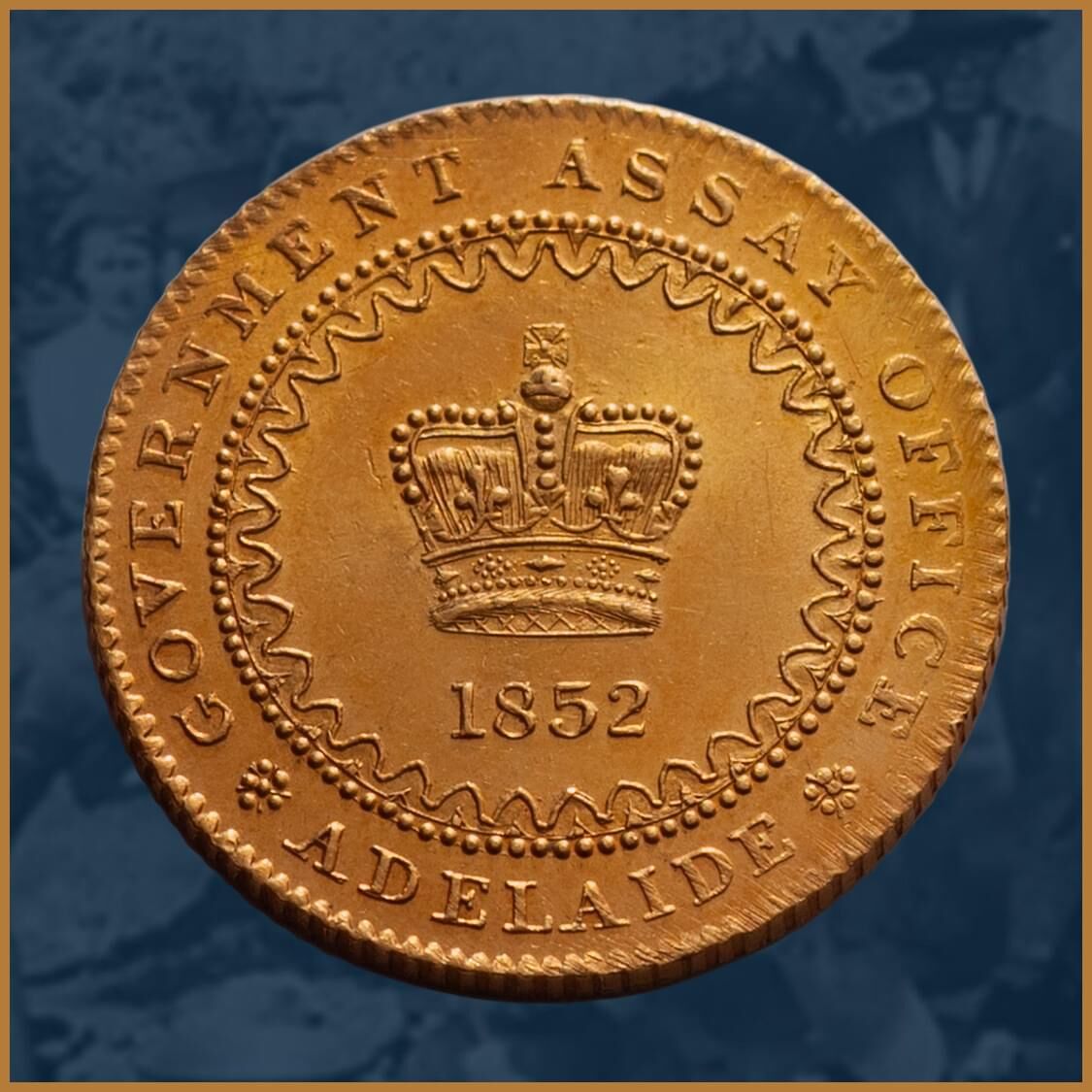
Uncirculated
1852 Adelaide One Pound
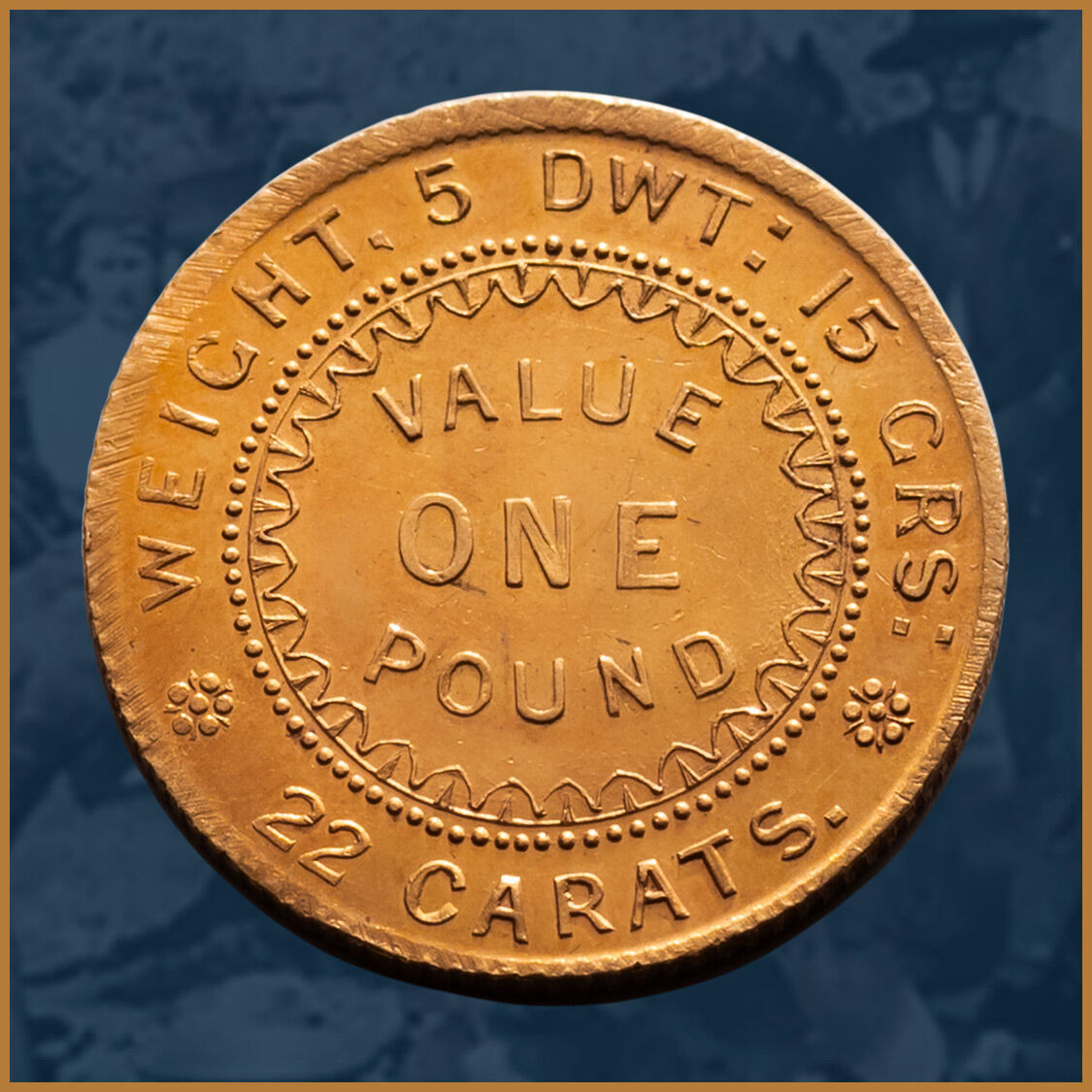
Uncirculated
1852 Adelaide One Pound
Uncirculated
1852 Adelaide One Pound
Uncirculated
1852 Adelaide One Pound
The first production run of Adelaide Pounds was short and eventful. A cracking of the reverse die during the striking of the first fifty coins halted production.
The impaired die, featuring a beaded inner circle, was replaced and production resumed, staff electing to use a die with a different design to that used in the first run. The second die featured a scalloped inner border. The move to use differently designed dies was profound for it clearly differentiates those coins struck in the first and second run.
In the second production run, pressure was relaxed on the edges to lengthen the die usage and re-focused on the central area of the design. The reduction in pressure on the edges meant that the edge perfection achieved in the first run of coins was simply not achievable. Most Adelaide Pounds from the second run therefore show some form of weakness in the edges, particularly in the Government Assay Office area. Occasionally the weakness is exhibited all the way round. Due to the re-focus of pressure away from the edges and to the centre of the coin, the crown design is almost always well executed with flattened areas simply due to wear.
The official recorded mintage of the nation’s first gold coin is 24,648, a relatively small number given the amount of gold deposited at the Assay Office. Very few out of the mintage actually circulated, with many of them ending up in the melting pot.
Assaying of the one pound samples sent to London determined that the intrinsic value of the gold contained in each piece exceeded its nominal value. The coin therefore became the target of profiteers and were exported to London and melted down.
The Adelaide Gold One Pound, struck in the first production run, is known as the Type I Adelaide Pound and fewer than forty examples survive from the first production run in varying degrees of quality.
The Adelaide Gold One Pound, struck in the second production run, is known as the Type II Adelaide Pound. It is an iconic gold coin with perhaps two hundred and fifty available to collectors.
The clear advantage of the Type II over the Type I is its availability and its affordability.
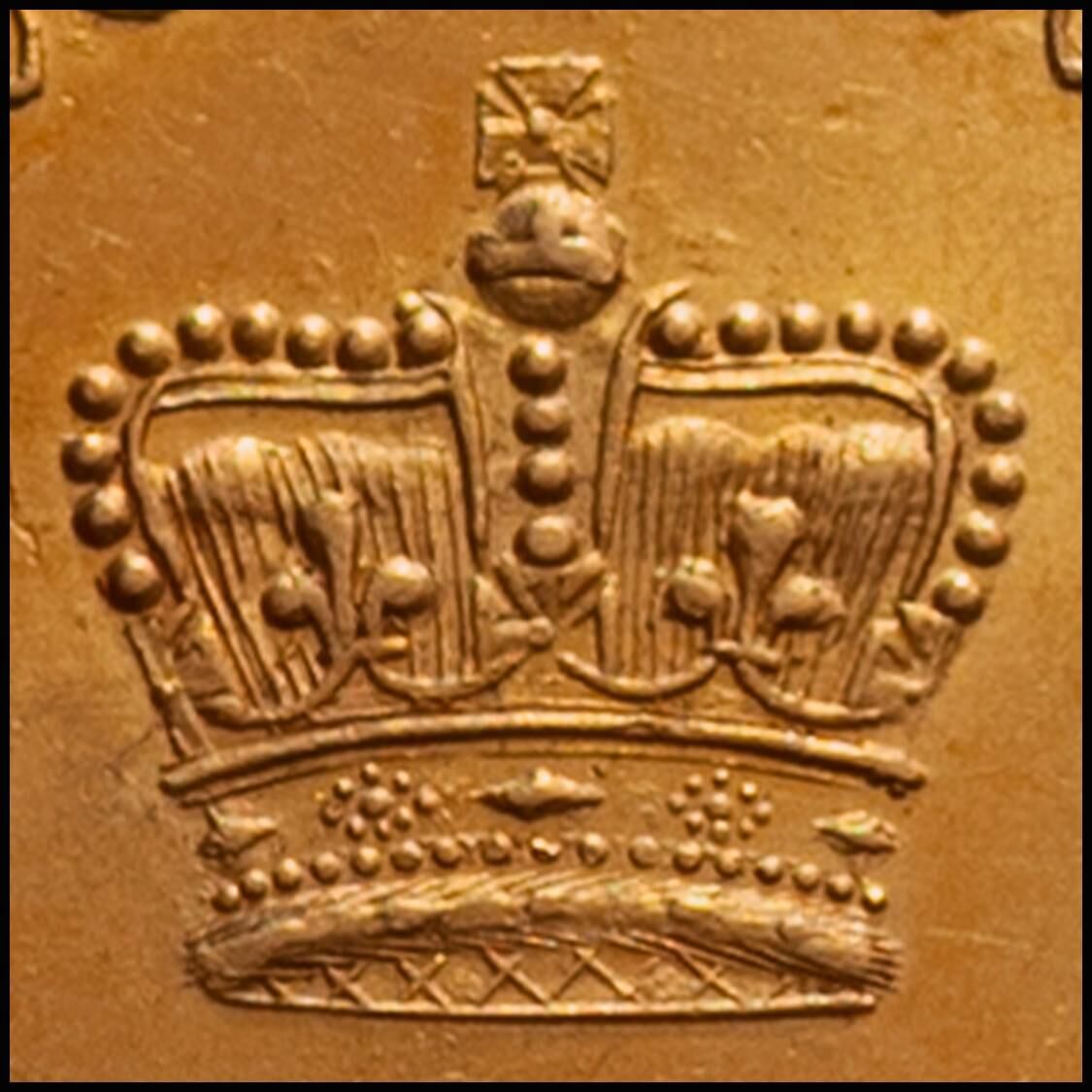
A close-up of the Crown
The cross on the orb at the top of the crown is untouched: so too the fleur de lis. The pleats in the cloth that back the fleur de lis are clear as are the black flecks in the ermine on the lower band of the crown.
The discovery of significant gold deposits in Australia in 1851 created sudden wealth and stimulated immigration on a vast scale. The Gold Rush transformed the nation, economically and socially, and marked the beginnings of a modern multi-cultural Australia.
No colony was immune from the dramatic effects of the discovery of gold. Those that were rich in gold. And those, such as the colony of South Australia, that was devoid of the precious metal, its economy collapsing due to the mass exit of manpower and currency lured to the Victorian gold fields.
While enormous potential wealth was being dug out of the ground, there was no local mechanism to transform the gold into currency. Money was scarce and the colonial governments had no authority to strike coinage.
That meant gold had to be shipped to London to convert into sovereigns, involving substantial shipping costs and a round-trip time of about six to eight months. The banks monopolised gold buying on the fields, forcing artificially low prices on the diggers who were powerless to achieve the higher London price. Transport from the fields was dangerous and expensive.
There was unanimous agreement amongst the five colonies, Victoria, Western Australia, Tasmania, South Australia and New South Wales, that a gold coinage had to be locally produced, that the six month turnaround of shipping gold off to London and receiving sovereigns in exchange was unworkable.
As each colony was under different pressures however, they failed to agree on the form a currency should take. And to its urgency.
The New South Wales legislature debated the establishment of an Assay Office to resolve the currency crisis. The notion was rejected, the legislators opting instead to follow protocols and petition London for the establishment of a colonial Mint. The decision was heavily influenced by the banks. While both options would present an impediment to their business, a mint was the lesser of two evils.
In the knowledge that an 'official' solution might take years, the colonial Governments of South Australia and Victoria sought a more immediate resolve, that of an Assay Office. Victoria's rumblings went nowhere. South Australia however pursued the idea with vigour, circumventing currency laws and established the Adelaide Government Assay Office.
The opening of the Adelaide Assay office required local legislation. It came in the form of the Bullion Act, enacted on 23 January 1852. The Act authorised the opening of a Government Assay Office that would produce gold ingots. While not legal tender, they could be exchanged for banknotes at the rate of £3 11/- per ounce.
Production of ingots began on 4 March 1852.
Fielding numerous complaints about the ingots and their efficacy in solving South Australia's financial crisis, the Act was amended in November of the same year and the striking of ingots repealed.
Instead the Government Assayer was instructed to strike gold pieces with a value of Ten Shillings (10/-), One Pound (£1), Two Pounds (£2) and Five Pounds (£5).
Local jeweler and engraver Joshua Payne created the dies for the nation's first gold coins. The obverse declared the issuing authority, Government Assay Office Adelaide, encircling a crown and the date, 1852, the design used continuously throughout production. The reverse declared the fineness and weight encircling it's value.
Two designs were prepared for the reverse one pound dies, the first with stylish lettering and a simple, elegant beaded inner circle. It was used in the very first production run. The second was prepared with plain lettering and a scalloped inner circle (similar to that used on the obverse) and was used throughout the second production run.
Only the One Pound coin was struck in 1852, the final mintage recorded as 24,648. No Five Pound pieces were struck in that year. The dies are however currently held in the National Collection of South Australia. Dies of the Ten Shillings and Two Pounds have never been found.
The Bullion Act was intended only as a short-term solution, its operation limited to twelve months, expiring in January 1853. No attempt was made to extend it or continue the coinage after the period originally fixed.

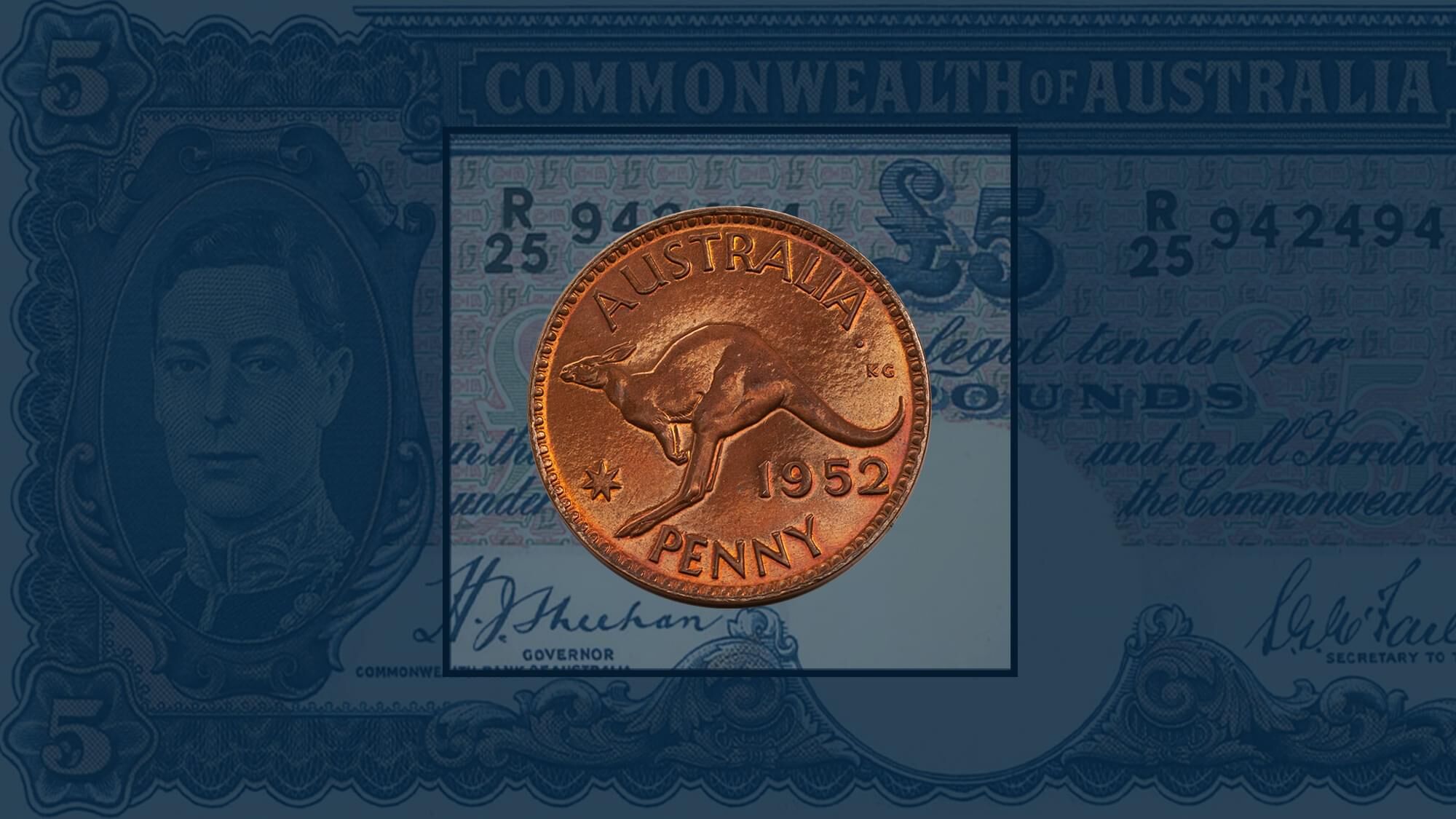
The Perth Mint made a huge commitment to its own heritage, and to the industry, when it acquired the 1899 Proof Half Sovereign from Coinworks in March 2026. The coin will be displayed alongside the 1899 Proof Sovereign as part of a move to host a permanent display of the Perth Mint’s first proof coin issues.
It's a move that will impact positively on values of all Perth Mint coins, gold and copper. Pieces such as this extraordinary quality Proof 1952 Penny, struck in the final year of the reign of George VI.
The coins of the Perth Mint are inordinately popular. They are extremely rare. Brilliant for quality. And sought after by an expanding collector audience. We say expanding because the Perth Mint is still producing coins and its collecting audience is growing through the production and export of decimal collector coins.
Offered at $25,000, this stunning 1952 Perth Mint Proof Penny is available now.
Click here for more details on this Product
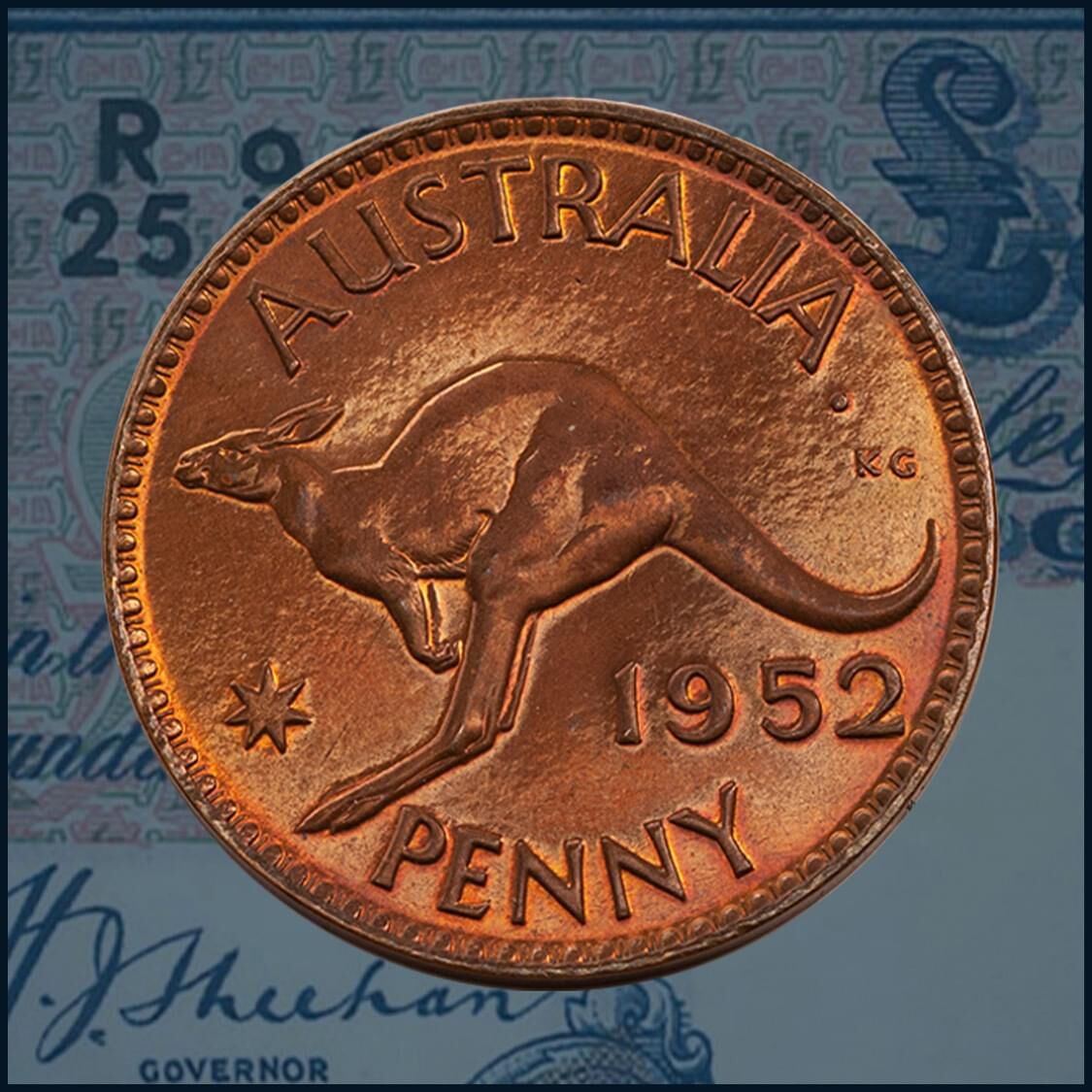
An extraordinary quality Perth Mint Proof 1952 Penny and, in our view, the absolute finest known.
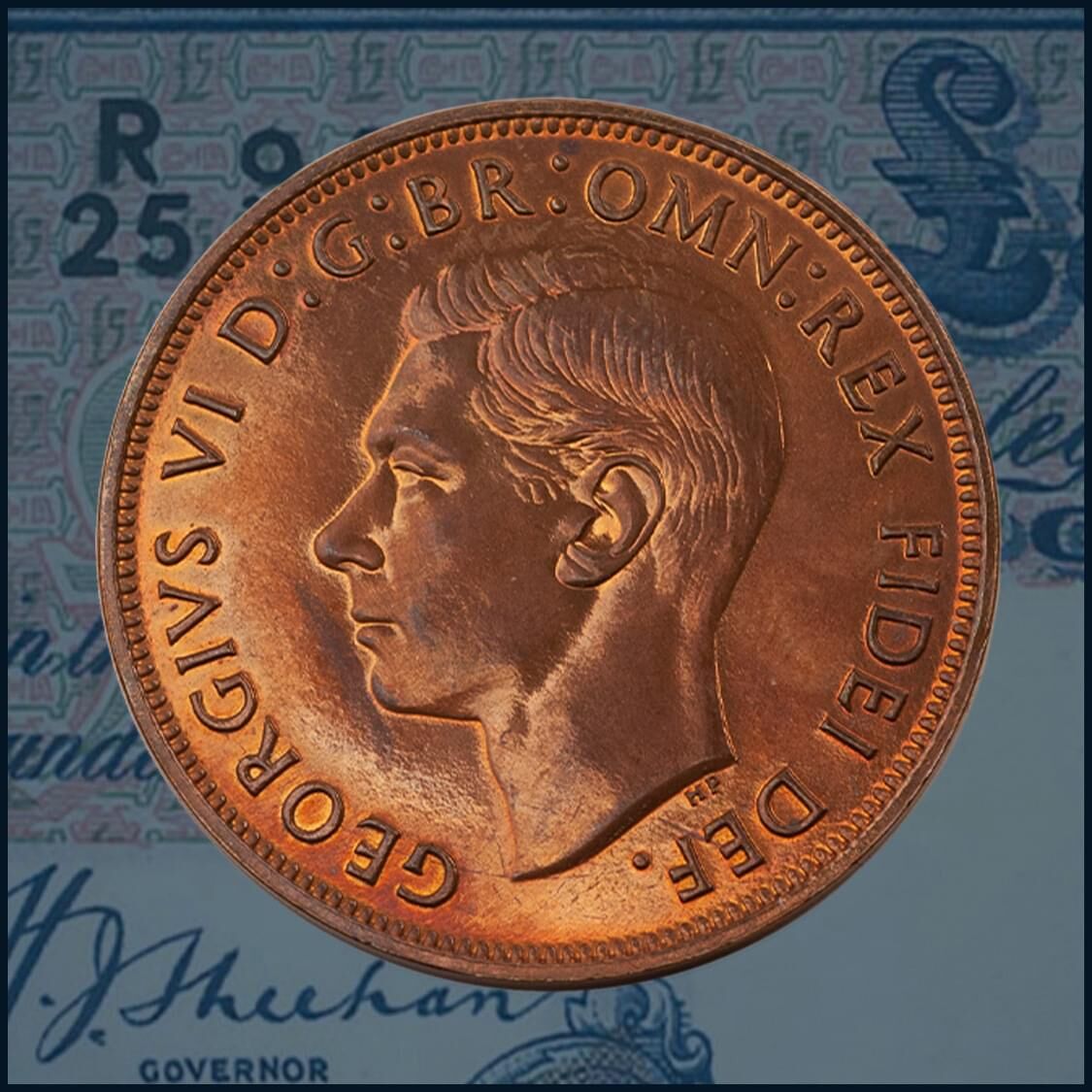
The fields are like molten copper, super-reflective, the edges polished, the denticles pristine.
In an article published in the Journal of the Numismatic Association of Australia 2005, renowned numismatist Paul Holland contends that the Perth Mint proofs seemed to have been created for unaided vision. The point here is that a collector would not need an eye-glass to take in their beauty.
He also contends that the Royal Mint's 1951 proofs from the Royal Mint London came to be viewed as the best possible model for what the Perth Mint bronze proofs should look like. It is a fact that the Royal Mint's 1951 copper proofs, as a general rule, are stunning. Visually impactful.
When you look at this Proof 1952 Penny you can't help but feel that Holland was spot-on with his assessment.
When the Perth Mint struck a proof penny, its intention was to create a single, copper masterpiece. Coining perfection. Perfection in the dies. Wire brushed so that they were razor sharp. Perfection in the design, highly detailed, expertly crafted. Perfection in the fields, achieved by hand selecting unblemished blanks, polished to create a mirror shine.
Perfection in the edges to encase the design … exactly what a picture frame does to a canvas. A proof coin was never intended to be used in every-day use, tucked away in a purse. Or popped into a pocket.
Proof coins were struck to be preserved in the mint's archives as a record of Australia’s coining history, time-capsuled for future generations. Proof coins were also used to showcase a mint’s coining skills, to display at major worldwide Exhibitions or sent to other mint’s and public institutions.
The rarity of the Perth Mint proofs was confirmed in 1995 in an article published in the NAA journal (Volume 8) by John Sharples, the then Curator of Australia’s Numismatic Archives. He examined the distribution of proof coins recorded in Perth Mint communications and records over the period 1940 – 1954.
He found evidence that fifteen proof pennies were struck at the Perth Mint in 1952.
And while we might sight a Proof 1952 Penny on the market every three to four years this coin, as the finest of its year, is a once in a lifetime buying opportunity.
He noted that two private collectors (most likely Syd Hagley and Ray Jewell) received examples of the pre-1955 proof coins, such was the influence of these collectors. The balance of the mintage, however, was destined for the mint's own archives with the majority sent to Public Collections and Numismatic Societies. The official list authorised to receive Perth proofs were the Australian War Memorial, Royal Mint London, British Museum, Royal Mint Melbourne, Japan Mint, National Gallery SA, Art Gallery WA, National Gallery Victoria, Victorian Numismatic Society, South Australian Numismatic Society and the Australian Numismatic Society.
That the bulk of the mintage was gifted to institutions is the very reason why they are so rare in today's collector market.
Apart from its extreme rarity, we offer four sound reasons why this Proof 1952 Penny is a must-have for today's collector.
1. Brilliantly preserved proof coins of the Perth Mint are unrivalled for quality.
The coins not only display superb levels of detail in their design, but qualities and colours that are unmatched by those of the Melbourne Mint. Each coin is a work of art, as individual, and as beautiful, as an opal. This Proof 1952 Penny looks like molten copper. It is magnificent.
2. Proof coins have a wonderful connection to the past.
They are the story tellers, defining an era, or a year, like no other coin. Proofs can also define an occasion. And a monarch. And they tend to have a connection to a prominent person, either a dignitary, a Mint Master or an influential collector. The Proof 1952 Penny is the last proof penny struck with the portrait of George VI.
3. Collectors are all but guaranteed that the market will never be flooded with examples.
The Perth Mint Proof Record Pieces is a sector of the rare coin market that offers financial stability and has been the hunting ground of investors for decades. The sector also has strength because it has widespread support amongst the Australian dealer market.
4. The Perth Mint is still operating.
That the Perth Mint is a leading coin producer makes their pre-decimal proofs historical. But also vibrantly current. So the ‘Perth Mint’ message always remains strong, underpinning future interest.
The discovery of vast gold fields in Coolgardie in 1892 and Kalgoorlie in 1893 triggered a Gold Rush in Western Australia and convinced the British Government to authorise the opening of a mint in Perth. It was the third branch of the Royal Mint London opened in Australia following the establishment of the Sydney Mint in 1855 and the Melbourne Mint in 1872.
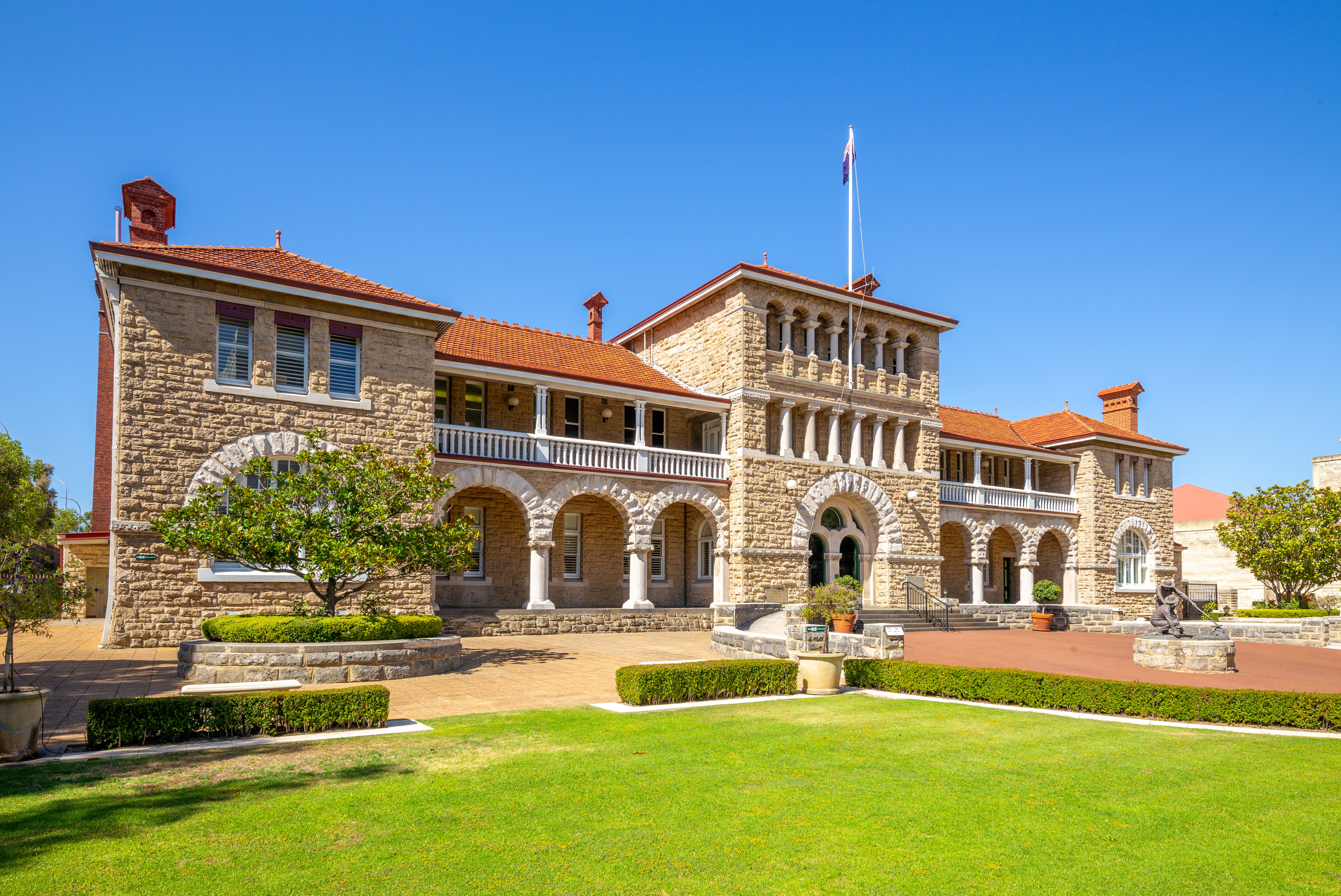
The Perth Mint was established in 1899 and remained a gold producing mint from the year of its opening until 1931 when Australia struck its last sovereign.
The coining presses at the Perth Mint ground to a halt in 1931 and remained so for the next nine years. Then early in November 1940, the Australian Government requested Perth to undertake the coining of Australia’s bronze pennies and halfpennies.
The Melbourne Mint had been called upon to do munitions work during World War II and assistance was sought from the Perth Mint to meet Australia’s currency requirements.
The Perth Mint continued to strike copper coins until 1964, when two years later Australia converted to decimal currency.
Established as a branch of the Royal Mint London, the Perth Mint adopted the practices of its master and struck proofs of those coins being struck for circulation.
In accordance with minting traditions the Perth Mint struck proof record pieces of those coins being struck for circulation. There was no hint of commercialism in the production of these pieces.
Posterity, the preservation of Australia’s coining heritage … that and a passion for numismatics were the driving forces behind their striking. The collector market per se was denied access to the coins.


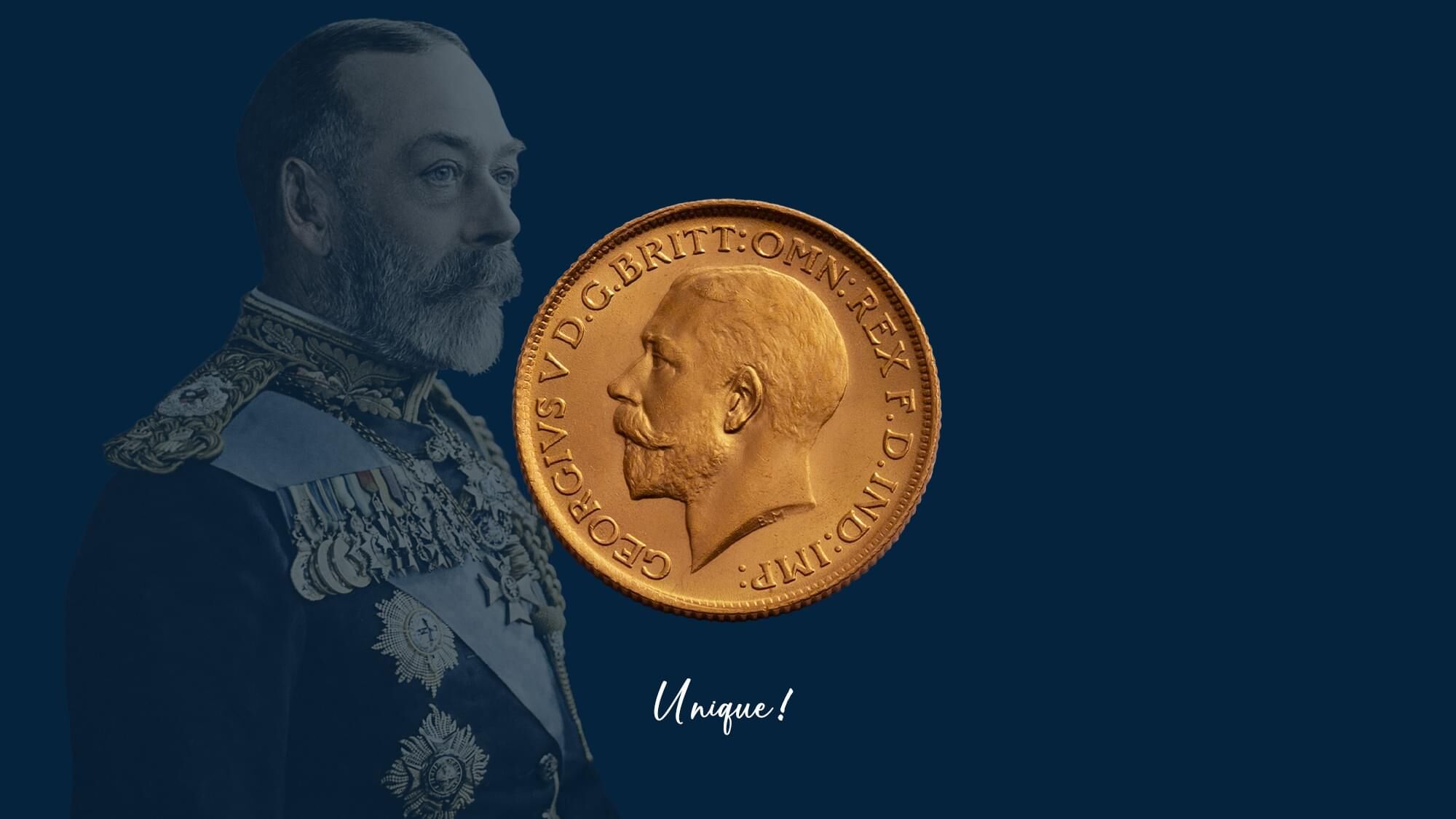
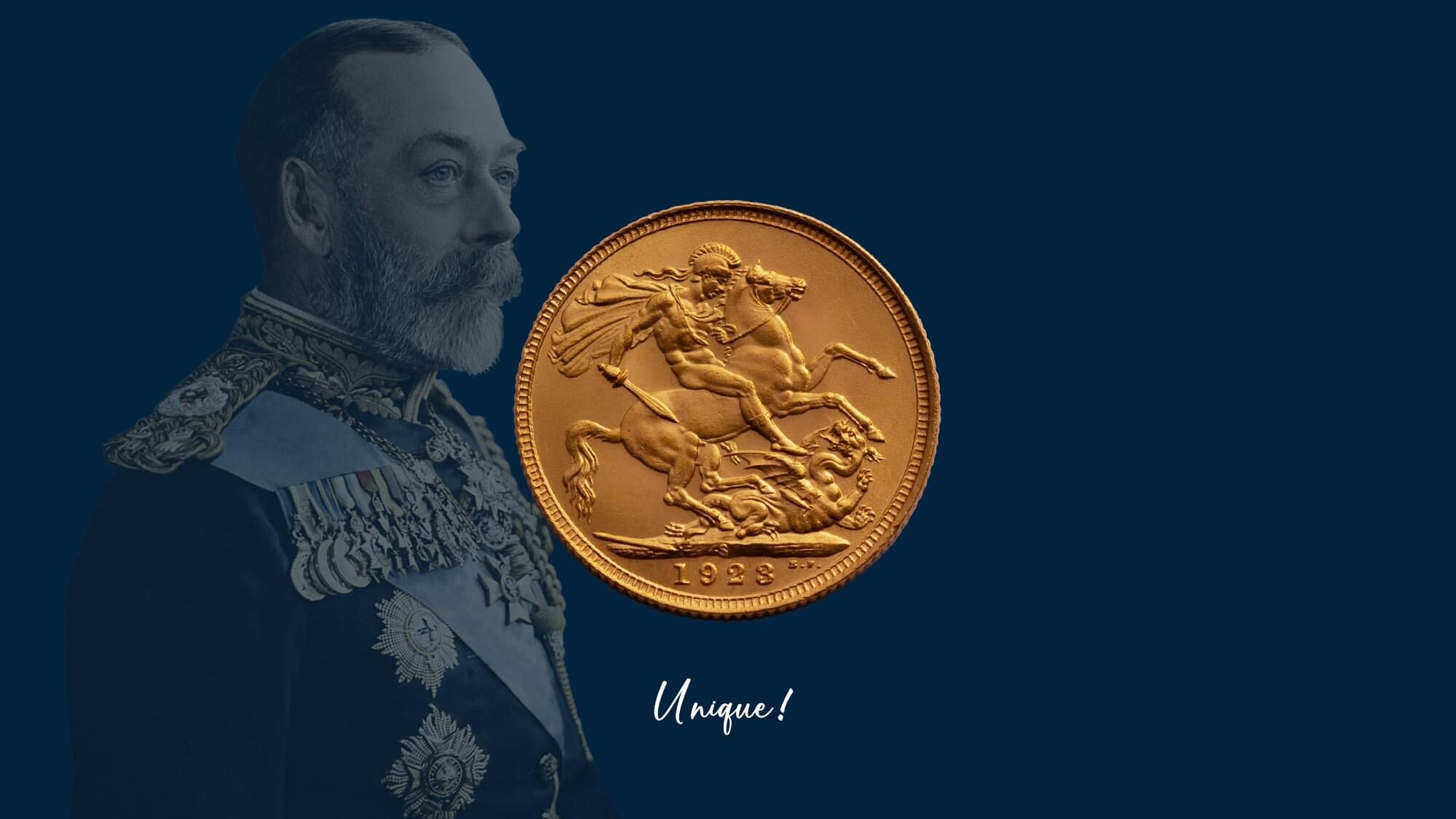
Sydney Mint Coins of Record are the crown jewels of coinage adding glamour and exceptionality to any collection. Individually crafted to a proof or specimen finish using special coining techniques, minted to standards far exceeding that required of a circulating coin. They were not struck in response to a Government directive, and they were not struck every year. They were produced at the discretion of the mint master and, in the case of the Sydney Mint, in only thirteen out of a possible seventy-two years of coining production. The mintages, minuscule.
There are some gems within those thirteen years. Five of the thirteen boast unique pieces and command special collector attention, 1871, 1879, 1883, 1920 and 1923.
That Australia's most valuable gold coin, the 1920 Sovereign, shared the same provenance as the unique 1923 Sovereign is a tacit affirmation of the significance of this piece. Both coins were held by Robert Jaggard, Paul Terry and Tom Hadley, three of the most advanced Australian gold coin collectors of the modern era.
Click here for more details on this Product
This 1923 Sovereign was struck as a Coin of Record at the Sydney Mint. The coin is unique.
To understand the motivations of the Sydney Mint in producing Coins of Record. And to know the numbers struck, is to recognise the value and outstanding qualities of this 1923 Sovereign.
The Sydney Mint began operations in 1855, issuing circulating gold sovereigns and half sovereigns. The mint did not have the machinery or the skills to strike Coins of Record, that responsibility initially taken up by the Royal Mint in London up to, and including, 1870.
The Sydney Mint took control of its proof issues in 1871. Its approach to production of Coins of Record throughout its lifetime was conservative. The mintages were tiny. And the years in which they were struck were thinly spread.
Only four years out of seventeen in the Young Head era (1871 to 1887). Two years in the Jubilee era (1887 to 1893), one in the Veiled Head era (1893 to 1901). One in Edward VII (1902 to 1910) and five in the George V era (1911 to 1926).
Summarising above. From 1871, when the Sydney Mint took control of production of its special strikings until it closed in 1926, the mint struck Coins of Record in only thirteen years.
Of those thirteen years, five can boast unique pieces, 1871, 1879, 1883, 1920 and 1923, the first three occurring in the Young Head era, the latter in the George V era.
This 1923 Sydney Specimen Sovereign is one of the truly 'great' coins of Australian numismatics.
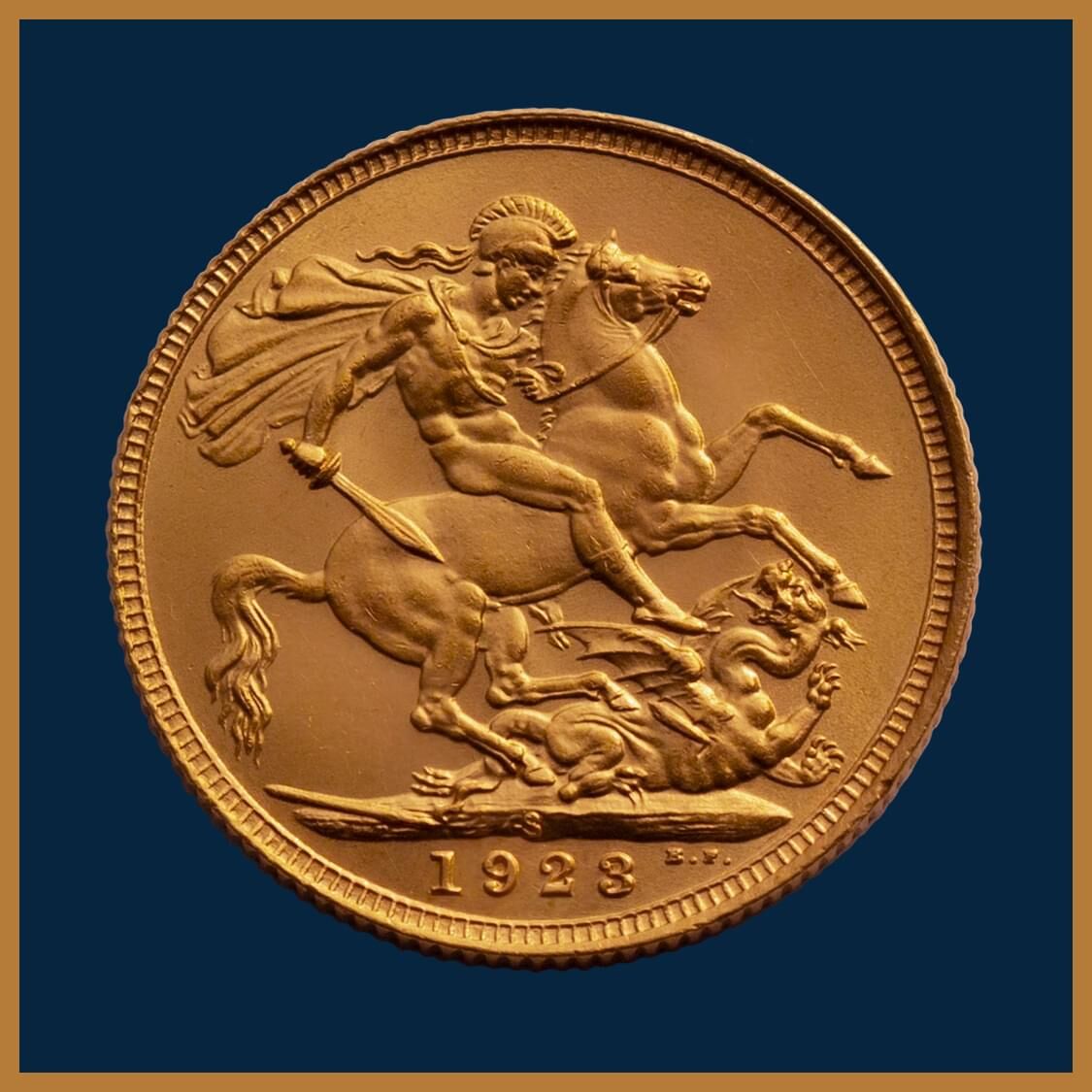
1923 Specimen Sovereign,
Sydney Mint Coin of Record
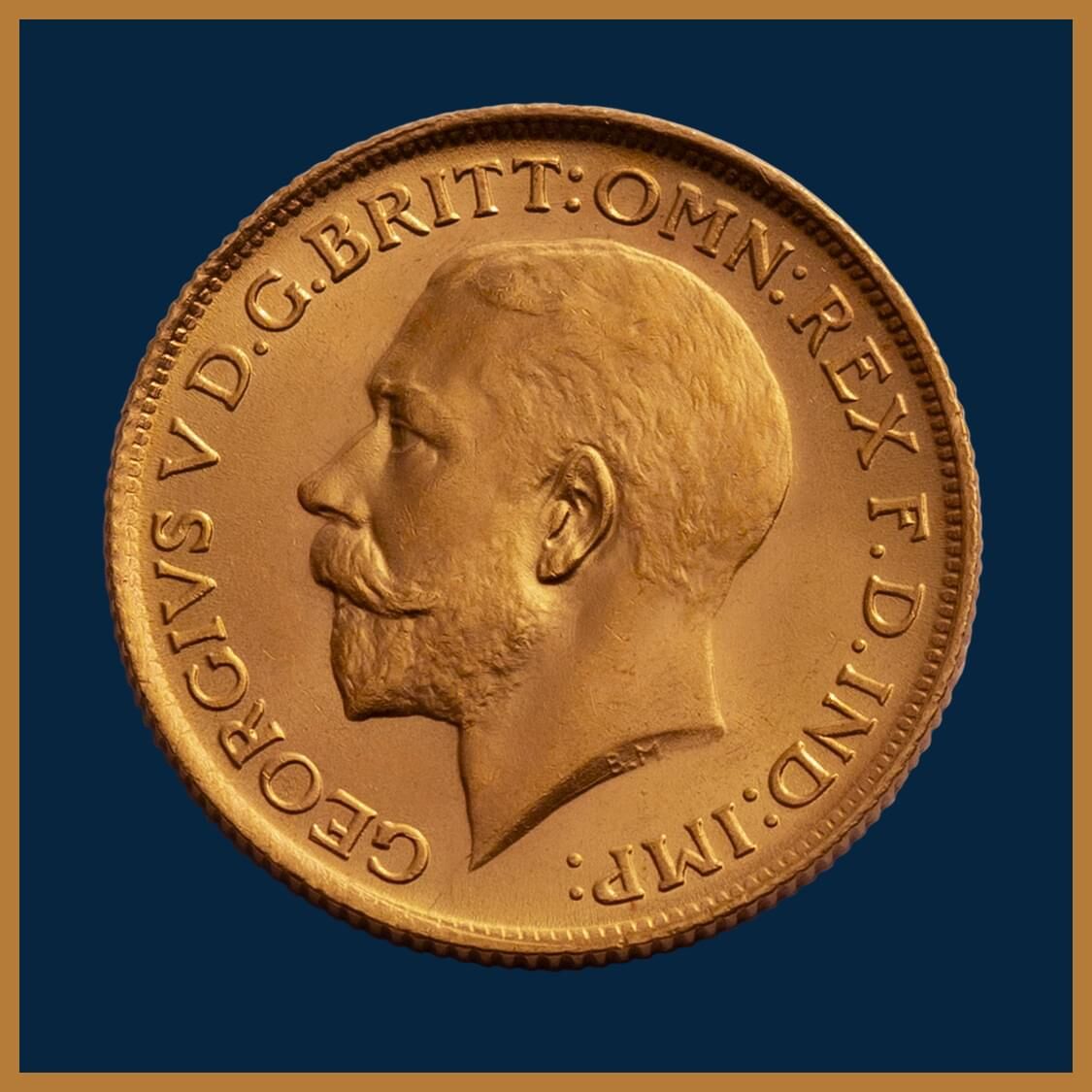
1923 Specimen Sovereign,
Sydney Mint Coin of Record
1923 Specimen Sovereign,
Sydney Mint Coin of Record
1923 Specimen Sovereign,
Sydney Mint Coin of Record
The Quartermaster Collection was owned by Queensland collector, Tom Hadley. He joined forces with rare coin dealer Barrie Winsor to form what is acknowledged as the most comprehensive collection of Australian gold coins ever formed. The program of acquisition took three decades, each coin hand selected to acquire the finest quality. Opportunities to upgrade, and to improve upon the quality, were taken up during this duration to achieve the ultimate grade, available at the time.
The Collection became a benchmark for Australian gold coins. And is still to this day the yardstick by which other coins are judged. Exhibited at the Royal Australian Mint Canberra in 2005 to celebrate the 150th anniversary of the Sydney Mint's opening, it was eventually sold at auction by Monetarium Sydney in June 2009.
This 1923 Sydney Specimen Sovereign became available in 1992 and was selected to become part of the Quartermaster Collection. The coin was especially struck as a Coin of Record at the Sydney Mint.
Winsor knew this sovereign represented the ultimate quality. During the George V era, Coins of Record from the Sydney Mint were struck to a specimen finish. And this coin is indeed an immaculate coin, graded FDC, with a superb strike.
Winsor also knew he had secured the ultimate rarity when he acquired this sovereign for it was believed unique. To this day, its unique status holds. There are no other known examples.
The Sydney Mint was the nation's first gold coin producer. During its lifetime, the mint processed more than 1200 tons of native gold, converting it into currency. In addition to producing circulating coins, the Sydney Mint was occasionally called upon to create special presentation pieces. The coins are technically referred to as 'Coins of Record'.
A Coin of Record would be gifted to a monarch, a dignitary or sent to an influential collector. Or put on display at an international trade fair. And if the Royal Mint London requested a sovereign for its archives, it was yet another occasion when a Coin of Record would be minted. Situations where a circulation strike would simply not suffice.
A Coin of Record is an artistic interpretation of coinage, a strikingly beautiful coin beyond ordinary currency. Individually crafted to a proof or specimen finish using special coining techniques to standards far exceeding that required of a circulating coin. (It is noted that during the George V era, all Coins of Record were struck to a specimen finish.)
Whereas production of circulating coinage was dictated by Government, Coins of Record were struck at the discretion of the mint master. The coins were not produced every year and, as they were individually created, the process was time consuming and the mintages minuscule. For Sydney Mint gold proofs, generally four pieces or less. There were years when only a single coin was struck.
Coins of Record of Australia's sovereigns and half sovereigns are visually stunning, distinguished by immaculate surfaces, either brilliant or satin depending on the strike. And it is their beauty and their ultra-exclusivity that drives demand.
The coins are today a globally traded commodity, confirmed again at St James Auction in New York, January 2026.
They are the crown jewels of coinage, adding glamour and exceptionality to any collection!

Australia’s four classic coin rarities and each boasting a first for the nation: the 1813 Holey Dollar and Dump, our very first locally produced coin. The 1852 Adelaide Pound, our very first locally produced gold coin. And the 1921 Kookaburra Penny, our very first coin to introduce an Australian themed design, native wildlife. These coins are timeless and will remain relevant through the ages. The very reason why they are so popular.
We have sold more Kookaburra Pennies in 2026 than ever before. And while our tally includes the complete collection of thirteen kookaburra coins, we have sold an inordinate number of pieces subsequent to that transaction that have contributed to our record-breaking sales tally.
And why wouldn’t you want a kookaburra square penny? They are as Australian as you can get and collectors are acknowledging through their buying patterns just how important the coins are to our history.
The Kookaburra Penny and Halfpenny were trailblazers: Australia's first attempt at independent design in our coinage, produced in 1919, 1920 and 1921 at the Melbourne Mint. Coins with simple design elegance, produced for Australians, by Australians.
And the Type 12, its availability and its affordability, makes it the most popular choice for buyers to enter the Kookaburra series.
Click here for more details on this Product
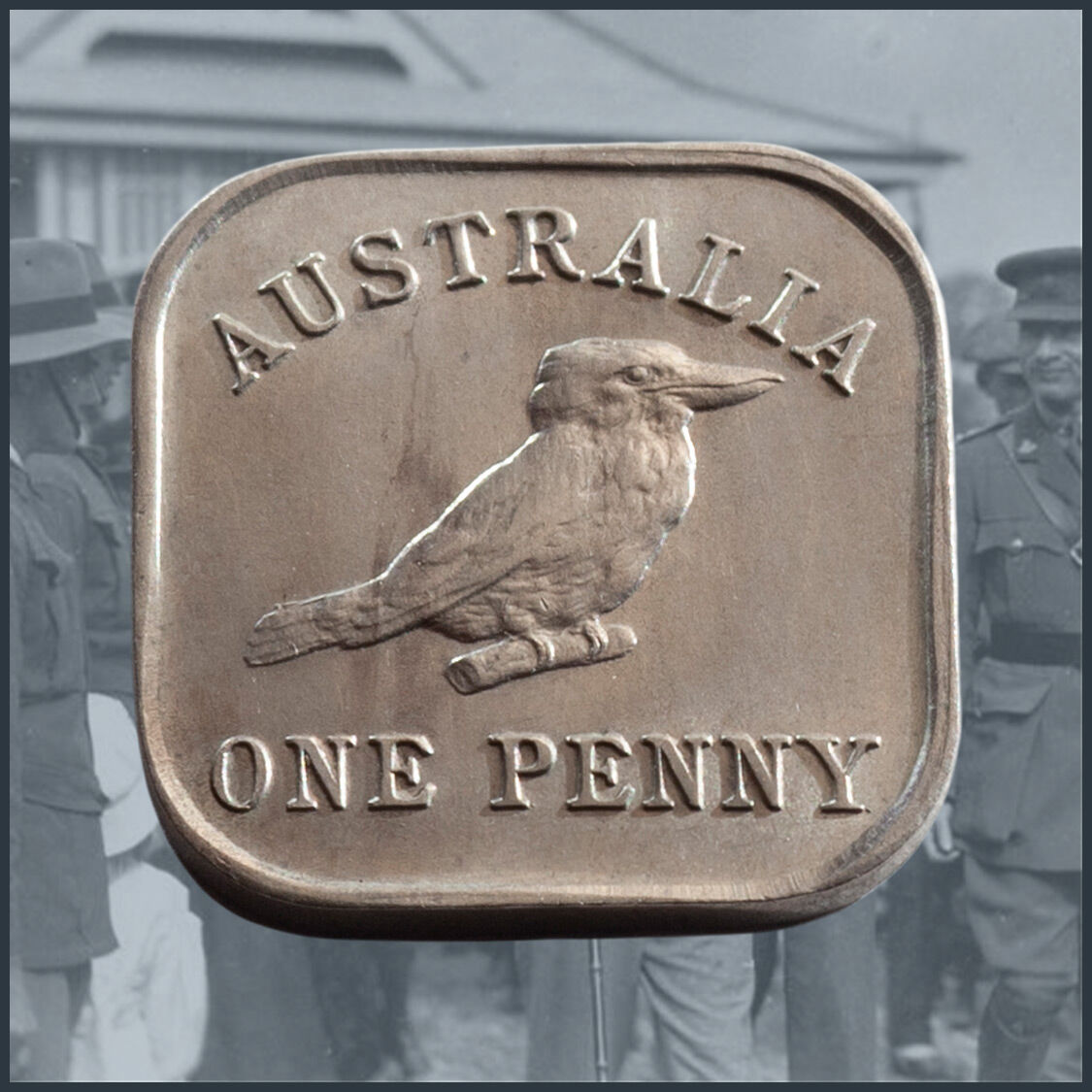
The 1921 Type 12 Kookaburra Penny
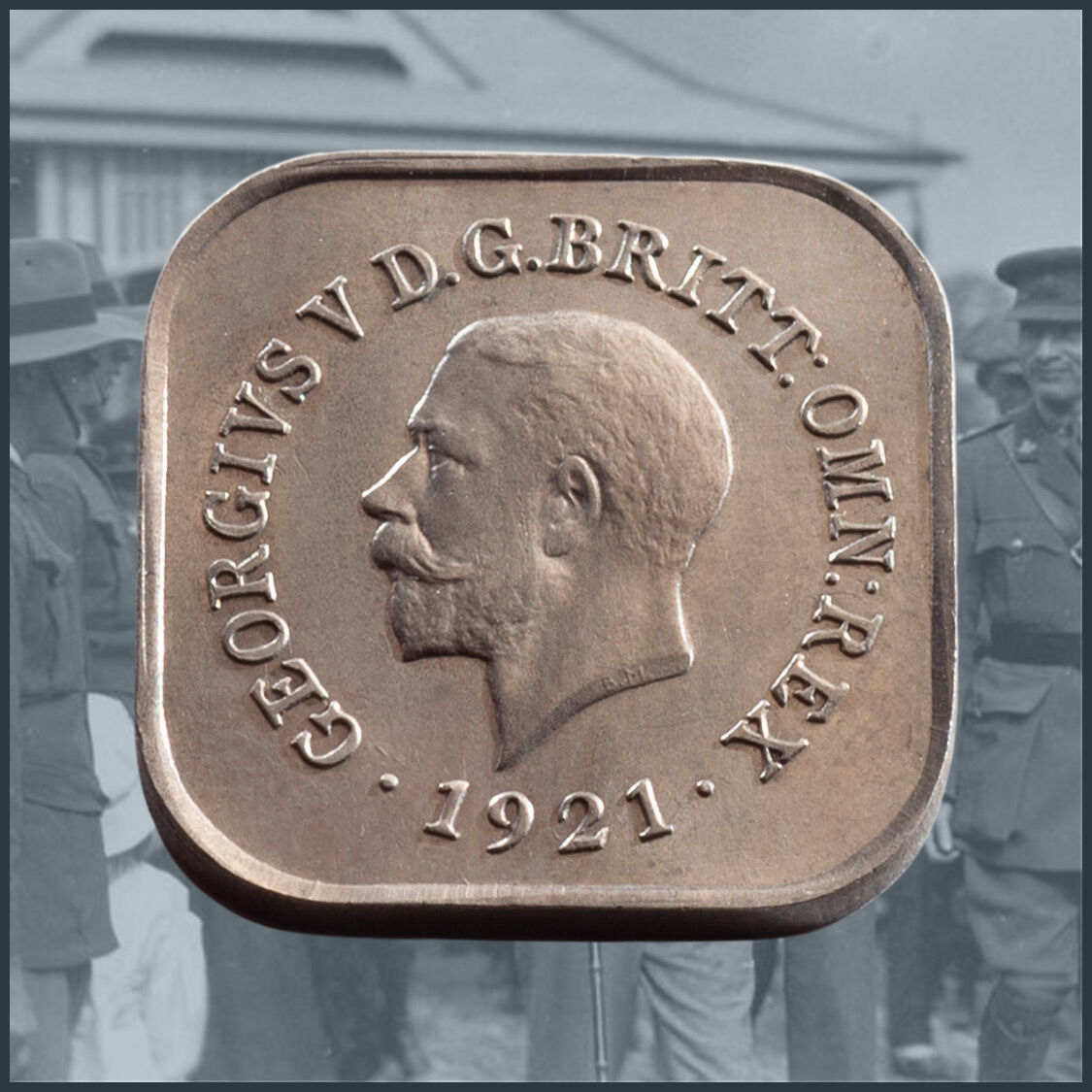
The 1921 Type 12 Kookaburra Penny
The quest to define Australia's national identity through our currency began with the Kookaburra Pennies and Halfpennies.
It was Australia's first attempt at independent design in our coinage, a currency that was Australian in imagery, concept and form, produced in 1919, 1920 and 1921 at the Melbourne Mint.
Coins with simple design elegance, produced for Australians by Australians. Avant-garde and adventurous, the historical significance of the kookaburra coins cannot be overstated.
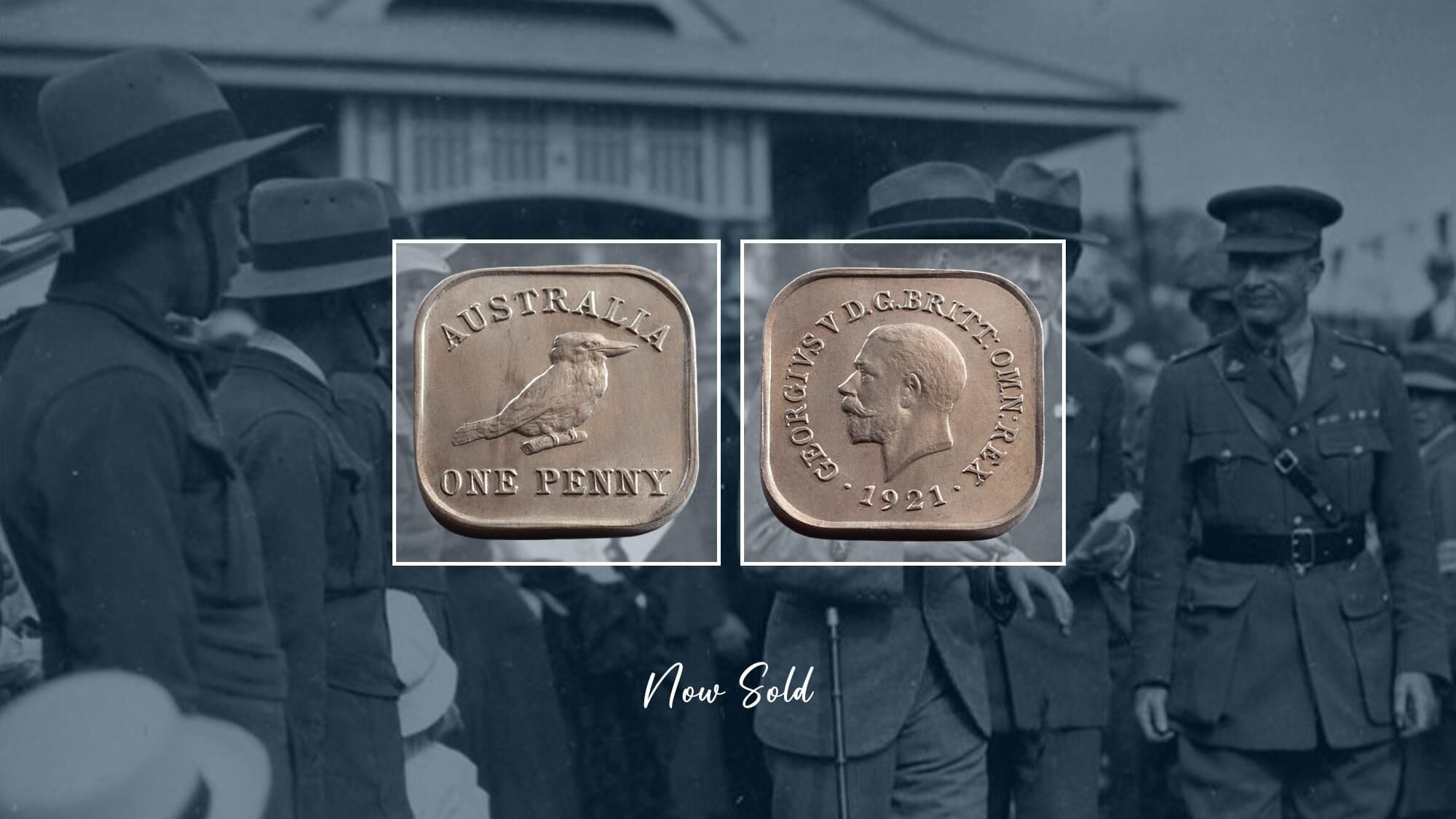
This Square Penny was struck in the final year of testing at the Melbourne Mint - 1921 - and features a plump kookaburra with the words ‘AUSTRALIA’ AND ‘ONE PENNY’ above and below it.
The coin is referenced, Renniks Type 12. The design is unique to the date 1921. No other Square Penny has this bird.
It is extremely rare for we would be lucky to sight one, maybe two, Type 12 Kookaburra Pennies on the market every year. And it is affordable.
We recently sold a 1919 Type 4 Kookaburra Penny, the price $95,000. Also sold, the 1919 Type 4 Kookaburra Sterling Silver Penny, the price $185,000.
While the rarity of the pieces validated the prices, the reality is not every collector wants to buy coins at this dollar level.
That's why the Type 12 is so popular. Affordable and yet still extremely rare.
Rarity - one of an estimated thirty-five to forty known. On average, a Type 12 Kookaburra Penny would be offered every six to eight months.
Composition - Nickel 75% Copper 25%
Reverse - A design shared with the Type 2 Kookaburra Halfpenny, a plump bird resting on a short, thick branch, the word 'AUSTRALIA' curved, the penny denomination in one line across the base of the coin.
Obverse - Uncrowned effigy of George V, designed by Australian sculptor, Sir Edgar Bertram Mackennal, the initials 'BM' appearing on truncation, and shared with the Type 2 Kookaburra Halfpenny. The legend reads GEORGIVS V D. G. BRITT: OMN:REX and appears on all the halfpennies Type 1 and Type 2 and the pennies Type 6 through to 12. The date '1921' appears below the portrait, an ornamental dot separating it from the legend.
We have put together a set of Australia’s four classic coin rarities, the 1813 Holey Dollar and Dump, the 1852 Adelaide Pound and a 1921 Kookaburra Penny. Each coin conservatively priced, the set of four presented in a hand-crafted Anton Gerner Presentation case. A definite one-off.
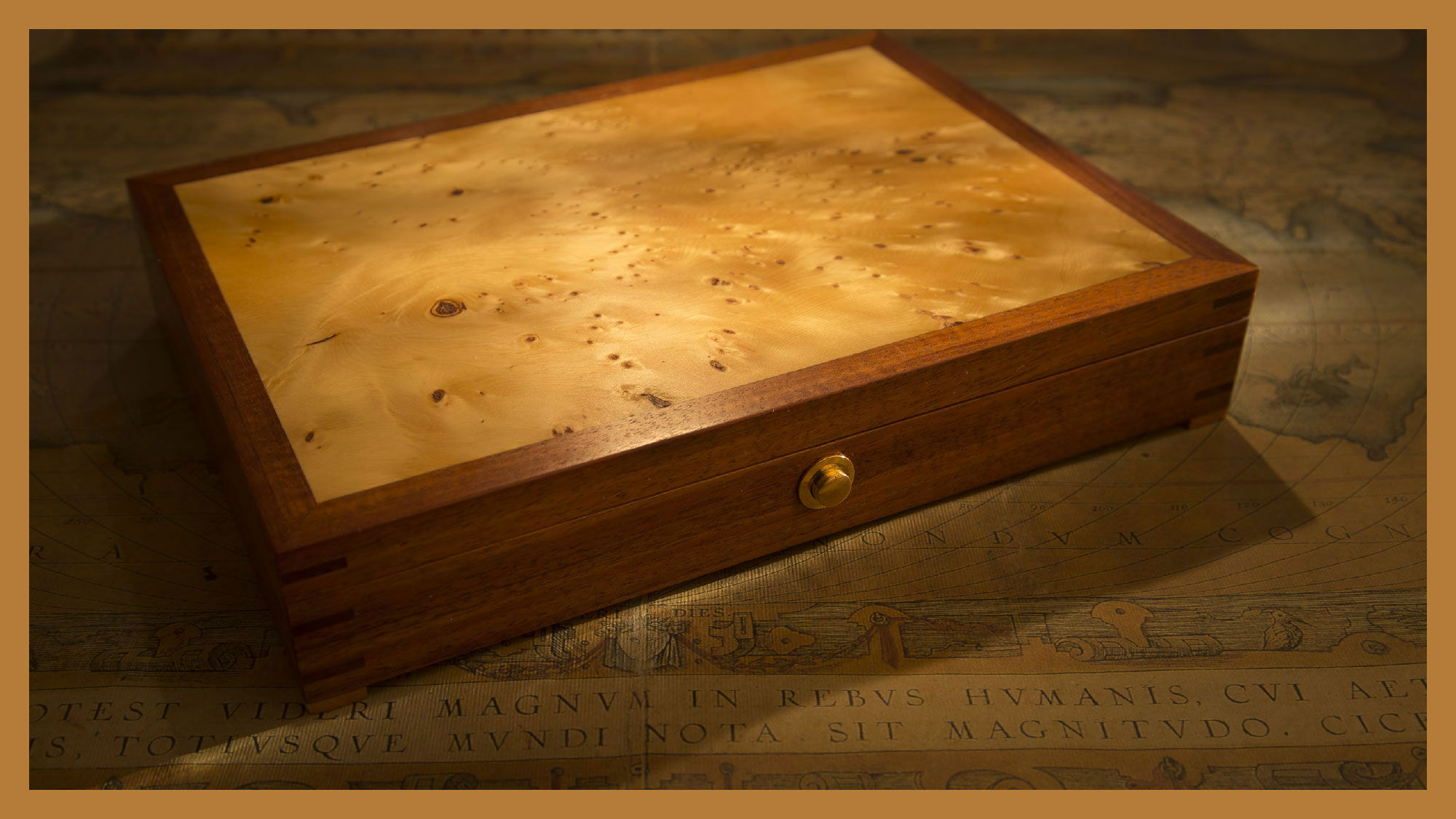
An heirloom worthy set of four coins. Early enquiries are welcome.
The Melbourne Mint commenced striking Australia's Commonwealth copper pennies in 1919. No sooner had the mint started issuing coins, than it was directed by Treasury to commence testing an entirely new penny concept, a square coin made from cupro-nickel.
The Melbourne Mint was established in 1872, and was a producer of gold and silver coins and had just commenced production of bronze pennies in 1919. While new to the mint, the striking of nickel coinage as legal tender had been incorporated into the Commonwealth's Coinage Act of 1909 (No. 6 of 1909), passed after Federation.
The period 1919 to 1921, sits squarely in the post–World War I period, the first years of peace after immense war-time loss. And an experimental era when Australia was rebuilding its national confidence and defining its own national identity through design. Or through whatever means it could.
For many Australians, it was a time for breaking out, of questioning and changing old values and behaviour and enjoying the good life. It was a time of great change. People forgot the old and embraced the new in an attempt to leave the hardship and struggles of the war behind them. New technology was being created, like toasters and cars, things that today we take for granted. The fashion world was exploding, Australians embracing great change in their styles of dress.
Australians were identifying with their own culture, keen to lessen the emotional and cultural ties with Great Britain. The Government wanted to tap into this nationalistic sentiment and create a new, totally Australian coinage, the Kookaburra Penny and Kookaburra Halfpenny, envisaging coins that would be unique to Australia.
It was one of the instruments the Government believed would give us a greater awareness, and appreciation, of all things Australian. A mechanism to promote national spirit.
The proposal was contentious in that King George V was depicted on the obverse without a crown. It is noted that all coins struck under the newly formed Commonwealth of Australia depicted a crowned monarch.
Contentious also the use of the word 'Australia' in the design and not 'Commonwealth of Australia'. It was a hard road to Federation, uniting the six colonies under one banner, involving decades of negotiation and intense debate. Ultimately, the six separate British colonies united under the banner Commonwealth of Australia on January 1, 1901. Again it is noted that Australia's bronze pennies and halfpennies issued by the newly formed Commonwealth of Australia acknowledged the nation's federated status in the legend.
Trials commenced at the Melbourne Mint in 1919 and continued until 1921, the mint producing different designs, each a variation of the one theme of a kookaburra sitting on a branch and on the other side, an uncrowned portrait of George V. The test pieces ultimately passed to dignitaries and Government officials to assess their reaction.
The program of testing did not move forward beyond 1921. And the coins did not move into production. It is believed that over the three-year period two hundred pieces, of various designs, were produced, of which we estimate, one hundred and fifty are available to collectors.
The best thing for collectors is that the one hundred and fifty kookaburra coins do not bear the same design. The Melbourne Mint tested many different styles of both obverse and reverse introducing enormous interest, personal choice and procurement challenges into the series.
There is no consensus as to why the coins did not move into production. The resignation in 1920 of Treasurer, William Watts, a supporter of the Kookaburra coinage did not impact on the program as his replacement Sir Joseph Cook was strongly in favour. That vending machines required a circular coin is also refuted as is the claim that it was unpopular with the general population.
Our view is that it was simply too soon in the national psyche.
While shaping our identity was politically expedient, uniting the states under the banner of Commonwealth of Australia was deemed a higher and more important priority. And the reality is the words 'Commonwealth of Australia' could never have been incorporated into the kookaburra design, given the size of the coins.
The quest to define Australia's national identity began with the Kookaburra Pennies and Halfpennies. It was Australia's first attempt at independent design in our coinage, a currency that was Australian in imagery, concept and form.
Their historical importance cannot be overstated. The coins clearly reflect where we were as a nation post-World War I.

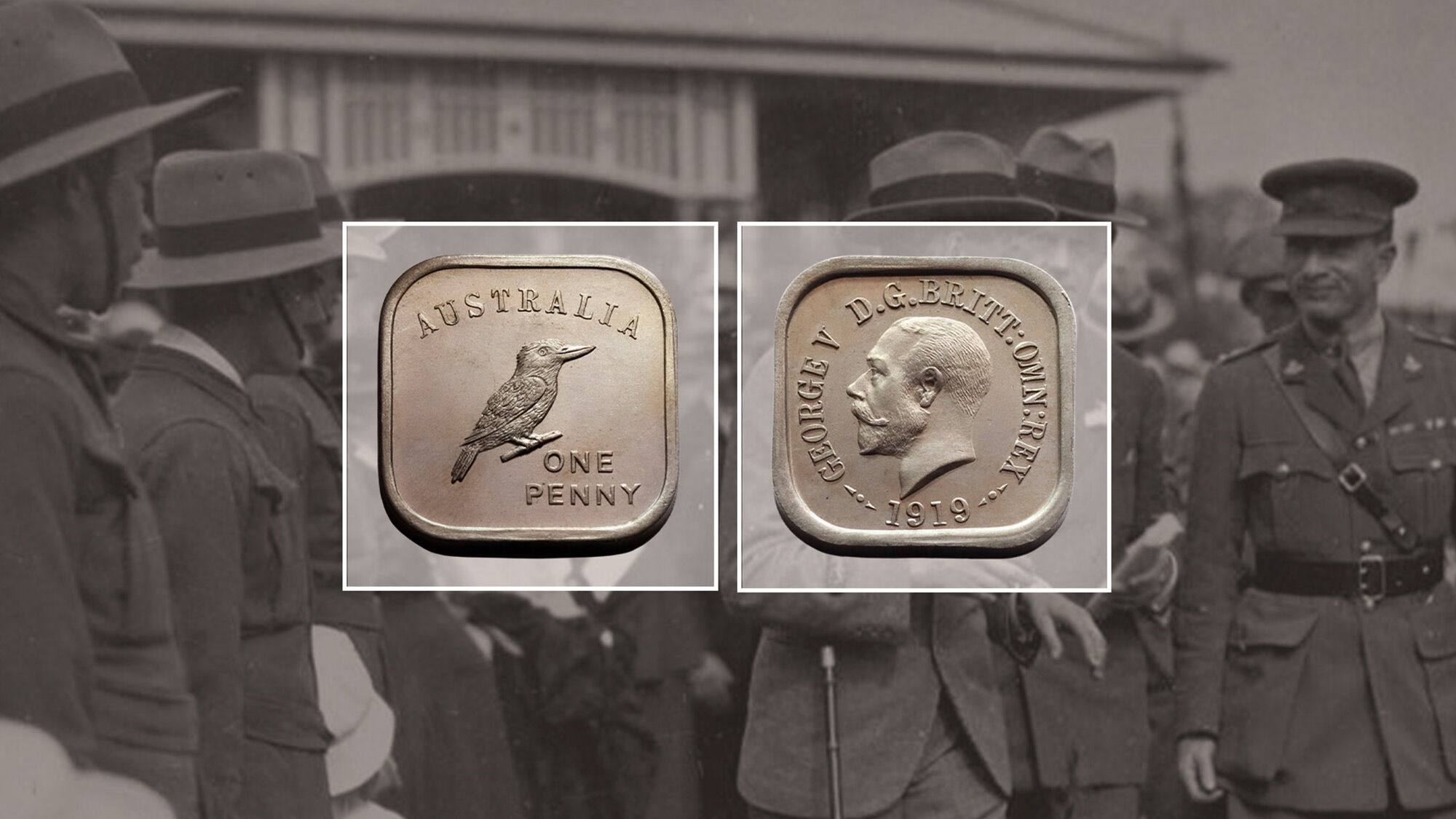
This Choice Uncirculated Kookaburra Penny was displayed at the 'Kookas in the Cathedral' Exhibition at the ANZ Gothic Bank, Melbourne 2007. It was included in the Exhibition for one reason ... its quality.
The Kookaburra coins are historical treasures: the nation's first attempt to break away from British designs and put something uniquely Australian on our coinage. They are an important part of our heritage. And they are extremely rare.
Collectors have options when it comes to acquiring a Kookaburra Penny. Our simple checklist of assessing the date, design type, quality and price, will assist you in working through the options
This 1919 Type 3 Kookaburra Penny is graded Choice Uncirculated and receives a ten out of ten for each point in our check list. Read more for further information.
Click here for more details on this Product
We have a simple four-point checklist for evaluating a Kookaburra Penny that involves the date, design type, quality and price.
1. What is the date?
The Kookaburra Pennies were struck in 1919, 1920 and 1921.
Our comments:
Each year offers opportunities for purchase involving varying degrees of rarity and price. The year 1919 is popular because it represents the start of the series, and collectors favour dates that reflect the 'beginnings'. It is also an emotional year, the signing of the peace treaty in Paris and the formal cessation of World War I.
2. What is the design type?
While all Square Pennies are rare, some designs are far rarer than others. And some designs are also unique. With 'uniqueness' and 'rarity', collectors can expect a higher price tag. For a collector, it's about finding a balance, the right design type (and quality) to suit your budget.
Our comments:
The Type 3 is extremely rare with an estimated fifteen to twenty examples available to collectors. We might see a Type 3 on the market every eighteen months to two years. It is noted that the Type 3 has a reverse design that is unique to its type. No other kookaburra coin portrays this design.
3. What is the quality?
The Square Pennies were test pieces and were not struck to the heady controls of a proof striking. As the coins were passed to the public for opinions and comments, some have been mishandled.
Our comments:
Some Kookaburra coins are so rare, that quality almost becomes irrelevant. But in cases such as the Type 3 which would become available a few times in a decade, quality can be considered. This coin is superb for quality. Take it through the light and you would be forgiven for thinking that it was minted to proof quality, the fields are like mirrors. And it is well struck, the details in the legend, portrait and the kookaburra are strongly three-dimensional. The edges fabulous and well executed. This coin was included in the 'Kookas' exhibition as part of a date set presentation of 1919, 1920 and 1921 coins. It was included for one reason ... it's quality.
4. What is the price?
Given its quality assignation of Choice Uncirculated and its rarity, the 1919 Type 3 Kookaburra Penny is priced to market at $45,000.
Our comments: This 1919 Kookaburra Penny is priced at the same level as a high quality Nearly Very Fine 1930 Penny and yet is far, far scarcer. And the quality is sublime.
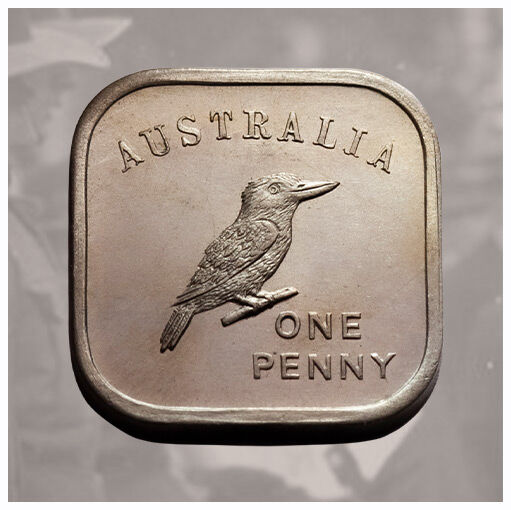
Choice Uncirculated
1919 Kookaburra Penny, Type 3
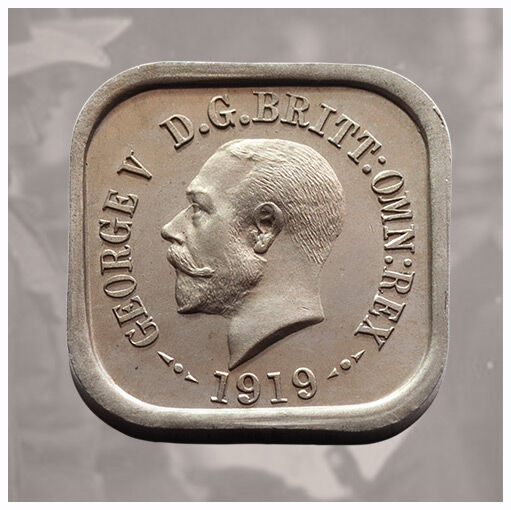
Choice Uncirculated
1919 Kookaburra Penny, Type 3
Choice Uncirculated
1919 Kookaburra Penny, Type 3
Choice Uncirculated
1919 Kookaburra Penny, Type 3
In 1919, the Government put forward a proposal to replace the round 'British-styled' penny and halfpenny in use at the time with completely new Australian coins. Proudly nationalistic, crafted on one side, with a kookaburra sitting on a branch, underneath the word 'AUSTRALIA' and on the other side, a portrait of George V.
It was Australia's first attempt at independent design in our coinage. A currency that was Australian in imagery, concept and form. Coins with simple design elegance, produced for Australians, by Australians, in 1919, 1920 and 1921. Eleven variations of the penny and two of the halfpenny were produced over three years, each a variation on the one kookaburra theme and each variation assigned a numeric design type, Type 1 to Type 13, to make it easy for collectors.
The only denomination produced in 1919 was the penny, crafted on one side with a kookaburra sitting on a branch. And on the other side, an uncrowned portrait of George V. Four variations on the one theme were produced in 1919 and they are designated the Type 3, Type 4, Type 5 and Type 6 Kookaburra Pennies.
The Type 3 Kookaburra Penny is the most available relative to the other 1919 designs and that is not a criticism. Simply a statement of fact. For the Type 3 is still extremely scarce with one example coming up for sale every eighteen months to two years. The remaining 1919 pennies, the Type 4, Type 5 and Type 6, are so scarce that a waiting time might range from four to ten years which would exasperate even the most patient of buyers and stifle market interest. A market is created when buyers and sellers interact, driven by a mutual interest in exchanging goods. This interaction establishes a price based on supply and demand. The reality is that you can't have a market without supply and it is the Type 3 that creates the market for the 1919 Kookaburra coins and sustains and excites buyer interest in the series.
Rarity - One of fifteen to twenty known examples. We estimate a Type 3 Kookaburra Penny would be offered every eighteen months to two years.
Composition - Nickel 75% Copper 25%
Reverse - The Type 3 has a unique reverse, the kookaburra design only used on this coin. The bird is slender, three feathers in the tail, the eye incuse. And the issuing authority and value is presented in a unique style. The word 'AUSTRALIA' is slightly curved across the top of the coin, detailed in a serif font, the words 'ONE PENNY' over two lines in a contrasting modern, sleek sans serif font. This break from tradition in using two fonts was not used on any other coin.
Obverse - Uncrowned effigy of George V was reduced from a metal die supplied by Australian manufacturer, Stokes & Son. The legend reads, GEORGE V D. G. BRITT: OMN:REX. The date appears under the portrait with ornamental stops separating it from the legend. The obverse design, portrait and legend, is shared with the Type 4 and Type 5 Kookaburra Penny.
The Melbourne Mint commenced striking Australia's Commonwealth copper pennies in 1919. No sooner had the mint started issuing coins, than it was directed by Treasury to commence testing an entirely new penny concept, a square coin made from cupro-nickel.
The Melbourne Mint was established in 1872, and was a producer of gold and silver coins and had just commenced production of bronze pennies in 1919. While new to the mint, the striking of nickel coinage as legal tender had been incorporated into the Commonwealth's Coinage Act of 1909 (No. 6 of 1909), passed after Federation.
The period 1919 to 1921, sits squarely in the post–World War I period, the first years of peace after immense war-time loss. And an experimental era when Australia was rebuilding its national confidence and defining its own national identity through design. Or through whatever means it could.
For many Australians, it was a time for breaking out, of questioning and changing old values and behaviour and enjoying the good life. It was a time of great change. People forgot the old and embraced the new in an attempt to leave the hardship and struggles of the war behind them. New technology was being created, like toasters and cars, things that today we take for granted. The fashion world was exploding, Australians embracing great change in their styles of dress.
Australians were identifying with their own culture, keen to lessen the emotional and cultural ties with Great Britain. The Government wanted to tap into this nationalistic sentiment and create a new, totally Australian coinage, the Kookaburra Penny and Kookaburra Halfpenny, envisaging coins that would be unique to Australia.
It was one of the instruments the Government believed would give us a greater awareness, and appreciation, of all things Australian. A mechanism to promote national spirit.
The proposal was contentious in that King George V was depicted on the obverse without a crown. It is noted that all coins struck under the newly formed Commonwealth of Australia depicted a crowned monarch.
Contentious also the use of the word 'Australia' in the design and not 'Commonwealth of Australia'. It was a hard road to Federation, uniting the six colonies under one banner, involving decades of negotiation and intense debate. Ultimately, the six separate British colonies united under the banner Commonwealth of Australia on January 1, 1901. Again it is noted that Australia's bronze pennies and halfpennies issued by the newly formed Commonwealth of Australia acknowledged the nation's federated status in the legend.
Trials commenced at the Melbourne Mint in 1919 and continued until 1921, the mint producing different designs, each a variation of the one theme of a kookaburra sitting on a branch and on the other side, an uncrowned portrait of George V. The test pieces ultimately passed to dignitaries and Government officials to assess their reaction.
The program of testing did not move forward beyond 1921. And the coins did not move into production. It is believed that over the three-year period two hundred pieces, of various designs, were produced, of which we estimate, one hundred and fifty are available to collectors.
There is no consensus as to why the coins did not move into production. The resignation in 1920 of Treasurer, William Watts, a supporter of the Kookaburra coinage did not impact on the program as his replacement Sir Joseph Cook was strongly in favour. That vending machines required a circular coin is also refuted as is the claim that it was unpopular with the general population.
Our view is that it was simply too soon in the national psyche.
While shaping our identity was politically expedient, uniting the states under the banner of Commonwealth of Australia was deemed a higher and more important priority. And the reality is the words 'Commonwealth of Australia' could never have been incorporated into the kookaburra design, given the size of the coins.
The quest to define Australia's national identity began with the Kookaburra Pennies and Halfpennies. It was Australia's first attempt at independent design in our coinage, a currency that was Australian in imagery, concept and form.
Transitioning to a more independent identity commenced in 1937/1938. And was extended in 1966, when Australia changed to decimal currency. On the five denominations, one, two, five, ten and twenty cent, the word 'Australia' appeared on the obverse and animals native to Australia appeared on the reverse.
For many collectors the fascination with the Kookaburra Penny and Halfpenny takes them on a journey to acquire more than one example. The coins are engaging and their rarity offers collectors the challenge they so often seek.

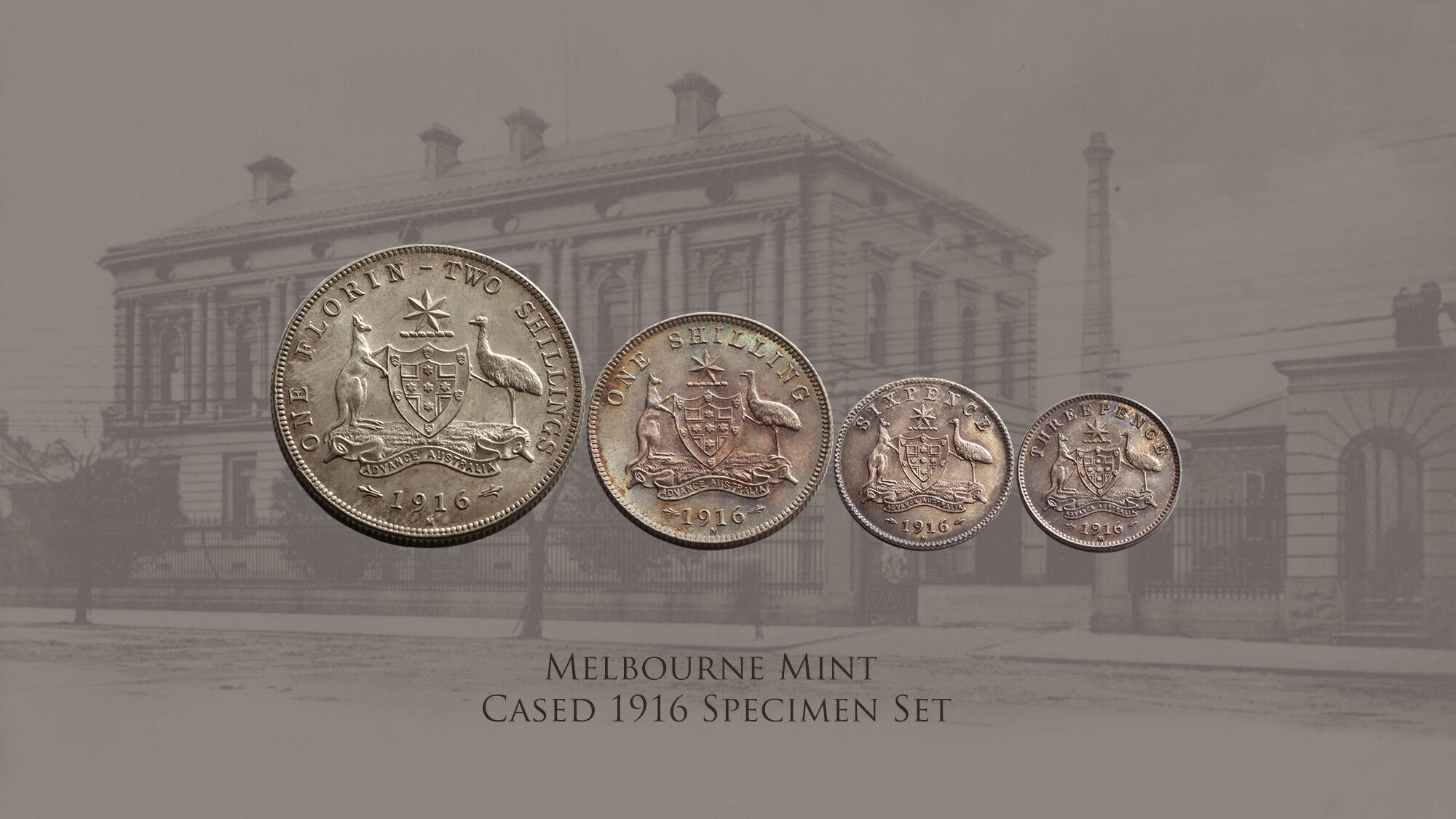
More than 100,000 collectors will pursue the Royal Australian Mint’s Proof and Mint Set series in 2026. As collectors are naturally inquisitive about the past, many will contemplate where, and when, it all started. For collectors, cased sets of Australia's circulating currency began in 1916 at the Melbourne Mint (shown here).
The nation's very first collector coin issue was the '1916 Specimen Set'. It was the only cased set produced for collectors by the Melbourne Mint in its entire history. Only sixty were created, each containing four silver coins struck to a high-quality specimen finish. The next cased issue for collectors was not produced until fifty years later (1966) at the Royal Australian Mint Canberra.
The 1916 Set was a big deal at the time. And it’s an even bigger deal today! Only seven original cased sets have been sighted at auction over the last seventy-plus years. Just one glance at the Royal Australian Mint’s 1966 Proof Set confirms that it was based on the 1916 Specimen Set.
For all collectors, decimal and pre-decimal, the 1916 Specimen Set is an important and highly historical issue. Extremely rare, it's worth having!
Click here for more details on this Product
Two dates are integral to the Melbourne Mint's history and the nation’s numismatic heritage. The first is its year of opening, '1872'. The second is '1916', when the Melbourne Mint expanded its gold coining repertoire and commenced striking silver coins for the newly formed Commonwealth of Australia. (Prior to that the coins were struck in the UK.)
The mint did not produce any presentation pieces to celebrate its opening in 1872, a missed opportunity for today's collectors. That numismatic shortcoming was addressed in 1916 when the Deputy Master of the Melbourne Mint authorised the production of sixty cased Presentation Sets, a portion earmarked to sell to collectors for six shillings, almost double the face value. Others were gifted to dignitaries.
Natural attrition has taken its toll on the original mintage and only seven cased presentation sets have been observed at auction over the last seventy-plus years.
The Melbourne Mint’s iconic 1916 cased specimen set stands out as the first Australian made presentation for collectors of the Commonwealth's coinage. There are a few things to note about the set.
First up the royal-blue case. The case is a stamp of authority indicating that the coins are presented today as they were originally intended more than a century ago. The integrity of the set is maintained by the case. Respected numismatist and author, Dr Vince Verheyen's take on the royal-blue case supports our view that it is an integral element of the presentation. “It cannot be over-emphasised that the set must be supplied with its original case.”
The second is that the coins tone. The toning to all the coins, again gives authenticity to the set. And given the different mirror and matte finishes of the four coins, collectors should not expect the toning to be identical, a point again emphasised by Verheyen. He also added ... "I would be suspicious of any bright white specimens given their age.”
The third point to note is storage. Over the years we have been asked if the coins should be stored in the case? The coins will be housed in archival quality (museum quality) coin holders and presented in a quality velvet lined tray, thereby preserving their investment value. The royal blue velvet case will be separate to the tray.
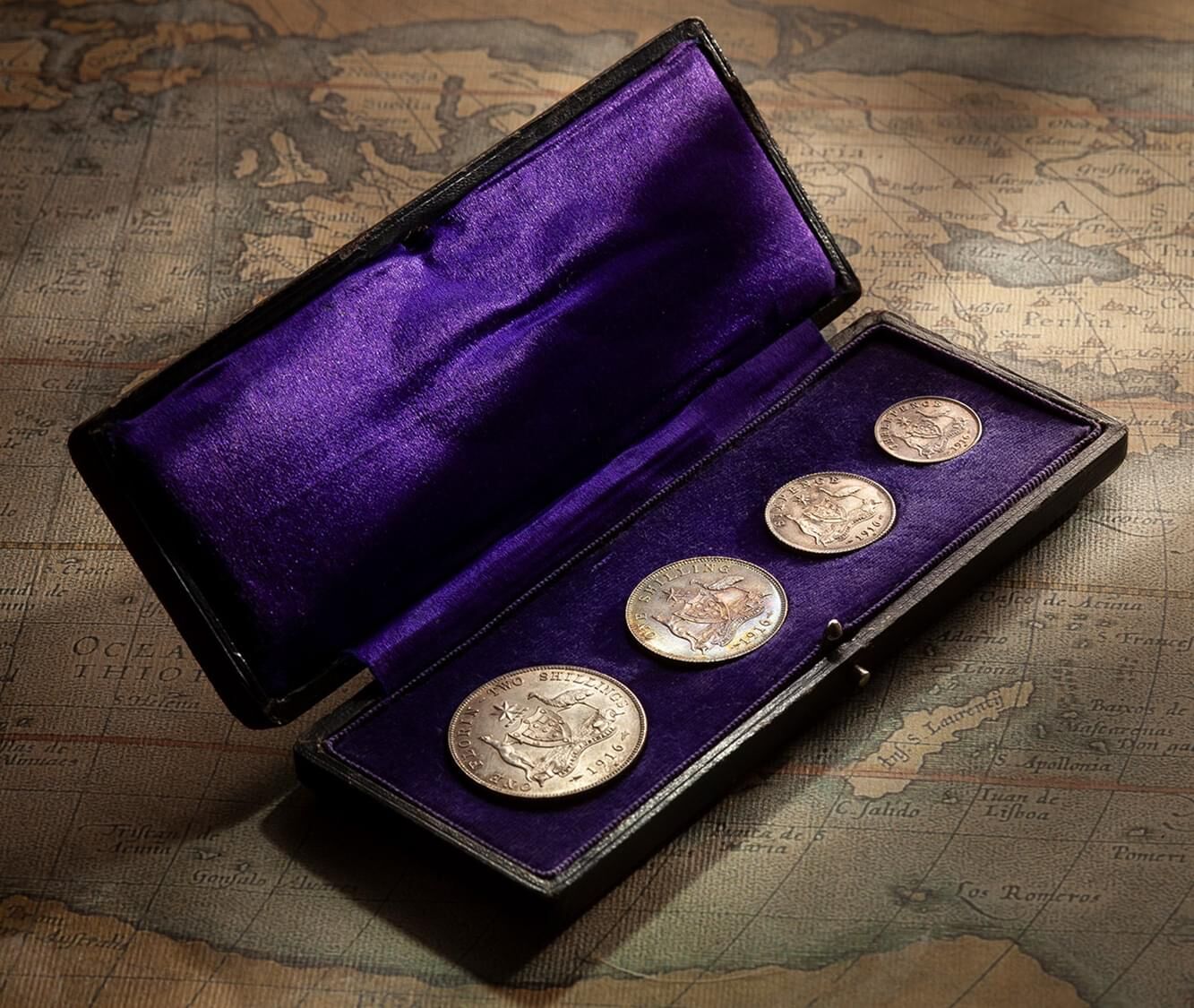
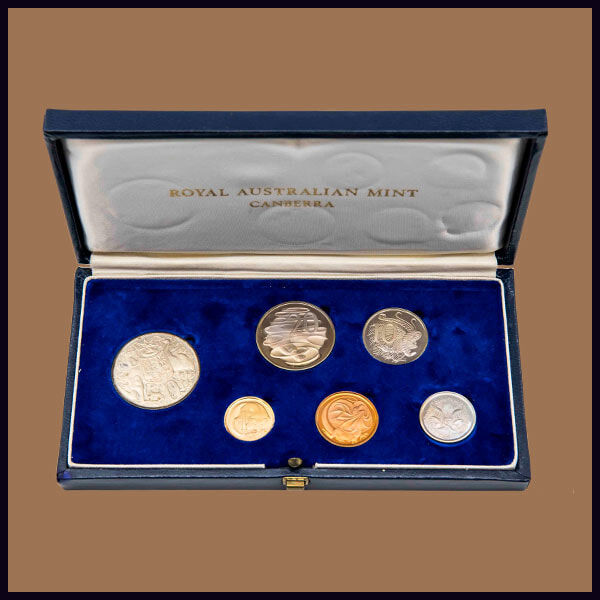
The Royal Australian Mint's 1966 Proof Set was based on the Melbourne Mint's 1916 Specimen Set.
Click on each icon for enlarged obverse and reverse photographs & descriptions.
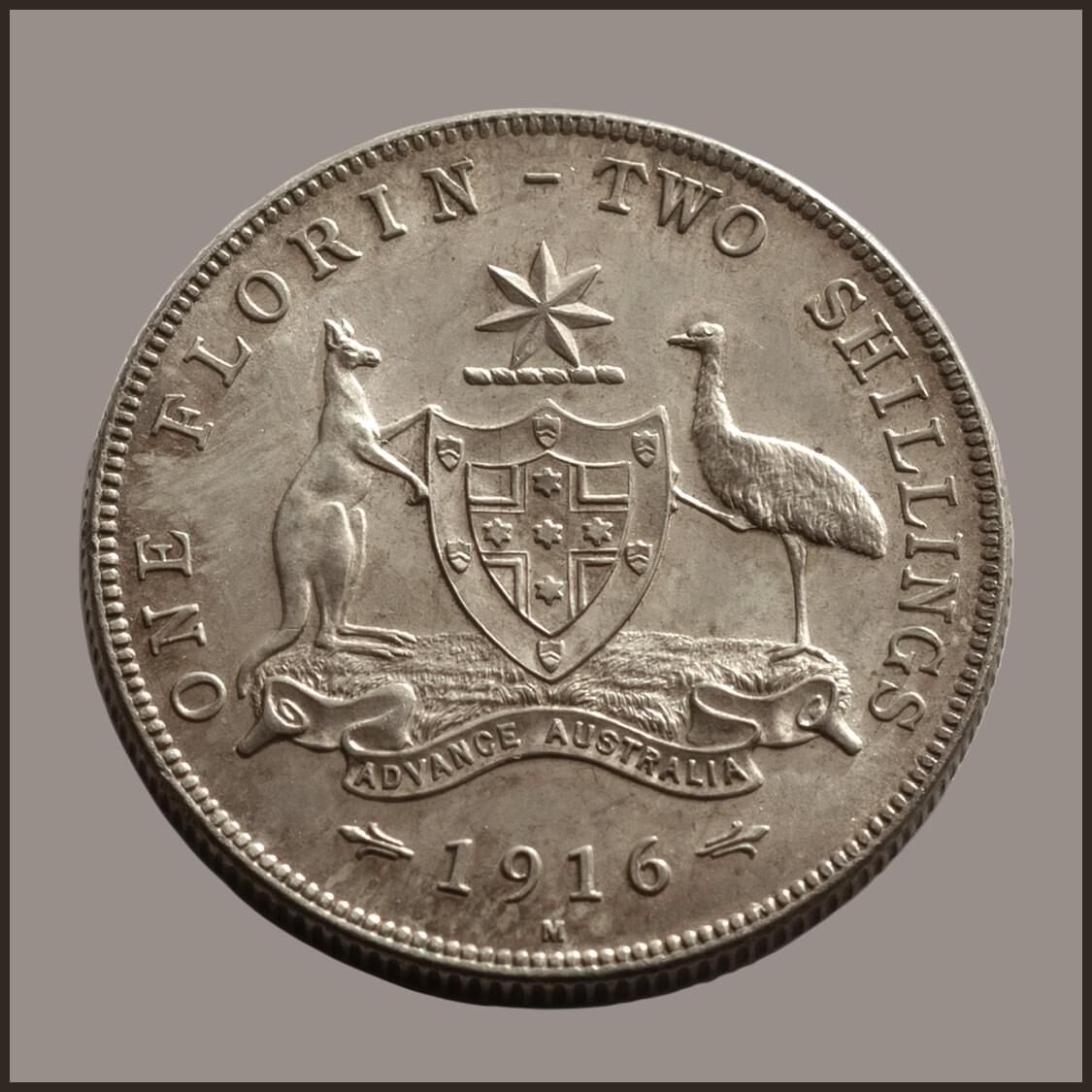
1916 Specimen Florin
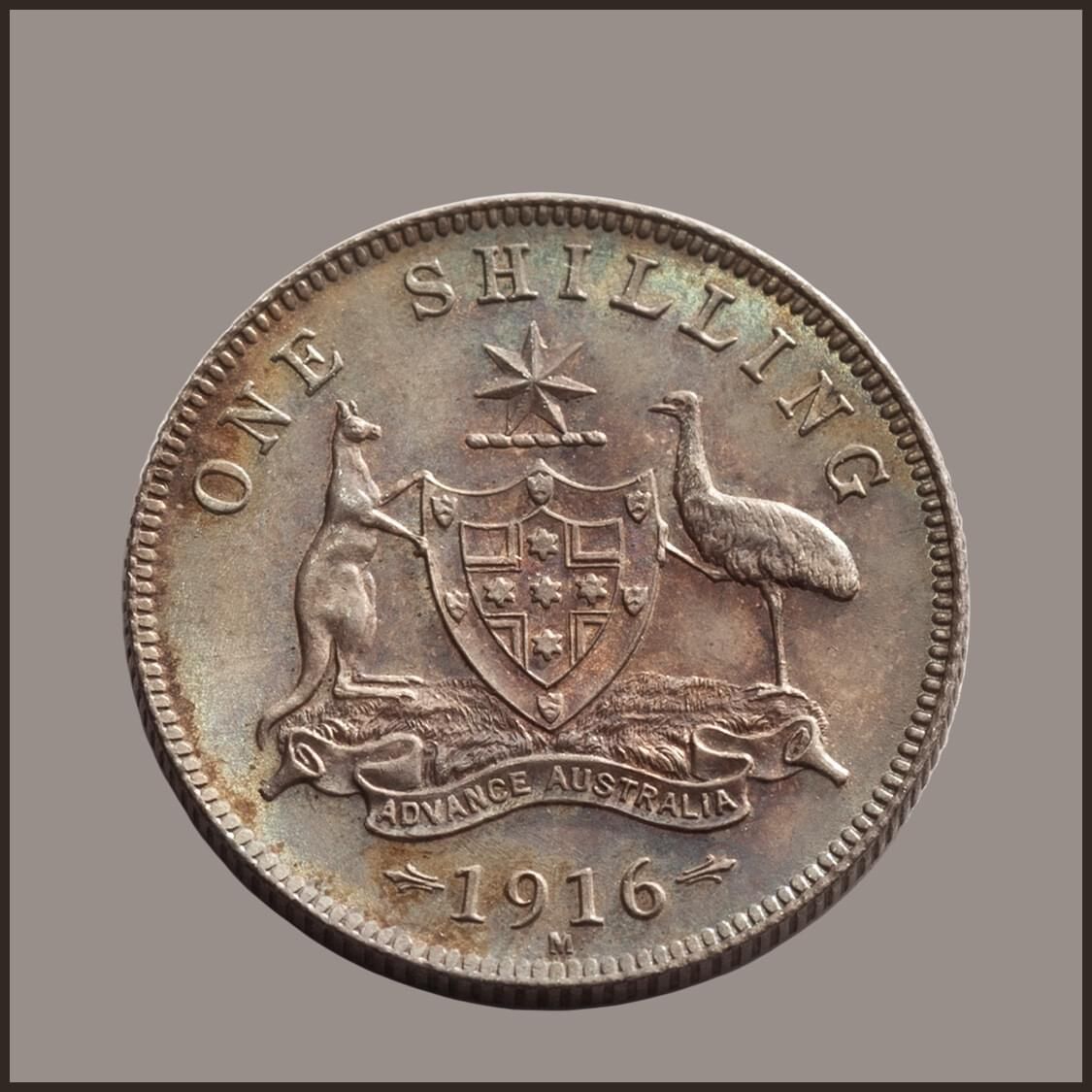
1916 Specimen Shilling
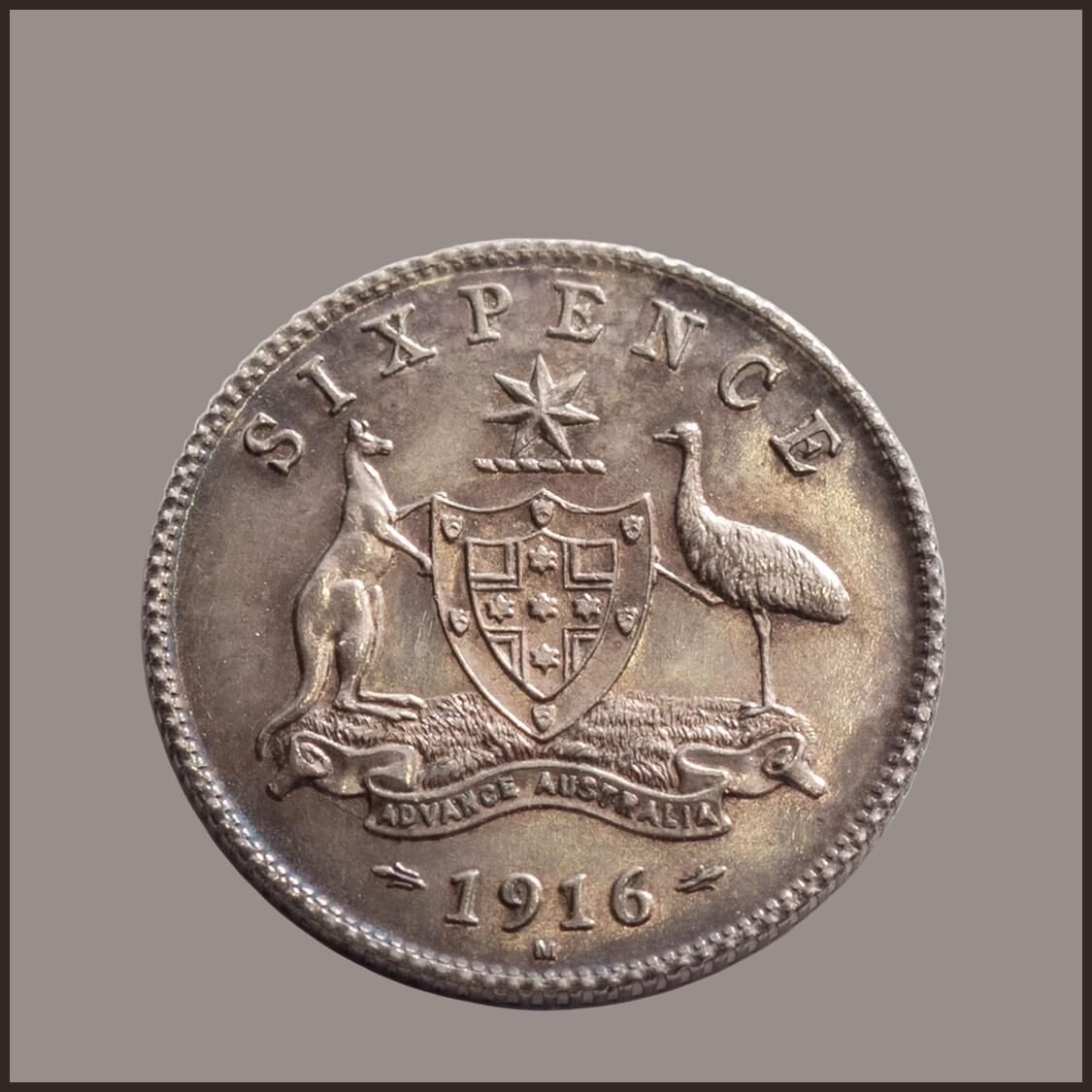
1916 Specimen Sixpence
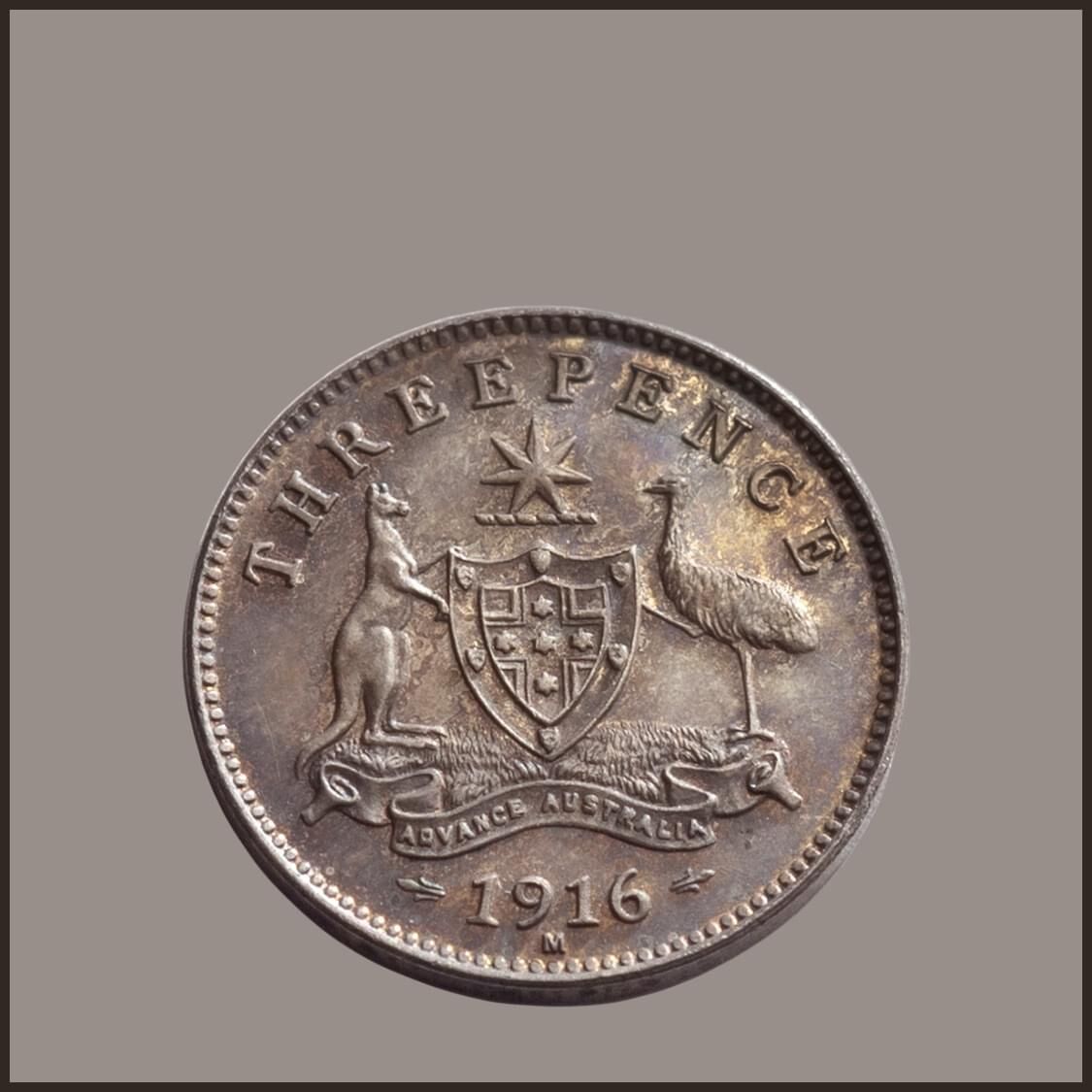
1916 Specimen Threepence
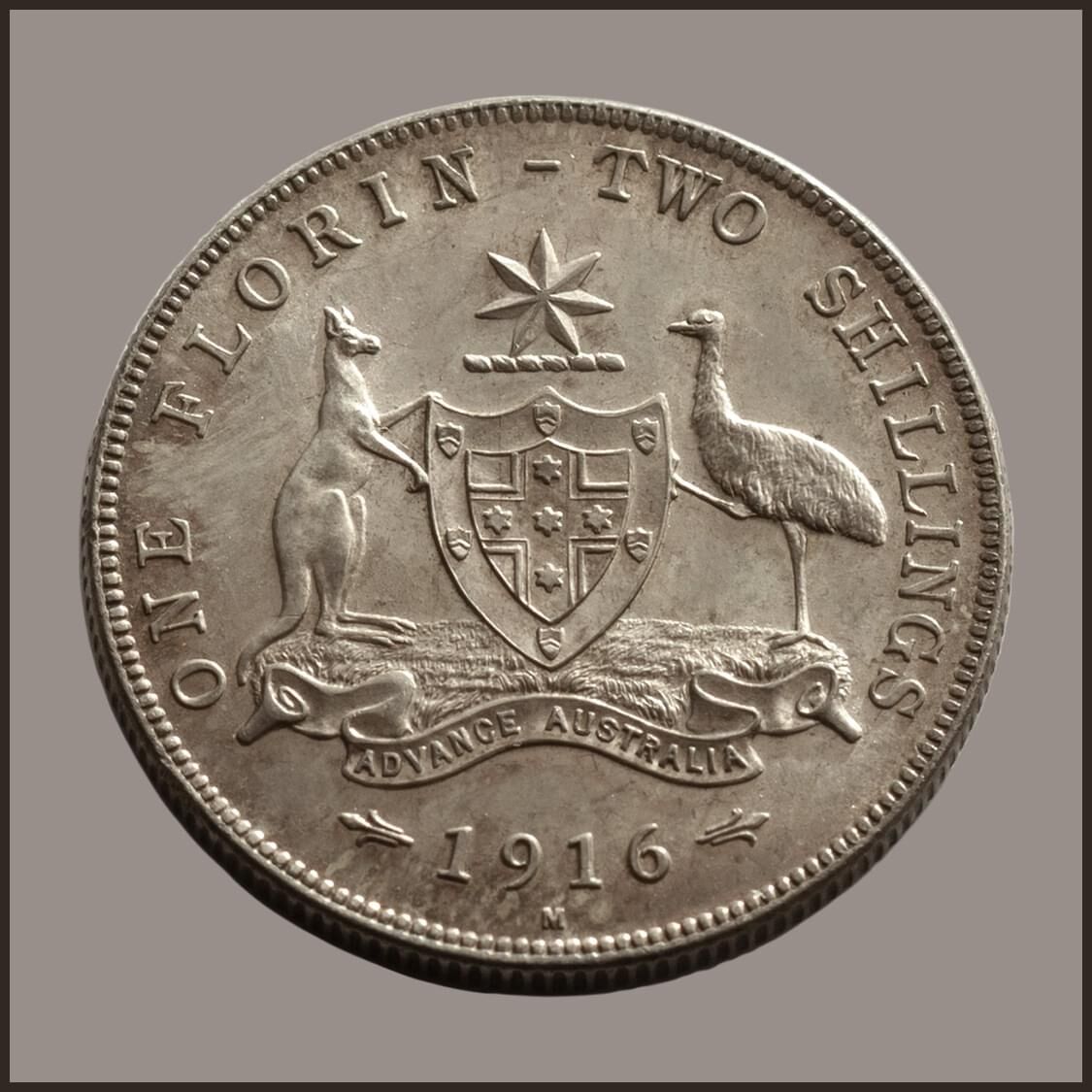
1916 Specimen Florin
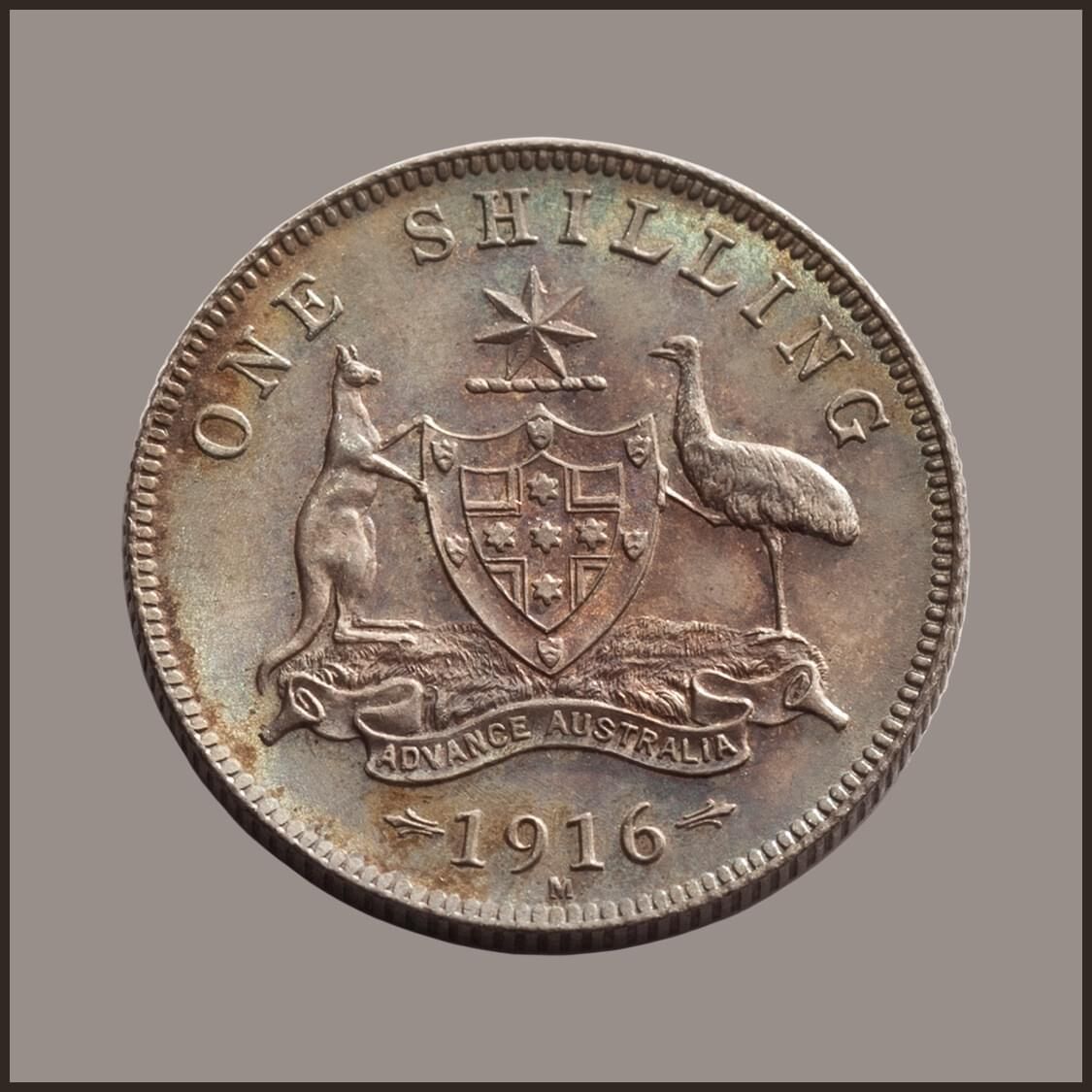
1916 Specimen Shilling
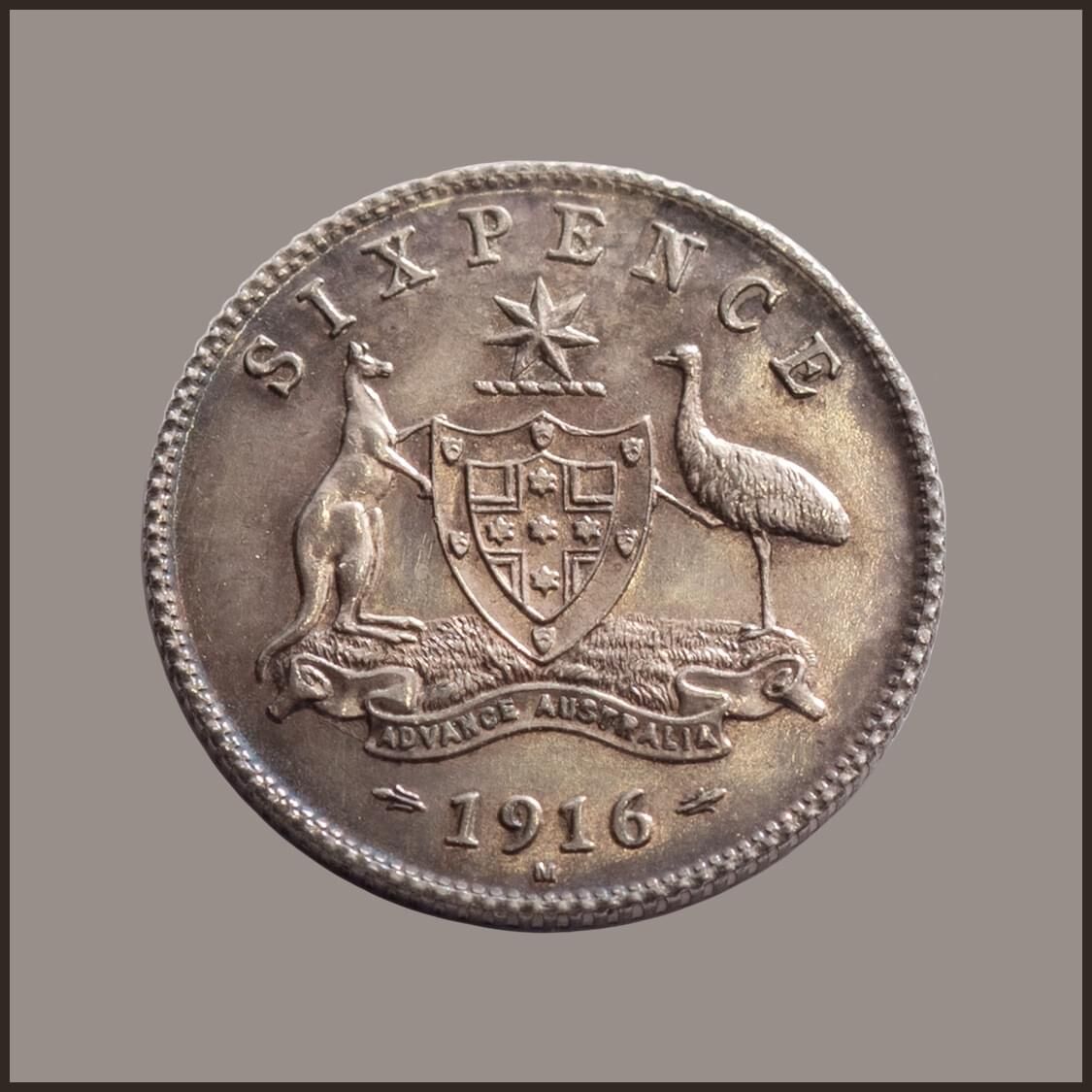
1916 Specimen Sixpence
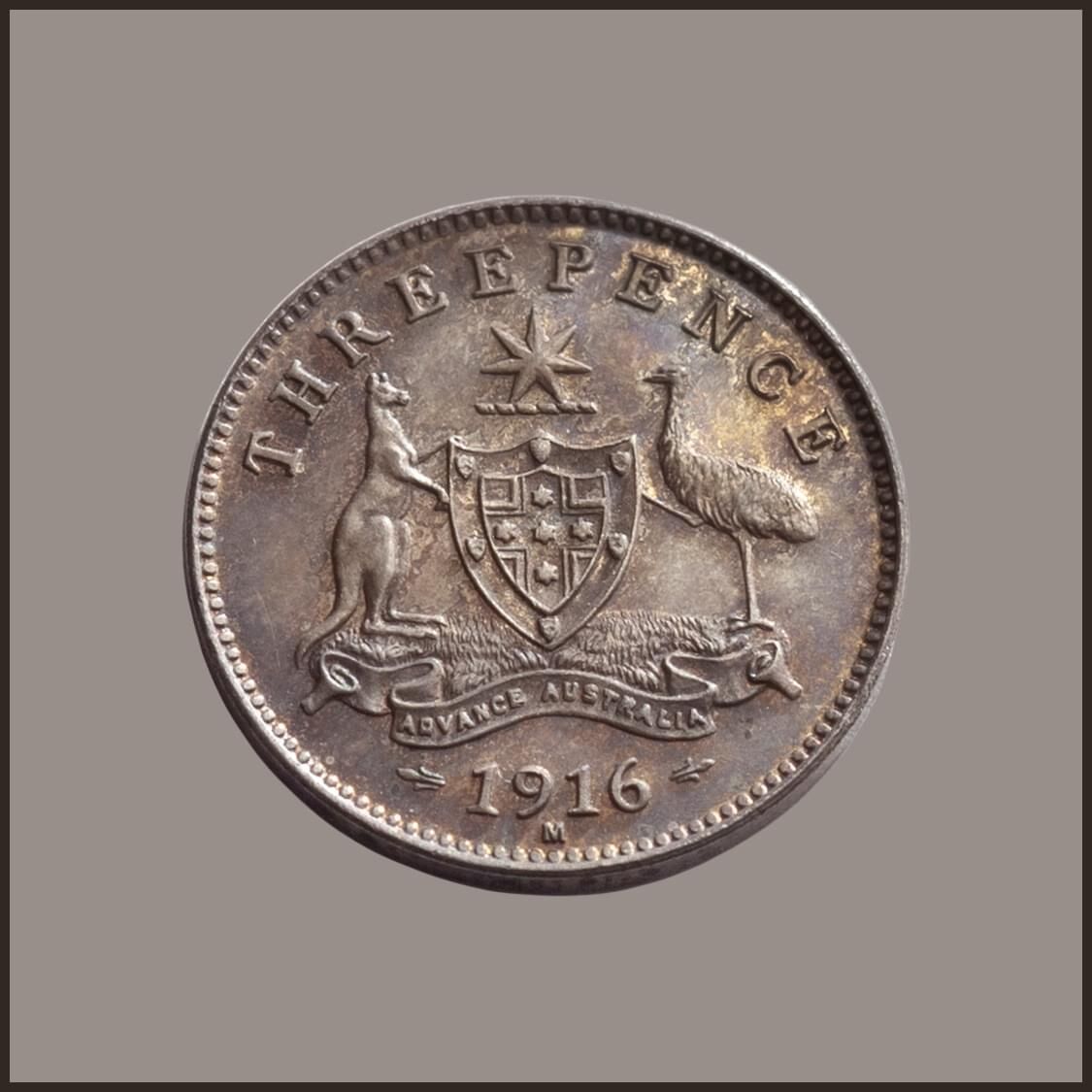
1916 Specimen Threepence
Early in November 1915 the Melbourne Mint was formally instructed to commence preparations for the striking of the Commonwealth's silver coinage. The silver was sourced locally from the Broken Hill mines. It is noted that prior to 1915, the nation's silver coinage had been minted overseas at the Royal Mint London and the Heaton Mint in Birmingham.
Towards the end of November 1915, dies for the set of four denominations were sent from London. Six weeks after the dies were shipped, the Governor of Victoria Sir Arthur Stanley K.C.M.G, struck the first circulating 1916 shilling. It was logical that the Melbourne Mint would begin striking silver coinage with the shilling denomination given its similar physical size to their familiar sovereign.
The florin was struck almost immediately after, sixpences by the middle of 1916 with the threepences finally later in the year. More than 11.5 million silver coins were released into circulation that year.
The Melbourne Mint's inaugural striking of Australia's Commonwealth coins was a momentous occasion in minting circles. The Deputy Master of the Melbourne Mint therefore decided to create a Presentation Set to record the occasion.
Each presentation set was comprised of the four silver coins of florin, shilling, sixpence and threepence, each featuring the Melbourne mint mark ‘M’ below the date 1916 and minted to specimen quality.
The set of four was housed in a handsome, velvet-lined royal blue case that had been locally sourced.
The availability of the four-coin specimen presentation set was confirmed in November 1916 when Le Souëf recorded an entry of sixty specimen sets in the Mint Museums’ cash accounts with a face value of £11 5/-.
While records show that 60 sets were produced, sixteen were sold, collectors charged 6/- for a cased set.
A further 25 sets out of the original mintage were presented to dignitaries and politicians with the precise fate of the remaining sets unknown.
What we do know is that many of the cases have been lost and many of the sets have been broken up and sold as individual coins.
We also know that others were accidentally used as circulating coins, their value irreparably reduced through wear.
Over the past seventy-plus years we note only seven sets housed in their original case of issue have been recorded.

'The Sir Marcus Clark' Aborigine Threepence is the earliest numismatic depiction of an indigenous Australian. Struck in silver in 1860, and this example, almost proof-like and the finest of eight known examples. It is a truly remarkable piece of Australiana that is easy to get emotional about. And it's pretty obvious when you look at its auction performance over the last seventy-plus years that many a collector/bidder has got emotional about it. The piece has consistently exceeded expectations on the three occasions it has made a public appearance.
The Aborigine Threepence was created in 1860 by colonial silversmiths Hogarth & Erichsen who arrived in the colony as free-settlers in 1852. The works of Hogarth and Erichsen are revered and are held by the following institutions, to name but a few. The National Library of Australia, Canberra, The National Gallery of Australia, Canberra, The National Gallery of Victoria, Melbourne and The Powerhouse Museum, Sydney.
Click here for more details on this Product
You know what you are getting when you acquire the Sir Marcus Clark Aborigine Threepence. It is a piece that promises, and delivers, an experience. In essence, it is a brand.
The development of a brand starts with an extraordinary quality coin. And then a great collector moves into the picture adding his/her name to the provenance, thereby firming its standing and establishing its reputation.
That great collector was Sir Marcus Clark KBE.
The first public appearance of the Aborigine Threepence occurred in July 1954 when James R. Lawson Auctioneers sold the collection of the late Sir Marcus Clark KBE.
The Aborigine Threepence was placed in the sale alongside his Holey Dollar and Dump, such is the respect with which it is held.
The results out of the 1954 Lawson auction are fascinating. The Aborigine Threepence fetched £38, twice that of the Sir Marcus Clark Dump that sold in the same auction for £18 and that we recently sold for $95,000.
The Marcus Clark Aborigine Threepence was auctioned again twenty-seven years later, and in a fiercely contested bidding war, sold for $23,000 on a pre-auction estimate of $12,500.
Its last auction appearance was in 2005, offered by Noble Numismatics, the piece selling for close to $100,000 on a pre-sale estimate of $75,000.
1860 Aborigine Threepence
ex Sir Marcus Clark
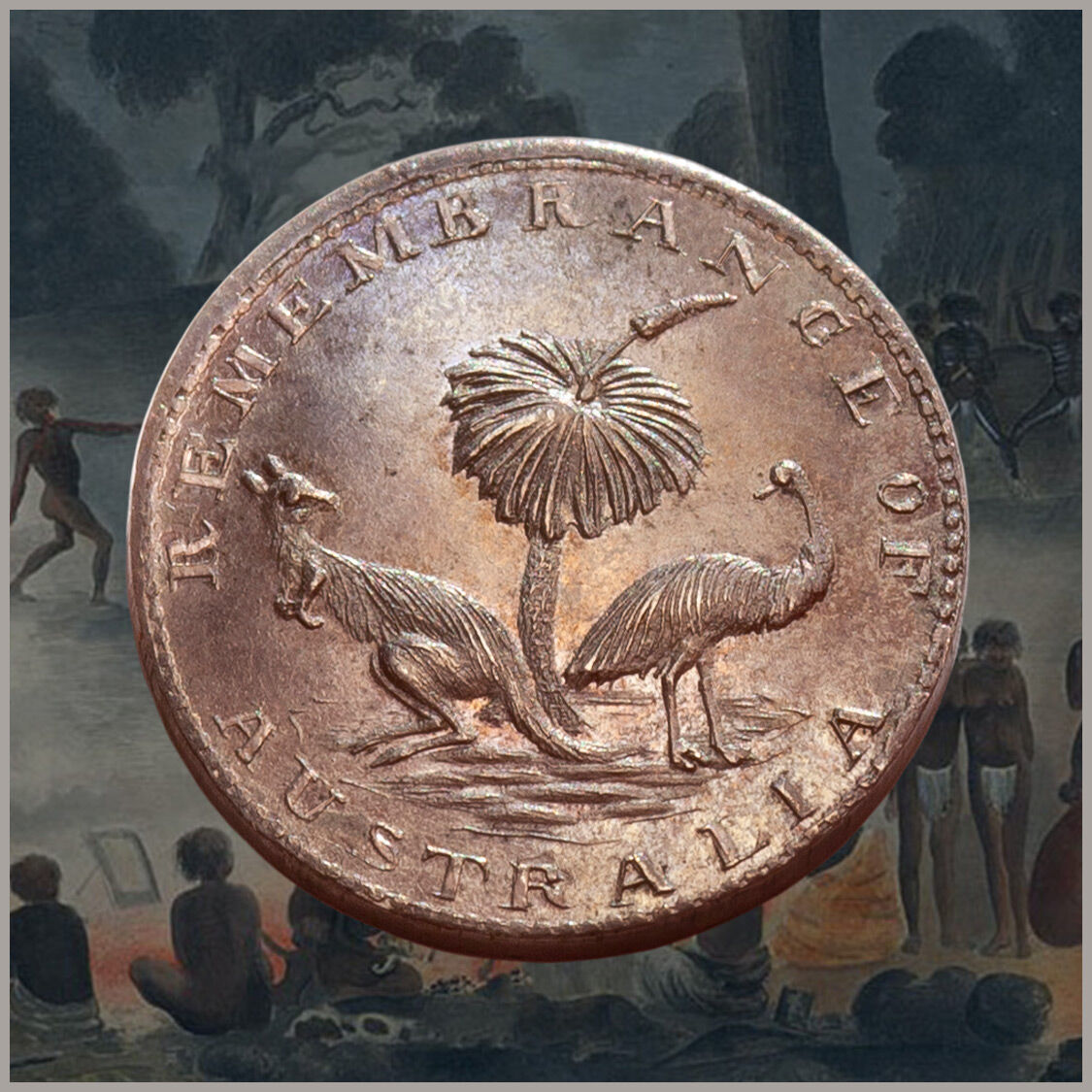
1860 Aborigine Threepence
ex Sir Marcus Clark
The 1860 Aborigine Threepence was minted by jewellers Julius Hogarth and Conrad Erichsen. Eight examples survive today, the Sir Marcus Clark specimen, the absolute finest known.
Scandinavian citizens, Hogarth was a sculptor and silversmith. Erichsen an engraver.
Both migrated to Australia to make their fortunes on the gold fields reaching Sydney on 11 December 1852. Failing to realise their ambitions, they utilised their skills and went into partnership as silversmiths opening their first enterprise at 255 George Street Sydney.
The firm quickly gained a reputation in the development of ‘Australiana’ themed decoration on metalwork and jewellery, which actively promoted the use of indigenous Australian floral and faunal elements and indigenous figures. Hogarth & Erichsen achieved great success during the 1850s notably through the vice-regal patronage of Governors Young and Denison.
The works of Hogarth and Erichsen are revered and are held by the following institutions, to name but a few.
• The National Library of Australia, Canberra
• The National Gallery of Australia, Canberra
• The National Gallery of Victoria, Melbourne
• The Powerhouse Museum, Sydney
Hogarth & Erichsen were numismatic trailblazers when in 1860 they created the Aborigine Threepence.
It would be another one hundred and twenty-eight years before Australia would acknowledge the contribution of Aboriginal Australians to our society when a portrait of a tribal elder appeared on the nation's Two Dollar coins created especially for the Bicentenary in 1988.
The Sir Marcus Clark 1860 Aborigine Silver Threepence
Price: $105,000
The Sir Marcus Clark Aborigine Threepence is the earliest numismatic representation of an indigenous Australian.
Struck in silver, and this example, almost proof-like.
It is a truly remarkable piece of Australiana that is easy to get emotional about. And it's pretty obvious when you look at its auction performance over the last seventy-plus years that many a collector/bidder has got emotional about it. The piece has consistently exceeded expectations on the three occasions it has made a public appearance.

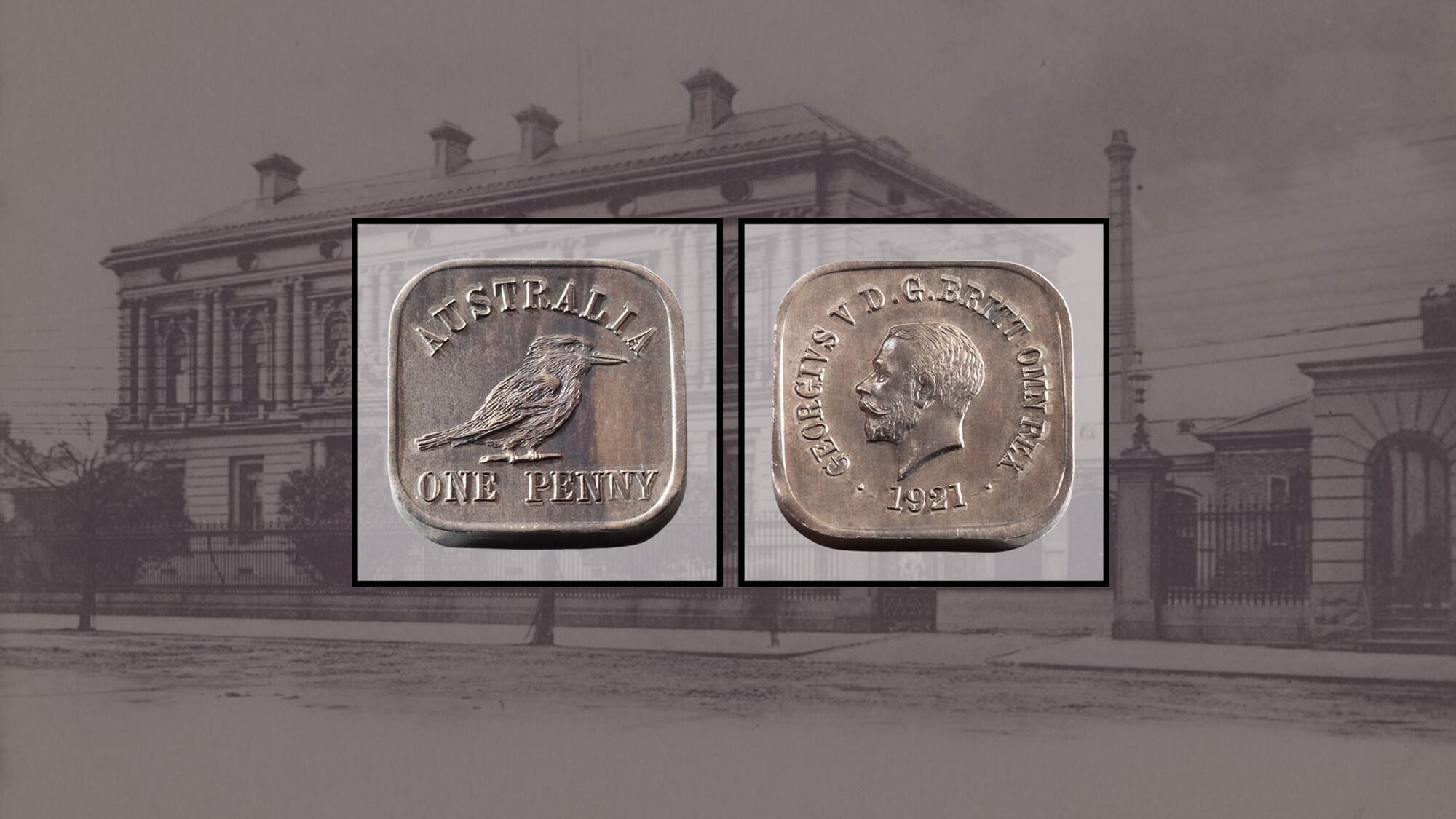
The year 1921 is the final year of the kookaburra series and hosts two design types, the Type 11 and the Type 12. This coin is the design type 11.
The 1921 Kookaburra Penny struck with the design type 11 has distinctive qualities that set it apart from those struck with the design type 12. And that set it apart from all other kookaburra designs.
The 'type 11s' have glorious, brilliant proof-like mirror surfaces. And they tone, uniformly, generally to a brown/golden hue. The design is highly detailed and both obverse and reverse are unique to the type 11. No other penny shares the same design. And they are rarer than the Type 12, the Type 11 appearing once annually, the Type 12 offered perhaps every six months.
The availability of the Type 11, and its affordability, makes it a very popular choice for buyers to enter the Kookaburra series.
Click here for more details on this Product
Rarity - one of an estimated twenty to twenty-five known. Statistically, a Type 11 Kookaburra Penny would be offered annually.
Composition - Nickel 75% Copper 25%
Reverse - A kookaburra that is unique to the Type 11, designed by Australian artist Douglas Richardson. The kookaburra is large, the eye struck incuse, the tail with four feathers. The branch is low. The words ONE PENNY are featured in one line across the base of the coin.
Obverse - Uncrowned effigy of George V, portrait prepared by Australian artist, Douglas Richardson, the hair an off-centre part, softer facial features and the top of the head noticeably flatter. The circular legend reads GEORGIVS D. G. BRITT: OMN:REX, the date '1921' appearing below the portrait, separated from the legend by ornamental dots. The obverse is unique to the Type 11.
The year 1921 hosts two design types, the Type 11 and the Type 12. The coins are the most available in the series and this is not a criticism, simply a statement of fact. Both coins are scarce and relative to other Australian coin rarities are infrequently offered. (The Type 11 offered once each year.)
A market is created when buyers and sellers interact, driven by a mutual interest in exchanging goods. This interaction establishes a price based on supply and demand. A market can't exist without supply and it is the Type 11 and the Type 12 that creates the market for the Kookaburra coins and sustains and excites buyer interest in the series. If every coin in the kookaburra series had the rarity of the Type 4, with only four known and offered once a decade, you simply wouldn't have a vigorous market.
The availability of the Type 11, and its affordability, makes it a very popular choice for buyers to enter the Kookaburra series.
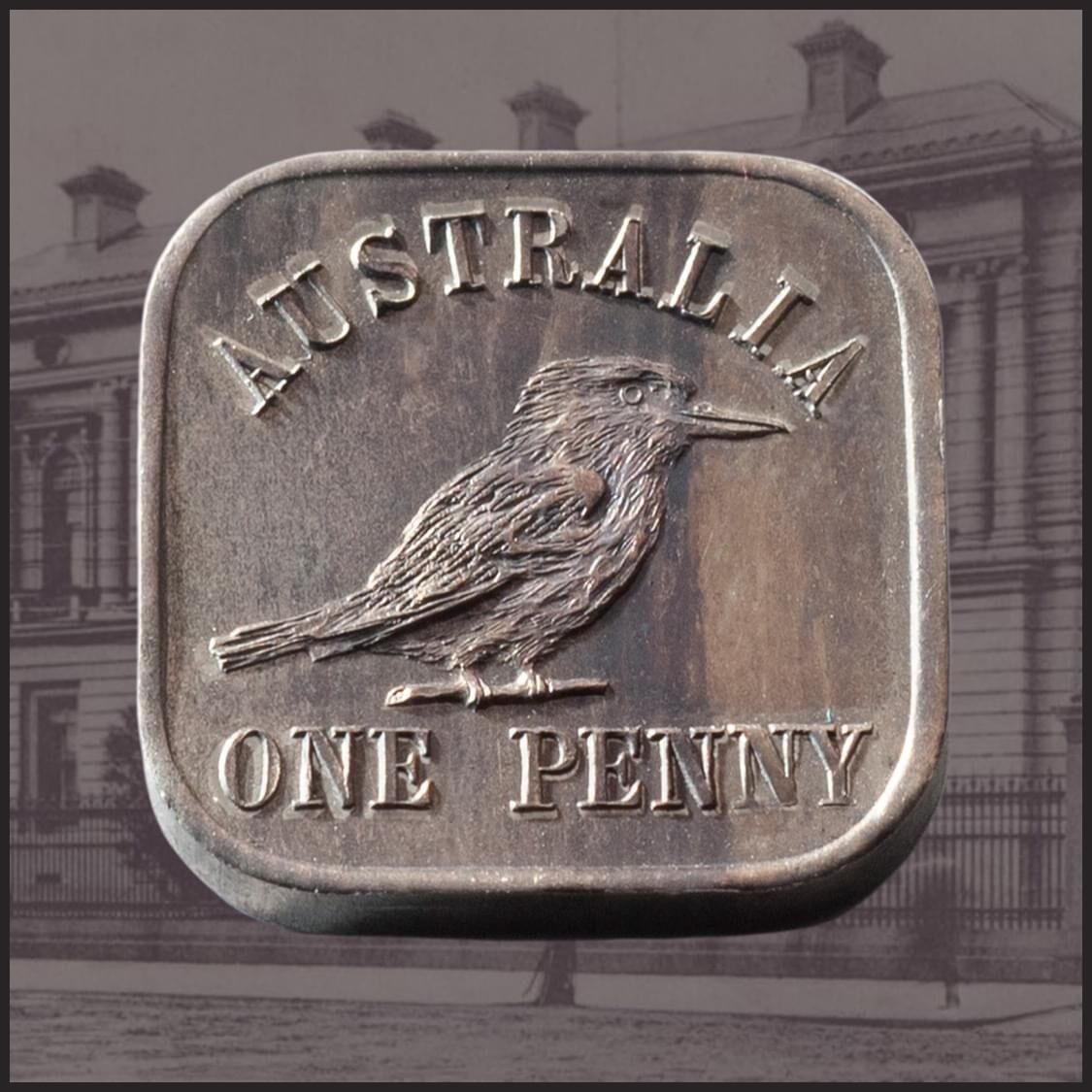
1921 Kookaburra Penny, Type 11,
brilliant fields, strong edges and Uncirculated.
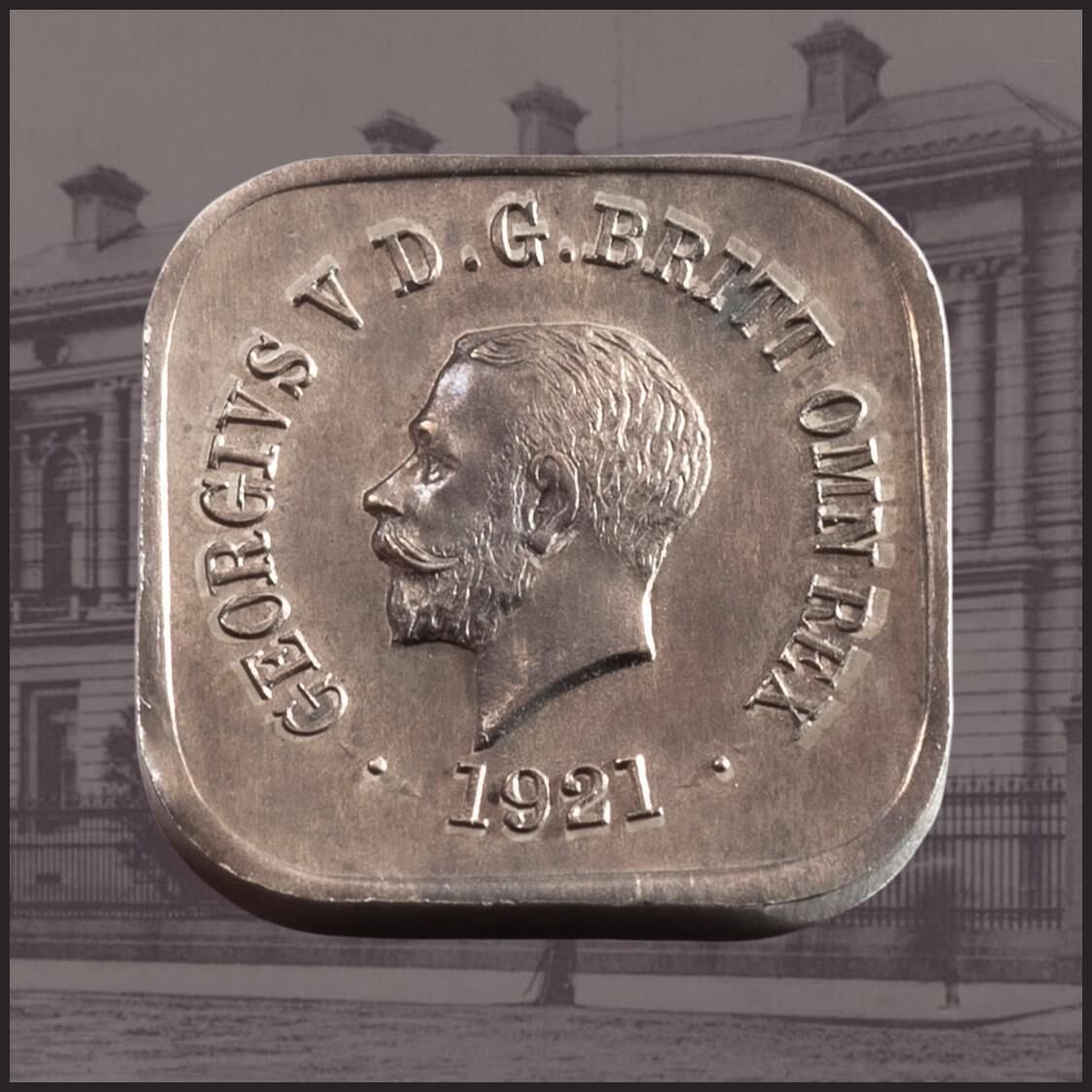
1921 Kookaburra Penny, Type 11,
brilliant fields, strong edges and Uncirculated.
The Kookaburra Penny and Halfpenny were trailblazers: Australia's first attempt at independent design in our coinage, produced in 1919, 1920 and 1921 at the Melbourne Mint. Coins with simple design elegance, produced for Australians, by Australians.
Avant-garde and adventurous, the historical significance of the kookaburra coins cannot be overstated.
The coins pushed the boundaries of traditional design practices, using a 'never-tried before' concept of depicting wildlife unique to Australia. And introduced an innovative material of cupro-nickel.
All of which were taken up in 1966 with Australia's decimal currency changeover!
In 1919, the Government put forward a proposal to replace the round 'British-styled' penny and halfpenny in use at the time with completely new Australian coins. Proudly nationalistic, crafted on one side, with a kookaburra sitting on a branch, underneath the word 'AUSTRALIA' and on the other side, a portrait of George V.
Eleven variations of the penny and two of the halfpenny were produced over three years, each a variation on the one kookaburra theme and each variation assigned a numeric design type, Type 1 to Type 13, to make it easy for collectors.
The Kookaburra coins were test pieces and were not struck to the exacting standards of a proof strike, the very reason why the coins show variations in the thickness of the edges. We note that the edges have been well executed on this coin.
Given to dignitaries to assess their reaction, there was no packaging and we know that not every dignitary was a collector and would have handled them with care. Some of the coins must have been tucked into a fob pocket for they have circulated. Others could have rattled around a top desk drawer. We note that this coin has been brilliantly preserved. The fields are fully brilliant!
It is a statement of fact that a well struck and well-preserved kookaburra coin is a joy to behold.


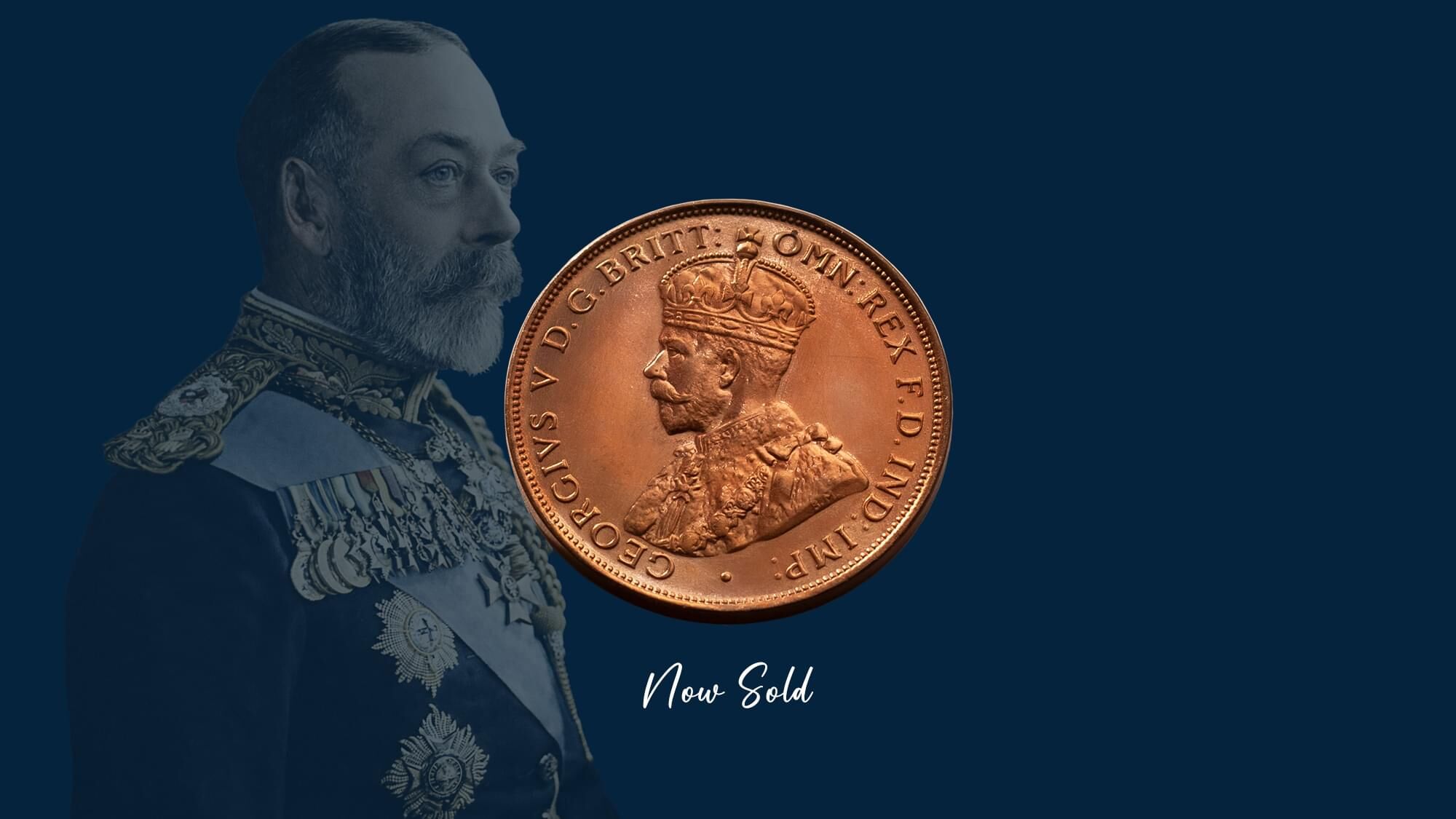
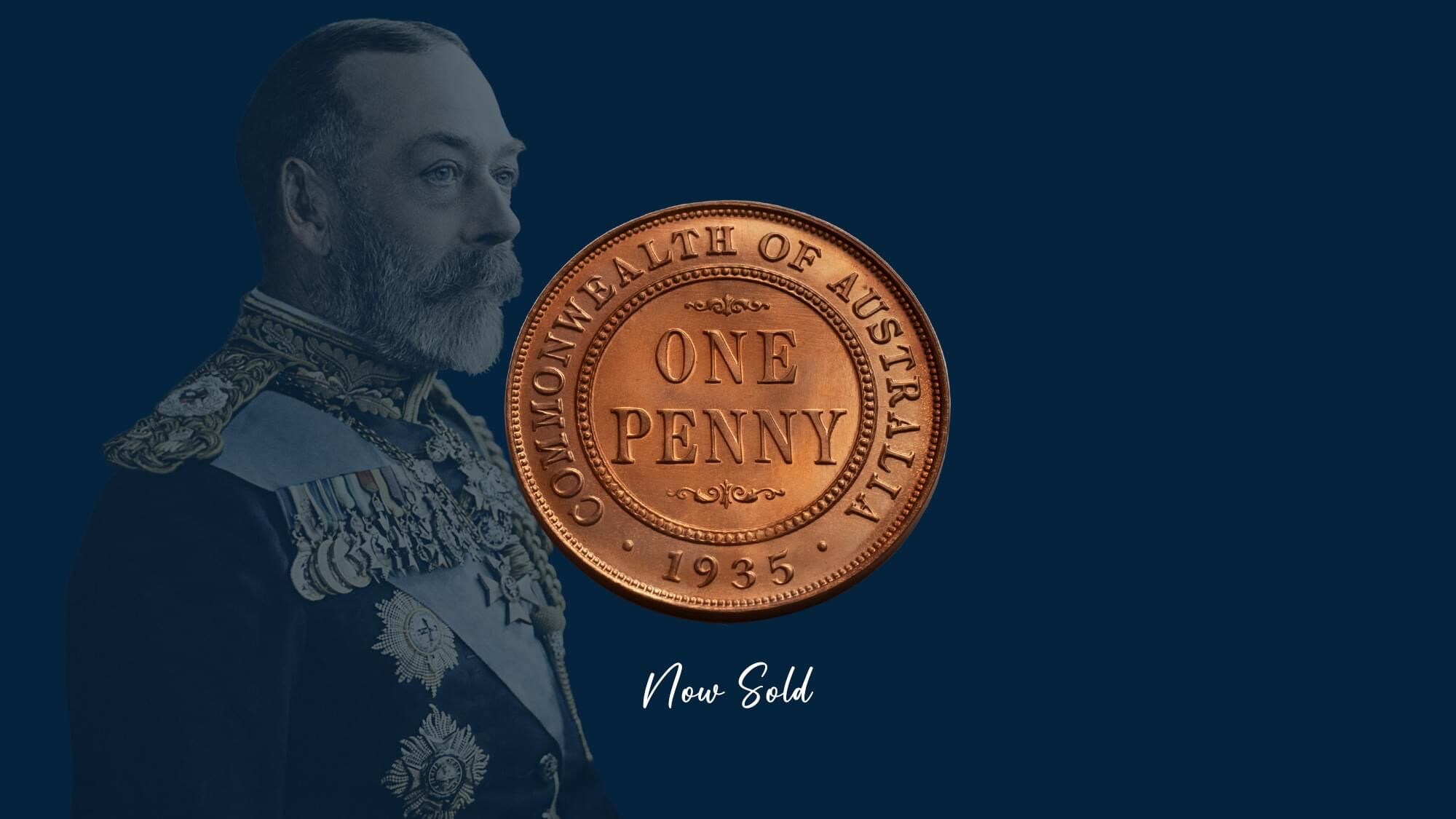
This Proof 1935 Penny was a great Australian coin rarity the day it was struck. The mintage was minuscule, just 125 coins were minted with the majority sold overseas. This coin is an even greater coin rarity today. It is a super-rarity. Brilliantly preserved with superb design definition, and the finest known out of the original mintage.
When it was first offered at auction in 2005, dealers and collectors alike, had never seen a proof '35' like it before and the price at which it sold smashed all records. And there has been nothing on the market since 2005 that challenges this coin.
This 1935 Proof Penny is magnificent. A gem proof, a full brilliant mint red.
Click here for more details on this Product
The pride and joy of owning a special coin is markedly enhanced with knowledge of both the people associated with its production and previous owners through whose hands it has passed.
New Zealand numismatist, Henry George Williams played a key role in persuading the Melbourne Mint to issue proof coins on a commercial basis in 1935.
Williams was captivated by the golden-eye appeal achieved by the Melbourne Mint with their proof coppers and ordered 125 pairs. The majority of coins were sold into the advanced collector markets in the U.K. and the U.S, the very reason why the coins are so scarce in the Australian market.
That Williams did not request the minting of any proof silver coins in 1935 reflected his personal preference and his insight into the market, that demand for the bronze coins far outweighed that for the silver.
As the photos reveal, the strike detail and the finish of this coin is unsurpassed by any other proofs out of the George V era. Historical letters confirm that the proofs of 1935 were struck from especially hardened blanks and were struck twice with fresh dies in the presses. The lack of bag marks is consistent with the coins being made effectively by hand.
Natural attrition has taken its toll on the original mintage and we would expect to see a 1935 Proof Penny or a 1935 Proof Halfpenny on the open market, perhaps once every year.
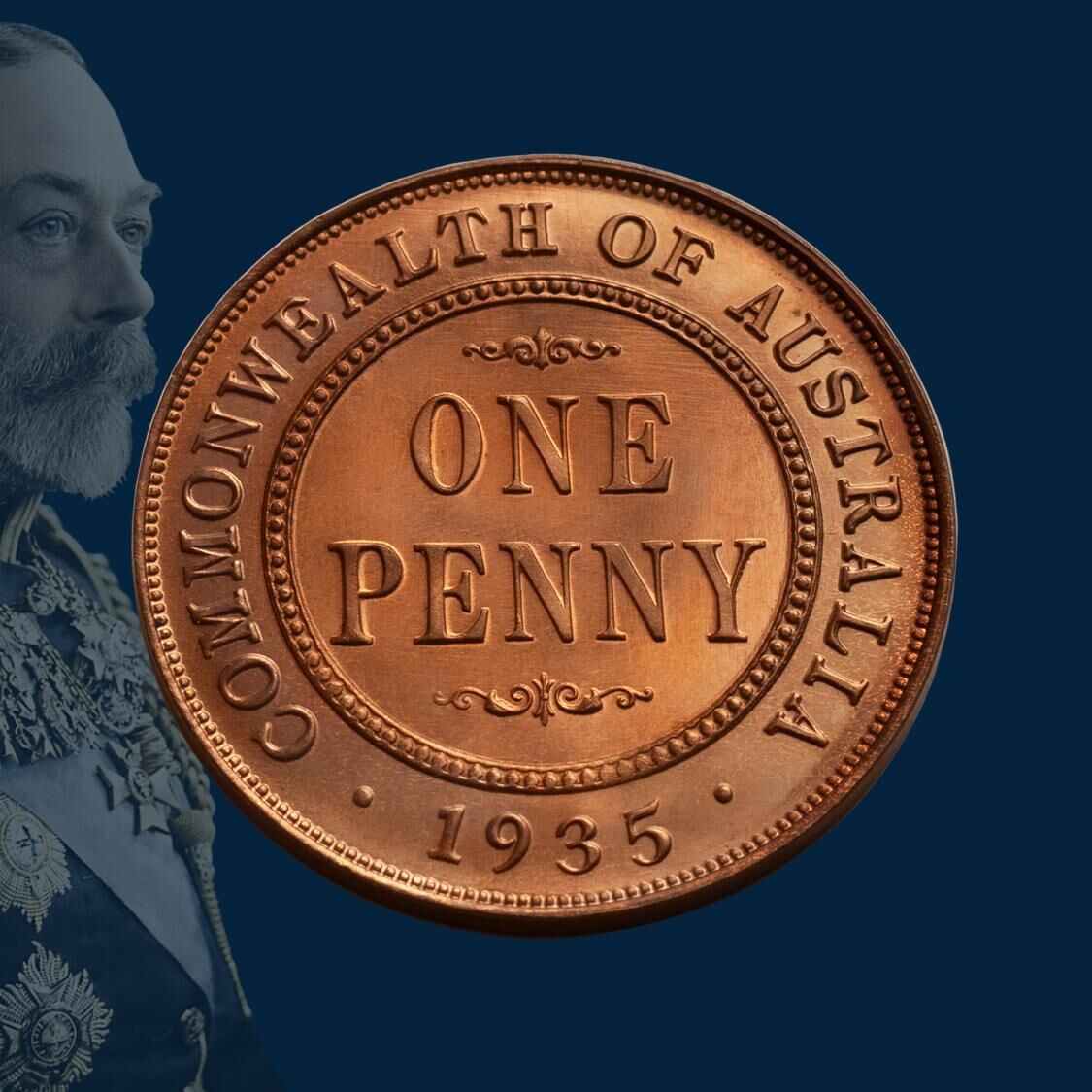
1935 Proof Penny,
a full brilliant mint red
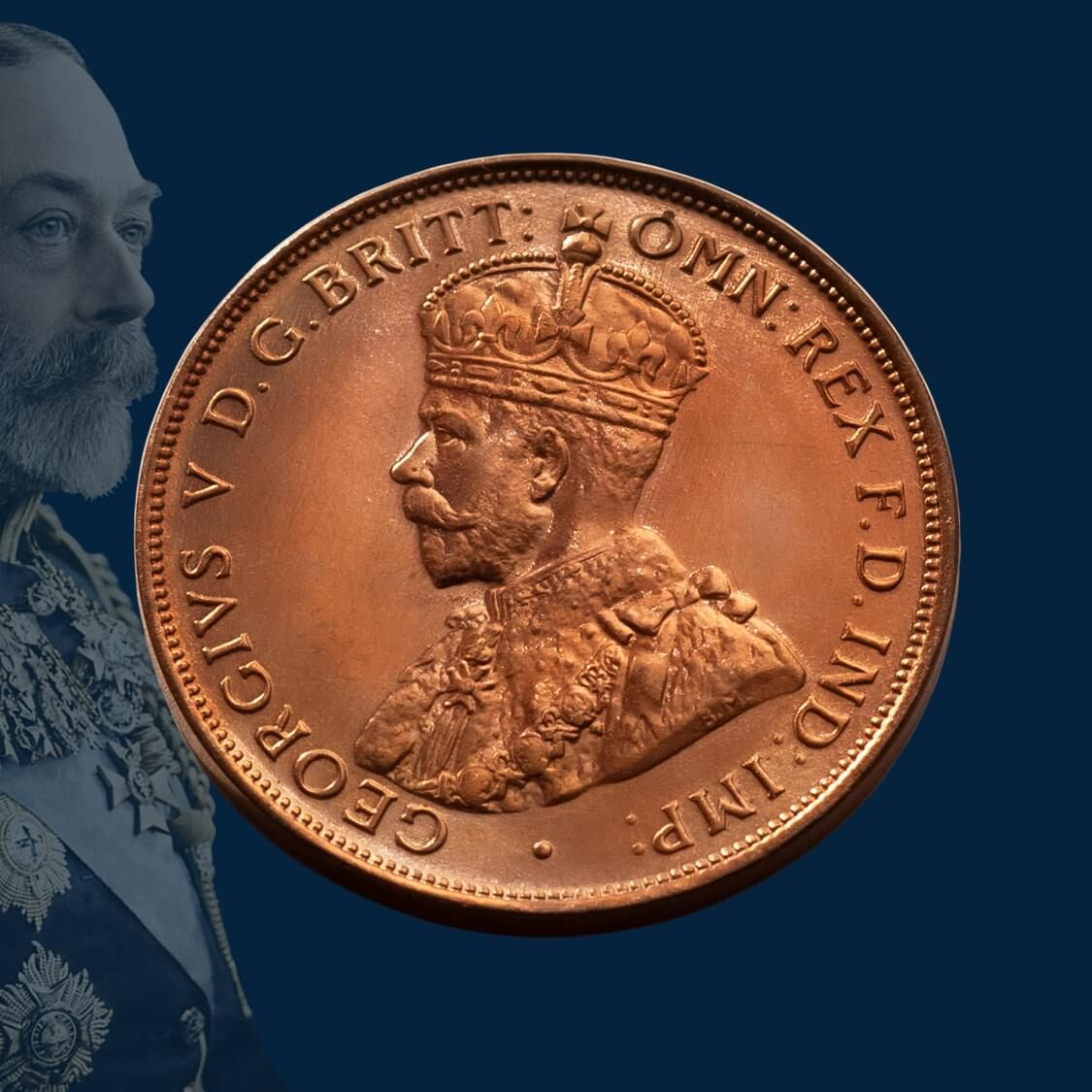
1935 Proof Penny,
a full brilliant mint red
The 1935 Proof Penny was a 'commercial' issue struck by the Melbourne Mint. Commercial in the sense that the mint sold the coins to make money, charging collectors a premium over face value.
But definitely not commercial by today's standards where mintages of 10,000 are the norm and collectors have the benefits of on-line ordering and toll-free phone numbers to buy their favourite collector coins from the Royal Australian Mint or the Perth MInt.
Collectors in the nineteenth and twentieth century were not afforded the same consideration from the operating mints.
The Melbourne Mint was Australia’s second coining facility and opened in 1872 to strike gold sovereigns. The mint did not produce any presentation pieces to celebrate its opening in 1872, a missed opportunity for today's collectors.
In 1916 the Melbourne Mint welcomed in a new era and commenced striking silver coins for the newly formed Commonwealth of Australia. The numismatic shortcoming of not issuing specially struck celebratory issues in the year of its opening was addressed in 1916.
The Deputy Master of the Melbourne Mint authorised the production of sixty cased Presentation Sets, each set comprised of four 1916 dated silver coins, the florin, shilling, sixpence and threepence struck to a specimen finish.
The notion that the mint might have been buoyed by striking coins especially for collectors is indeed a misnomer.
The Melbourne Mint did not strike its next collector issue until 1927, everyone's favourite, the Proof Canberra Florin. And indeed, up until 1955, the Melbourne Mint struck commercial issues on only another five occasions, 1934, 1935, 1937, 1938, 1939 and 1953.
And even then, two of the issues (1934 and 1935) required financing from the private sector, so timid was the Melbourne Mint in committing themselves to a commercial coining programme.
The Melbourne Mint's issues, especially struck for collectors, are extremely scarce and they are celebrated as critical points in Australia's numismatic history.
The table below indicates the collector issues that were struck between 1916 and 1953 and the mintage. The mintage figures have been determined from the mint's historical records including letters and sales ledgers and are shown in brackets.
• 1916 Specimen Set ( 60 )
• 1927 Proof Canberra Florin ( 400 )
• 1934 Proof Set ( 50 )
• 1935 Proof Pair ( 125 )
• 1937 Proof Crown ( 100 )
• 1938 Proof Set ( 68 )
• 1938 Proof Crown ( 52 )
• 1939 Proof Halfpenny ( 40 )
• 1953 Specimen Set ( 12 )


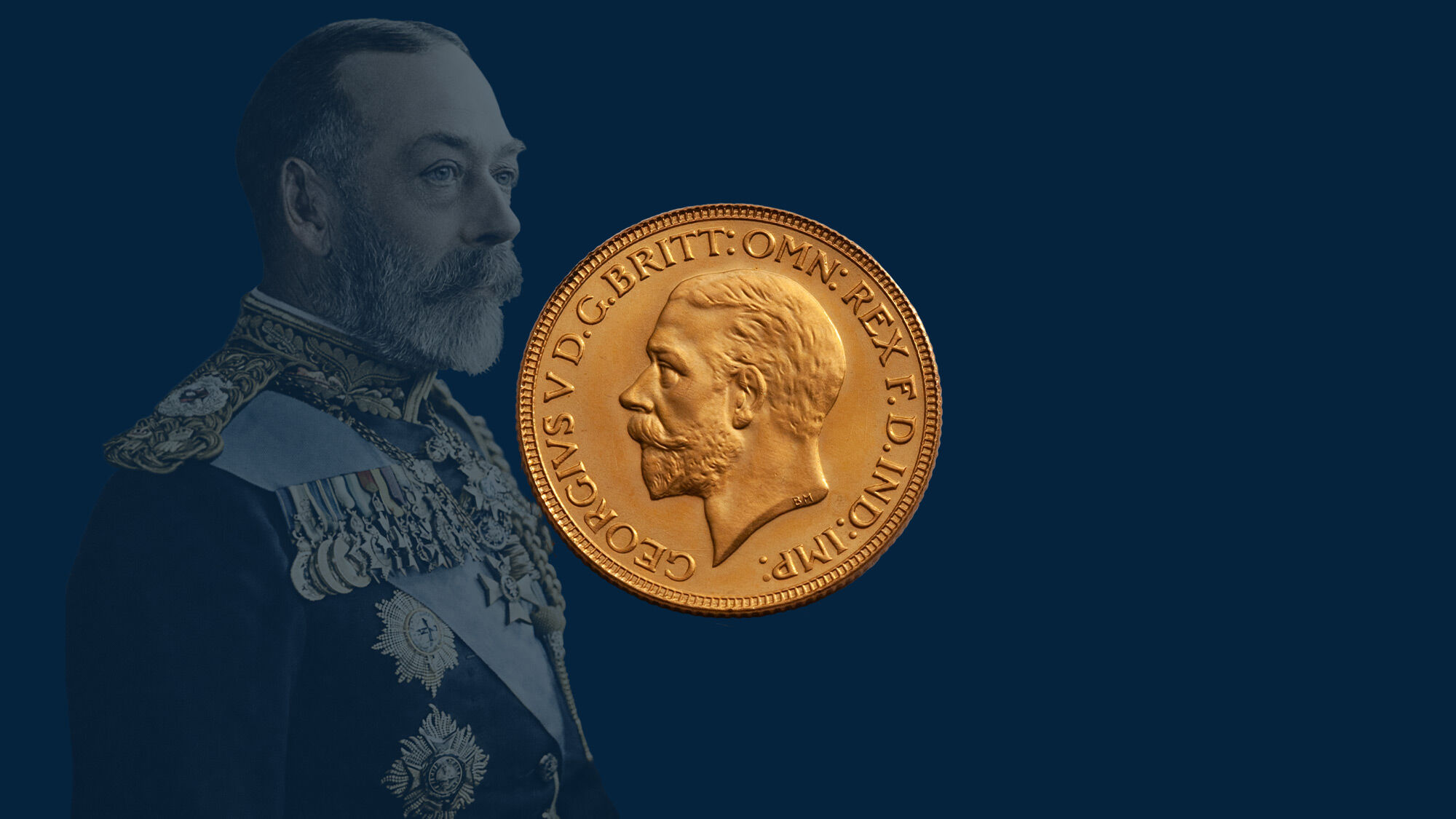
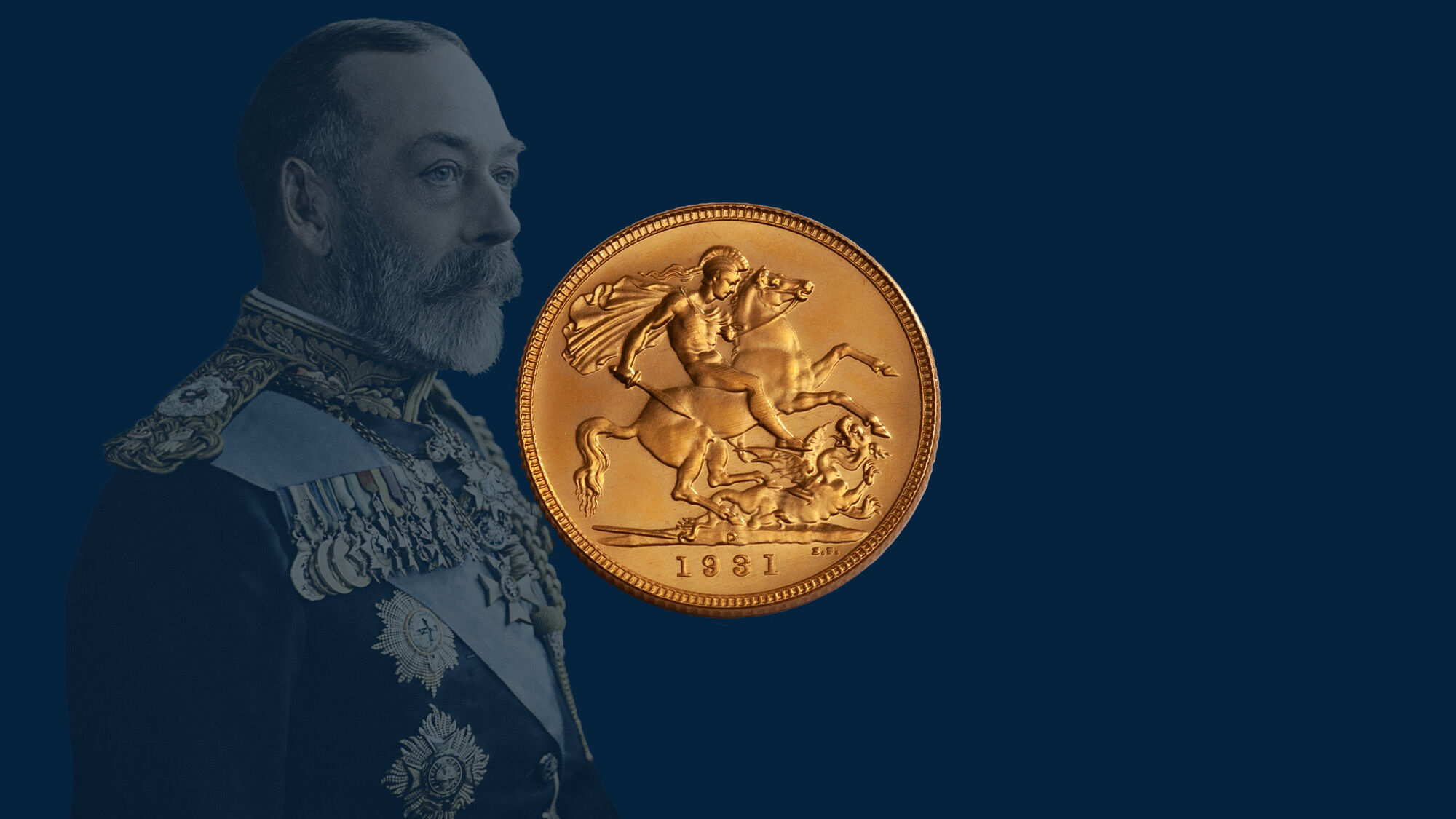
This 1931 Perth Mint Proof Sovereign is one of Australia’s high-value proof gold coins. And one of our most exclusive. A pivotal monetary decision by the Government, for Australia to go off the gold standard, saw the nation’s mints strike their last gold sovereign in 1931. This Proof Sovereign was struck at the Perth Mint as a numismatic commemoration of the end of the era of gold coining. The date ensures that the coin will always be relevant, for generations to come. That the issuing mint was the Perth Mint guarantees its exclusivity. The Perth Mint struck circulating sovereigns between 1899 and 1931 but struck proofs in only three of them (1899, 1901 and 1931). And in the most minuscule mintages. This 1931 Proof Sovereign is one of two examples, and the absolute finest of the two. The proofs of the Perth Mint are the crown jewels of coinage, adding glamour and exceptionality to any collection.
Click here for more details on this Product
This Proof 1931 Sovereign, struck at the Perth Mint, is a numismatic giant. And that status is reflected in its price.
There are key factors that influence coin values. Understanding those factors is essential to understanding why this coin is so highly valued. It's no different to real estate and appreciating why median values of suburbs such as Toorak in Melbourne, Point Piper in Sydney, Teneriffe in Brisbane and Peppermint Grove in Perth are the highest in their respective cities.
Values of Australian proof gold coins are shaped by a mix of date (and the historical significance of the date), exclusivity of the sector, the rarity of the coin (generally, 1, 2 or 3 pieces), the coin's quality. And its provenance. No single factor works on its own. It is the interaction of these factors that shape values.
Now let's evaluate the 1931 Proof Sovereign using the criteria detailed above.
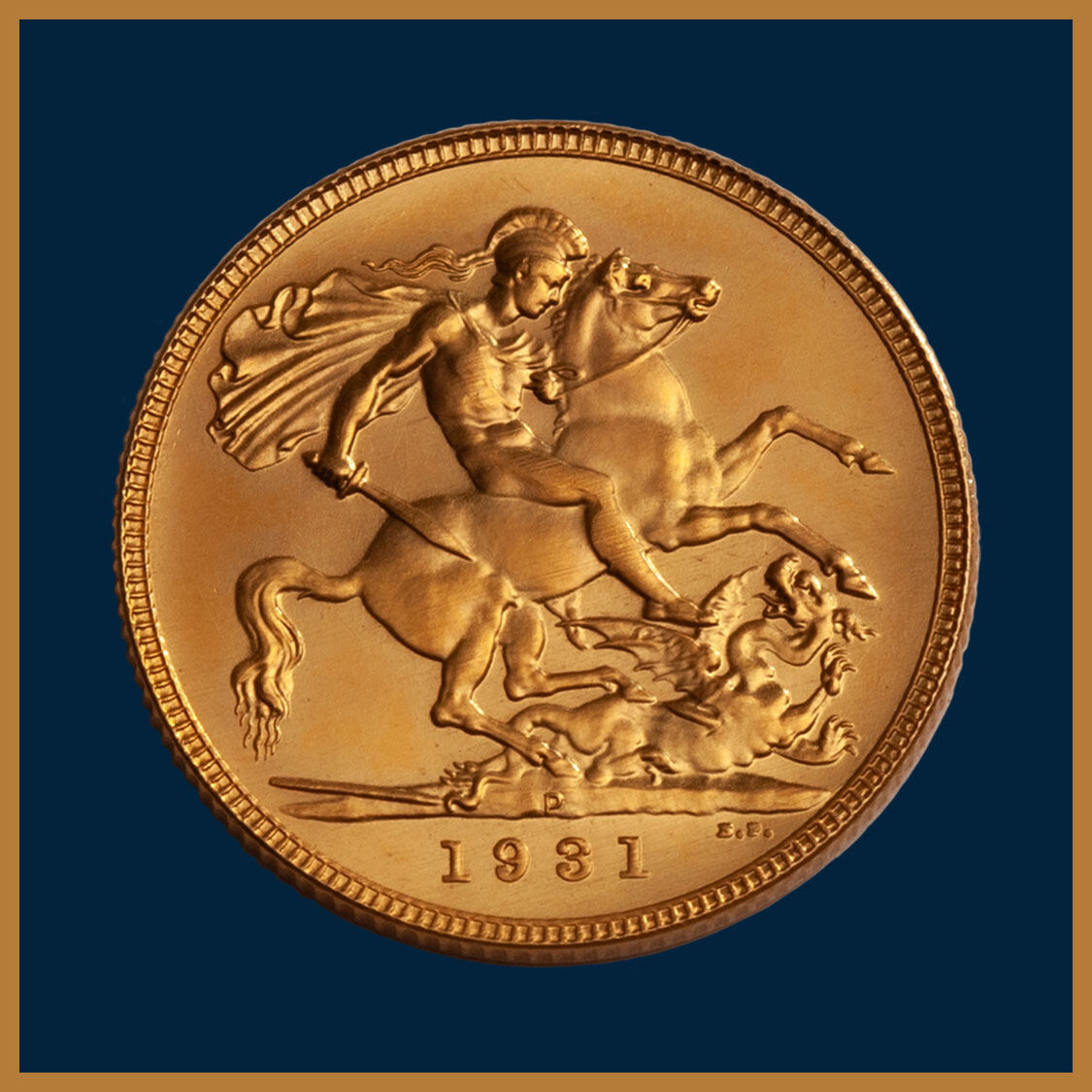
1931 Proof Sovereign
struck at the Perth Mint
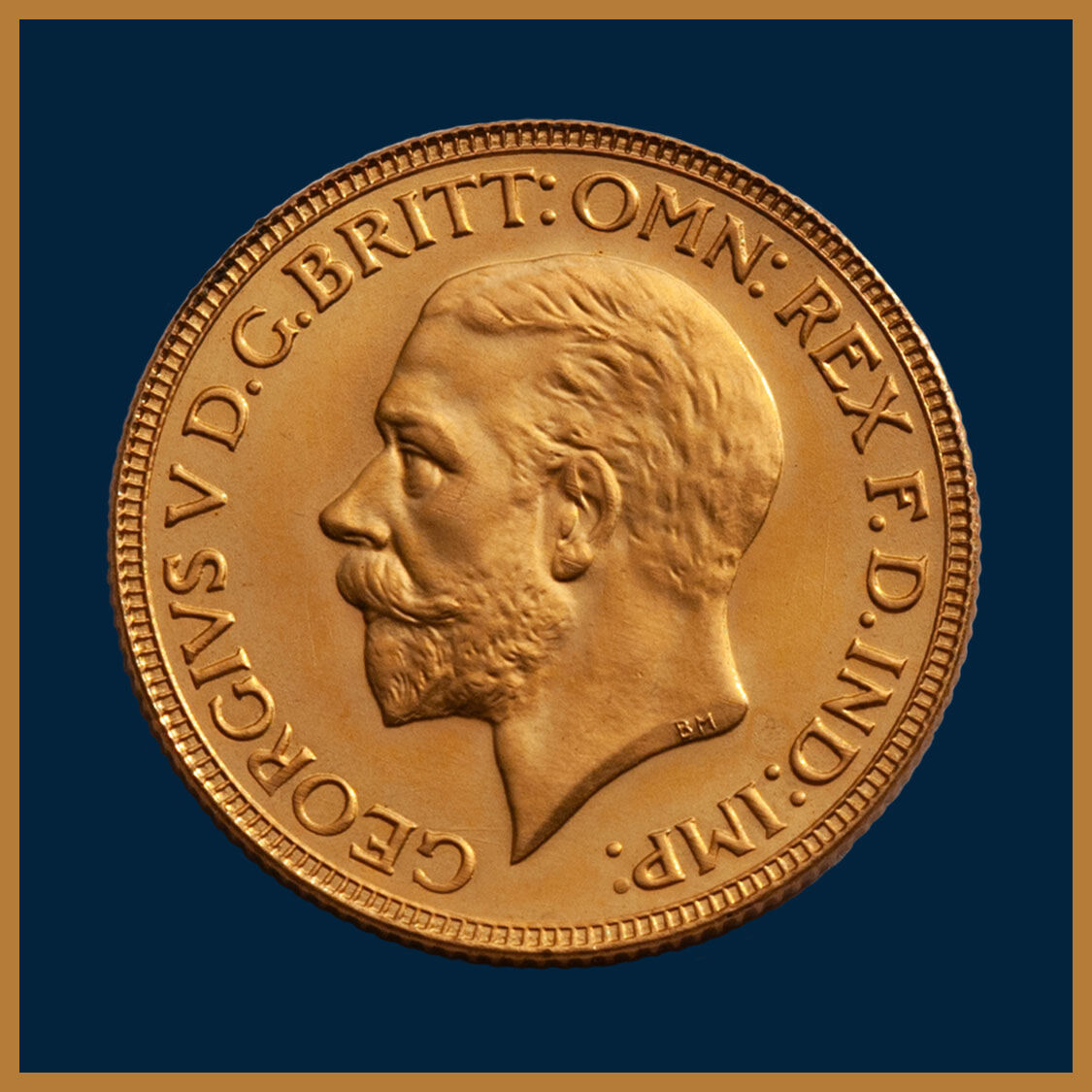
1931 Proof Sovereign
struck at the Perth Mint
Date - the date 1931 is historically significant for it was the year Australia ceased production of sovereigns as circulating currency. The date signifies the end of an era and ensures that the coin will always be relevant for generations to come.
Exclusivity of the sector - the Perth Mint had a miserly approach to striking proof coinage. Between 1899, when the mint opened, and 1931 when the last sovereign was struck, proof coinage was produced in just three years. Those proof production years were 1899, the year of its opening. Next came 1901, Australia's Federation year. (The coins of both 1899 and 1901, depicted the Veiled Head portrait of Queen Victoria.) And the final year of Australian gold sovereign production, 1931, when Australia ceased striking gold coins as currency (George V era). There were no proofs struck in between!
Three years that offer a total buying pool of seven coins. Conversely the Melbourne Mint proofs were struck in twenty-three out of sixty years of operation and the Sydney Mint proofs nineteen, out of seventy-two years of production.
The market's reaction to this coin was clearly shown when it was first offered at Baldwins, London in 2012, as lot 878, the coin selling for £52,800, 32 per cent higher than its pre-sale upper estimate of £40,000. By comparison, a 1929 Melbourne Mint Proof Sovereign, a proof coin out of the same era, was offered with an upper pre-sale estimate of £40,000 and sold for £40,800.
Exclusivity of the sector ... cont'd - If we compare the two coins, the 1931 Perth Proof and the 1929 Melbourne Proof, there is no doubt that the year 1931 is considered more important historically than 1929. But the prime reason for the vast price differential was that the 1931 Proof Sovereign is a product of the Perth Mint. And is overwhelmingly rare and prestigious.
Rarity - there are two known examples of the Perth Mint Proof 1931 Sovereign. But if quality is a prime consideration, then this coin is unique, for the other known coin is impaired with imperfections in the fields. This coin is a gem proof, and a superb FDC.
Provenance - the provenance of this coin is supremely fitting. It was presented to John Agnew circa 1931. That a coin of such power and influence in the Australian gold coin market was originally owned by John Agnew somehow seems just right for he too was powerful and influential. A man of vision and remarkable knowledge of gold mining, Agnew was credited with making a major contribution to revitalise the Western Australian gold mining sector in the 1920s and 1930s and was Director of Consolidated Goldfields when he was gifted this coin.
Australia's Proof Gold Coinage
When the Royal Mint London or the British Museum requested a sovereign or half sovereign from an Australian Mint, they were never sent a circulation strike. Nor would a circulation strike be presented to the monarch, gifted to a dignitary or sent to an influential collector. And a circulation strike would not be displayed at a Colonial Exhibition.
An individually crafted presentation piece would be specially created for the occasion, minted to a proof or specimen finish. The technical term for such a piece is 'Coin of Record'.
A Coin of Record is an artistic interpretation of coinage, a strikingly beautiful coin beyond ordinary currency. Individually crafted to standards far exceeding that required of a circulating coin, using special coining techniques. Whereas production of circulating coinage was dictated by Government, Coins of Record were struck at the discretion of the mint master.
Coins of Record were not produced every year and, as they were individually crafted, the process was time consuming and the mintages minuscule. For gold proofs, generally ten pieces or less. There were several occasions when only a single coin was struck.
Coins of Record of Australia's sovereigns and half sovereigns are visually stunning, distinguished by brilliant golden-mirror surfaces. And it is their beauty and their ultra-exclusivity that drives demand.
Australia's gold proof coins moved onto the international stage when the collection of John G. Murdoch was liquidated via Sotheby, Wilkinson & Hodge in London in 1903, following his passing in 1902. Murdoch held an extensive collection of gold proofs, including coins featuring the Sydney Mint design, Young Head, Jubilee and Veiled Head design. The Melbourne Mint was well represented with both proof sovereigns and proof half sovereigns. And minor representation from the Sydney Mint and the Perth Mint.
The reputation of Australia's gold proof sovereigns and half sovereigns as an international commodity was set in stone in 1903, a widespread regard that holds to this very day, right across the globe. Recent international auction results, November 2021 and more recently in February 2026 confirm the status of Australia's gold proof coins as a globally traded commodity. And in particular confirm the price levels that Perth Mint proofs command.
The proofs of the Perth Mint are the crown jewels of coinage, adding glamour and exceptionality to any collection.
There is one other reason why the Proofs of the Perth Mint are so popular. The Perth Mint is still producing coins; its narrative has not been confined to history. The mint is an on-going story with a collecting audience that is expanding through the production and export of decimal collector coins. The Perth Mint’s commercial profile creates an environment whereby its earlier gold sovereign and half sovereign issues can be enabled and brought to life. Every time the Perth Mint opens its doors to welcome visitors, releases a new proof coin or celebrates an anniversary of its minting operations (as it did on 2024), we are reminded of a tradition of coining excellence that began in 1899.


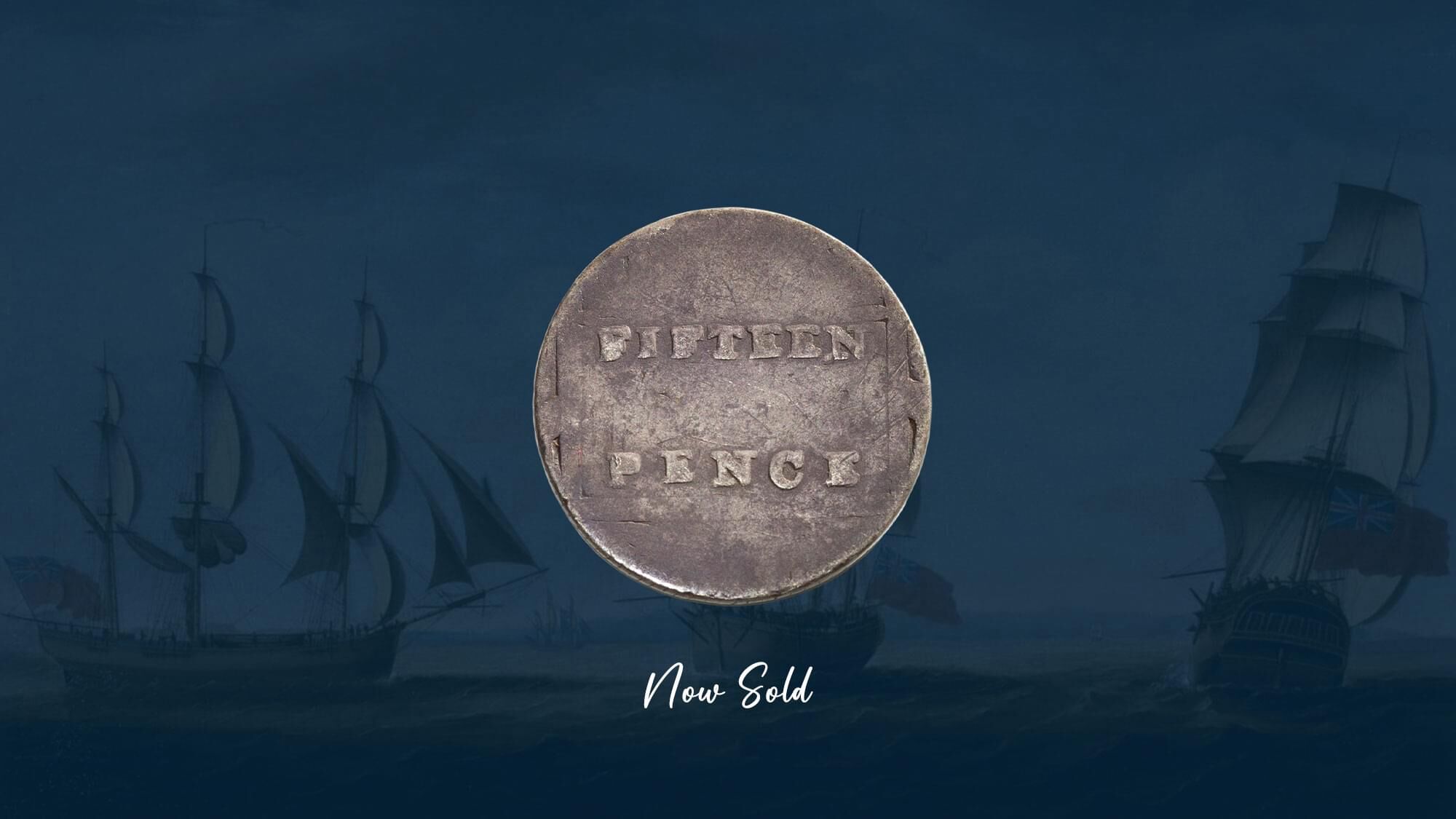
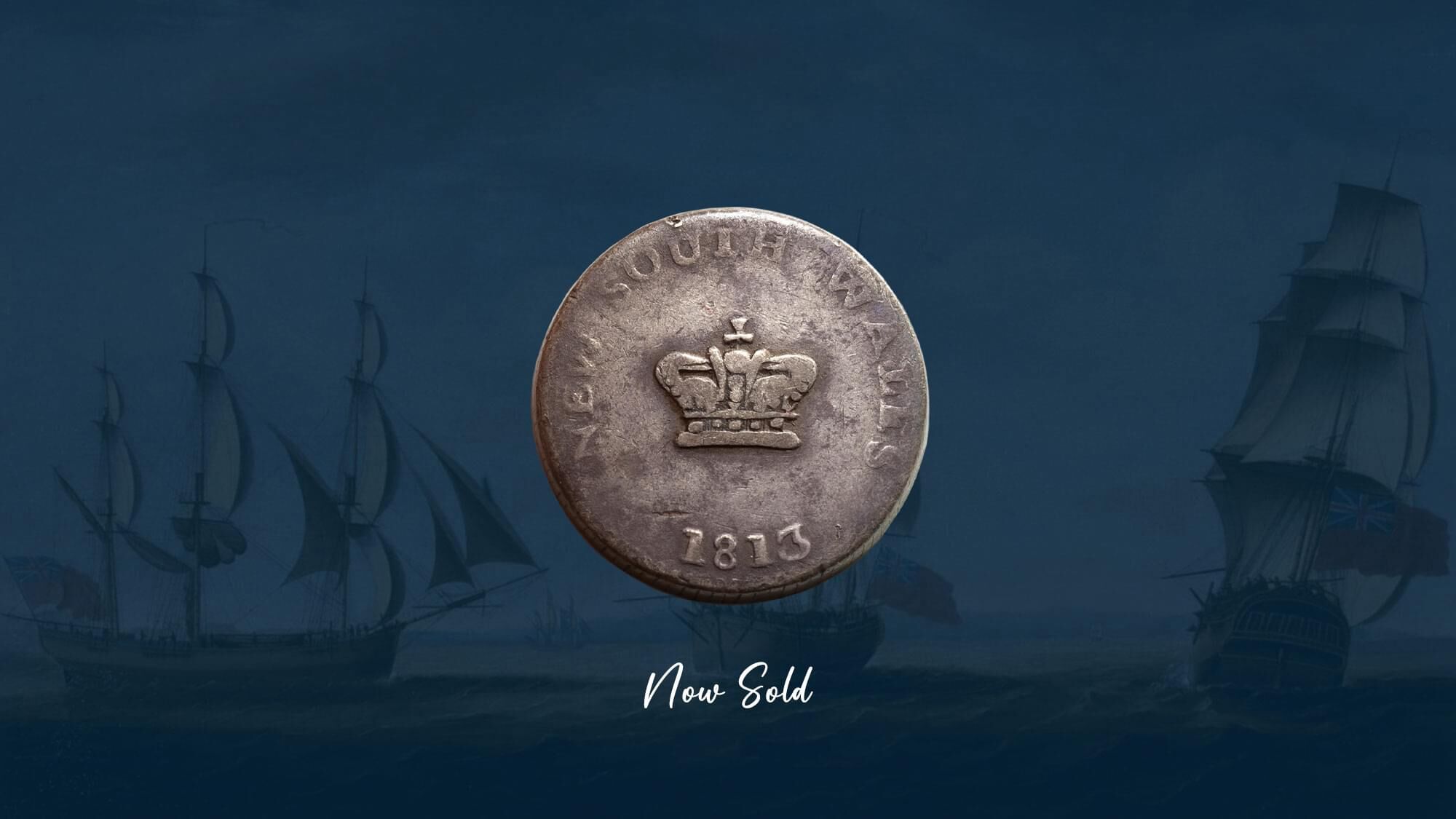
Macquarie had high hopes for the Holey Dollar and Dump, and in particular the Dump. He stated that the Dump would fill the role of small change and would remove much of the need for promissory notes of low denominations. This coin certainly lived up to Macquarie’s expectations for it is well used. At the same time it is a very pleasant and collectable example of the nation’s first coin. A well centred strike, the crown prominent, extensive under-type on the reverse. And well-priced.
Click here for more details on this Product
The Holey Dollar, and the Dump, are the nation’s first coins, minted in 1813 by order of Governor Lachlan Macquarie.
The issuing of Australia’s first coinage symbolised the changing dynamics of the penal colony of New South Wales. The colony had started out in 1788 as a jail, a repository for convicts, under the governorship of Captain Arthur Phillip. It had emerged some twenty-five years later as a thriving economy requiring a formal medium of exchange to support a burgeoning commercial hub.
As Macquarie had no access to metal blanks to create his currency, he improvised and acquired 40,000 Spanish Silver Dollars as a substitute.
To make his new coinage unique to the colony, and to inhibit their export, he employed emancipated convict William Henshall to cut a hole in each silver dollar.
Each holed silver dollar was then counterstamped on both sides, around the edge of the hole. On one side, the date 1813 and the issuing authority of New South Wales. And on the other side, the value 'Five Shillings' with some decorative embellishments. It became the Holey Dollar.
The silver disc that fell out of the hole was also overstamped with a crown, the issuing authority of New South Wales. And on the other side the value of Fifteen Pence. It became the Dump.
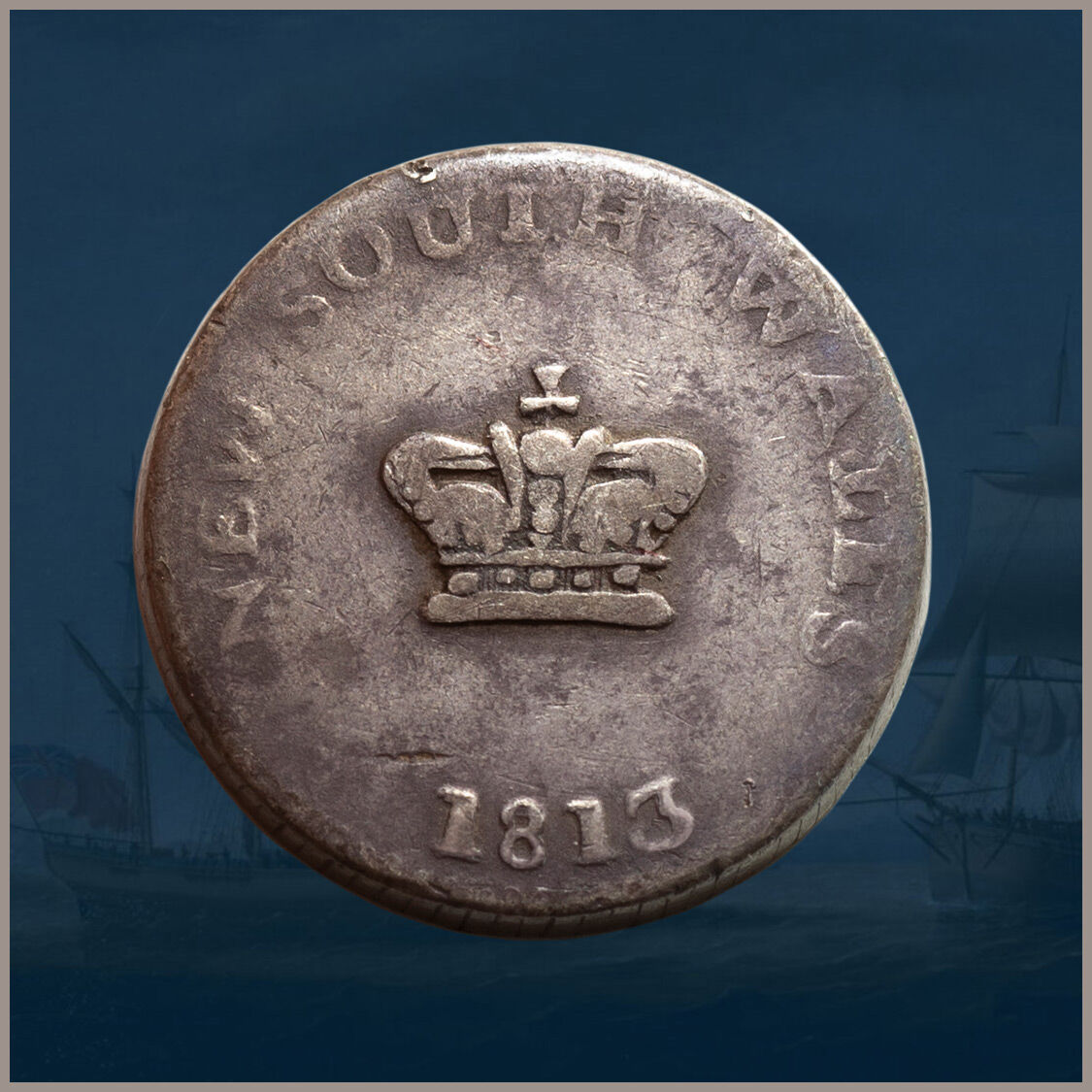
1813 Dump Type A/1
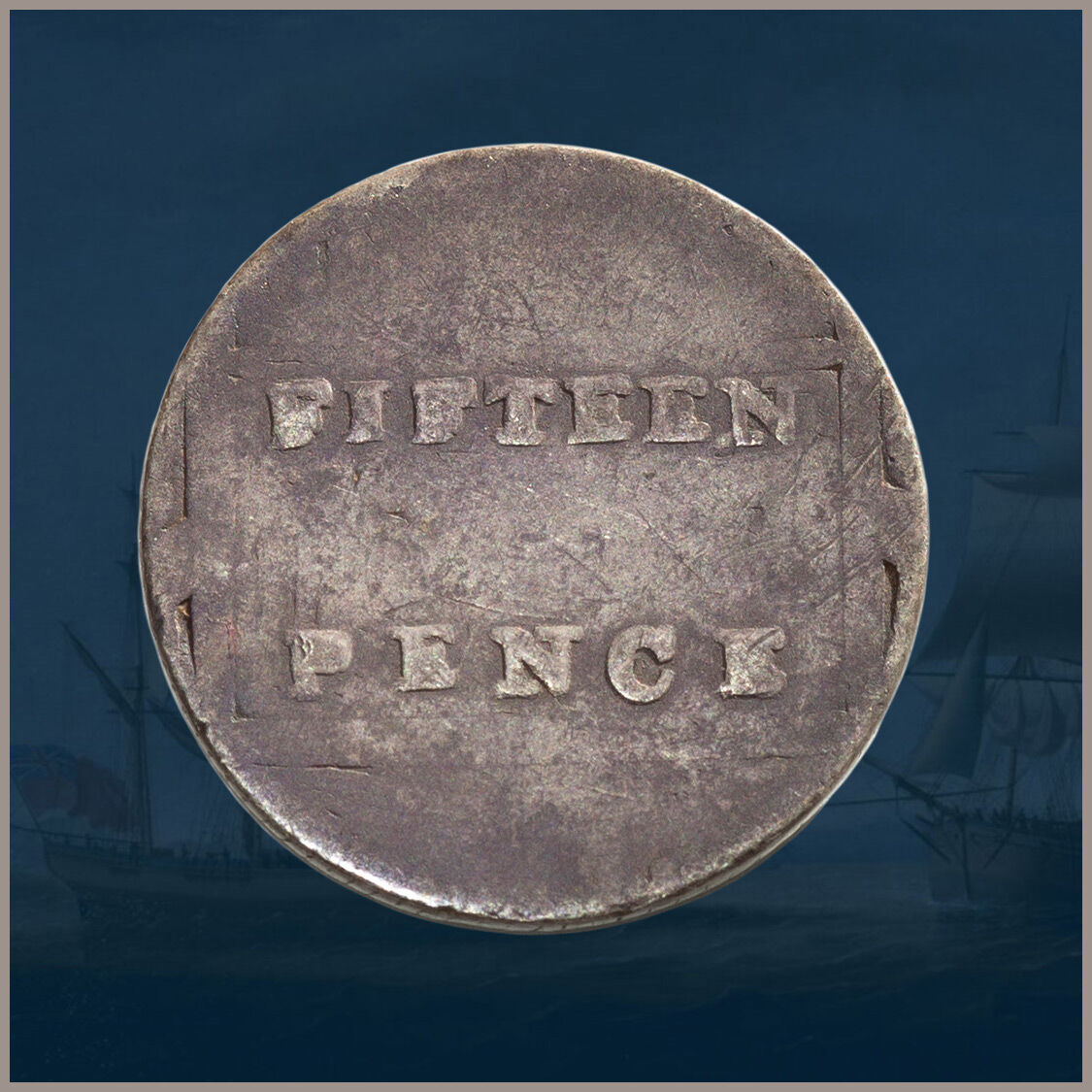
1813 Dump Type A/1
1. A coin to enjoy and show around
Struck with the A/1 dies, the crown is classically well-centred. The design details, the crown with its fleur-de-lis and pearls, the legend New South Wales, the date 1813 and on the reverse, the value Fifteen Pence are all legible.
2. Evidence of the original Spanish Dollar design
The design detail of the original Spanish Dollar from which this Dump was created is evident on the fifteen pence side of the Dump. We refer to it as the under-type and it is not always present. Its existence re-affirms the origins of the Dump and is highly prized.
3. Henshall's claim to fame - the elusive 'H' on the reverse
William Henshall declared his involvement in the creation of the Dump by inserting an 'H' into some (but not all) of the dies used during its striking. And on a well circulated Dump, the 'H' will not generally be prominent. But, using an eye-glass on this coin, you can see where the 'H' was located between the 'FIFTEEN' and the 'PENCE' on the reverse.
4. Oblique milling
There is evidence of the oblique milling. It was used as deterrent against clipping whereby the unscrupulous shaved off slivers of silver, reducing the silver content of the Dump. And making a small profit on the side.

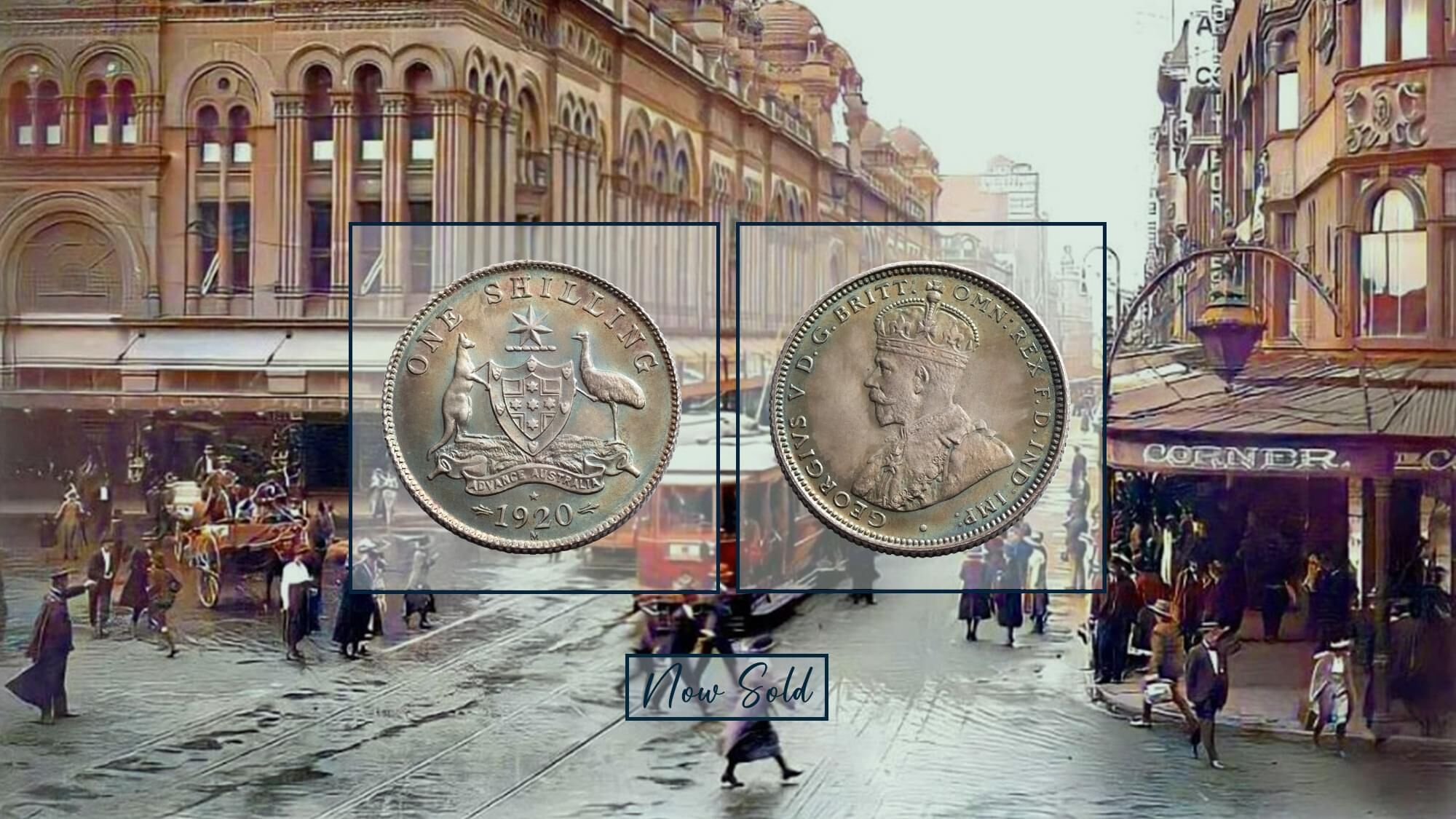
Coinworks has a substantial numismatic library with books dating back to the 1900s, the catalogues yielding vast quantities of historical price/rarity information. There is a point at which auction houses commenced, and continued, featuring photographs on their front and back covers and they are also informative. It’s a space that is reserved for the most important, the rarest or the most topical. It’s certainly not a space that is allocated to anything trivial. This is perhaps the simplest way of conveying the importance of the 1920 Star Shilling to the industry. When it was offered by London firm Morton & Eden in June 2006, it was the sole front cover item of their catalogue.
Click here for more details on this Product
Rarity and circumstance have made the 1920 Star Shilling one of Australia's greatest coin rarities.
In 1920, wildly fluctuating silver prices posed a serious issue for Governments, such as Australia, that were striking their coins in .925 fine silver. The possibility that the intrinsic value of the florin, shilling, sixpence and threepence would exceed their face value was a real one and the Australian Government pondered a debasement of its coinage (to .625 and .500 fine) to lower the costs.
The florin and shilling dies were prepared at the Royal Mint London with a star above the date to indicate a reduced metal content. Seven florins and seven shillings were produced at the Melbourne Mint as part of a specially controlled circulation strike and each coin featured a star above the date.
That the strike was controlled is reflected in the depth of detail of the coins, their denticles and their smooth surfaces.
Distribution of these prized pieces was heavily restricted. Influential collector Albert Le Souef, (a Deputy Master of the Melbourne Mint between 1921 and 1926), obtained one of each of the florin and shilling. Three examples were retained by the mint with three heading to London, the Royal Mint the main recipient.
Aside from Le Souef's coin, a further two have since emerged in the private sector. The first sold late in 1988 on behalf of the Melbourne Mint museum through an Australian auction house, the mint selling off a duplicate as part of a fundraising exercise. The second is this coin, sold by British Auction House Morton & Eden, in London, 27 June 2006 as Lot 322.
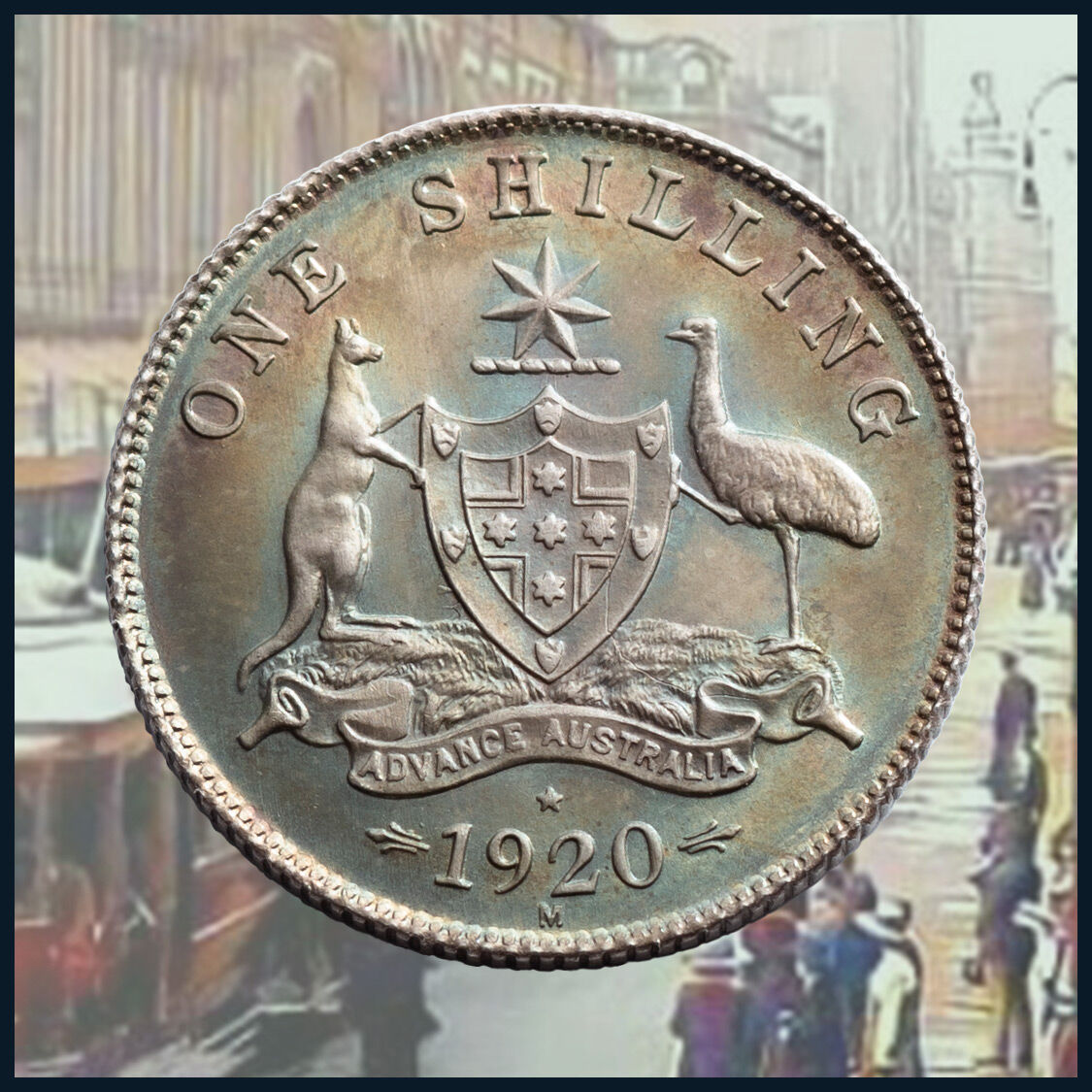
George V, shilling, 1920 M, with star above the date, struck in .925 fine silver at the Melbourne Mint
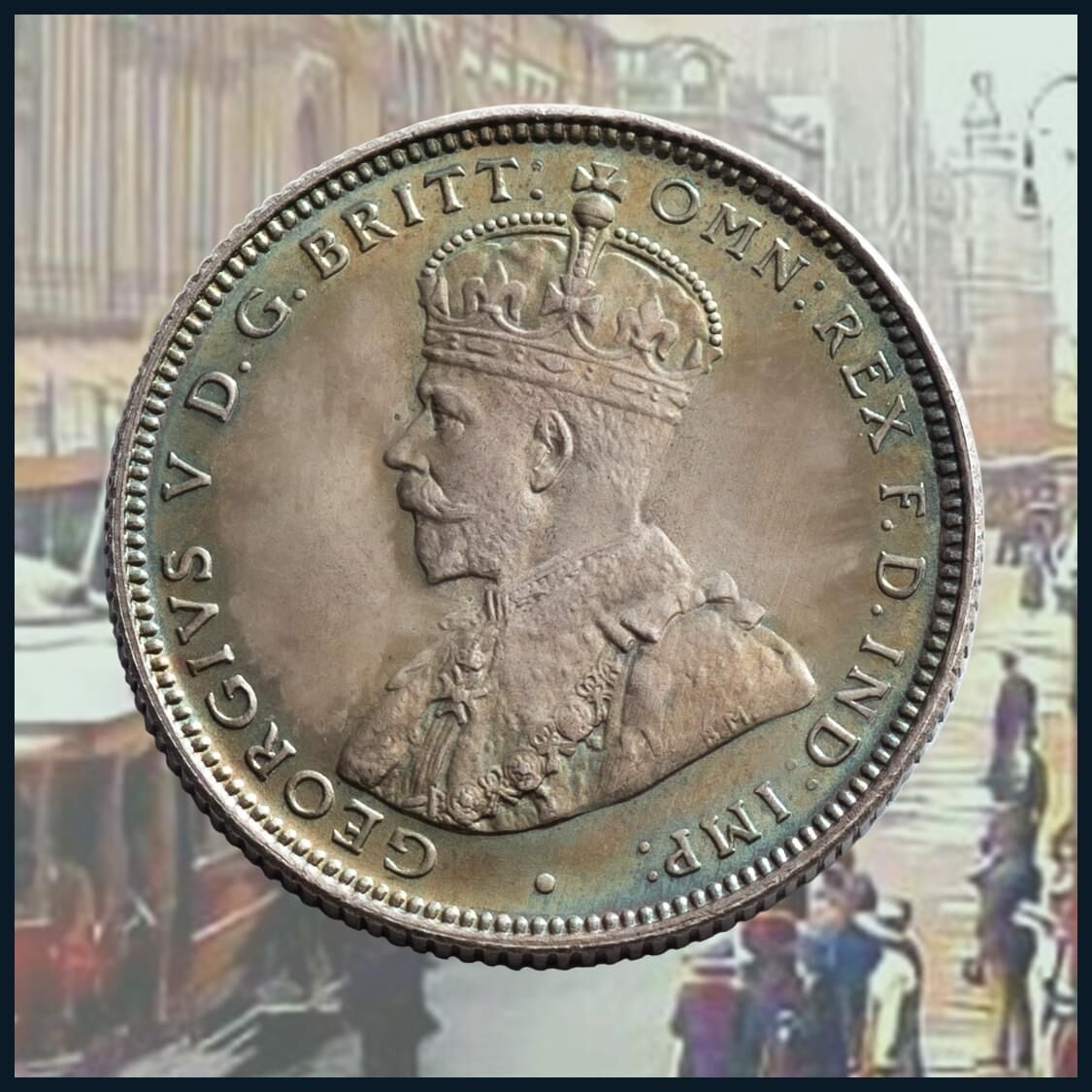
George V, shilling, 1920 M, with star above the date, struck in .925 fine silver at the Melbourne Mint
The 1920 Florins and 1920 Shillings, showing the star above the date, were prepared as a result of a sudden rise in the price of silver that caused Great Britain and many other countries to reassess the silver content of their respective currencies.
Britain abandoned around 800 years of tradition when it reduced the finesse of its Sterling silver (92.5% pure) coins to an alloy of 50%. Canada also moved from the 92.5% standard down to 80% while British West Africa dropped silver issues completely in 1920 in favour of nickel and nickel brass coins.
Australia considered a similar move but in a gesture which cynical taxpayers of today would find very refreshing, the government wanted the public to be completely aware that the new coins would contain less silver.
According to the former numismatic curator of the Museum of Victoria, John Sharples, the normal order for 1920 dies for the silver coins had been placed in July 1919. At that time the intrinsic worth of the silver was less than the face value of the respective denominations and so no special instructions were issued in respect to the dies being prepared by the Royal Mint in London.
However, by March 1920 the situation had changed drastically. According to John it was decided to prepare new dies which featured smaller date figures to differentiate the debased coins from the earlier issues.
Judging from correspondence that came back from London, it would appear that the mint had already started work on the dies or was too busy with other projects. A suggestion came back that a star above the date would not only be more noticeable but could be produced more easily and quickly than reworking the date.
This change was accepted by Melbourne and working dies for 1920 and punches for 1921 were ordered with the star. By August 1920, the Melbourne Mint had received thirty pairs of working dies for the florin and shilling denomination.
By the time everything was in place the silver crisis had passed. The silver price dropped, and Australia did not proceed with a debasement of its coinage.
Even so, no 1920 dated florins were issued for circulation.
Three other denominations were however struck for circulation in 1920, the shilling, sixpence and threepence. None carried the star. On some of the 1920 shillings (and even the sixpences) a small indentation above the date can be seen in high-grade coins, where the star has been removed on the die.
Strangely enough, the 1921 shilling still carried the star, although the silver crisis had long passed.

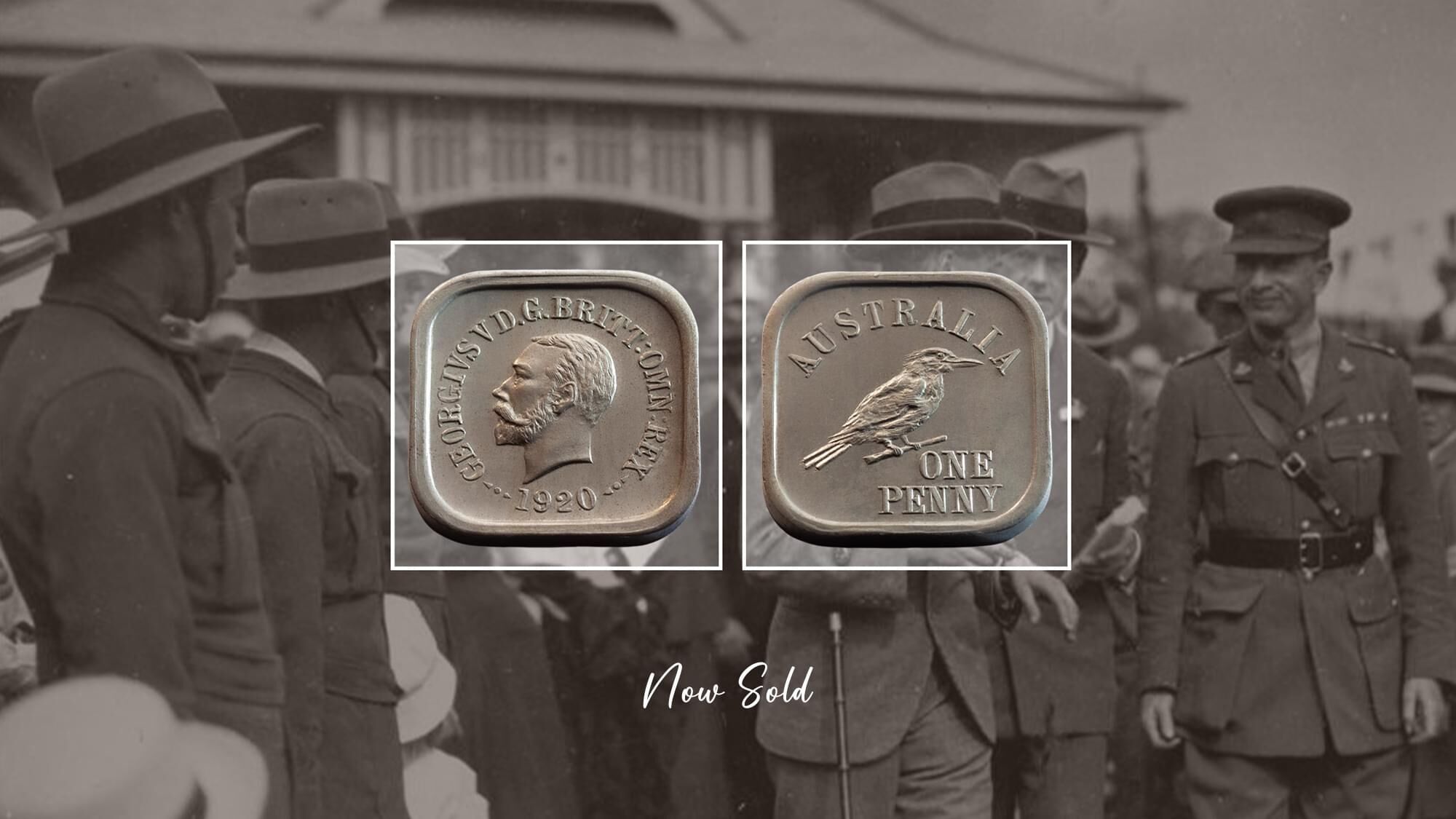
The year nineteen-twenty has produced some of Australia's greatest coin rarities, and this 1920, Type 7 Kookaburra Penny is one of them. Twelve coins out of the original mintage survive today. And this example is stunning.
Coins capture the mood of a nation, and so it was with the Kookaburra Penny and Halfpenny produced between 1919 and 1921. A post-World War I period and the first years of peace after immense war-time loss. And an experimental era when Australia was re-building its national confidence and defining its own national identity through design. The kookaburra coins were trailblazers. They pushed the boundaries of traditional design practices, using a 'never-tried before' design concept of depicting wildlife unique to Australia. And introduced an innovative material of cupro-nickel. Avant-garde and provocative, the term ‘Commonwealth of Australia’ was replaced with the single word ‘Australia’ and while the effigy was required for legal tender status, the monarch was depicted without a crown.
The historical significance of the kookaburra coins cannot be overstated.
Click here for more details on this Product
We have a four-point check-list for evaluating a Kookaburra Penny that involves the date, design type, quality and price.
1. What is the date?
For the Kookaburra Pennies were struck in 1919, 1920 and 1921.
Our comments:
The year 1920 is a stand-out year as far as the industry is concerned as it hosts some of the rarest and most famous coins of the Australian numismatic industry: the 1920 Star Florin, Australia's rarest florin, one of Australia's most valuable shillings, the 1920 Star Shilling. And Australia's most valuable sovereign, the 1920 Sydney Mint Sovereign. And, of course, the 1920 Kookaburra Pennies.
2. What is the design type?
While all Square Pennies are rare, some designs are far rarer than others. But, as you would expect, with that rarity comes a higher price tag.
Our comments:
The Type 7 is extremely rare with an estimated twelve examples available to collectors. We might see a Type 7 on the market every eighteen months to two years. We note that Australia's largest auction house last sold a Type 7 in 2016!
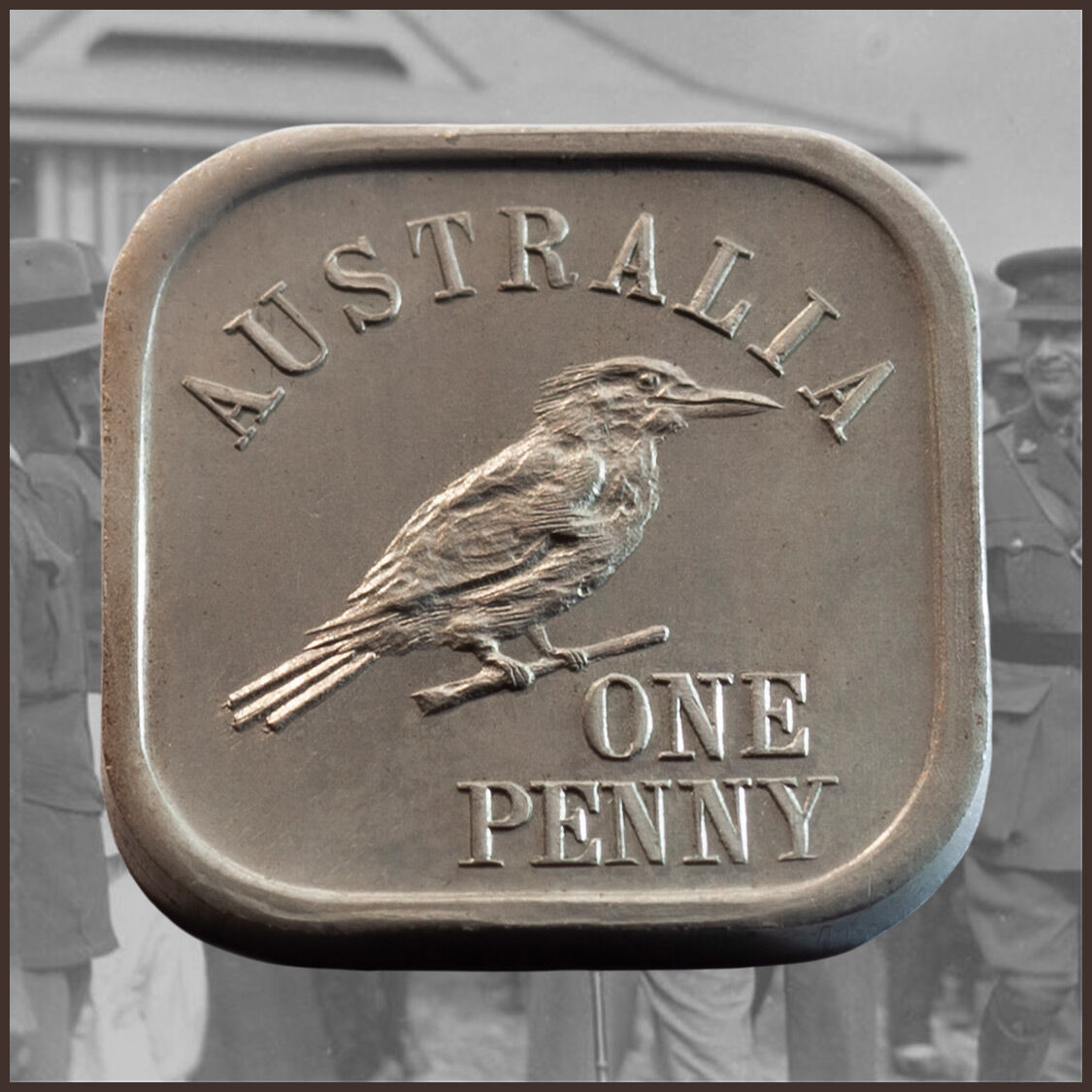
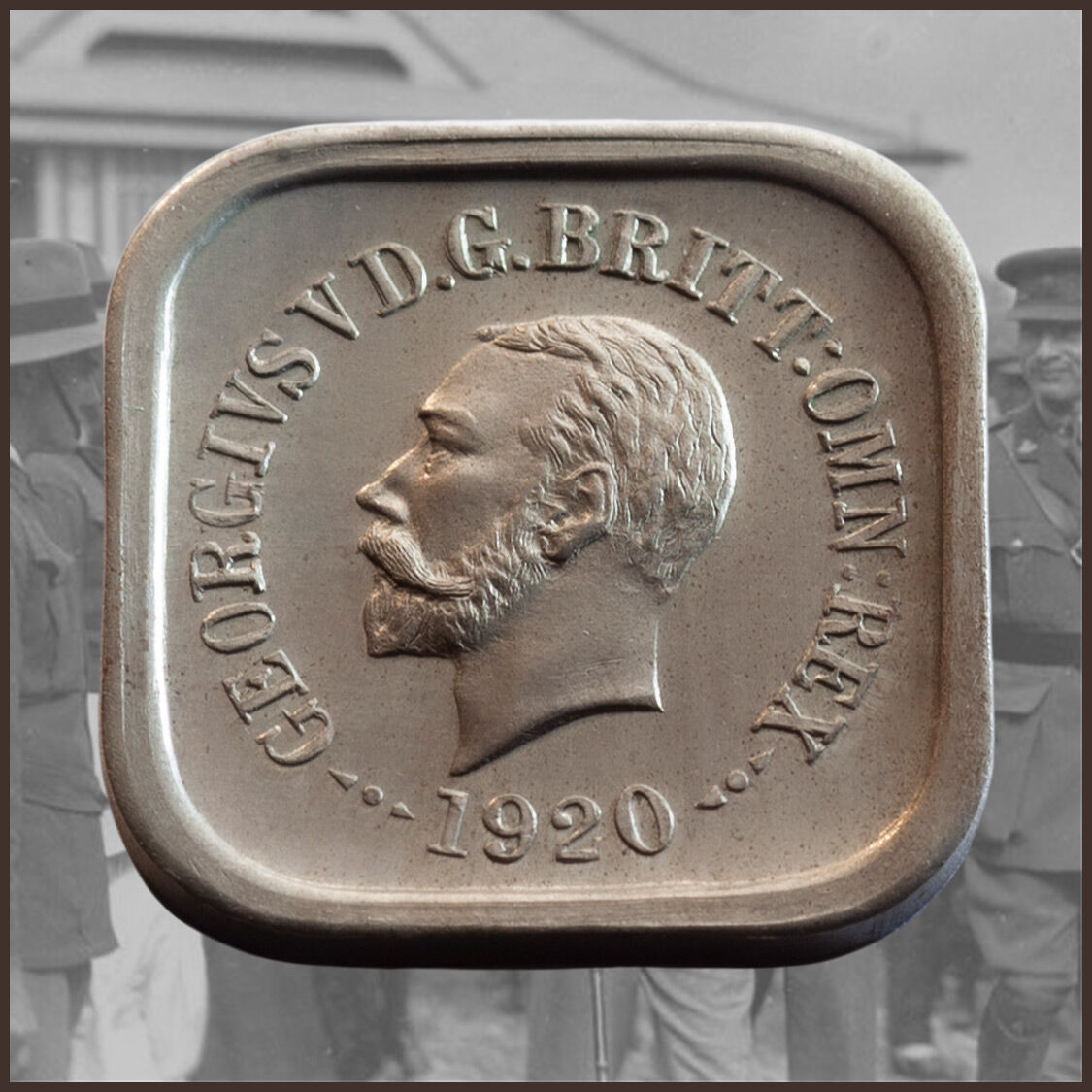
3. What is the quality?
The Square Pennies were test pieces and were not struck to the heady controls of a proof striking. As the coins were passed to the public for opinions and comments, some have been mishandled.
Our comments:
Some Kookaburra coins are so rare, that quality almost becomes irrelevant. But in cases such as the Type 7 which would become available a few times in a decade, quality can be considered. This coin is superb for quality. Take it through the light and you would be forgiven for thinking that it was minted to proof quality, the fields are like mirrors. And it is well struck, the details in the legend, portrait and the kookaburra are strongly three-dimensional. Could you improve upon the quality of this coin? We doubt it!
4. What is the price?
Given its quality assignation of Choice Uncirculated and its rarity, the 1920 Type 7 Kookaburra Penny is priced to market at $65,000.
Our comments: This 1920 Square Penny is priced at the same level as a high quality Very Fine 1930 Penny and yet is far, far scarcer.
Summary statement.
The Type 7 1920 Kookaburra Penny is extremely rare and is the most popular of those dated 1920. And a Coinworks all-time favourite.
Choice Uncirculated, 1920 Type 7 Kookaburra Penny • Price $65,000
The year 1920 is the glamour year of the industry and the glamour year of the kookaburra coin series.
The collector that wishes to acquire a 1920 Kookaburra Penny has four options, the Type 7, Type 8, Type 9 and Type 10. The decision about which coin to acquire will most certainly be influenced by availability. And perhaps price.
The Type 7 Kookaburra Penny is the most available of the 1920 designs. That is not a criticism. Simply a statement of fact. For the Type 7 is still extremely scarce with a waiting time of perhaps eighteen months to two years for an example to come onto the market.
But a collector could realistically be looking at a waiting time of six to ten years, or more, for another design type dated 1920. A time lag that would exasperate even the most patient of buyers.
Extremely rare, and yet available within a reasonable time frame are the prime reasons why the Type 7 is the most popular of those dated 1920.
There is no doubt that the Melbourne Mint utilised different finishes with each coin type, and in each year. Our comment is that a superb Type 7 is a coin to behold! Proof-like and mirror fields and this coin is no exception.
Rarity - one of twelve known. We estimate an example would be offered every two to three years.
Composition - Nickel 75% Copper 25%
Reverse - A kookaburra with coarse plumage resting on a branch, the eye struck in relief, the tail with three feathers. The word 'AUSTRALIA' is curved, the letters large and well spaced, the penny denomination over two lines. A reverse that is shared with the Square Legend Type 9 and the Crowned Head Type 10
Obverse - Uncrowned effigy of George V, portrait prepared by Australian artist, Douglas Richardson, the portrait with a distinctive central part in the hair. A design shared with the Square Legend Type 9 Kookaburra Penny. The circular legend reads GEORGIVS D. G. BRITT: OMN:REX, the date '1920' appearing below the portrait, separated from the legend by ornamental stops.

This Queen Elizabeth II, 1953 Presentation Set is comprised of five coins, the penny, florin, shilling, sixpence and threepence. Each piece was struck to specimen quality to launch the new portrait of the just-crowned Queen, in her coronation year. The sets were struck to order, the request placed by the Chase Manhattan Bank in New York for their Currency Museum and only twelve sets were produced.
This set is historically important. It the only Australian coin issue produced in 1953 to mark the coronation of Queen Elizabeth II. Paradoxically, the entire mintage was exported overseas. No sets were struck for the Australian collector market outside of those struck for the Chase Manhattan Bank. And only a few sets have managed to make their way back from the US to their country of origin.
Five Queen Elizabeth II Presentation Sets are known, four of which have been offered at auction, the first sighting at Spink & Son Auctions, Melbourne 1975. A set was more recently offered at auction in November 2001, where it sold for $39,000 on a pre-auction estimate of $18,000. Testimony to its scarcity, this particular set last changed hands in 2002.
Click here for more details on this Product
The 1953 Queen Elizabeth II Presentation Set is an extremely rare coin issue with only twelve units produced, exported in its entirety to the Chase Manhattan Bank in New York for their Currency Museum.
The set also is extremely rare in the context of the series to which it belongs. The issue was produced on a commercial basis, struck to order for Queen Elizabeth's coronation in 1953 and was sold to the bank in New York.
The Royal Australian Mint's release of decimal coin sets every year may have some collectors believing that pre-decimal sets were produced with the same regularity. And in the same quantities.
The reality is, over the period, 1916 to 1953 there were only four years in which the Melbourne Mint produced coin sets on a commercial basis. The year '1953' is one of the four.
The Melbourne Mint in William Street was opened in 1872 as a branch of the Royal Mint London to strike Australia's gold sovereigns and half sovereigns. The mint diversified its coining repertoire in 1916 when it was commissioned by Treasury to strike Australia's Commonwealth silver coinage. As the servant of Treasury, the Melbourne Mint became a prolific producer of coins for circulation.
The notion of producing limited edition pieces for collectors was not on the mint's agenda and over the next four decades (1916 to 1953) the Melbourne Mint produced only four complete sets of coins to sell to the public.
• 1916 George V Specimen Set
Commemorating the inaugural striking of the Commonwealth's silver coinage at the Melbourne Mint. Only seven sets (in their original presentation case) have been offered over the last fifty years.
• 1934 George V Proof Set
The only Proof Set struck for King George V. Only ten sets have appeared at public auction over the last fifty years.
• 1938 George VI Proof Set
A reflection of the numbers struck, the George VI 1938 Proof Set is slightly more readily available with twenty sets sighted on the open market. Many of these have now been broken up and sold off as individual coins.
• 1953 Queen Elizabeth II, Presentation Set
The rarest by far of the commercial sets struck at the Melbourne Mint with only five known sets.
Click on each icon for enlarged obverse and reverse photographs & descriptions.
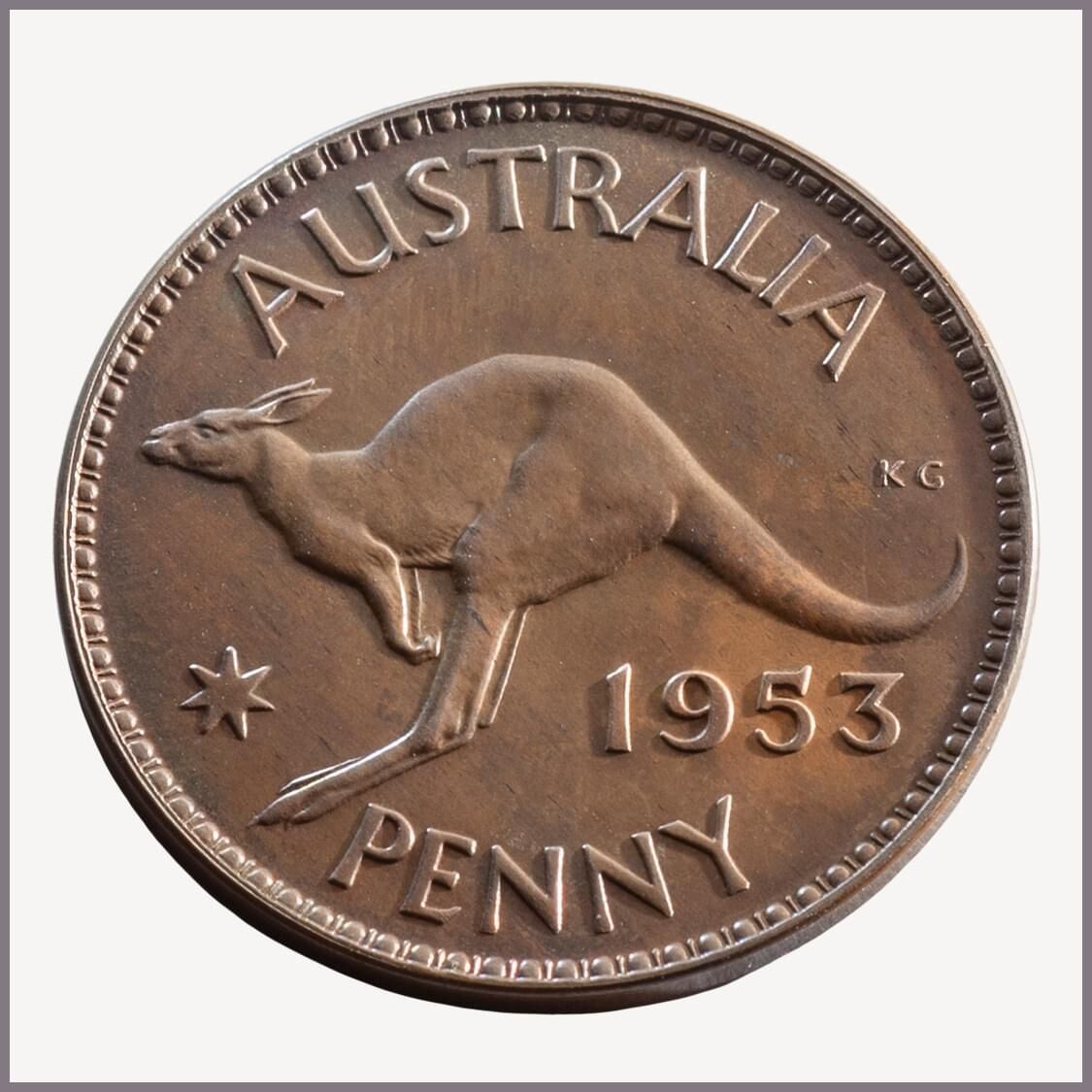
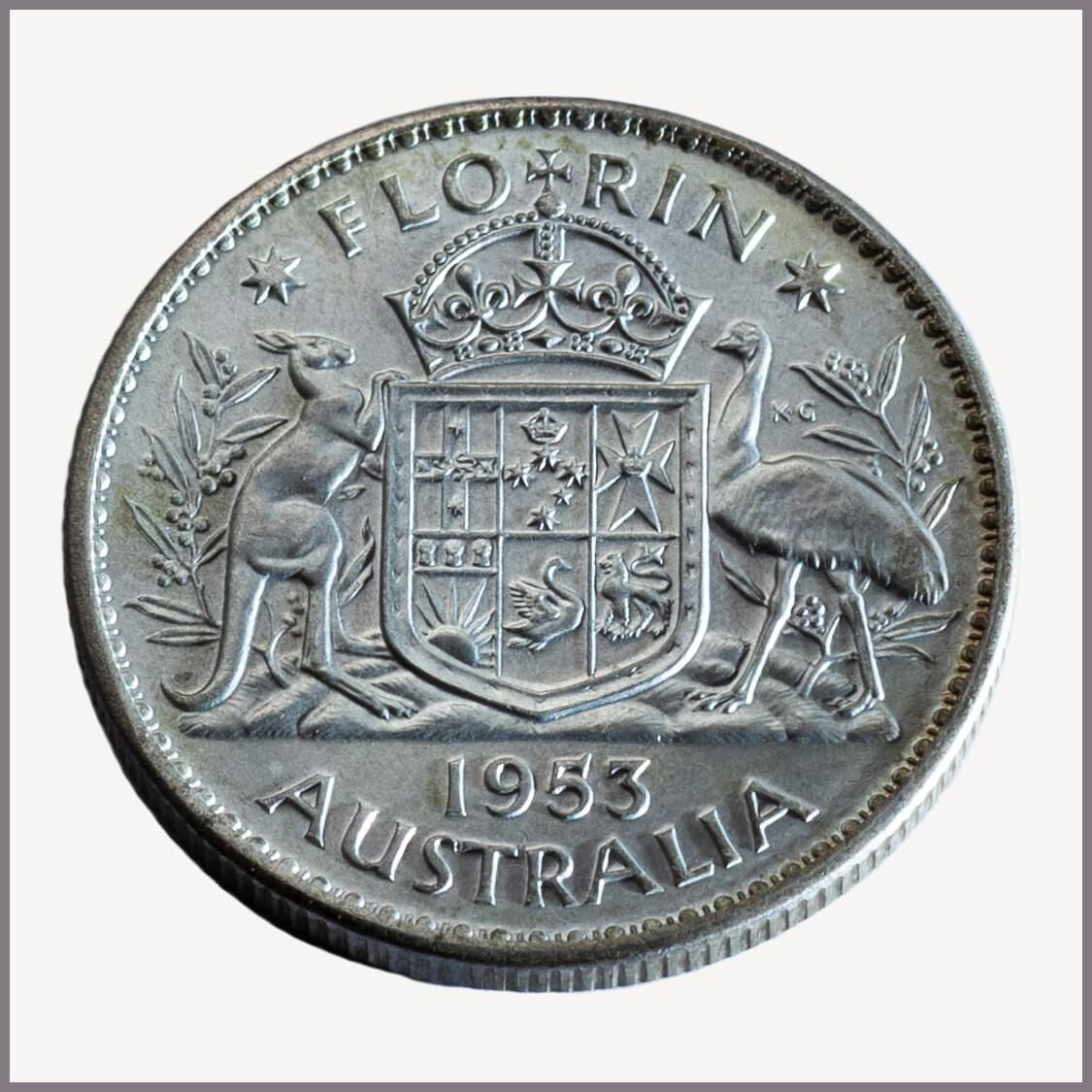
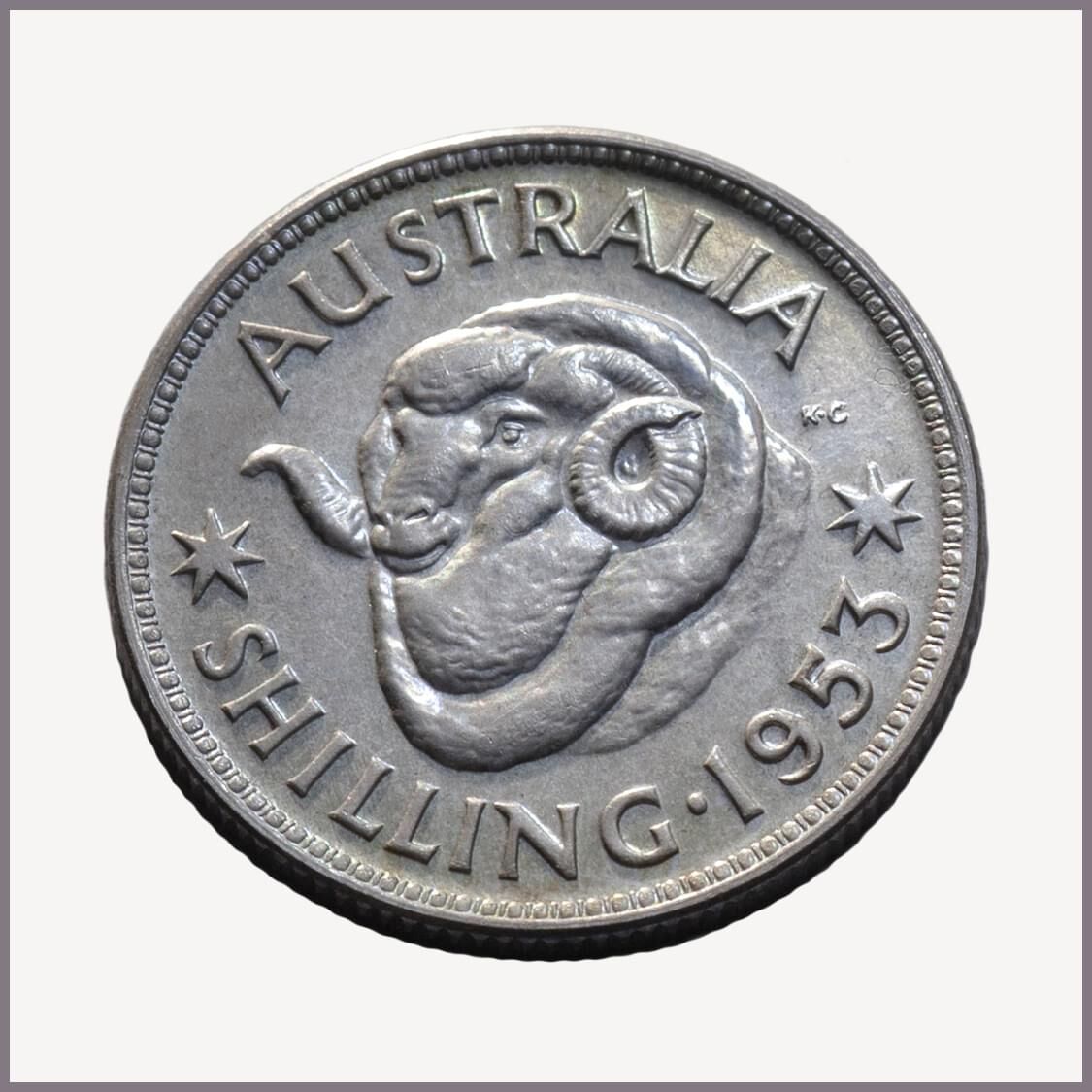
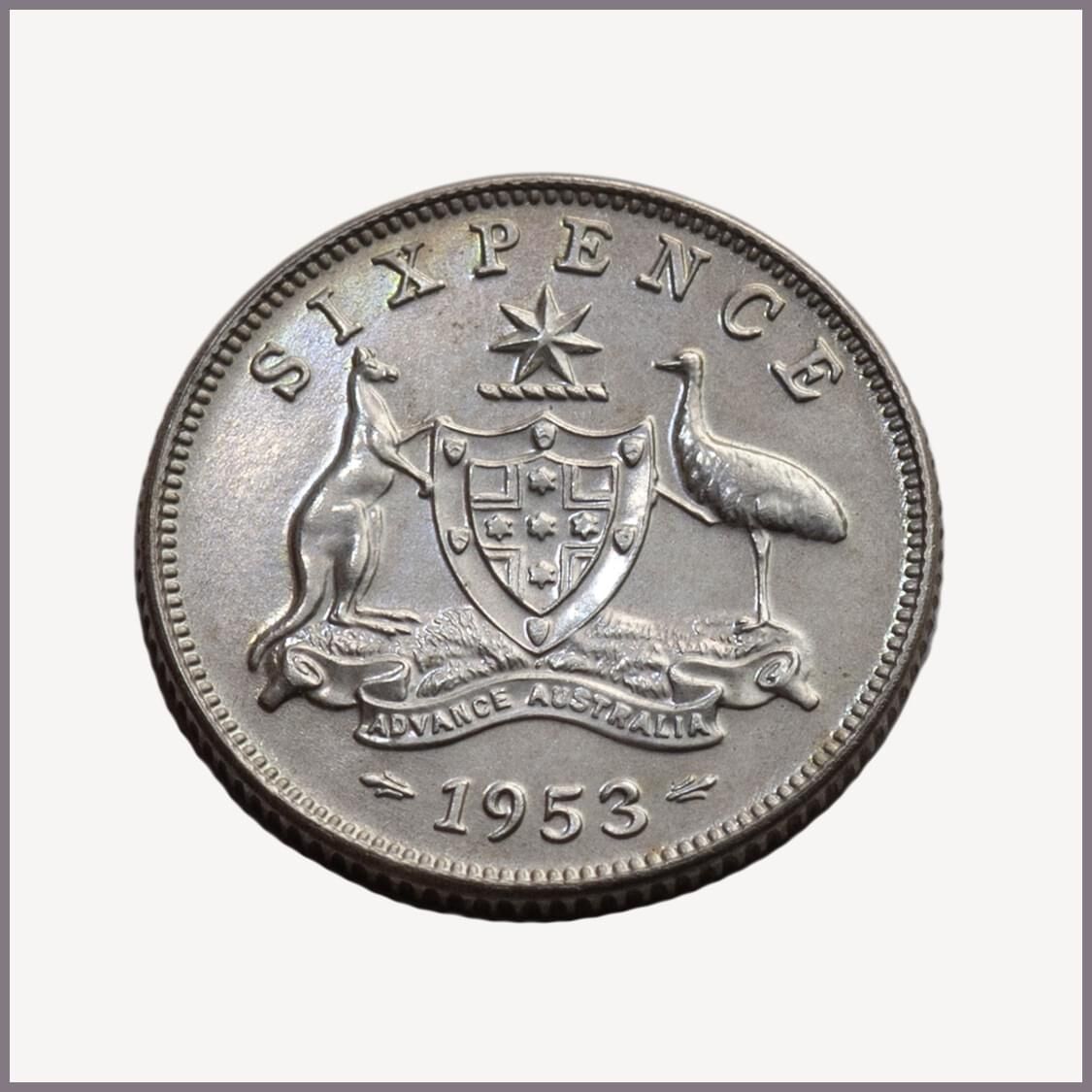
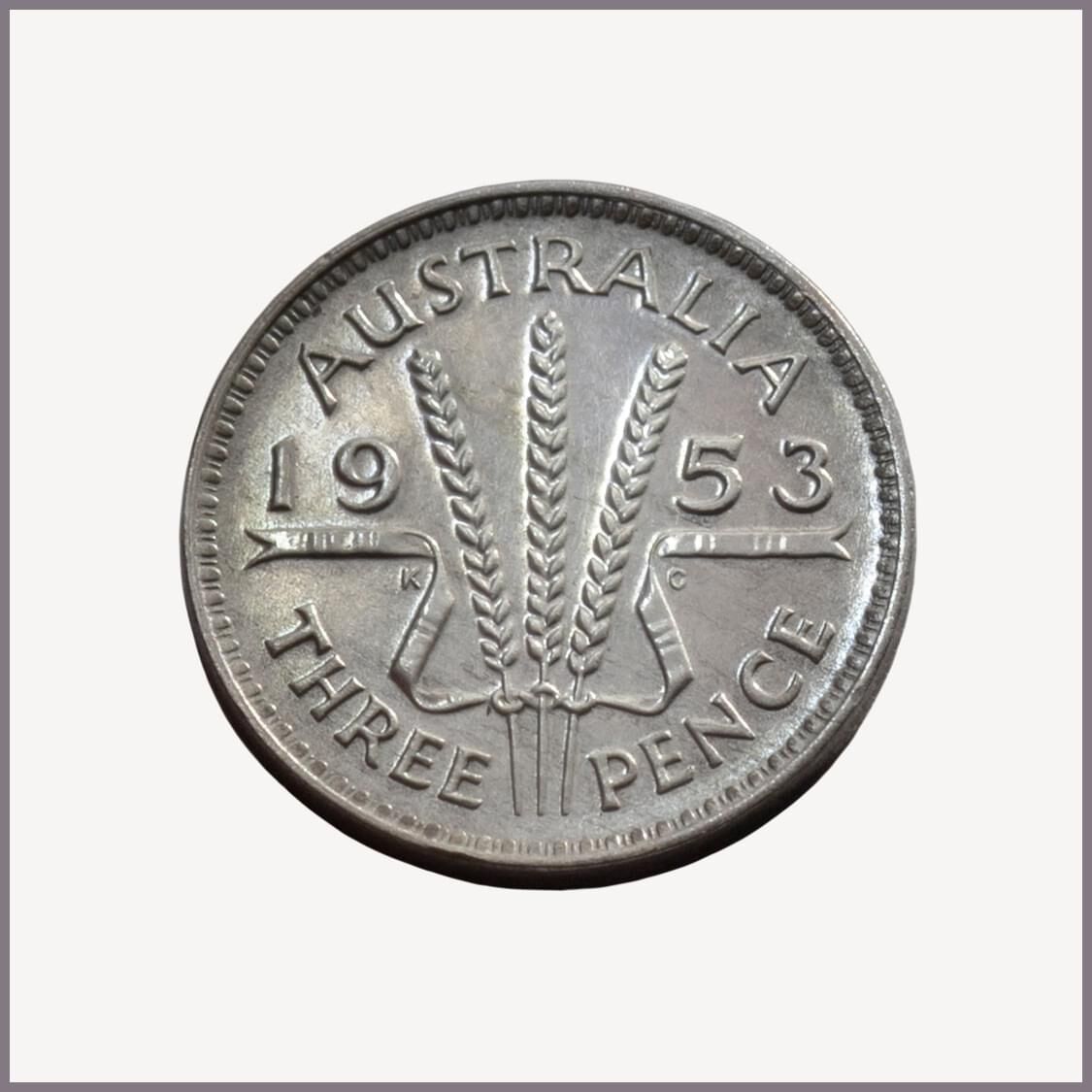
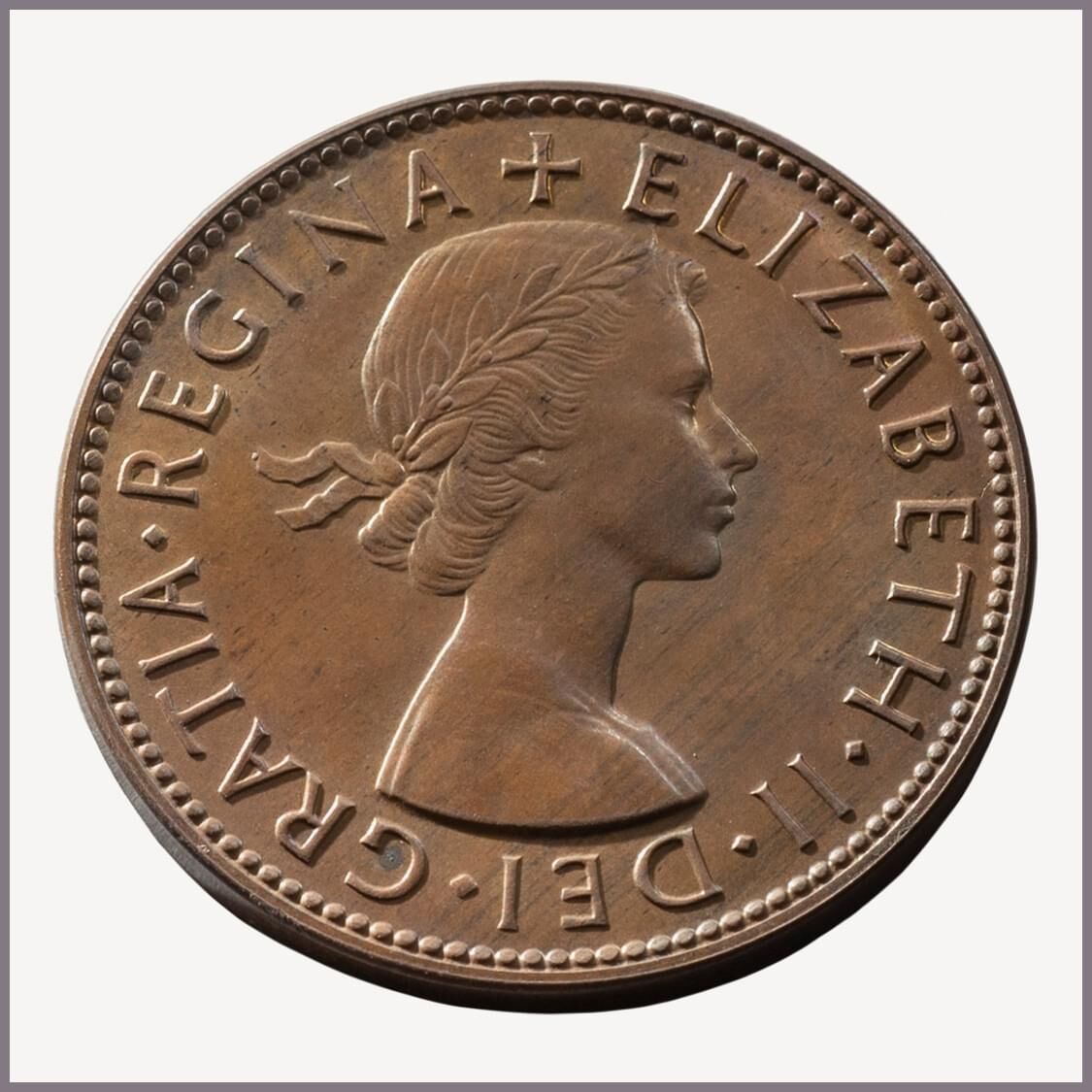
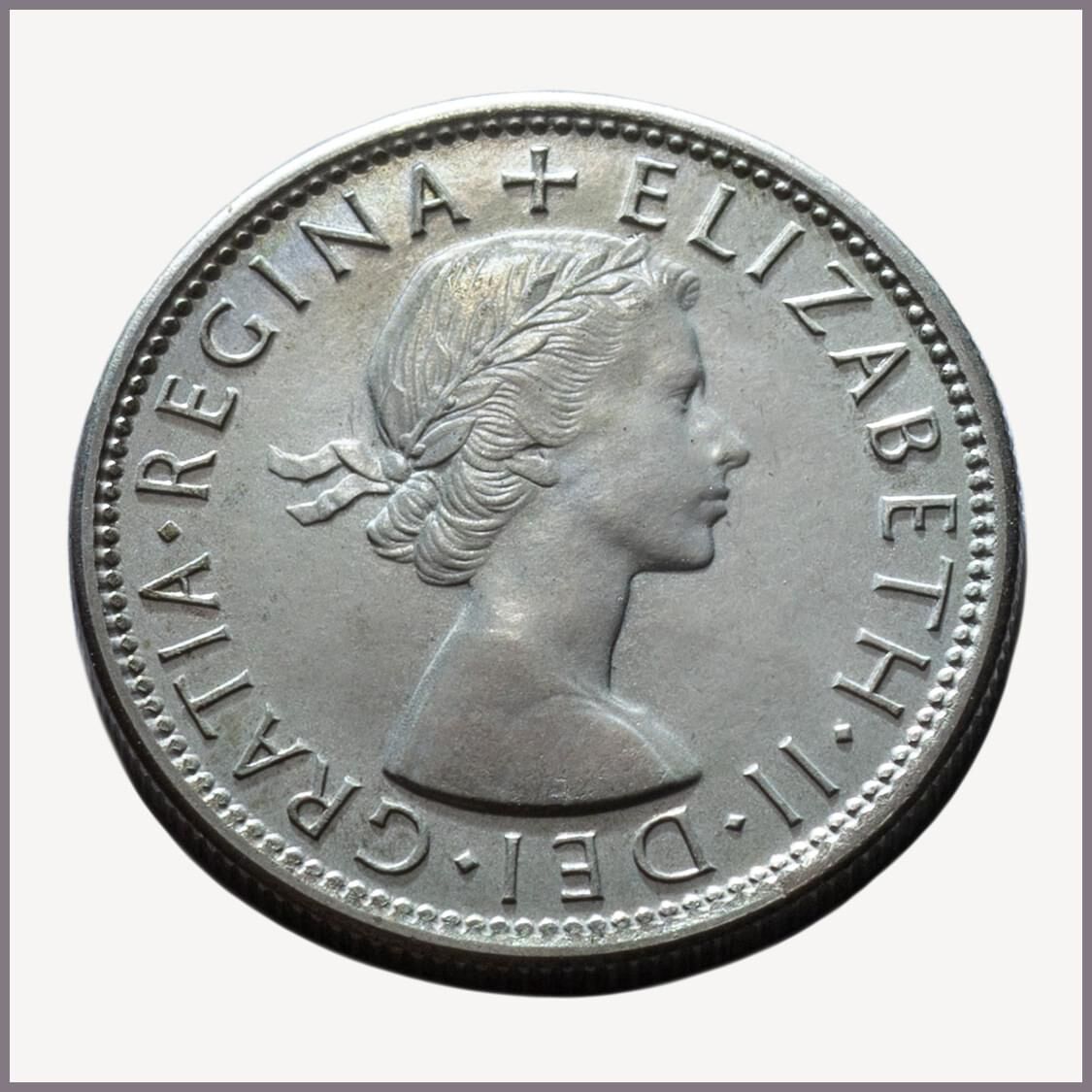
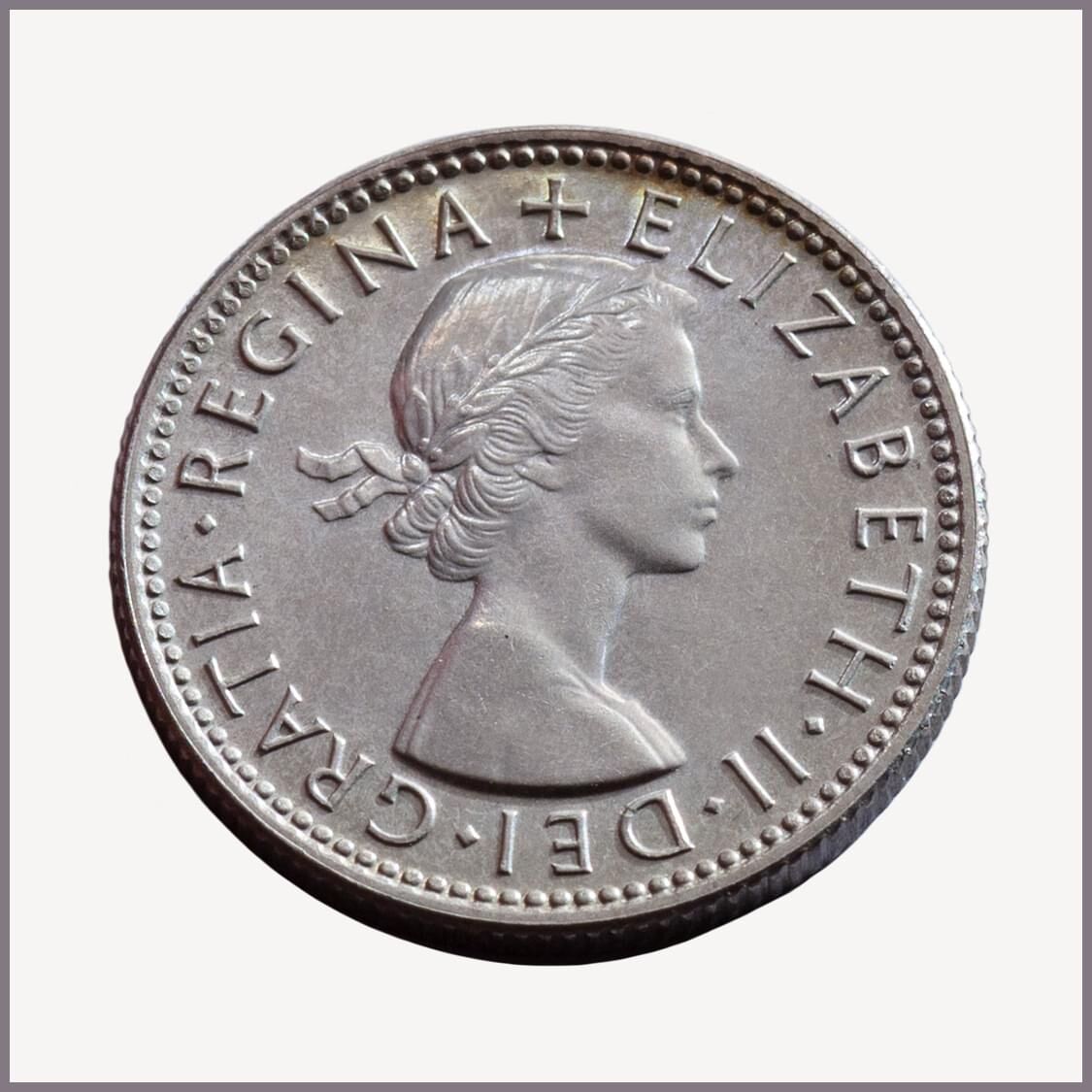
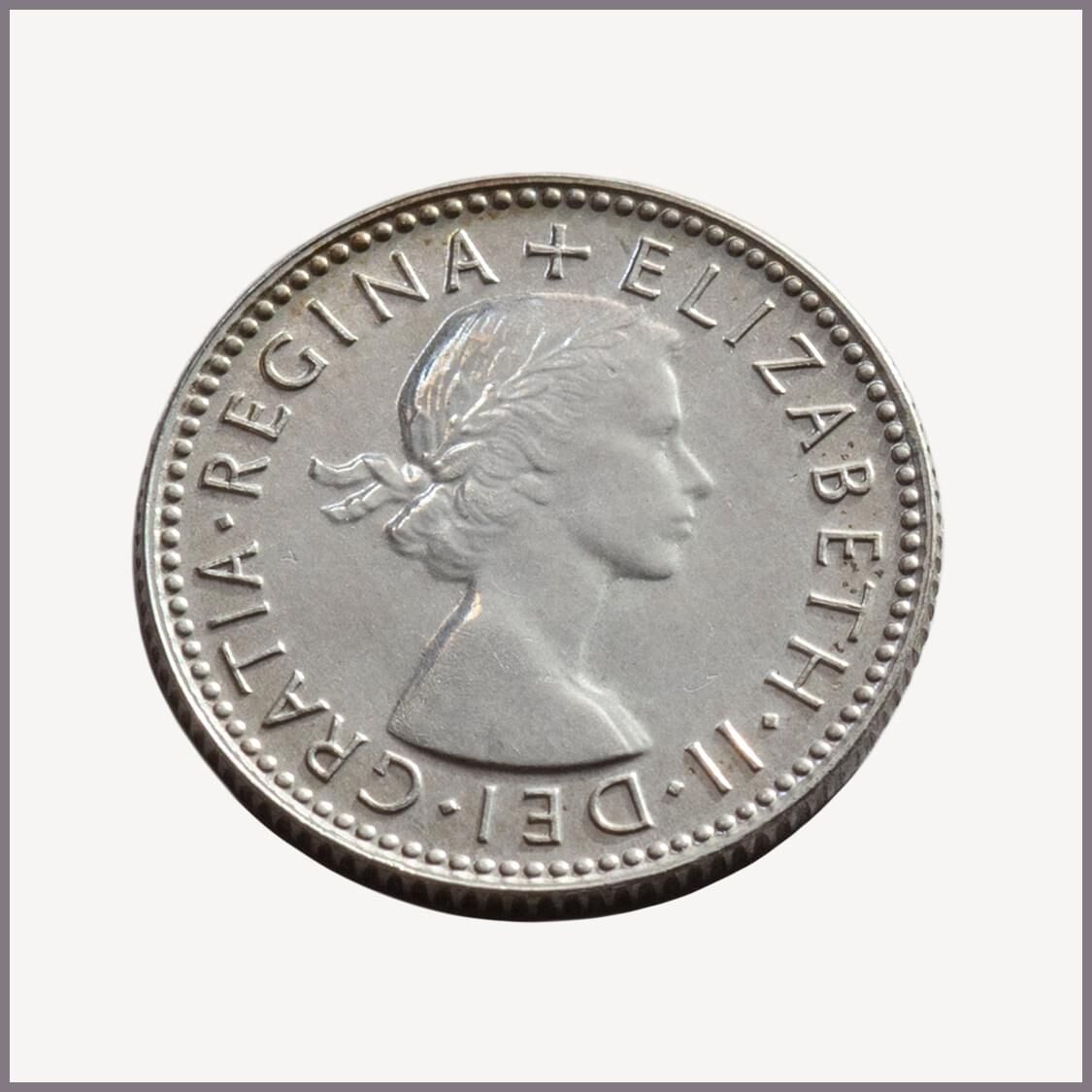
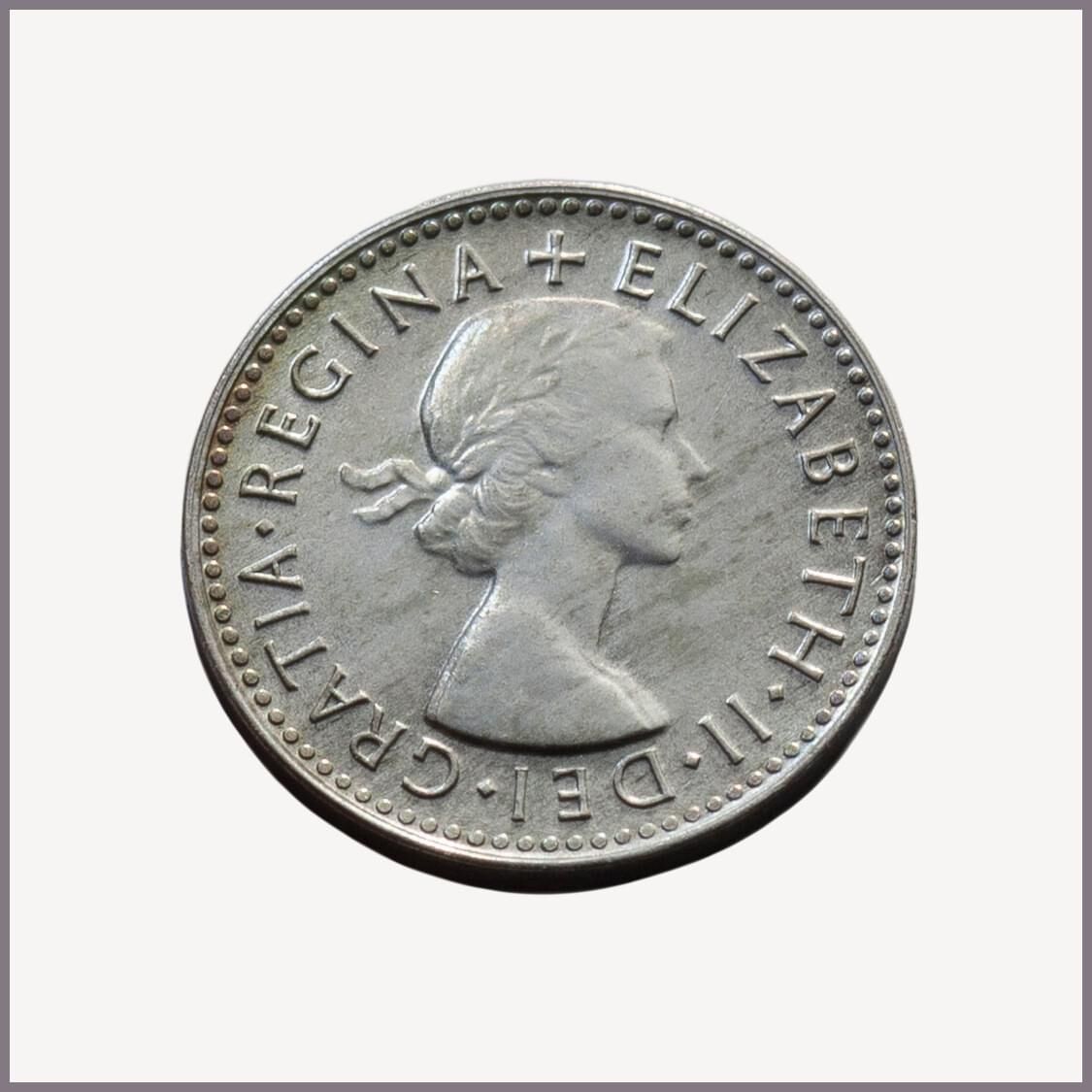

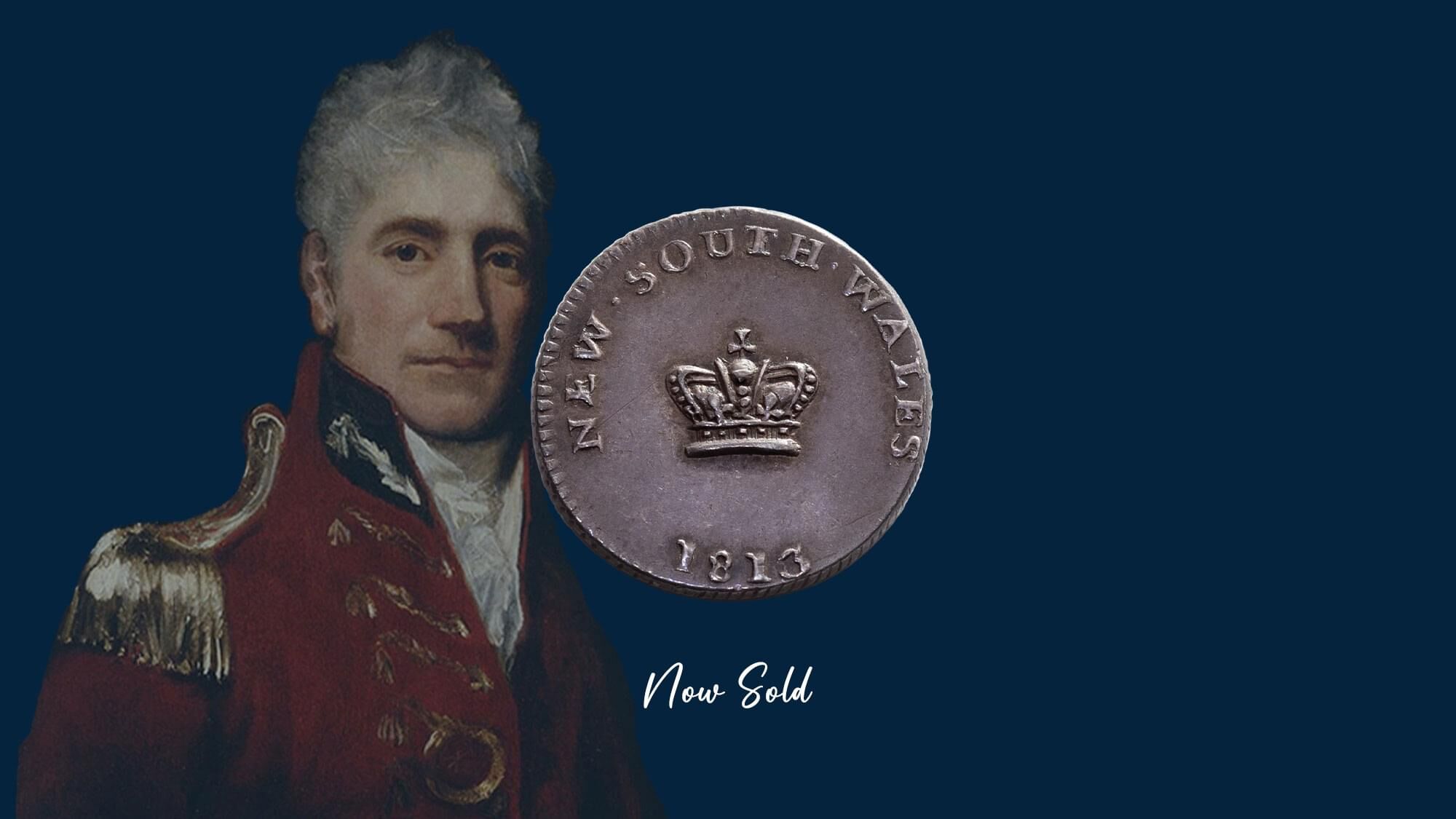
This J. J. Ford 1813 Dump is a remarkable piece of colonial history. At About Uncirculated, it is extraordinary and is the only known D/2 Dump at this quality level. There are none of a higher quality. Quite remarkable when you consider that the Dump was the workhorse of the colony.
This Dump was offered in 2004, at Stacks, New York, opening auction of the year. Viewed as the passive partner to the higher denomination Holey Dollar, the coin, forced a market-rethink about the status and the price at which top quality Dumps can - and should – command. The coin cemented its position as the finest known and put top quality 1813 Dumps 'on the map' on a worldwide scale breaking the $100,000 barrier for the first time ever.
Click here for more details on this Product
Ranked number one!
A pecking order exists amongst top echelon Colonial Dumps. This particular example, with a quality level of About Uncirculated, ranks as Number 1 of the surviving D/2 examples. The Dump with a value of fifteen pence circulated widely in the colony, the extreme wear on most Dumps evidence that they saw considerable use. Not so with this Dump. In the hand the coin is stunning, its state of preservation simply miraculous. The fields are highly reflective with grey/blue toning, the coin mint fresh for quality.
Under the eye glass, the coin continues to shine. We note the horizontal line that makes up the cross on the orb at the top of the crown. And the smudging of the vertical line. Most collectors would not even be aware that, as with the 1852 Adelaide Pound, the Dump design includes a cross on the orb at the top of the crown.
And there is a 'stop' in the legend 'NEW SOUTH WALES' after 'NEW' and after 'SOUTH'. The dies would have had shallow depressions to create the stops and must have quickly filled with debris for they can be difficult - or impossible - to discern on even the best of D/2 examples.
There is no doubt that heat was involved in the creation of the Dump. When the disc fell out of the centre of the Spanish Dollar, it still bore the original dollar design of a four quadrant shield, depicting a lion and castle in each quadrant. High temperatures obliterated the original Spanish Dollar design from most Dumps.
This Dump has extensive evidence of the original Spanish Dollar design on the reverse. That evidence includes the base of the crown, the cross-bars of the four quadrants in the shield and the remnants of the castle and lion in each quadrant. Its sizeable and its impressive.
While the method of manufacture of the nation's first coins is unknown, history records that convicted forger and emancipist, William Henshall, was hired to create the nation's first currency. Effectively our first Mint Master. Henshall declared his involvement in the creation of the Dump by inserting his initial, an 'H' for Henshall, on some - but not all - of the reverse dies of the Dump. The 'H' for Henshall is rarely seen in D/2 examples. And even when it is sighted it can only be described as a 'blob'. The 'H' for Henshall is present on this coin and is shaped. Quite amazing!
An 1813 Dump to be savoured
The buyer of this 1813 Dump will take pride in knowing that the coin was formerly held as part of the legendary J. J. Ford Collection.
High profile collectors are noted for holding only the very best. John J. Ford was a major force in numismatics in the USA for 68 years both as a professional numismatist and a consummate collector. That this coin was part of the J. J. Ford Collection speaks volumes to its calibre.
The buyer will also take pride in knowing that this Dump has been exhibited twice, in 2013 at the Macquarie Bank exhibition. And in 2019, at the Royal Australian Mint Canberra, in the 'All That Is Holey' Exhibition.
The coin was a natural contender for inclusion in the exhibitions. It was struck from the very rare D/2 dies. And with a quality grading of About Uncirculated is clearly the best.
Historians have determined that four individual dies were used in the striking of the 1813 Dump. The A/1 Dump is the most frequently sighted (75% of cases). Next in line for availability is the D/2 dies (20%). Then comes the C/4 and E/3 dies that while incredibly rare, produced coins that were extremely crude.
This coin is an exceptional piece for it has design detail and shows a finesse in the striking that is not normally seen in the D/2 type. Historians argue that the D/2 design types were most likely the first coins produced, since the majority of specimens reflect one major design characteristic. The legend and the date tend to be partially struck because the dies were too big for the blank. And the denticles (introduced as a security measure) are almost always absent. On this Dump, however, the legend and the date are well contained in the coin and the partial denticles are crisp and clear.
1813 Dump Type D/2, About Uncirculated, ex J. J. Ford Collection, $165,000.
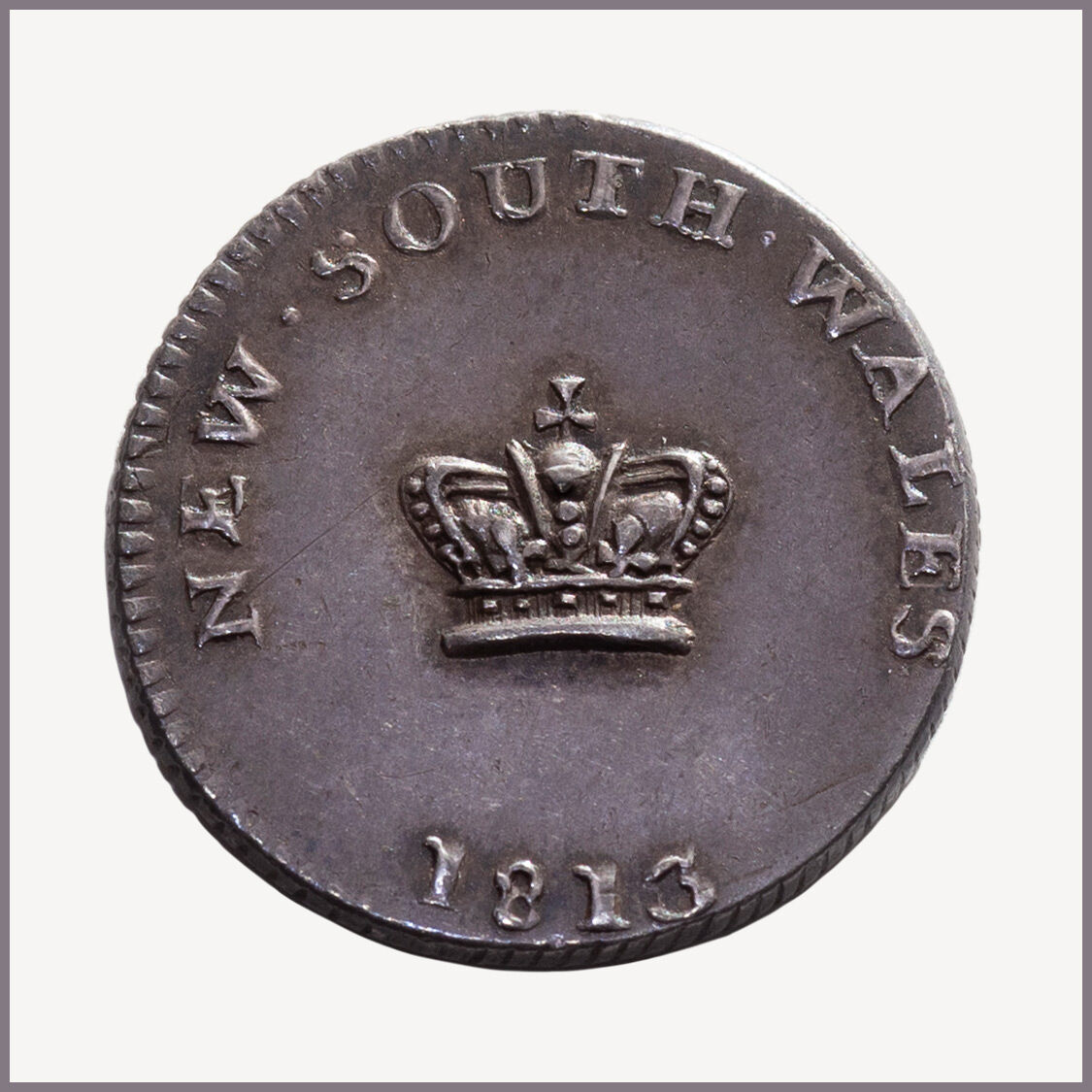
About Uncirculated 1813 Dump ex J. J. Ford Collection
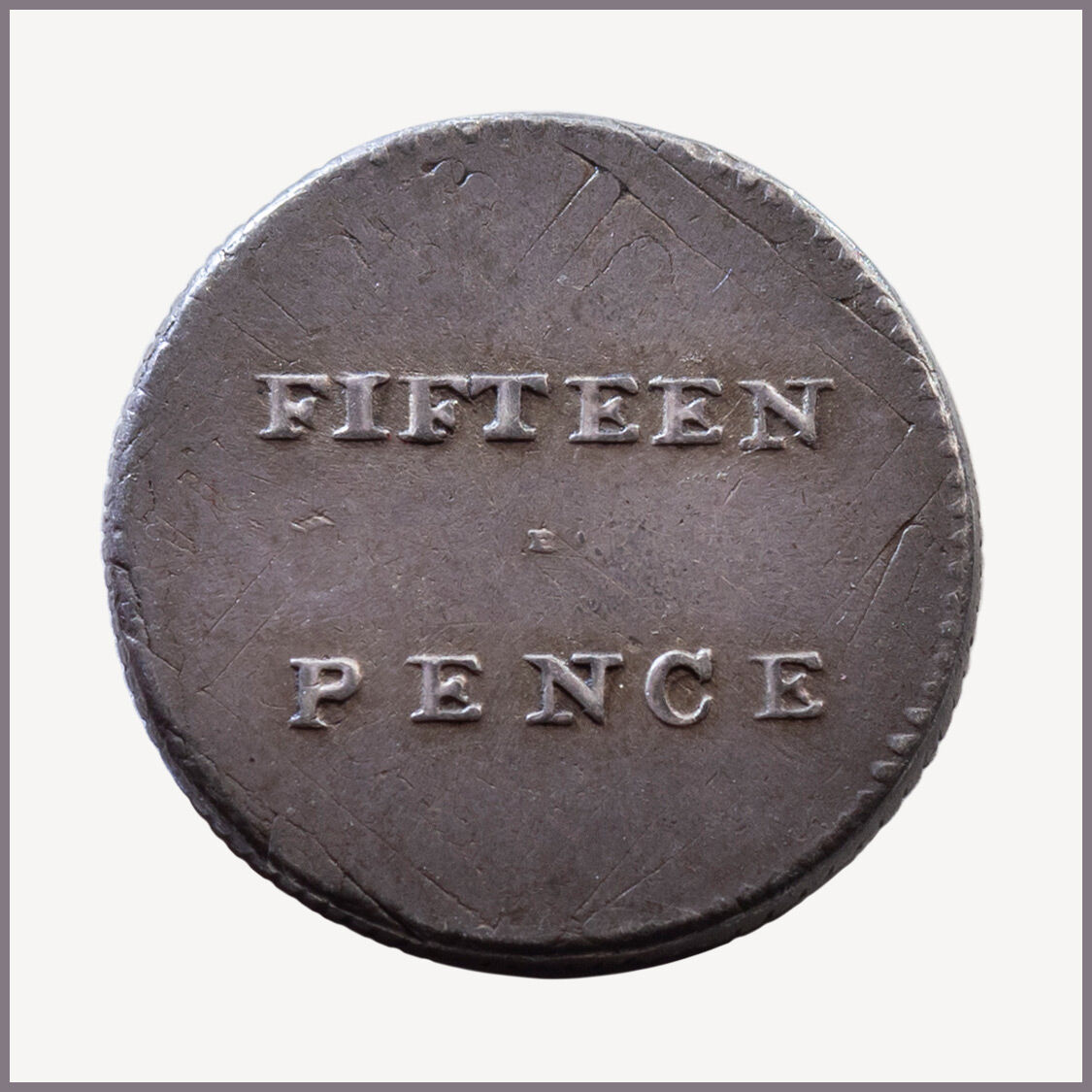
About Uncirculated 1813 Dump ex J. J. Ford Collection
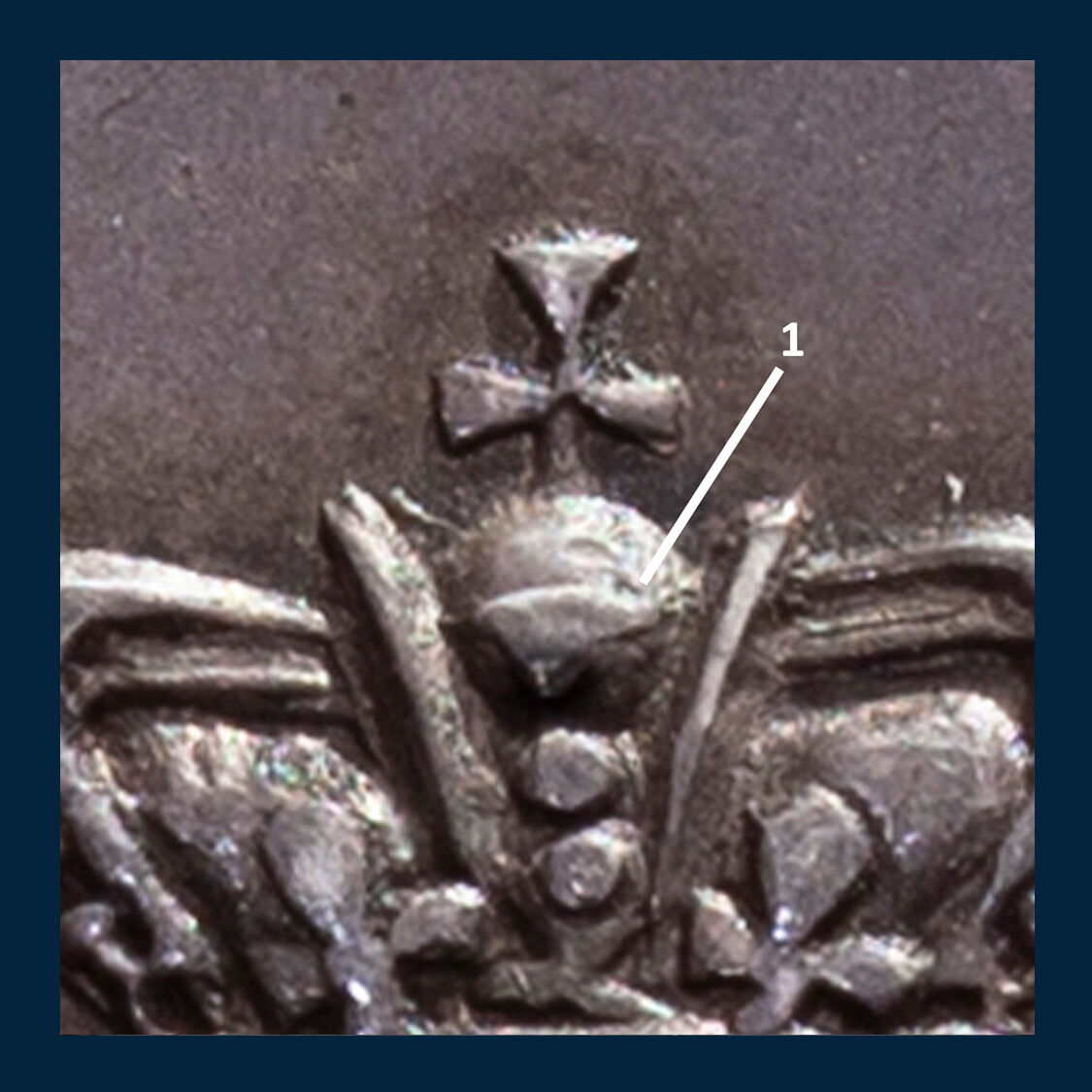
The horizontal line that makes up the cross on the orb at the top of the crown is present. Amazing!
This coin shines under an eye glass. We note the horizontal line that makes up the cross on the orb at the top of the crown. And the smudging of the vertical line. Most collectors would not even be aware that, as with the 1852 Adelaide Pound, the Dump design includes a cross on the orb at the top of the crown. (See close-up above.)
Henshall declared his involvement in the creation of the Dump by inserting his initial, an 'H' for Henshall, on some - but not all - of the reverse dies of the Dump. The 'H' for Henshall is rarely seen in D/2 examples. And even when it is sighted it can only be described as a 'blob'. The 'H' for Henshall is present on this coin and is formed. Quite amazing! (See close up below.)
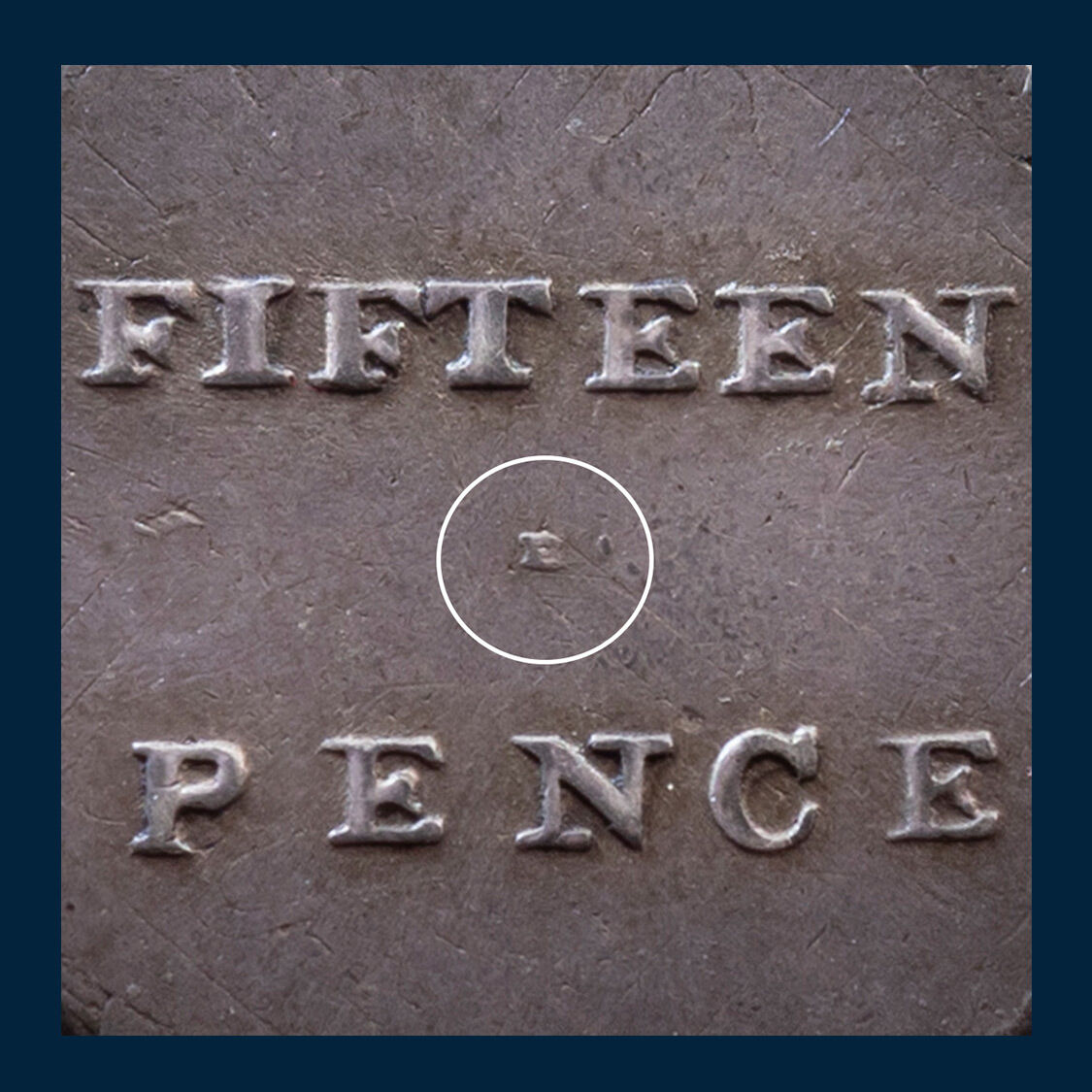
The 'H' for Henshall is present on this coin and is formed. Again, quite amazing!

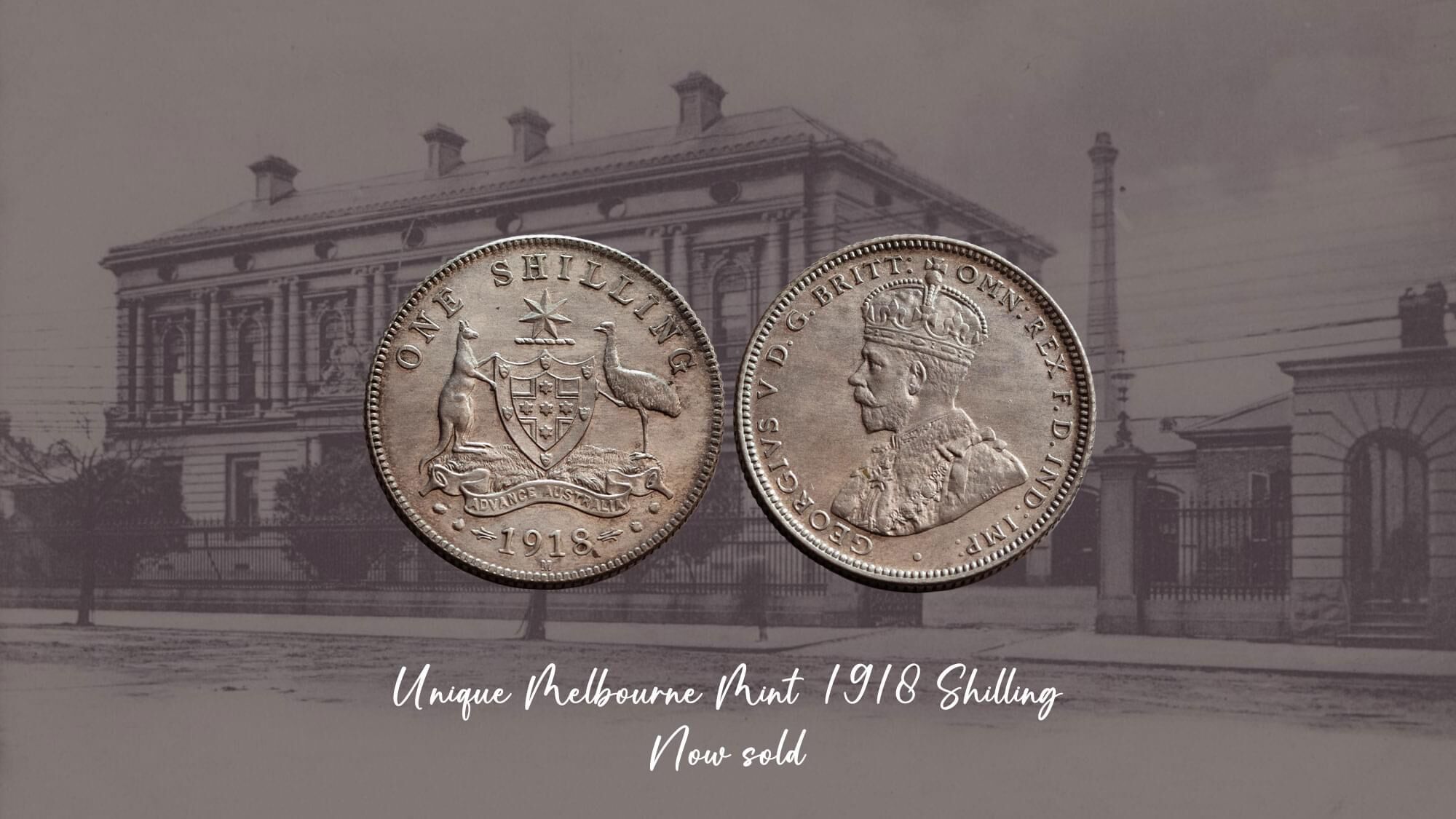
The period 1918 to 1921 produced three of Australia's greatest coin rarities, the 1918 Trial Shilling (this coin), the 1919 Trial Shilling and the 1920 Star Florin. The price of silver was fluctuating wildly at the time and, despite being a silver producing nation, Australia was rocked by the price rise and forced to reassess the silver content of its currency. The Melbourne Mint began testing a reduced silver alloy (.500 fine and .625 fine) and the 1918 Trial Shilling was struck as a consequence. While three examples of the 1920 Star Florin are available to collectors and two of the 1919 Trial Shilling, this is the only example available to collectors of the 1918 Trial Shilling. Its first recorded owner, Mr A M Le Souef, a former Deputy Master of the Melbourne branch of the Royal Mint London. The coin was considered so important that when a second example came to light in 1991, and was offered at Spink Auctions Australia, it was acquired by the Museum of Victoria for their collection, where it is still held.
Click here for more details on this Product
The 1918 Trial Shilling is a product of a period of serious financial and economic turbulence that saw nations around the world abandon sterling silver as their currency standard.
The fluctuations particularly affected governments like Australia that were still producing their currency in .925 sterling silver. The possibility that the intrinsic value of a coin would exceed its face value was a real one. The Government pondered a debasement of its coinage to lower the costs.
The Government's strategies for coping are well documented in historical records. It is also documented by way of Australia’s coinage.
The Government planned to adopt a new silver coinage alloy and in 1918 began a testing period of striking coins with a reduced silver content.
Consideration was given to a .625 alloy and one struck in .500 fine as taken up by the British during the precious metal crisis.
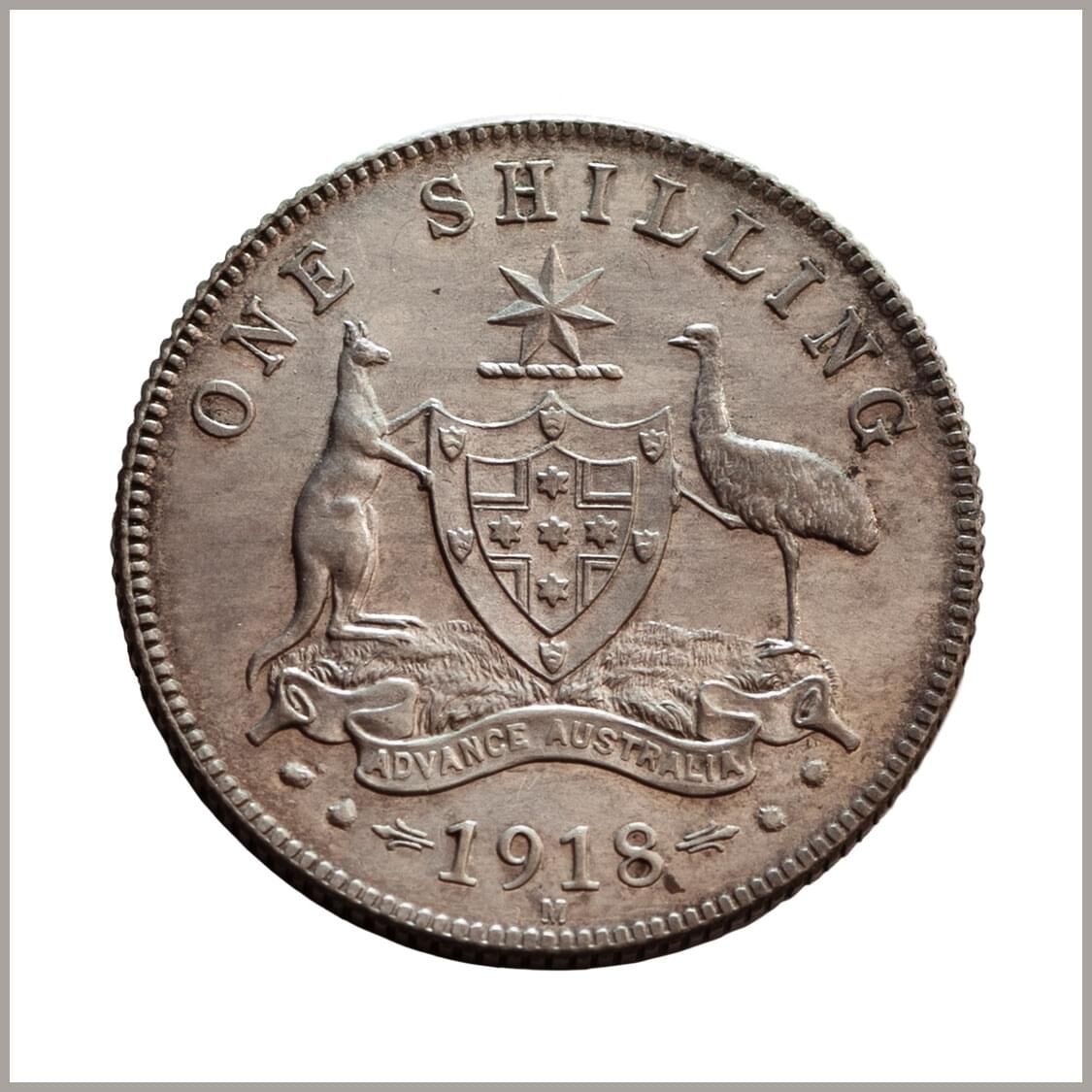
Unique 1918 Shilling, struck in .500 fine silver.
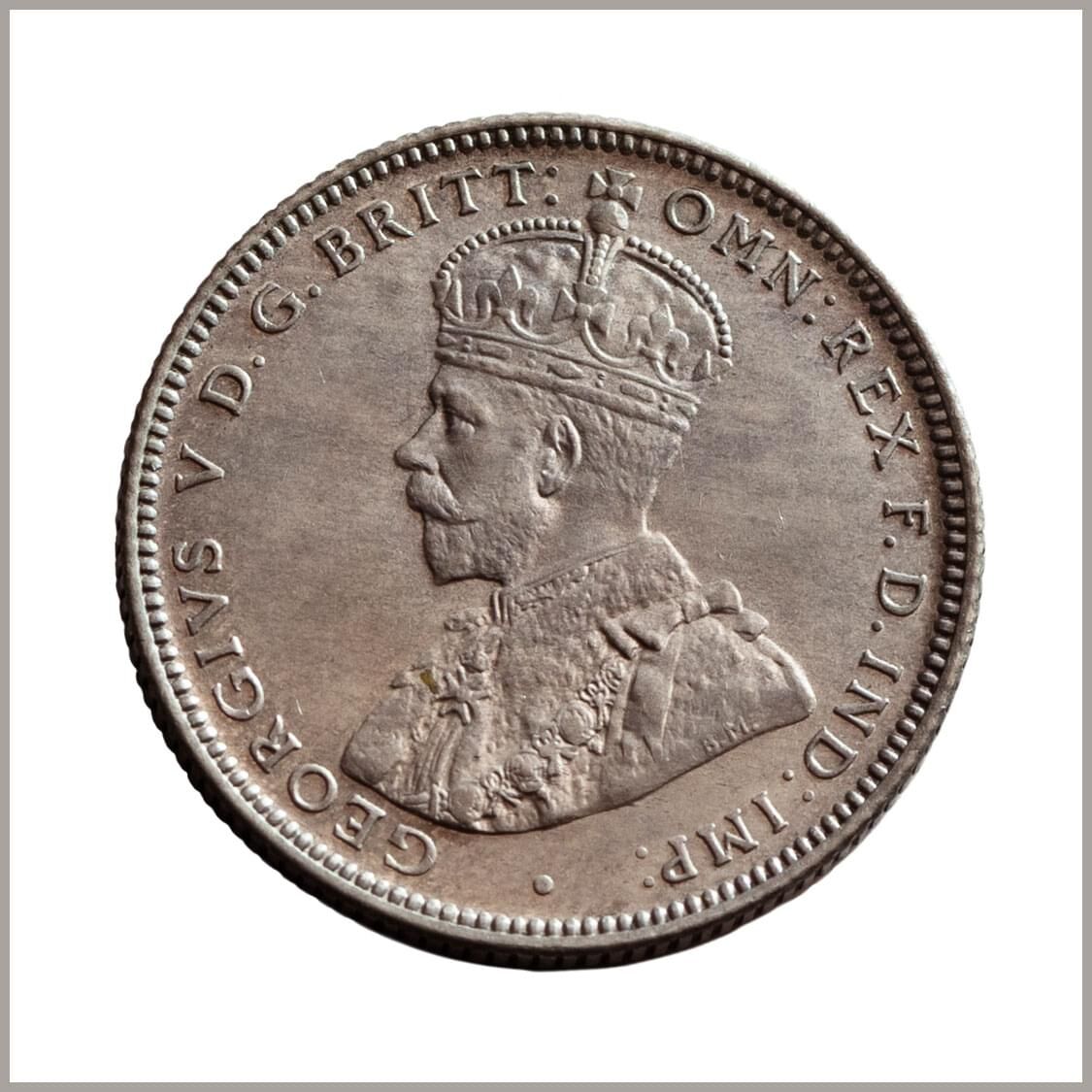
Unique 1918 Shilling, struck in .500 fine silver.
The Government planned to adopt a coinage with a reduced silver content and between 1918 and 1920 the Melbourne Mint undertook a testing program in which the following coins were produced.
The 1918 Shilling
• The testing of a reduced silver alloy commenced in 1918 with the striking of this 1918 Shilling. Struck in .500 fine from the currency dies, the reverse die was punched in the field with two irregular stops on either side of the date.
The 1919 Shilling
• Australia’s rarest Commonwealth coin was created during this testing process, the 1919 Pattern Shilling. The coin was struck in a .625 fine and counter-stamped with two ‘S’s on both sides of the obverse and reverse fields so that it would be easily distinguished and to prevent it from accidentally going into circulation.
The 1920 Star Florin & 1920 Star Shilling
• The Australian Government pursued the testing of alternative alloys into 1920. Dies were ordered, the design to include a star above the date, to reflect a coin with a reduced silver content. To test the dies, seven trial 1920 florins were minted each bearing the distinctive star (Three are held in private hands). The testing continued with the striking of seven star shillings, three of which are privately held.
While the Government dithered about the impending debasement of its coinage, the years passed and precious metal prices settled. There is no doubt that Australia weathered the storm concerning the silver crisis of 1920.
The nation, however, was not so fortunate in 1945 and 1946 when the price of silver was again booming. The year 1946 heralded in a new order for Australia. The nation's florins, shillings, sixpence and threepences were issued in a reduced silver quarternary alloy.
Unique 1918 Shilling, struck in .500 fine silver from the currency dies, the reverse die was punched in the field with two irregular stops on either side of the date.
$50,000
Unique 1918 Shilling, struck in .500 fine silver from the currency dies, the reverse die was punched in the field with two irregular stops on either side of the date.
$50,000

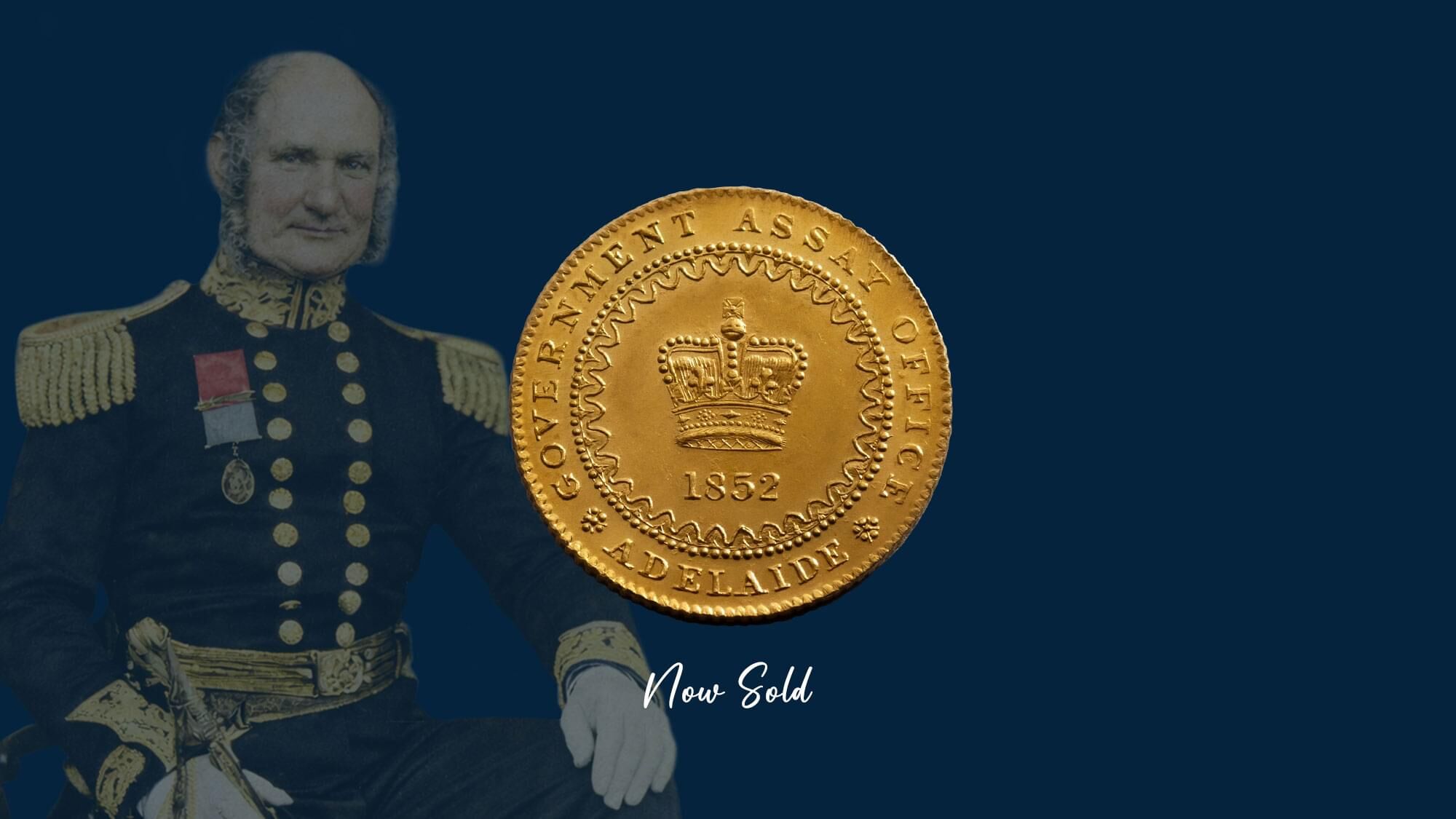
This 1852 Adelaide Pound is ascribed the higher quality ranking of Choice Uncirculated and is one of the top examples of the nation’s first gold coin. The addition of the word ‘choice’ takes a coin to a quality level rarely seen when discussing circulating currency and one of the highest quality rankings available to collectors. To warrant such a grading the coin has to be brilliantly preserved with lots of eye appeal. And the strike has to be powerful. This Adelaide Pound has both. The coin retains its original brilliance and is highly lustrous. The reverse in particular is quite magnificent. And the design has been brilliantly executed, the edges strong all the way around and the legend well defined, again all the way around (notorious areas of weakness in most Type II Adelaide Pounds). The crown has supremely-fine detail. The Adelaide Pound is a coin that will always be in favour. It is ‘gold’ after all, one of our most popular collecting metals. The coin appeals to all age-groups, including the younger generation, and that augurs well for its future. (Photo shown above, Sir Henry Edward Fox Young, Governor of South Australia, 2 August 1848 until 20 December 1854.)
Click here for more details on this Product
The Adelaide One Pound is the nation’s first gold coin, struck in 1852 at the South Australian Government Assay Office, Adelaide.
Local jeweler and engraver Joshua Payne created the dies for the nation's first gold coins.
The obverse declared the issuing authority, Government Assay Office Adelaide, encircling a crown and the date, 1852, the design used continuously throughout production. The reverse declared the fineness and weight encircling it's value.
With its fine design detail, the Adelaide Pound is compelling and a piece of significance, its status as the nation's first gold coin ensuring that it will never be forgotten.
And it is extremely rare with less than forty examples surviving from the first production run and perhaps two hundred and fifty from the second.
Either first or second run, the Adelaide Pound is a prized possession, an iconic gold coin revered by local and international buyers.
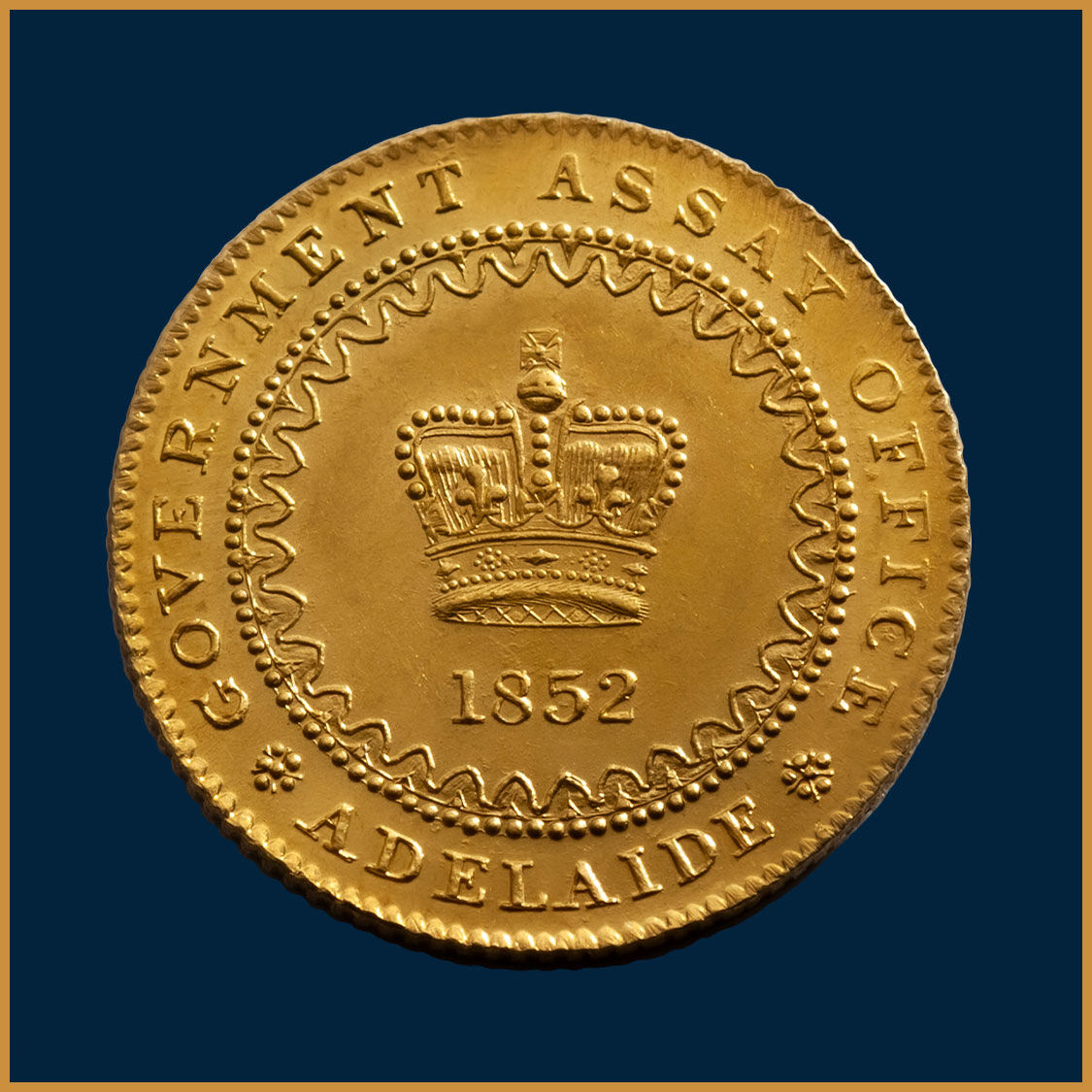
1852 Adelaide Pound Type II
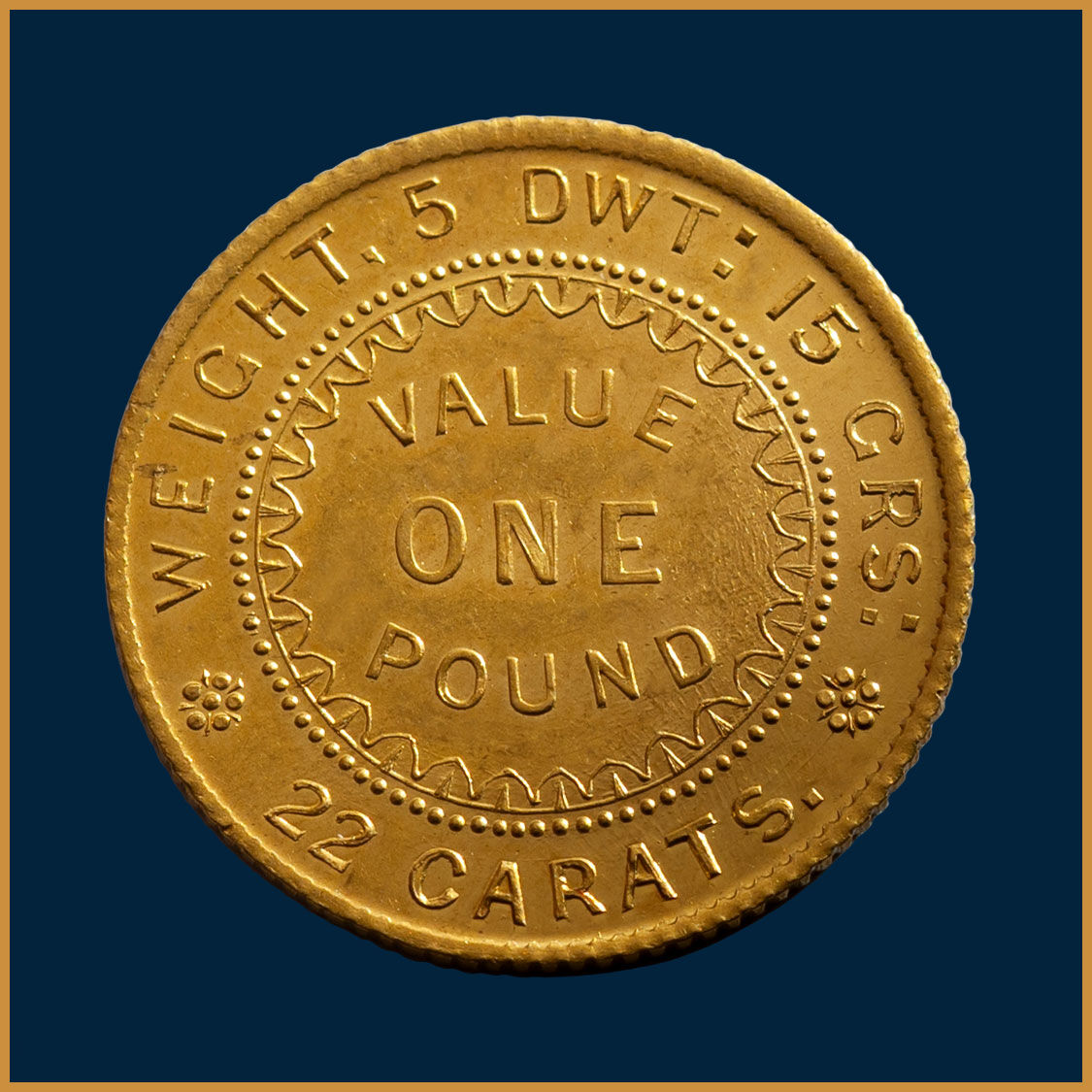
1852 Adelaide Pound Type II
History records that disaster struck during the early stages of the minting of the 1852 Adelaide Pound. Die-maker and engraver Joshua Payne later confirmed that staff had struggled to find the correct pressure levels to exert on the dies to execute a strong overall design.
In the early stages of production, pressure was applied to the edges to ensure that the denticles and legend were strong. The downside to this decision is that excessive pressure applied to the edges cracked the reverse die, forcing an interruption to minting. The upside to this decision is that Adelaide Pounds struck during the first production run have almost picture-perfect edges and beautiful strong denticles.
Relaxing the pressure on the dies in the second production run, lengthened the die usage but created its own shortcomings. Once the pressure was reduced on the edges, the perfection that was achieved in the denticles and legend in the first run of coins was simply not achievable in the second run.
Adelaide Pounds from the second production run notoriously have weakness in the edges and weakness in the legend, most particularly in the Assay Office area. And this is noted in about nine out of every ten examples. But, the crown design will invariably be well executed with flattened areas mainly due to circulation. (Flattened areas may also reflect die usage and be due to a poor strike.)
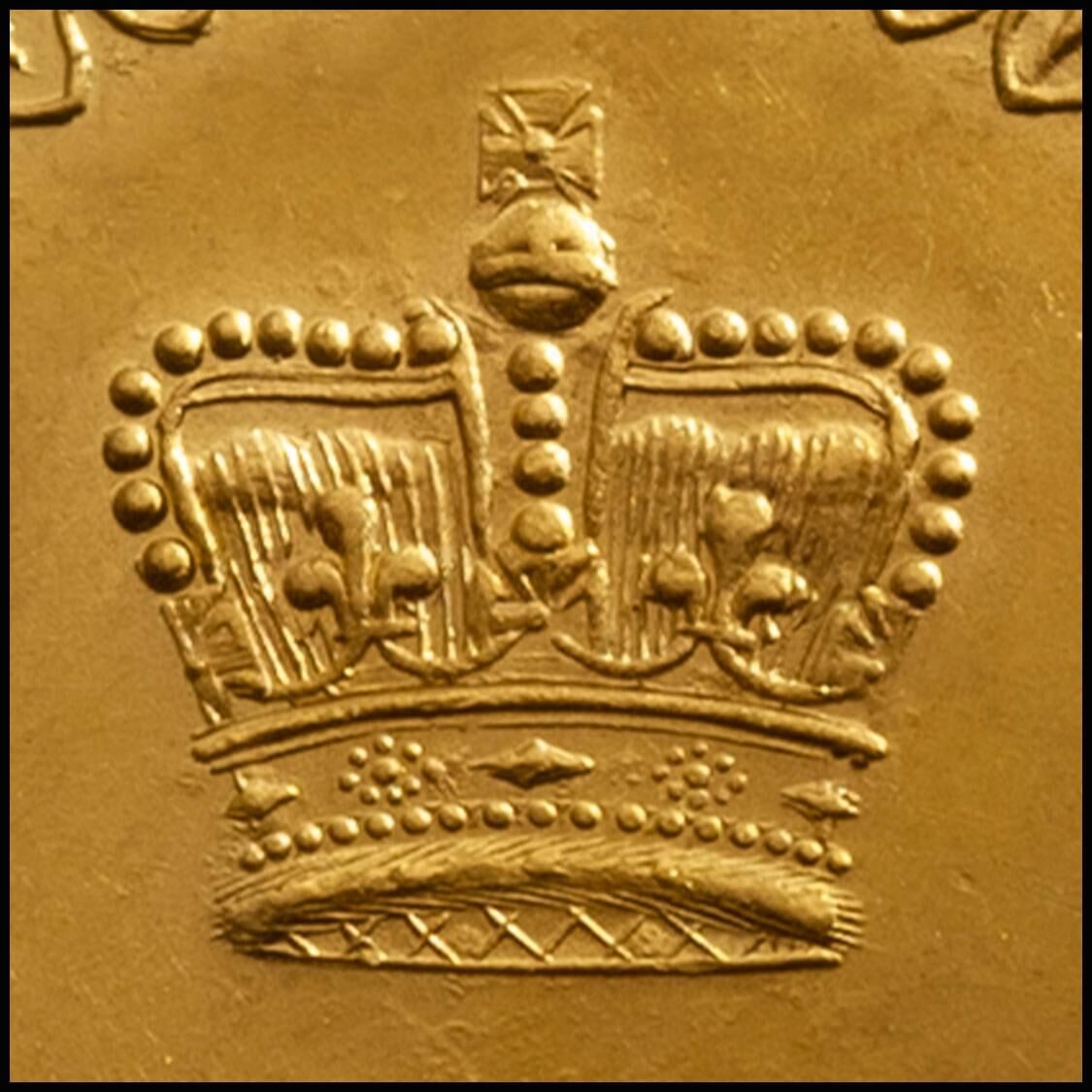
Supremely fine detail in the crown.
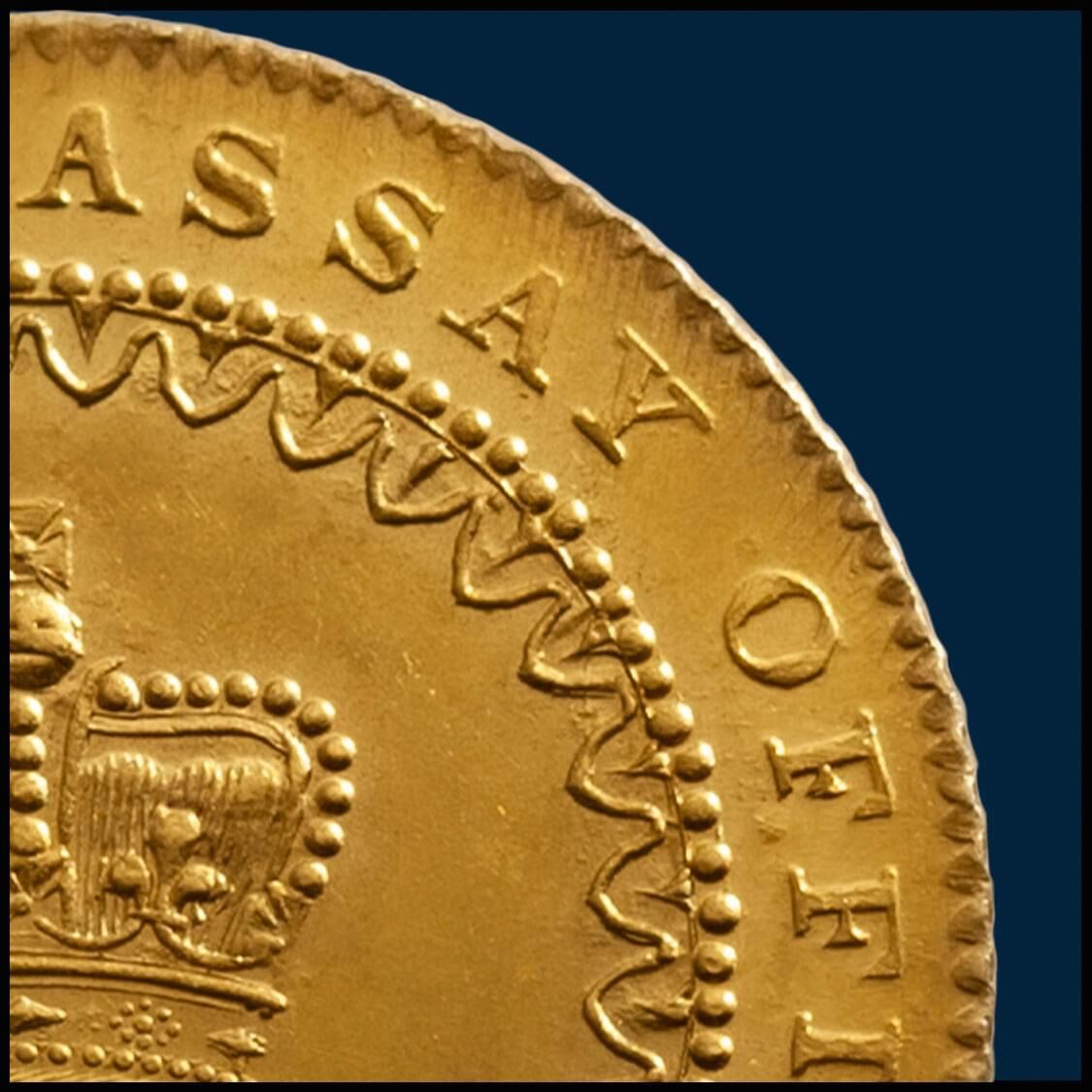
Strength in the legend and edge.
This Type II 1852 Adelaide Pound has a beautiful balance of strong edge denticles, strong legend and a brilliantly struck crown. (See above.) It is the exception to those most frequently sighted and was formerly held by the owner of the famous Nobleman 1852 Adelaide Pound Type I.
Choice Uncirculated 1852 Adelaide Pound struck using the second reverse die featuring a scalloped inner border (Type II)
Price: $75,000
This 1852 Adelaide Pound is ascribed the higher quality ranking of Choice Uncirculated and is one of the best examples of the nation’s first gold coin.
The addition of the word ‘choice’ takes a coin to a quality level rarely seen when discussing circulating currency and one of the highest quality rankings available in numismatics.
To warrant that grading the coin has to be brilliantly preserved with lots of eye appeal. And the strike has to be powerful.
This Adelaide Pound has both.
The coin retains its original brilliance and is highly lustrous. The reverse in particular is magnificent. And the design has been brilliantly executed, the edges strong all the way around and the legend well defined, again all the way around (notorious areas of weakness in most Type II Adelaide Pounds). The crown has supremely-fine detail.
The Adelaide Pound is a coin that will always be in favour. It is ‘gold’ after all, one of our most popular collecting metals. The coin appeals to all age-groups, including the younger generation, and that augurs well for its future.

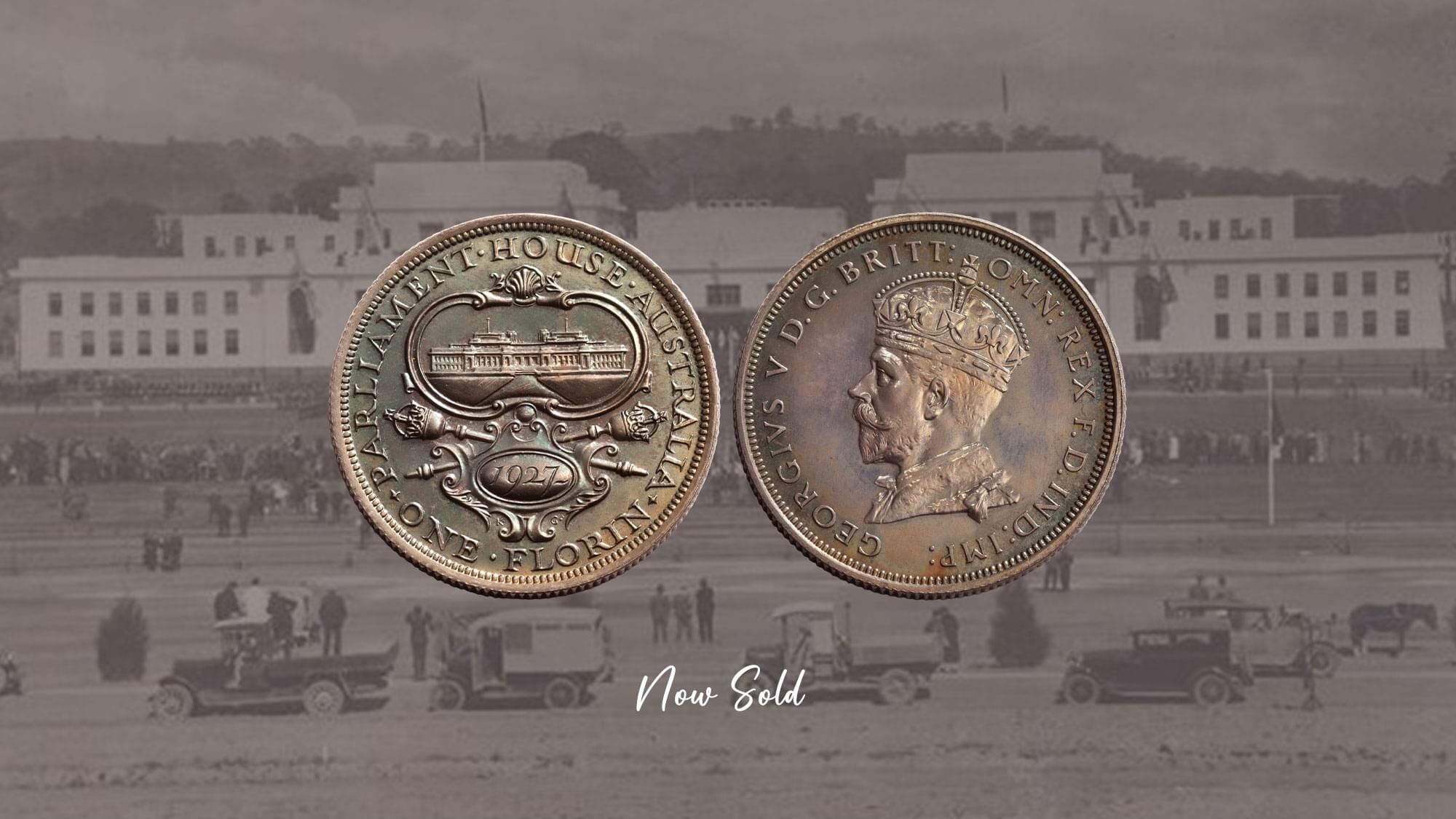
This 1927 Proof Canberra Florin is distinguished by a strong strike, brilliant mirror fields and magnificent emerald-green toning. Ex Barrie Winsor, February 2000, when it was sold to Marcus Plunkett to form part of the Treasures Collection. The coin is exceptional and is one of the few proof Canberra florins available today that is offered with a detailed provenance. And if you think the reverse looks great, wait until you see the obverse. The portrait of King George V almost leaps out of the coin!
Click here for more details on this Product
If we asked collectors to name the top five most popular and recognised Australian rare coins, without doubt the 1930 Penny would be at the top of the list.
But, the 1927 Proof Canberra Florin would, in all likelihood, be at position number two.
It is a coin that resonates with all Australians and for many collectors it's not a matter of 'if' I will buy a Proof Canberra Florin, it's 'when' I will buy one.
1. The coin has genuine rarity
While Melbourne Mint records show a mintage of 400, it is generally accepted that the issue did not sell-out, the proposed mintage too optimistic for the size of the collector market at the time. And non-collectors baulking at having to pay a premium over face value to acquire the 'proof'! The unsold coins were melted down, the mintage believed to be as small as 150.
The proofs were gifted to politicians and sold to the public without a case thereby introducing the possibility of mishandling.
So for the buyer that makes quality a priority, the waiting time for a really nice 1927 Proof Canberra Florin can be a minimum of two years. Perhaps even longer.
2. The coin is historically important
The Proof Canberra is Australia's first commemorative coin, minted for one of the most significant events in Australia’s journey to nationhood. The opening of the nation’s first Parliamentary buildings in the national capital in 1927. The coin is distinguished by a unique obverse featuring an enlarged bust of King George V, designed by Sir Edgar Mackennal.
3. The coin has a design that resonates with all Australians
In an article published in the CAB Magazine, February 2007, author and respected numismatist Vince Verheyen declared the 1927 Proof Canberra Florin "arguably Australia's most attractive predecimal silver coin". We can only agree. The reverse of 'Old Parliament House' was designed by George Kruger-Gray.
4. The coin has value and, over the long term, appreciating value
An analysis of auction realisations over the past forty years, confirms the 1927 Proof Canberra Florin is extremely scarce. On average one pristine example is offered every few years. We also note the coin has enjoyed solid price growth. In the 1980s, a Proof 1927 Canberra Florin was selling for approximately $1000 - $1500 at auction. In the 1990s the coin was fetching betwen $4000 - $6000. Two decades later, top quality Proof Canberra Florins are commanding prices in excess of $20,000.
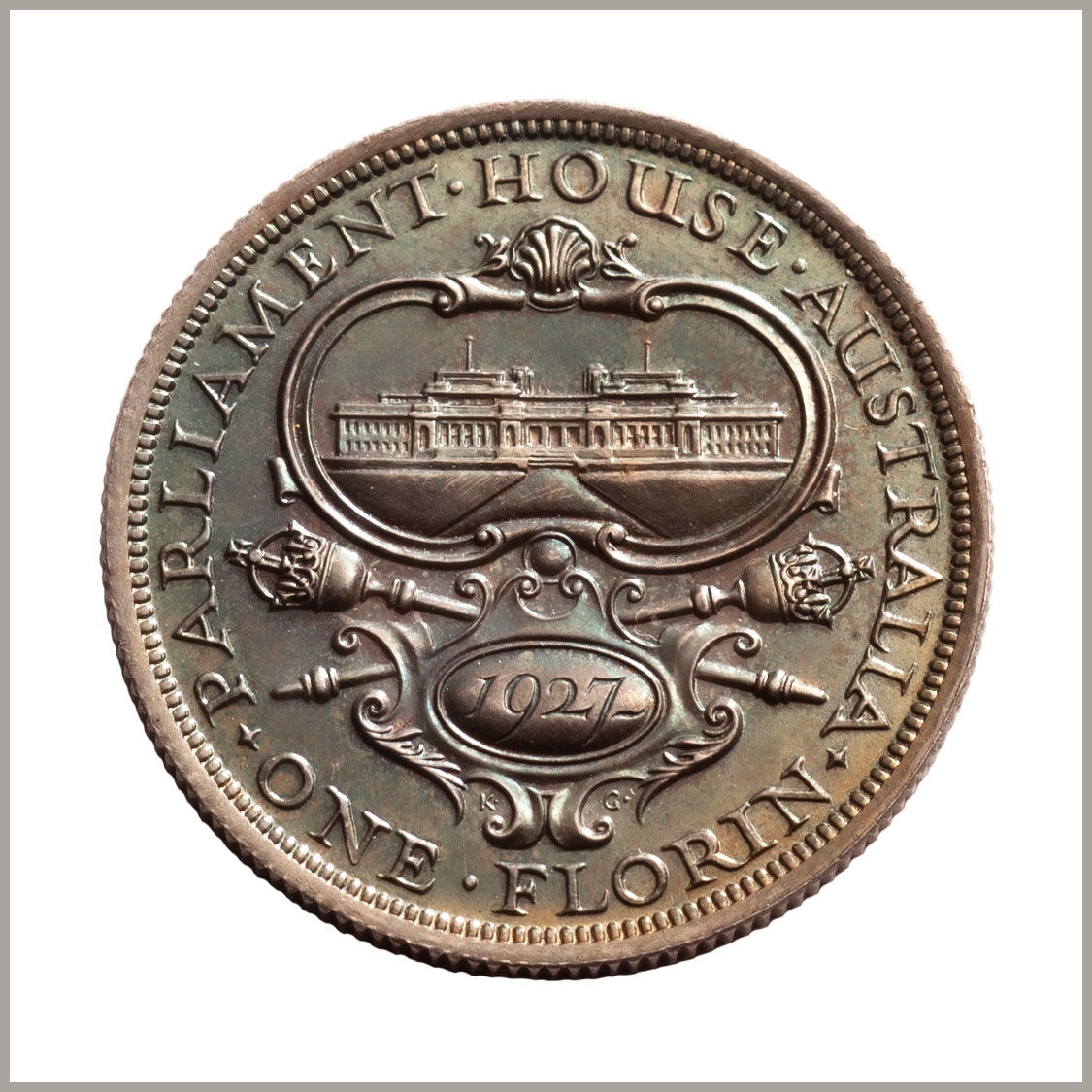
1927 Proof Canberra Florin
• stunning emerald colours •
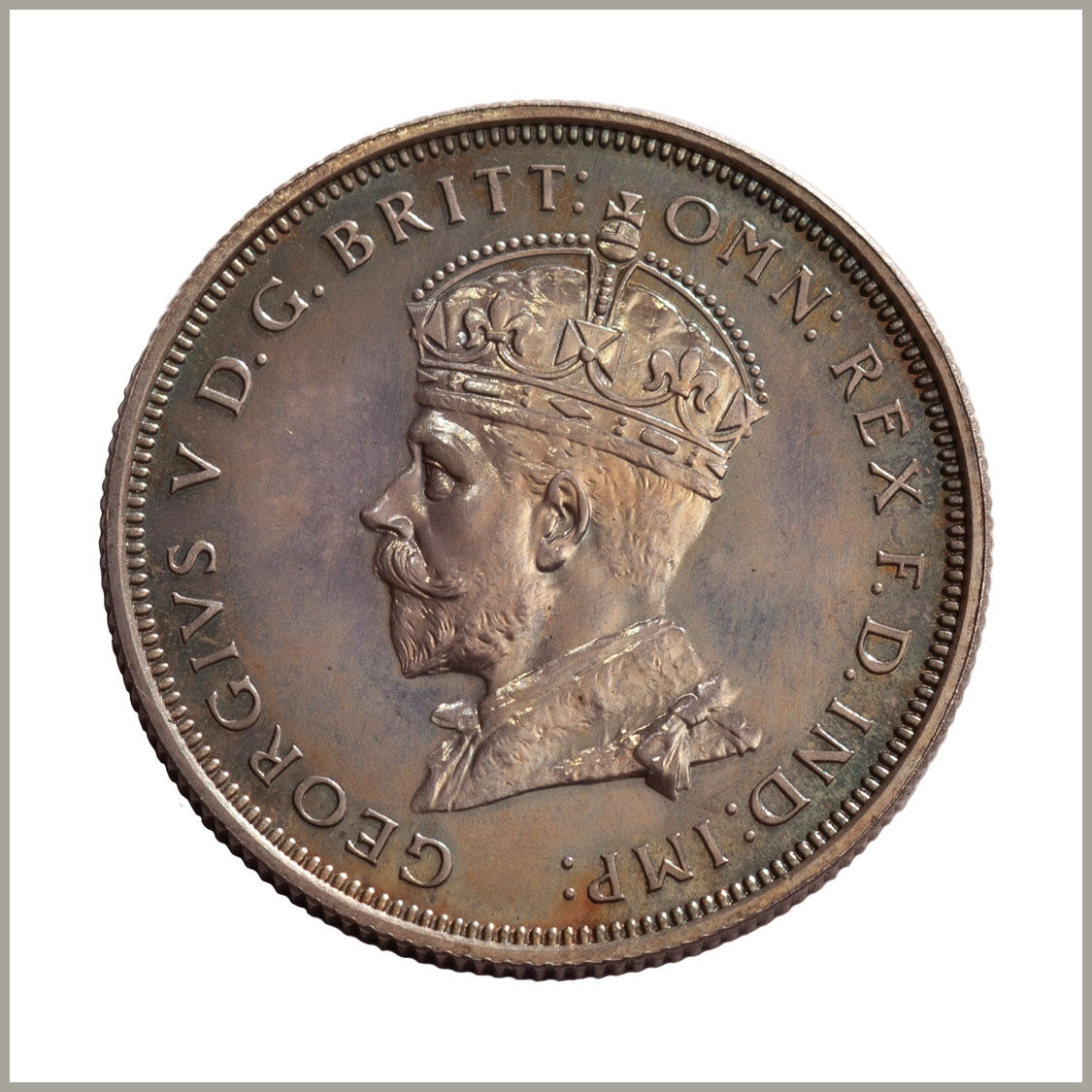
1927 Proof Canberra Florin
• glass-like surfaces •
This Proof Canberra Florin is worth owning!
Using the naked eye, move the coin through the light, allowing it to reflect off the fields. Both obverse and reverse fields are brilliant, highly reflective. It is as though you are looking at a mirror.
• The emerald-green toning is magnificent!
• The edges are intact and solid.
• Under a magnifying glass we note, the striations, between the 'ONE' in the legend and the oval containing the date 1927. They are strong.
• Vertical striations on the obverse are similarly distinct and strong.
• Heavy striations equates to well brushed dies. Well brushed dies equates to a razor sharp, three dimensional coin design. And the three parliamentary steps are present!
• The fields are impressive. Amazing for a coin struck nearly a century ago. Our comment here is that the coin's former owners have always respected and cherished its quality for its state of preservation is remarkable.
1927 Proof Canberra Florin minted for one of the most significant events in Australia’s journey to nationhood, the opening of the first Parliamentary buildings in the national capital, Canberra.
Price: $22,000
This 1927 Proof Canberra Florin is distinguished by a strong strike, brilliant mirror fields and magnificent emerald-green toning. Ex Barrie Winsor February 2000 when it was sold to Marcus Plunkett to form part of the Treasures Collection.
The coin is extraordinary and is one of the few Canberra florins available today that is offered with a detailed provenance.
Exhibited at the Melbourne Mint, Williams Street Melbourne, 29 November 2011 in the launch of the Treasures Collection.

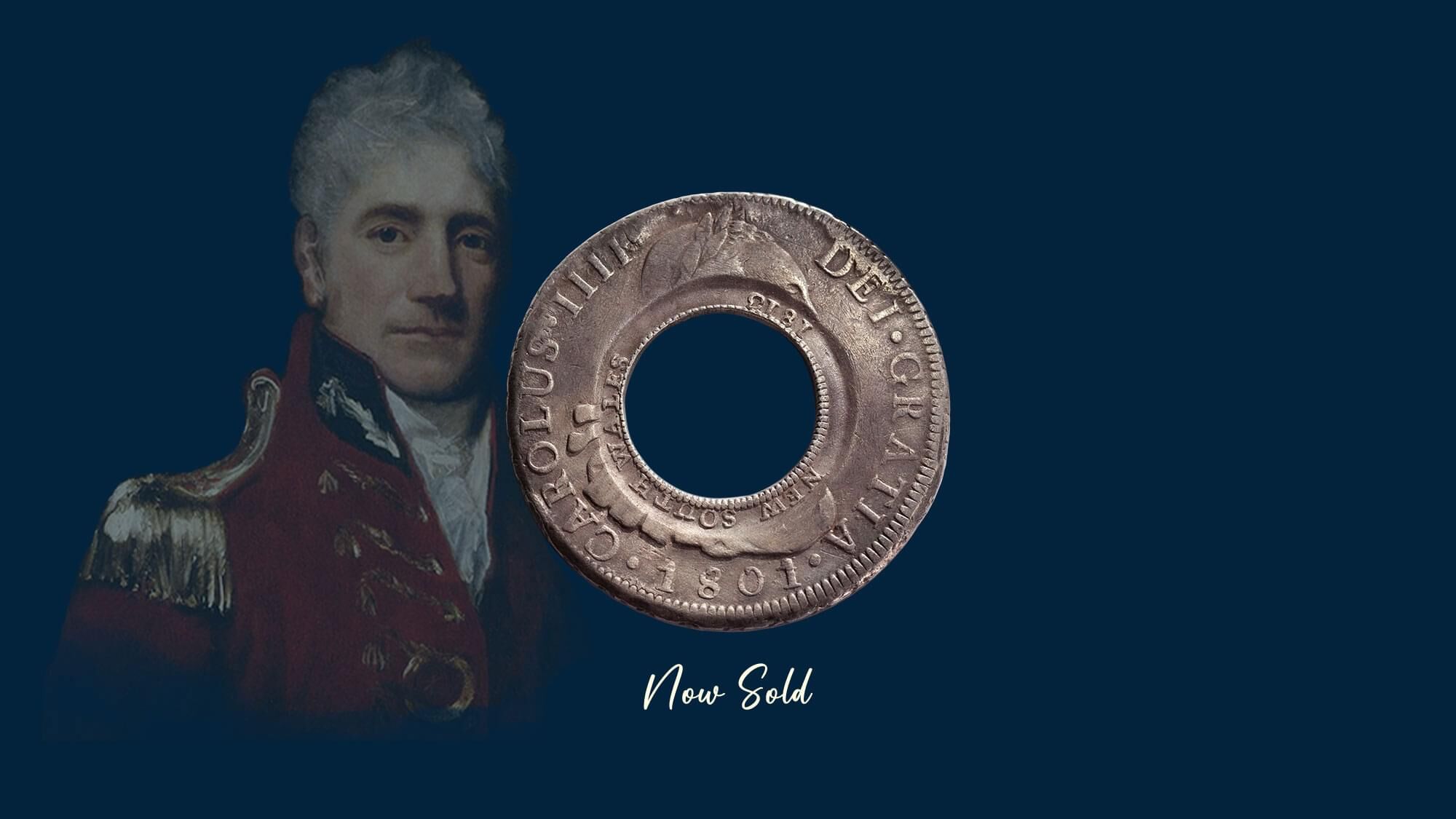
This 1813 Holey Dollar was created from a silver dollar that was minted at the Potosi Mint in Bolivia. 'Potosi' makes it a big deal! This is a mint that is very rarely seen.
Of the two hundred Holey Dollars available to collectors, only fifteen were converted from silver dollars struck at the Potosi Mint in Bolivia. And if you look closely at the fifteen, only five are known in the upper quality levels, of which this coin is one. (By comparison almost one hundred and fifty were created from silver dollars produced at the Mexico Mint, located in the silver-rich colony of Mexico.)
This Holey Dollar is high quality. And this Holey Dollar is extremely rare. Offered in Amsterdam in 1910, it is yet another top Holey Dollar that has returned to its country of origin from Europe over the last century.
Click here for more details on this Product
A Holey Dollar that is extremely rare quality-wise.
Macquarie's order for Spanish Silver Dollars was fulfilled by the East India Company in Madras, and was not date specific or quality specific. Macquarie simply wanted coins.
An analysis of surviving examples confirms that the majority of Holey Dollars are well worn. The analysis also confirms that a Holey Dollar at Very Fine is a well above average example (refer chart).
We like the price point at which this Holey Dollar is offered. In our view, the range of $100,000 to $200,000 offers excellent value for your investment dollars.
At this price level, a Holey Dollar will look good to the naked eye, relatively untouched. And the major design detail will still be relatively sharp.
We particularly notice with this coin, there are no harsh knocks, gouges or weaknesses in the metal (which so often occurred when Henshall hammered out the hole).
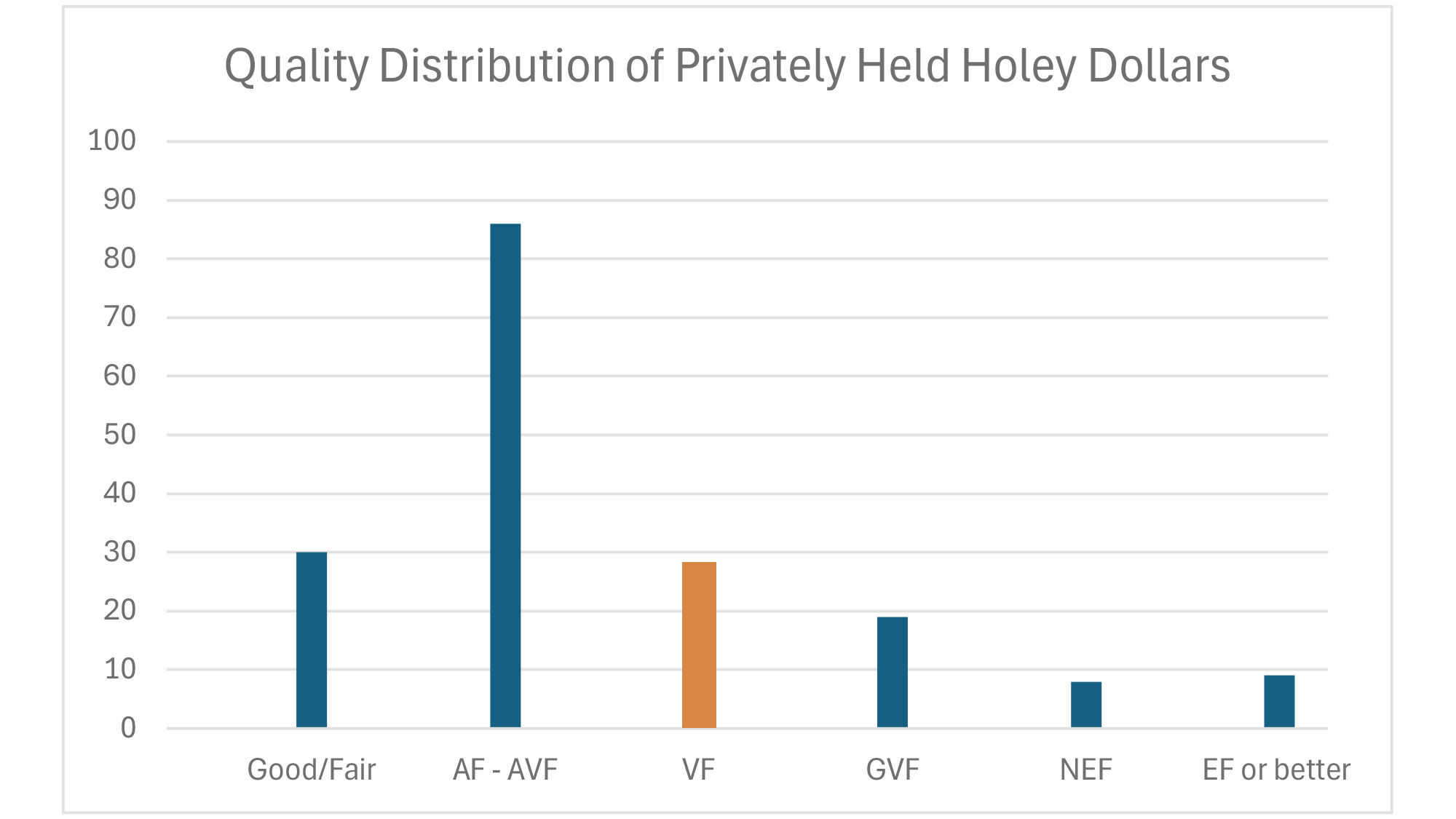
Good/Fair • Akin to a washer
AF - AVF • About Fine to About Very Fine
VF • Very Fine
GVF • Good Very Fine
NEF • Nearly Extremely Fine
EF or better • Extremely Fine to Uncirculated
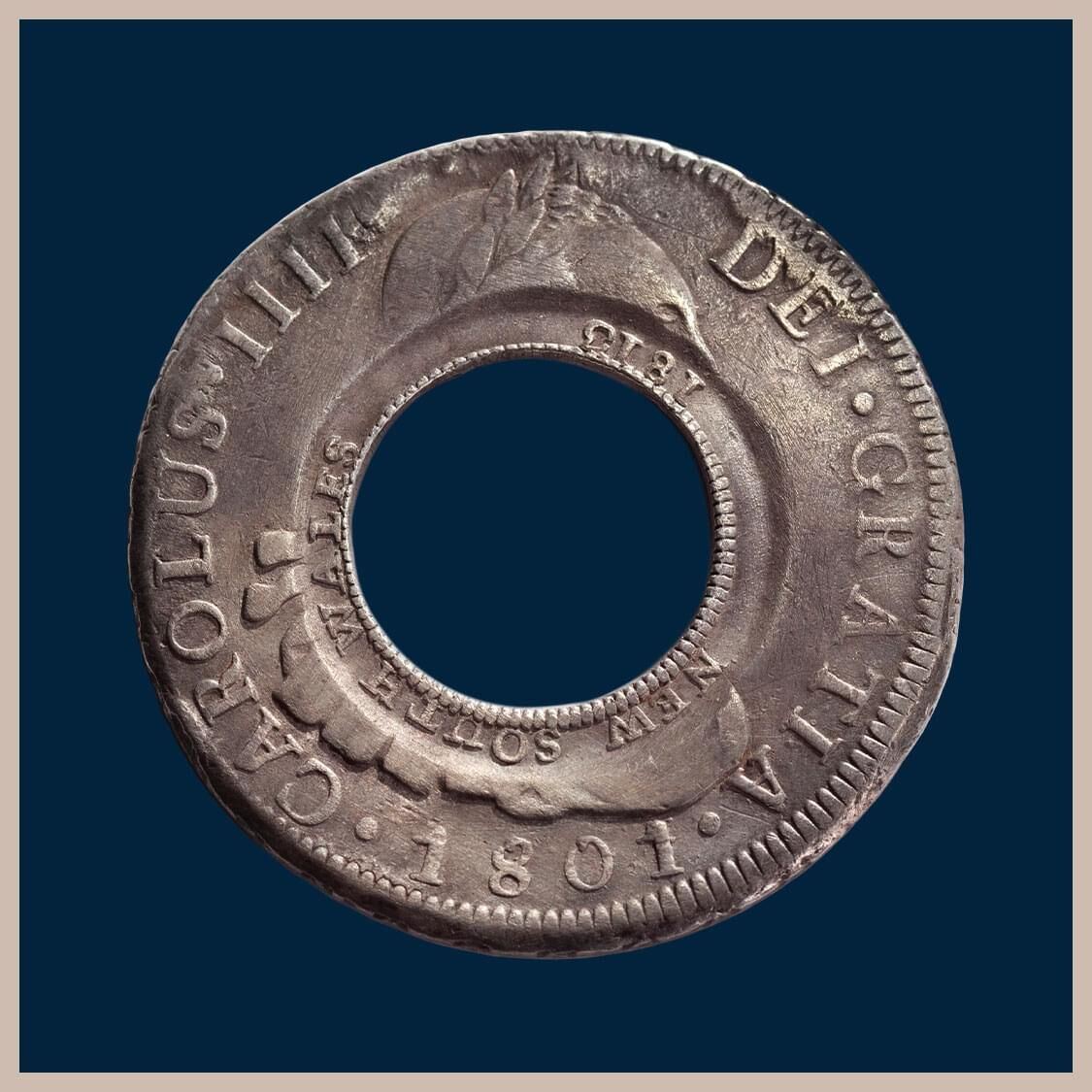
Quality of silver dollar: Very Fine
Quality counter stamps: Good Very Fine
Counter stamp dies: II/4: B/4
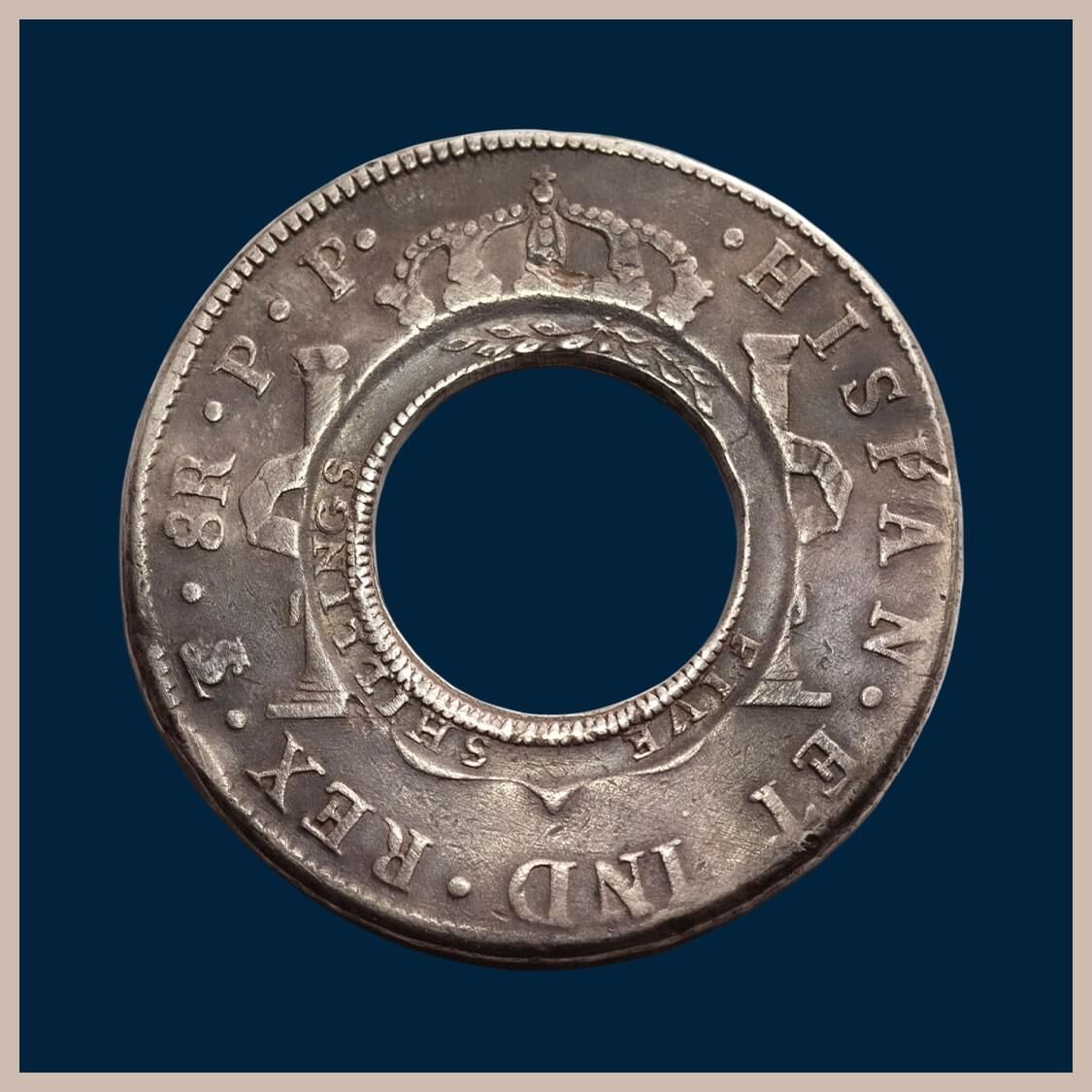
Potosi Mint, identified by the PTS monogram in the legend on the reverse said to be the inspiration of the '$' sign
The defining quality of this Holey Dollar is that it was created from a Spanish Silver Dollar that was struck at the Potosi Mint. The Potosi Mint being the key here.
Macquarie's order for Spanish Silver Dollars was fulfilled by the East India Company in Madras, and was not date or quality specific. No did he care which mint they came from. The dollars were sourced from various mints around the world, each with a different identifying mark. The percentage of Holey Dollars converted from the mints in Mexico, Lima, Potosi and Madrid are noted here.
• Holey Dollars converted from Mexico Mint dollars - 81 per cent
• Holey Dollars converted from Lima Mint dollars - 10 per cent
• Holey Dollars converted from Potosi Mint dollars - 8 per cent.
• Holey Dollars converted from Madrid Mint dollars - 1 per cent
1813 Holey Dollar created from a Spanish Silver Dollar that had been struck at the Potosi Mint, Bolivia, in 1801 (Mira/Noble 1801/5, Spalding 99).
Price: $165,000
Design type: 5 (Charles IV legend and portrait)
Date of the silver dollar: 1801
Reigning monarch: Charles IV (1788 - 1808)
Portrait: Charles IV
Legend: Carolus (Charles) IIII
Mint and mint mark: Potosi Mint, identified by the PTS monogram in the legend on the reverse said to be the inspiration of the '$' sign.
Quality of silver dollar: Very Fine
Quality counter stamps: Good Very Fine
Counter stamp dies: II/4: B/4
More information on the 1813 Holey Dollar
The Holey Dollar is the nation’s first coin, minted in 1813 by order of Governor Lachlan Macquarie. As Macquarie had no access to metal blanks to create his currency, he improvised and acquired 40,000 Spanish Silver Dollars as a substitute.
To make his new coinage unique to the colony, he employed emancipated convict William Henshall to cut a hole in each Spanish dollar. Each holed dollar was then over-stamped on both sides around the edge of the hole. On one side, the date 1813 and the issuing authority of New South Wales. And the other, the value of Five Shillings.
If you look at the entire process, the application of the counter stamps - the issuing authority of New South Wales, the date 1813 and the value of five shillings - is the point at which the 1813 Holey Dollar is created. Prior to that, it was just a Spanish dollar with a hole in it!
The 40,000 Spanish Silver Dollars came with different dates and different design details that reflected the reigning Spanish monarch. And they were sourced from various mints around the world, each mint with a different identifying mark. As the Spanish Dollar was an internationally traded coin, most of them came to Macquarie well used. (We know that because the majority of Holey Dollars are well worn.)
As the Holey Dollar was crafted from a Spanish Silver Dollar (and not a metal blank), assessing its value gives consideration to the original dollar. Its quality. And its rarity, for some are indeed rarer than others.
Consideration must also be given to the extent of circulation once the dollar was converted to an 1813 Holey Dollar by looking at the wear to the counterstamps.
Valuing a Holey Dollar is therefore a multi-faceted process that takes into account seven elements. The date, the monarch and the legend of the original silver dollar. The mint at which the dollar was issued. The quality of that dollar. Now we turn to the counter stamps applied by Henshall. Are they random or precise? And are they worn?
The brief summary above is intended to explain how and why vast price differences can occur with Holey Dollars.
Owning a Holey Dollar is about indulging in an experience, a fusion of history and prestige. And its about savouring the moment.
It has been the inspiration and aspiration of many. Think Macquarie Bank and its logo! Museums, the world over. Historians, collectors, investors, both local and international.

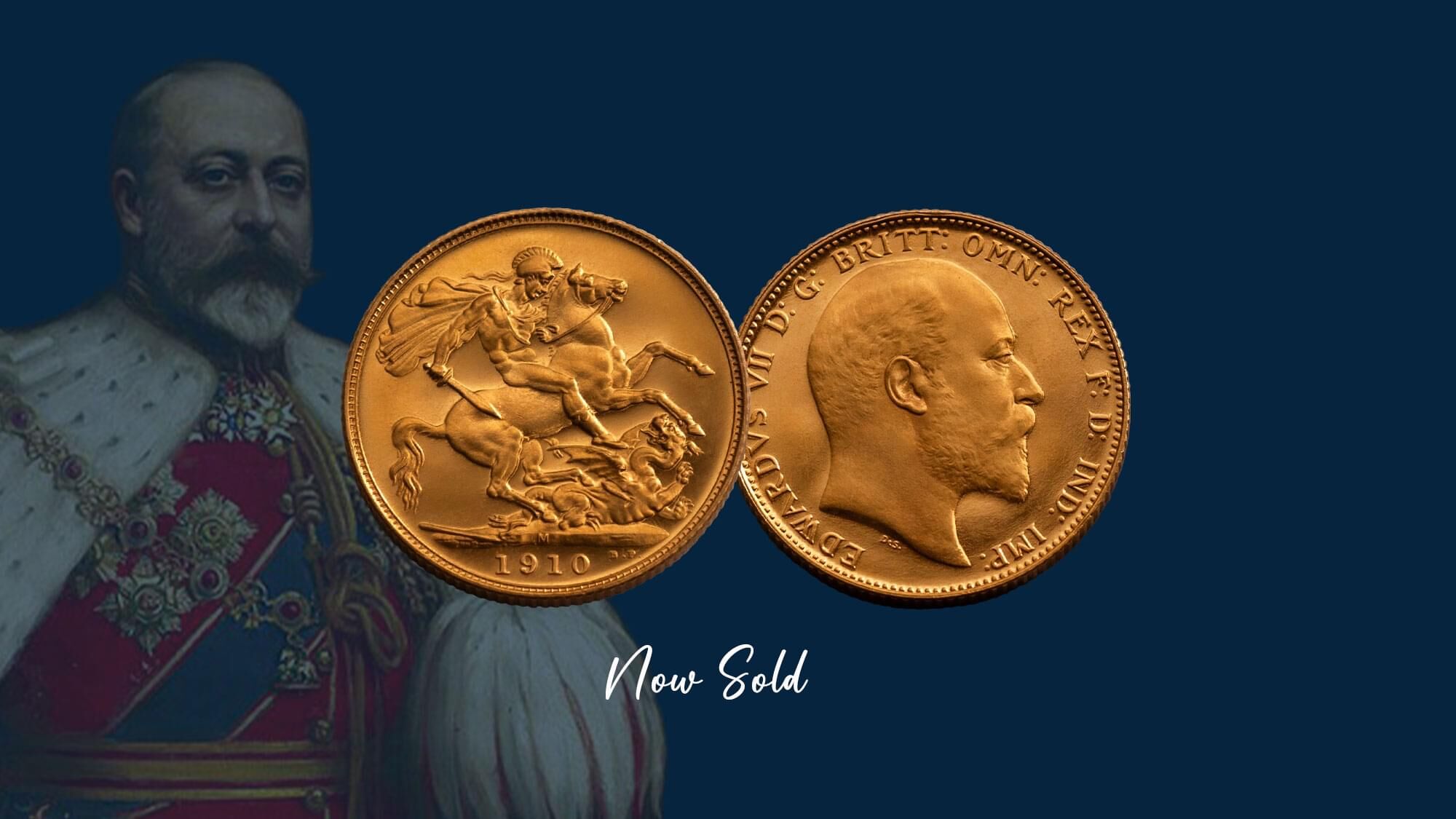
This Edward VII 1910 Proof Sovereign has a level of excellence and exclusivity that inspires widespread admiration. The coin is a celebration of the Melbourne Mint’s achievements in crafting perfection in gold. And it is unique. It represents the very best in its class.
We estimate that one thousand collectors can own a 1930 Penny. Perhaps nineteen collectors can own a veiled head proof sovereign. But only two collectors can ever own an Edward VII proof sovereign, this coin one of the two. The importance of this offer cannot be overstated.
Excerpts from our report on the Melbourne Mint proofs (in the view more section) confirm its unique status and the extreme rarity of Edward VII proofs.
Click here for more details on this Product
When the Royal Mint London or the British Museum requested a sovereign or half sovereign from an Australian Mint, they were never sent a circulation strike. They were sent a specially crafted presentation piece.
Nor would a circulation strike be presented to the monarch, gifted to a dignitary or sent to an influential collector. And a circulation strike would not be displayed at a Colonial Exhibition. Again, an individually crafted presentation piece would be specially created for the occasion.
The technical term for such a piece is 'Coin of Record'.
A Coin of Record is an artistic interpretation of coinage, a strikingly beautiful coin beyond ordinary currency. Individually crafted to standards far exceeding that required of a circulating coin, minted with a proof or specimen finish and created using special coining techniques. Whereas production of circulating coinage was dictated by Government, Coins of Record were struck at the discretion of the mint master.
Coins of Record were not produced every year and, as they were individually crafted, the process was time consuming and the mintages minuscule. For gold proofs, generally ten pieces or less. There were several occasions when only a single coin was struck.
Coins of Record of Australia's sovereigns and half sovereigns are visually stunning, distinguished by brilliant golden-mirror surfaces. And it is their beauty and their ultra-exclusivity that drives demand.
The market for Australia's gold Coins of Record was effectively established in London, in 1903, and continues to this very day right across the globe.
Recent international auction results confirm their status as a globally traded commodity, the frosted proofs of the Melbourne MInt in particular, keenly sought after by American collectors.
The Coins of Record of Australia's proof sovereigns and proof half sovereigns are the crown jewels of coinage, adding glamour and exceptionality to any collection!
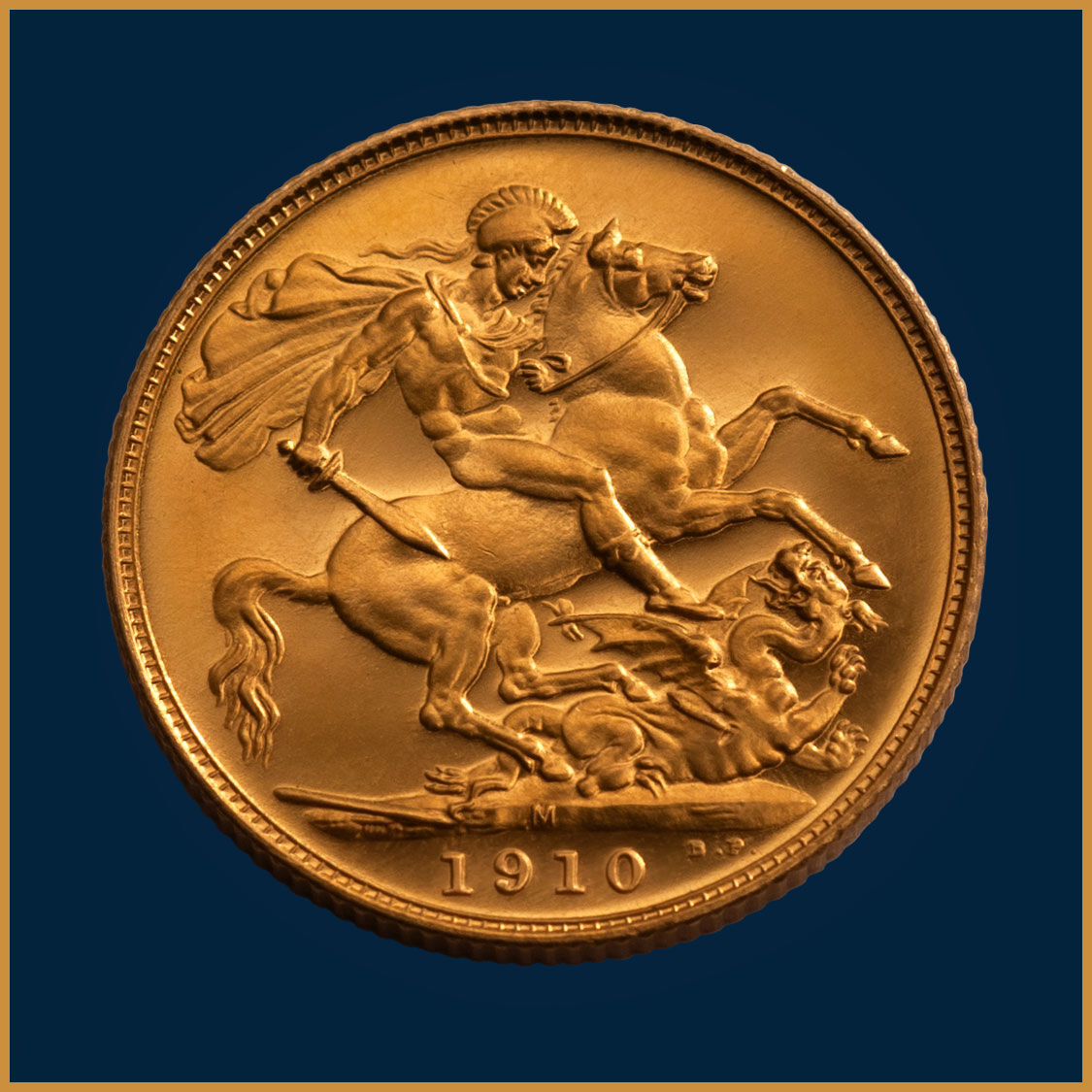
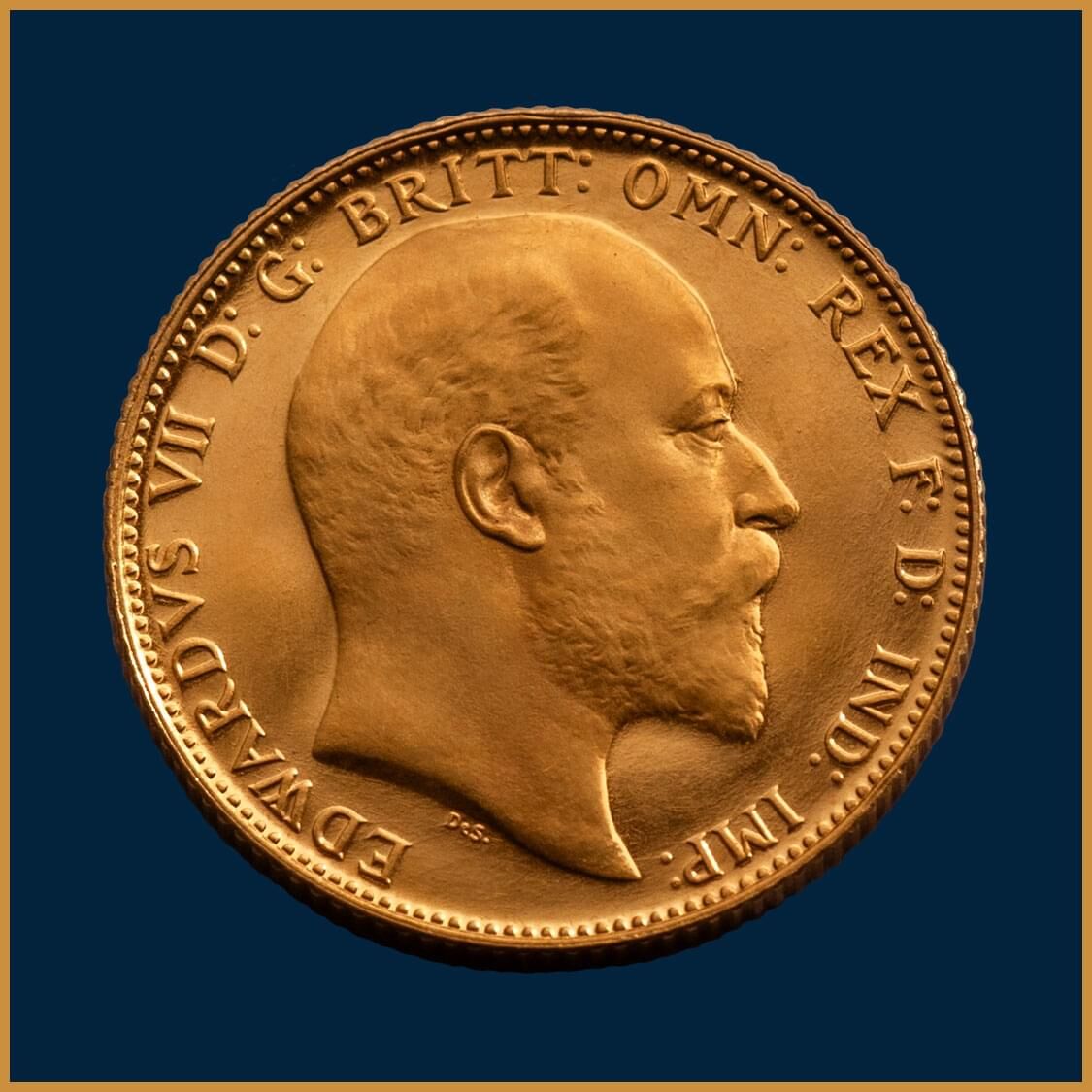
The Melbourne Mint opened in 1872 as a branch of the Royal Mint London, its main function to produce gold sovereigns and half sovereigns. Its gold coin production ceased in 1931.
Three monarchs reigned between 1872 and 1931, Queen Victoria, King Edward VII and George V.
The Melbourne Mint struck Coins of Record sporadically. Of the record pieces that were produced, those of Edward VII are the least available for collectors. (Confirmed in our chart below.)
John G. Murdoch was an influential British collector. He developed a strong business relationship with the Melbourne Mint and was one of the few collectors that was regularly supplied Coins of Record from 1884 until 1901, through the Young Head, Jubilee and Veiled era of Queen Victoria.
The market for Australia’s proof gold coins is international and it is dynamic. Without the involvement of John G. Murdoch, Australia's gold Coins of Record may never have seen the light of day, permanently stored in Government archives and out of reach of collectors.
Murdoch single-handedly created a market by taking Australian gold proofs into the buy/sell environment of collectors. And he struck a perfect balance with the market (then and today) with the quantities he held.
The coins moved onto the international stage when Murdoch's collection was liquidated via Sotheby, Wilkinson & Hodge in London in 1903 following his passing in 1902.
Murdoch's death in 1902 had a dramatic impact on production of Coins of Record at the Melbourne Mint.
Technically, it fell off a cliff.
Only one Melbourne Mint 1902 Proof Sovereign is known. Formerly held by the South Africa Mint (a temporary branch of the Royal Mint, 1923 - 1941) it is now held by a private collector.
No 1902 Proof Half Sovereigns are known.
And one example of the 1910 Proof Sovereign is privately held, formerly owned by Ross Pratley and Barrie Winsor, both leading gold coin specialists. (This coin)
The proofs of Edward VII are characterised by extreme scarcity. Proofs were only struck in two years and of each, only one example is known.
The proofs of Edward VII are further characterised by extreme beauty.
The Melbourne Mint reached its zenith in proof gold coining during the era of Edward VII, the depth of design of both the 1902 and 1910 Proof Sovereigns is magnificent, sculpted, three dimensional. The fields are like golden mirrors.
Unique 1910 Edward VII Proof Sovereign struck as a Coin of Record at the Melbourne Mint.
Superb FDC
Price: $135,000
This Edward VII 1910 Proof Sovereign has a level of excellence and exclusivity that inspires widespread admiration.
The coin is a celebration of the Melbourne Mint’s achievements in crafting perfection in gold. And it is unique. It represents the very best in its class.
The proofs of Edward VII are characterised by extreme scarcity. Proofs were only struck in two years and of each, only one example is known.
The proofs of Edward VII are further characterised by extreme beauty. The Melbourne Mint reached its zenith in proof gold coining during the era of Edward VII, the depth of design of both the 1902 and 1910 Proof Sovereigns is magnificent, sculpted, three dimensional. The fields are like golden mirrors.
We estimate that one thousand collectors can own a 1930 Penny. Perhaps nineteen collectors can own a veiled head proof sovereign. But only two collectors can ever own an Edward VII proof sovereign, this coin one of the two.
The importance of this offer cannot be overstated.

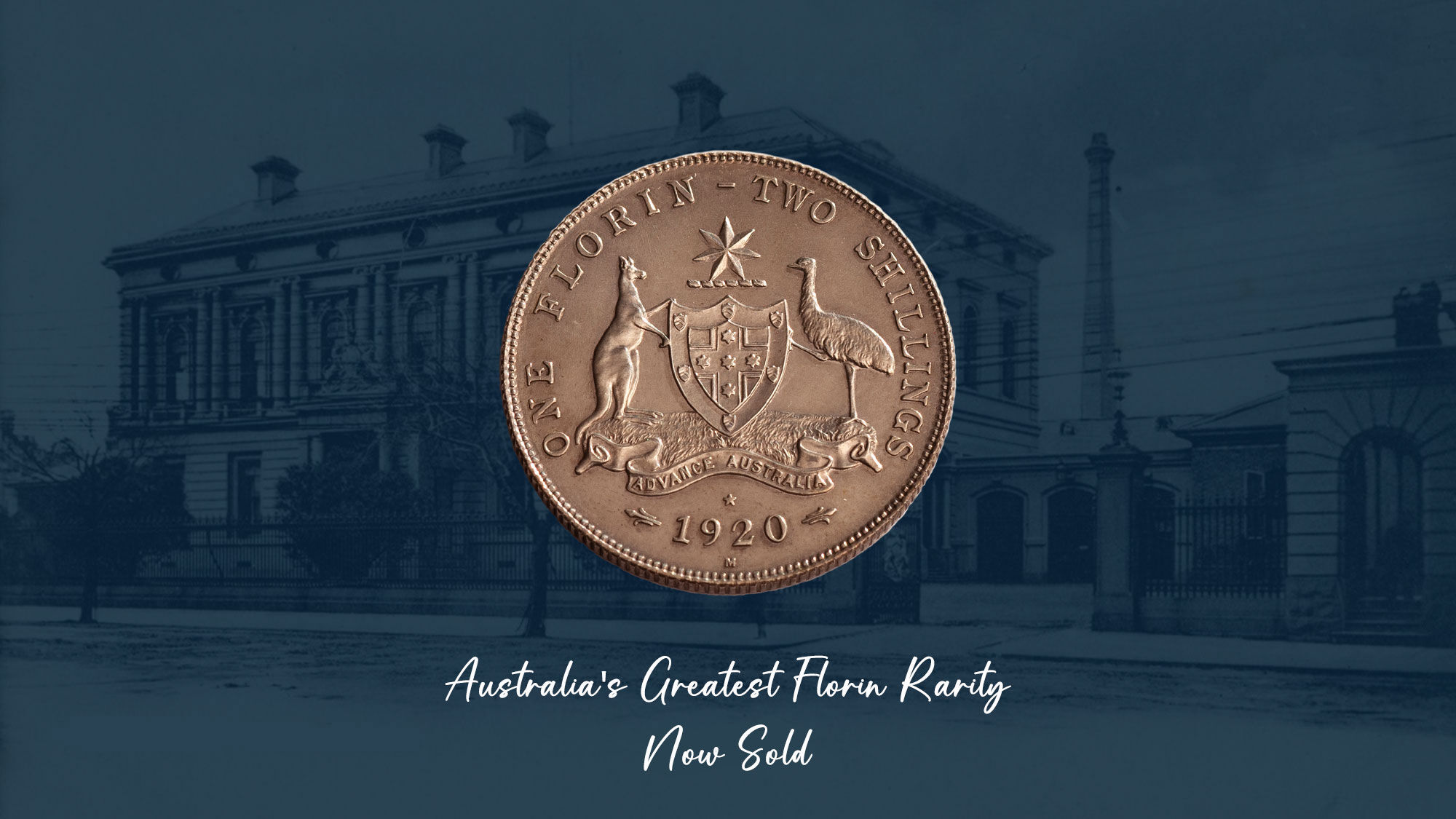
Sale number 24, conducted by Spink Auctions (Australia) in March 1988 was one of the company's most important auctions; a bicentennial celebration of all that was great in the Australian rare coin industry. The breadth and depth of excessively rare, high quality coins was compelling and overwhelming and was an event that is unlikely to be repeated. The auction made history! Out of the glittering array of esteemed rarities, a 1920 Star Florin was chosen to appear on the front cover of the catalogue. This is perhaps the simplest and easiest way of conveying the importance of the 1920 Star Florin to the industry. The coin is Australia's greatest florin rarity - the rarest florin struck for circulation. One of only seven produced at the Melbourne Mint as part of a specially controlled circulation strike, three of which are held by private collectors. And this example, one of the three ex Morton & Eden London, with superb detail and impressive satin surfaces.
Click here for more details on this Product
Rarity and circumstance have made the 1920 Star Florin one of Australia's greatest coin rarities.
In 1920, no florins were struck for general circulation. Seven florins were however produced at the Melbourne Mint as part of a specially controlled circulation strike and each coin featured a star above the date.
Distribution of these prized pieces was heavily restricted. Influential collector Albert Le Souef, (a Deputy Master of the Melbourne Mint between 1921 and 1926), obtained one of the seven. Three examples were retained by the mint with three heading to London, the Royal Mint the main recipient.
Aside from the Le Souef's coin, a further two have since emerged in the private sector. This coin acquired out of London and the other, sold on behalf of the Melbourne Mint museum through an Australian auction house as part of a fundraising exercise, late in 1988.
As to why no circulation florins were struck in 1920. Wildly fluctuating silver prices posed a serious issue for Governments, such as Australia, that were striking their coins in sterling silver.
The possibility that the intrinsic value of a coin would exceed its face value was a real one. The Government pondered a debasement of its coinage to lower the costs.
As to why the star appeared above the date. The dies were re-worked just in case the Government changed its mind and decided to strike a mintage of circulating florins with a reduced silver content, the star to signify the debasement.
History records that only seven circulating florins were struck in 1920, this coin one of the seven.
It is Australia's greatest florin rarity - the rarest florin struck for circulation.
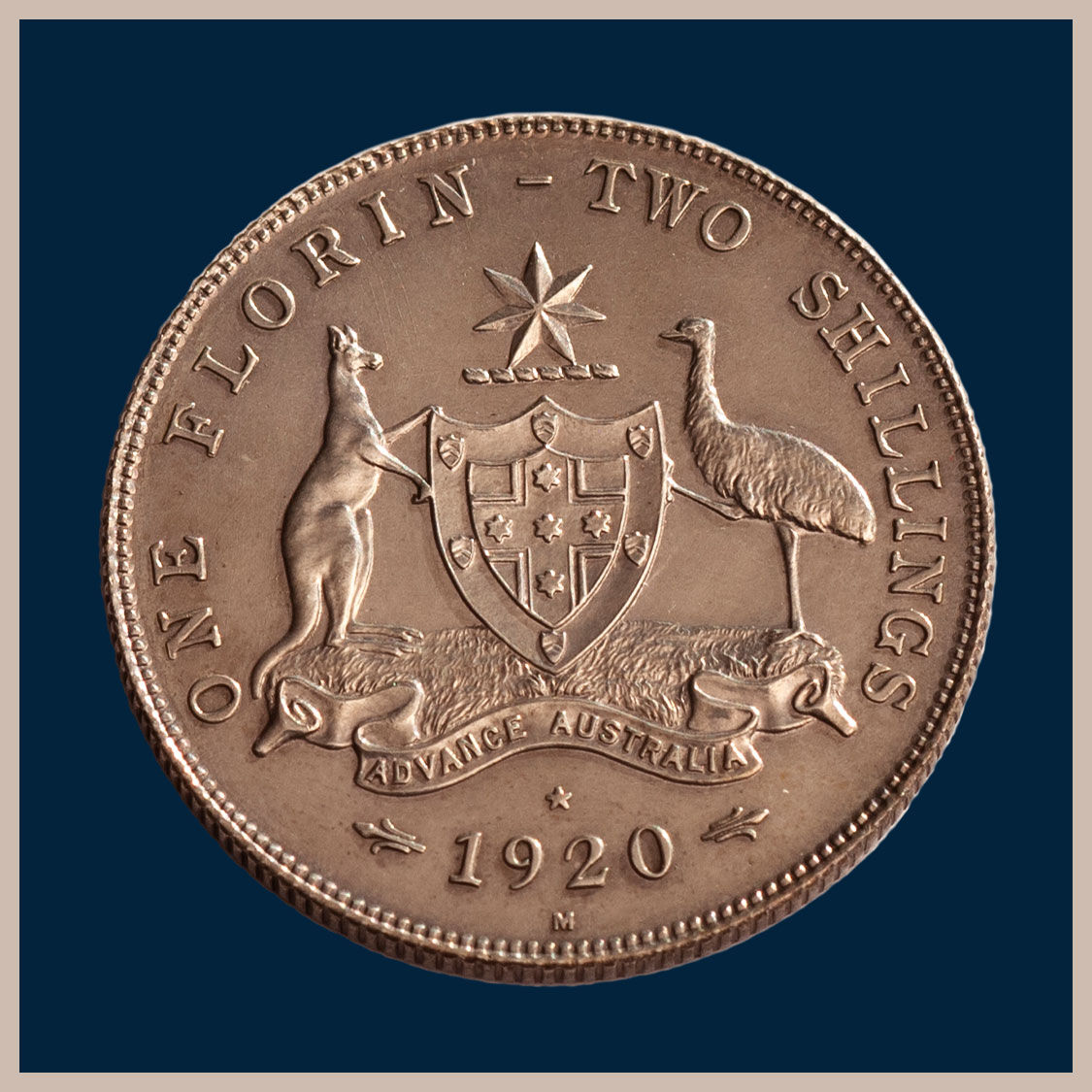
Melbourne Mint
1920 Star Florin
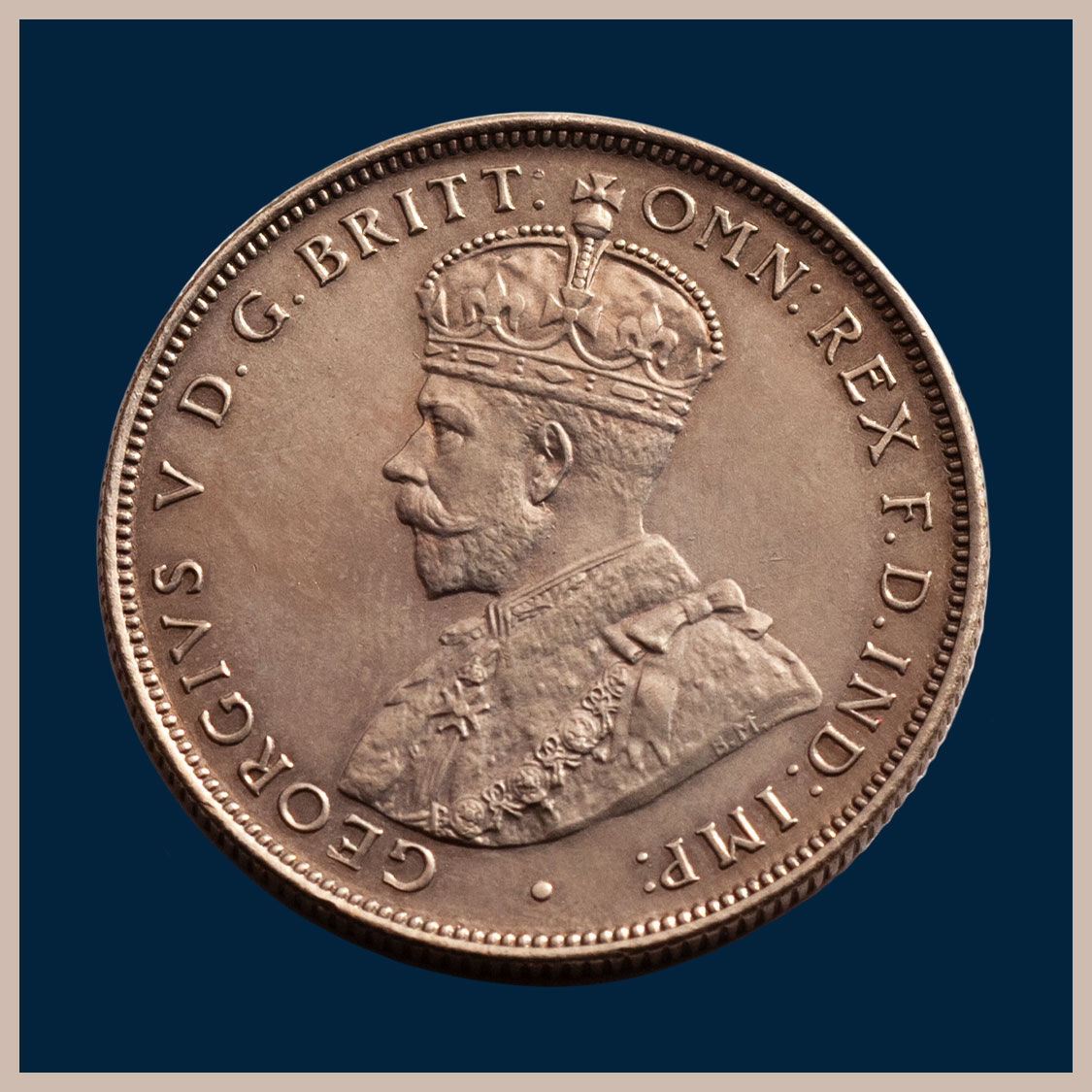
Melbourne Mint
1920 Star Florin
The 1920 florins, showing the star above the date, were prepared as a result of a sudden rise in the price of silver that caused Great Britain and many other countries to reassess the silver content of their respective currencies.
Britain abandoned around 800 years of tradition when it reduced the finesse of its Sterling silver (92.5% pure) coins to an alloy of 50%. Canada also moved from the 92.5% standard down to 80% while British West Africa dropped silver issues completely in 1920 in favour of nickel and nickel brass coins.
Australia considered a similar move but in a gesture which cynical taxpayers of today would find very refreshing, the government wanted the public to be completely aware that the new coins would contain less silver.
According to the former numismatic curator of the Museum of Victoria, John Sharples, the normal order for 1920 dies for the silver coins had been placed in July 1919. At that time the intrinsic worth of the silver was less than the face value of the respective denominations and so no special instructions were issued in respect to the dies being prepared by the Royal Mint in London.
However by March 1920 the situation had changed drastically. According to John it was decided to prepare new dies which featured smaller date figures to differentiate the debased coins from the earlier issues.
Judging from correspondence that came back from London, it would appear that the mint had already started work on the dies or was too busy with other projects. A suggestion came back that a star above the date would not only be more noticeable but could be produced more easily and quickly than reworking the date.
This change was accepted by Melbourne and working dies for 1920 and punches for 1921 were ordered with the star. By August 1920, the Melbourne Mint had received thirty pairs of working dies for the florin and shilling denomination.
By the time everything was in place the silver crisis had passed. The silver price dropped, and neither the reduction or a circulation version of the 1920 florin eventuated.
No 1920 dated florins were issued for circulation. Three other denominations were struck for circulation in 1920, the shilling, sixpence and threepence. None carried the star. On some of the 1920 shillings (and even the sixpences) a small indentation above the date can be seen in high-grade coins, where the star has been removed on the die.
Strangely enough, the 1921 shilling still carried the star, although the silver crisis had long passed.
The excessively rare Melbourne Mint 1920 Star Florin, FDC
Ex Morton & Eden London 2007
Price: $95,000
Sale number 24, conducted by Spink Auctions (Australia) in March 1988 was one of the company's most important auctions; a bicentennial celebration of all that was great in the Australian rare coin industry.
The breadth and depth of excessively rare, high quality coins was compelling and overwhelming and was an event that is unlikely ever to be repeated. The auction made history!
Out of the glittering array of esteemed rarities, a 1920 Star Florin was chosen to appear on the front cover of the catalogue.
This is perhaps the simplest and easiest way of conveying the importance of the 1920 Star Florin to the industry.
The coin is Australia's greatest florin rarity - the rarest florin struck for circulation. One of only seven struck at the Melbourne Mint, three of which are held by private collectors, and this example with superb detail and fabulous satin surfaces.
If further accolades are required. The Numismatic Association of Australia (NAA) issued their inaugural journal in July 1985, a publication that continues to this very day. The first edition featured the 1920 Star Florin on the front cover!

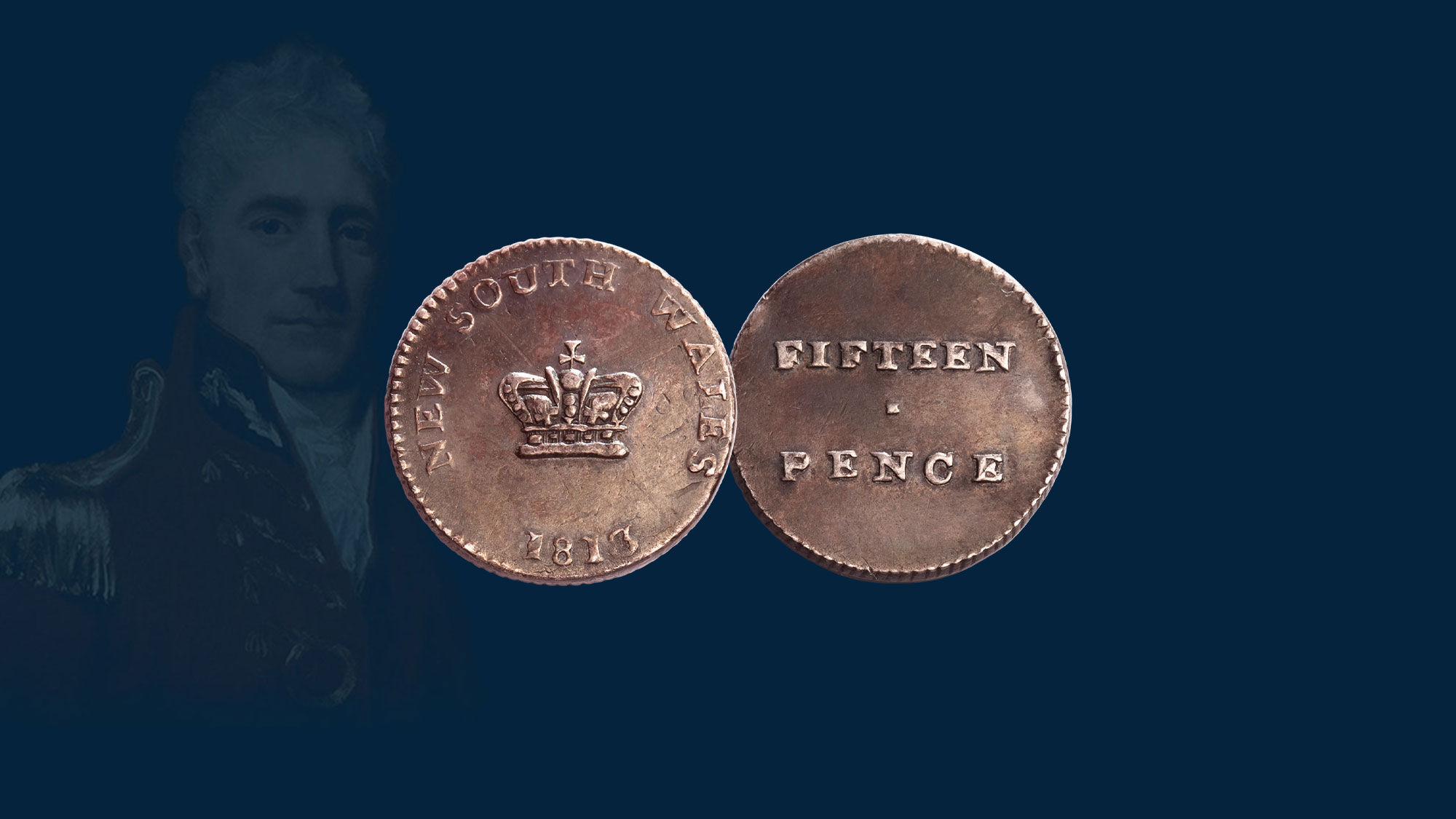
When you look at this 1813 Dump in your hand, the fields are like glass and very reflective. The design details are super-fine and clearly visible to the naked eye. And that’s a sign of a high-quality coin. This is a superior quality example of the nation’s first coin, technically ranked in the top five per cent. Over and above its quality ranking this coin has attributes that are highly prized, traits that you simply don't see in every Dump. For a start there is the 'H’ for Henshall on the reverse, the mark left by the nation’s first mint master that guaranteed his fame. On the obverse, there also is evidence of the original Spanish Dollar design from which it was created. Intact edge milling, the minting authority's ploy to prevent clipping of slivers of silver from the edges. And the elusive dot above the ‘3’ in the date 1813. A Dump that offers the lot.
Click here for more details on this Product
The buyer that pursues a top quality Dump will find the task extremely challenging. It can be years before a premium quality example comes onto the market and decades before the very best becomes available. And that statement is said in the knowledge that there are perhaps 800 Dumps, across all quality levels, available to private collectors.
The Dump with a value of fifteen pence circulated widely in the colony, the extreme wear on most Dumps evidence that they saw considerable use. The Holey Dollar being a higher valued piece, at five shillings, had a narrower band of circulation.
So, while the Dump may seem the diminutive partner of the Holey Dollar, the reality is top quality Dumps have authority. They are extremely rare, in fact far rarer than their holed counterpart in the same quality level. Official Bank of New South Wales records show that in 1820 the bank held 16,680 Holey Dollars and only 5900 Dumps. Considering that 39,910 of each were released into circulation, the figures reflect the greater circulation of the smaller denomination Dump.
Top quality Dumps are extremely rare and highly valued.
Documentation as to the method of manufacture of the Holey Dollar and Dump has never been found. It is however safe to assume that whatever machinery was employed, it was hand operated as the first steam engine did not become operational in the colony until 1815.
Likely production options were the screw press, drop hammer or hand-held punch with the drop hammer method onto a pre-heated plug generally regarded as the most likely.
There is no doubt that heat was involved in the creation of the Dump. When the disc fell out of the centre of the Spanish Dollar, it still bore the original dollar design of a four quadrant shield, housing a lion and castle in each quadrant. And the shield's cross-bars. High temperatures obliterated the original Spanish Dollar design from most examples.
Those Dumps that retain the original dollar design elements are highly prized.
The high temperatures also caused an expansion of the metal disc that fell out of the dollar. The very reason why the Dump is always larger than the hole in the Holey Dollar.
The haphazard, obliquely grooved edge milling found on the dumps indicates that a 'fiddle method' was the final step in the production process whereby a roll of Dumps was rotated under pressure against a grooved cylinder.
While no one knows the method of manufacture, history records that convicted forger and emancipist, William Henshall, was hired to create the nation's first currency, effectively our first Mint Master. He declared his involvement in the creation of the Dump - and the Holey Dollar - by inserting his initial, an 'H' for Henshall, on some - but not all - of the reverse dies of the Dump. And some - but not all - of the Holey Dollar counter stamp dies.
Amazing to think that a convicted forger created the first 'mint mark' on Australia's first coinage!
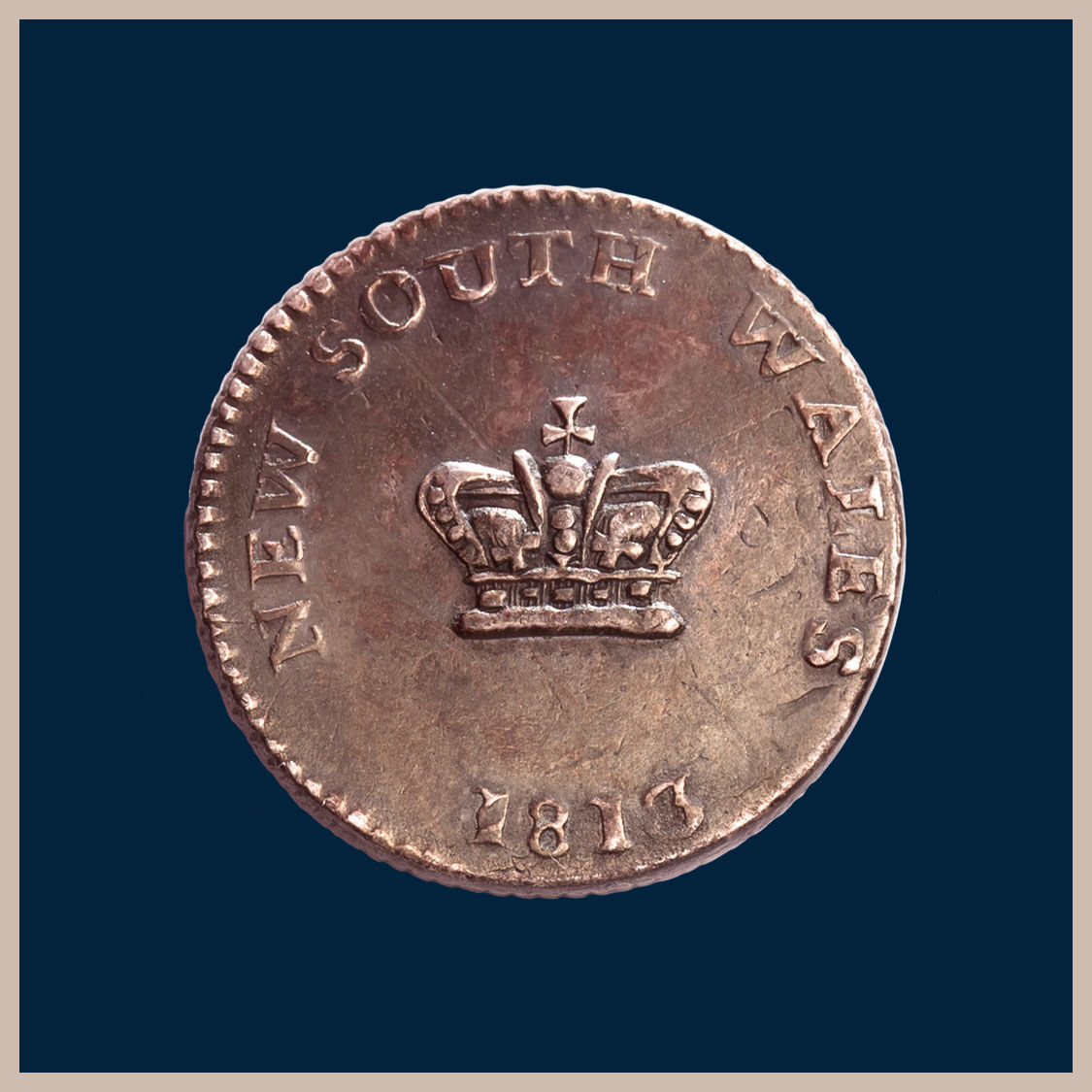
1813 Dump
struck using the A/1 dies
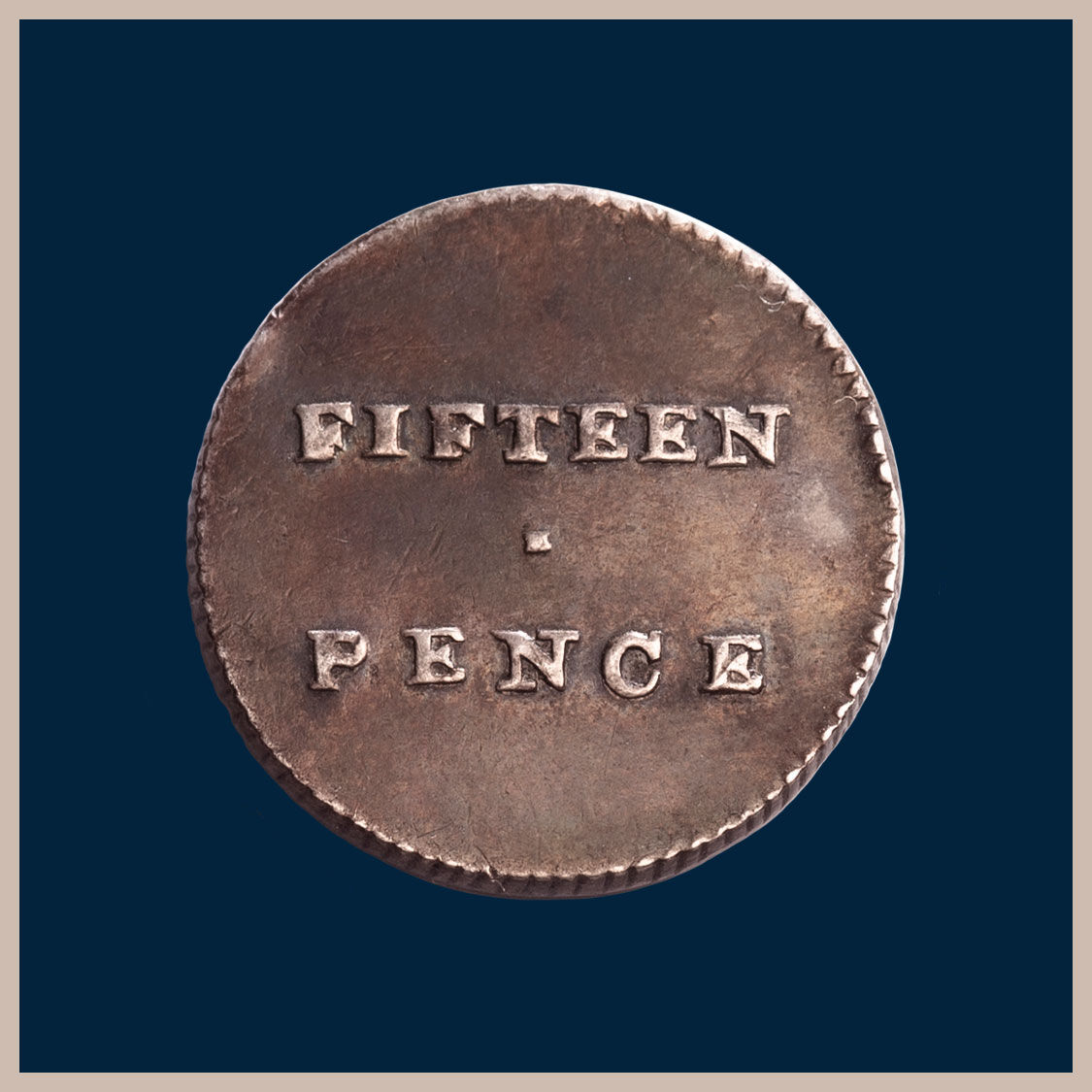
1813 Dump
struck using the A/1 dies
This is a classic example of the 1813 Dump.
1. The 1813 Dump circulated widely in the colony, the extreme wear on most Dumps evidence of its extensive use. The average quality Dump is graded at Fine to Good Fine, with this coin at least four grades higher at Nearly Extremely Fine / Extremely Fine. (See chart below)
2. Struck with the A/1 dies, the crown is classically well-centred and well struck, the design definition strong.
3. William Henshall inserted an 'H' into some (but not all) of the dies used during its striking. The 'H' is strong and three dimensional.
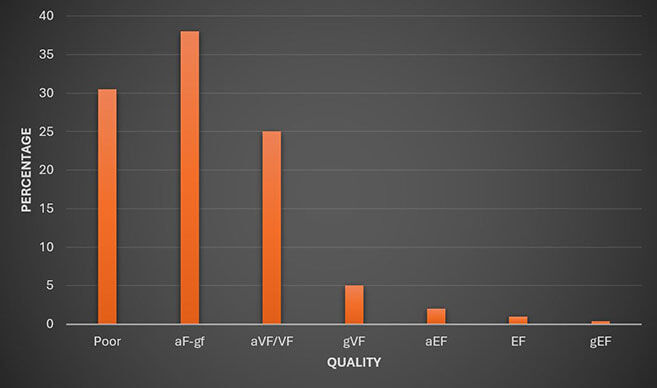
4. The denticles around the edge of the coin are evident, almost half way around. Complete denticles, all the way round, is a phenomenon that is rarely seen on the 1813 Dump.
5. The oblique milling around the edge is fully evident. (The edge milling was used as deterrent against clipping whereby the unscrupulous shaved off slivers of silver, reducing the silver content of the Dump. And making a small profit on the side.)
6. While the Holey Dollar clearly shows that it is one coin struck from another, in a less obvious way so too can the Dump. The design detail of the original Spanish Dollar from which this Dump was created is evident on the obverse. We refer to it as the under-type and it is not always present. Its existence re-affirms the origins of the Dump and is highly prized.
7. This Dump shows a 'dot' above the '3' in the date '1813'. This is almost certainly due to a pit in the die and only occurs in those coins struck with the type A/1 dies. And even then it is identified in very few type A/1 examples.
1813 Dump struck from A/1 dies, Nearly Extremely Fine / Extremely Fine and rare in this quality
When you look at this 1813 Dump in your hand, the fields are like glass and very reflective. The design details are crisp and clearly visible to the naked eye.
And that’s a sign of a high-quality coin.
This is a superior quality example of the nation’s first coin, technically ranked in the top five per cent.
Over and above its quality ranking this coin has attributes that are highly prized, traits that you simply don't see in every Dump.
For a start there is the 'H’ for Henshall on the reverse, the mark left by the nation’s first mint master that guaranteed his fame. There also is evidence of the original Spanish Dollar design from which it was created on the obverse. Intact edge milling, the minting authority's ploy to prevent clipping of slivers of silver from the edges. And there is evidence of the elusive dot above the ‘3’ in the date 1813.
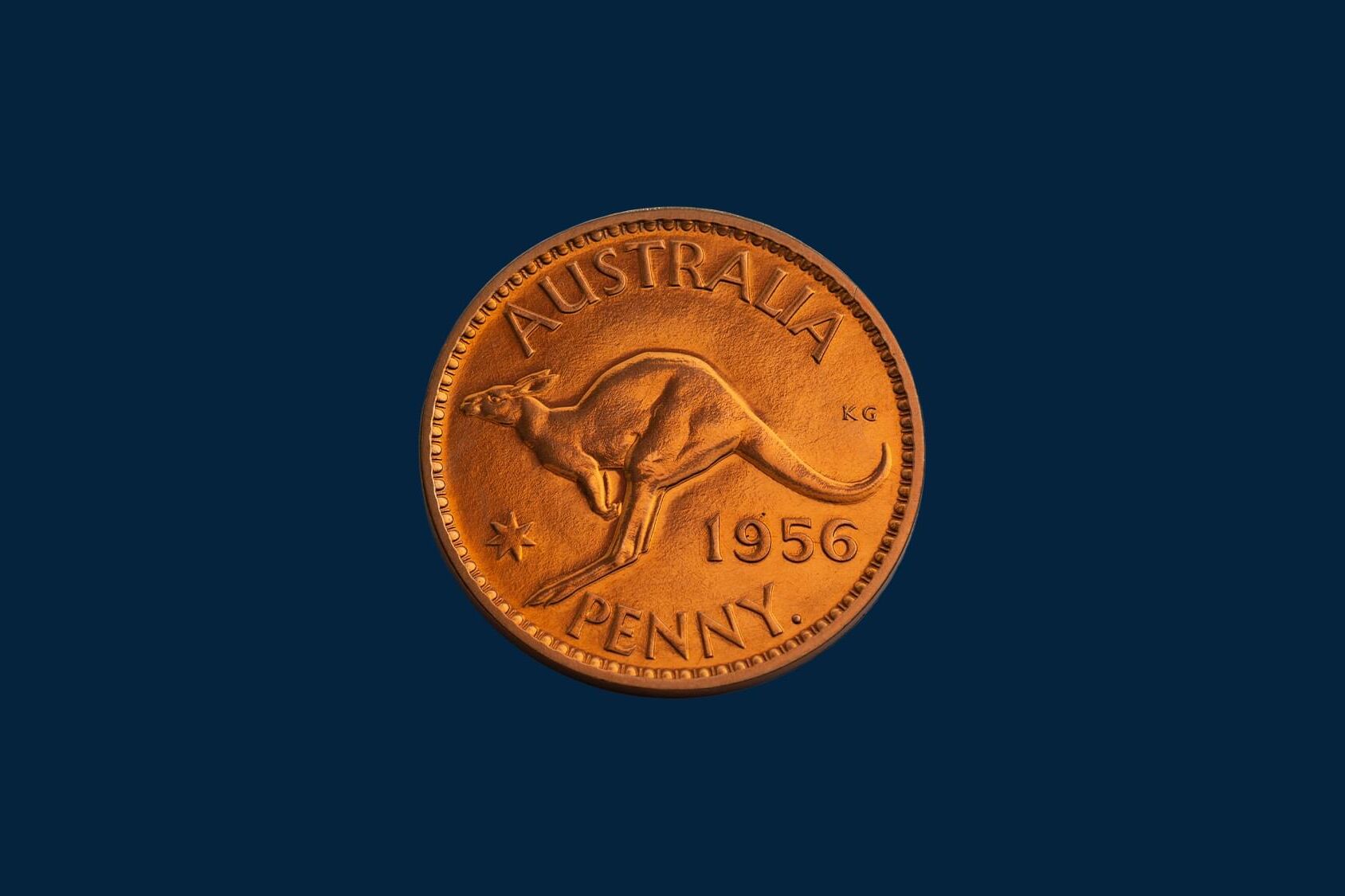
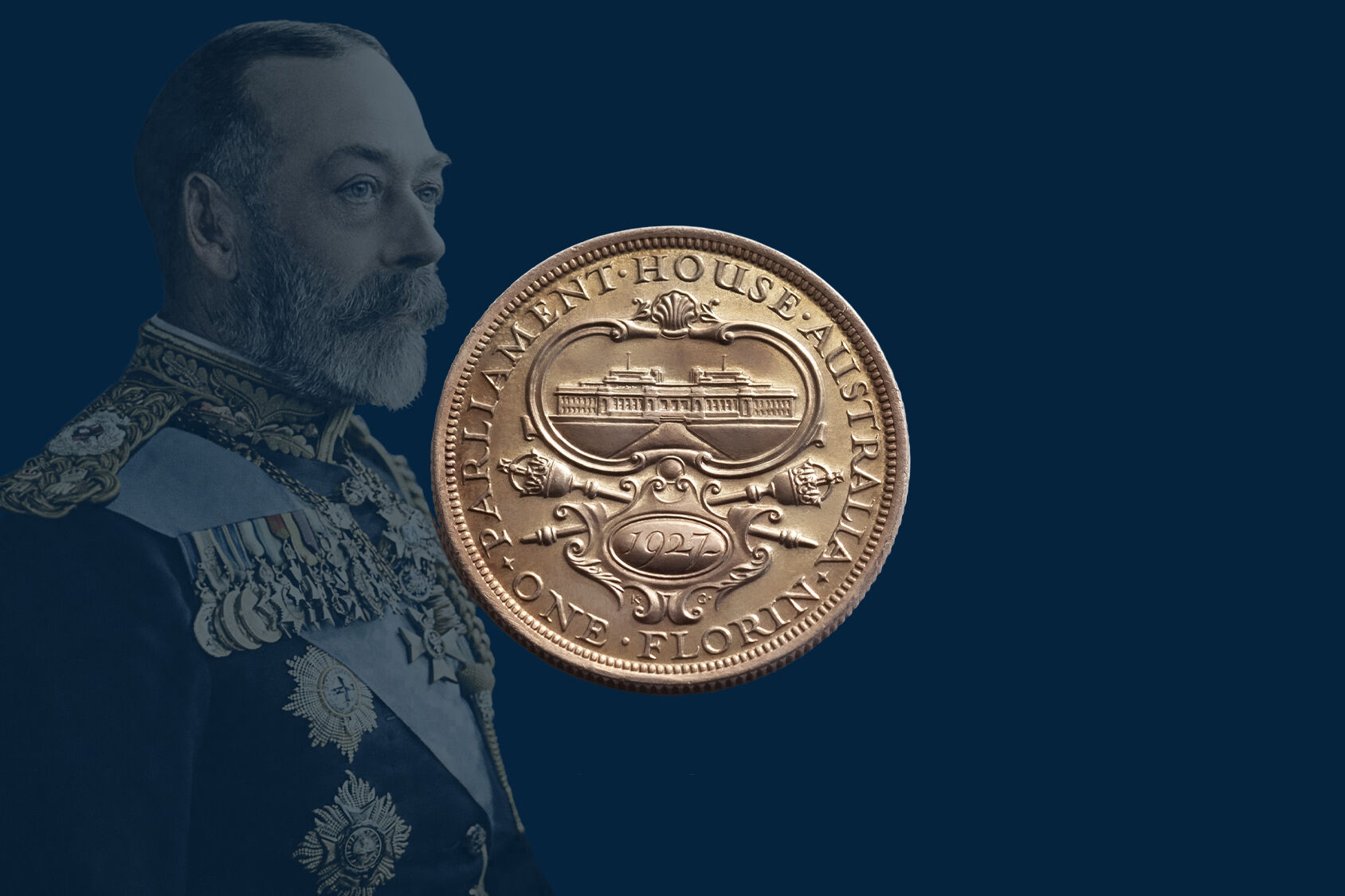
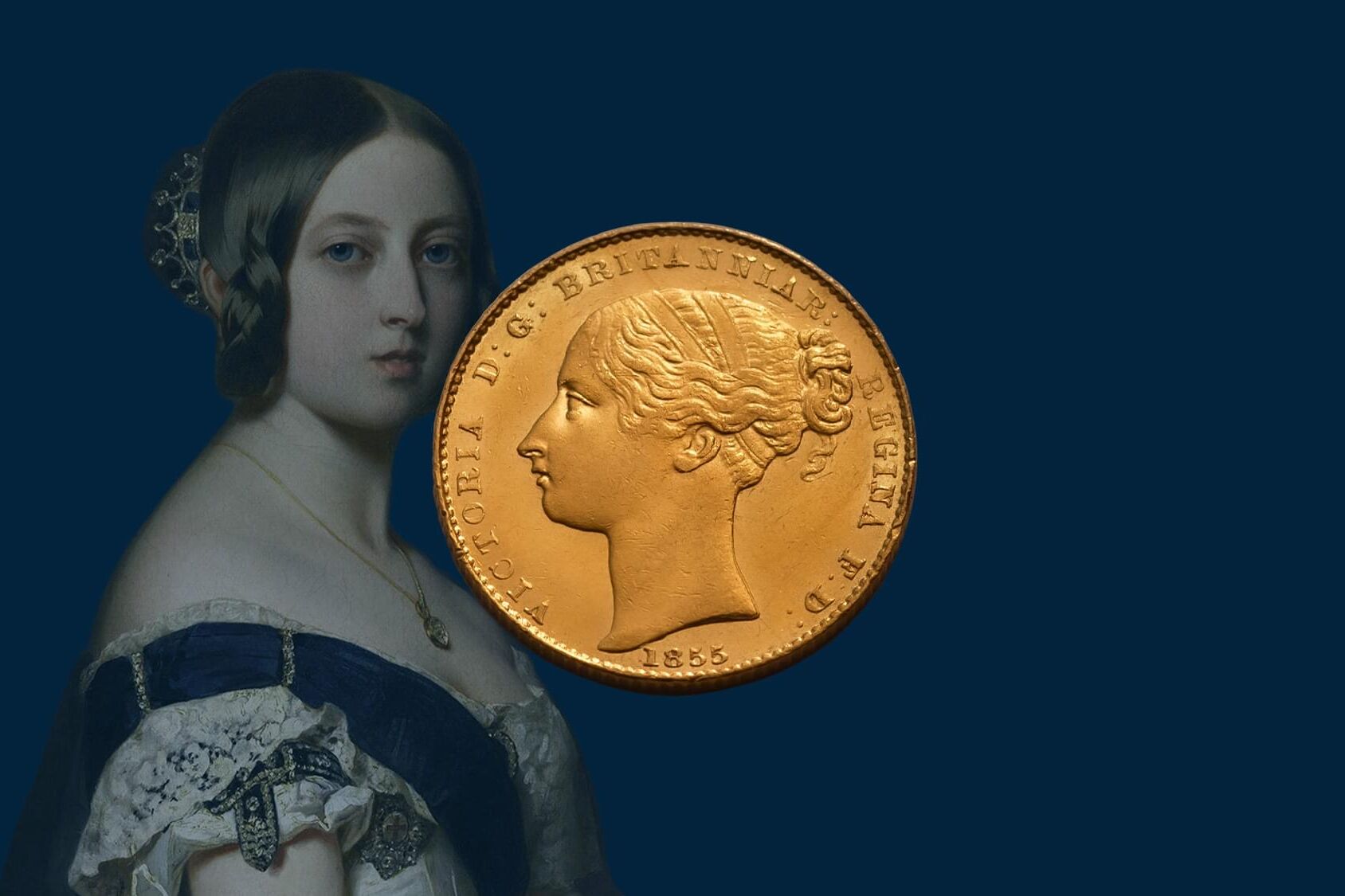
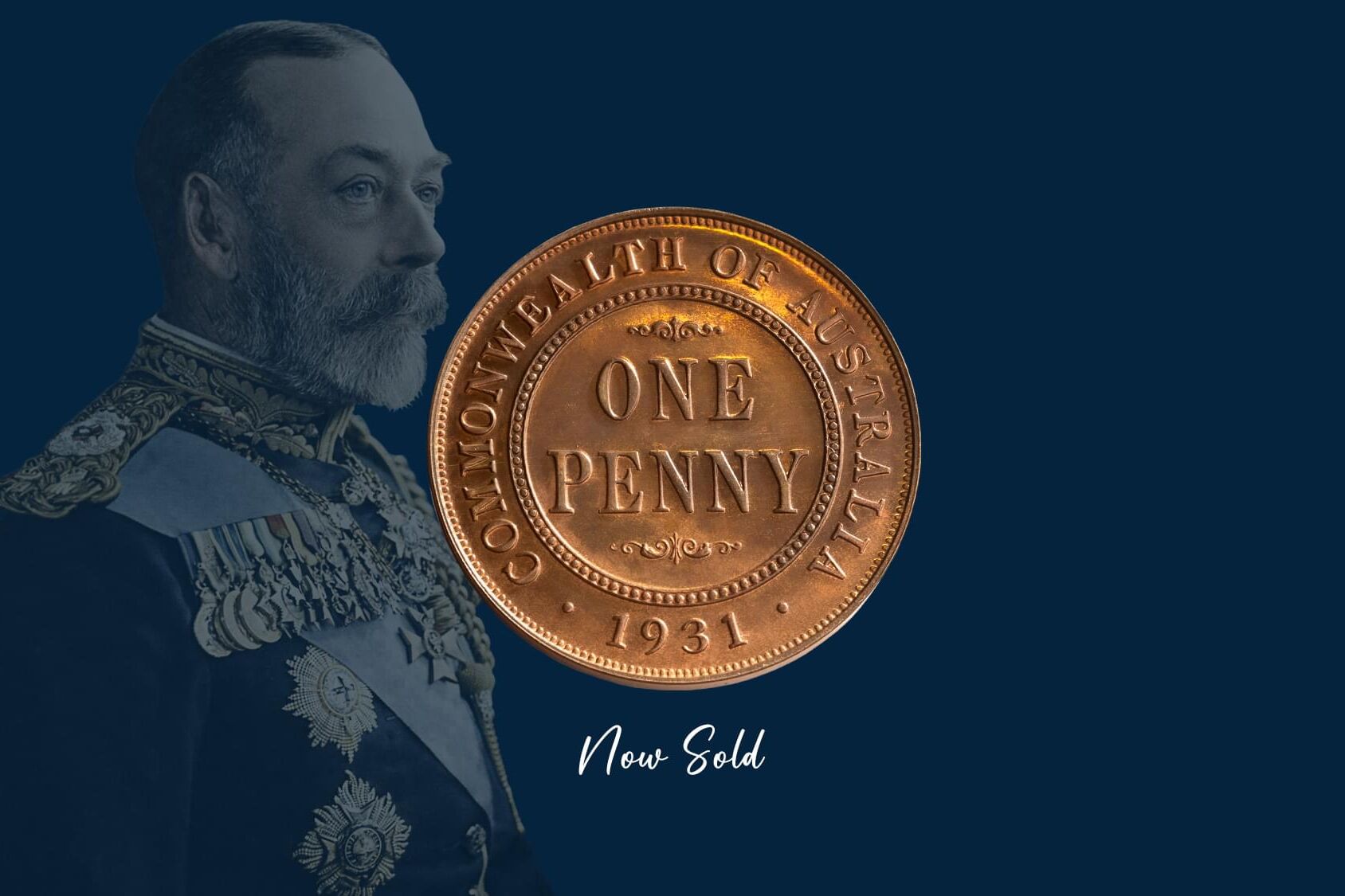
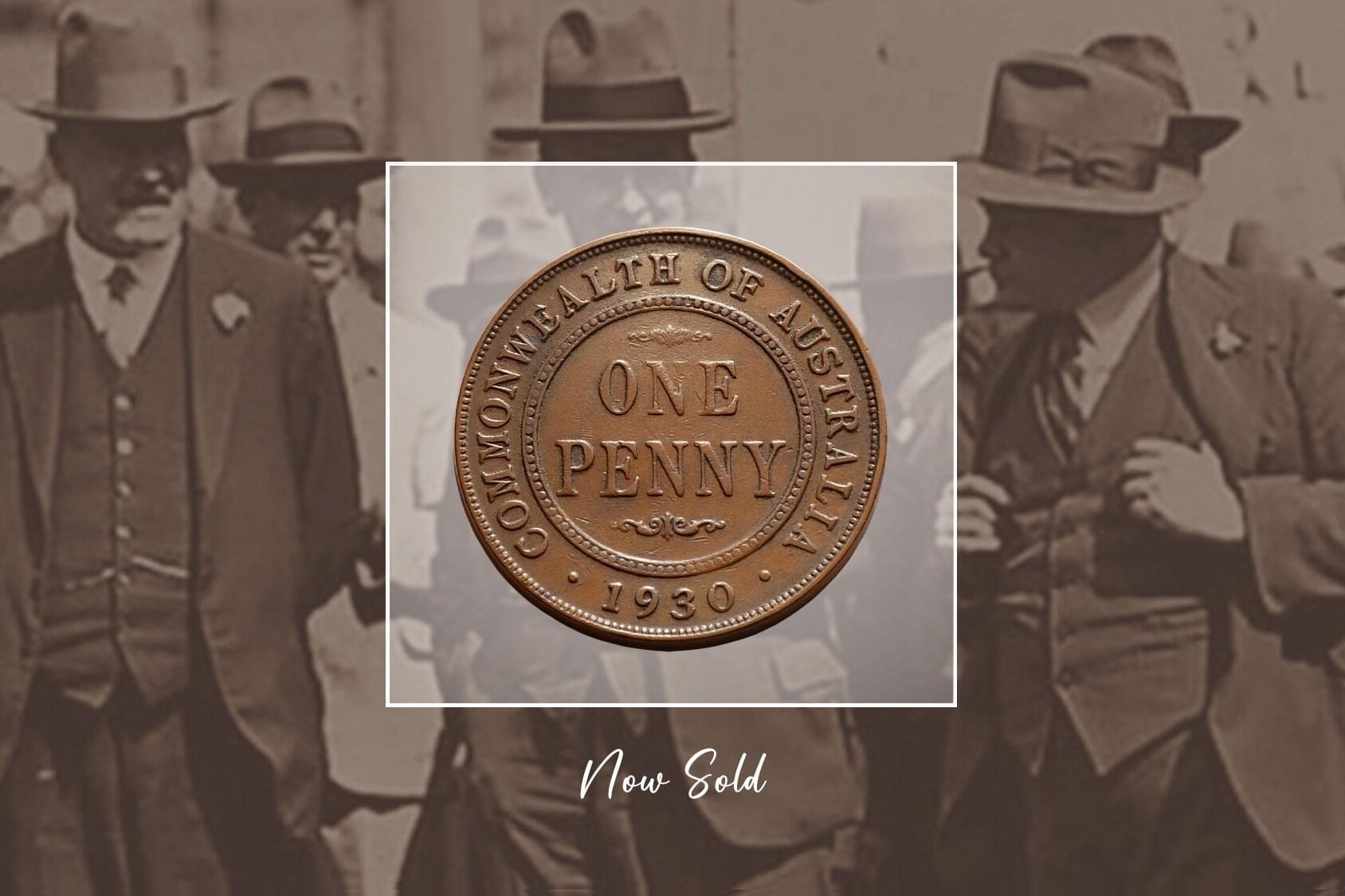
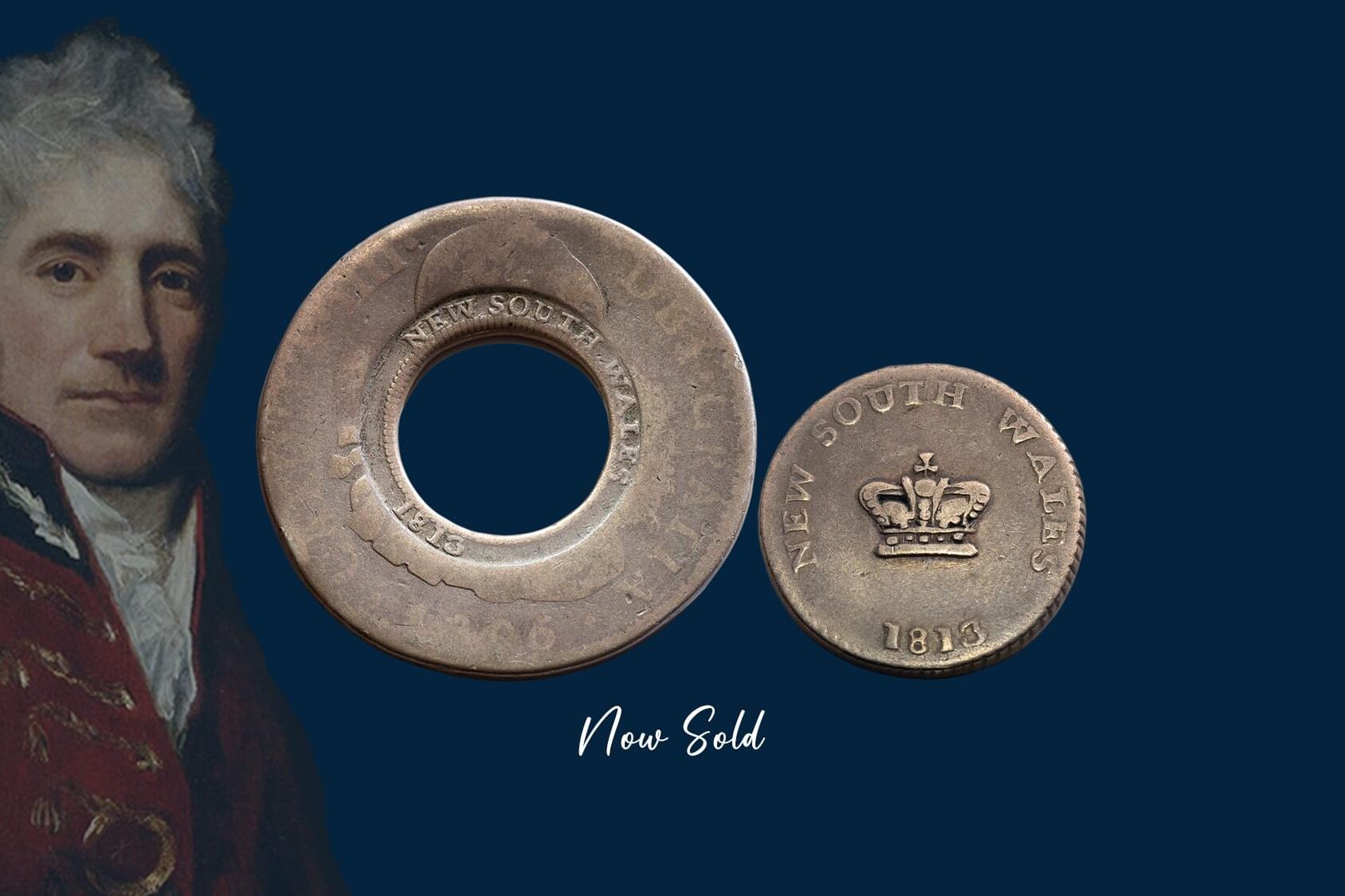
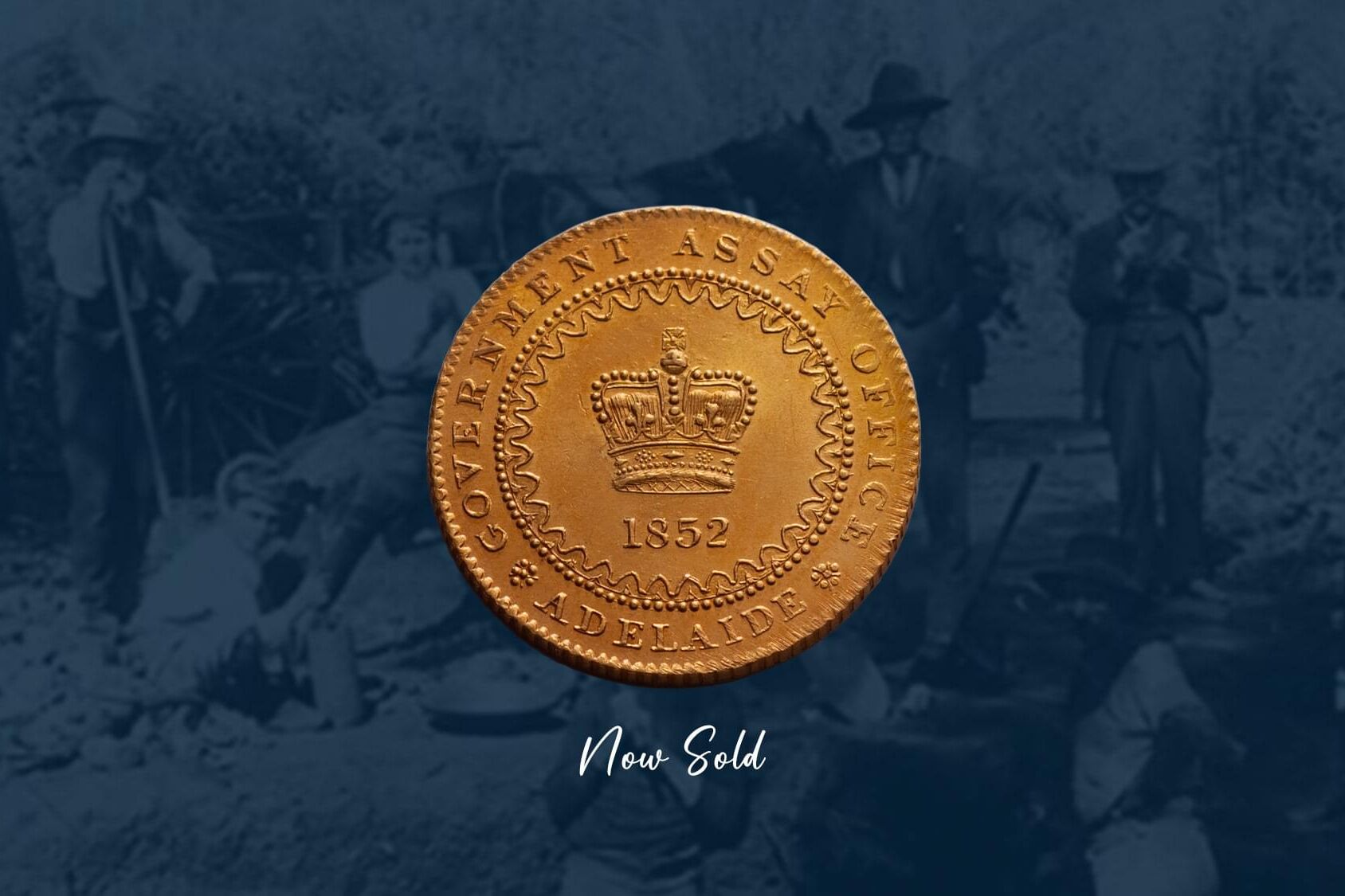
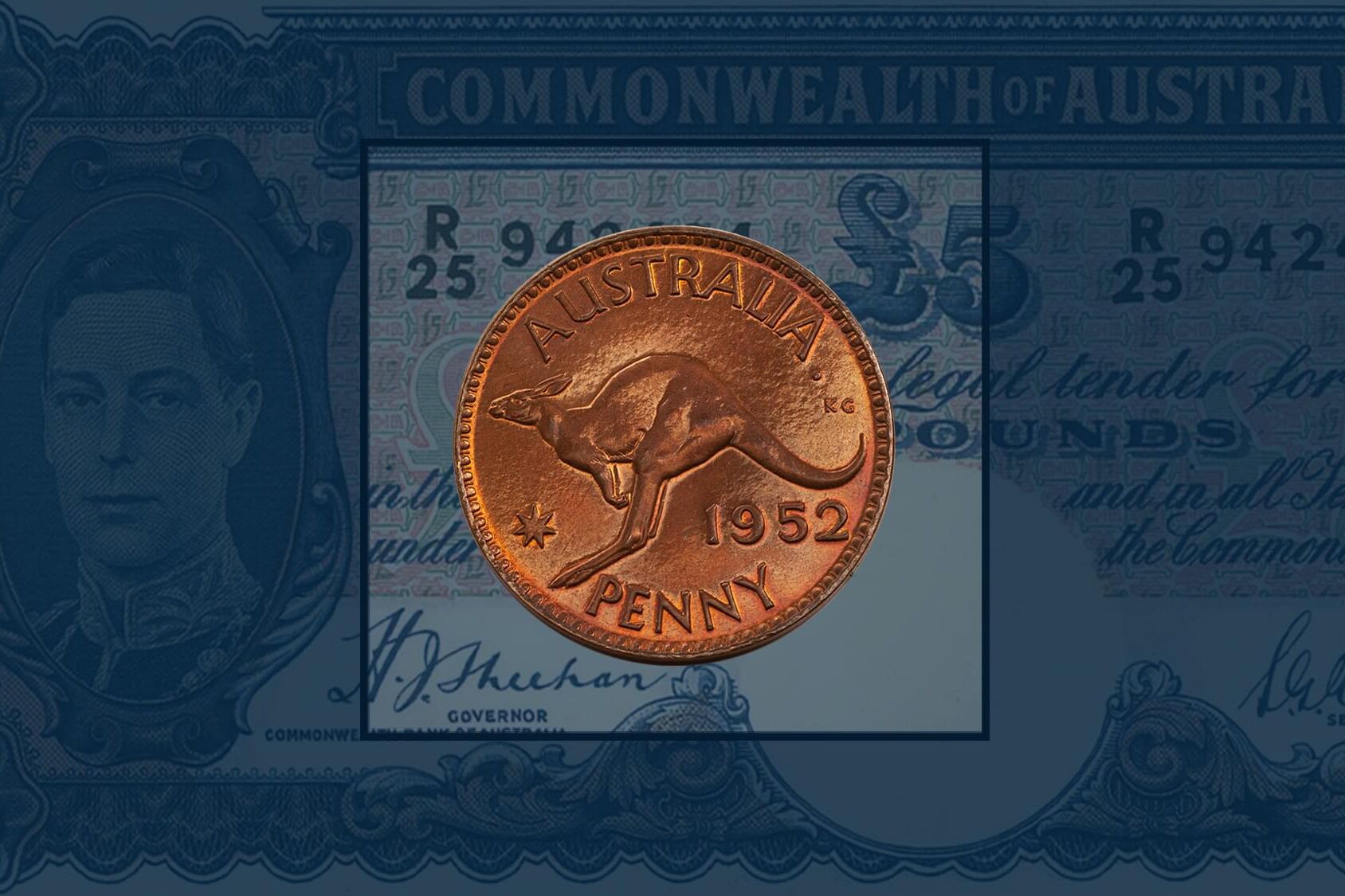
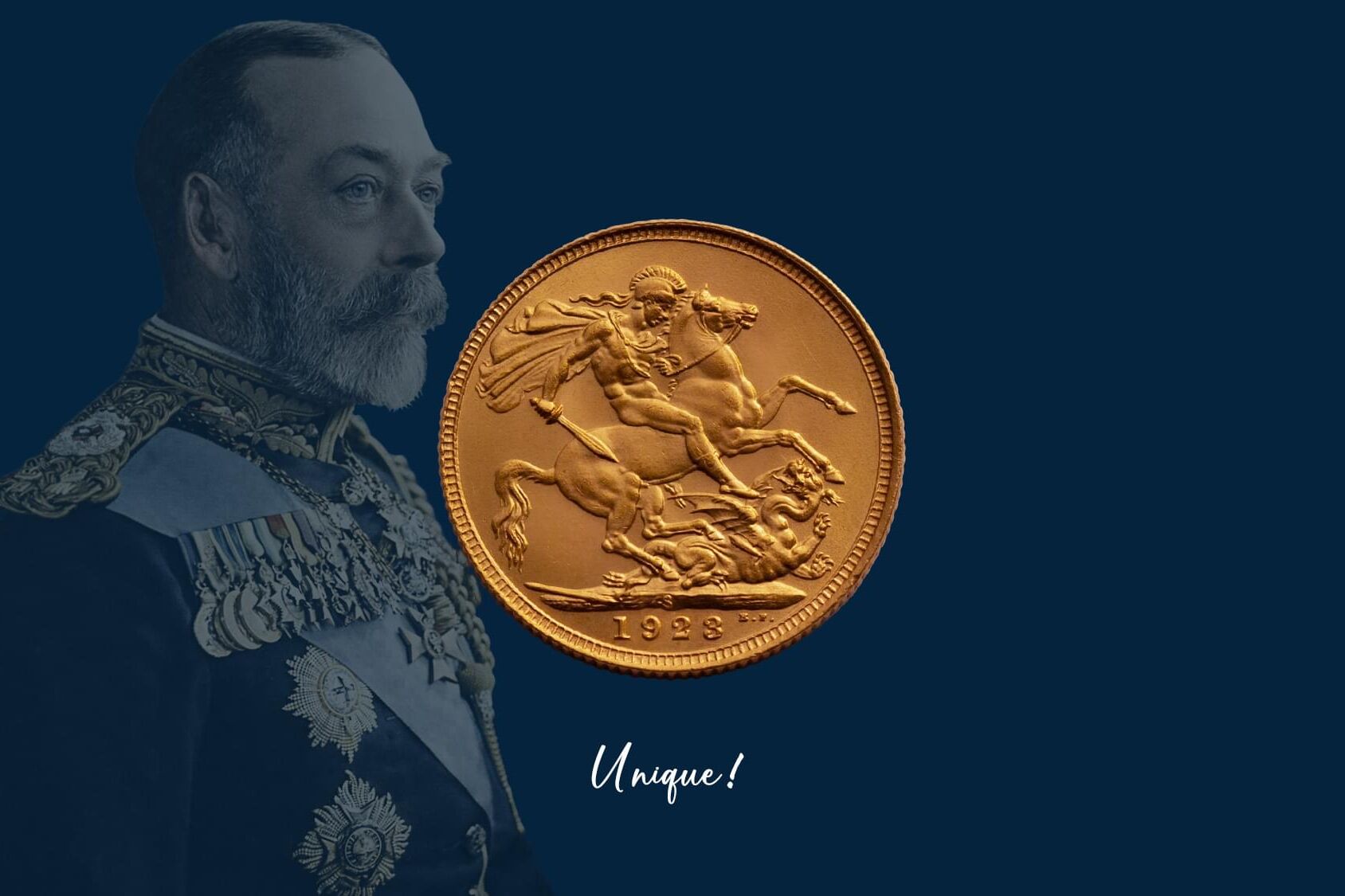
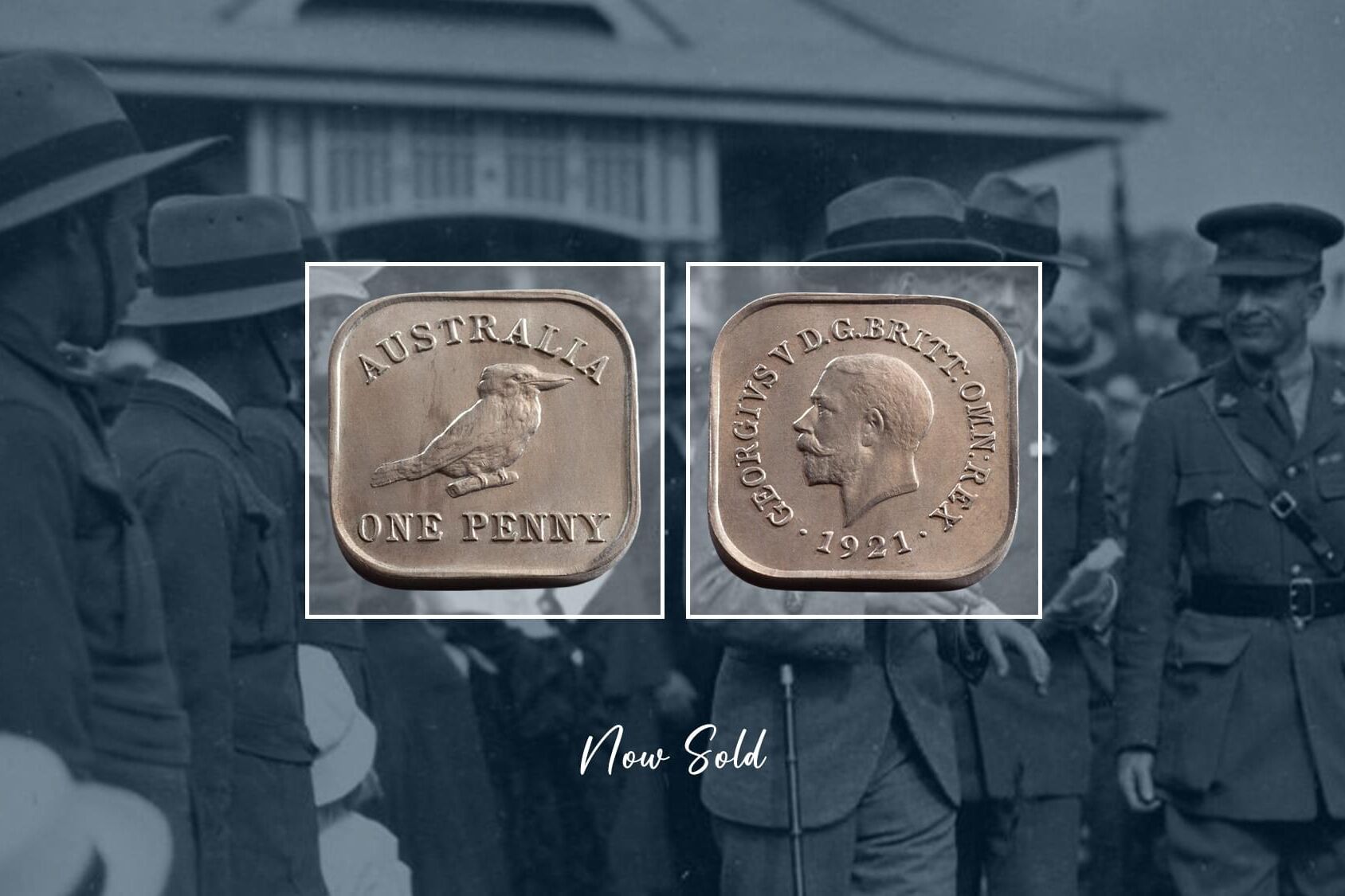
The intensity of this 1956 Perth Mint Proof Penny is amazing. It is an exceptional coin.
Just one glance and we knew that it could only have come from one of two sources, Melbourne collector Kevin Tierney or Country Victorian collector Dr Vince Verheyen. We checked our records and confirmed that it was the former. The coin was acquired by Tierney in 1989 while he was living in the U.S. from American coin dealer Karl Stephens. It had not seen the light of day for more than two decades. And it shows! Superb for quality and a solid blazing orange.
That this coin came from the U.S. is a further endorsement of its quality. It is known that the Perth Mint had developed a large export market for its early commercial proofs of 1955 to 1963 and American collectors were a prime target. And it is acknowledged that the quality of those coins sold into the U.S. were far superior to those sold locally.