1855 Sydney Mint Sovereign, with a particularly well struck reverse

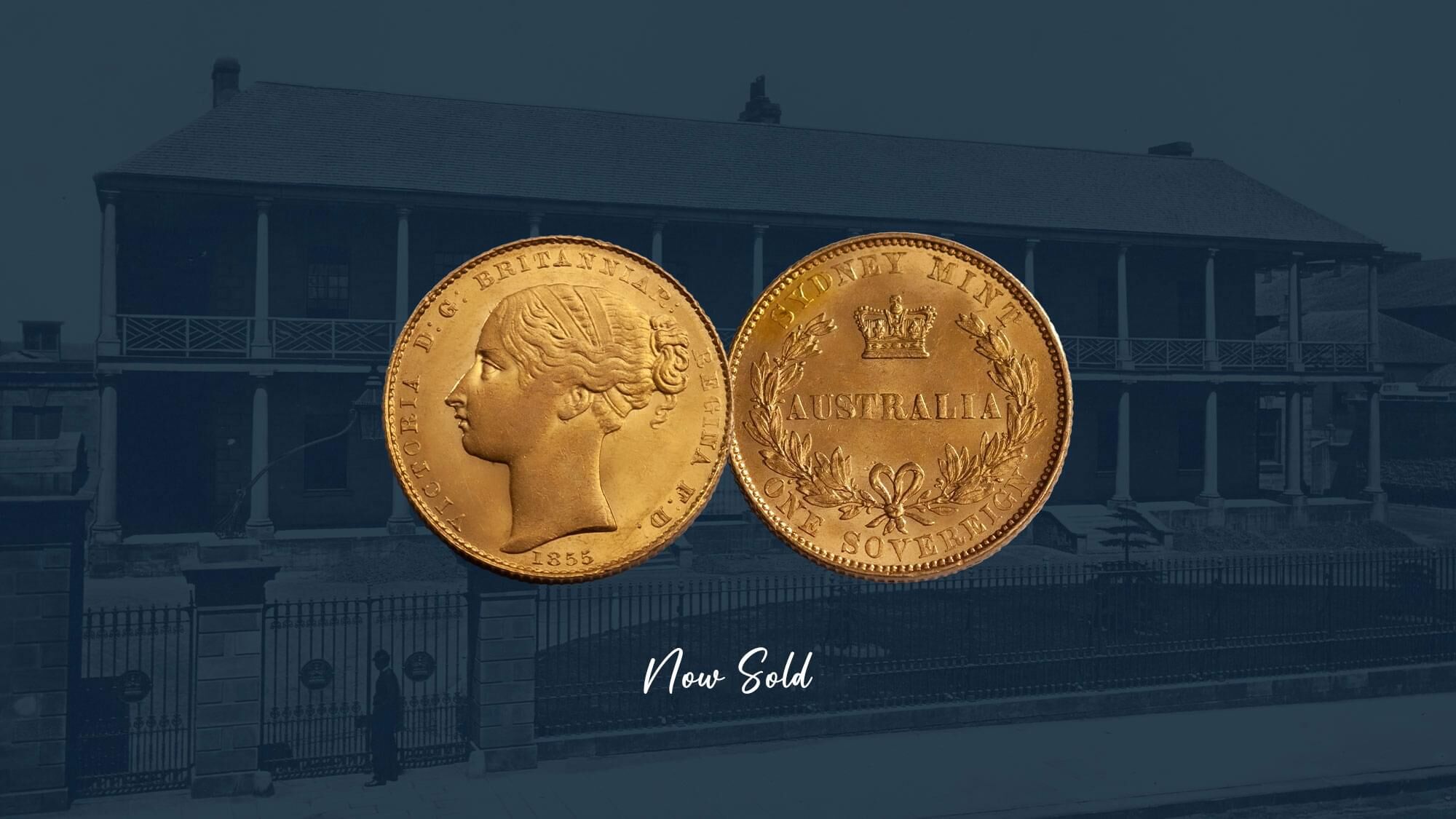
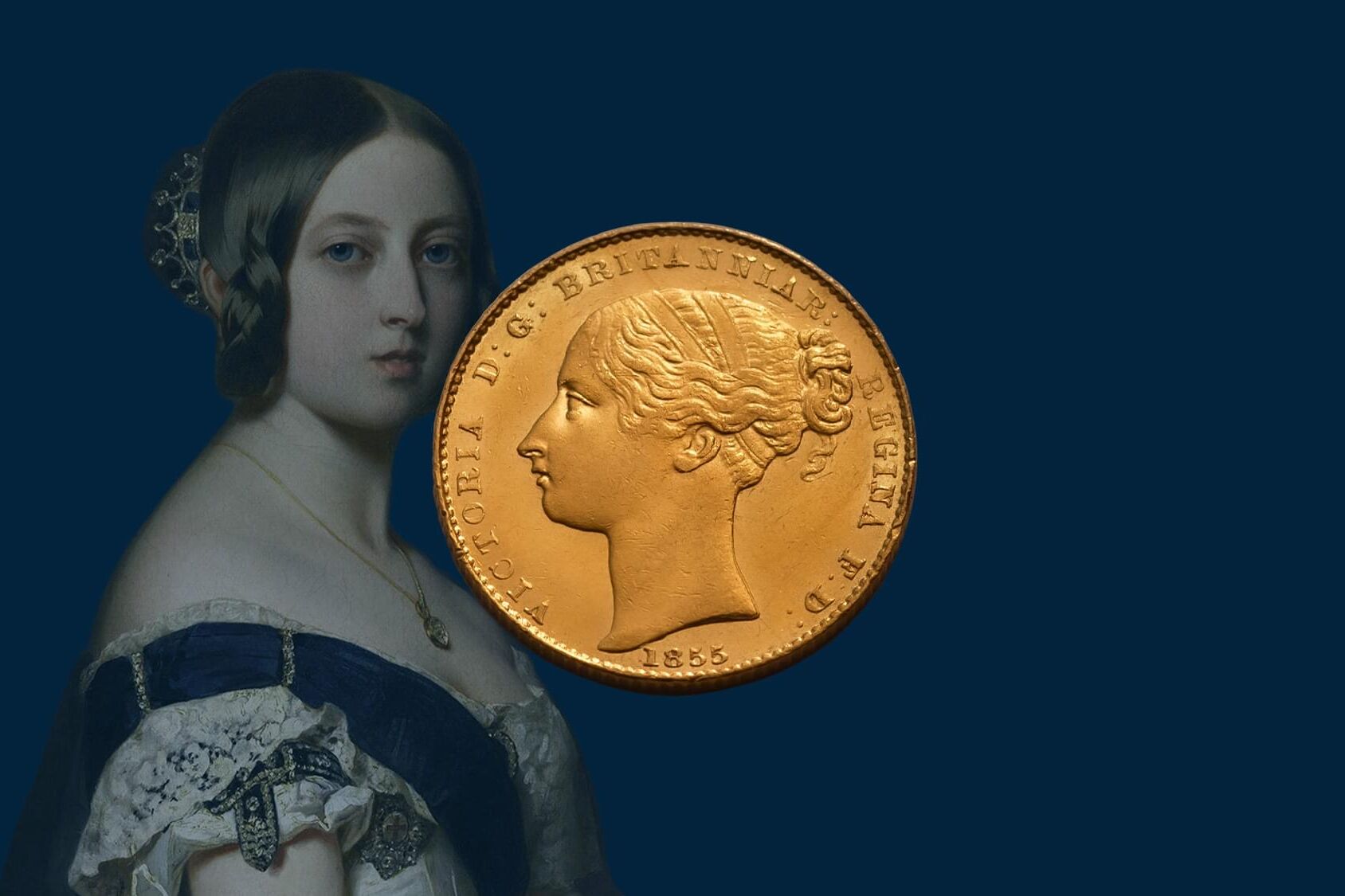
Australia issued sovereigns between 1855 and 1931 and while the appeal of the sovereign is enhanced by different versions featuring the effigies of various monarchs, no coin is as popular as the first Australian sovereign, the 1855 Sydney Mint Sovereign. And this example is a prize. A superior quality coin offered in Nearly Uncirculated / Uncirculated. Two things stand out when you look at the coin in your hand. The fields are smooth and lustrous. The reflective nature of the obverse is spectacular. And the detail on both obverse and reverse is super fine. Under the eye glass the coin continues to shine for the reverse is sharp, the cross on the orb at the top of the crown is complete, the fleur de lis on left and right are precise as are the pleats in the cloth. And so is ‘AUSTRALIA’ below the crown. And there is just a whisper touch to the hairline at the top of Victoria’s forehead.
When it comes to collecting vintage gold coins, collectors have two distinct options.
Collectors can acquire coins that were struck for circulation. Circulating coins were mass produced, hurled down a shute and into a barrel to be delivered to the banks, the mintages determined by Government and generally in the hundreds of thousands, if not millions.
Collectors can also collect coins that were struck as Coins of Record. Using standards and techniques far beyond that required for circulating currency, Coins of Record were minted to a proof or specimen finish and because the process was time-intensive, mintages were generally less than ten.
Each option, circulating currency or Coins of Record, presents the buyer with a vastly different sized pool of examples from which to choose. And very different challenges for procurement.
Average circulating gold sovereigns struck in years that have no special importance are generally readily available.
Once a buyer sets parameters on the quality and the dates being sought, the pool of specimens narrows and it is true that acquiring a key date gold coin that was struck for circulation, particularly one in premium quality, can be a journey in time that involves years.
The 1855 Sovereign is a key-date coin, the first year of operation of the nation's first mint and the mintage a minuscule 502,000 coins. And the quality of this sovereign is superb.
Would you sight one 1855 Sydney Mint Sovereign at this quality level on the market annually? Perhaps. More than one? We very much doubt it.
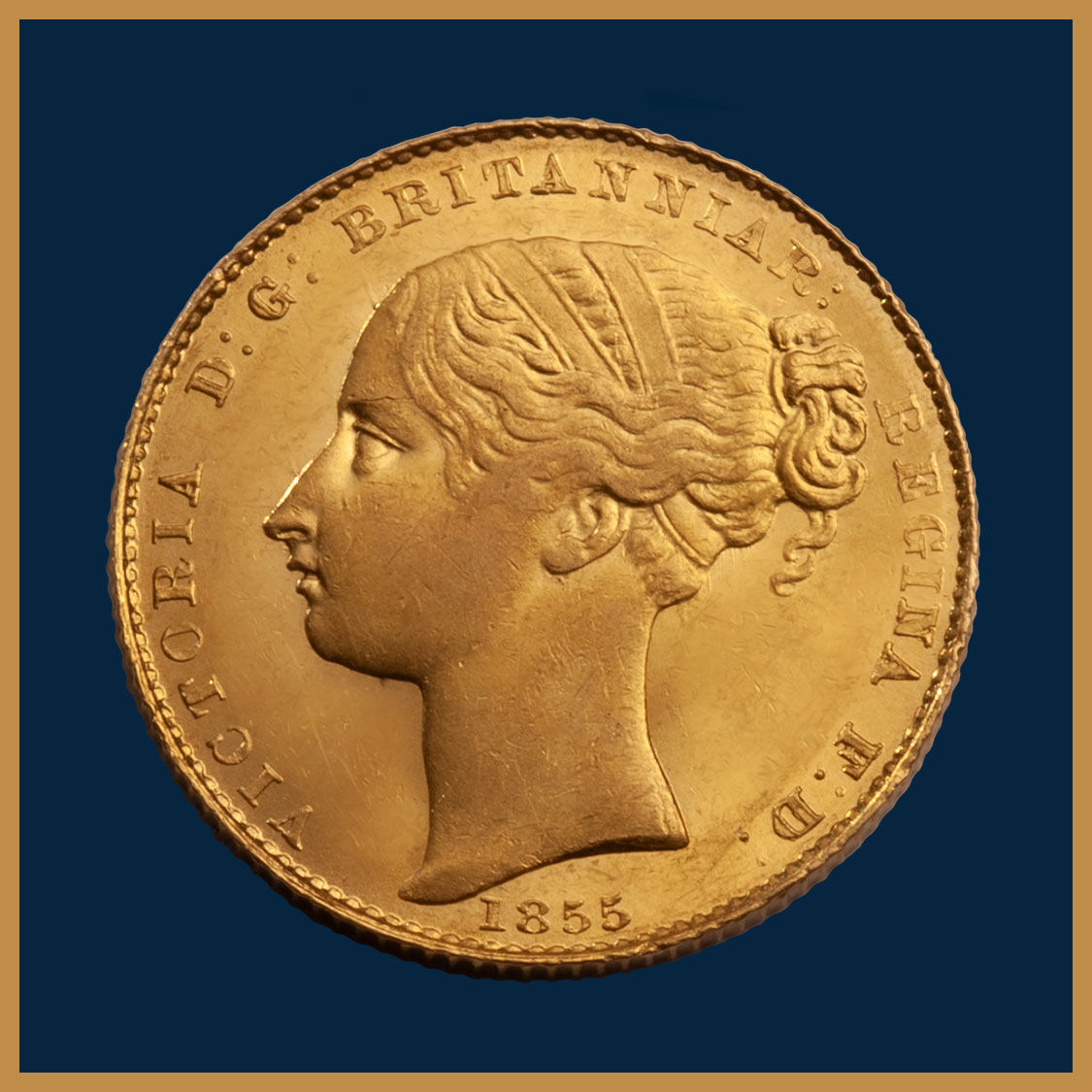
1855 Sydney Mint Sovereign
Nearly Uncirculated Obverse
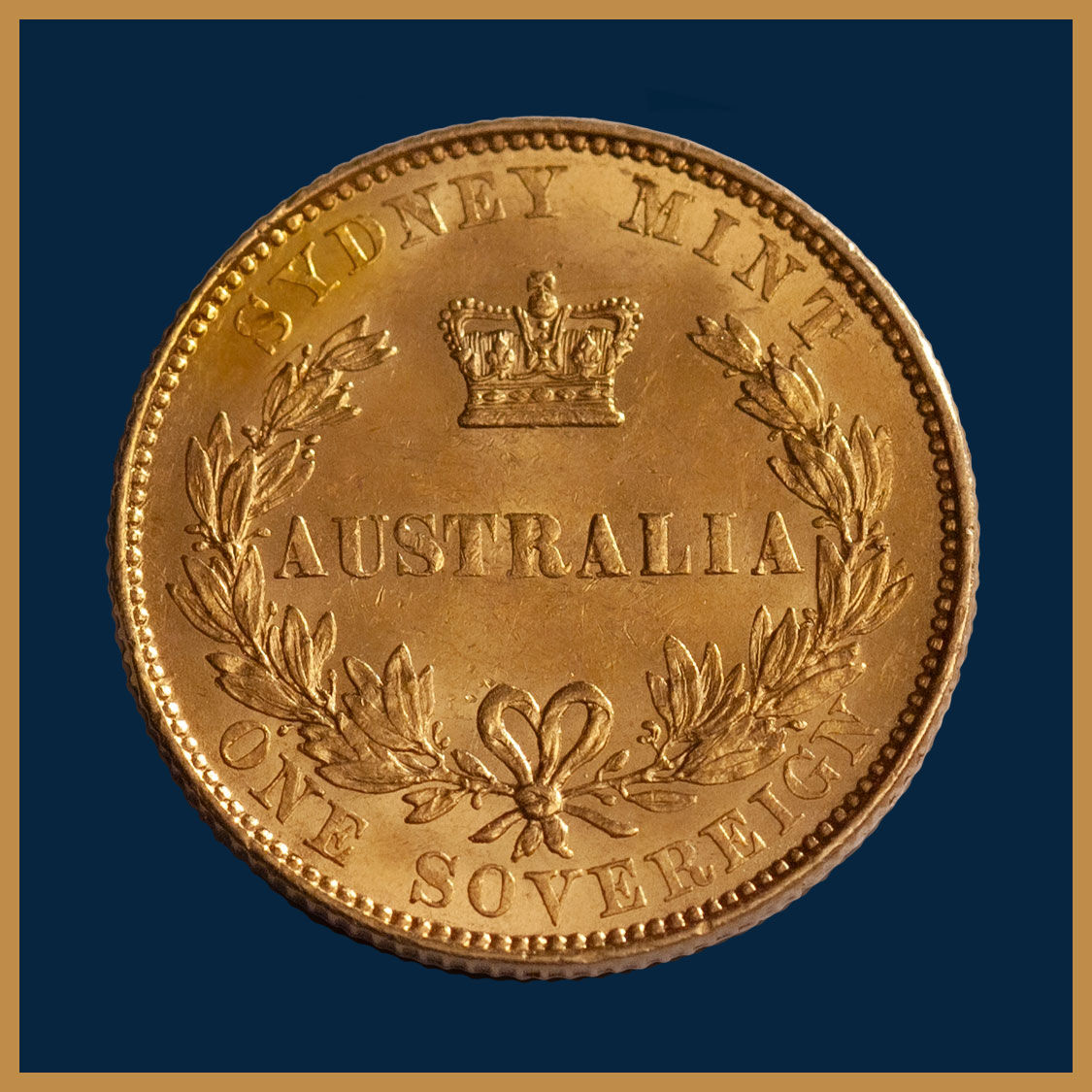
1855 Sydney Mint Sovereign
Uncirculated Reverse
Every circulating coin has a grading level at which serious rarity kicks in.
That is the point at which the balance between acquiring a coin as a collectible - and as an investment - shifts more towards the latter.
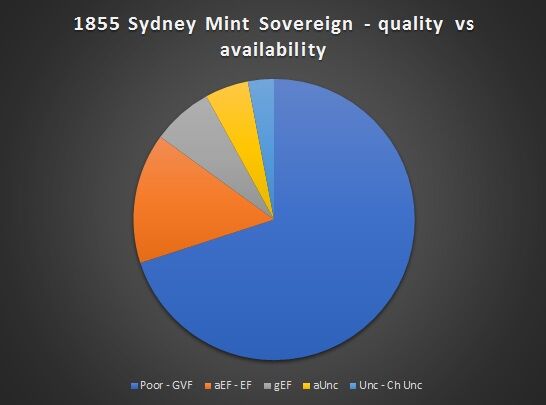
The pie chart shown here clearly shows that well circulated examples of the 1855 Sydney Mint Sovereign (in a quality range of Poor to Good Very Fine) are reasonably readily available.
While About Extremely Fine to Extremely Fine 1855 Sovereigns have reduced availability, the chart clearly shows that it is the coins graded between Good Extremely Fine and Choice Uncirculated that are exceptionally scarce.
1855 Sydney Mint Sovereign Nearly Uncirculated / Uncirculated
Price: $40,000
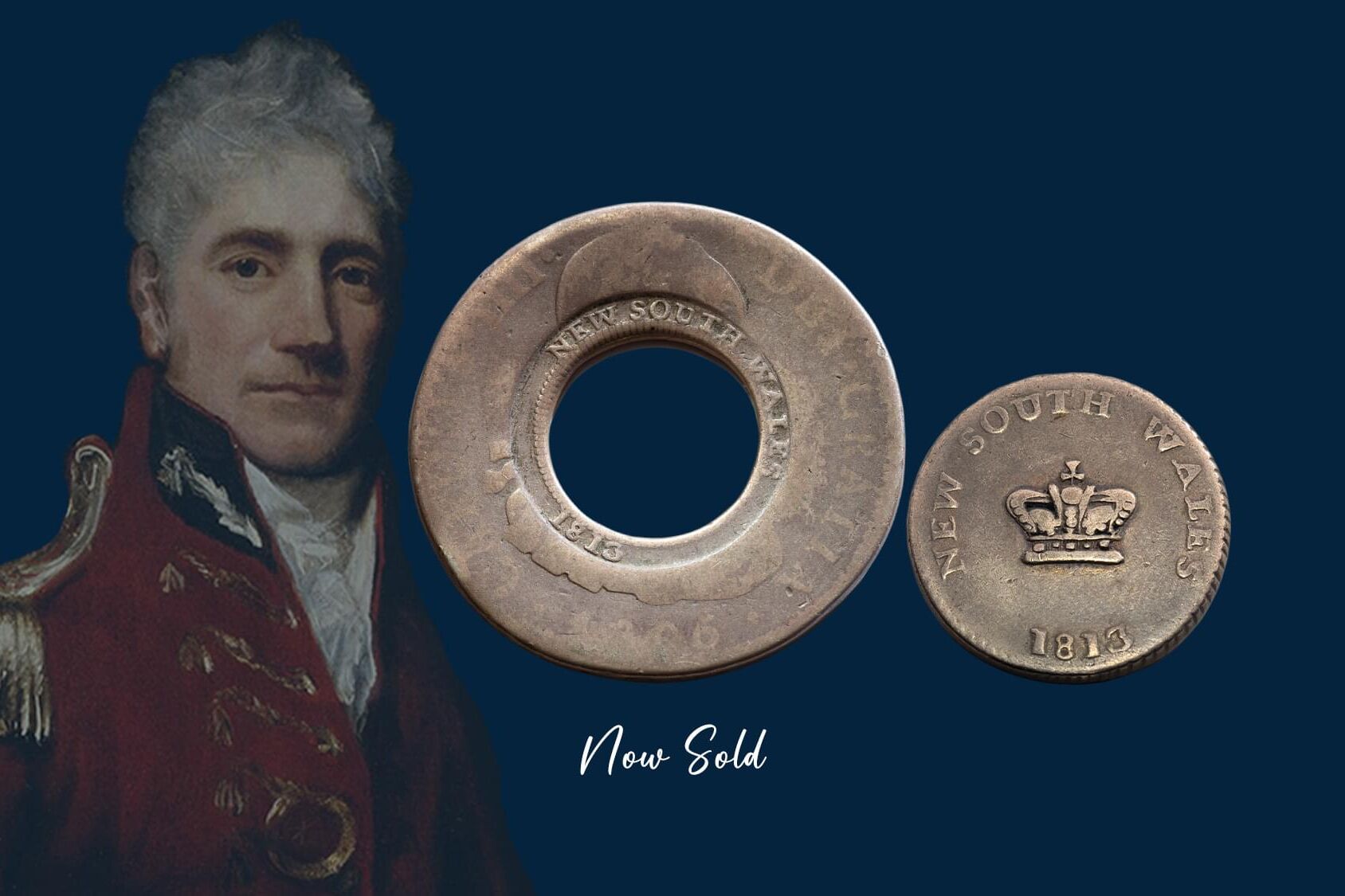
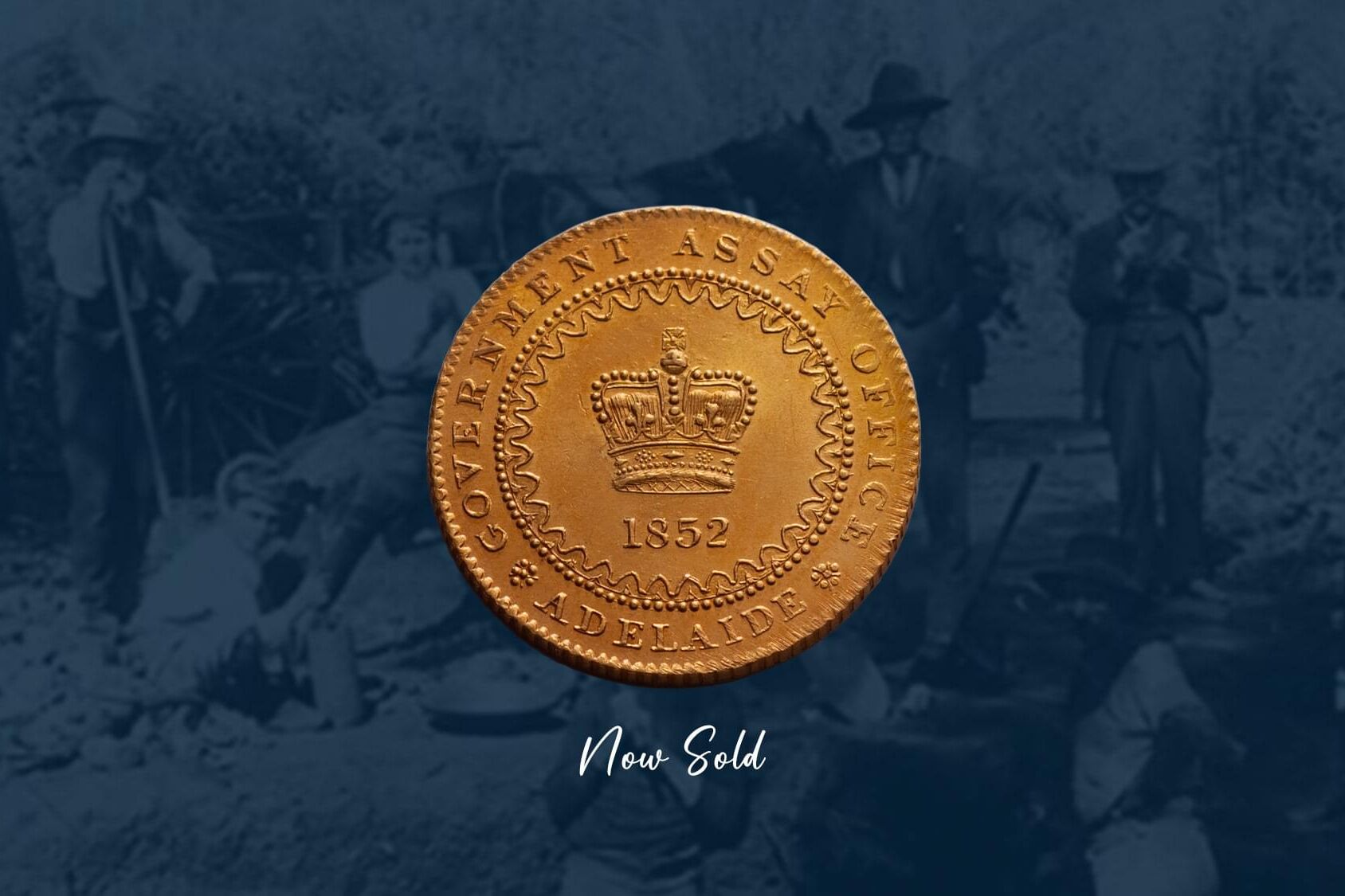
Australia celebrates the 1813 Holey Dollar and 1813 Dump. And the 1852 Adelaide Pound. Each coin was the first of its kind. A definite one-off, struck in one year only as an interim measure to address a currency crisis. And the coins fulfilled their purpose and are lauded for their history and the ingenuity of their creation.
The sovereign also was the first of its kind: the nation’s first official coinage issued by the nation’s first official mint. But it was not a one-off and became the mainstay of commerce. Regulated by currency laws the sovereign was introduced for the long term and became a unit of exchange up until 1931 when Australia struck its last gold sovereign.
Australia issued sovereigns between 1855 and 1931 and while the appeal of the sovereign is enhanced by different versions featuring the effigies of various monarchs, no coin is as popular as the first Australian sovereign, the 1855 Sydney Mint Sovereign.
In 1851, the Sydney Morning Herald published an editorial championing the establishment of a branch of the Royal Mint in Sydney to buy gold at full price and strike it into sovereigns.
The plan for a branch of the Royal Mint received great support from the diggers. Solid opposition came from the banks and a prominent group of private individuals both of whom had become major buyers of gold on the fields at prices discounted well below the full London price. Profits were at stake! Both factions had earlier joined forces to quash a proposal for a Sydney Assay Office that would have also impacted negatively on their commercial interests.
While it is true that New South Wales had in 1851 formally petitioned the home office in London for a branch of the Royal Mint, the decision had already been made in the British Parliament to give the colonies greater autonomy and establish a branch mint to allow them to strike coins of the realm, the sovereign.
The Sydney Mint would strike sovereigns and half sovereigns to exactly the weight and fineness levels at the Royal Mint but they would have their own design. This was to protect the international reputation of the imperial gold coins in the event that Sydney was unable to meet the exacting standards demanded of the coin.
On the 19 August 1853 Queen Victoria gave formal approval to establish Australia’s very first mint at or near Sydney in New South Wales. In the same year, the Royal Mint London prepared designs of Australia’s first gold coinage and manufactured the dies.
The sovereign and half sovereign obverse design was a filleted bust of Victoria, only slightly different to that used on British sovereigns. The obverse quickly fell out of favour and James Wyon was ordered to engrave a new obverse that would be uniquely Australian to easily distinguish the colonial sovereigns from their British counterparts. To this end, a new portrait was introduced in 1857 that featured Queen Victoria with a banksia wreath in her hair instead of the band.
The reverse design was based loosely around contemporary reverse designs of the British sixpence and shilling. Its strong point of difference to the British sovereigns was the inclusion of the words 'Australia' and 'Sydney Mint'.
The use of the word Australia, a fascination with historians. At the time the nation was operating as separate colonies. Australia did not operate under a single Government until Federation in 1901.
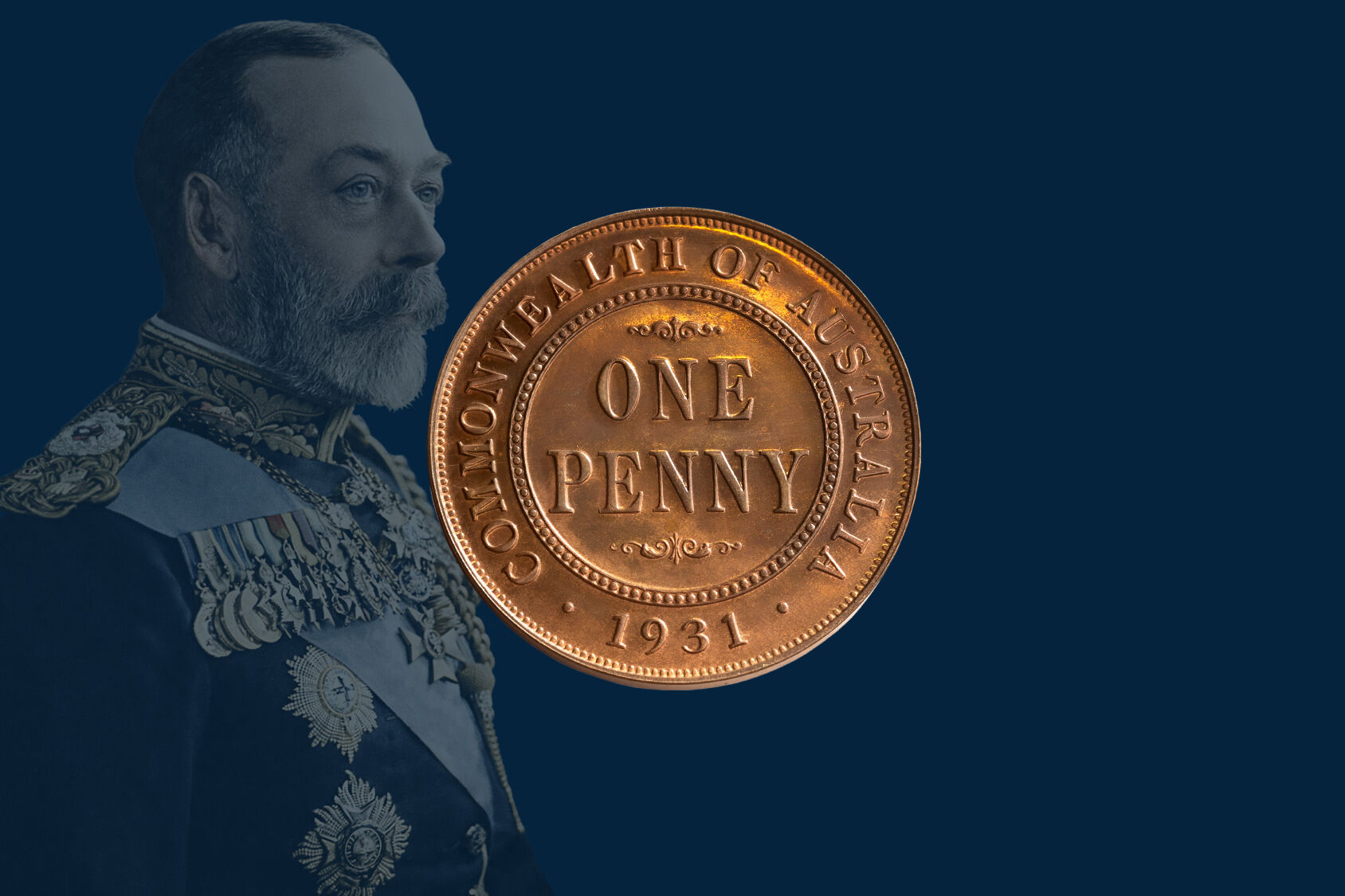
The first Deputy Master of the Sydney Mint was Captain Edward Wolstenholme Ward, a trained member of the Royal Engineers. (Photo shown at top.)
Ward arrived in the colony in October 1854 on the ship Calcutta, along with other members of the Royal Engineers, a sergeant, three corporals and twelve privates. The group was deposited on Circular Quay with the bales and boxes of Sydney's new mint, along with the dies.
The Sydney Mint was established in a wing of the 'Rum Hospital' in Macquarie Street, Sydney. The mint began receiving gold on 14 May 1855 and issued its first gold sovereign soon after on June 23.
In their infancy the Sydney Mint sovereigns and half sovereigns were legal tender only in the colony of New South Wales.
In January 1856, the British tested the quality of the colonial gold coins and the results showed that they had a higher intrinsic value than their British counterparts, primarily due to their 8.33% silver content. Once these facts became known, profiteers began melting them down.
The colonial gold coins also became legal tender in Tasmania and Western Australia in 1856. South Australia and Victoria were reticent to enshrine the Sydney Mint as Australia's official mint as each colony had independently requested their own and were miffed at missing out.
By 1857, the legal tender scope was widened to include all Australian colonies and Mauritius, Ceylon and Hong Kong. In 1868 the Sydney Mint Sovereigns and Half Sovereigns became legal tender throughout the British Empire.
The design of the Sydney Mint Sovereign lasted until 1870 and was the only time the word Australia appeared on our gold sovereigns. From 1871, Australia's sovereigns took on a traditional British design.
Highlights of our Inventory
© Copyright: Coinworks