1931 Proof Sovereign struck at the Perth Mint, a numismatic commemoration of the year that Australia struck its last gold sovereign


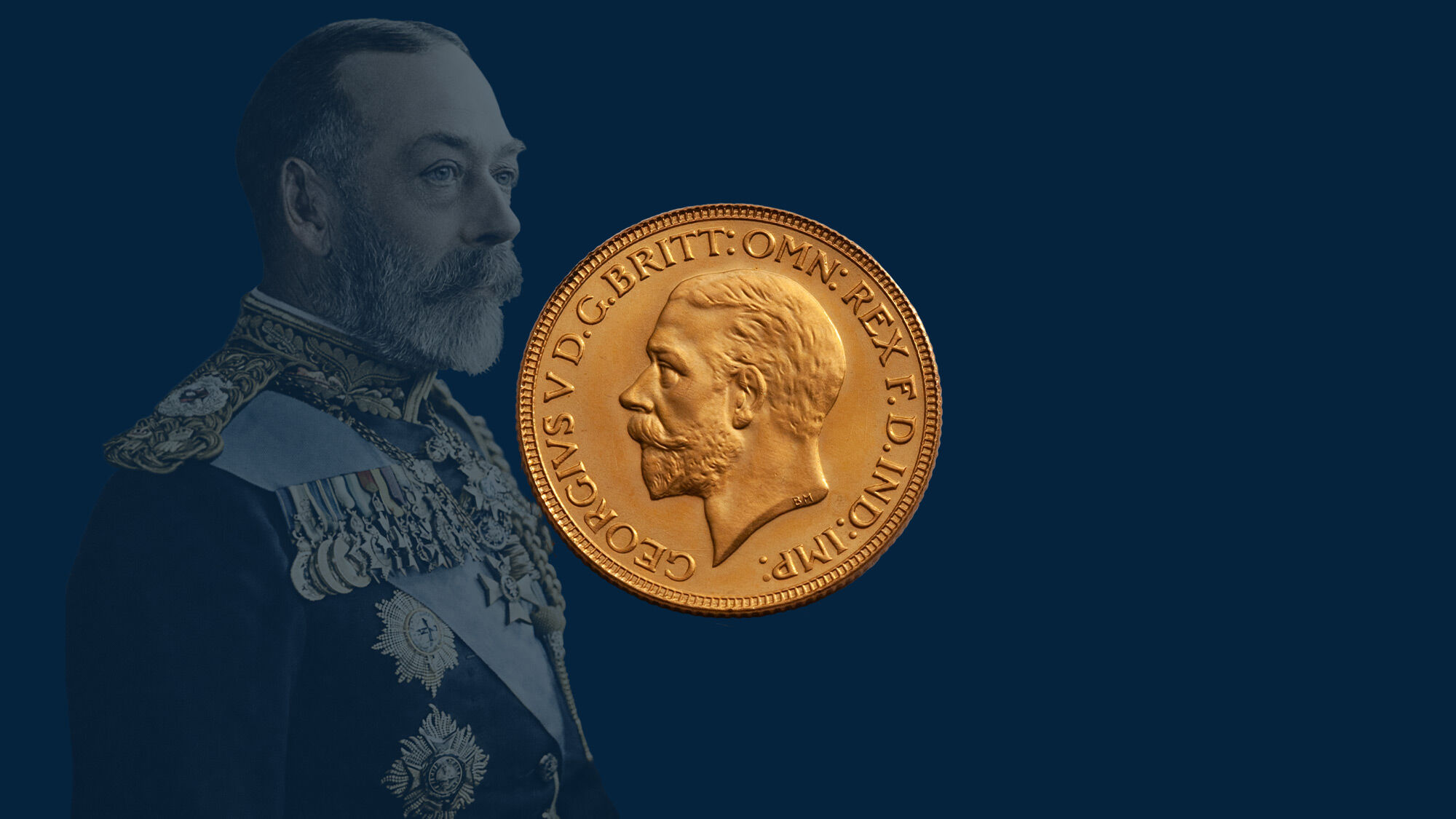
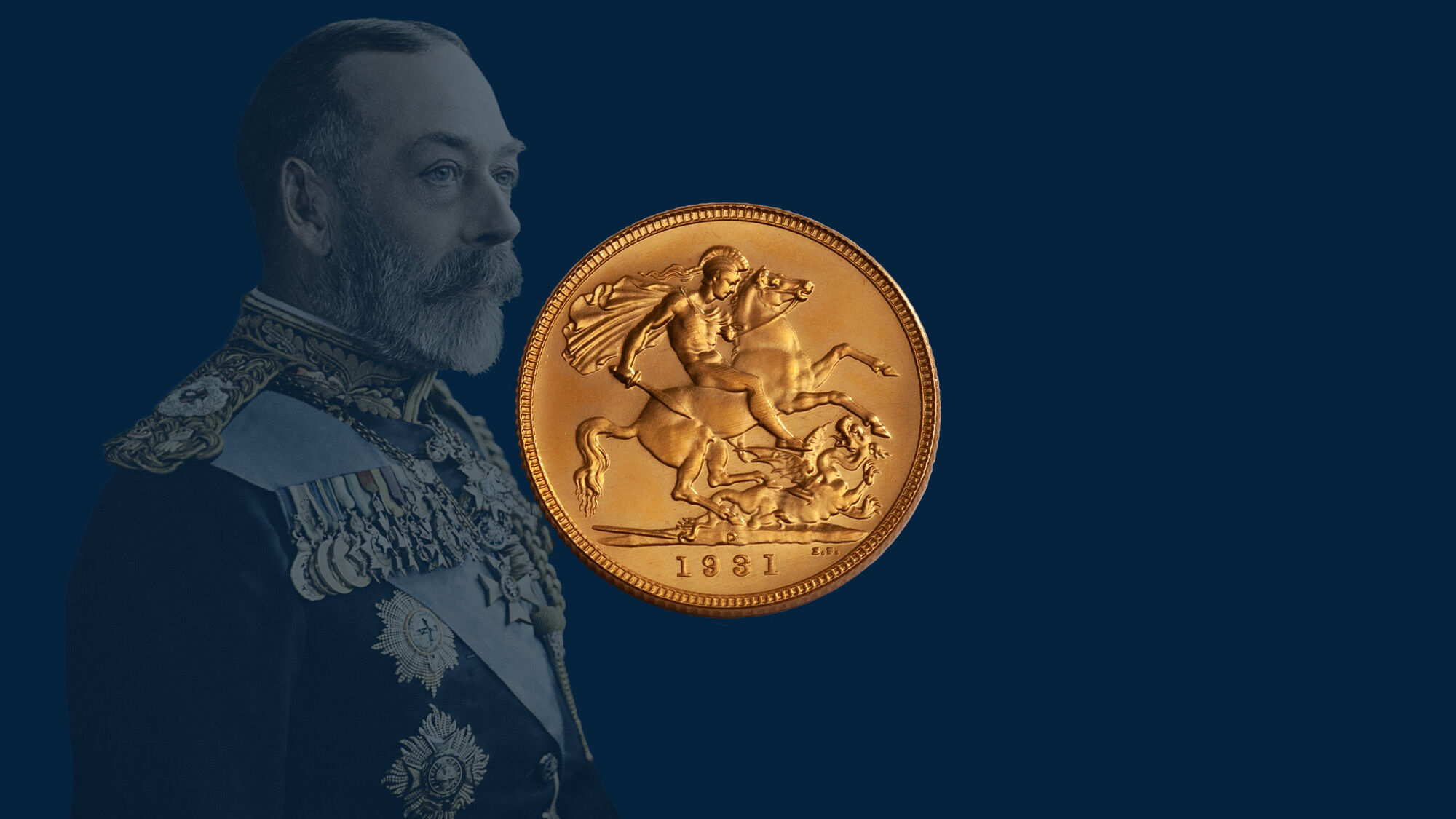
This 1931 Perth Mint Proof Sovereign is one of Australia’s high-value proof gold coins. And one of our most exclusive. A pivotal monetary decision by the Government, for Australia to go off the gold standard, saw the nation’s mints strike their last gold sovereign in 1931. This Proof Sovereign was struck at the Perth Mint as a numismatic commemoration of the end of the era of gold coining. The date ensures that the coin will always be relevant, for generations to come. That the issuing mint was the Perth Mint guarantees its exclusivity. The Perth Mint struck circulating sovereigns between 1899 and 1931 but struck proofs in only three of them (1899, 1901 and 1931). And in the most minuscule mintages. This 1931 Proof Sovereign is one of two examples, and the absolute finest of the two. The proofs of the Perth Mint are the crown jewels of coinage, adding glamour and exceptionality to any collection.
This Proof 1931 Sovereign, struck at the Perth Mint, is a numismatic giant. And that status is reflected in its price.
There are key factors that influence coin values. Understanding those factors is essential to understanding why this coin is so highly valued. It's no different to real estate and appreciating why median values of suburbs such as Toorak in Melbourne, Point Piper in Sydney, Teneriffe in Brisbane and Peppermint Grove in Perth are the highest in their respective cities.
Values of Australian proof gold coins are shaped by a mix of date (and the historical significance of the date), exclusivity of the sector, the rarity of the coin (generally, 1, 2 or 3 pieces), the coin's quality. And its provenance. No single factor works on its own. It is the interaction of these factors that shape values.
Now let's evaluate the 1931 Proof Sovereign using the criteria detailed above.
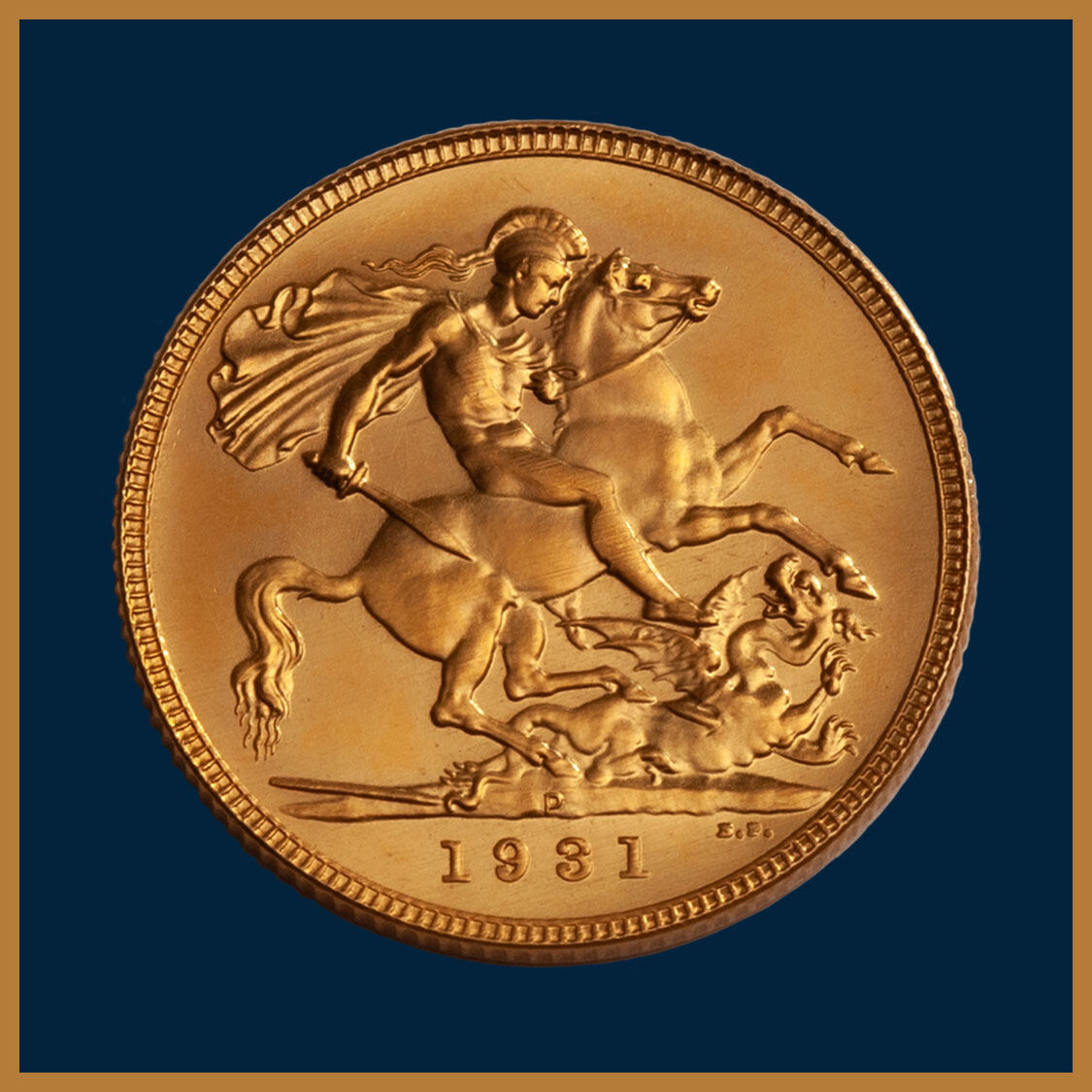
1931 Proof Sovereign
struck at the Perth Mint
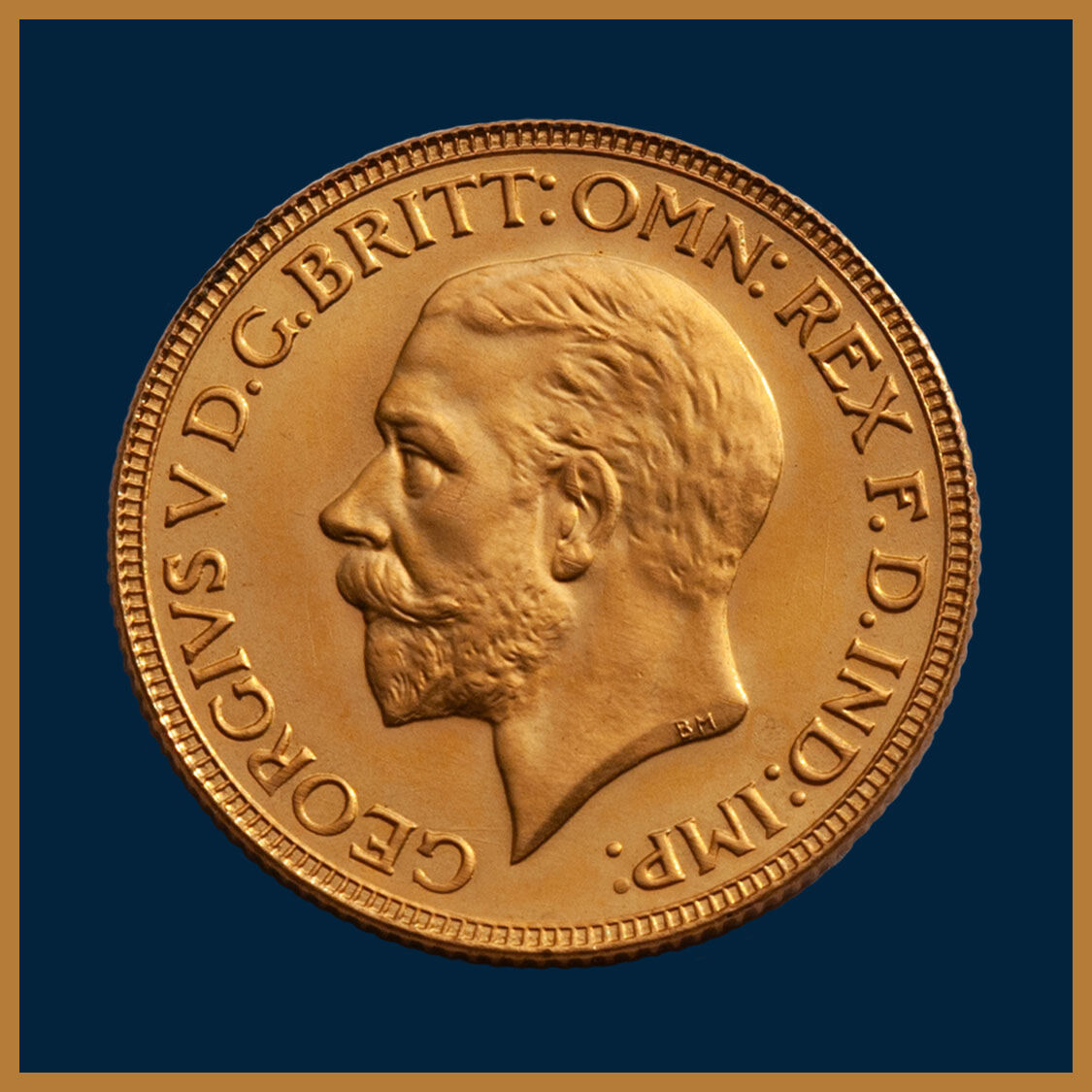
1931 Proof Sovereign
struck at the Perth Mint
Date - the date 1931 is historically significant for it was the year Australia ceased production of sovereigns as circulating currency. The date signifies the end of an era and ensures that the coin will always be relevant for generations to come.
Exclusivity of the sector - the Perth Mint had a miserly approach to striking proof coinage. Between 1899, when the mint opened, and 1931 when the last sovereign was struck, proof coinage was produced in just three years. Those proof production years were 1899, the year of its opening. Next came 1901, Australia's Federation year. (The coins of both 1899 and 1901, depicted the Veiled Head portrait of Queen Victoria.) And the final year of Australian gold sovereign production, 1931, when Australia ceased striking gold coins as currency (George V era). There were no proofs struck in between!
Three years that offer a total buying pool of seven coins. Conversely the Melbourne Mint proofs were struck in twenty-three out of sixty years of operation and the Sydney Mint proofs nineteen, out of seventy-two years of production.
The market's reaction to this coin was clearly shown when it was first offered at Baldwins, London in 2012, as lot 878, the coin selling for £52,800, 32 per cent higher than its pre-sale upper estimate of £40,000. By comparison, a 1929 Melbourne Mint Proof Sovereign, a proof coin out of the same era, was offered with an upper pre-sale estimate of £40,000 and sold for £40,800.
Exclusivity of the sector ... cont'd - If we compare the two coins, the 1931 Perth Proof and the 1929 Melbourne Proof, there is no doubt that the year 1931 is considered more important historically than 1929. But the prime reason for the vast price differential was that the 1931 Proof Sovereign is a product of the Perth Mint. And is overwhelmingly rare and prestigious.
Rarity - there are two known examples of the Perth Mint Proof 1931 Sovereign. But if quality is a prime consideration, then this coin is unique, for the other known coin is impaired with imperfections in the fields. This coin is a gem proof, and a superb FDC.
Provenance - the provenance of this coin is supremely fitting. It was presented to John Agnew circa 1931. That a coin of such power and influence in the Australian gold coin market was originally owned by John Agnew somehow seems just right for he too was powerful and influential. A man of vision and remarkable knowledge of gold mining, Agnew was credited with making a major contribution to revitalise the Western Australian gold mining sector in the 1920s and 1930s and was Director of Consolidated Goldfields when he was gifted this coin.
Australia's Proof Gold Coinage
When the Royal Mint London or the British Museum requested a sovereign or half sovereign from an Australian Mint, they were never sent a circulation strike. Nor would a circulation strike be presented to the monarch, gifted to a dignitary or sent to an influential collector. And a circulation strike would not be displayed at a Colonial Exhibition.
An individually crafted presentation piece would be specially created for the occasion, minted to a proof or specimen finish. The technical term for such a piece is 'Coin of Record'.
A Coin of Record is an artistic interpretation of coinage, a strikingly beautiful coin beyond ordinary currency. Individually crafted to standards far exceeding that required of a circulating coin, using special coining techniques. Whereas production of circulating coinage was dictated by Government, Coins of Record were struck at the discretion of the mint master.
Coins of Record were not produced every year and, as they were individually crafted, the process was time consuming and the mintages minuscule. For gold proofs, generally ten pieces or less. There were several occasions when only a single coin was struck.
Coins of Record of Australia's sovereigns and half sovereigns are visually stunning, distinguished by brilliant golden-mirror surfaces. And it is their beauty and their ultra-exclusivity that drives demand.
Australia's gold proof coins moved onto the international stage when the collection of John G. Murdoch was liquidated via Sotheby, Wilkinson & Hodge in London in 1903, following his passing in 1902. Murdoch held an extensive collection of gold proofs, including coins featuring the Sydney Mint design, Young Head, Jubilee and Veiled Head design. The Melbourne Mint was well represented with both proof sovereigns and proof half sovereigns. And minor representation from the Sydney Mint and the Perth Mint.
The reputation of Australia's gold proof sovereigns and half sovereigns as an international commodity was set in stone in 1903, a widespread regard that holds to this very day, right across the globe. Recent international auction results, November 2021 and more recently in February 2026 confirm the status of Australia's gold proof coins as a globally traded commodity. And in particular confirm the price levels that Perth Mint proofs command.
The proofs of the Perth Mint are the crown jewels of coinage, adding glamour and exceptionality to any collection.
There is one other reason why the Proofs of the Perth Mint are so popular. The Perth Mint is still producing coins; its narrative has not been confined to history. The mint is an on-going story with a collecting audience that is expanding through the production and export of decimal collector coins. The Perth Mint’s commercial profile creates an environment whereby its earlier gold sovereign and half sovereign issues can be enabled and brought to life. Every time the Perth Mint opens its doors to welcome visitors, releases a new proof coin or celebrates an anniversary of its minting operations (as it did on 2024), we are reminded of a tradition of coining excellence that began in 1899.
© Copyright: Coinworks