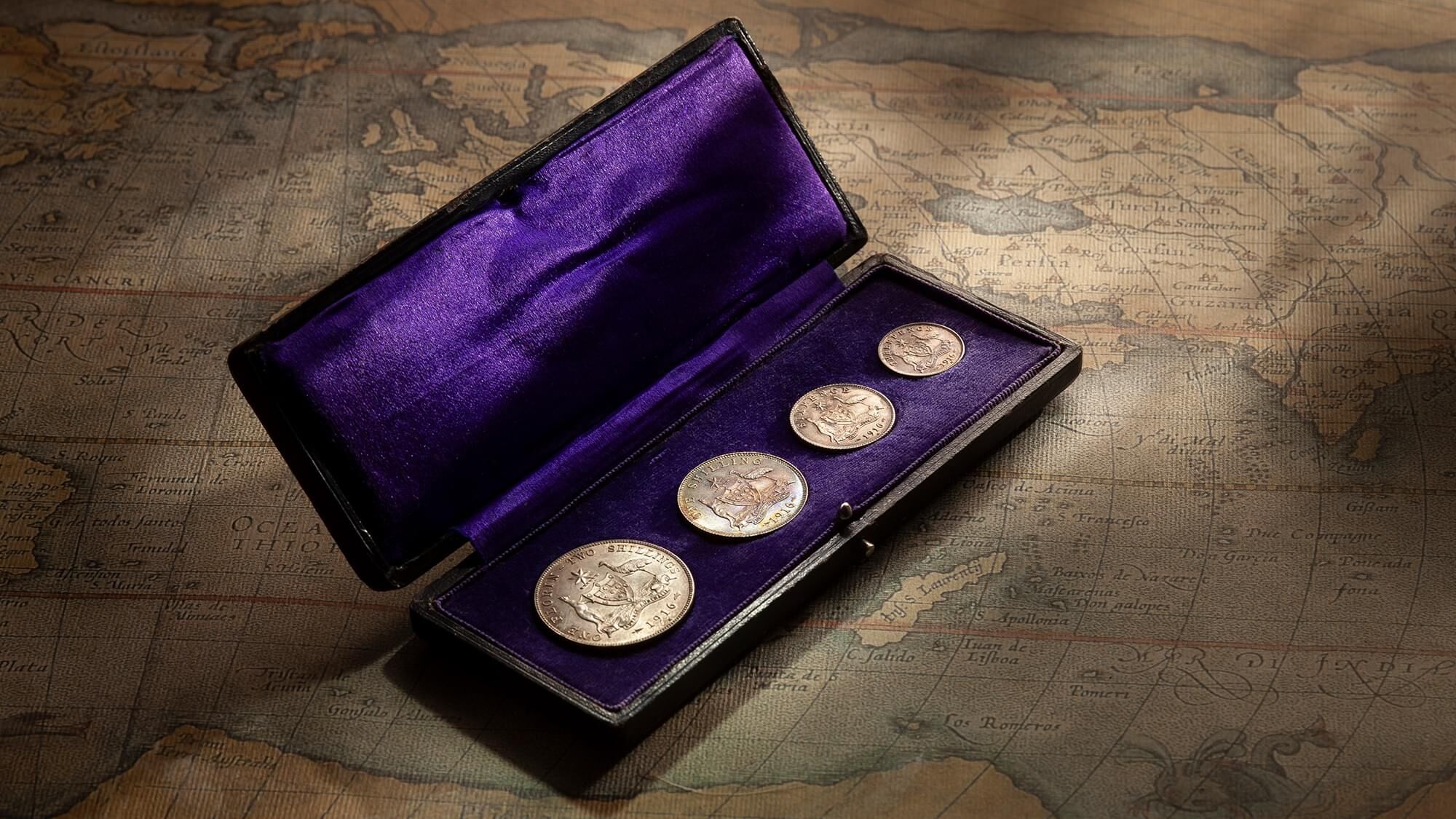
1916 Specimen Set in an original velvet-lined Melbourne Mint case of issue. Highly historical, and extremely rare, highly historical, and extremely rare.


More than 100,000 collectors will be pursuing the Royal Australian Mint’s Proof and Mint Sets in 2026; the mint's latest issue, the 60th Anniversary of Decimal Currency Proof Set.
As collectors are naturally inquisitive about the past, many will be wondering where, and when, it all started.
The Canberra mint's ever successful coining program was an extension of that which began at the Melbourne Mint in 1916 when it produced the very first issue of Australian coins made especially for collectors. Sixty sets were produced and, while some were gifted to dignitaries, a portion were sold to collectors for 6/- (six shillings): almost double the face value.
It was a big deal at the time! The Melbourne Mint had just begun to strike Australia's Commonwealth coinage, and the cased set was a numismatic celebration of the occasion.
And it’s an even bigger deal today! Only seven original cased sets have been sighted at auction over the last seventy-plus years.
The Royal Australian Mint's latest release confirms what we in the industry all know. Collectors love history and they love to acknowledge the past.
Two dates are integral to the Melbourne Mint's history and the nation’s numismatic heritage. The first is its year of opening, '1872'. The second is '1916', when the Melbourne Mint expanded its gold coining repertoire and commenced striking silver coins for the newly formed Commonwealth of Australia. (Prior to that the coins were struck in the UK.)
The mint did not produce any presentation pieces to celebrate its opening in 1872, a missed opportunity for today's collectors. That numismatic shortcoming was addressed in 1916 when the Deputy Master of the Melbourne Mint authorised the production of sixty cased Presentation Sets, a portion earmarked to sell to collectors with a 2/-3d premium over face value. Others were gifted to dignitaries.
Natural attrition has taken its toll on the original mintage and only seven cased presentation sets have been observed at auction over the last seventy-plus years.
The Melbourne Mint’s iconic 1916 cased specimen set stands out as the first Australian made presentation for collectors of the Commonwealth's coinage. There are a few things to note about the set.
First up the royal-blue case.
The case is a stamp of authority indicating that the coins are presented today as they were originally intended more than a century ago. The integrity of the set is maintained by the case. Respected numismatist and author, Dr Vince Verheyen's take on the royal-blue case supports our view that it is an integral element of the presentation. “It cannot be over-emphasised that the set must be supplied with its original case.”
The second is that the coins tone.
The toning to all the coins, again gives authenticity to the set. And given the different mirror and matte finishes of the four coins, collectors should not expect the toning to be identical, a point again emphasised by Verheyen. He also added ... "I would be suspicious of any bright white specimens given their age.”
The third point to note is storage.
Over the years we have been asked if the coins should be stored in the case? The coins will be housed in archival quality (museum quality) coin holders and presented in a quality velvet lined tray, thereby preserving their investment value. The royal blue velvet case will be separate to the tray.
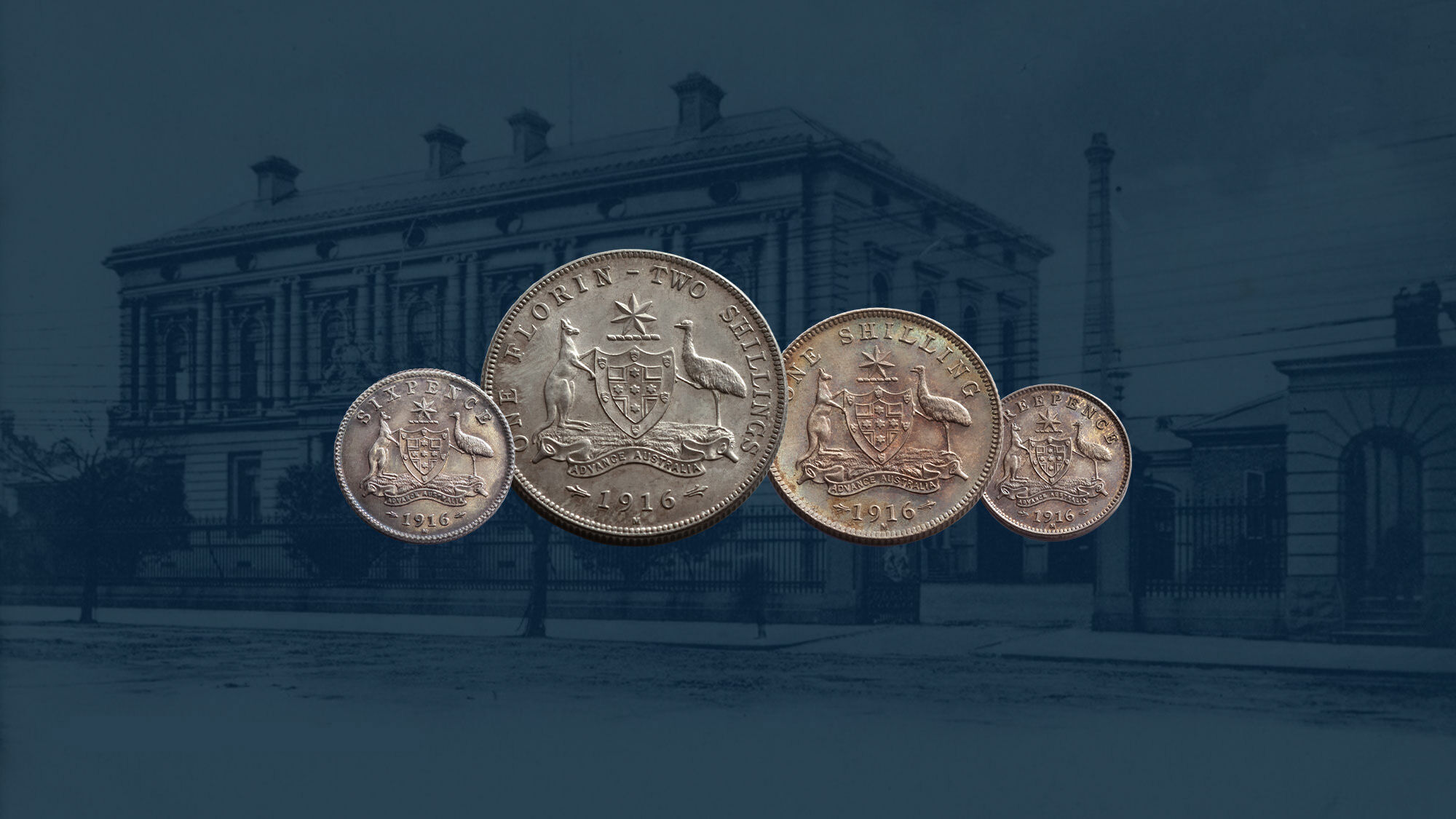
Click on each icon for enlarged obverse and reverse photographs & descriptions.
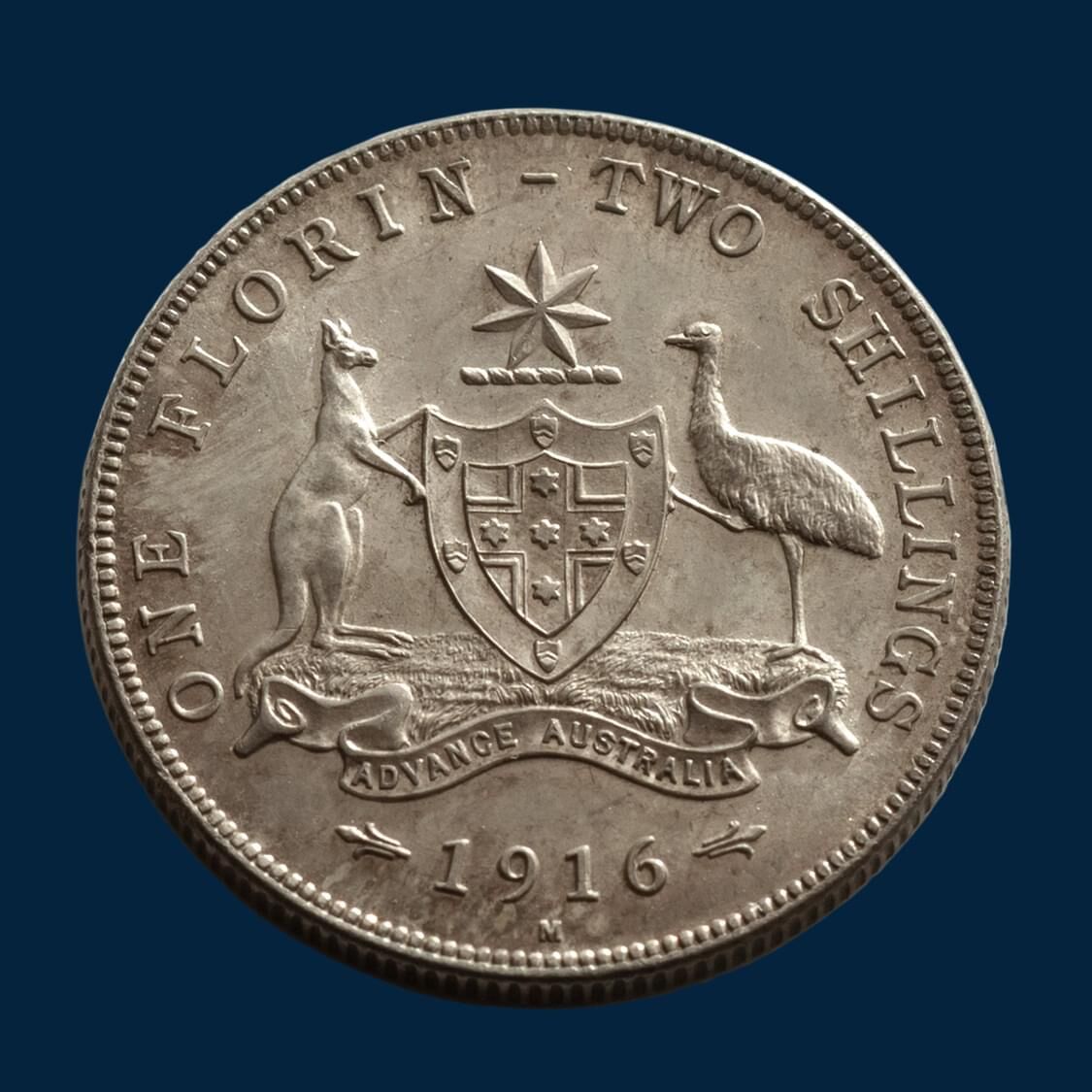
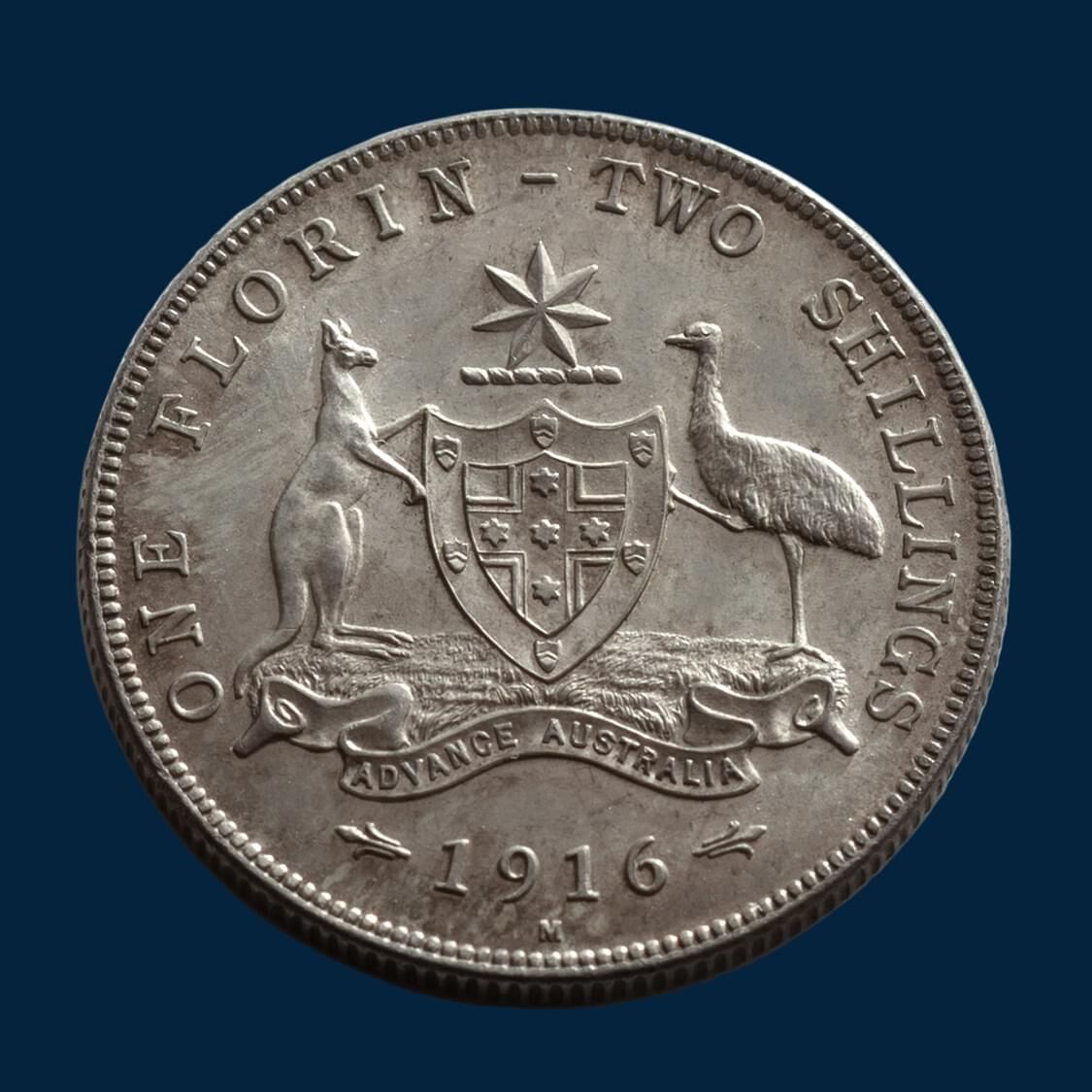
1916 Specimen Florin
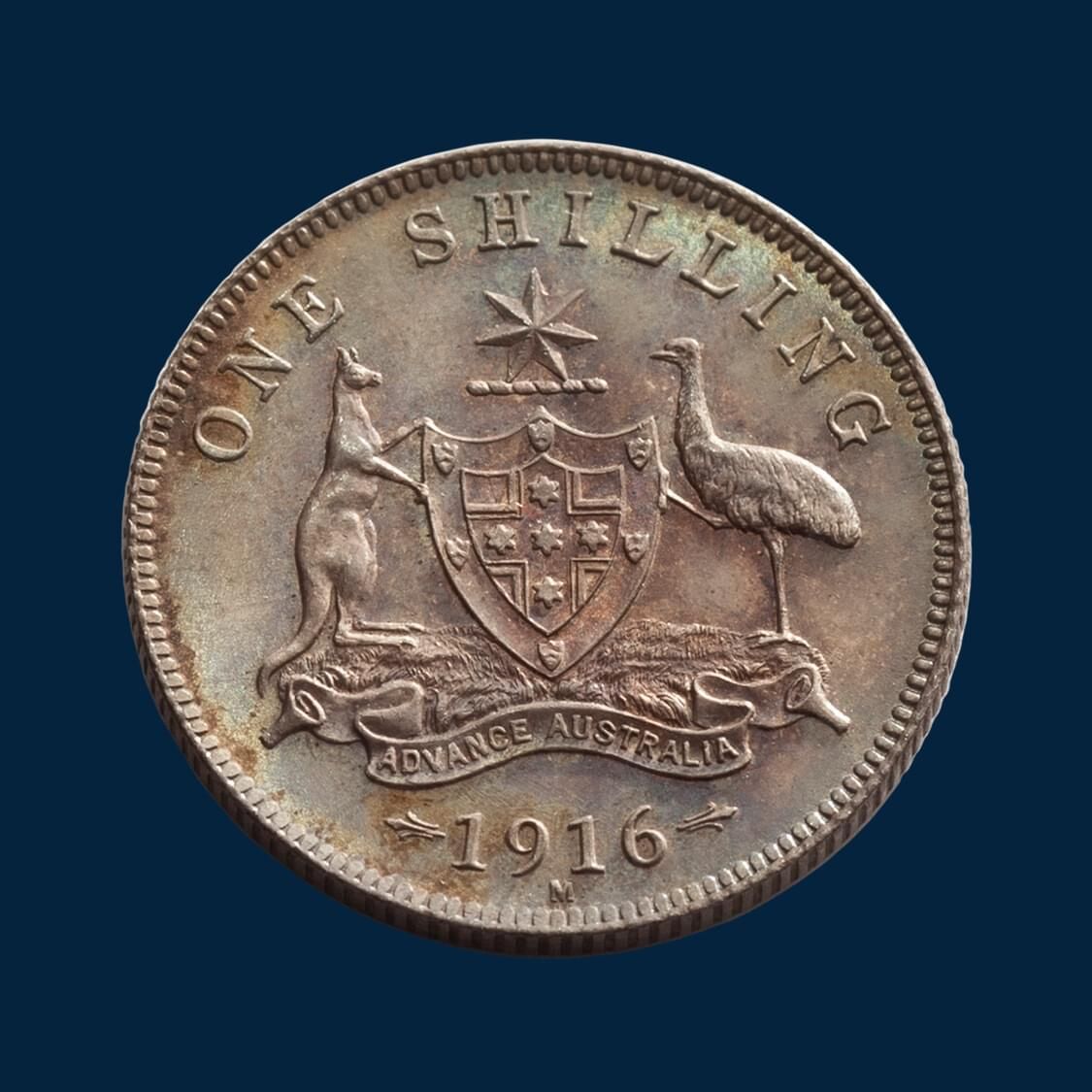
1916 Specimen Shilling
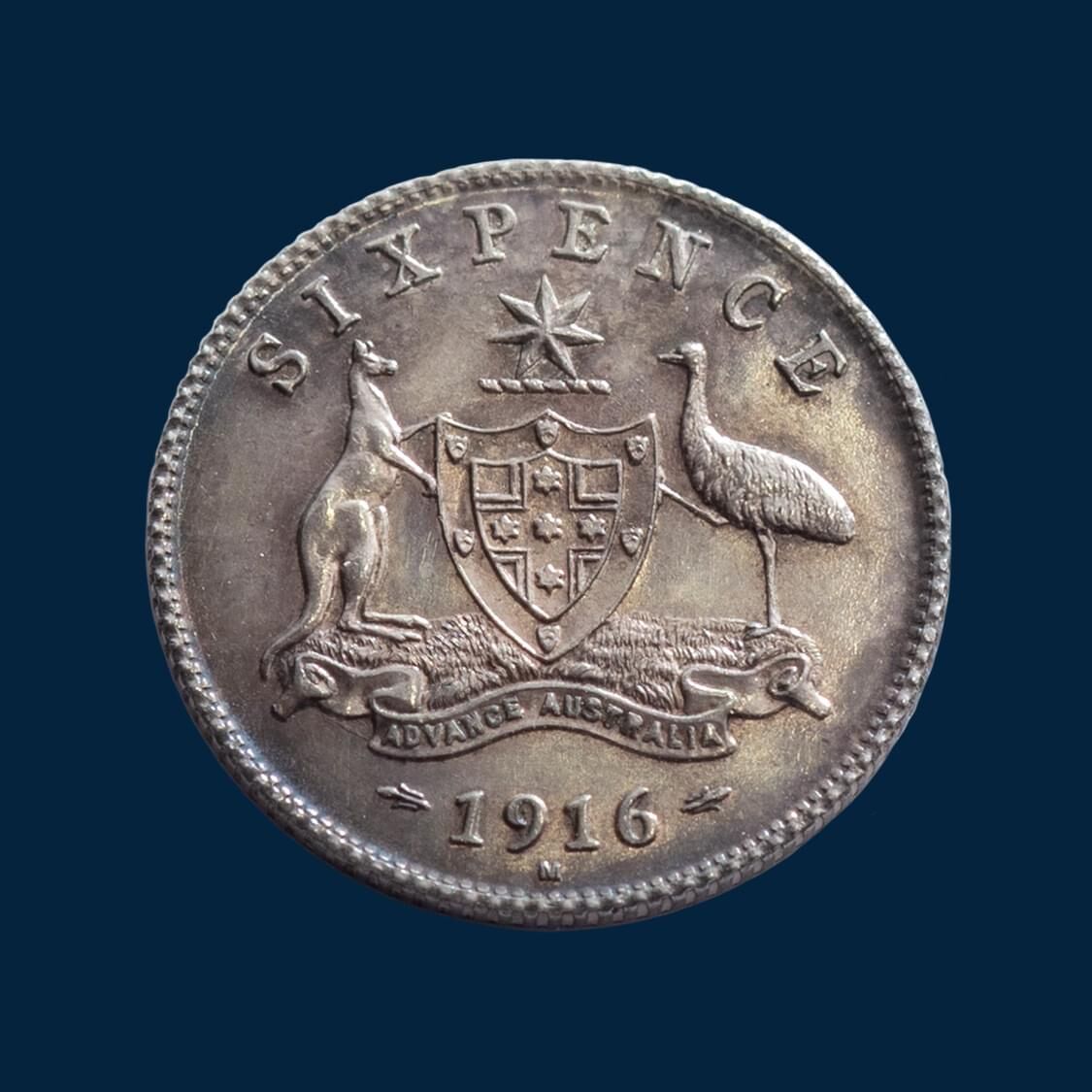
1916 Specimen Sixpence
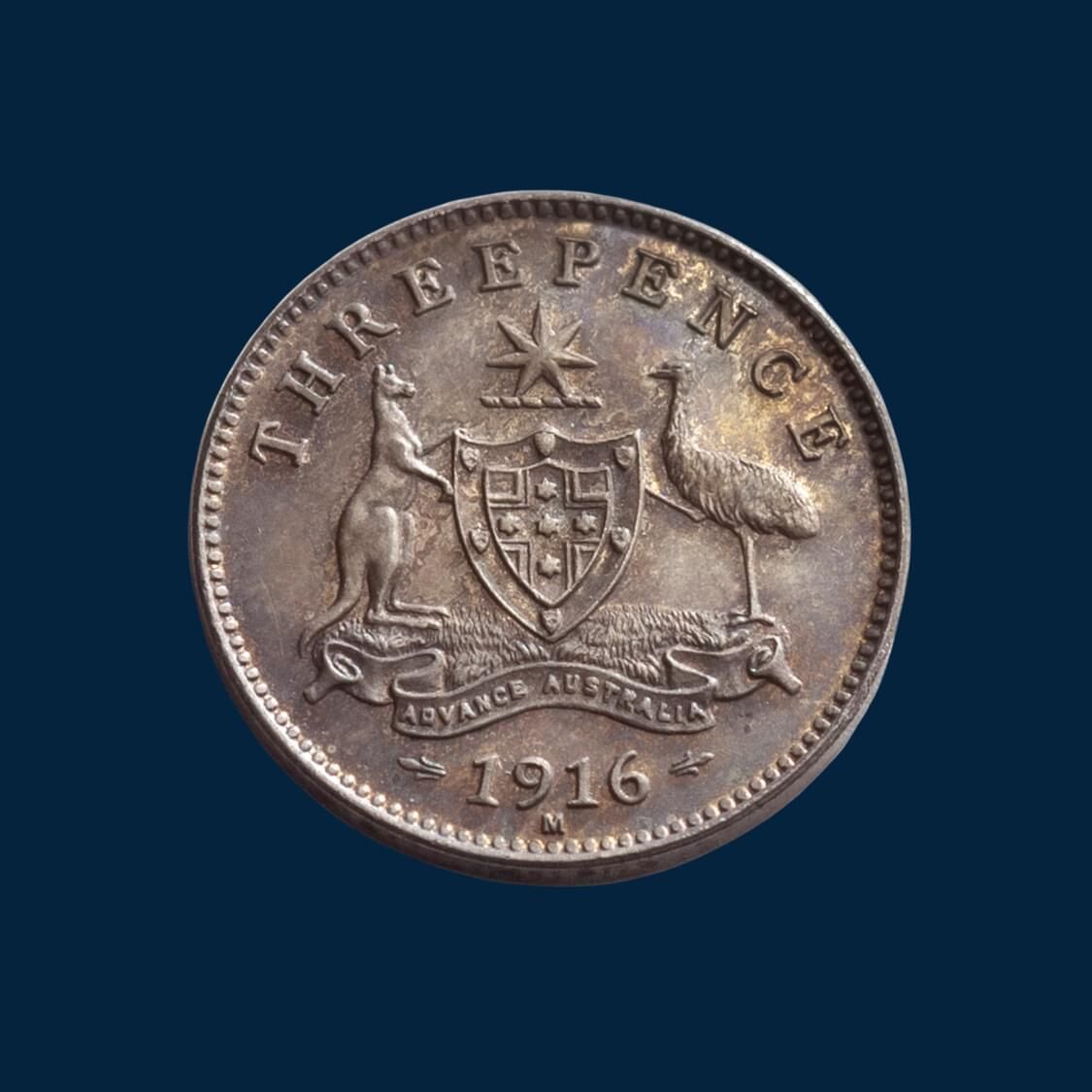
1916 Specimen Threepence
Early in November 1915 the Melbourne Mint was formally instructed to commence preparations for the striking of the Commonwealth's silver coinage. The silver was sourced locally from the Broken Hill mines. It is noted that prior to 1915, the nation's silver coinage had been minted overseas at the Royal Mint London and the Heaton Mint in Birmingham.
Towards the end of November 1915, dies for the set of four denominations were sent from London. Six weeks after the dies were shipped, the Governor of Victoria Sir Arthur Stanley K.C.M.G, struck the first circulating 1916 shilling. It was logical that the Melbourne Mint would begin striking silver coinage with the shilling denomination given its similar physical size to their familiar sovereign.
The florin was struck almost immediately after, sixpences by the middle of 1916 with the threepences finally later in the year. More than 11.5 million silver coins were released into circulation that year.
The Melbourne Mint's inaugural striking of Australia's Commonwealth coins was a momentous occasion in minting circles. The Deputy Master of the Melbourne Mint therefore decided to create a Presentation Set to record the occasion.
Each presentation set was comprised of the four silver coins of florin, shilling, sixpence and threepence, each featuring the Melbourne mint mark ‘M’ below the date 1916 and minted to specimen quality.
The set of four was housed in a handsome, velvet-lined royal blue case that had been locally sourced.
The availability of the four-coin specimen presentation set was confirmed in November 1916 when Le Souëf recorded an entry of sixty specimen sets in the Mint Museums’ cash accounts with a face value of £11 5/-.
While records show that 60 sets were produced, sixteen were sold, collectors charged 6/- for a cased set.
A further 25 sets out of the original mintage were presented to dignitaries and politicians with the precise fate of the remaining sets unknown.
What we do know is that many of the cases have been lost and many of the sets have been broken up and sold as individual coins.
We also know that others were accidentally used as circulating coins, their value irreparably reduced through wear.
Over the past 50 years we have sighted only seven sets housed in their original case of issue.
© Copyright: Coinworks