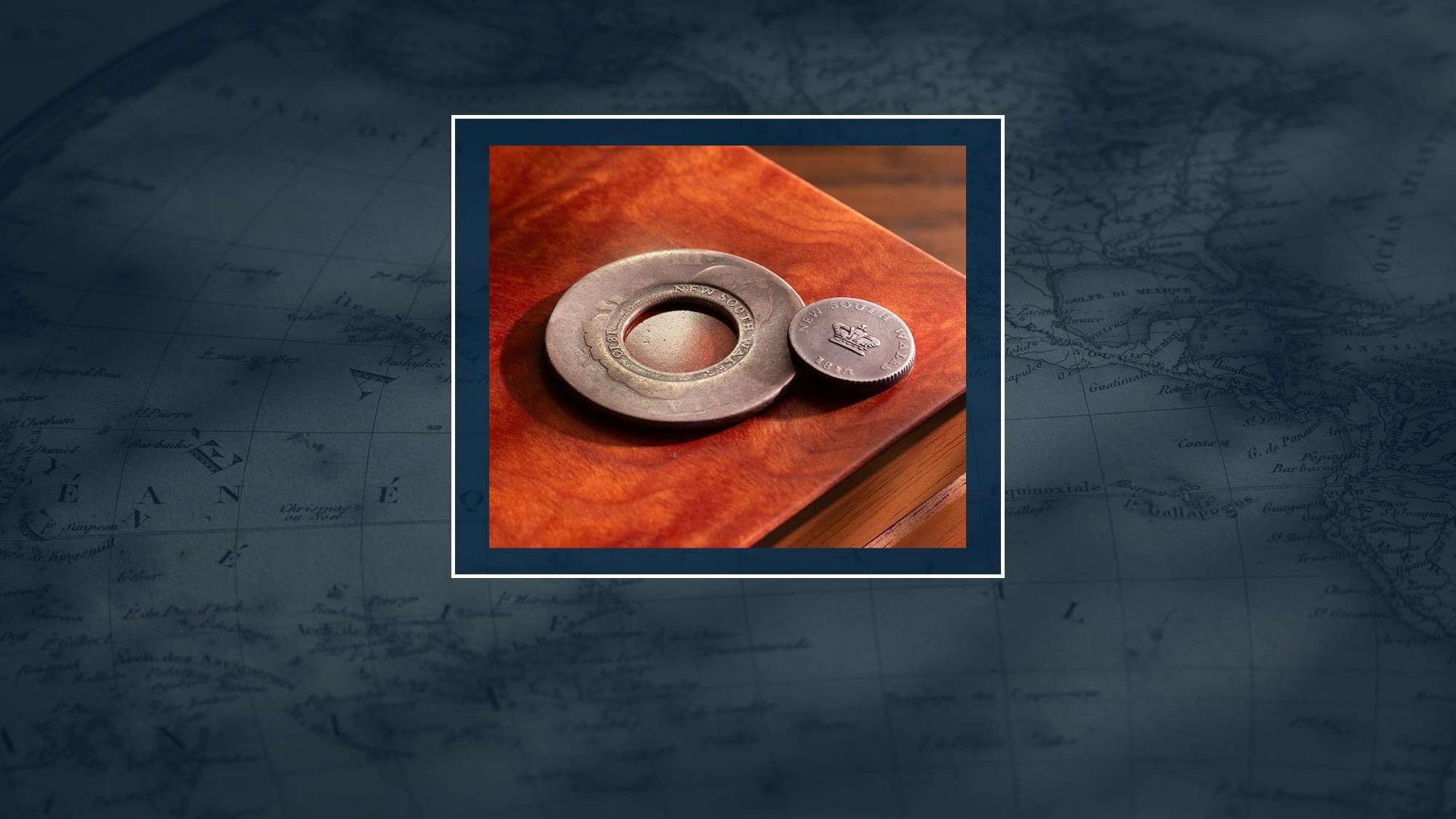
The ultimate pair of Holey Dollar and Dump, the two coins offered for $85,000.
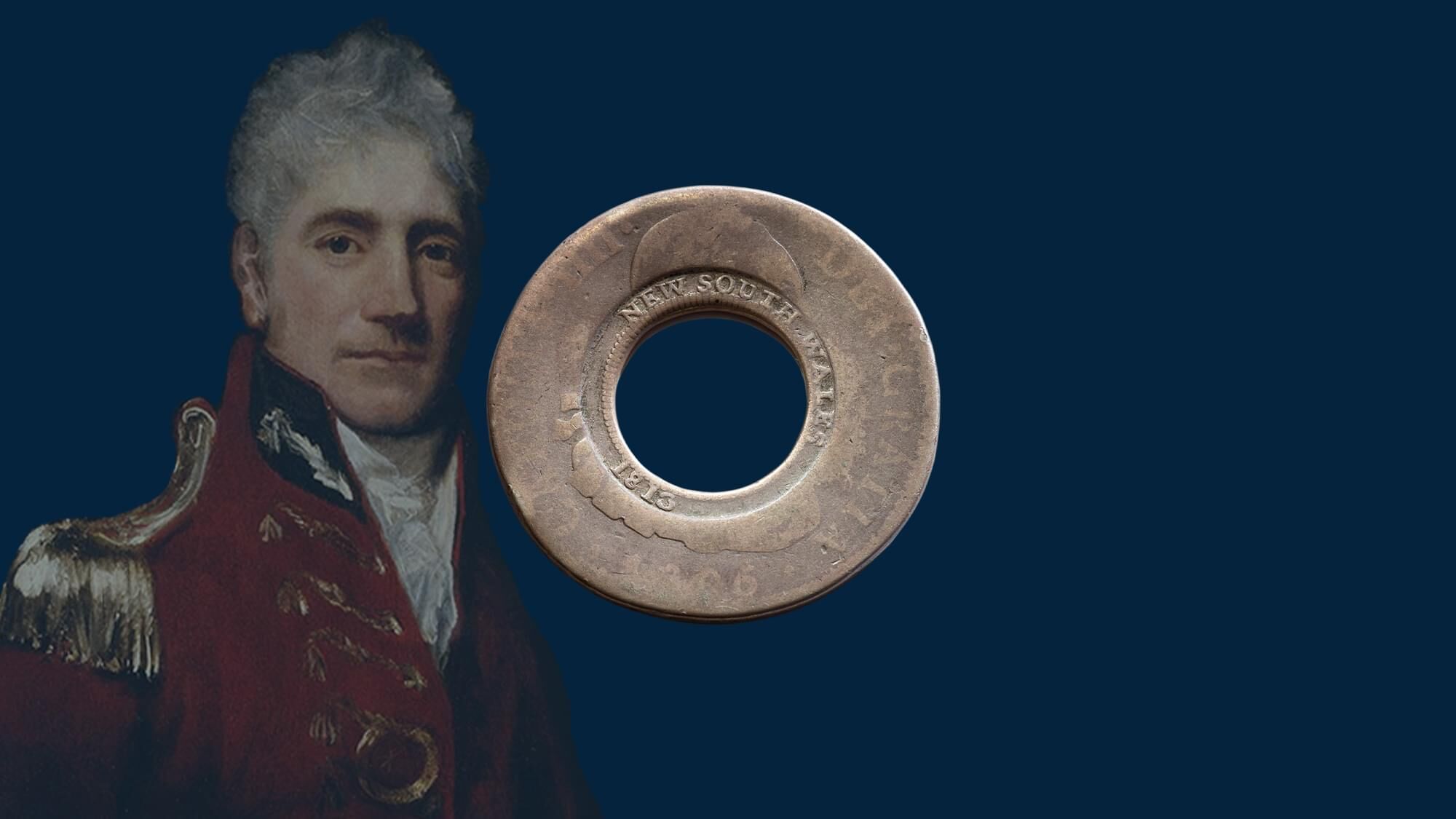
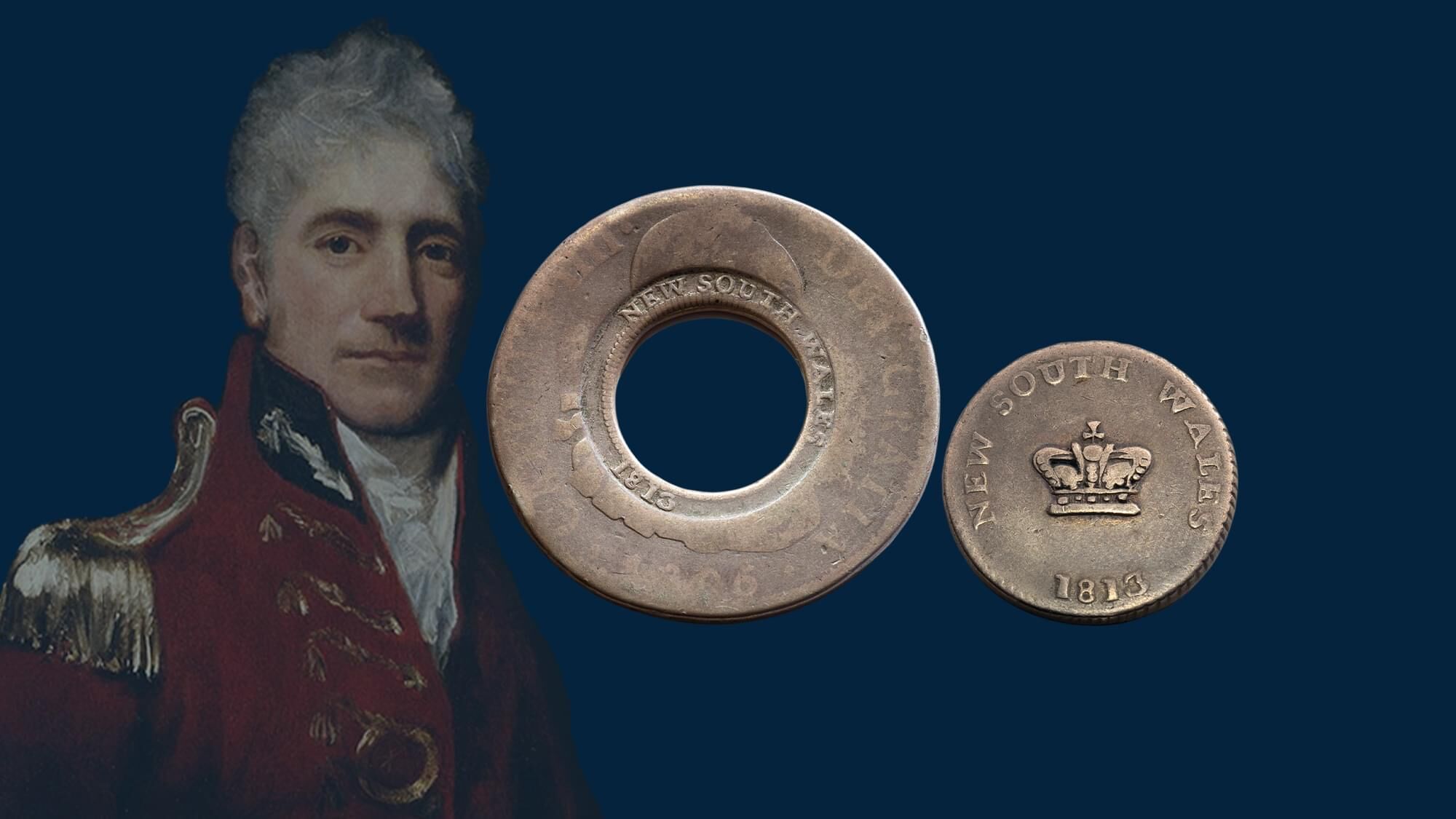
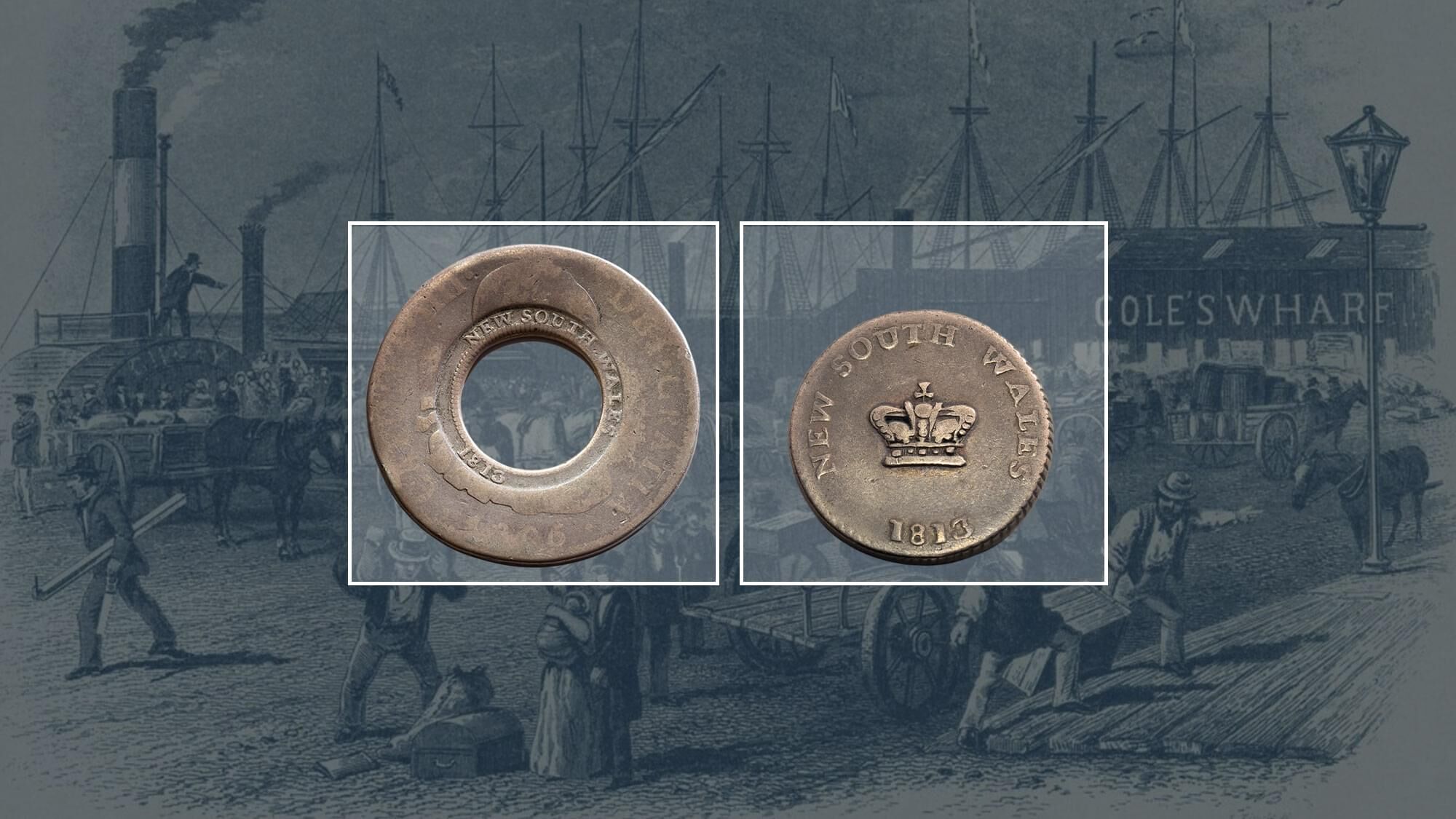
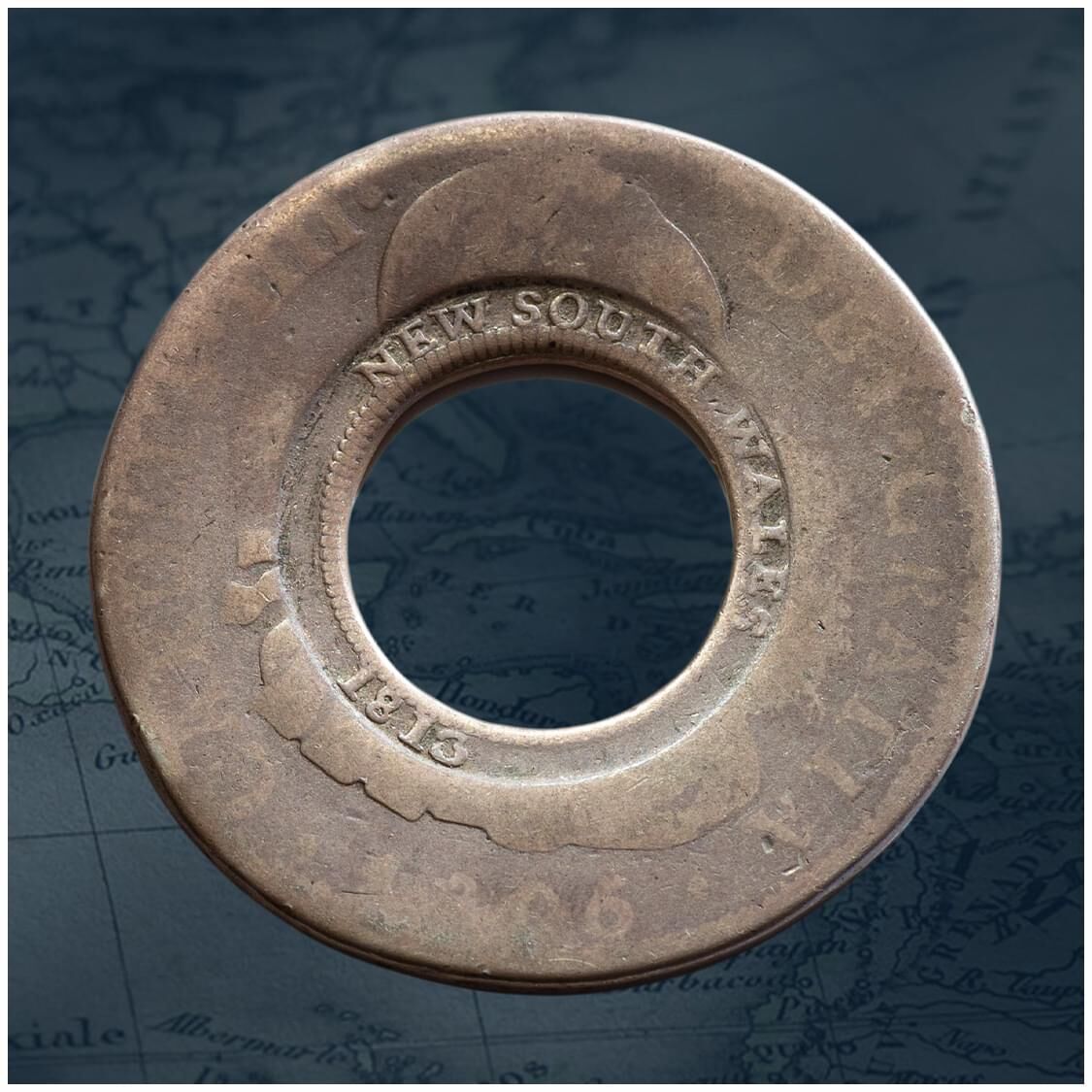
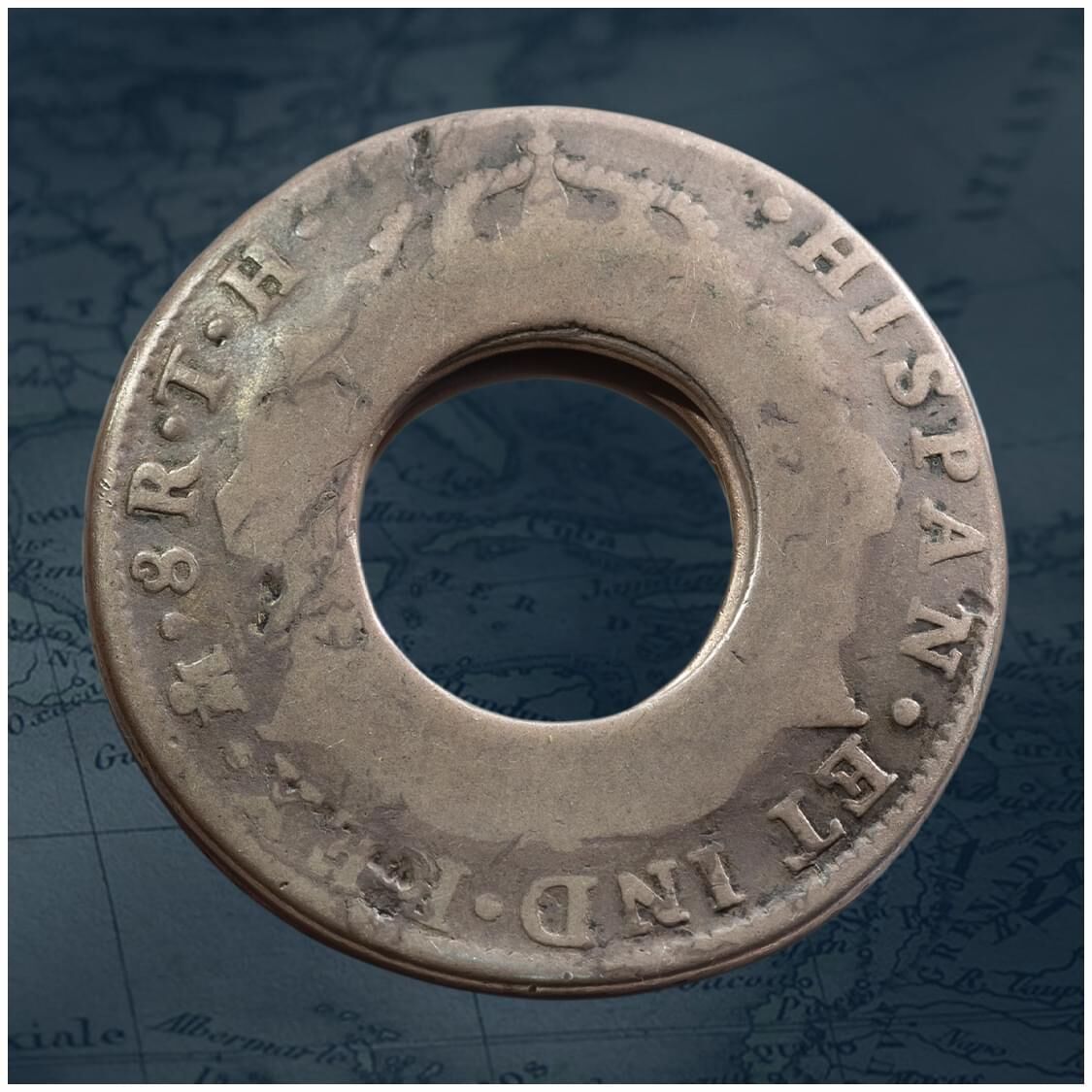
The Holey Dollar and Dump are the nation’s first coins, minted in 1813 by order of Governor Lachlan Macquarie. Two coins cut from one ... a Spanish Silver Dollar. Joined at the hip by way of the process that created them, each Holey Dollar and partner Dump began their lives with identical toning and surface texture.
Today there are approximately two hundred Holey Dollars held by private collectors, and about eight hundred Dumps. You would think that with those numbers finding a Dump that is preserved in the same style and tone as a Holey Dollar would be a simple feat. That could not be further from the truth.
In a career that spans more than half a century, this is the second only well-matched pair of Holey Dollar and Dump that we have managed to put together.
Separated at birth in 1813, each coin embarked upon its own journey. Vastly different pathways.
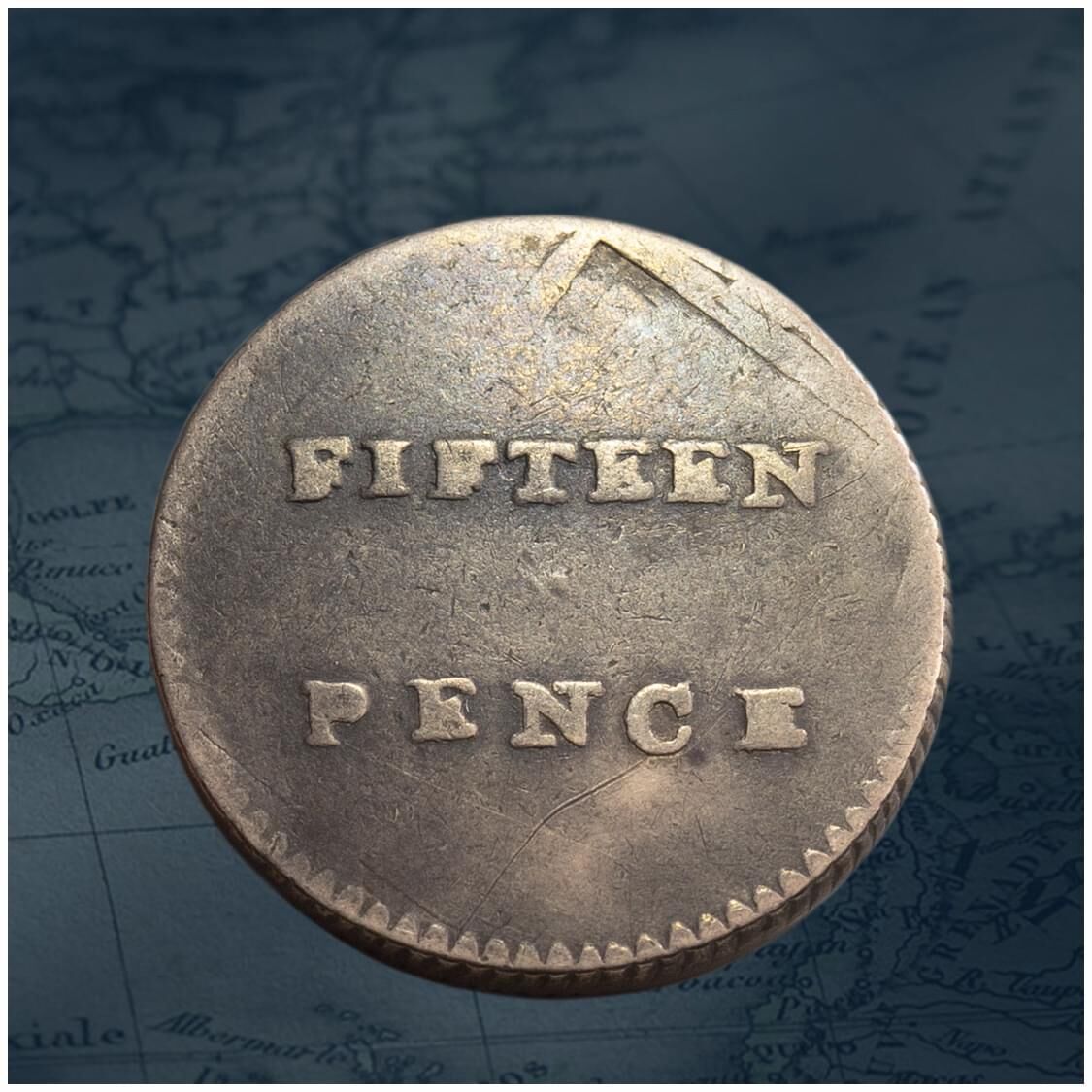
The Holey Dollar, with a value of Five Shillings, underwent minimal usage and was primarily stored in the Bank of New South Wales. The Dump, at Fifteen Pence, was well used and became the work horse of the colony, introducing multi-opportunities for tonal changes and damage.
This is the ultimate gift ... a well-matched pair of 1813 Holey Dollar and Dump. Presented in a presentation case hand-crafted from Australian timbers by award winning artisan Anton Gerner.
The ultimate corporate gift? Family heirloom? Or the ultimate indulgence for the collector that is passionate about Australia's history.
We point out the following:
Well matched toning
The coins are well matched, from a toning perspective. And the texture of their surfaces are both smooth and highly reflective. Despite the high circulation of both coins, there are no blemishes.
As toning is heavily influenced by the environment in which the toning took place, toned coins can come in many different colors and color combinations.
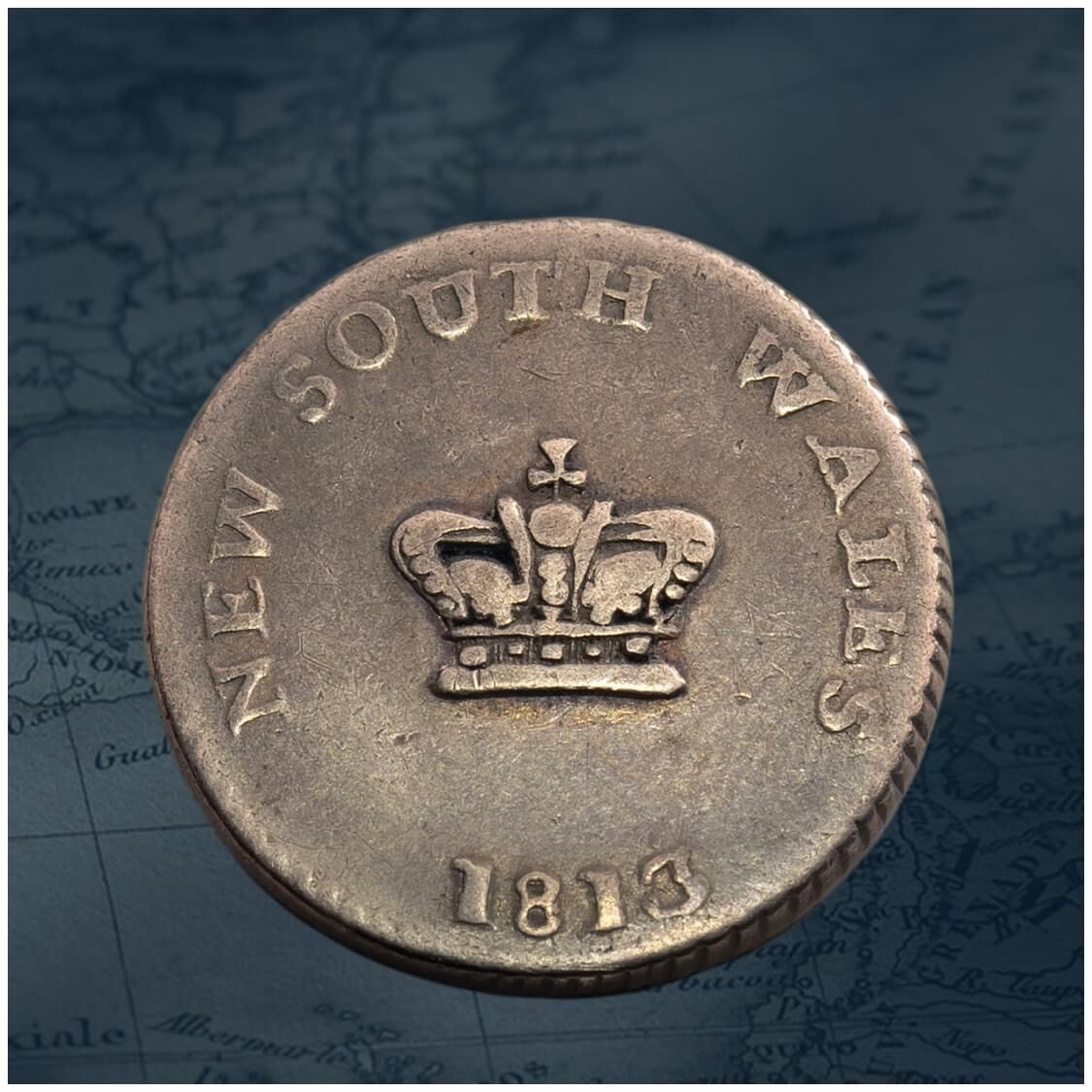
News South Wales at the top of both coins.
There is synergy in the presentation with New South Wales at the top of the Holey Dollar counter stamps and the top of the Dump.
We applaud Henshall's acumen in achieving vertical counter stamps on the obverse of the Holey Dollar. The impact of having the issuing authority of New South Wales on the Holey Dollar next to We like the vertical alignment of the Holey Dollar counter stamps, that New South Wales rests at the top of the counterstamps. Well matched that the words New South Wales rest at the top of the Dump.
The coins have circulated and that means they are affordable.
The appeal of the Holey Dollar and Dump extends far beyond numismatics, driven by their immense historical significance and tangible connection to a foundational moment in Australian history ... the creation of our first coinage.
Owning this Holey Dollar and Dump is about indulging in an experience, a fusion of history and prestige. And its about savouring the moment. And recognising that this pair of coins represents the full story as Macquarie intended it.
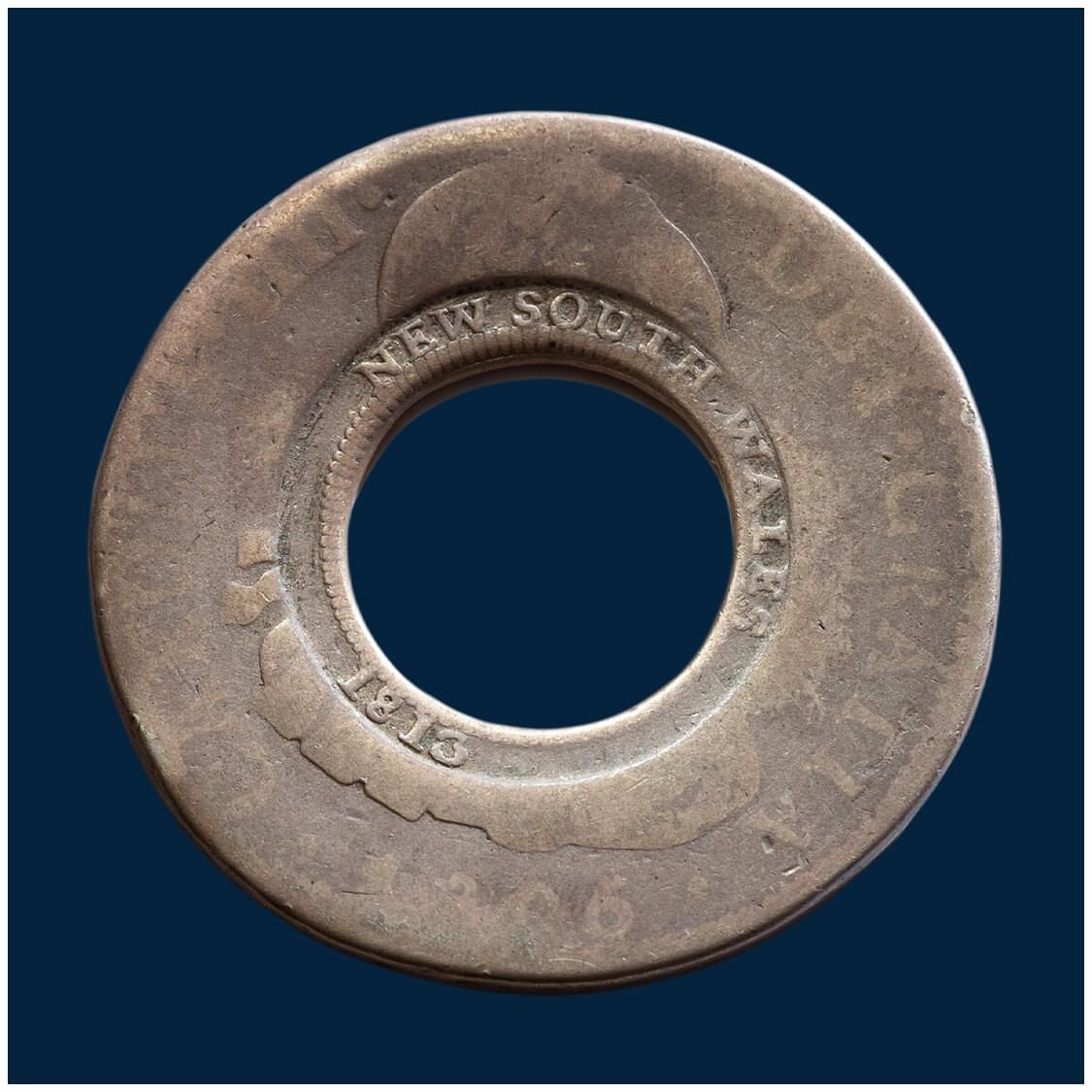
1813 Holey Dollar
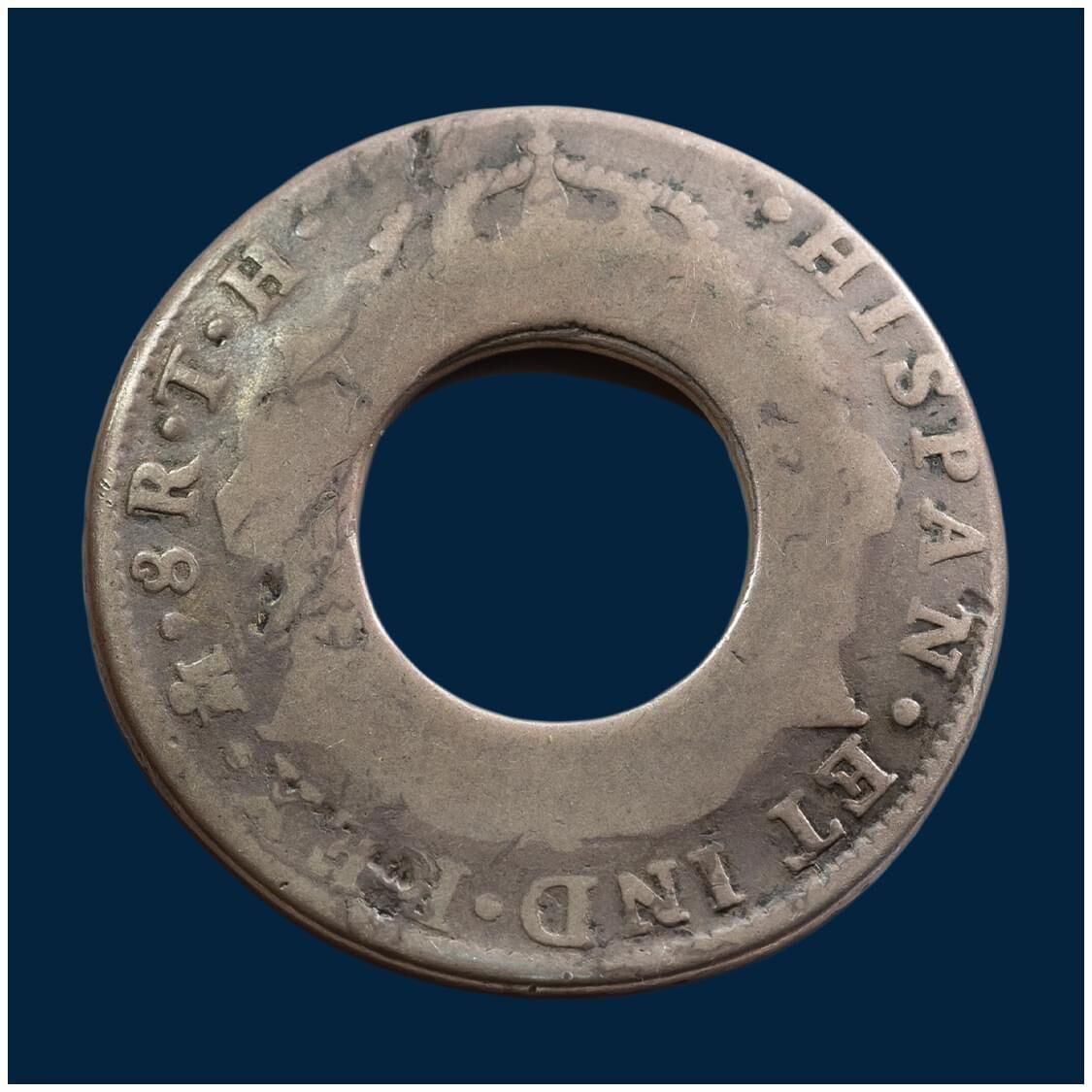
1813 Holey Dollar
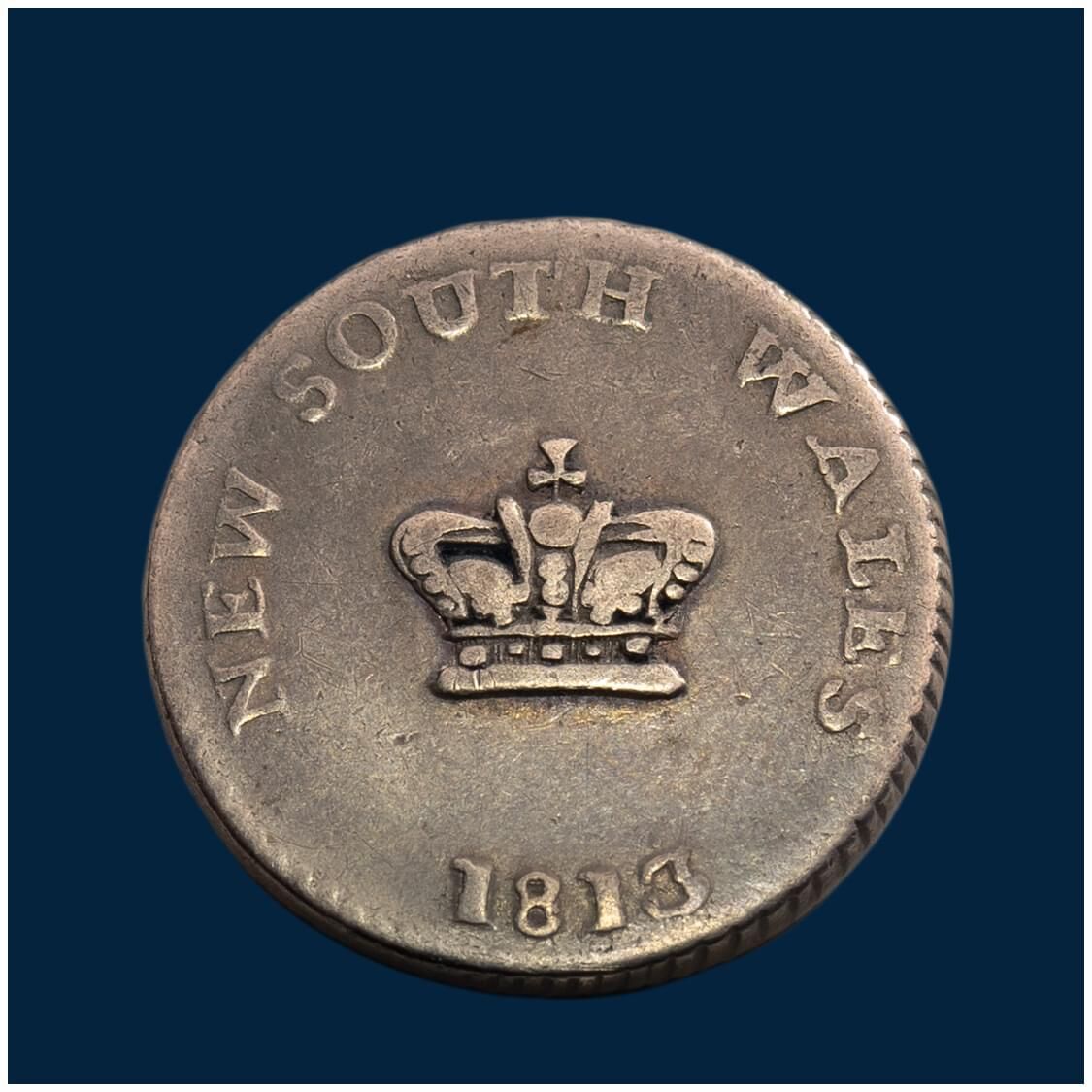
1813 Dump
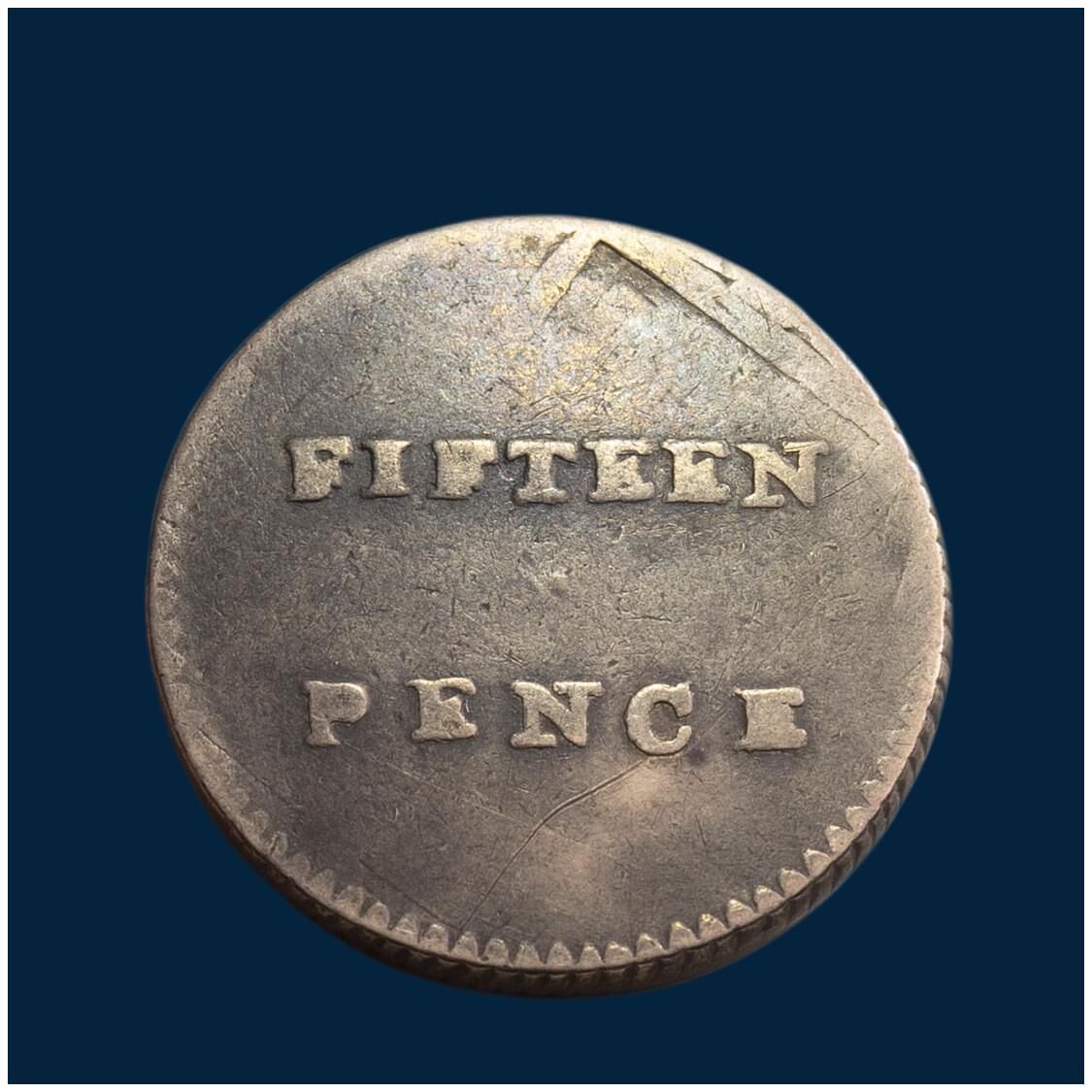
1813 Dump
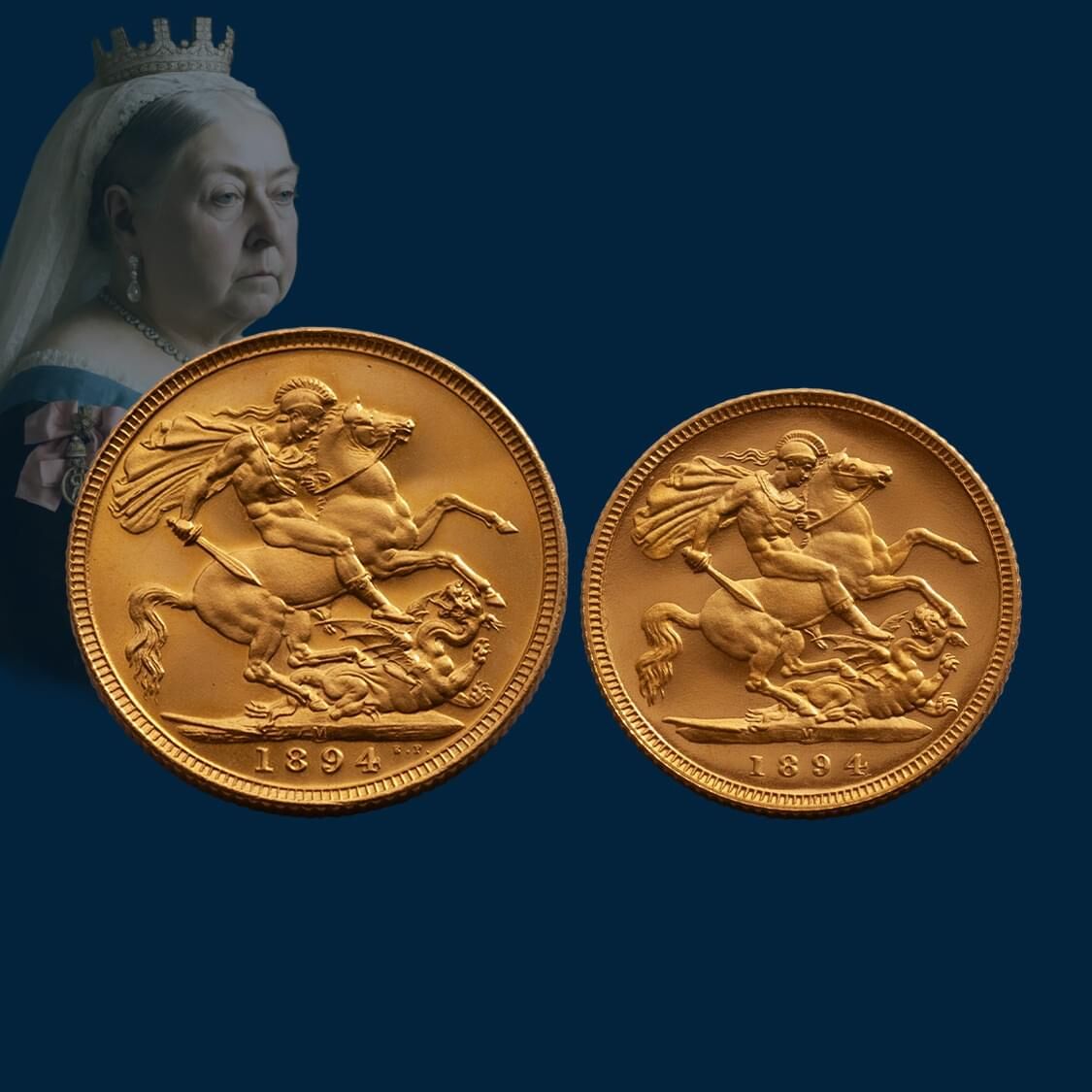
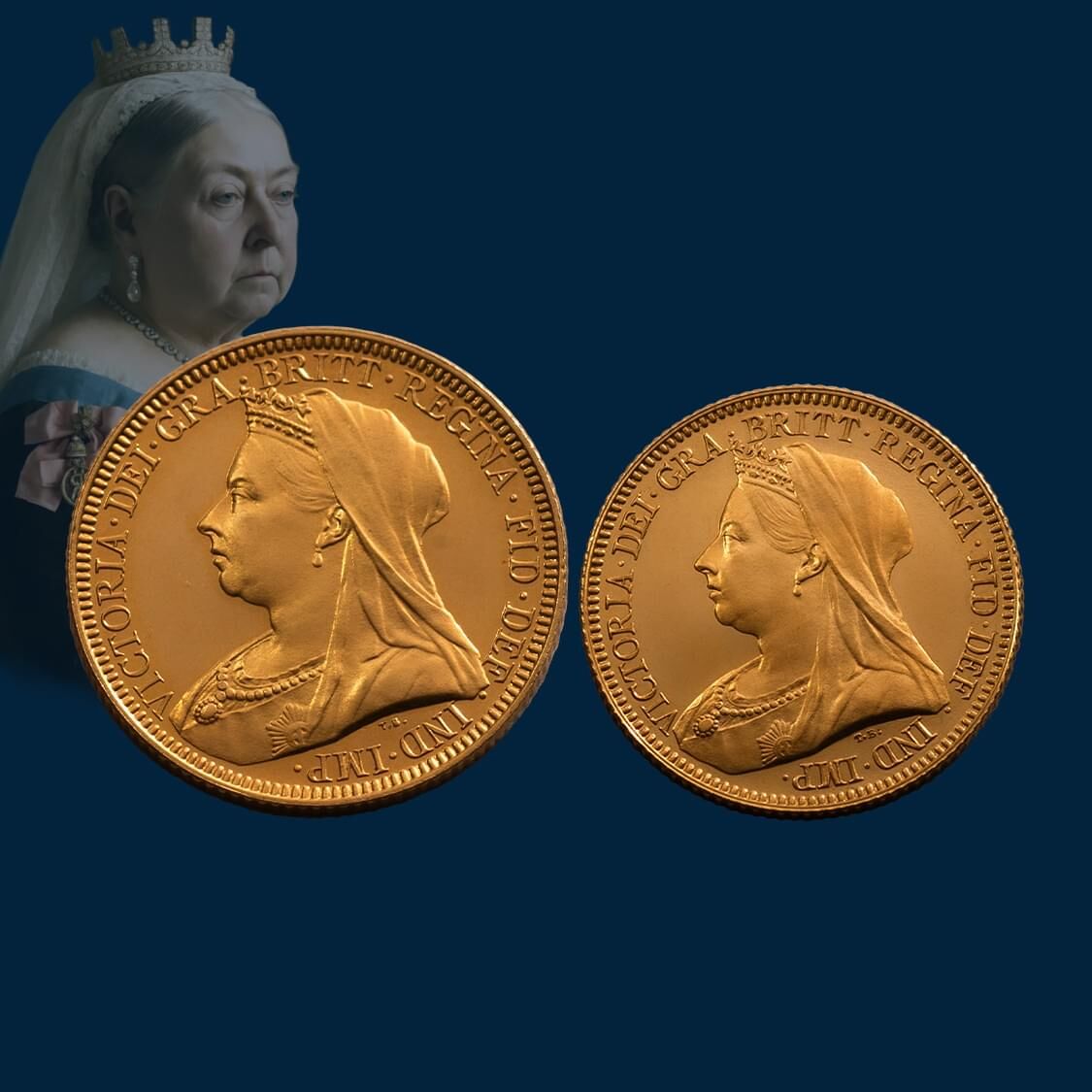
This 1894 Proof Sovereign is the only known example held by a private collector and was acquired by private treaty from Barrie Winsor in 1999.
Of the Veiled Head Melbourne Mint proof sovereigns (1893 to 1901), the 1894 is noted as "extremely rare".
An 1894 Proof Sovereign last appeared at auction in 1974, more than half-a-century ago, in London and has not been sighted at an international auction since. Australian coin auctions commenced in the 1950s and an example has never been sighted at an Australian auction.
The coin's 1974 auction appearance was conducted by Glendinings where it sold for £620, Lot 31. The catalogue notes that "all the important coins are illustrated by direct photography", this coin listed as lot 31 and photographed. Prior to its 1974 appearance, the coin was offered in the sale of the Murdoch Collection, sold Sotheby, Wilkinson & Hodge London 1903, lot 636. It seems that in terms of Australian proofs, "all roads lead to Murdoch".
(It is noted that the famed Whetmore Collection sold by Glendinings London in 1943 offered every example of the Melbourne Mint Proof Sovereigns 1893 to 1899 with the exception of 1894.)
And while it is acknowledged that in 1903 Murdoch owned two examples of the 1894 Proof Sovereign, the whereabouts of the second Murdoch coin is unknown.
This 1894 Proof Half Sovereign was also owned by John G Murdoch.
From a business that began manufacturing musical boxes, J. G. Murdoch’s company became a leader in the music industry, manufacturing pianos and organs. His successes provided him with the financial means of securing coins of the highest rarity and quality.
Two examples of the Melbourne Mint Proof 1894 Half Sovereign were held in the Murdoch Collection acquired direct from the Melbourne Mint. Both coins were offered at auction in 1903 by Sotheby, Wilkinson & Hodge, this example noted as Lot 637.
The coin re-surfaced and was offered at an Australian auction house, Noble Numismatics, in April 1998, as Lot 1563. Coinworks acquired this coin by private treaty from Barrie Winsor in 1999.
A second example of the 1894 Proof Half Sovereign is known and has appeared at an Australian auction. (The assumption that it was also part of the Murdoch Collection as he was the prime holder of Australia's Veiled Head proof coinage in the early 1900s.)
Australia's Gold Proof Coinage
The Holey Dollar is the nation’s first coin, minted in 1813 by order of Governor Lachlan Macquarie.
The issuing of Australia’s first coinage symbolised the changing dynamics of the penal colony of New South Wales. The colony had started out in 1788 as a jail, a repository for convicts, under the governorship of Captain Arthur Phillip. It had emerged some twenty-five years later as a thriving economy requiring a formal medium of exchange to support a burgeoning commercial hub.
An individually crafted presentation piece would be specially created for the occasion, minted to a proof or specimen finish. The technical term for such a piece is 'Coin of Record'.
A Coin of Record is an artistic interpretation of coinage, a strikingly beautiful coin beyond ordinary currency. Individually crafted to standards far exceeding that required of a circulating coin, using special coining techniques. Whereas production of circulating coinage was dictated by Government, Coins of Record were struck at the discretion of the mint master.
Coins of Record were not produced every year and, as they were individually crafted, the process was time consuming and the mintages minuscule. For gold proofs, generally ten pieces or less. There were several occasions when only a single coin was struck.
Coins of Record of Australia's sovereigns and half sovereigns are visually stunning, distinguished by brilliant golden-mirror surfaces. And it is their beauty and their ultra-exclusivity that drives demand.
Australian gold proof coins moved onto the international stage when the collection of John G. Murdoch was liquidated via Sotheby, Wilkinson & Hodge in London in 1903, following his passing in 1902. Murdoch held an extensive collection of gold proofs, including coins from the Sydney Mint, Young Head, Veiled Head and Jubilee eras.
The reputation of Australia's gold proof sovereigns and half sovereigns as an international commodity was set in stone in 1903, a widespread regard that holds to this very day, right across the globe. Recent international auction results (February 2026) confirm the status of Australia's gold proof coins as a globally traded commodity. It is noted that the frosted proofs of the Melbourne Mint (such as the 1894s) are keenly sought by American collectors.
© Copyright: Coinworks