The Sir Marcus Clark 1860 Aborigine Silver Threepence

The Sir Marcus Clark Aborigine Threepence is the earliest numismatic representation of an indigenous Australian. Struck in silver, and this example, almost proof-like. It is a truly remarkable piece of Australiana that is easy to get emotional about. And it's pretty obvious when you look at its auction performance over the last seventy-plus years that many a collector/bidder has got emotional about it. The piece has consistently exceeded expectations on the three occasions it has made a public appearance.
The Aborigine Threepence was created in 1860 by colonial silversmiths Hogarth & Erichsen who arrived in the colony as free-settlers in 1852. The works of Hogarth and Erichsen are revered and are held by the following institutions, to name but a few. The National Library of Australia, Canberra, The National Gallery of Australia, Canberra, The National Gallery of Victoria, Melbourne and The Powerhouse Museum, Sydney.
You know what you are getting when you acquire the Sir Marcus Clark Aborigine Threepence. It is a piece that promises, and delivers, an experience. In essence, it is a brand.
The development of a brand starts with an extraordinary quality coin. And then a great collector moves into the picture adding his/her name to the provenance, thereby firming its standing and establishing its reputation.
That great collector was Sir Marcus Clark KBE.
The first public appearance of the Aborigine Threepence occurred in July 1954 when James R. Lawson Auctioneers sold the collection of the late Sir Marcus Clark KBE.
The Aborigine Threepence was placed in the sale alongside his Holey Dollar and Dump, such is the respect with which it is held.
The results out of the 1954 Lawson auction are fascinating. The Aborigine Threepence fetched £38, twice that of the Sir Marcus Clark Dump that sold in the same auction for £18 and that we recently sold for $95,000.
The Marcus Clark Aborigine Threepence was auctioned again twenty-seven years later, and in a fiercely contested bidding war, sold for $23,000 on a pre-auction estimate of $12,500.
Its last auction appearance was in 2005, offered by Noble Numismatics, the piece selling for close to $100,000 on a pre-sale estimate of $75,000.
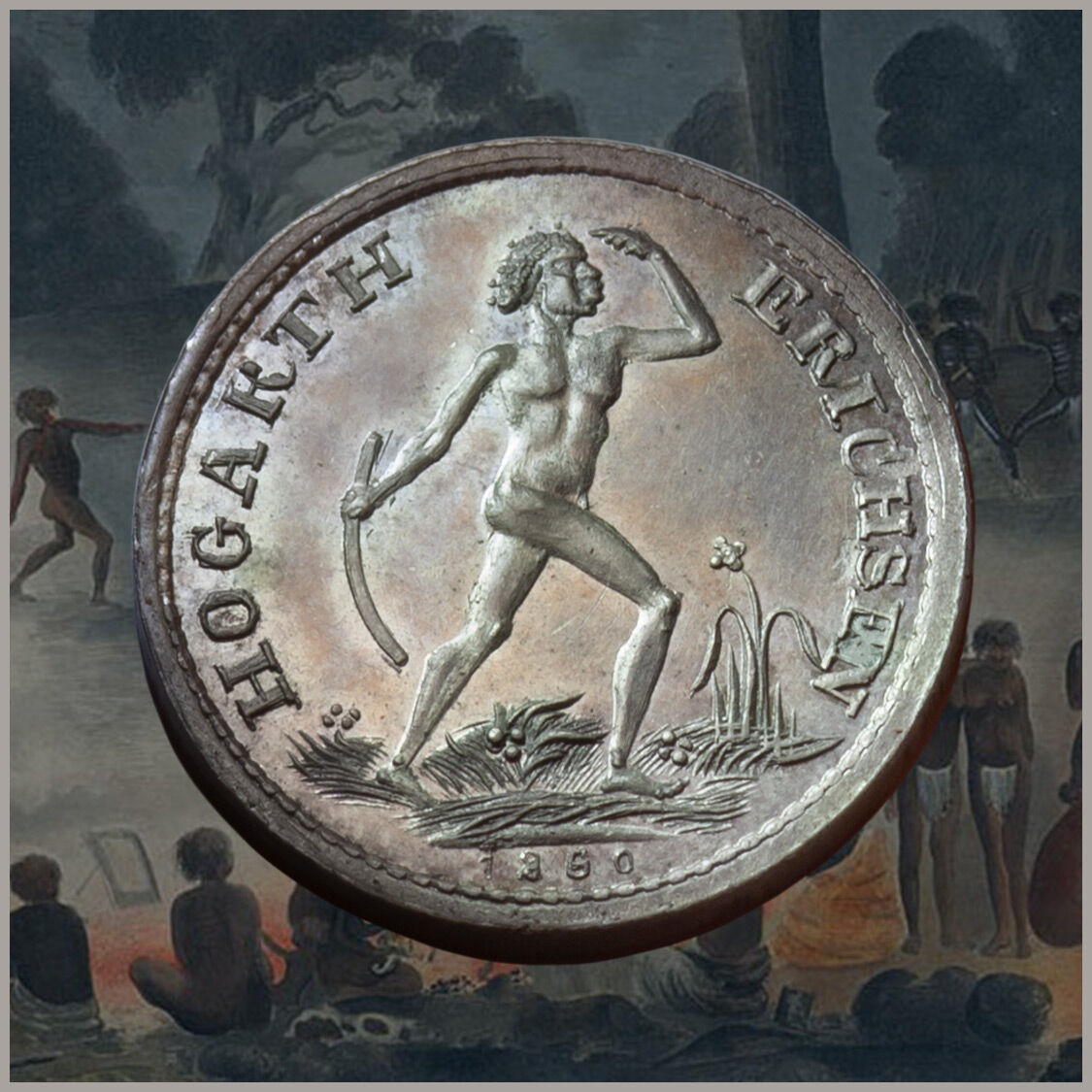
1860 Aborigine Threepence
ex Sir Marcus Clark
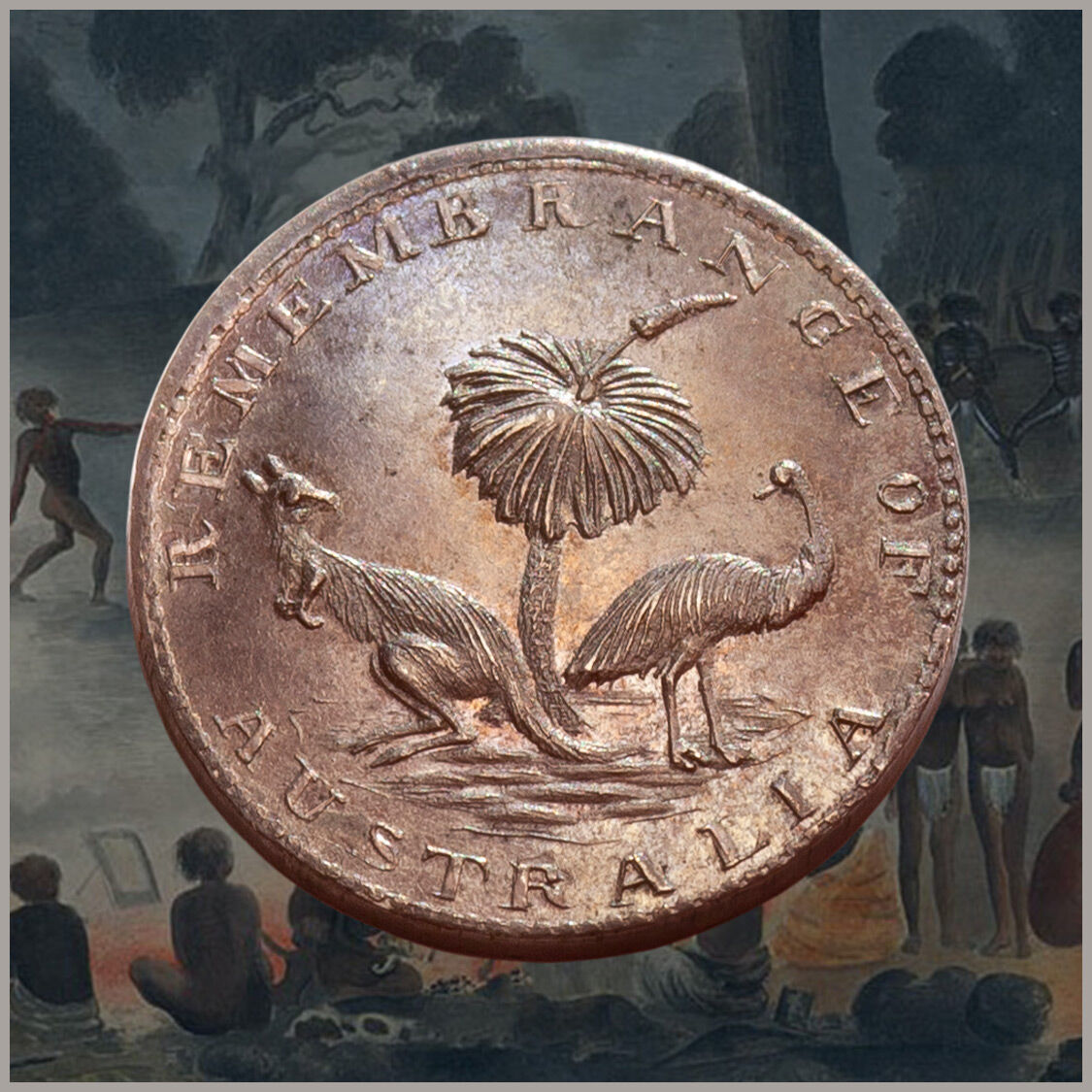
1860 Aborigine Threepence
ex Sir Marcus Clark
The 1860 Aborigine Threepence was minted by jewellers Julius Hogarth and Conrad Erichsen. Eight examples survive today, the Sir Marcus Clark specimen, the absolute finest known.
Scandinavian citizens, Hogarth was a sculptor and silversmith. Erichsen an engraver.
Both migrated to Australia to make their fortunes on the gold fields reaching Sydney on 11 December 1852. Failing to realise their ambitions, they utilised their skills and went into partnership as silversmiths opening their first enterprise at 255 George Street Sydney.
The firm quickly gained a reputation in the development of ‘Australiana’ themed decoration on metalwork and jewellery, which actively promoted the use of indigenous Australian floral and faunal elements and indigenous figures. Hogarth & Erichsen achieved great success during the 1850s notably through the vice-regal patronage of Governors Young and Denison.
The works of Hogarth and Erichsen are revered and are held by the following institutions, to name but a few.
• The National Library of Australia, Canberra
• The National Gallery of Australia, Canberra
• The National Gallery of Victoria, Melbourne
• The Powerhouse Museum, Sydney
Hogarth & Erichsen were numismatic trailblazers when in 1860 they created the Aborigine Threepence.
It would be another one hundred and twenty-eight years before Australia would acknowledge the contribution of Aboriginal Australians to our society when a portrait of a tribal elder appeared on the nation's Two Dollar coins created especially for the Bicentenary in 1988.
The Sir Marcus Clark 1860 Aborigine Silver Threepence
Price: $135,000
The Sir Marcus Clark Aborigine Threepence is the earliest numismatic representation of an indigenous Australian. Struck in silver, and this example, almost proof-like. It is a truly remarkable piece of Australiana that is easy to get emotional about. And it's pretty obvious when you look at its auction performance over the last seventy-plus years that many a collector/bidder has got emotional about it. The piece has consistently exceeded expectations on the three occasions it has made a public appearance.
© Copyright: Coinworks