SB0626 A unique pair of 1893 Proof Sovereign and Proof Half Sovereign, brilliant FDC, the two coins offered for $225,000.
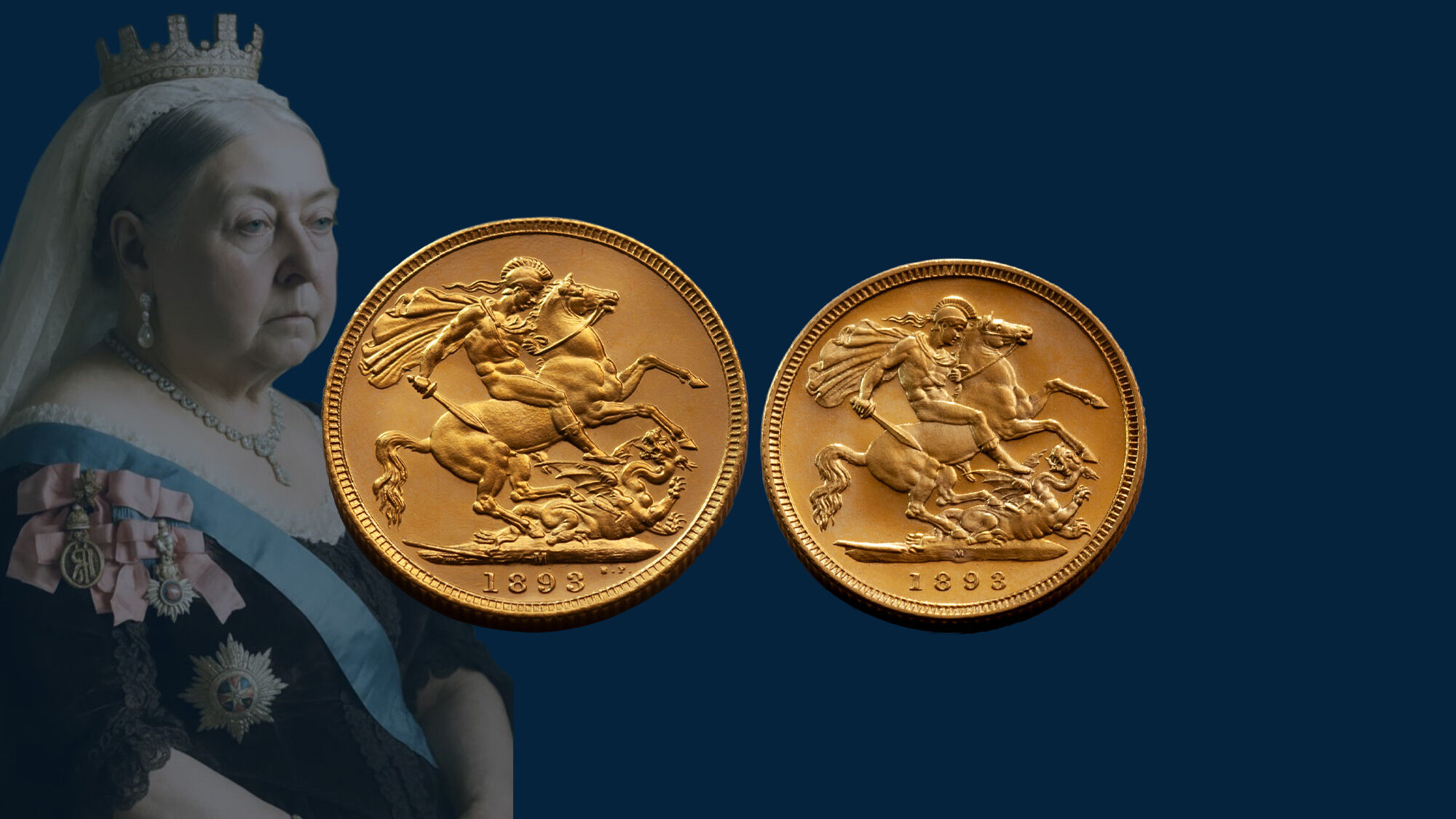
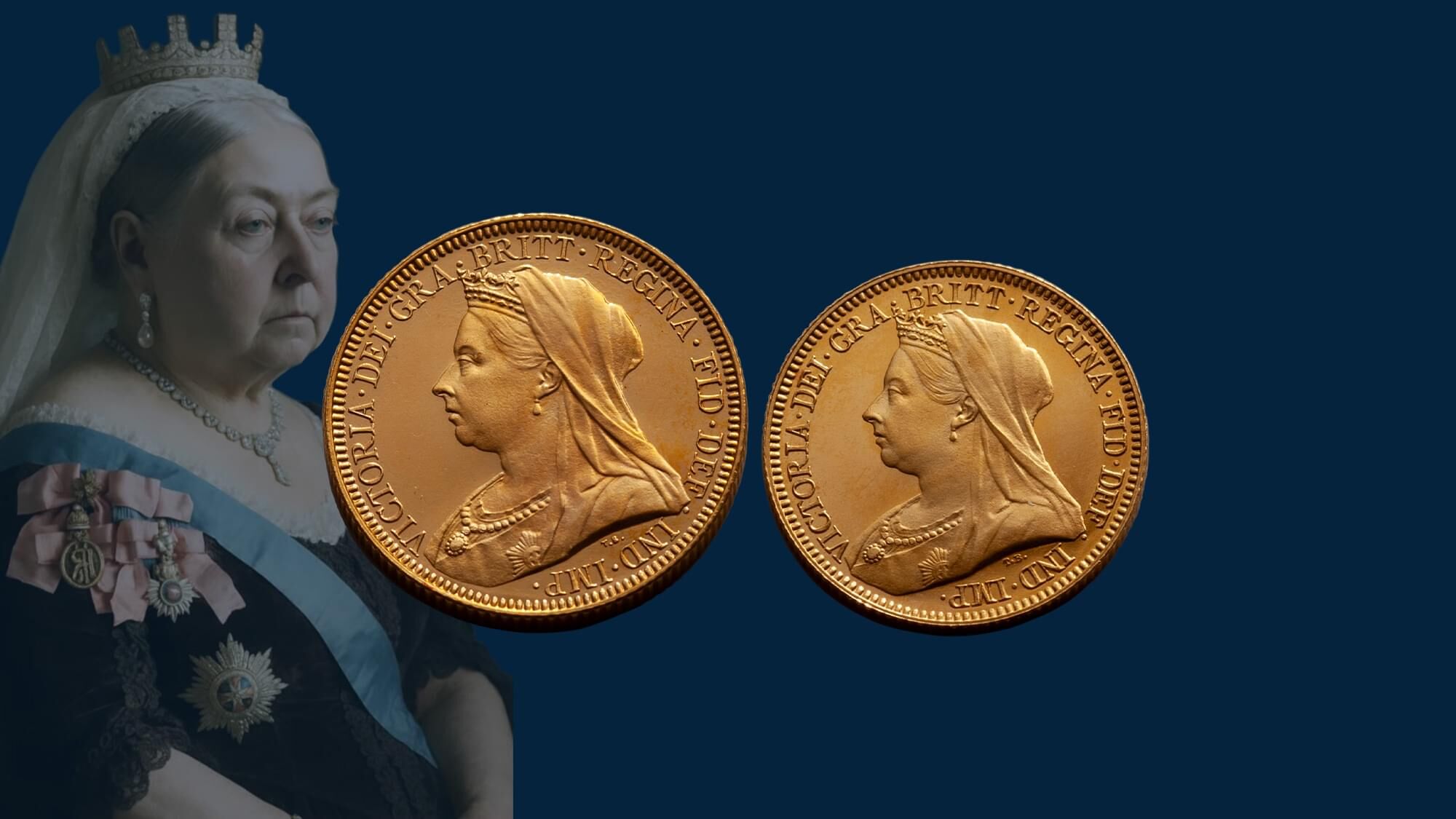
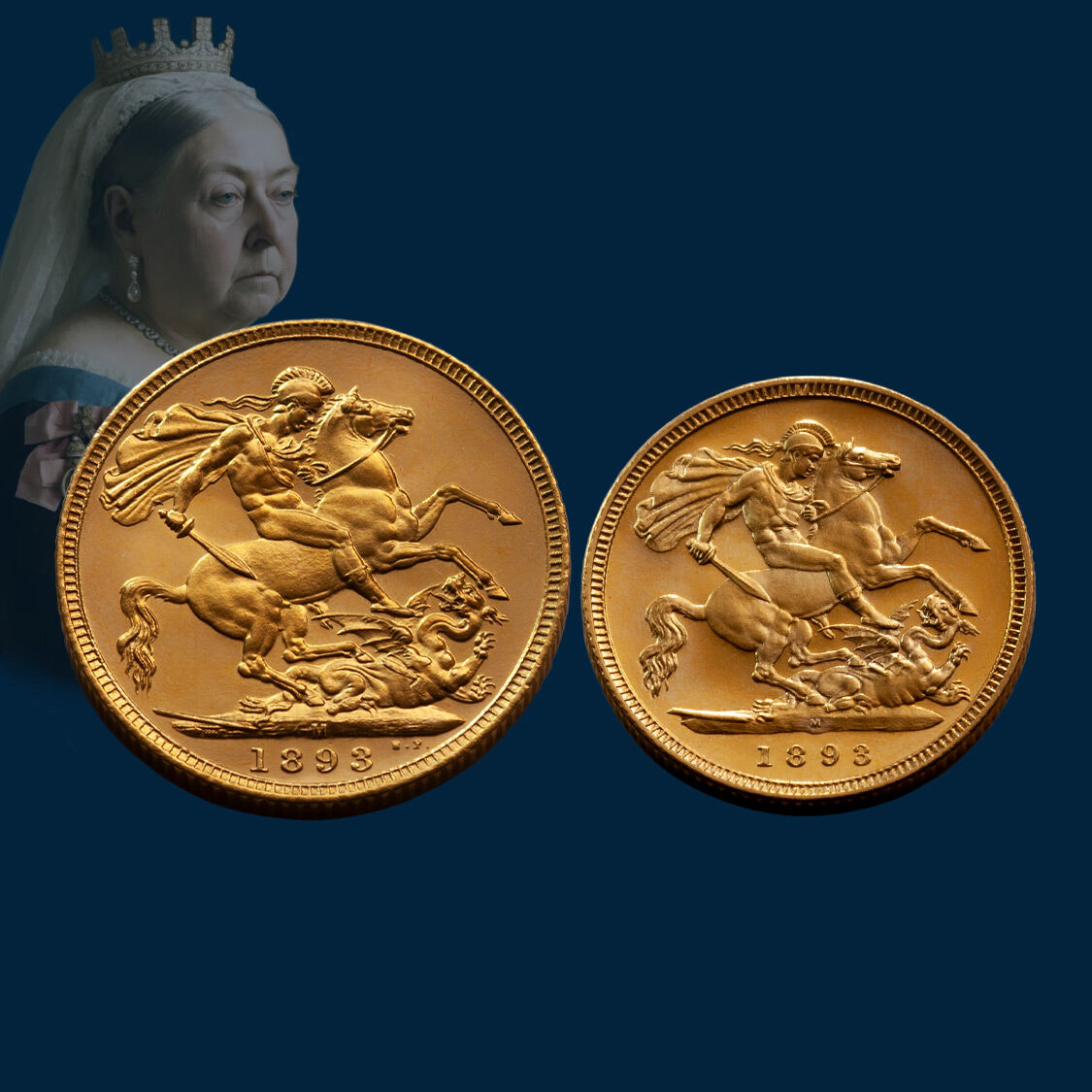
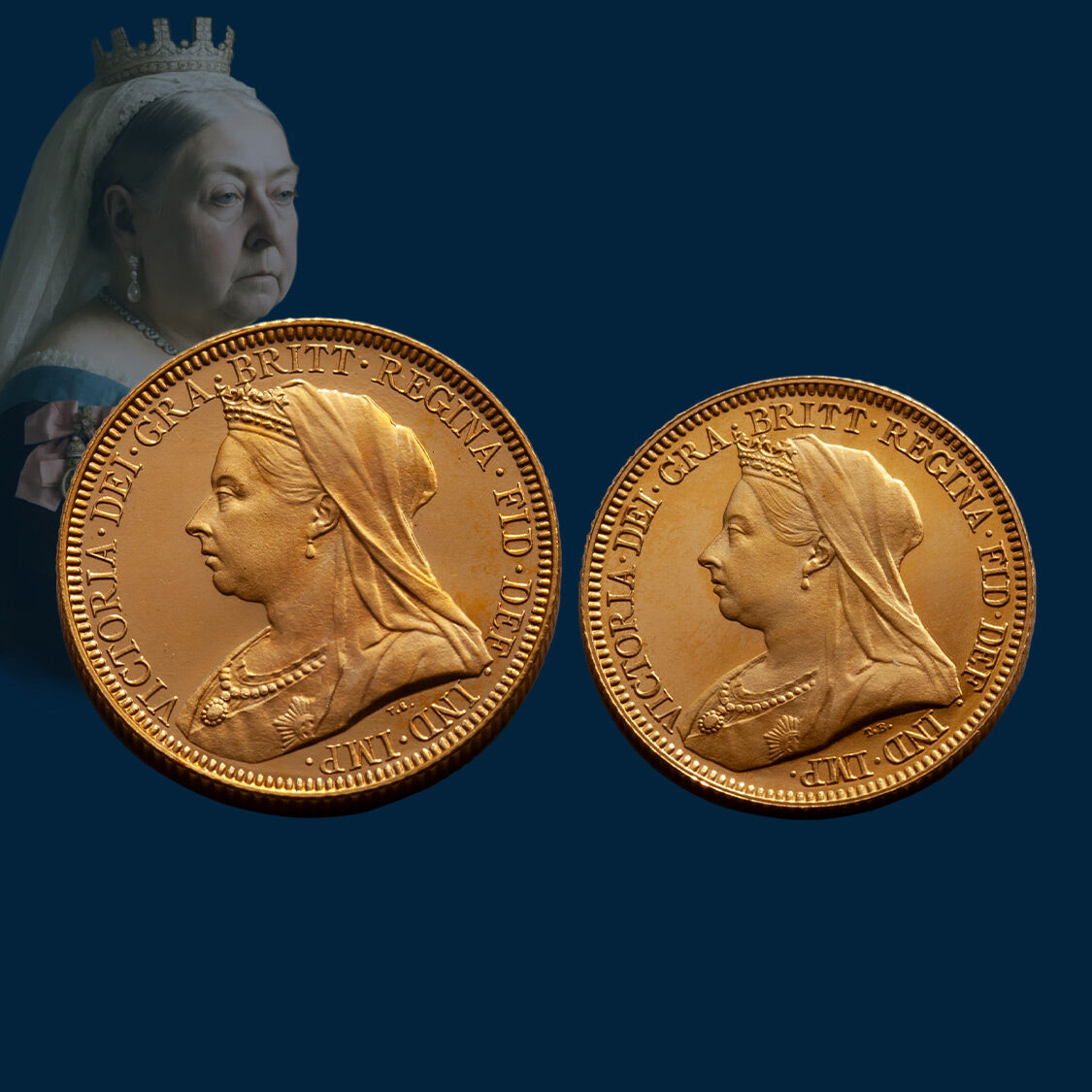
The 1893 Proof Sovereign and 1893 Proof Half Sovereign shown above were struck as Coins of Record at the Melbourne Mint.
Naturally heirloom-worthy, the pair offers rarity you can’t replicate. The pair is unique.
Individually the coins have esteemed qualities.
The 1893 Proof Sovereign represents the first year of the Veiled Head Design. The coin is rare, one of two known.
The 1893 Proof Half Sovereign also represents the first year of the Veiled Head design. It is unique. There is one other aspect to the half sovereign that gives it an elite status, it is a proof striking of Australia's rarest circulating half sovereign, the 1893 Half Sovereign. The Proof 1930 Penny, the Proof 1923 Half Penny, the 1920 Specimen Sovereign. Coins of Record of rare date circulating coins come in for extra attention.
The 1893 Proof Half Sovereign was always dear to Barrie Winsor's heart.
Proof strikings of rare date coins have status.
and important. The coins are historically important, representing th0 first year of the Veiled Head design. The half sovereign in particular is a proof striking of Australia's rarest circulating half sovereign. The pair is unique.
Both coins were acquired in 1999 by Barrie Winsor in a private treaty transaction from the UK Strauss Family Collection. Both coins were more than likely offered in 1903, as part of the Murdoch Collection.
U.S. and European collectors view Australia's gold proof Coins of Record as opportunities. A recognition of their extreme scarcity and the view that they are offered infrequently and any sighting is an opportunity for purchase.
Australian collectors also see the offering as an opportunity. With a bit of emotion thrown in. For the coins represent the nation's history.
The Melbourne Mint began operating in 1872 and struck its first proof coin one year later, the coin retained within minting circles.
The first proof coin out of this Young Head era to move into collectors circles was 1884. And repeated again in 1886 and 1886. The Young head era is a period of ...
The Melbourne Mint was relatively prolific in the production of proof coins, primarily due to the influence of British collector, John G. Murdoch. The mint enjoyed a commercial relationship with Murdoch and by 1884, the mint was supplying (selling) him proofs. From 1888 until 1901, the end of the Veiled Head era, Murdoch received Melbourne Mint proofs of each year. And while the mintages remained minuscule, it is the regularity of the issues that is the defining difference between Melbourne Mint Coins of Record and those of the Perth and Sydney Mints. Proof coin production at the Melbourne Mint fell away in 1902, due to Murdoch's passing.
The Melbourne Mint was a gold coin producer for sixty years (1872 - 1931) and struck Coins of Record in twenty-five of them, primarily in the fifteen years of the Jubilee and Veiled Head era. For collectors, the pool of representative examples of Melbourne Mint Coins of Record is in the vicinity of forty proof sovereigns and thirty proof half sovereigns. Still extremely modest, but this discussion is all about relativities.
The Sydney Mint had no control over its proof strikings for the first sixteen years of its opening. Australia's Coins of Record featuring the Sydney Mint design were struck at the Royal Mint London in 1853, 1855, 1856, 1857, 1866 and 1870. The proximity to already established collector markets in the U.K. and Europe meant that the Sydney Mint proofs were traded commercially soon after they were struck.
The Half Sovereign was sold into
They left the mint, as a pair, more than a century ago destined for the collection of revered British collector, John G. Murdoch. They are offered today as a pair, brilliantly preserved, for $150,000.
Naturally heirloom-worthy, the pair offers rarity you can’t replicate.
We have sold a handful of individual proof sovereigns out of this era. And even less proof half sovereigns. It is the only Melbourne Mint gold proof pair we have offered in fifty-four years of trading. And that’s a powerful statement given that this is an area of the rare coin market that is our strength.
Today's collectors show a marked preference for pairs, if and when they are available. Or complete sequences or complete sets. The sentiment today is that while each coin should be individually savoured, it is but a moment in time. A complete set is the whole story.
And this principle is being consistently taken up and is noted in Coinworks sales. The Complete Kookaburra Collection sold within a few hours of its release. The 1901 Perth Mint Proofs sold as a pair for $525,000, the purchaser commenting that he would not have bought an individual coin because it was not the complete story.
The same views were expressed by the purchaser of the 1871 Sydney Mint Proof Sovereign and Half Sovereign. "I will take both, and I wouldn't have taken just one''.
A single coin is a chapter. A complete set is the entire narrative and preserves the integrity of the Mint’s original intention of striking the sovereign and the half sovereign. Furthermore, complete sets are naturally heirloom-worthy. They’re easier to pass down, easier to explain, and more likely to retain their identity over generations. Families understand the concept of the full set instantly.
Let's also be clear. There is a lot of money out there, waiting to be placed. And collectors with significant financial resources are looking to spend their money on an item that has substance. And pairs or sets have more substance than an individual coin.
The 1893 proofs come with an illustrious history, held by esteemed British collector, John G Murdoch. From a business that began manufacturing musical boxes, J. G. Murdoch’s company became a leader in the music industry, manufacturing pianos and organs. His successes provided him with the financial means of securing coins of the highest rarity and quality. An expansion of the provenance on both coins is detailed below.
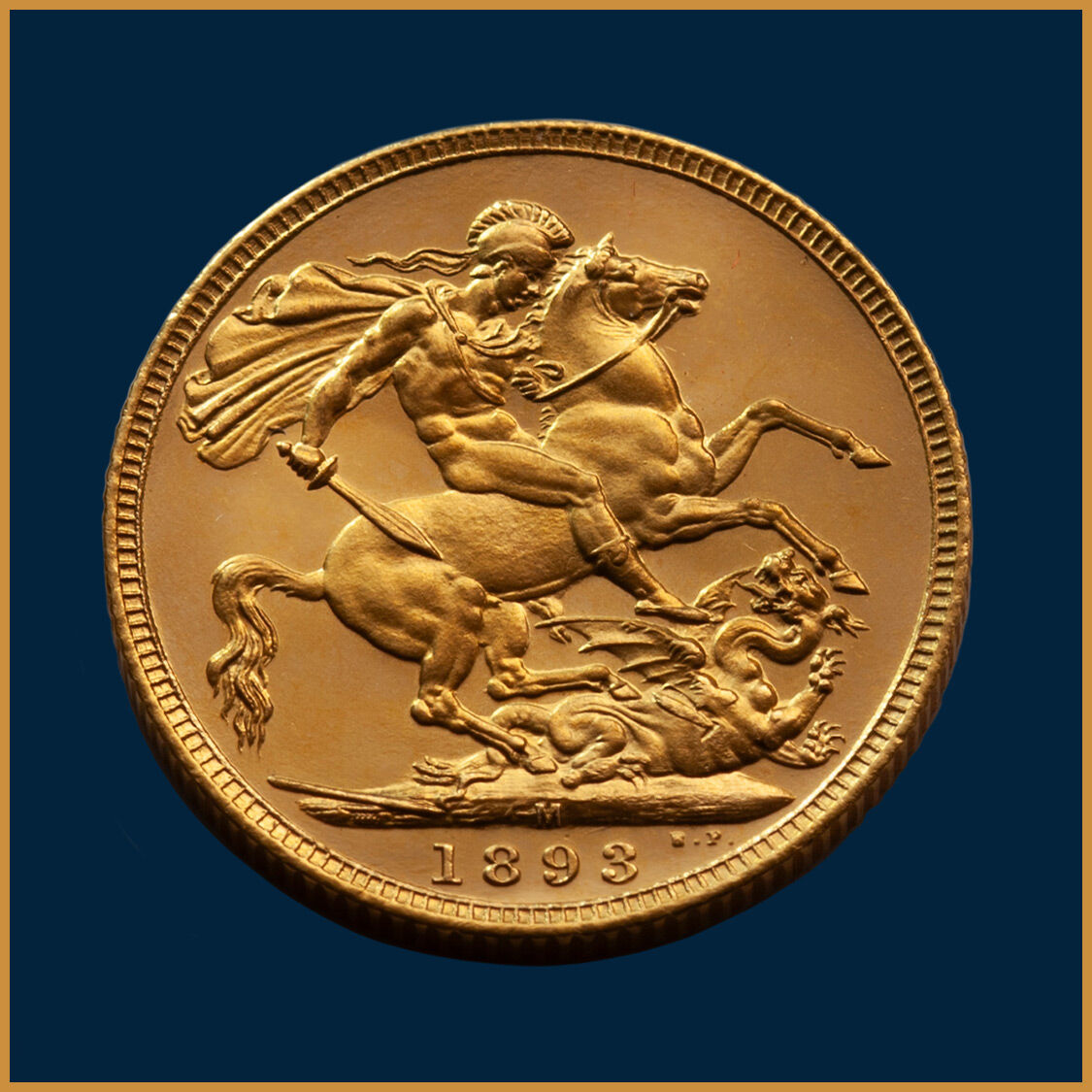
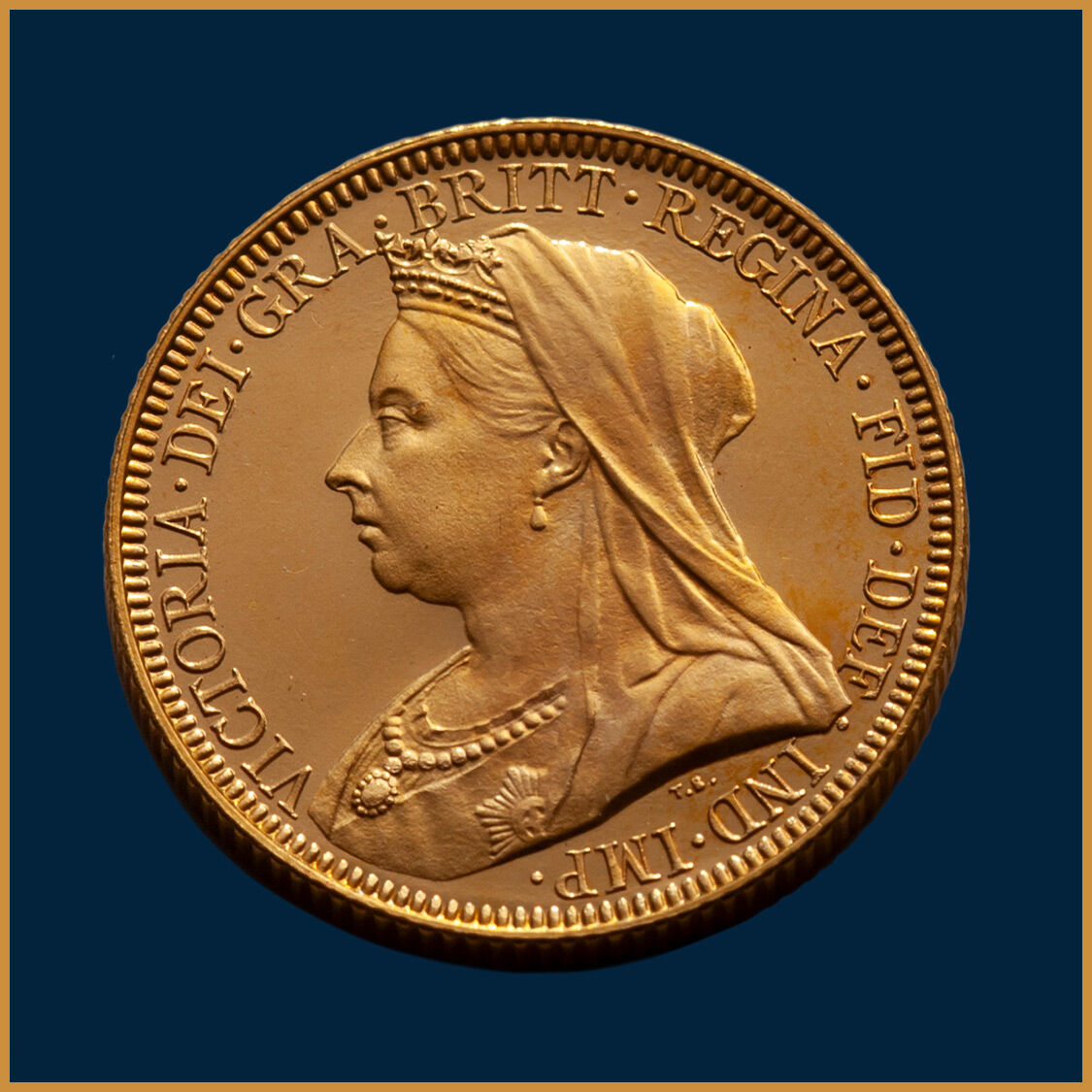
This 1893 Proof Sovereign struck as a Coin of Record at the Melbourne Mint.
One of two known, ex Strauss Collection, International Auction Galleries Sale 88 September 2018 (Lot 443) .
Of the Veiled Head Melbourne Mint proof sovereigns (1893 to 1901), the 1894 is noted as "extremely rare".
An 1893 Proof Sovereign last appeared at auction in 1974, more than half-a-century ago, in London and has not been sighted at an international auction since. Australian coin auctions commenced in the 1950s and an example has never been sighted at an Australian auction.
The coin's 1974 auction appearance was conducted by Glendinings where it sold for £620, Lot 31. The catalogue notes that "all the important coins are illustrated by direct photography", this coin listed as lot 31 and photographed. Prior to its 1974 appearance, the coin was offered in the sale of the Murdoch Collection, sold Sotheby, Wilkinson & Hodge London 1903, lot 636. It seems that in terms of Australian proofs, "all roads lead to Murdoch".
(It is noted that the famed Whetmore Collection sold by Glendinings London in 1943 offered every example of the Melbourne Mint Proof Sovereigns 1893 to 1899 with the exception of 1894.)
And while it is acknowledged that in 1903 Murdoch owned two examples of the 1893 Proof Sovereign, the whereabouts of the second Murdoch coin is unknown.
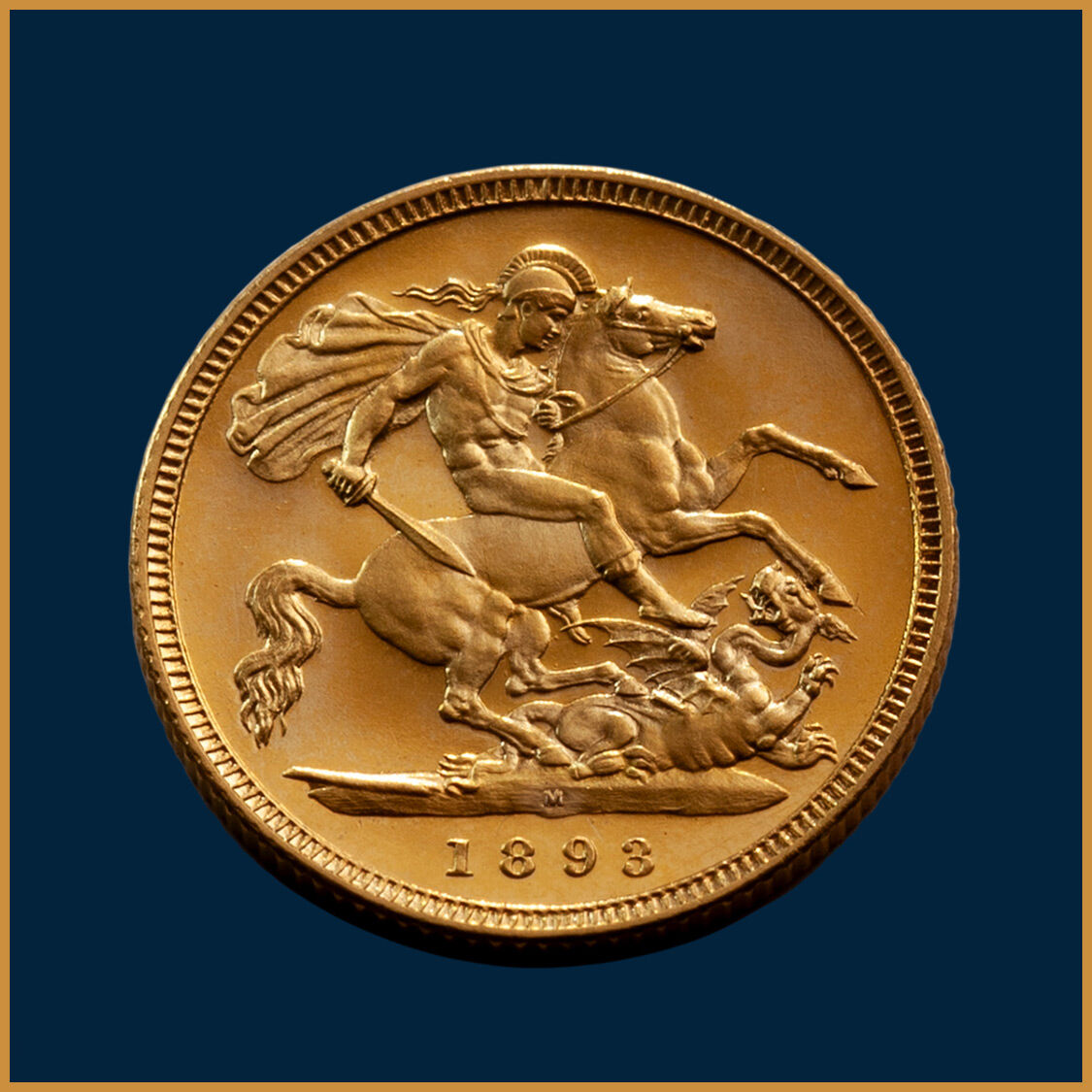
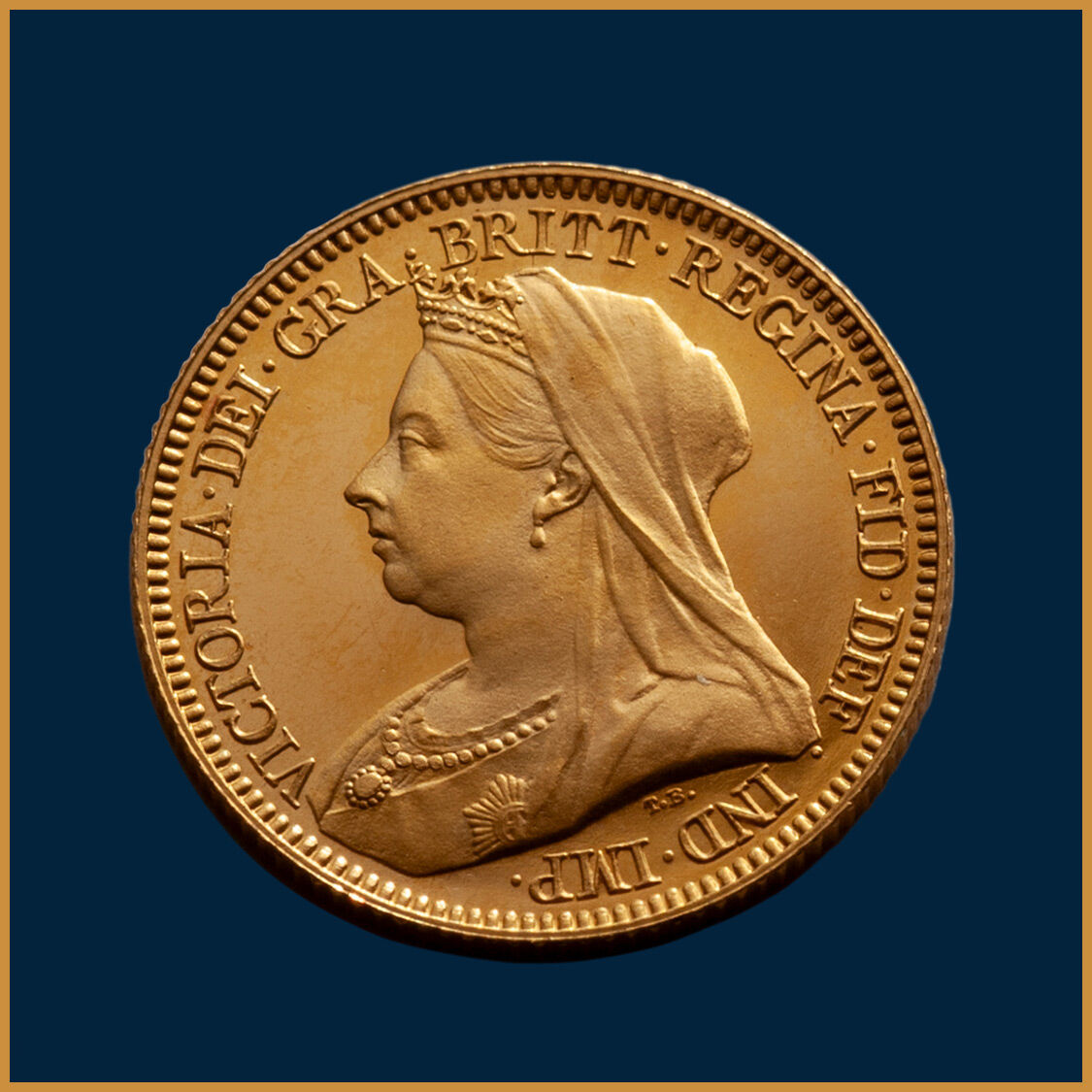
1893 Proof Half Sovereign struck as a Coin of Record at the Melbourne Mint. Ex Strauss Collection 1999, thence to Quartermaster Collection (Lot 281).
Believed unique.
Two examples of the Melbourne Mint Proof 1893 Half Sovereign were held in the Murdoch Collection acquired direct from the Melbourne Mint.
Both coins were offered at auction in 1903 by Sotheby, Wilkinson & Hodge, this example noted as Lot 637.
The coin re-surfaced and was offered at an Australian auction house, Noble Numismatics, in April 1998, as Lot 1563. Coinworks acquired this coin by private treaty from Barrie Winsor in 1999.
A second example of the 1893 Proof Half Sovereign is known and has appeared at an Australian auction. (The assumption that it was also part of the Murdoch Collection as he was the prime holder of Australia's Veiled Head proof coinage in the early 1900s.)
Australia's Gold Proof Coinage
When the Royal Mint London or the British Museum requested a sovereign or half sovereign from an Australian Mint, they were never sent a circulation strike. Nor would a circulation strike be presented to the monarch, gifted to a dignitary or sent to an influential collector. And a circulation strike would not be displayed at a Colonial Exhibition.
An individually crafted presentation piece would be specially created for the occasion, minted to a proof or specimen finish. The technical term for such a piece is 'Coin of Record'.
A Coin of Record is an artistic interpretation of coinage, a strikingly beautiful coin beyond ordinary currency. Individually crafted to standards far exceeding that required of a circulating coin, using special coining techniques. Whereas production of circulating coinage was dictated by Government, Coins of Record were struck at the discretion of the mint master.
Coins of Record were not produced every year and, as they were individually crafted, the process was time consuming and the mintages minuscule. For gold proofs, generally ten pieces or less. There were several occasions when only a single coin was struck.
Coins of Record of Australia's sovereigns and half sovereigns are visually stunning, distinguished by brilliant golden-mirror surfaces. And it is their beauty and their ultra-exclusivity that drives demand.
Australian gold proof coins moved onto the international stage when the collection of John G. Murdoch was liquidated via Sotheby, Wilkinson & Hodge in London in 1903, following his passing in 1902. Murdoch held an extensive collection of gold proofs, including coins from the Sydney Mint, Young Head, Veiled Head and Jubilee eras.
The reputation of Australia's gold proof sovereigns and half sovereigns as an international commodity was set in stone in 1903, a widespread regard that holds to this very day, right across the globe. Recent international auction results (February 2026) confirm the status of Australia's gold proof coins as a globally traded commodity. It is noted that the frosted proofs of the Melbourne Mint (such as the 1894s) are keenly sought by American collectors.
© Copyright: Coinworks