1930 Penny with two sides of the central diamond and six plump pearls

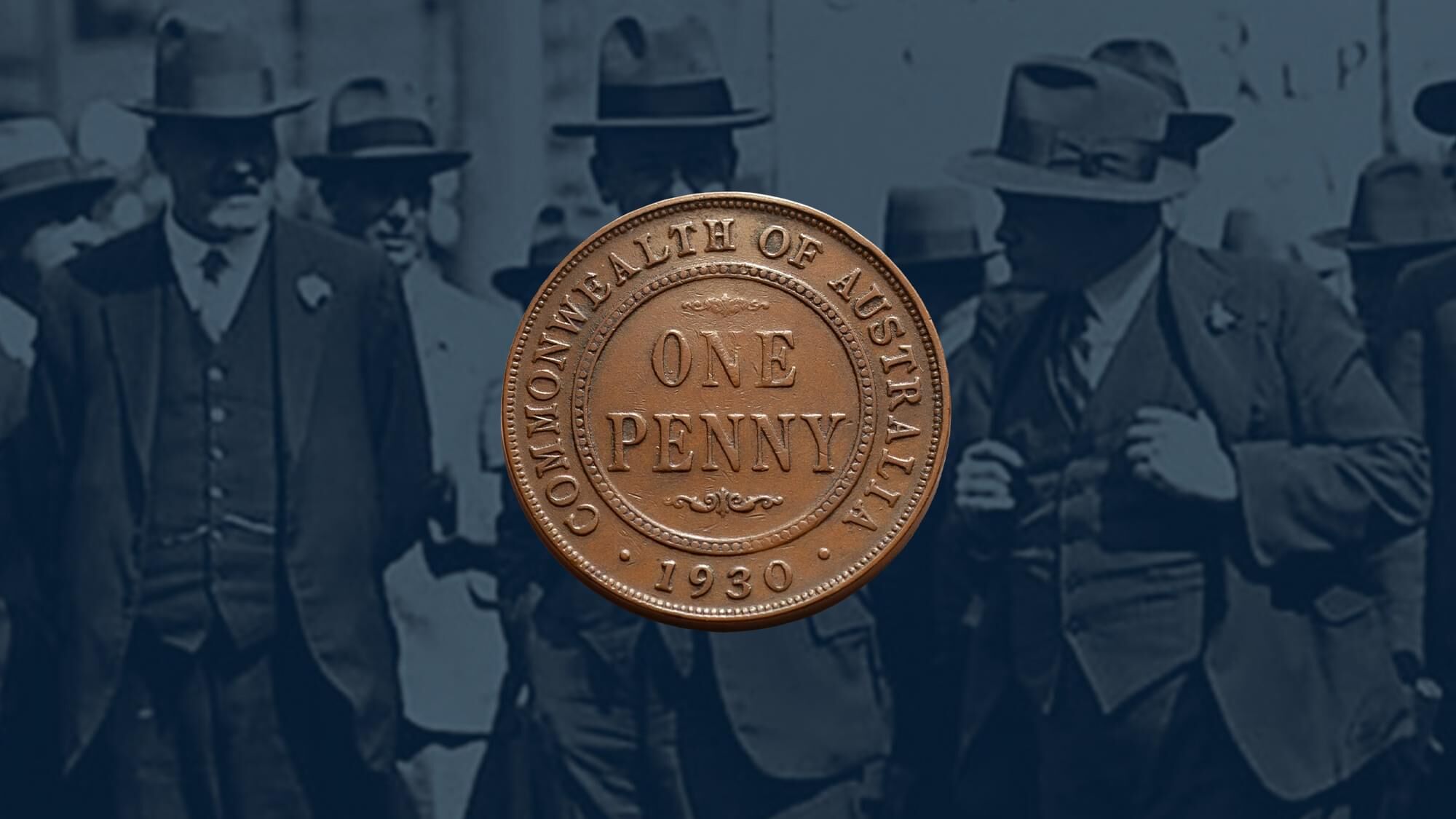
Our rule of thumb for buying a 1930 Penny has never changed. Irrespective of the quality, pick a coin that is pleasing to look at. Acquire a coin that is visually very attractive and that has no obvious defects from its time in circulation. So, when you show it off to family and friends you don’t commence the conversation with an apology to explain why there is an unsightly mark or obvious defect.
It is a fact that the 1930 Penny was not discovered until the 1940s, allowing at least a decade of circulation before collectors even knew of their existence. Which means that most 1930 Pennies have been handled, mishandled, dropped, scratched, or rattled around in change.
The simple point - of acquiring a 1930 Penny that looks 'good' - really counts when, further down the track, it comes time for you to sell and realise on your investment.
And this 1930 Penny is a great coin. And worth owning.
There are three basic steps involved when considering a 1930 Penny.
The first step is to look at the coin in the flesh using just the naked eye. A truly great coin will always look good to the unaided eye. And this coin is impressive.
It is evenly toned a handsome chocolate brown, very glossy surfaces. The edges, an aspect that we value highly, are solid. (In our view the edges of a coin are akin to a frame around a work of art. And you wouldn't accept a painting if a piece of a frame was missing or badly damaged!)
Also solid, the date '1930', and the legend Commonwealth of Australia. The upper and lower scrolls, the inner beading are all in evidence.
The second step is to take up a magnifying glass and examine the coin in detail. The eye glass re-confirms what we have seen to the naked eye and much, much more. We have graded this coin About Very Fine on the obverse which indicates that there are two, nearly three sides of the central diamond and six crisp pearls. The coin has minimal marks in the fields and no unsightly gouges.
The final step is to re-visit the coin with the naked eye. Just to make sure that you have taken everything in. Start with the edges and work your way in looking at the design detail and the fields.
The final assessment of this 1930 Penny is that it is a great coin and passes our three-point assessment with flying colours.
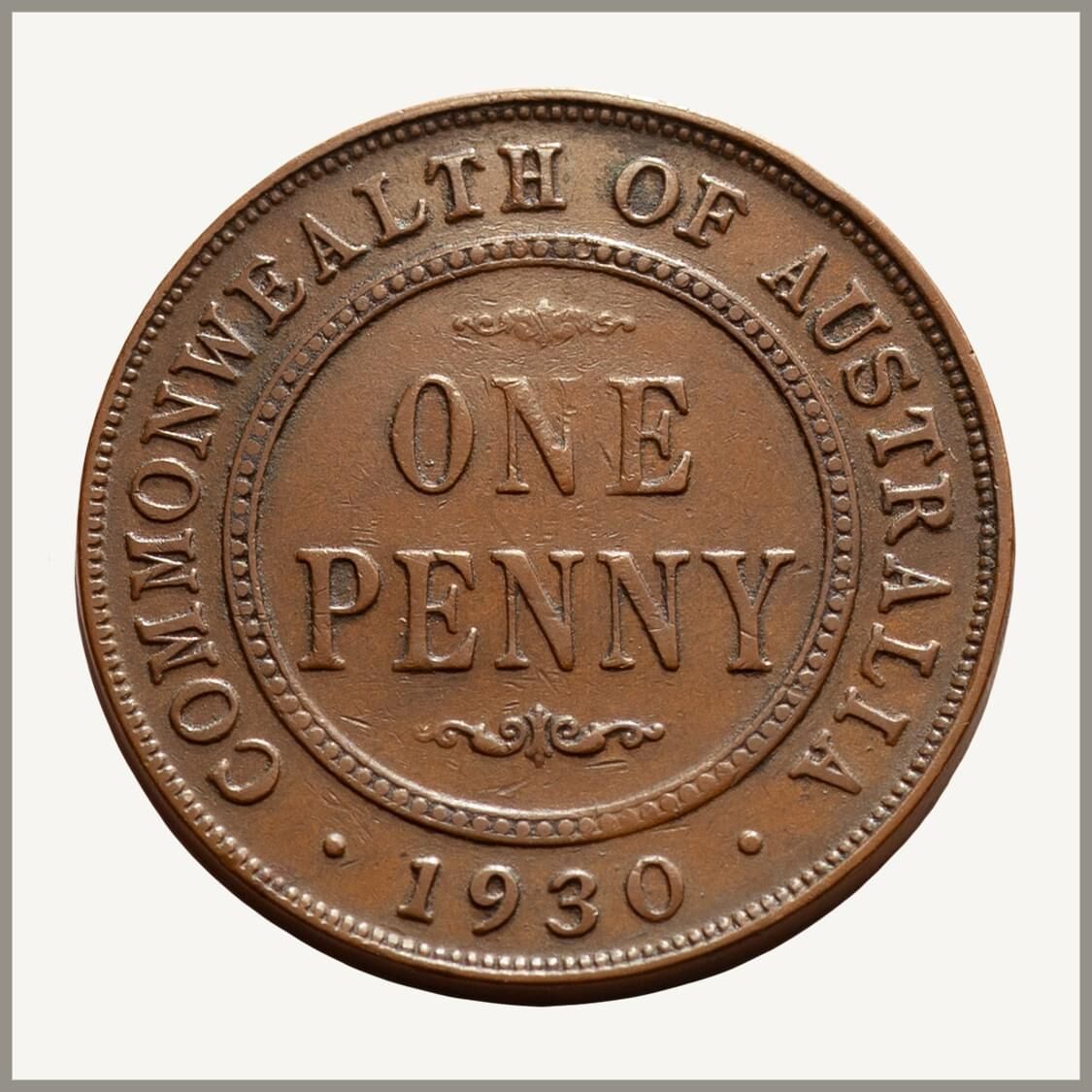
Commonwealth of Australia 1930 Penny
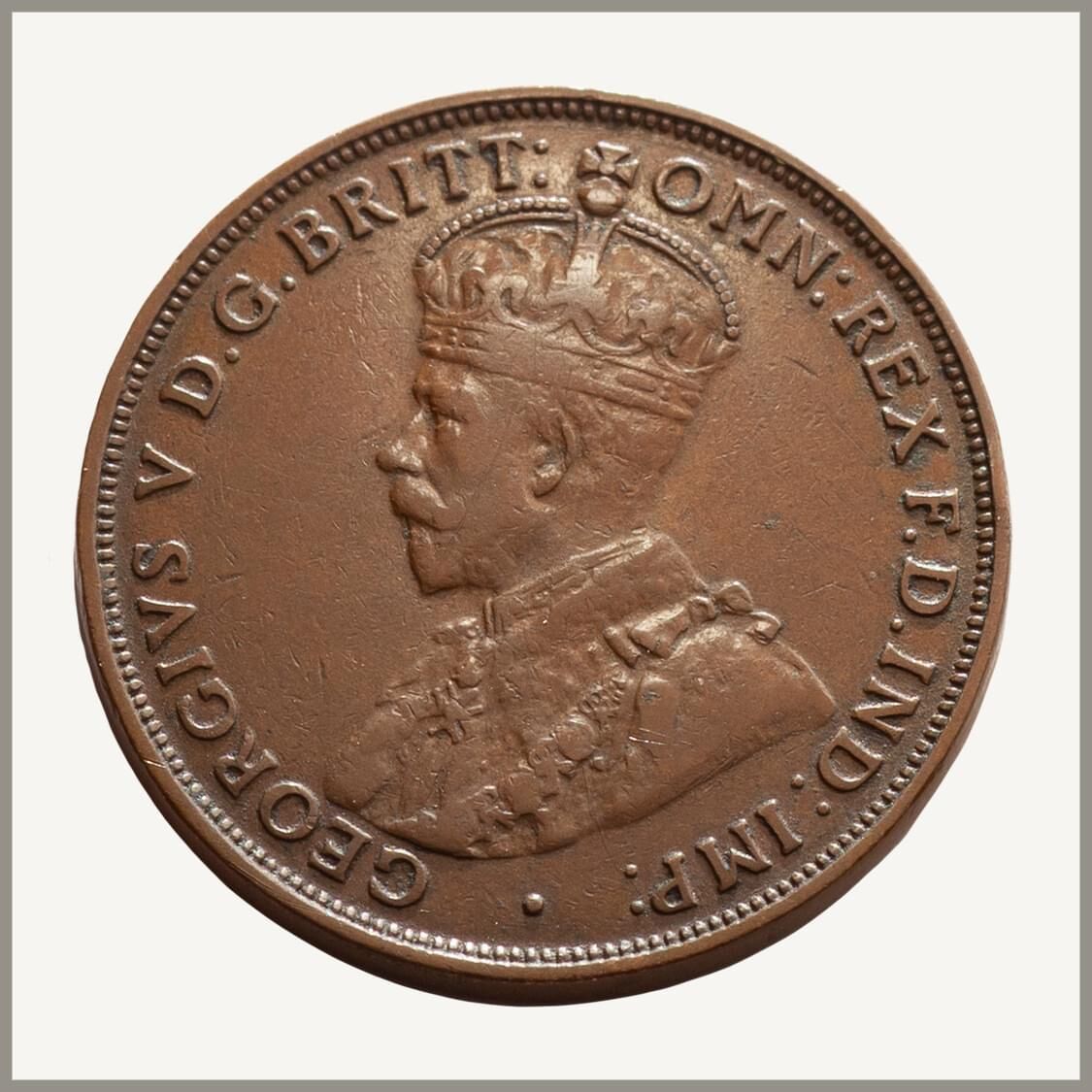
Commonwealth of Australia 1930 Penny
Acquiring a 1930 Penny is a proud moment for an Australian coin collector. It an occasion to be savoured and celebrated for the 1930 Penny is an Australian icon, a part of the nation's folklore. It is the coin that was borne out of the Great Depression, never meant to be struck with its origins shrouded in mystery and romance.
Acquiring a 1930 Penny doesn't happen every day simply because of its extreme rarity.
A meagre 1500 coins were believed struck.
When a 1930 Penny is passed on to a family member that person is being gifted an item of value and increasing value. And they are being passed an item that was particularly special to its owner evoking wonderful memories.
And this 1930 Penny is a well above average example.
There are many reasons why collectors love the 1930 Penny and one of the prime reasons is its financial reliability. It is a solid coin. And this genuinely counts. In fact, we would go one step further and say that over the long term the 1930 Penny has probably been one of our most consistent and trustworthy numismatic performers.
The second reason is that the 1930 Penny is as Australian as you can get. Struck during the Great Depression, the 1930 Penny is the nation’s glamour coin and is unrivalled for popularity, enjoying a constant stream of demand unmatched by any other numismatic rarity.
The third reason is that the 1930 Penny is sought after at all quality levels and all dollar levels. It is in many respects an industry phenomenon, for in a market that is quality focused the 1930 Penny is keenly sought irrespective of its quality ranking. And growth over the mid to long term has been significant across all quality levels. Well circulated (Fine) 1930 Pennies were selling for £50 in the 1950s. A decade later, by decimal changeover, the coins were fetching £255 ($510). By 1988, Australia's Bicentenary, a Fine 1930 Penny had reached $6000. The turn of the century saw 1930 Penny prices move to a minimum of $13,000. Twenty years later prices have more than doubled. And with a 100th anniversary just four years away, the push to acquire Australia’s favourite Penny is really on.
© Copyright: Coinworks