1921 Kookaburra Halfpenny, Type 2

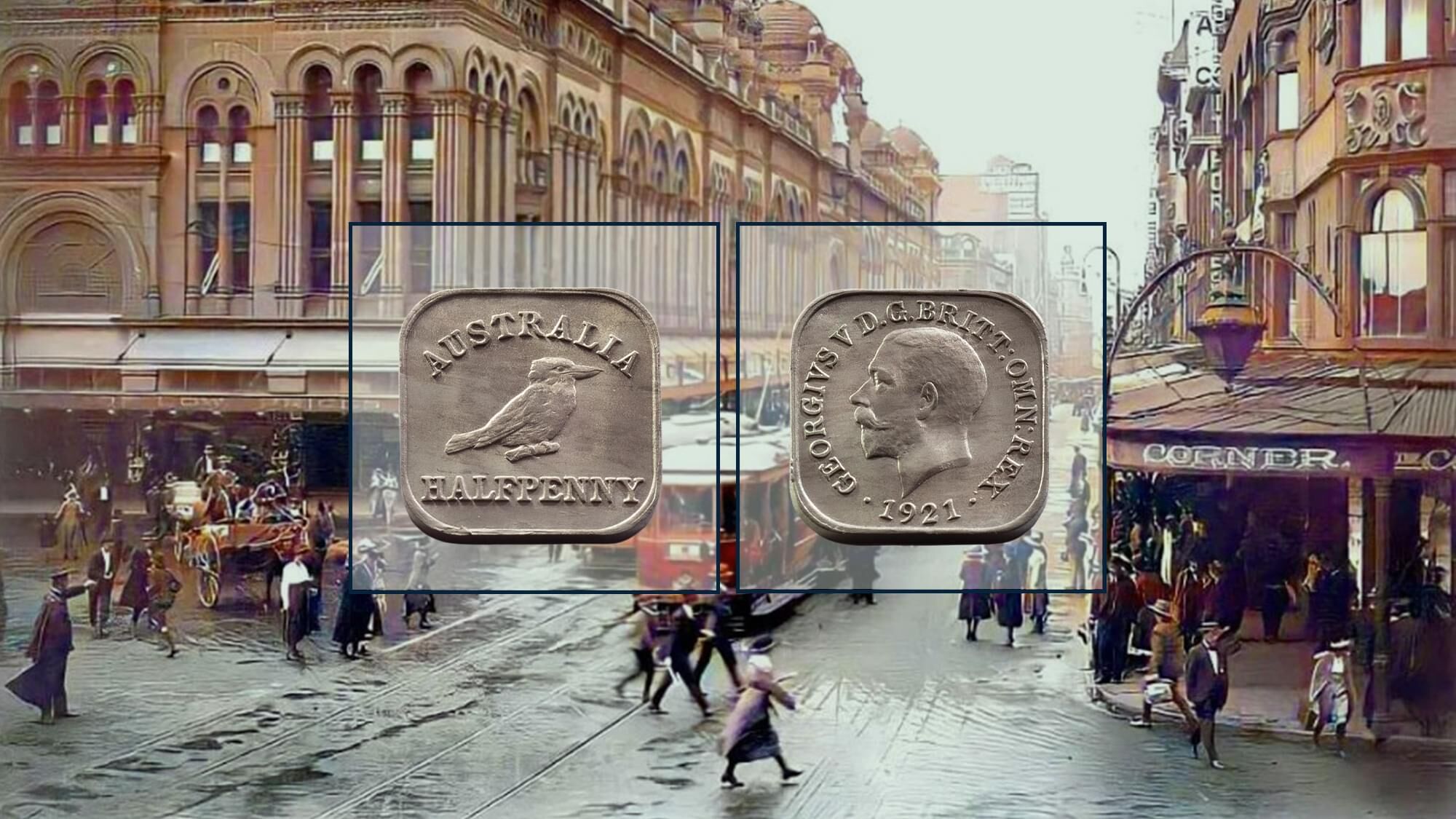
Collectors have an inherent drive to pursue a narrative with their coins. Own a set or a sub-set within a series and create a story.
For Australia’s Kookaburra coins that means seeking out a halfpenny to sit alongside a penny. And that poses a challenge!
Whereas approximately one hundred and fifty Kookaburra Pennies are available to collectors, of varying dates, designs and prices. A minuscule twelve Kookaburra Halfpennies are potentially available to the same buying audience. (We say potentially, for the reality is while twelve are known to exist, several are 'locked away' out of reach of the collector market.)
The industry acknowledges the Kookaburra Halfpenny as one of Australia's great Commonwealth coin raritites. Given the popularity of the series, and their availability, it's not hard to fathom why.
The key to understanding the high value of the kookaburra halfpenny is to look at the imbalance in the numbers produced of the halfpenny compared to the penny.
In 1919, the Melbourne Mint began testing a square kookaburra coinage made from cupro-nickel. The penny was the only denomination produced in that year, minted in four different styles. No halfpenny was tested. In 1920, the mint expanded its focus and tested five pennies and one halfpenny. One year later, in 1921, the Melbourne Mint tested two pennies and again produced only one halfpenny design.
So, while eleven different kookaburra penny designs were tested between 1919 and 1921, only two halfpenny designs were produced.
If the mintages of the halfpennies were substantial, then a balance might have been achieved between the number of pennies and halfpennies available to collectors.
But the mintage of halfpennies was small with only twelve halfpennies available to collectors compared to the one hundred and fifty pennies available to the same market.
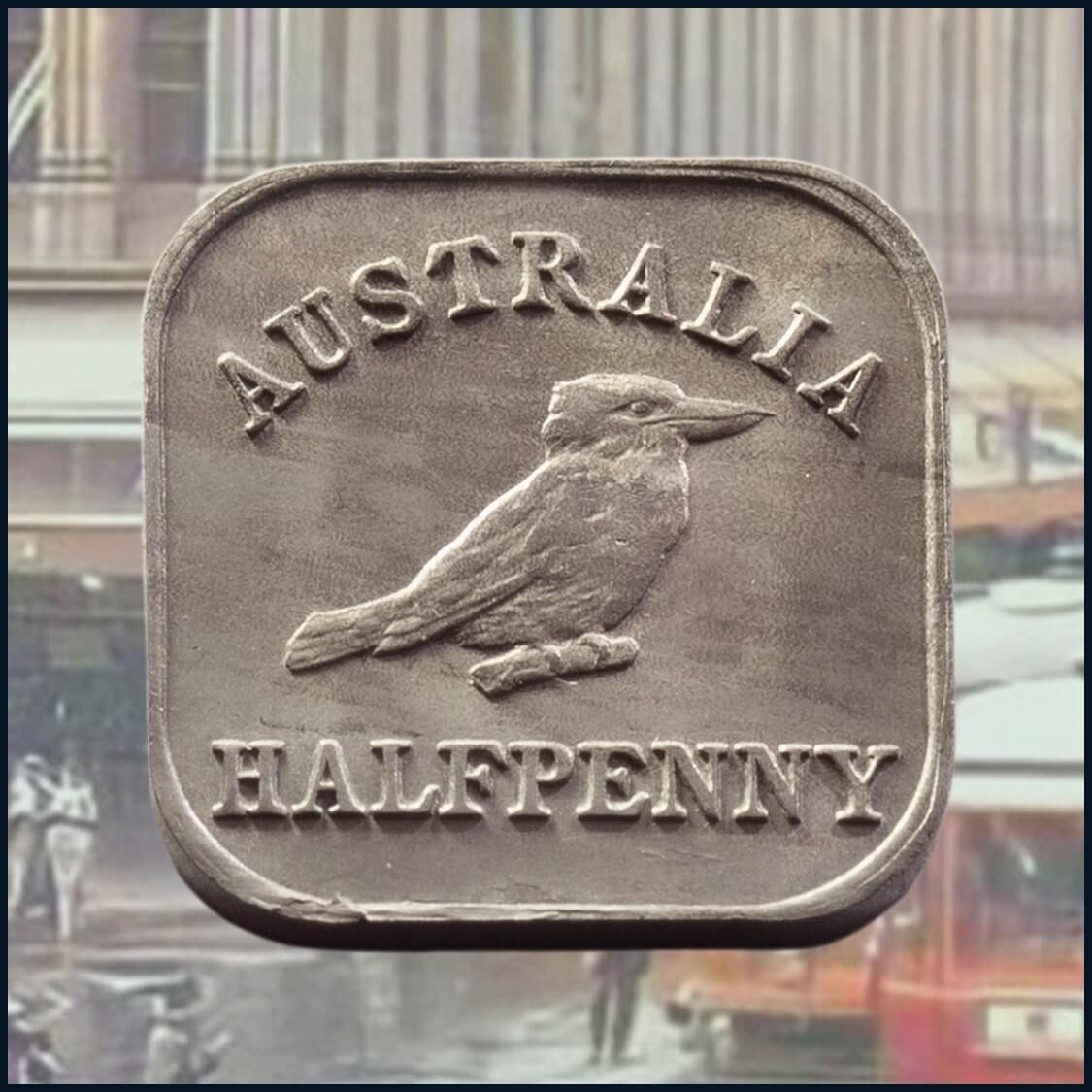
1921 Kookaburra Halfpenny
good strike, light toning
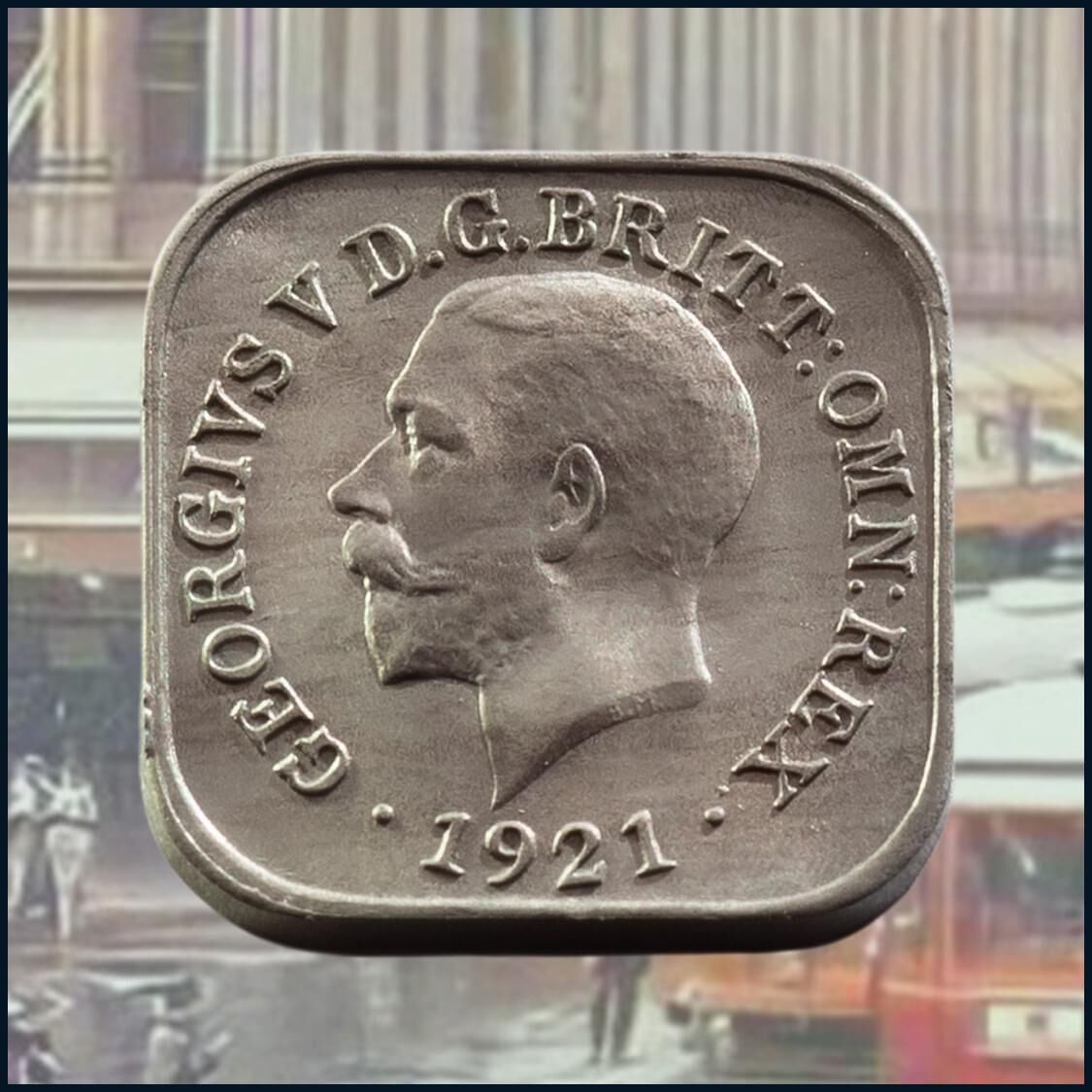
1921 Kookaburra Halfpenny
good strike, light toning
The Melbourne Mint tested one halfpenny design in 1920. Referenced the Type 1, three exist. A second design was tested in 1921. Referenced the Type 2, there are nine known examples, including the coin offered here.
The demand for the kookaburra halfpenny is strong. Collectors aim for completion and while owning every coin can be prohibitive, both financially and from a time perspective, collectors also pursue themes within a series. And in the case of the Kookaburra coins, that means pursuing a penny and halfpenny, one of each denomination that was struck at the Melbourne Mint. A "sub-set", if you like. One that feels complete, resulting in a display-worthy set or collection. Sets are naturally heirloom-worthy. They’re easier to pass down, easier to explain, and more likely to retain their identity over generations. Families understand the concept of the set.
Now let's look at the Halfpenny options. There is one dated 1920, and one dated 1921.
Having handled the three examples of the 1920 Halfpenny, and knowing what we know about each of the purchaser's intentions, it is our view that the coins are now out of reach of the collector market. And are unlikely to ever become available.
A fact that makes the 1921 Halfpenny critical to collectors. The coin is offered every two to three years, on average, with just nine examples available to collectors.
Rarity - One of nine known, appearing on the market every two to three years.
Composition - Nickel 75% Copper 25%
Reverse - A plump bird resting on a short, thick branch, the eye in relief, the tail with five feathers. The word 'AUSTRALIA' is sharply curved, the halfpenny denomination is bold and presented in one line. A design shared with the Type 12 Kookaburra Penny,
Obverse - Uncrowned effigy of George V, designed by Australian sculptor, Sir Edgar Bertram Mackennal, and shared with the Type 12 Kookaburra Penny, the initials 'BM' appearing on truncation. The legend reads GEORGIVS V D. G. BRITT: OMN:REX and appears on all the halfpennies Type 1 and Type 2 and the pennies Type 6 through to 12. The date '1921' appears below the portrait, an ornamental dot separating it from the legend.
The Melbourne Mint commenced striking Australia's Commonwealth copper pennies in 1919. No sooner had the mint started issuing coins, than it was directed by Treasury to commence testing an entirely new penny concept, a square coin made from cupro-nickel.
The Melbourne Mint was established in 1872, and was a producer of gold and silver coins and had just commenced production of bronze pennies in 1919. While new to the mint, the striking of nickel coinage as legal tender had been incorporated into the Commonwealth's Coinage Act of 1909 (No. 6 of 1909), passed after Federation.
The period 1919 to 1921, sits squarely in the post–World War I period, the first years of peace after immense war-time loss. And an experimental era when Australia was rebuilding its national confidence and defining its own national identity through design. Or through whatever means it could.
For many Australians, it was a time for breaking out, of questioning and changing old values and behaviour and enjoying the good life. It was a time of great change. People forgot the old and embraced the new in an attempt to leave the hardship and struggles of the war behind them. New technology was being created, like toasters and cars, things that today we take for granted. The fashion world was exploding, Australians embracing great change in their styles of dress.
Australians were identifying with their own culture, keen to lessen the emotional and cultural ties with Great Britain. The Government wanted to tap into this nationalistic sentiment and create a new, totally Australian coinage, the Kookaburra Penny and Kookaburra Halfpenny, envisaging coins that would be unique to Australia.
It was one of the instruments the Government believed would give us a greater awareness, and appreciation, of all things Australian. A mechanism to promote national spirit.
The proposal was contentious in that King George V was depicted on the obverse without a crown. It is noted that all coins struck under the newly formed Commonwealth of Australia depicted a crowned monarch.
Contentious also the use of the word 'Australia' in the design and not 'Commonwealth of Australia'. It was a hard road to Federation, uniting the six colonies under one banner, involving decades of negotiation and intense debate. Ultimately, the six separate British colonies united under the banner Commonwealth of Australia on January 1, 1901. Again it is noted that Australia's bronze pennies and halfpennies issued by the newly formed Commonwealth of Australia acknowledged the nation's federated status in the legend.
Trials commenced at the Melbourne Mint in 1919 and continued until 1921, the mint producing different designs, each a variation of the one theme of a kookaburra sitting on a branch and on the other side, an uncrowned portrait of George V. The test pieces ultimately passed to dignitaries and Government officials to assess their reaction.
The program of testing did not move forward beyond 1921. And the coins did not move into production. It is believed that over the three-year period two hundred pieces, of various designs, were produced, of which we estimate, one hundred and fifty are available to collectors.
There is no consensus as to why the coins did not move into production. The resignation in 1920 of Treasurer, William Watts, a supporter of the Kookaburra coinage did not impact on the program as his replacement Sir Joseph Cook was strongly in favour. That vending machines required a circular coin is also refuted as is the claim that it was unpopular with the general population.
Our view is that it was simply too soon in the national psyche.
While shaping our identity was politically expedient, uniting the states under the banner of Commonwealth of Australia was deemed a higher and more important priority. And the reality is the words 'Commonwealth of Australia' could never have been incorporated into the kookaburra design, given the size of the coins.
The quest to define Australia's national identity began with the Kookaburra Pennies and Halfpennies. It was Australia's first attempt at independent design in our coinage, a currency that was Australian in imagery, concept and form.
Transitioning to a more independent identity commenced in 1937/1938. And was extended in 1966, when Australia changed to decimal currency. On the five denominations, one, two, five, ten and twenty cent, the word 'Australia' appeared on the obverse and animals native to Australia appeared on the reverse.
For many collectors the fascination with the Kookaburra Penny and Halfpenny takes them on a journey to acquire more than one example. The coins are engaging and their rarity offers collectors the challenge they so often seek.
© Copyright: Coinworks