ON HOLD 14/5/2026 - A unique pair of 1886 Proof Sovereign and Proof Half Sovereign, brilliant FDC, the two coins offered for $250,000.
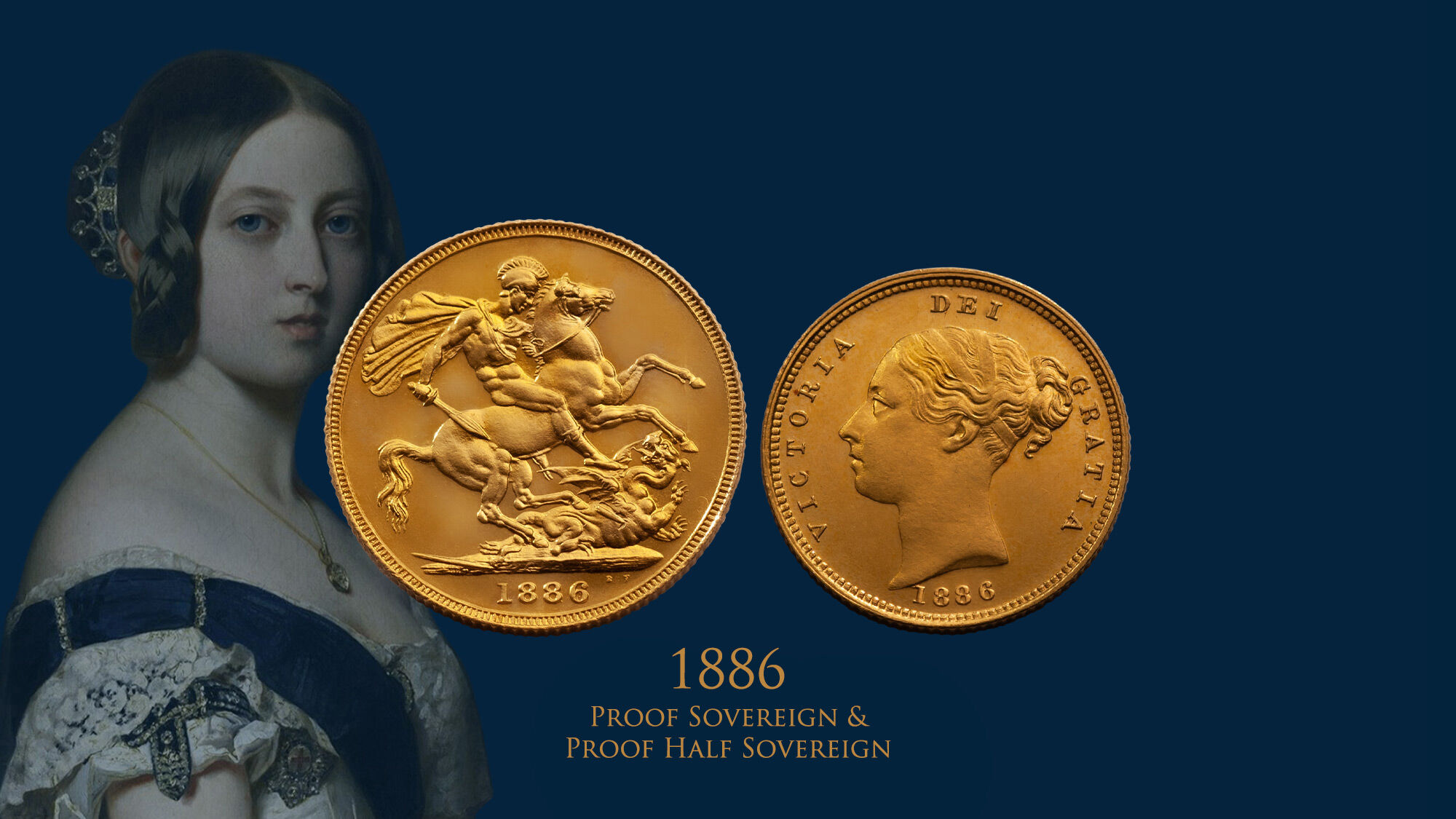
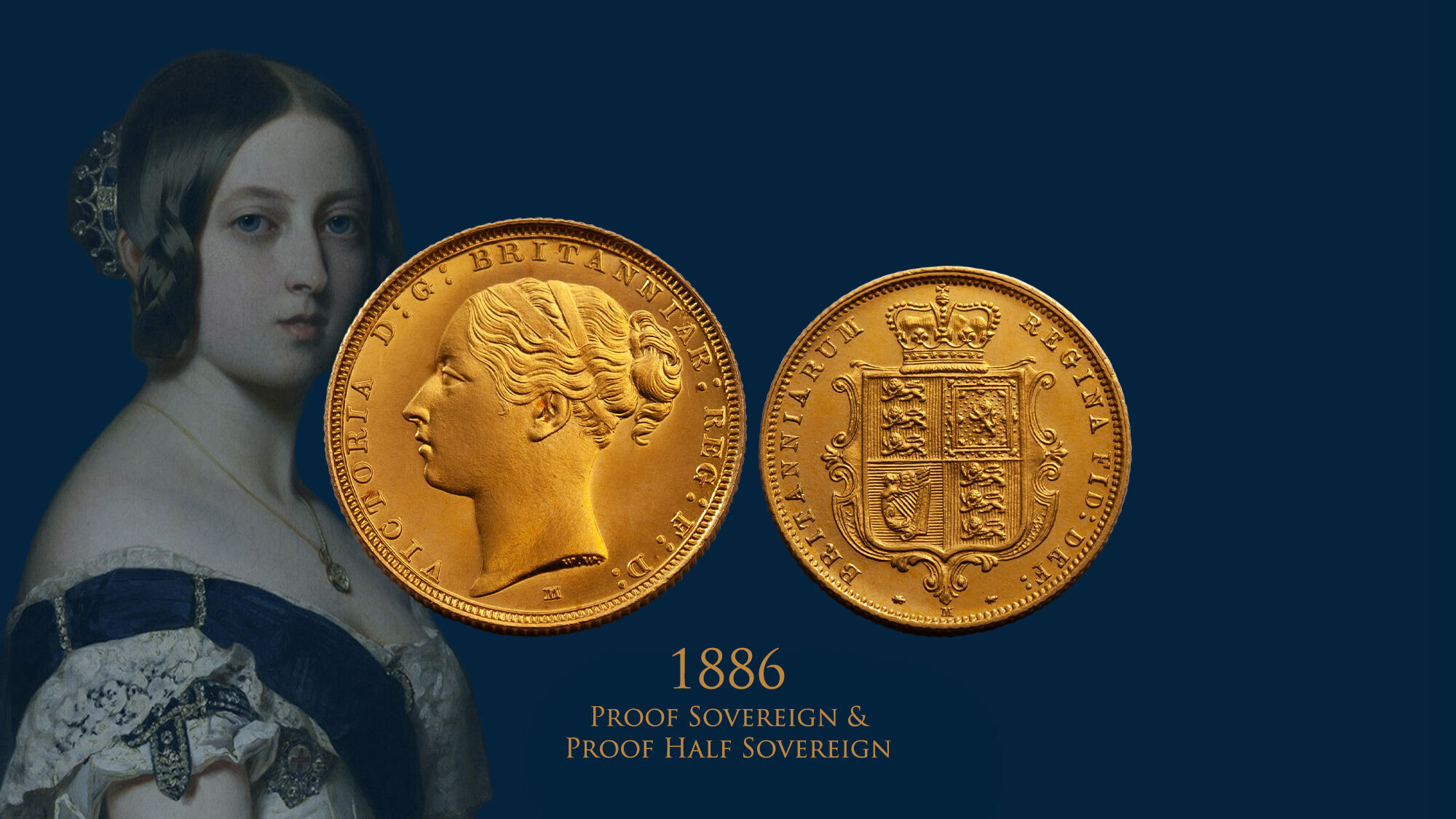
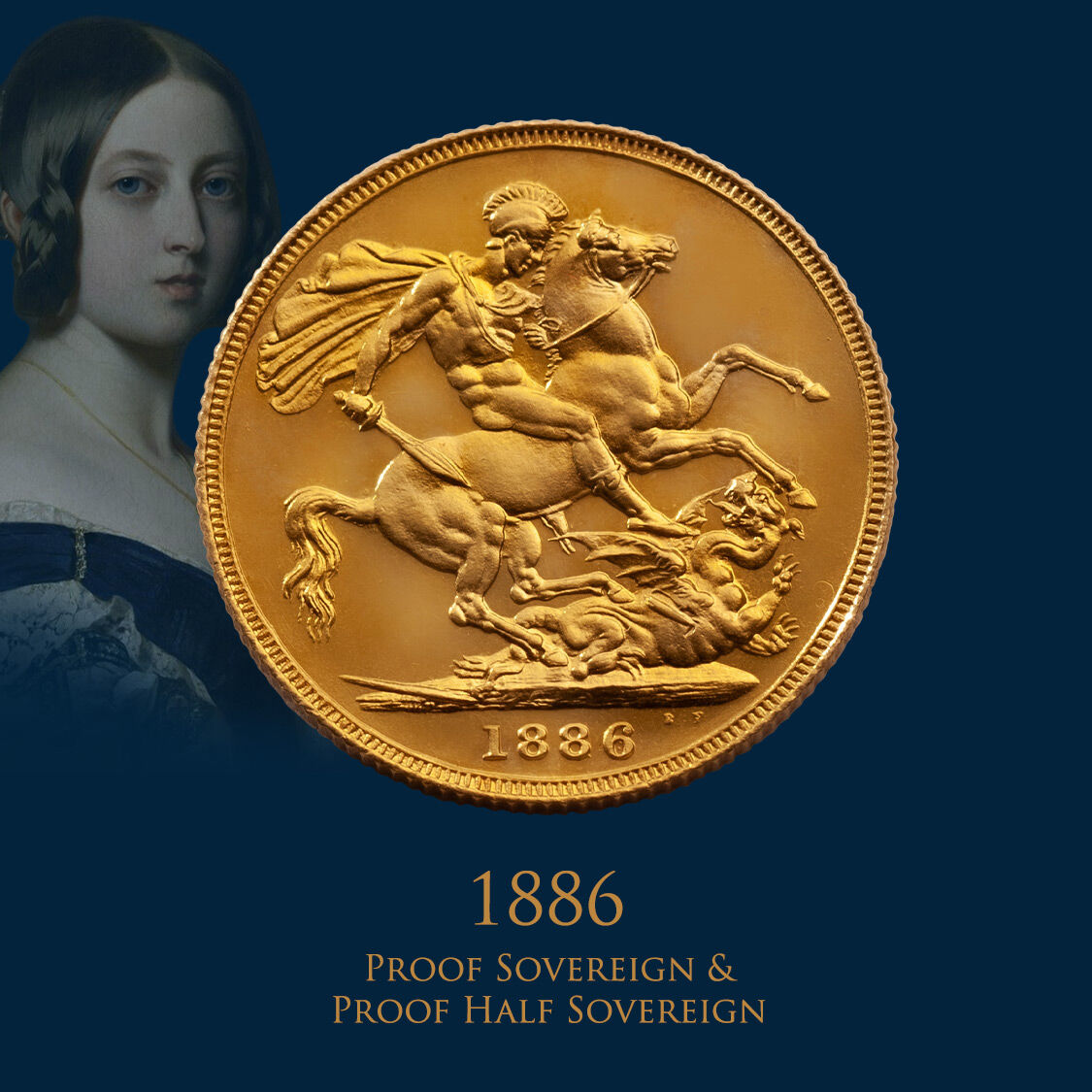
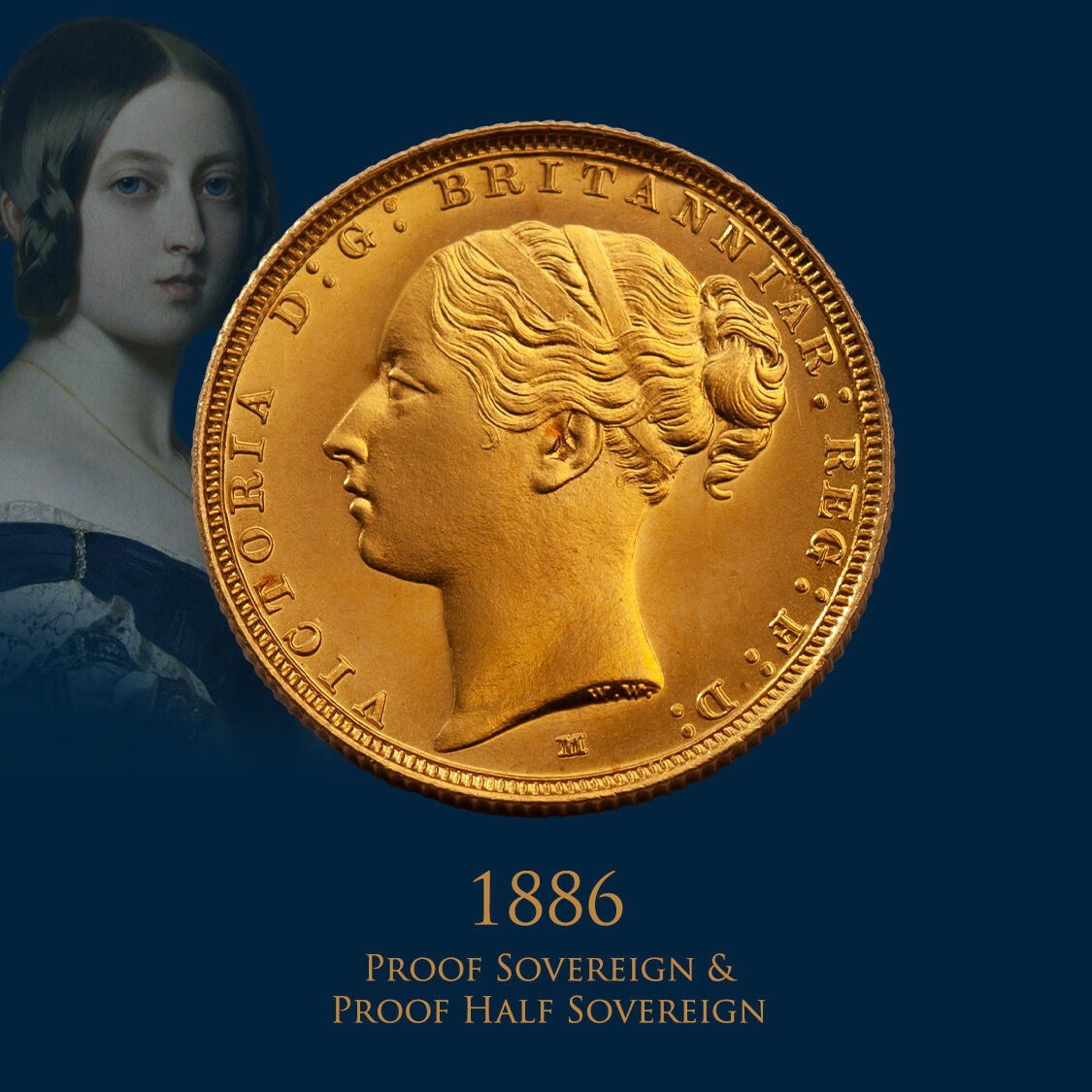
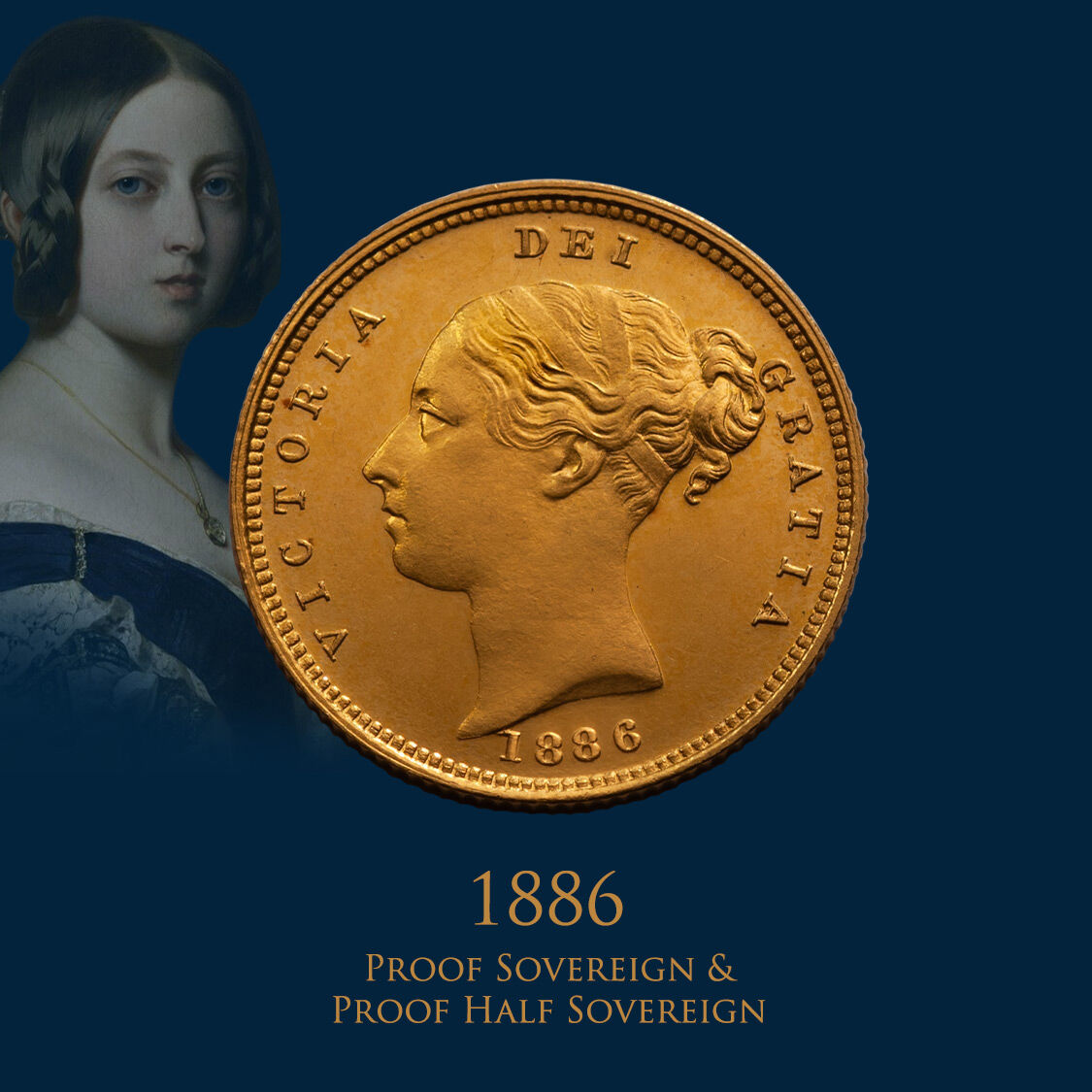
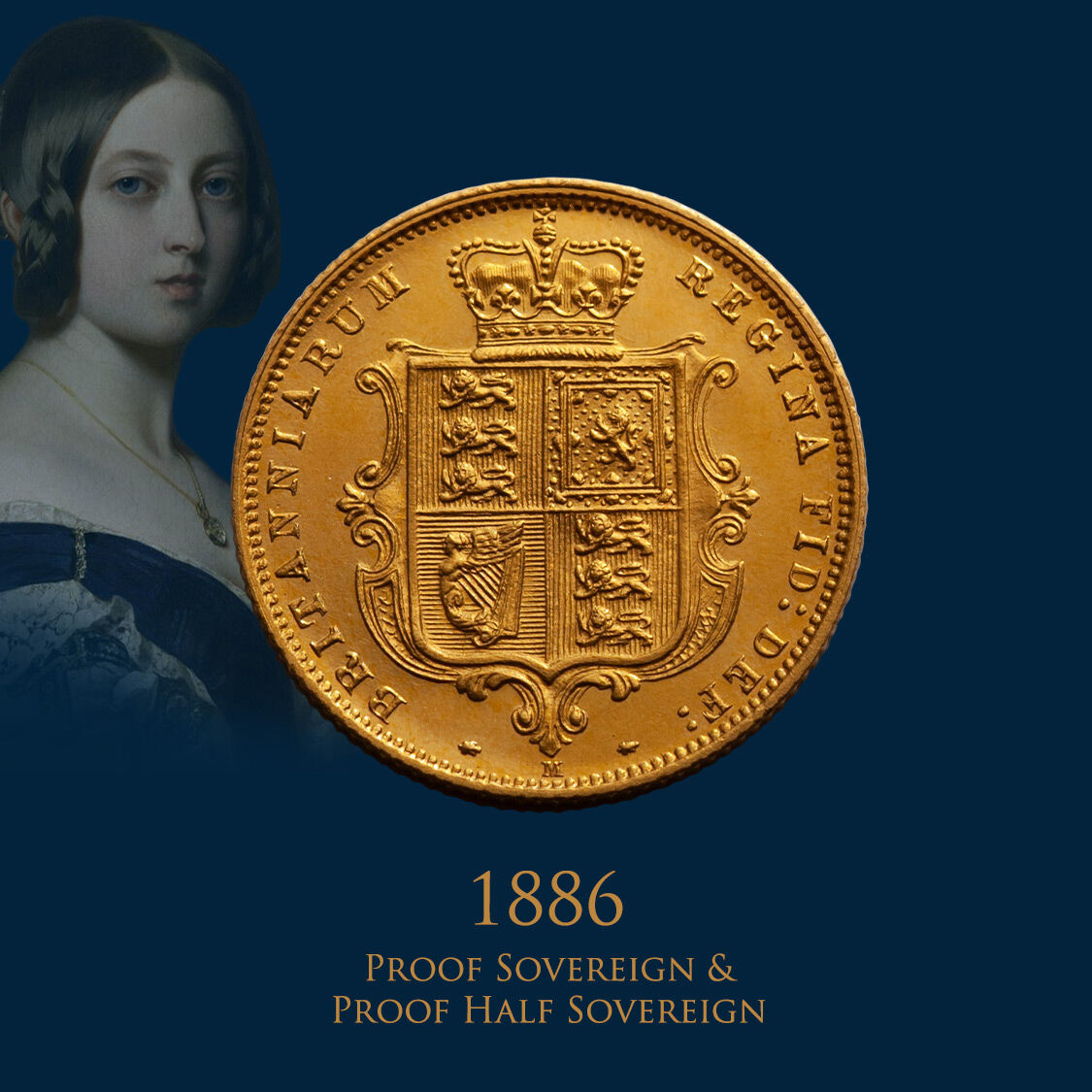
The Melbourne Mint struck a Proof Sovereign and a Proof Half Sovereign in 1886, featuring the Young Head design of Queen Victoria. The coins left the mint, as a pair, more than a century ago destined for the collection of revered British collector, John G. Murdoch.
The sovereign returned to its country of origin in 1999, acquired by Barrie Winsor from the Strauss Collection U.K. The Half Sovereign returned earlier, in the 1980s, eventually being offered by Spink Auctions in 1985.
The two coins are presented today as the mint intended. Back together again as a pair. Naturally heirloom-worthy, the pair offers rarity you can’t replicate. It is unique.
Brilliantly preserved, the two coins are offered for $250,000.
Australia’s Proof Sovereigns and Proof Half Sovereigns are coins that were quite literally, fit for royalty. They are powerfully irresistible. And they are respected for the history they represent. They are sought after, the world over, for their exclusivity.
Today's collectors are showing a marked preference for pairs if, and when, they are available. So not one coin, but two, the Proof Sovereign and the Proof Half Sovereign together. The current sentiment is that a pair is the mint's complete story, the total narrative.
The quest for completion is a principle that is being taken up by today's collectors. And today's institutions. Coinworks recently sold the 1899 Proof Half Sovereign to the Perth Mint, the partner to the 1899 Proof Sovereign held by the mint.
Complete sets are naturally heirloom-worthy. They’re easier to pass down, easier to explain, and more likely to retain their identity over generations. Families understand the concept of the full set instantly.
Coinworks is also making this offer to clients who are considering a pair of proofs. Take the first coin and we will guarantee to hold the second coin, and hold the price, for six months to facilitate a purchase of the pair.
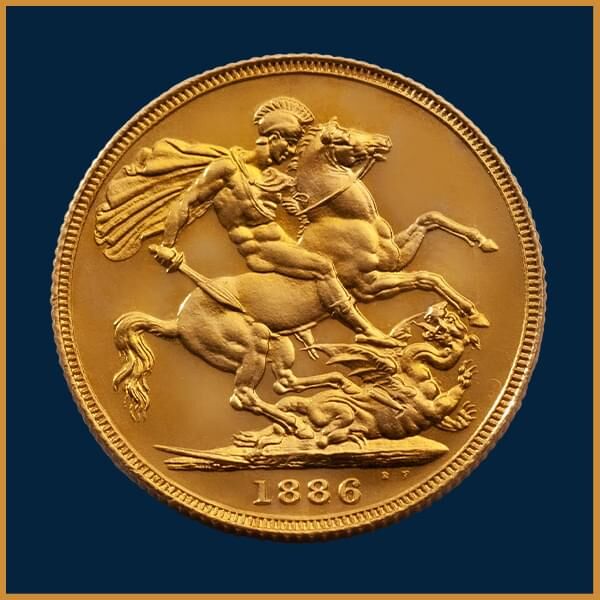
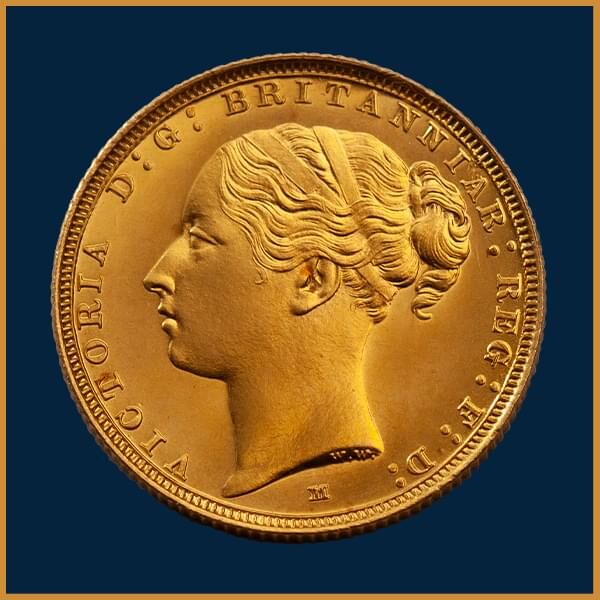
Ex Murdoch Collection sold Sotheby Wilkinson & Hodge, London 1903 and ex Strauss Collection (comes with original coin tag from the Strauss Collection).
This 1886 Proof Sovereign is one of two known and was acquired by treaty from Barrie Winsor in 2005.
The Melbourne Mint produced sovereigns featuring the Young Head portrait between 1872 and 1887. And struck proof sovereigns in only two of those sixteen years, 1885 minted with the Shield reverse design. And 1886 minted with the St George reverse design.
Two St George 1886 Proof Sovereigns are known.
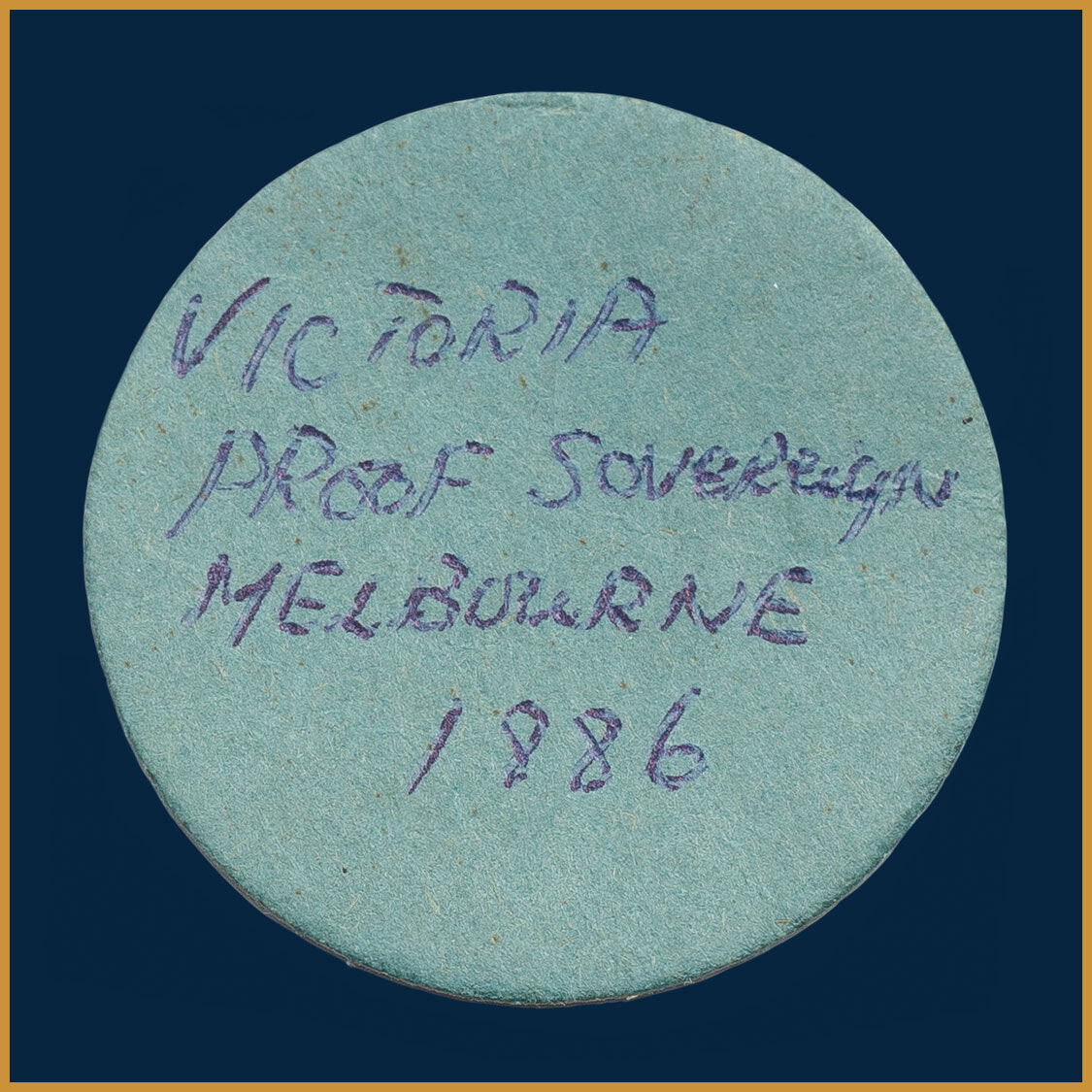
Original coin tag from the
Strauss Collection U.K.
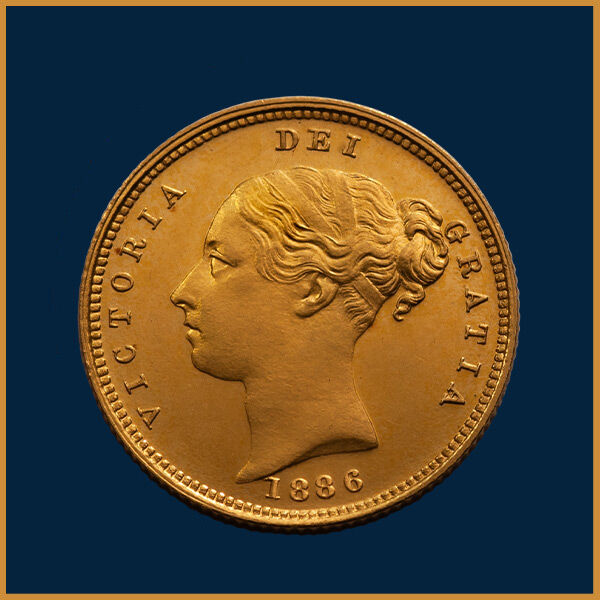
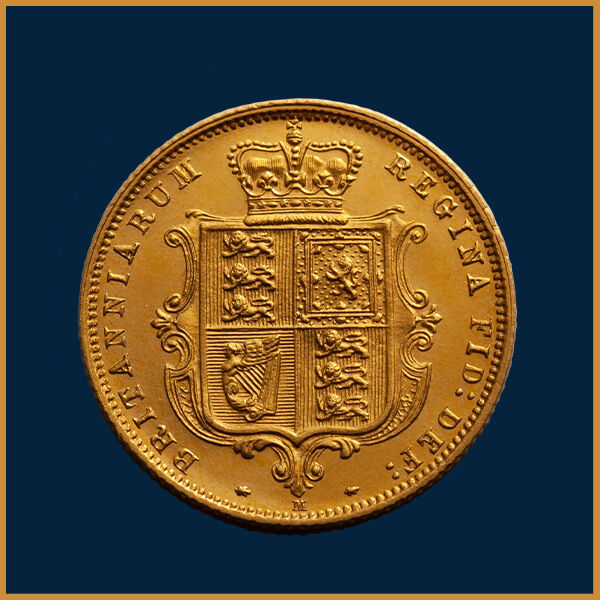
Ex Murdoch Collection sold Sotheby Wilkinson & Hodge, London 1903, Nobleman Collection sold Sotheby, Wilkinson & Hodge 1922, Spink Auctions November 1985 and Philip Spalding Collection.
The Melbourne Mint produced half sovereigns featuring the Young Head portrait between 1872 and 1887. And struck proof half sovereigns in only two of those sixteen years, 1884 and 1886, both minted with the Shield reverse.
The year 1886 is the prize, the only year to offer collectors a proof sovereign and proof half sovereign.
This 1886 Proof Half Sovereign is today, the only known example.
Australia's Gold Proof Coinage
When the Royal Mint London or the British Museum requested a sovereign or half sovereign from an Australian Mint, they were never sent a circulation strike. Nor would a circulation strike be presented to the monarch, gifted to a dignitary or sent to an influential collector. And a circulation strike would not be displayed at a Colonial Exhibition.
An individually crafted presentation piece would be specially created for the occasion, minted to a proof or specimen finish. The technical term for such a piece is 'Coin of Record'.
A Coin of Record is an artistic interpretation of coinage, a strikingly beautiful coin beyond ordinary currency. Individually crafted to standards far exceeding that required of a circulating coin, using special coining techniques. Whereas production of circulating coinage was dictated by Government, Coins of Record were struck at the discretion of the mint master.
Coins of Record were not produced every year and, as they were individually crafted, the process was time consuming and the mintages minuscule. For gold proofs, generally ten pieces or less. There were several occasions when only a single coin was struck.
Coins of Record of Australia's sovereigns and half sovereigns are visually stunning, distinguished by brilliant golden-mirror surfaces. And it is their beauty and their ultra-exclusivity that drives demand.
Australian gold proof coins moved onto the international stage when the collection of John G. Murdoch was liquidated via Sotheby, Wilkinson & Hodge in London in 1903, following his passing in 1902. Murdoch held an extensive collection of gold proofs, including coins from the Sydney Mint, Young Head, Veiled Head and Jubilee eras.
The reputation of Australia's gold proof sovereigns and half sovereigns as an international commodity was set in stone in 1903, a widespread regard that holds to this very day, right across the globe. Recent international auction results (February 2026) confirm the status of Australia's gold proof coins as a globally traded commodity. It is noted that the frosted proofs of the Melbourne Mint (such as the 1886s) are keenly sought by American collectors.
© Copyright: Coinworks