Mac300
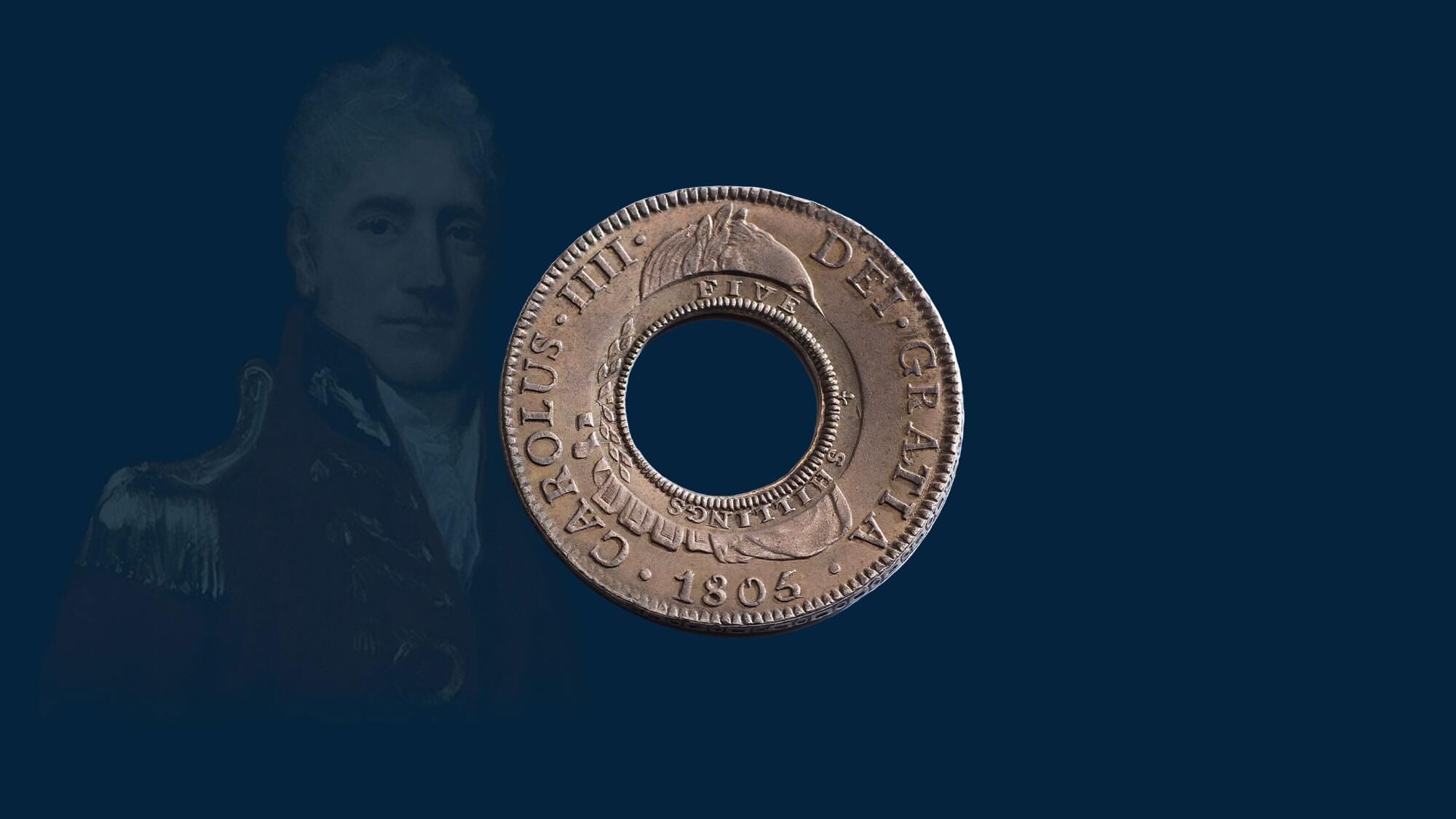
In the realm of rare coins, Holey Dollars exist on a different plane. They transcend mere collectibles, and have become coveted objects that represent the pinnacle of Australia's numismatic industry, our very first coin.
Owning a Holey Dollar isn't just about adding another coin to a collection. It's about indulging in an experience, a fusion of history and prestige. You are not just buying a coin, you own the experience.
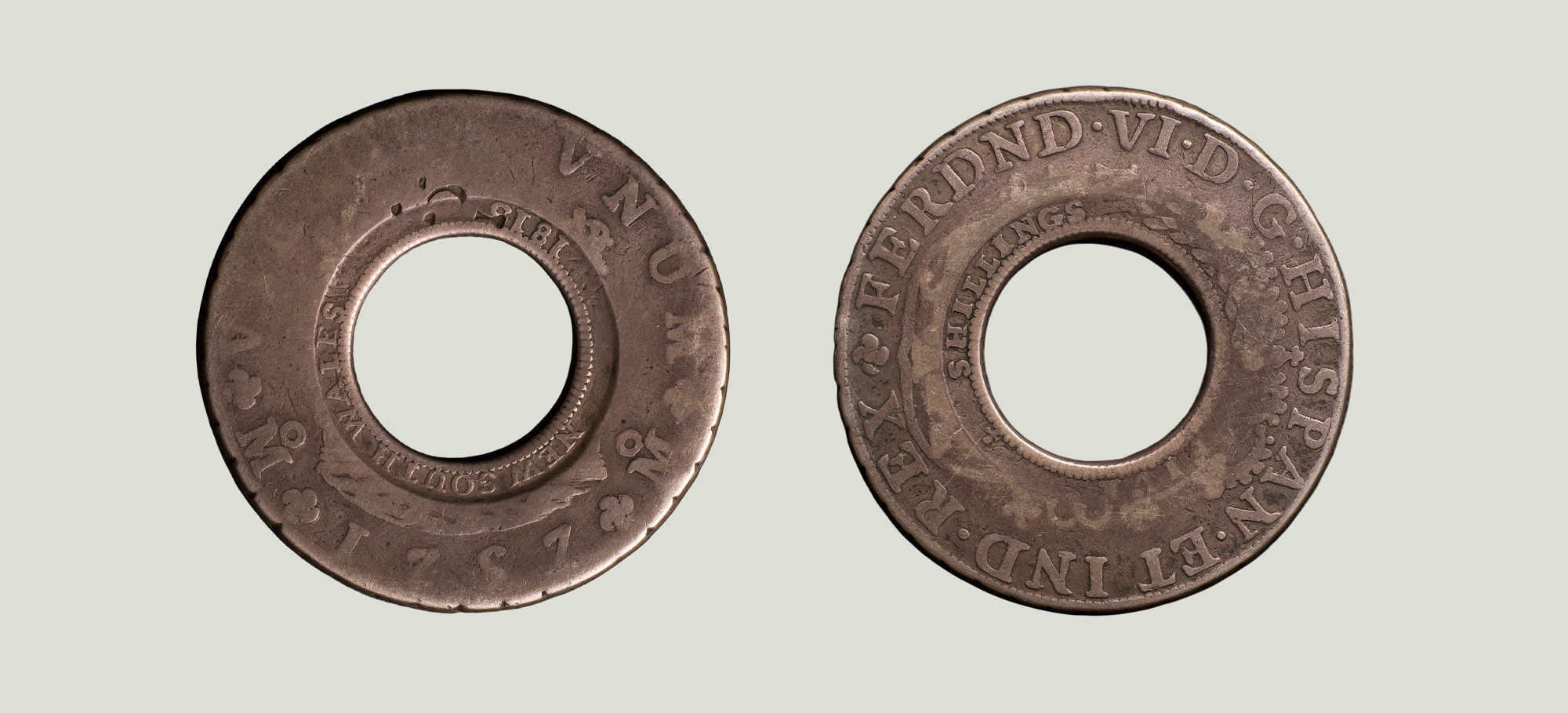
1757 • Ferdinand VI • Mexico • The Pillar Dollar
Design type: 1
Mac300: 1757/1 Mira/Noble: 1757/1
Dies: I/4 : A/1
Date of the silver dollar: 1757
Reigning monarch: Ferdinand VI (1746 - 1759)
Design of the silver dollar: pillar type
Portrait: no portrait, the reverse features two classically styled pillars
Legend: Ferdinand VI (on the reverse)
Quality of the silver dollar : About Fine
Quality counter stamps: About Fine
Exhibited: Macquarie Bank 2013, Royal Australian Mint 2019
Value: $500,000
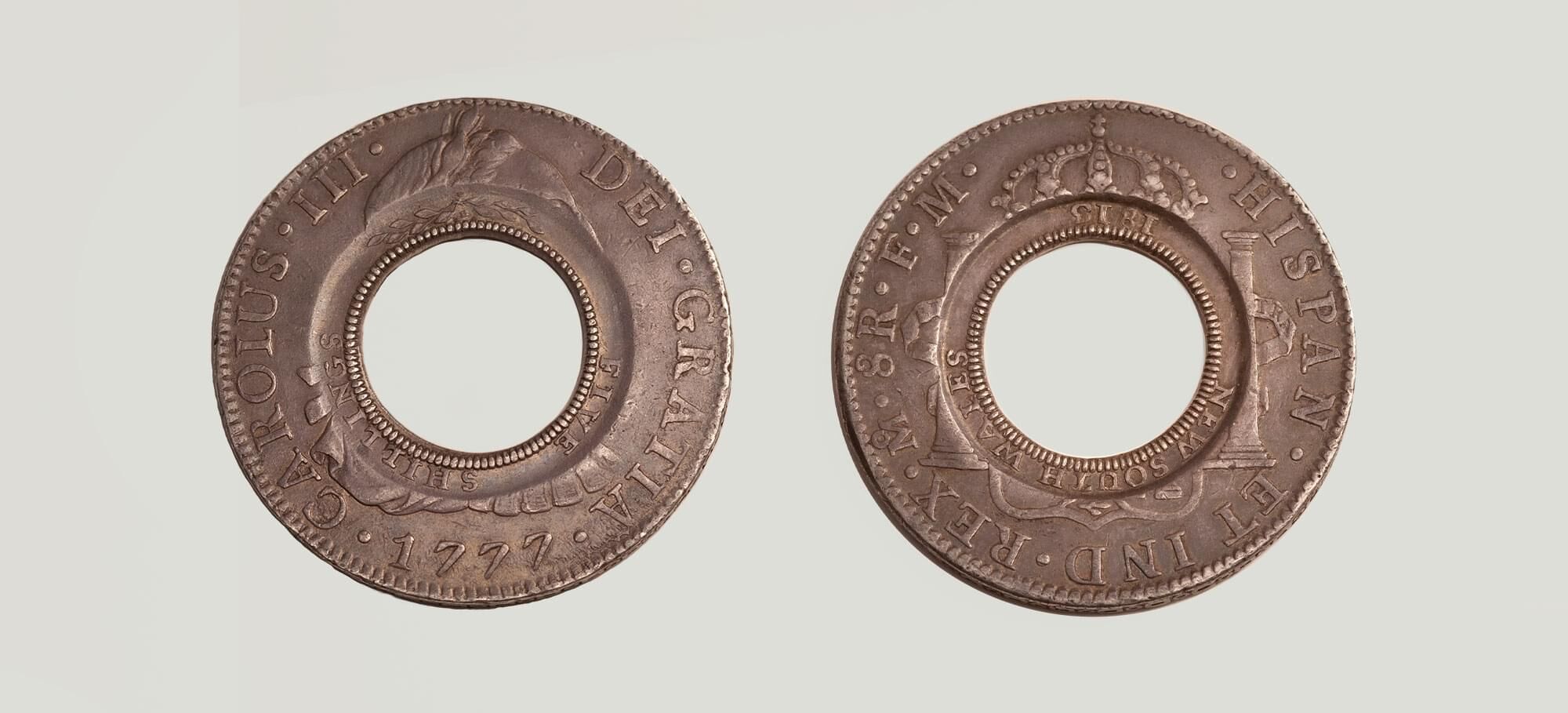
1777 • Charles III • Mexico Mint
1813 Holey Dollar struck from a Spanish Silver Dollar that was struck at the Mexico Mint in 1777. An impressive piece with glossy surfaces. The counter-stamps are graded About Uncirculated, the 'H' for Henshall at the intersection of the two twigs is well formed. (Not just a smudge as we see in most Holey Dollars.)
The coin is glossy and highly impactful. The counter-stamps 'New South Wales' and '1813' have silver lustre and beautiful colours in the lettering.
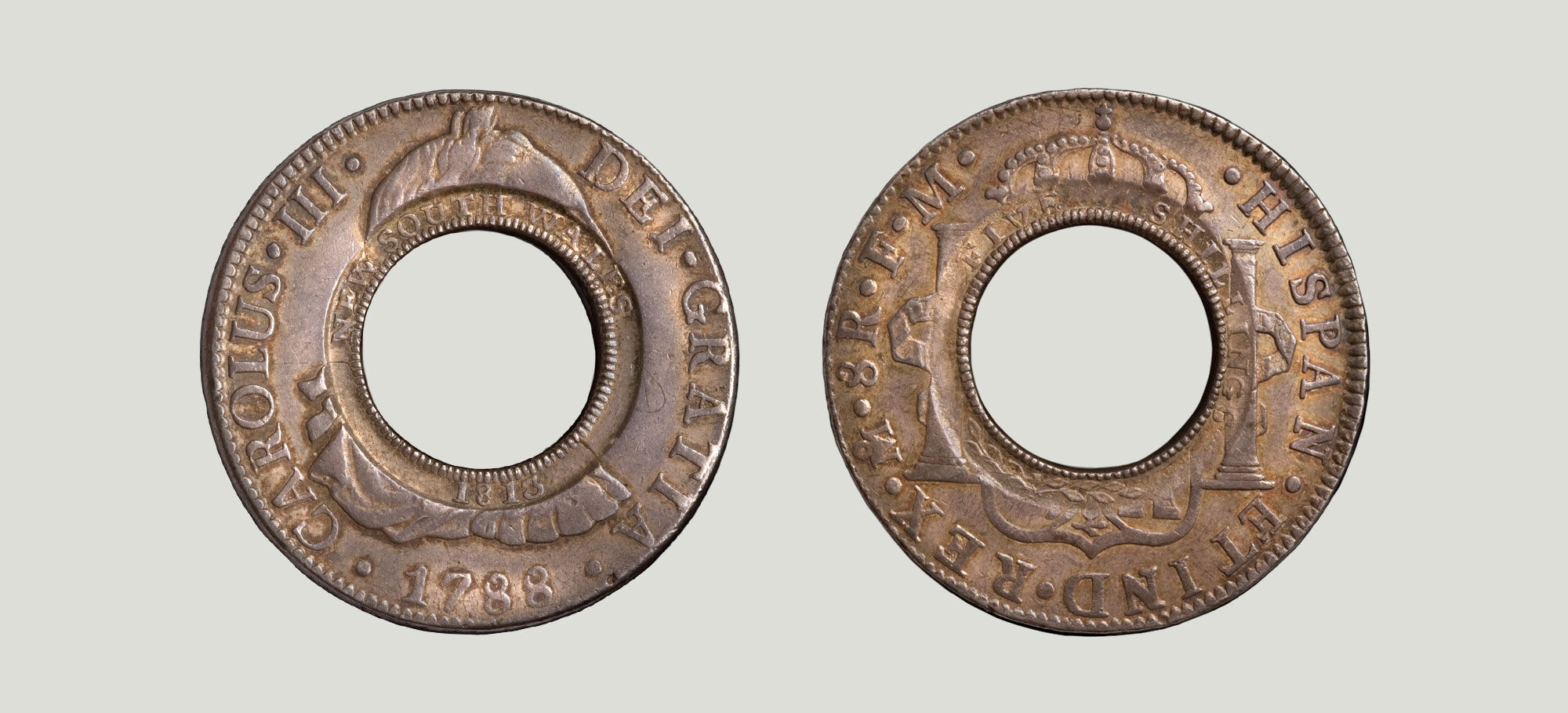
1788 • Charles III • Mexico Mint • The Montague Holey Dollar
Created from a Spanish Silver Dollar of the 'bust' type depicting the portrait and legend of Charles III. This coin is the finest of twenty two Charles III Holey Dollars.
The quality of the Spanish Silver Dollar is amazing when you consider that it was minted in 1788 and had twenty five years of circulation before it was converted into a Holey Dollar in 1813. We also note that the counter stamps, applied by William Henshall around the edge of the hole are vertically aligned on both obverse and reverse. This is the optimum position of the counter stamps and was rarely ever achieved. Given the date of 1788, and its precise counter stamps, there is some suggestion that the coin may have been especially struck.
Design type: 2
Date of the silver dollar: 1788
Reigning monarch: Charles III (1759 - 1788)
Design of the silver dollar: colonial bust type
Portrait: Charles III
Legend: Carolus (Charles) III
Quality of the silver dollar : About Extremely Fine
Quality counter stamps: Extremely Fine
Exhibited: Macquarie Bank 2013, Royal Australian Mint 2019
Value $500,000+
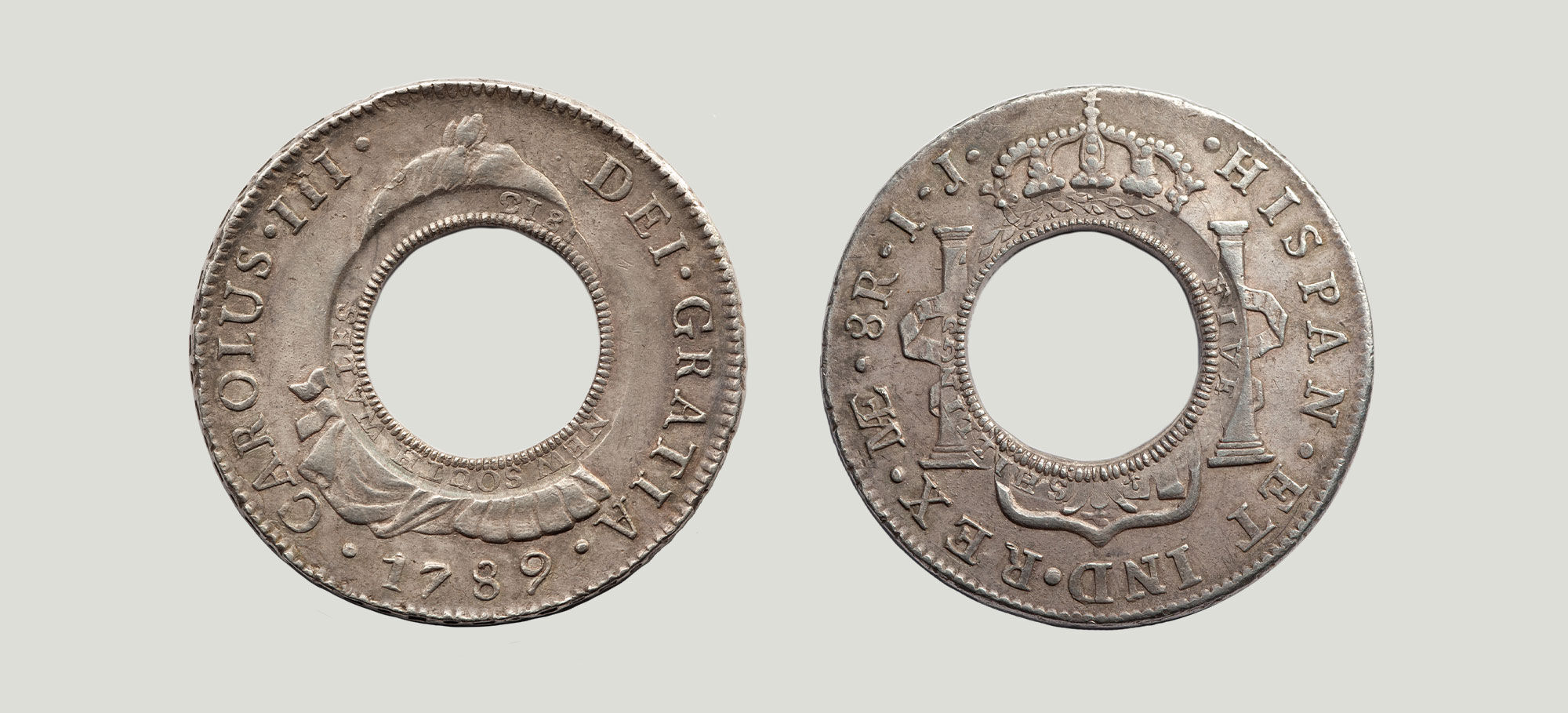
1789 • Charles III • Mexico Mint • Charles III (deceased) Holey Dollar
Created from a Spanish Silver Dollar of the 'bust' type depicting the portrait and legend of the deceased King Charles III (Charles III died in December 1788). To maintain coin production, the colonial mints continued to produce coinage with the legend and portrait of the deceased king. Three hundred Holey Dollars survive today and of those, only two have this extraordinary design detail.
The first is a well circulated example, the silver dollar issued at the Mexico Mint. It is unique for the mint. The second is this coin, the silver dollar originating at the Lima Mint in Peru. It is again unique for the mint. We comment on its superior quality for the dollar circulated twenty four years before it was converted into this Holey Dollar in 1813. Amazing!
Design type: 3
Date of the silver dollar: 1789
Reigning monarch: Charles IV (1788 - 1808)
Design of the silver dollar: colonial bust type
Portrait: Charles III
Legend: Carolus (Charles) III
Quality of the silver dollar : Extremely Fine
Quality counter stamps: Extremely Fine
Exhibited: Macquarie Bank 2013, Royal Australian Mint 2019
Value $550,000+
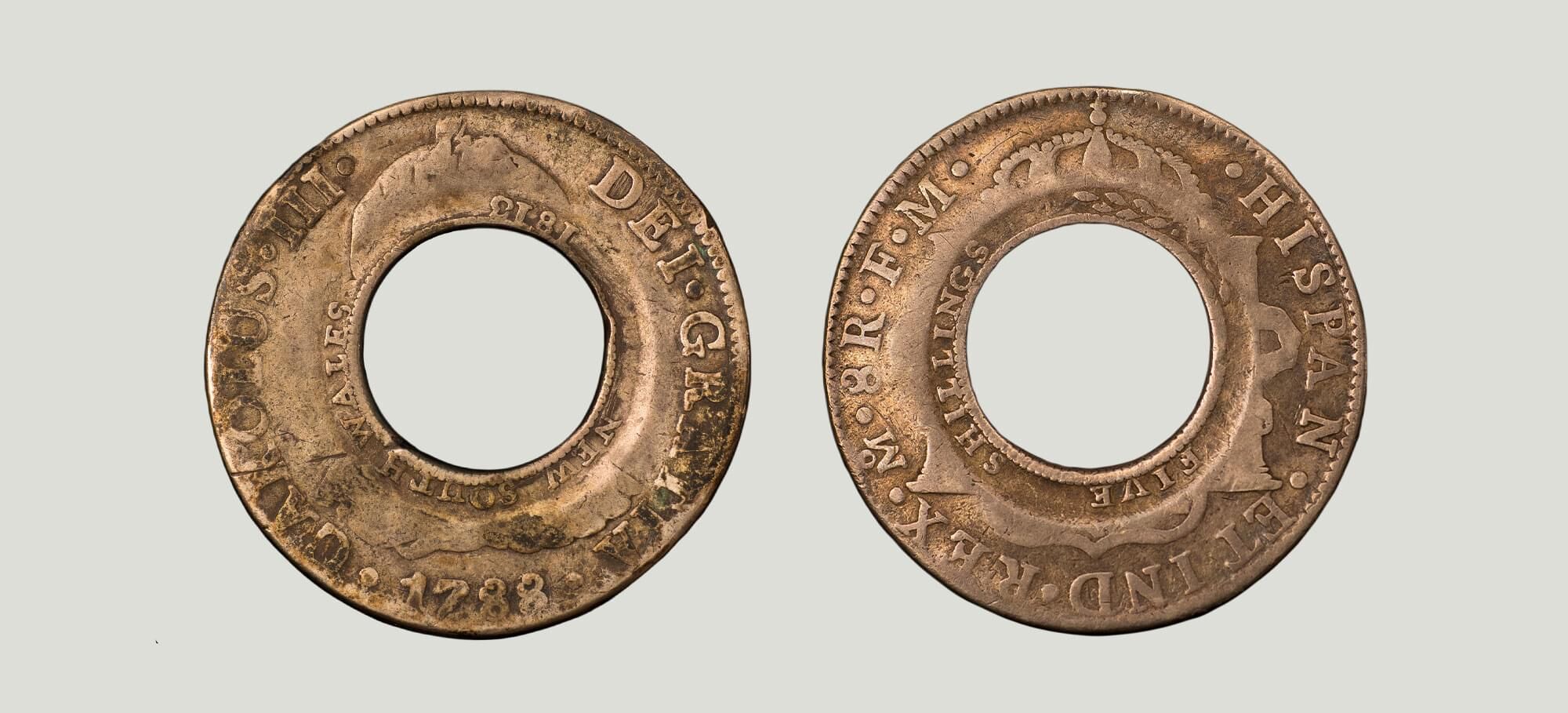
1788 Charles III
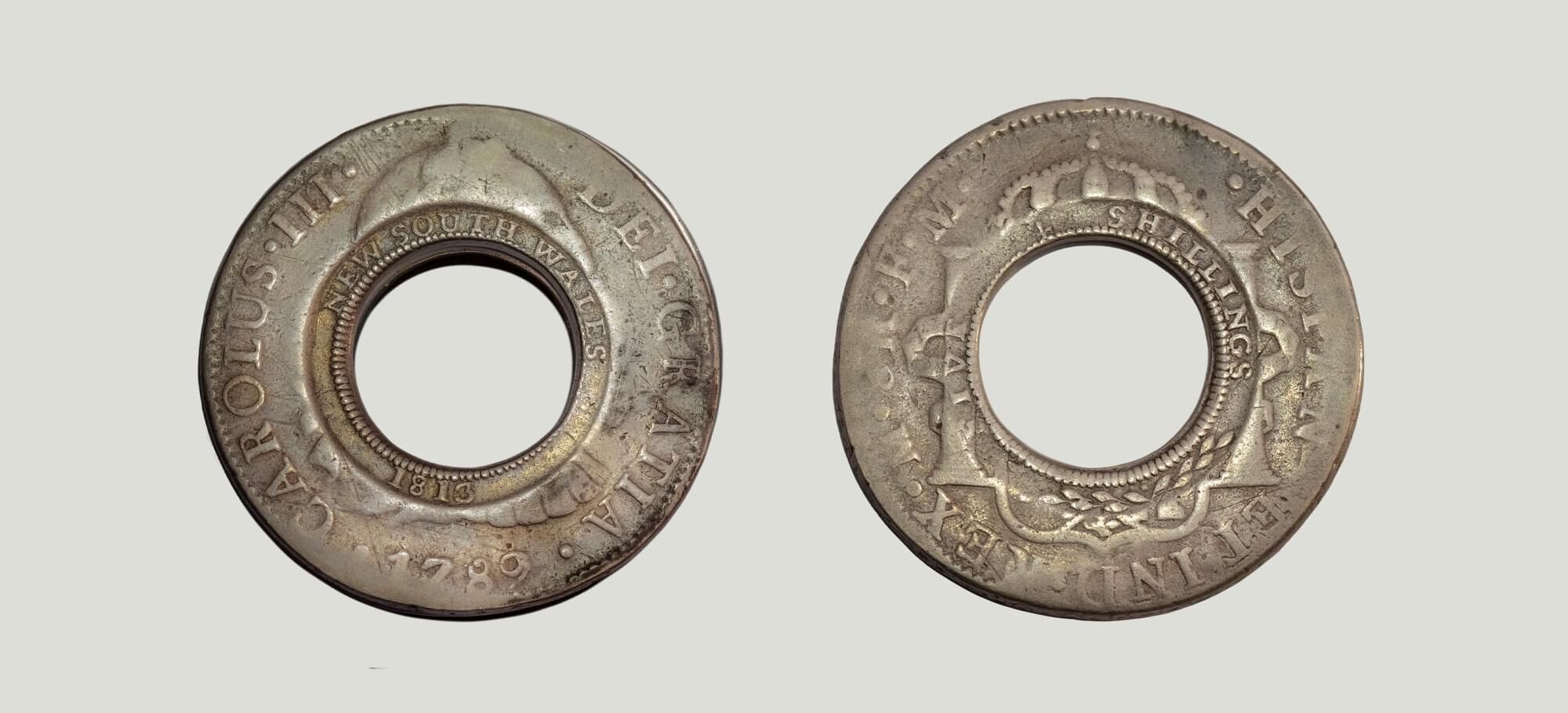
1789 Charles III Spalding
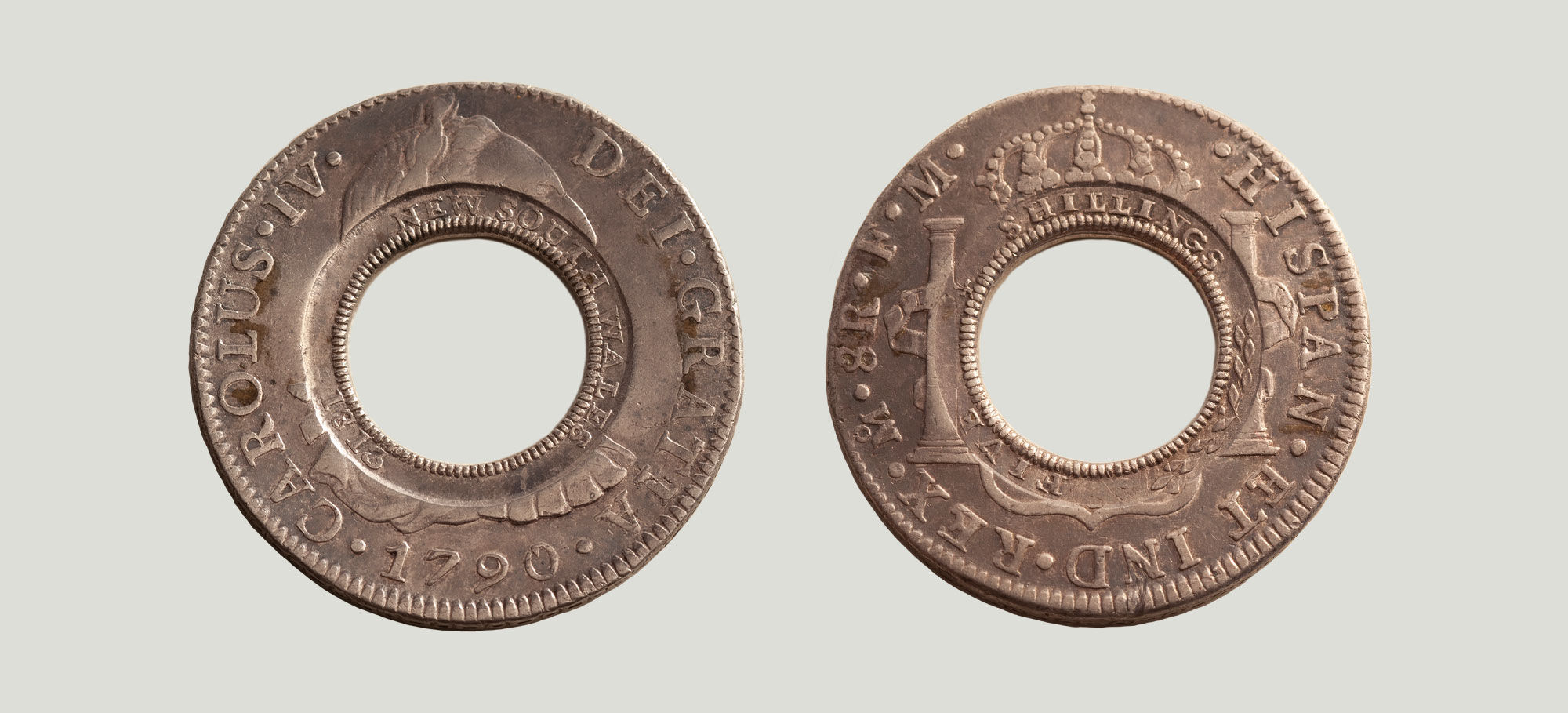
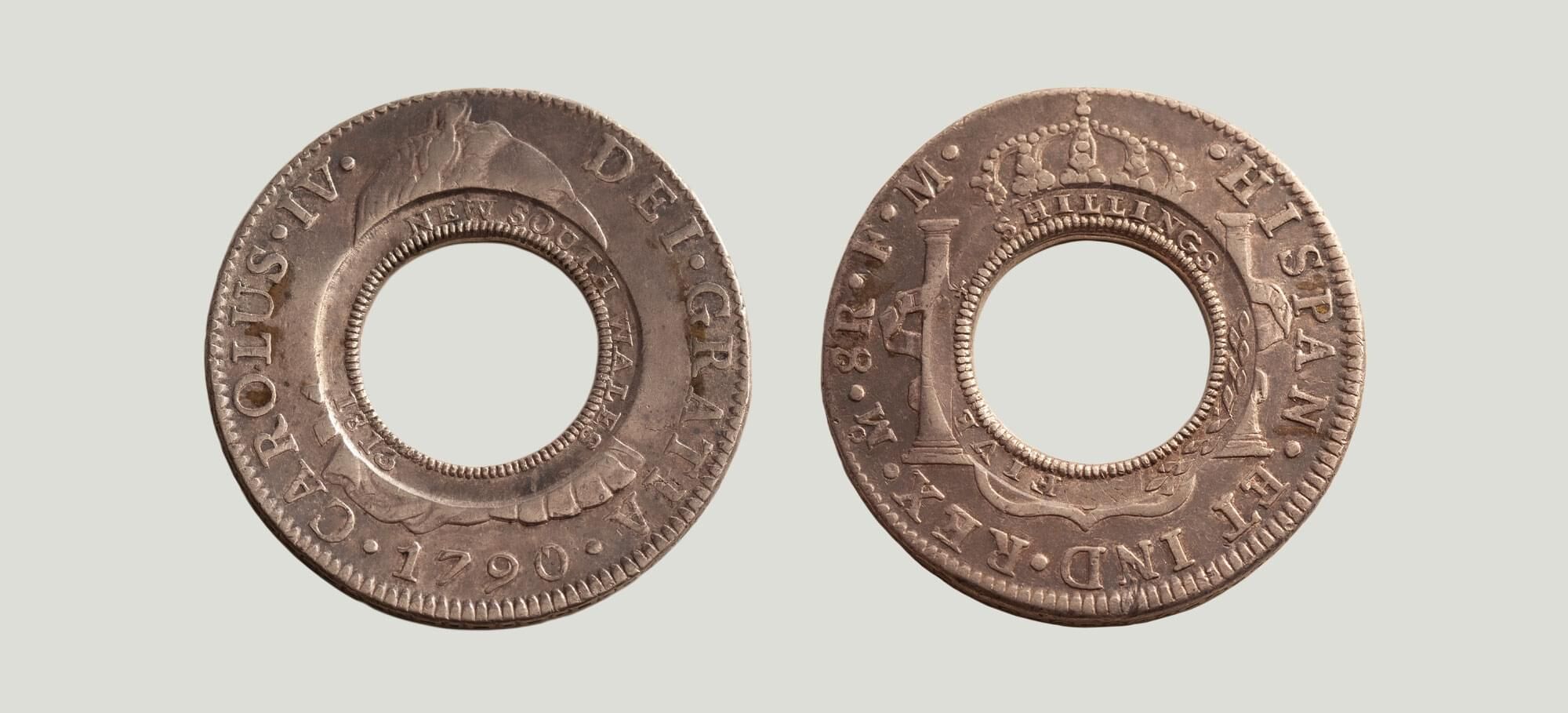
The Charles III on Charles IV Holey Dollar
To ensure that the colonial mints could continue their coinage production uninterrupted, a Royal decree granted them the right to amend the legend to Carolus IV to acknowledge the new monarch but continue striking coins with the portrait of the deceased King Charles III.
This coin is the finest of eight privately held examples depicting the portrait of Charles III and the legend Carolus IV.
Design type: 4
Date of the silver dollar: 1790
Reigning monarch: Charles IV (1788 - 1808)
Design of the silver dollar: colonial bust type
Portrait: Charles III
Legend: Carolus (Charles) IV
Quality of silver dollar : About Extremely Fine
Quality counter stamps: Extremely Fine
Exhibited: Macquarie Bank 2013, Royal Australian Mint 2019
Value $400,000+
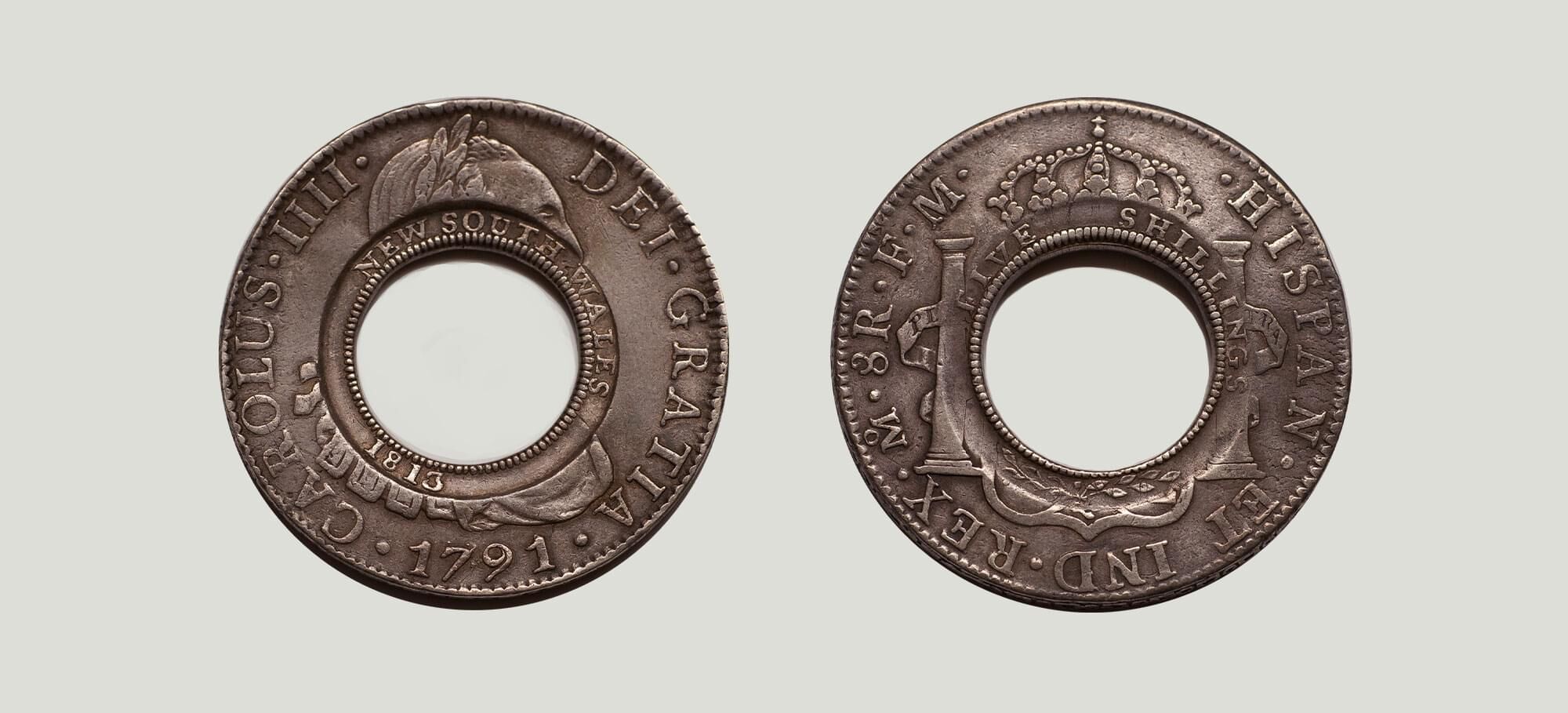
1791 Charles IIII Mexico 'Tusculum'
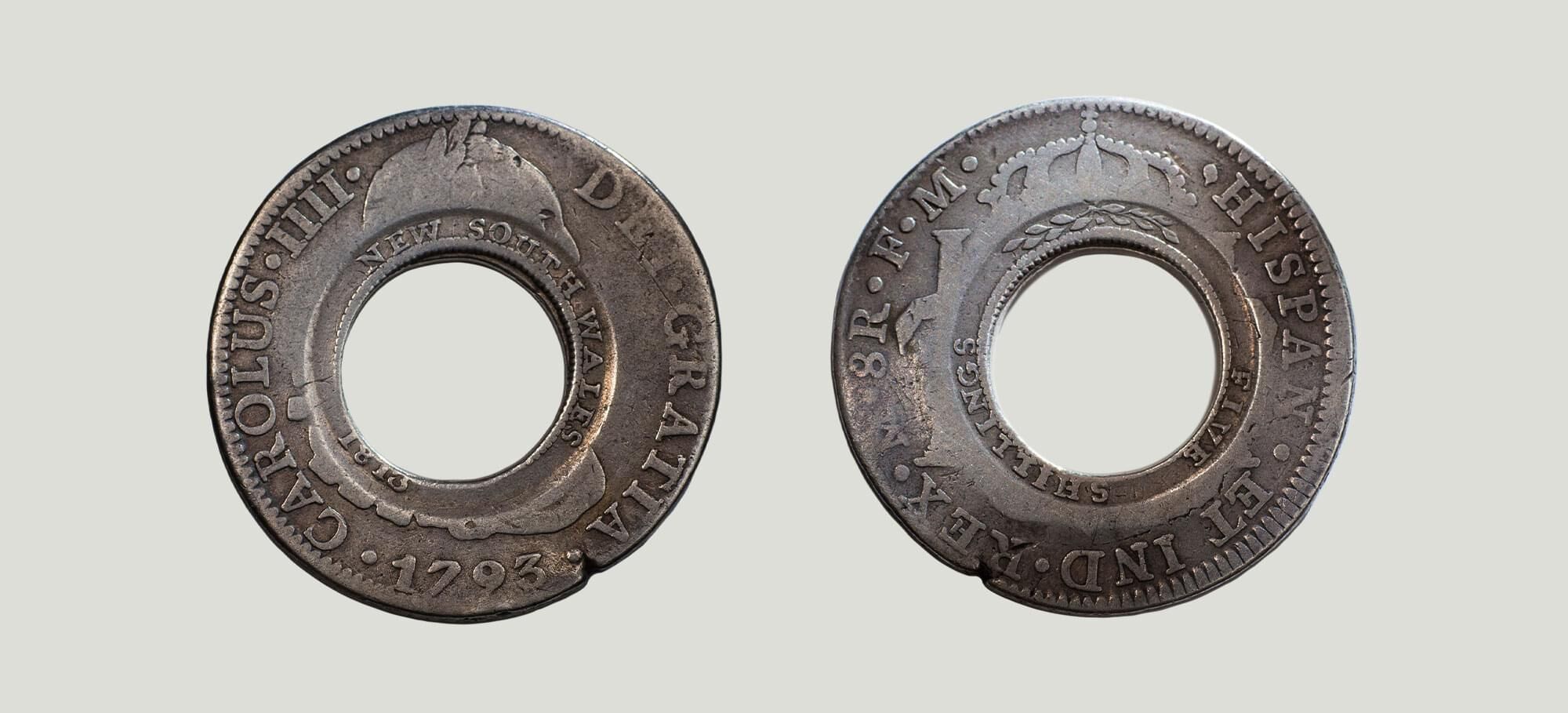
1793 Charles IIII Holey Dollar
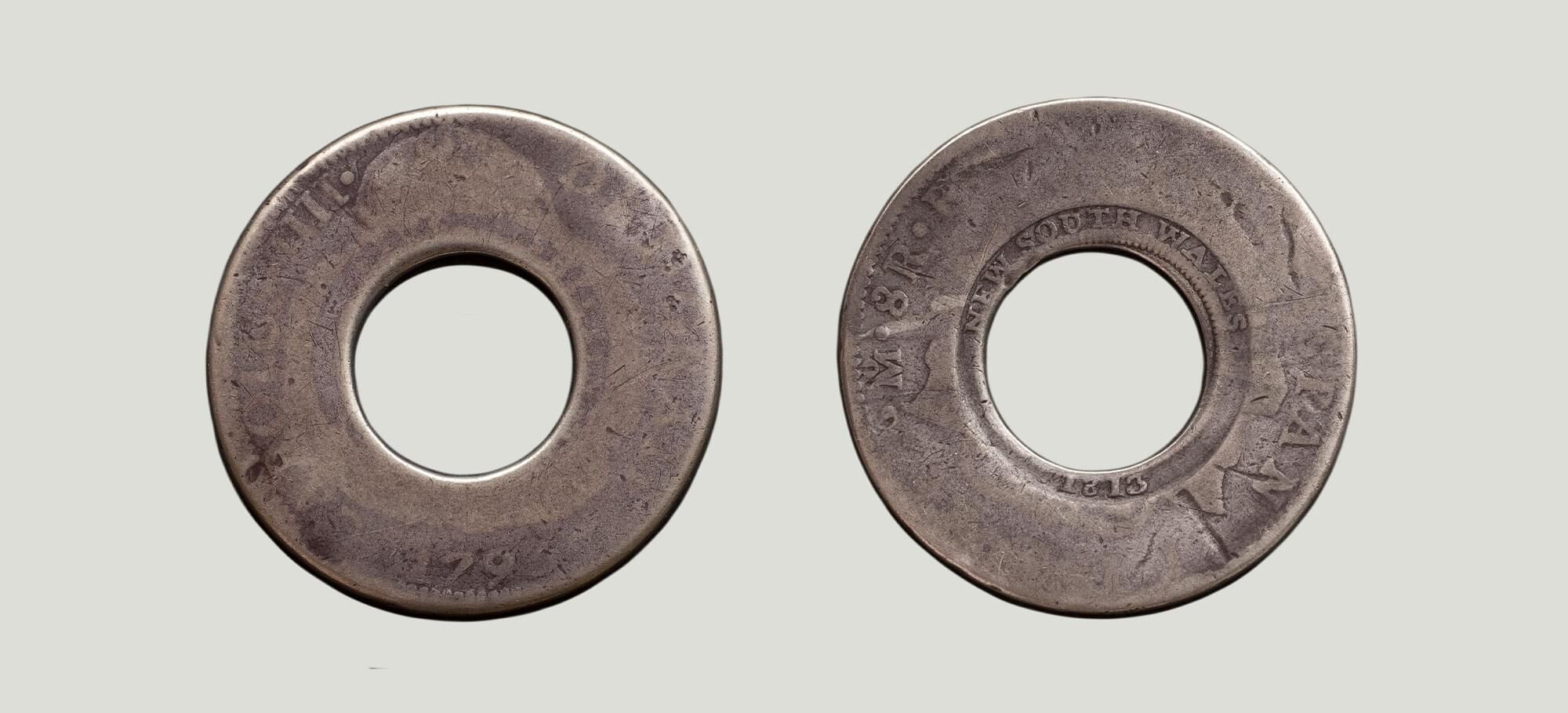
1793-6 Mexico Mint
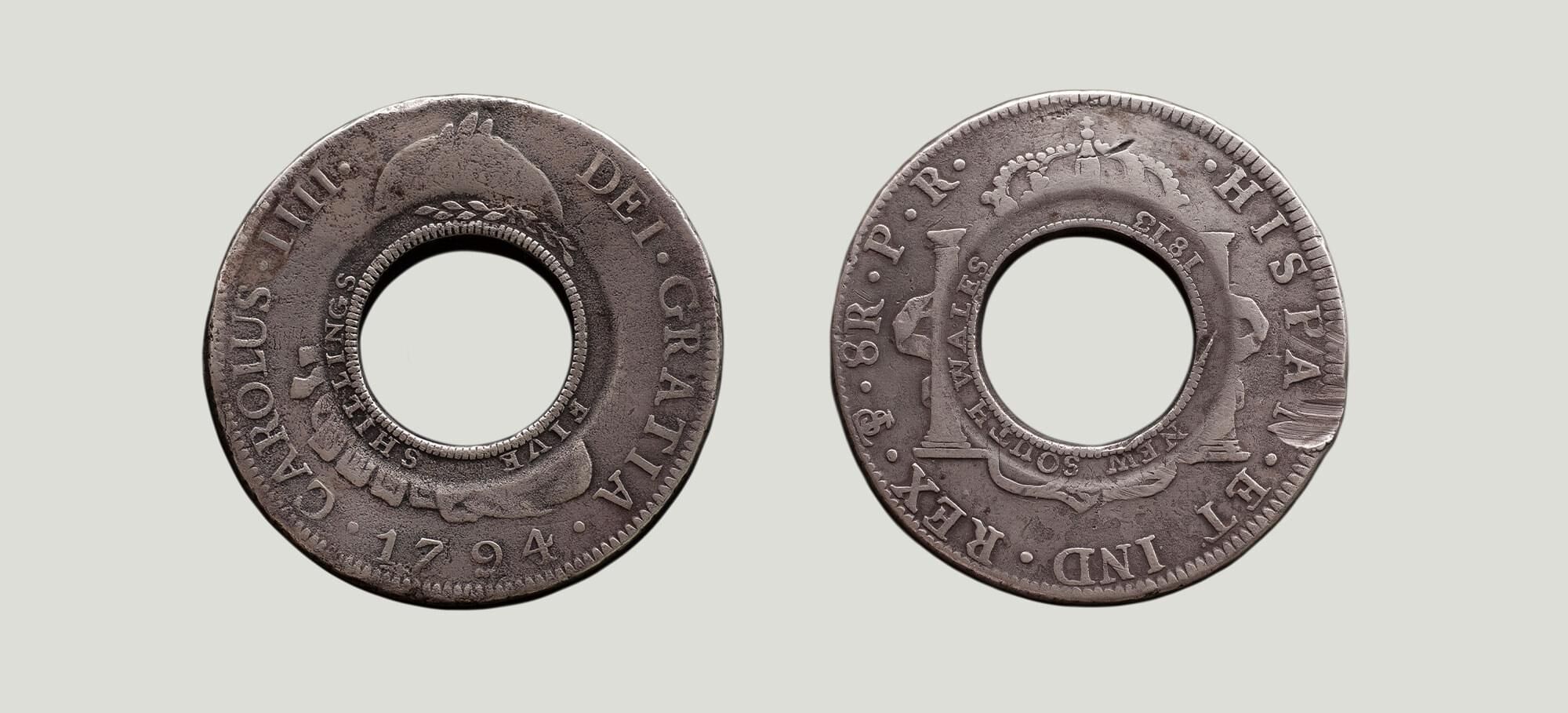
1794-9 Potosi Mint
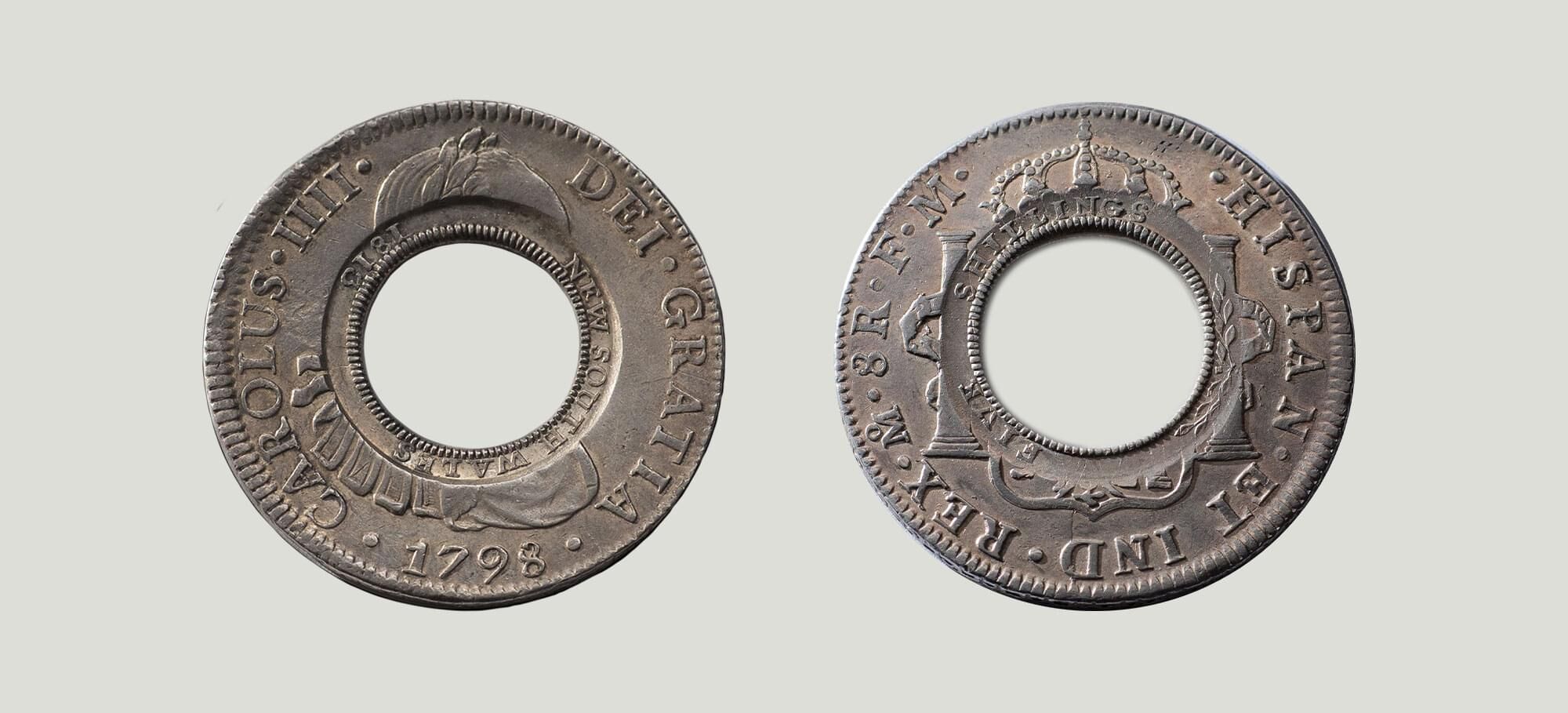
1798 Charles IIII Mexico Mint
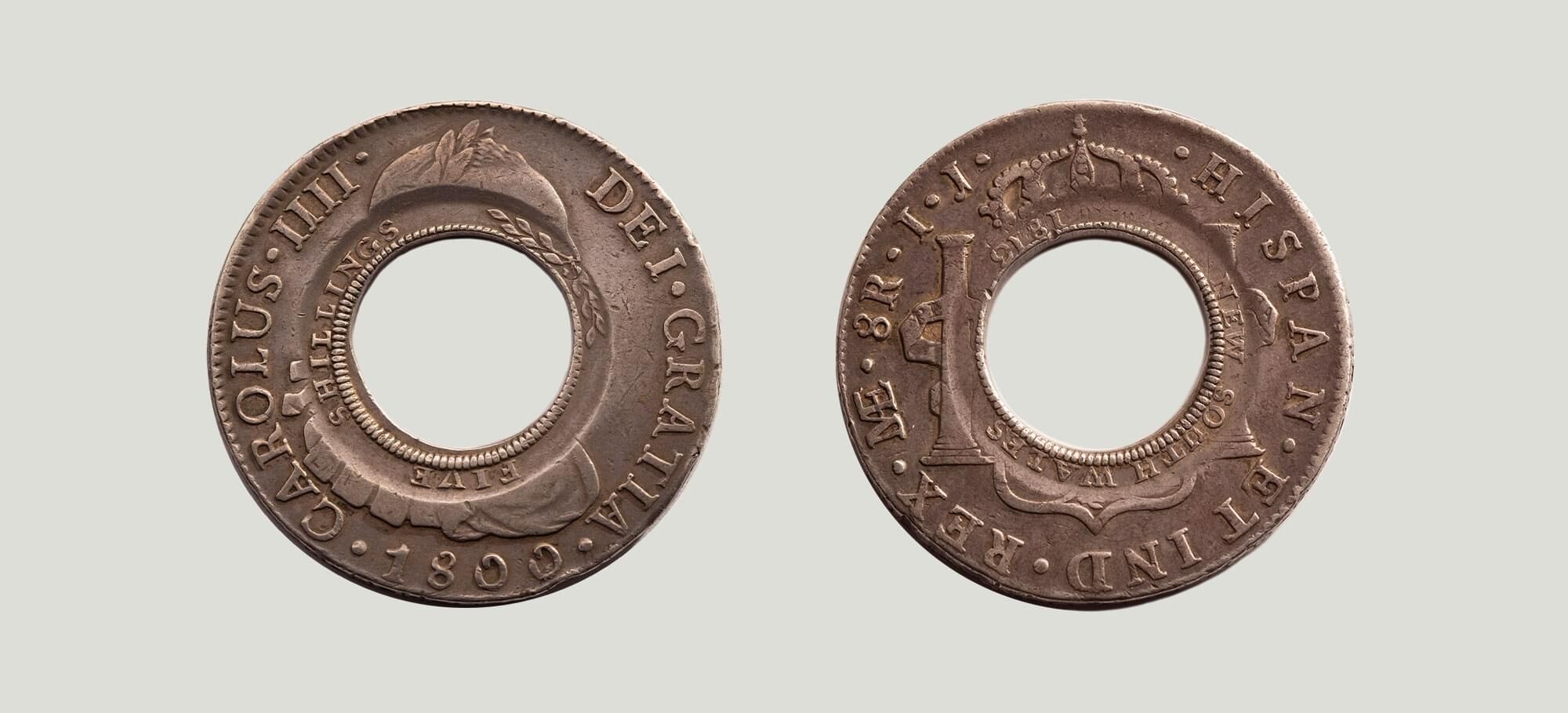
1800 Charles IIII Lima
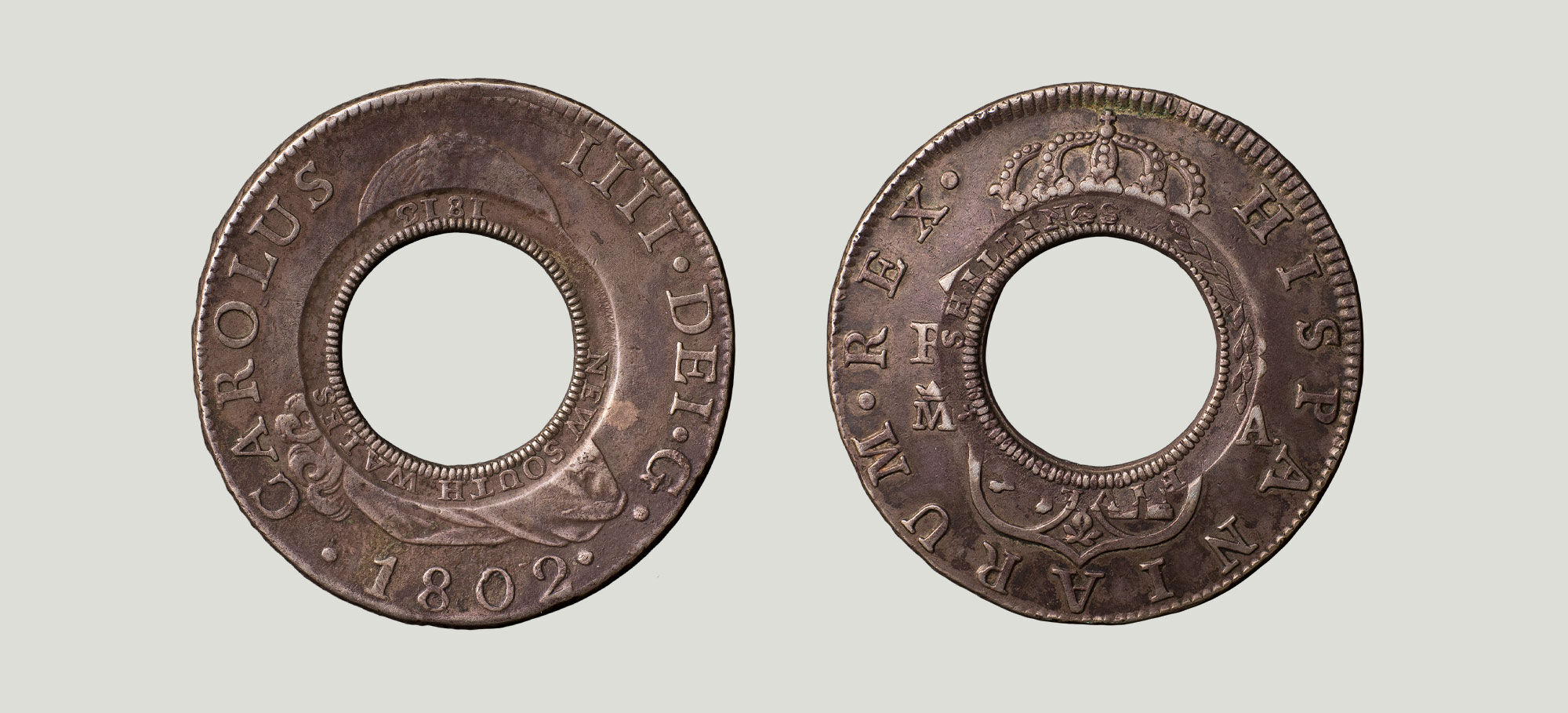
The Madrid (Continental) Holey Dollar
Created from a Spanish Silver Dollar of the 'bust' type that was minted at the Madrid Mint. The Spanish Mints of Madrid and Seville produced silver dollars of a different design to those minted in the colonies and are referred to as Continental dollars. They were a status of Royalty, the Church and wealthy landowners and were as a consequence hoarded. Holey Dollars converted from Continental dollars are by default, exceedingly scarce.
This is the finest of six Continental Holey Dollars (two Seville Mint and four Madrid Mint) and the only one in private hands. Noted in 1988 as 'the most desirable' of all Holey Dollars.
Design type: 6
Date of the silver dollar: 1802
Reigning monarch: Charles IV (1788 - 1808)
Design of the silver dollar: continental bust type
Portrait: Charles IV
Legend: Carolus (Charles) IIII
Quality of the silver dollar : Good Extremely Fine
Quality counter stamps: Good Extremely Fine
Exhibited: Macquarie Bank 2013, Royal Australian Mint 2019
Value $675,000+
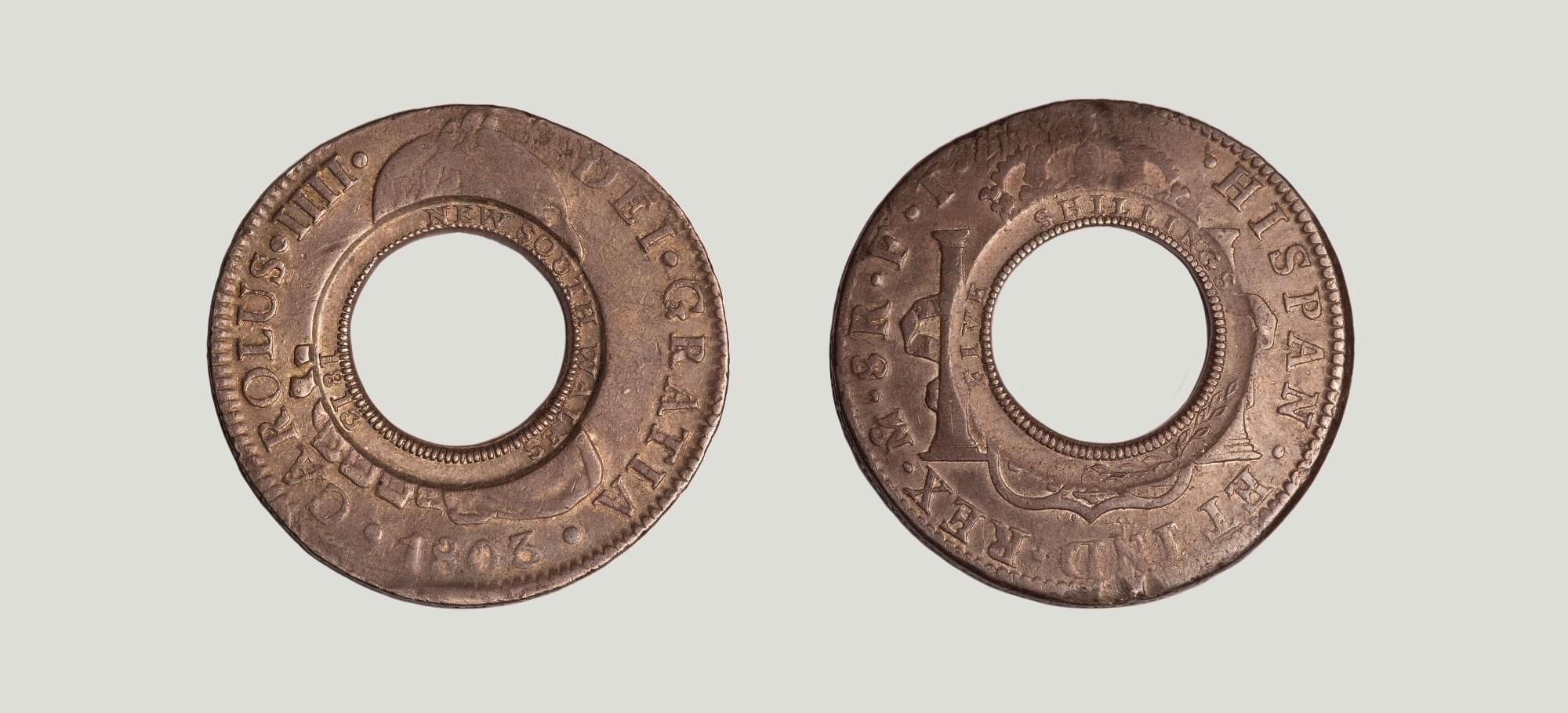
1803 Charles IIII Mexico Mint
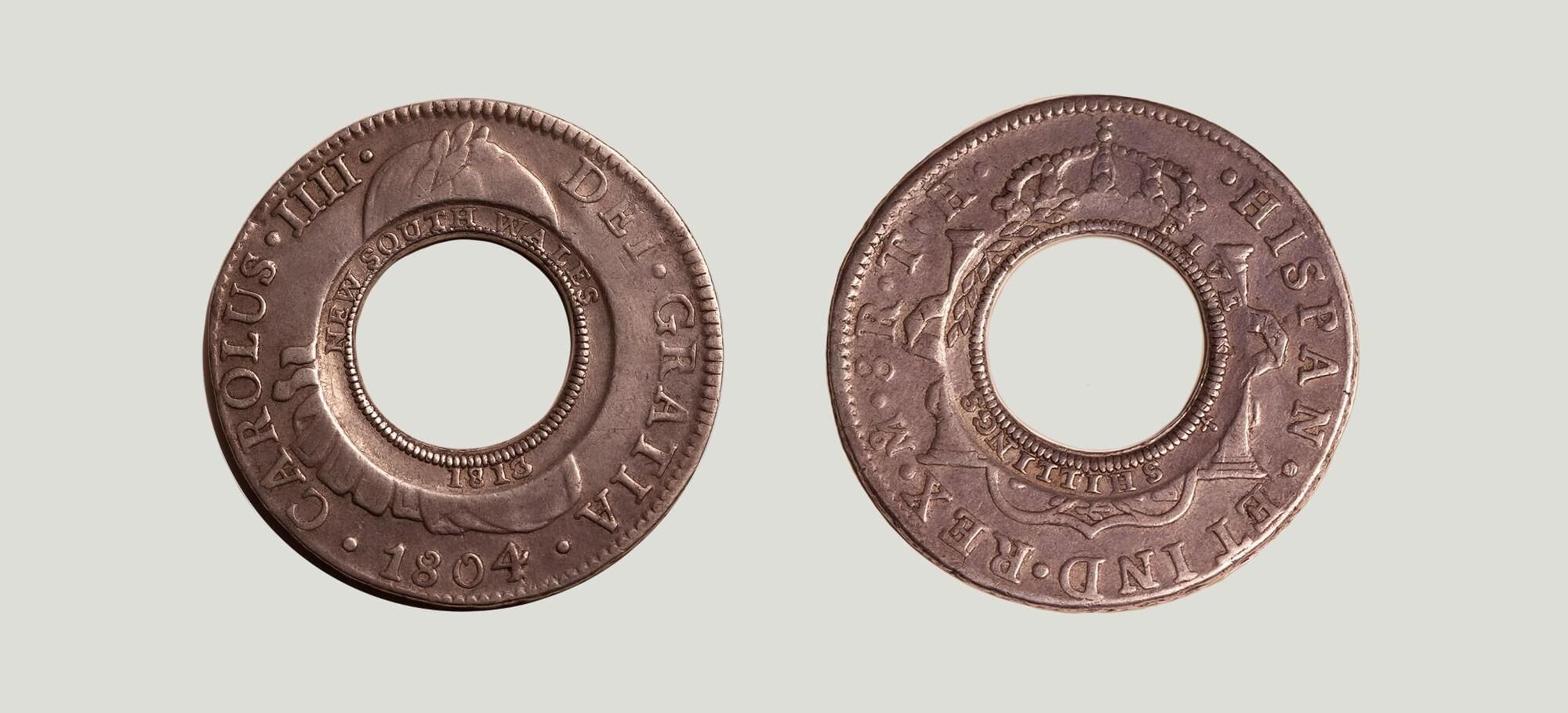
1804 Charles IIII Mexico Mint
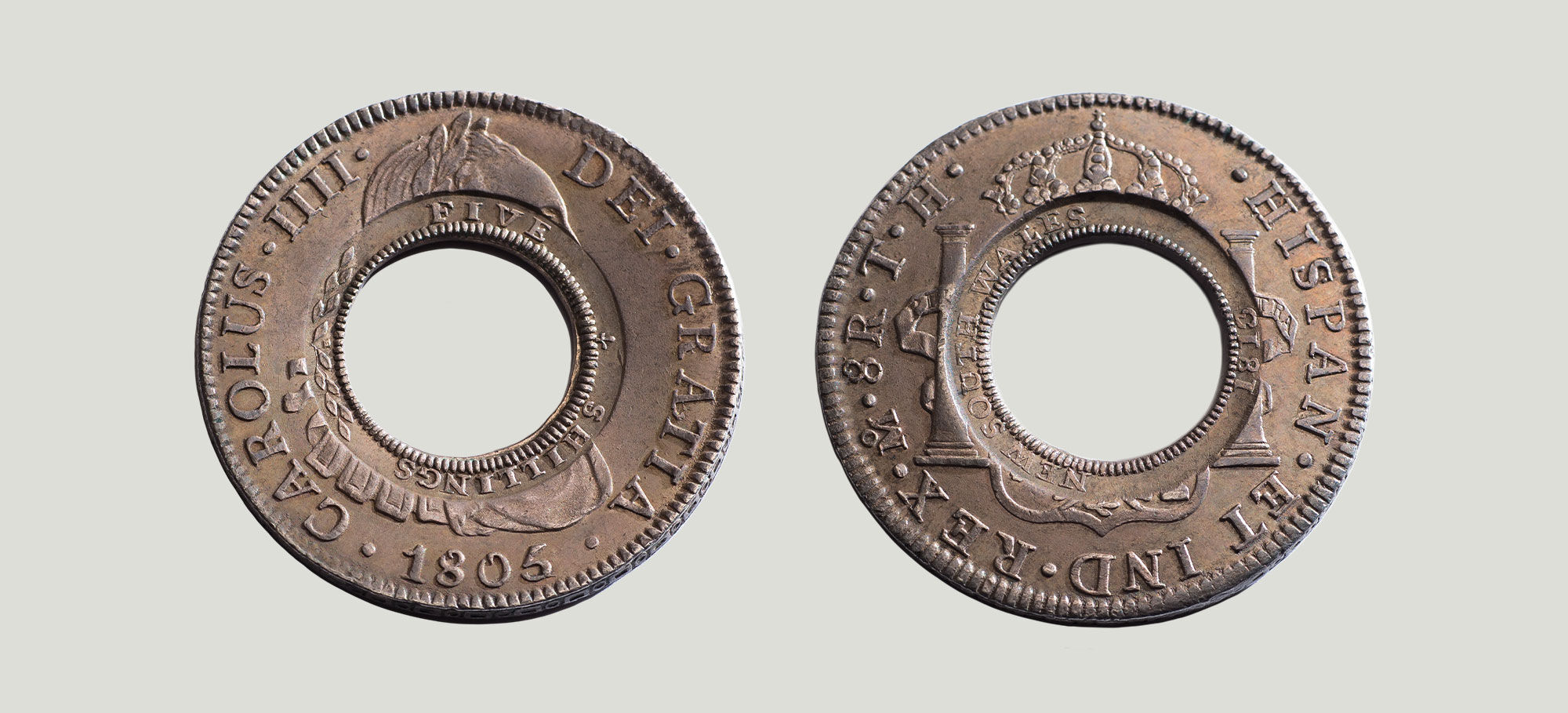
The Unique Charles IIII Holey Dollar
The Unique Charles IV Holey Dollar
This Holey Dollar is without peer. A Holey Dollar created from a Spanish Silver Dollar that shows no signs of circulation. It begs the question ... as the original silver dollar was minted in Mexico in 1805, how did it avoid usage in the seven years before it arrived in the colony of New South Wales? And how did it avoid usage after it was converted into a Holey Dollar in 1813?
Miraculous preservation, unique for quality, and the absolute finest of the three hundred Holey Dollars that are held in private collections and institutions, worldwide.
Design type: 5
Date of the silver dollar: 1805
Reigning monarch: Charles IV (1788 - 1808)
Design of the silver dollar: colonial bust type
Portrait: Charles IV
Legend: Carolus (Charles) IIII
Quality of silver dollar : Uncirculated
Quality counter stamps: Uncirculated
Value $600,000+
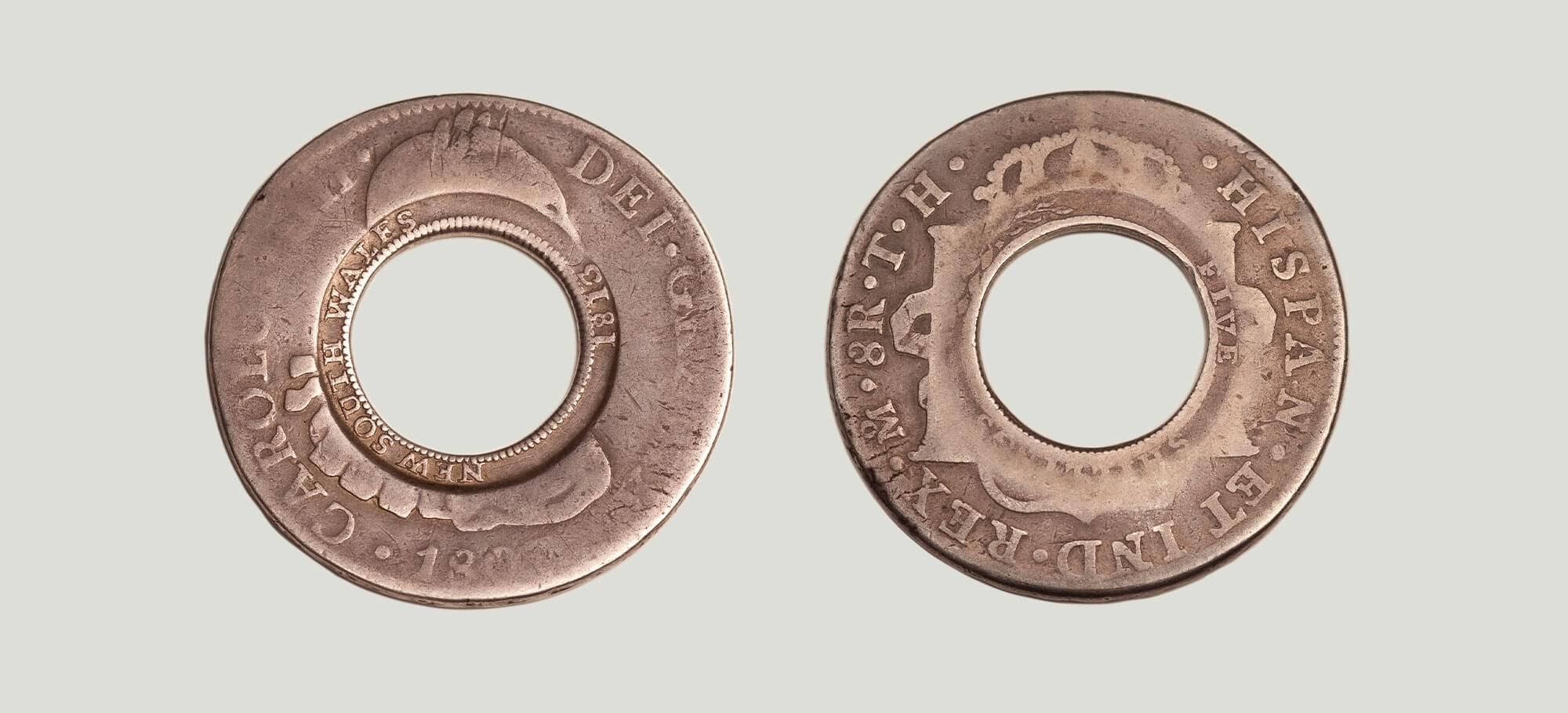
1805 Charles IIII Mexico Mint
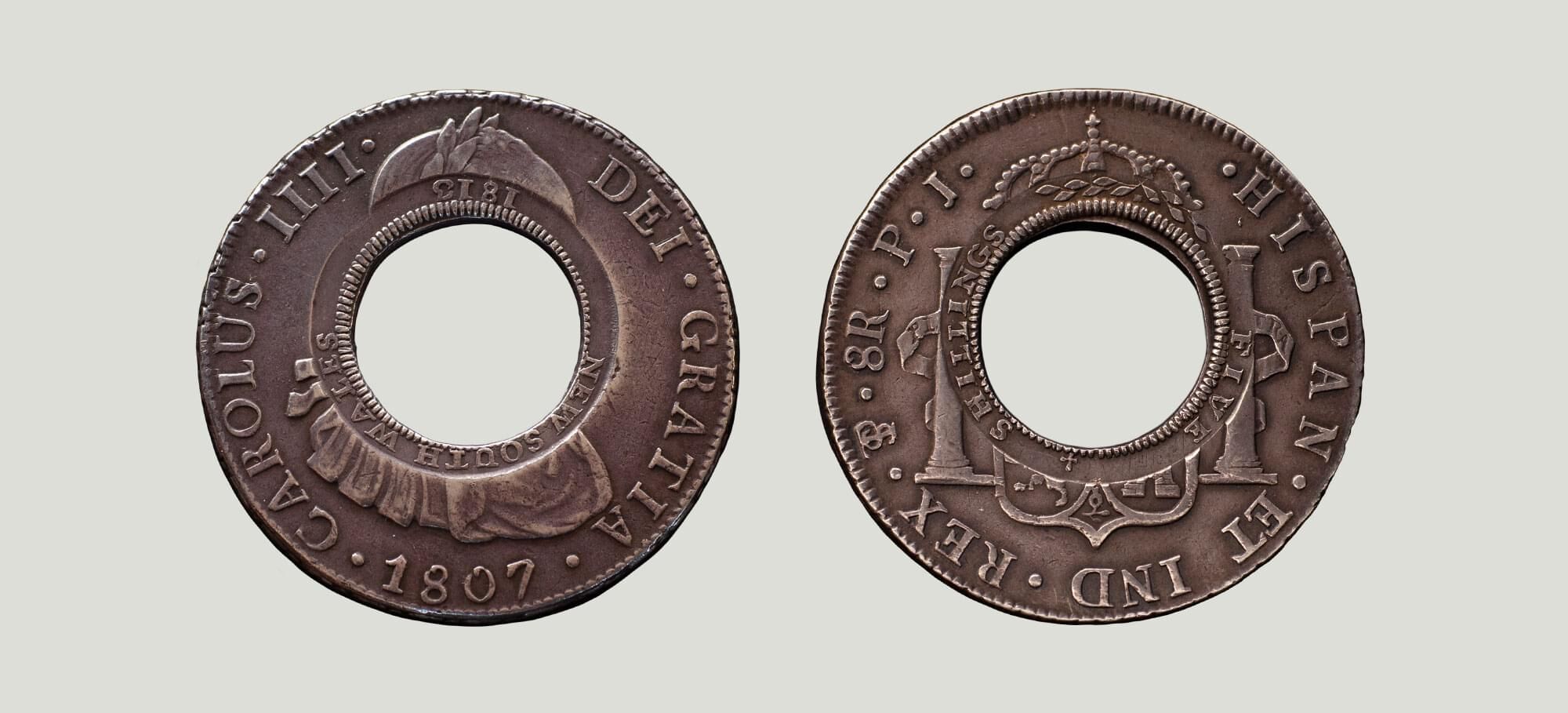
1807 Charles IIII Potosi - REPLACE
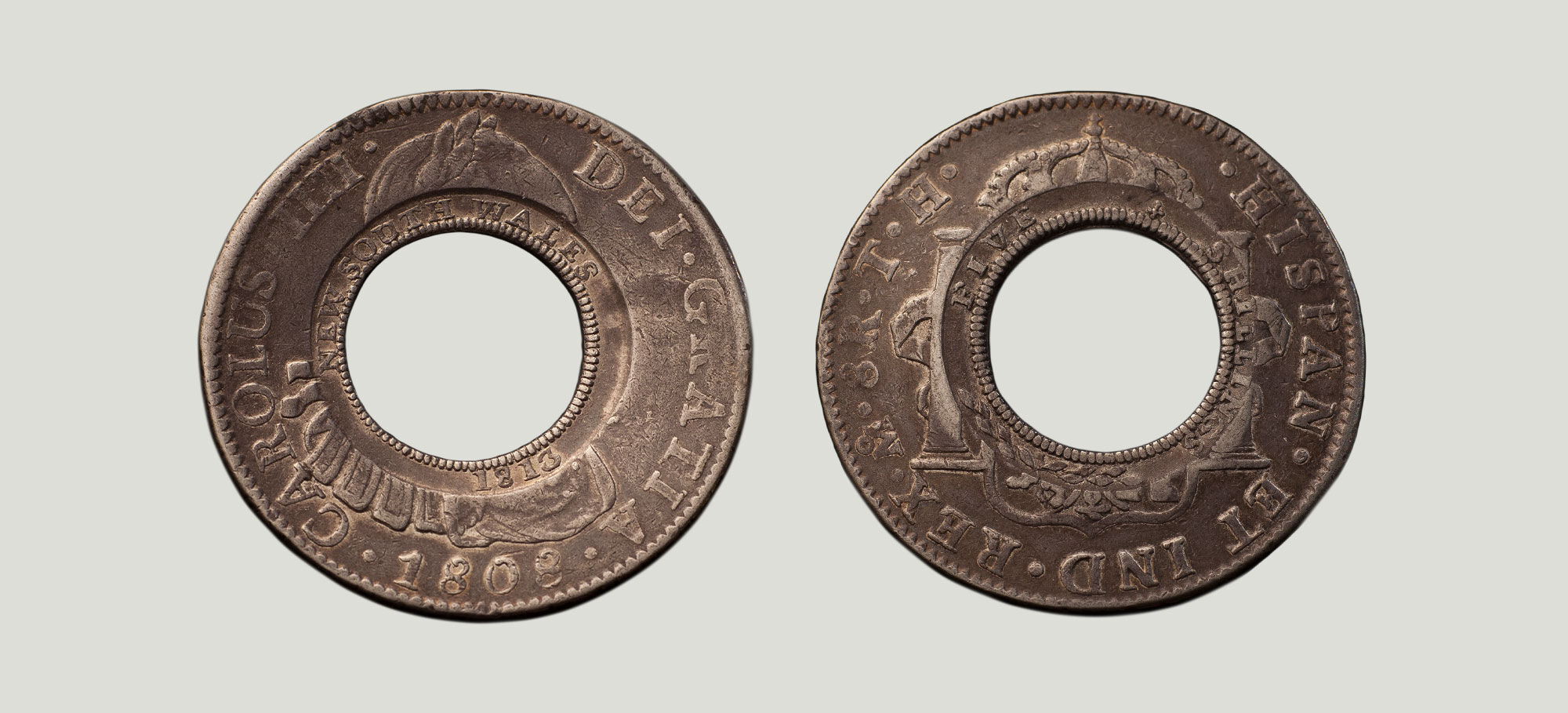
1808-6 Mexico Mint Charles IIII Holey Dollar
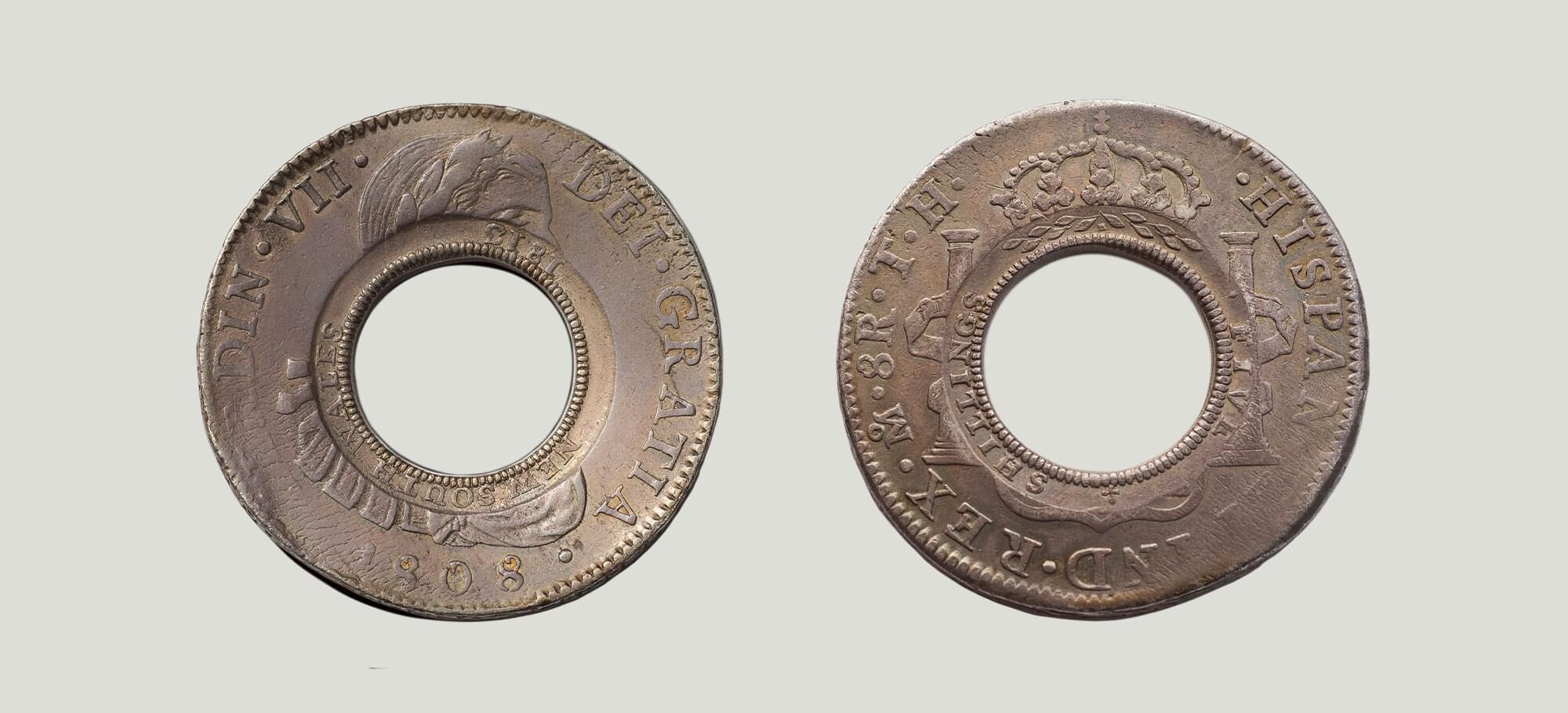
1808 Ferdinand VII Holey Dollar
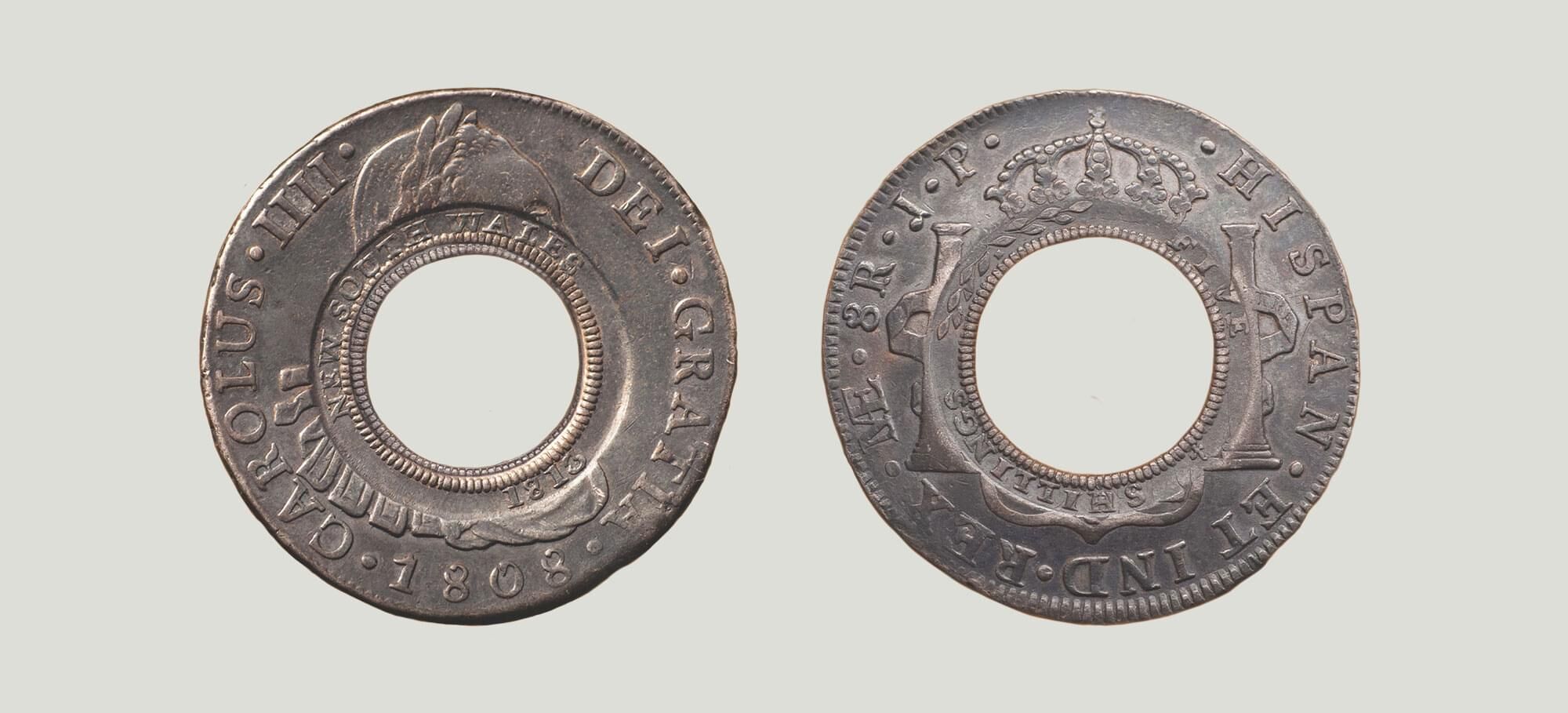
1808 Lima Mint Charles IIII Holey Dollar
The finest Lima Mint Holey Dollar
Created from a Spanish Silver Dollar of the 'bust' type depicting the portrait and legend of Charles IV, this coin is the finest of twenty two Holey Dollars with ties to the Lima Mint in Peru.
At Good Extremely Fine, this coin is in the top four of the three hundred Holey Dollars held in private collections and institutions, worldwide. We also note the counter stamps on the obverse, applied by William Henshall around the edge of the hole, are in the same vista as the date 1808. This is the optimum position of the counter stamps and was rarely ever achieved by mint master, William Henshall.
Date of the silver dollar: 1808
Reigning monarch: Charles IV (1788 - 1808)
Design of the silver dollar: colonial bust type
Portrait: Charles IV
Legend: Carolus (Charles) IV
Mint mark: LMAE monogram in the legend on the reverse
Quality of the silver dollar : Good Extremely Fine
Quality counter stamps: About Uncirculated
Exhibited: Macquarie Bank 2013, Royal Australian Mint 2019
Value $500,000+
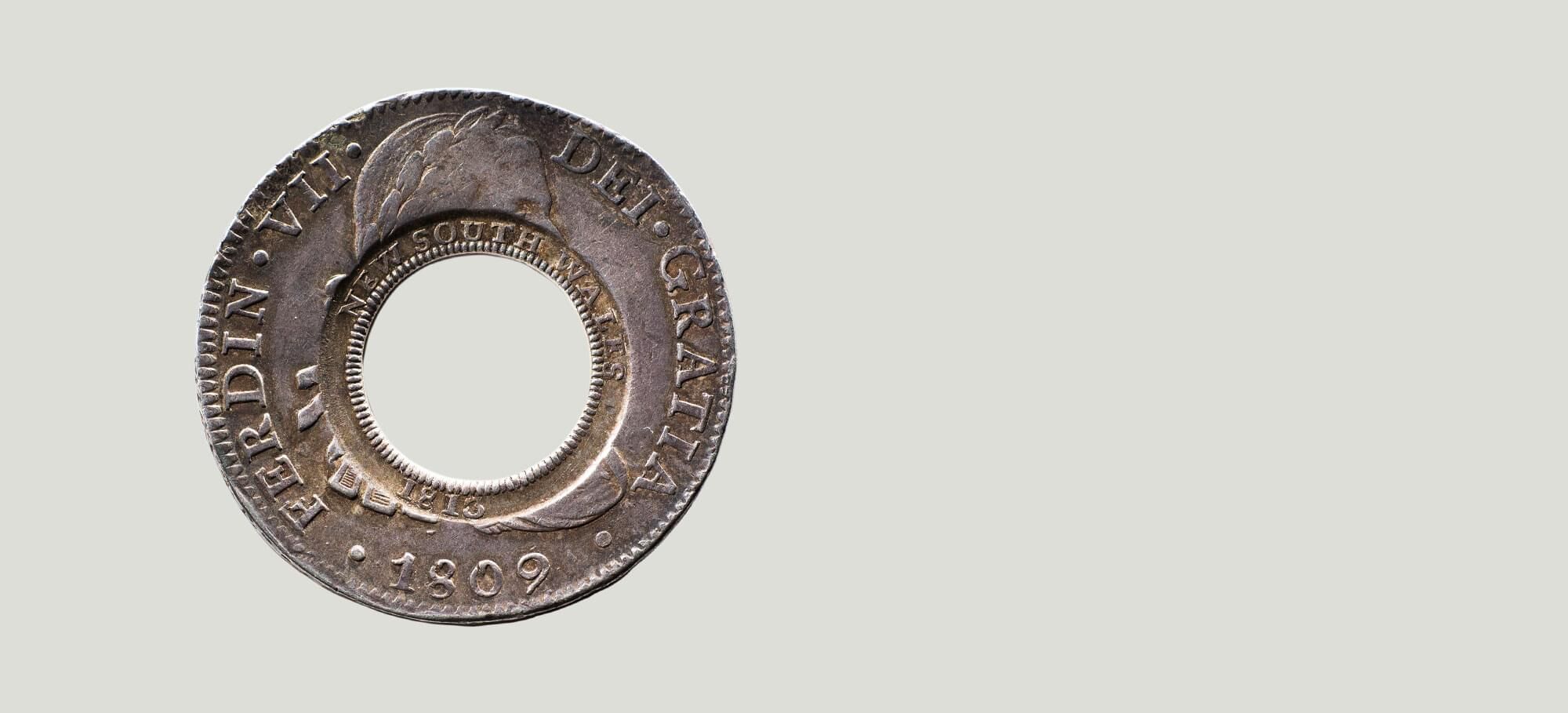
1809 Holey Dollar
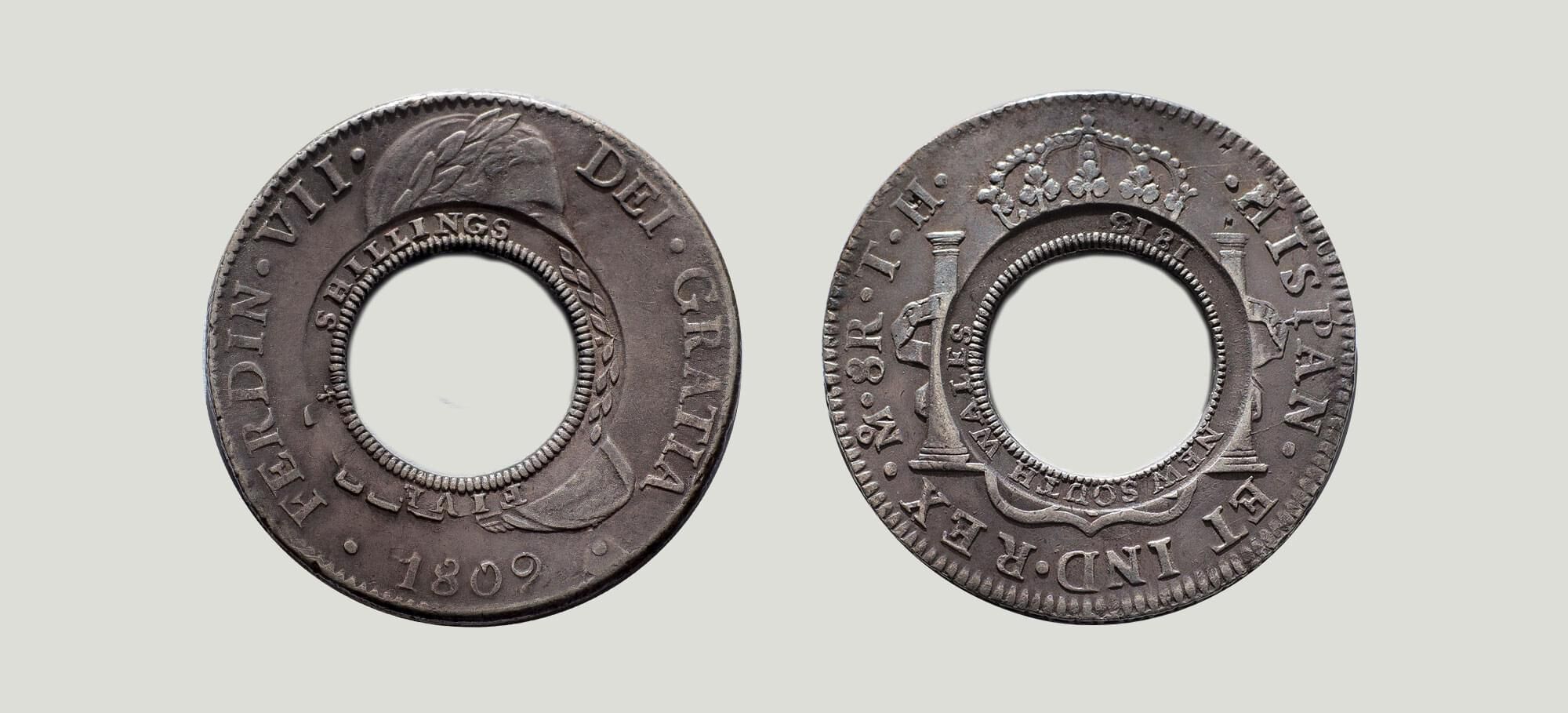
1809 The Ferdinand VII Holey Dollar
Created from a Spanish Silver Dollar of the 'bust' type depicting the portrait and legend of Ferdinand VII. In 1808, Charles IV abdicated the throne for his son Ferdinand VII. In that same year, Napoleon Bonaparte persuaded Ferdinand to relinquish his monarchical authority. He, in turn, placed his brother Joseph Bonaparte on the Spanish throne. The colonial Mexico Mint refused to accept Bonaparte as king and continued to use the portrait and legend of Ferdinand VII.
This coin is the finest of thirteen Holey Dollars featuring the legend and portrait of Ferdinand VII.
Design type: 7
Date of the silver dollar: 1809
Reigning monarch: Joseph Bonaparte (1808 - 1813)
Design of the silver dollar: colonial bust type
Portrait: Ferdinand VII
Legend: Ferdinand VII
Quality of silver dollar : Extremely Fine
Quality counter stamps: Extremely Fine
Exhibited: Macquarie Bank 2013, Royal Australian Mint 2019
Value $500,000+
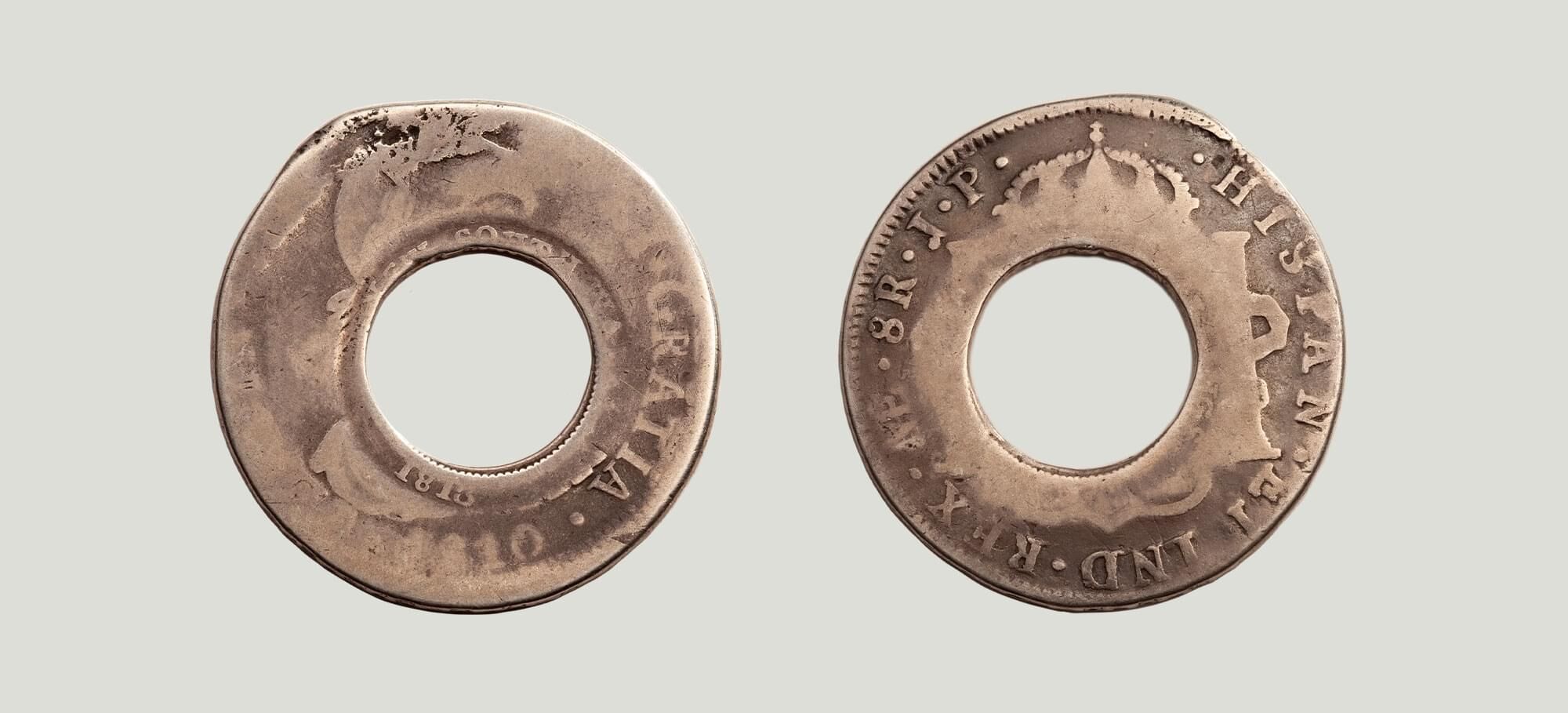
1810 The Hannibal Head Holey Dollar
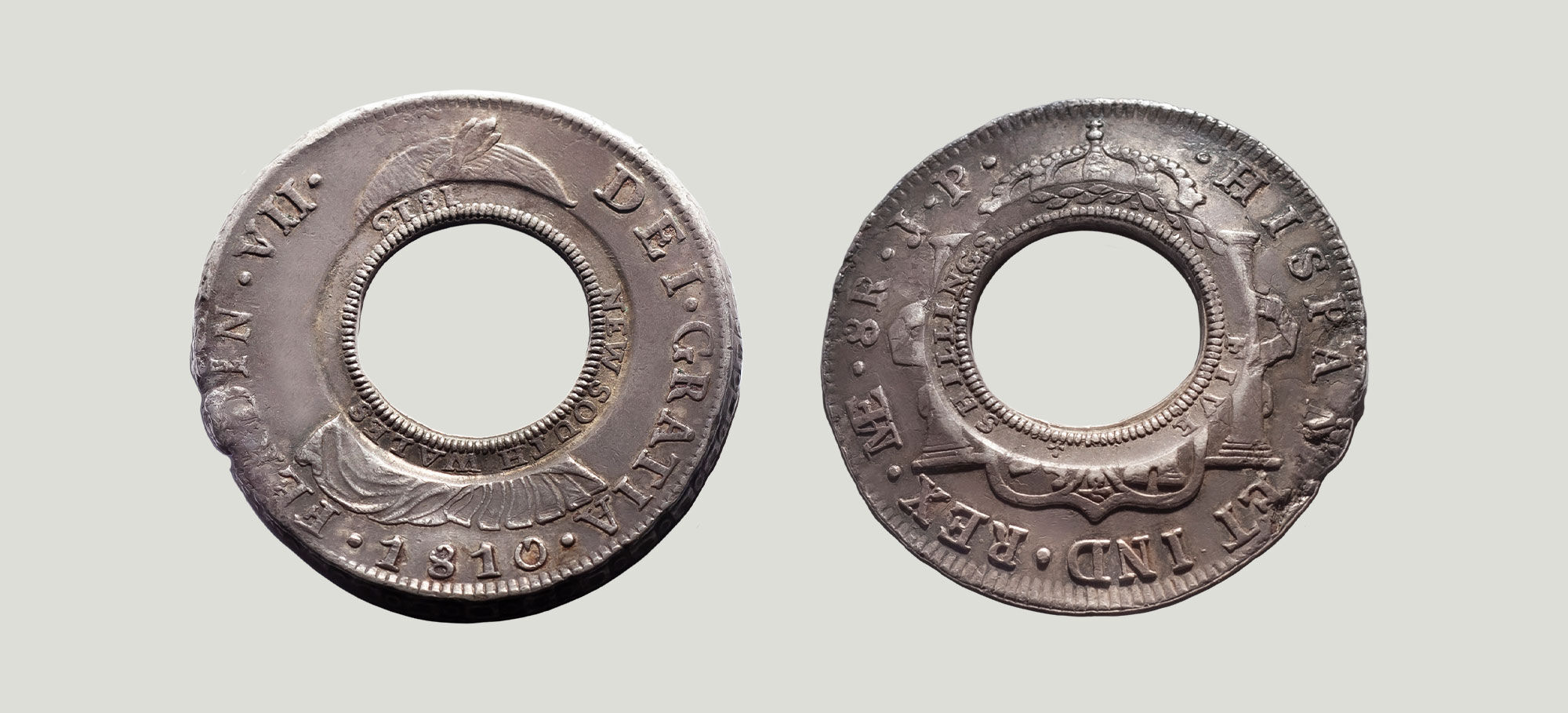
1810 The Hannibal Head Holey Dollar
Created from a Spanish Silver Dollar of the 'bust' type depicting the legend of Ferdinand VII and an imaginary portrait referred to as the 'Hannibal Head'. In 1808, Charles IV abdicated the throne for his son Ferdinand VII. In that same year, Napoleon Bonaparte persuaded Ferdinand to relinquish his monarchical authority. He, in turn, placed his brother Joseph Bonaparte on the Spanish throne. The colonial mint in Lima Peru also refused to accept Bonaparte as king and maintained the legend Ferdinand VII. In an even stronger political protest, the Lima Mint introduced a new portrait of the monarch to its dollars - said to be most unflattering - referred to as the 'Hannibal Head'.
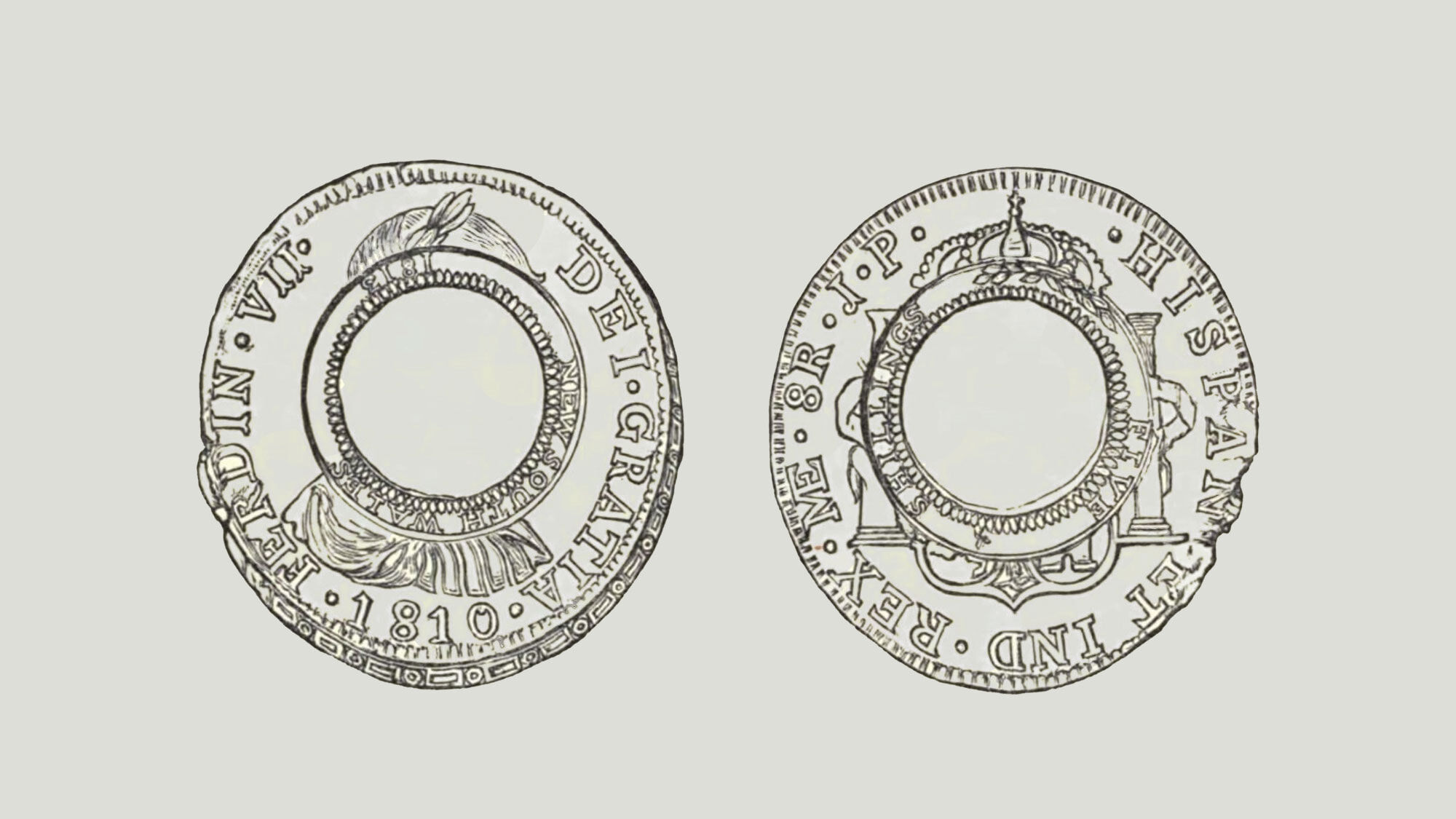
This coin is the finest of two Hannibal Head Holey Dollars and is the most historic of the nation’s Holey Dollars. Its discovery was written up in the Hobart Mercury (1883) and the Sydney Morning Herald (1884). Furthermore, a pencil drawing of this coin, published in 1883 in London's Numismatic Chronicle, is the earliest known illustration of Australia’s very first coin (shown here).
Design type: 8
Date of the silver dollar: 1810
Reigning monarch: Joseph Bonaparte (1808 - 1813)
Design of the silver dollar: colonial bust type
Portrait: imaginary, known as the Hannibal Head
Legend: Ferdinand VII
Quality of silver dollar: About Extremely Fine
Quality counter stamps: Extremely Fine
Exhibited: Macquarie Bank 2013, Royal Australian Mint 2019
Value $550,000+
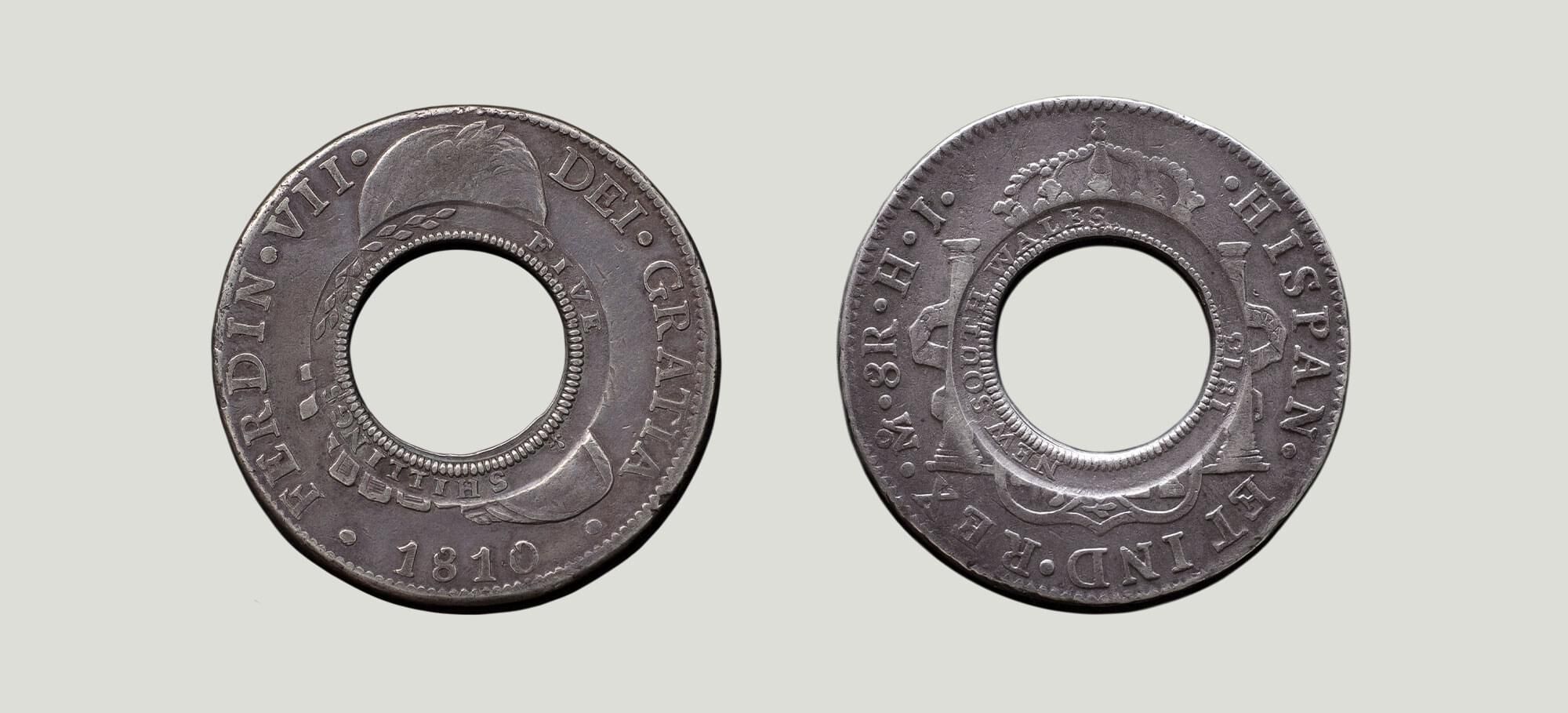
1810-2 Mexico Mint
© Copyright: Coinworks