An offering of five 1813 Holey Dollars

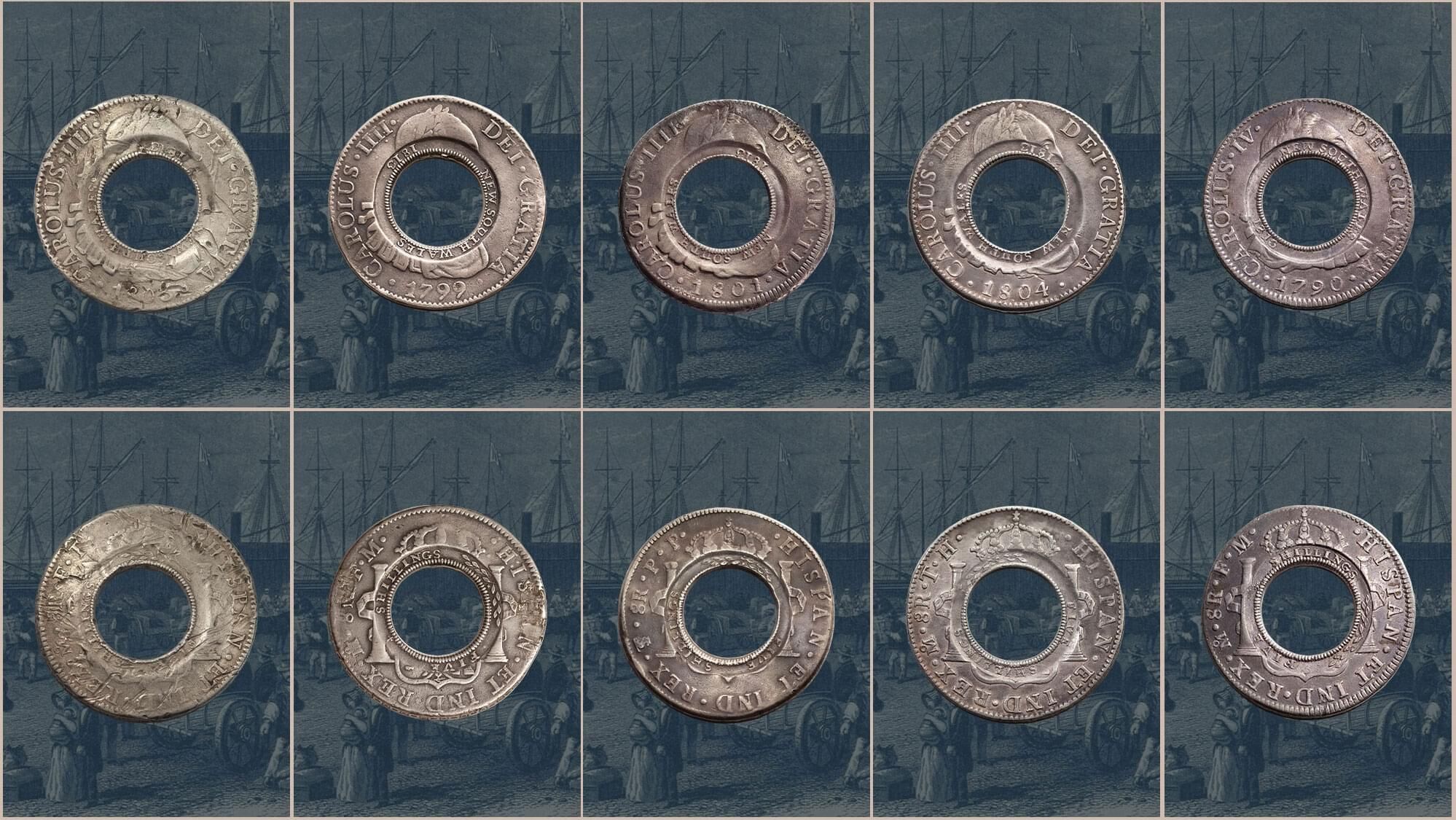
The Holey Dollar is a story-teller.
There is a market for Holey Dollars at all quality levels. And at dollar levels.
In the realm of rare coins, Holey Dollars exist on a different plane.
They transcend mere collectibles, and have become coveted objects that represent the pinnacle of Australia's numismatic industry, our very first coin.
Owning a Holey Dollar isn't just about adding another coin to a collection. It's about indulging in an experience, a fusion of history and prestige.
You are not just buying a coin, you own the experience.
The Holey Dollar is the nation’s first coin, minted in 1813 by order of Governor Lachlan Macquarie.
The issuing of Australia’s first coinage symbolised the changing dynamics of the penal colony. New South Wales had started out in 1788 as a jail, a repository for convicts, under the governorship of Captain Arthur Phillip. It had emerged some twenty-five years later as a thriving economy requiring a formal medium of exchange to support a burgeoning commercial hub.
As Macquarie had no access to metal blanks to create his currency, he improvised and acquired 40,000 Spanish Silver Dollars as a substitute.
To make his new coinage unique to the colony, and to inhibit their export, he employed emancipated convict William Henshall to cut a hole in each silver dollar. Each holed silver dollar was then over-stamped on both sides, around the edge of the hole. On one side, the date 1813 and the issuing authority of New South Wales.
And on the other side, the value 'Five Shillings' with some decorative embellishments of a fleur de lis, a double twig of six leaves and a tiny 'H' for Henshall at the junction of the twigs.
The application of the counter stamps is the point at which the holed silver dollar became the 1813 Holey Dollar, the nation's first locally made coinage.
While the original intention was to create 40,000 Holey Dollars from 40,000 silver dollars, spoilage and the despatch of samples back to Great Britain saw a slightly reduced number of Holey Dollars - 39,910 - released into circulation.
Today there are approximately 200 Holey Dollars held by private collectors with perhaps 100 held in museums. The coin is a national treasure and is revered and sought after by collectors, the world over.
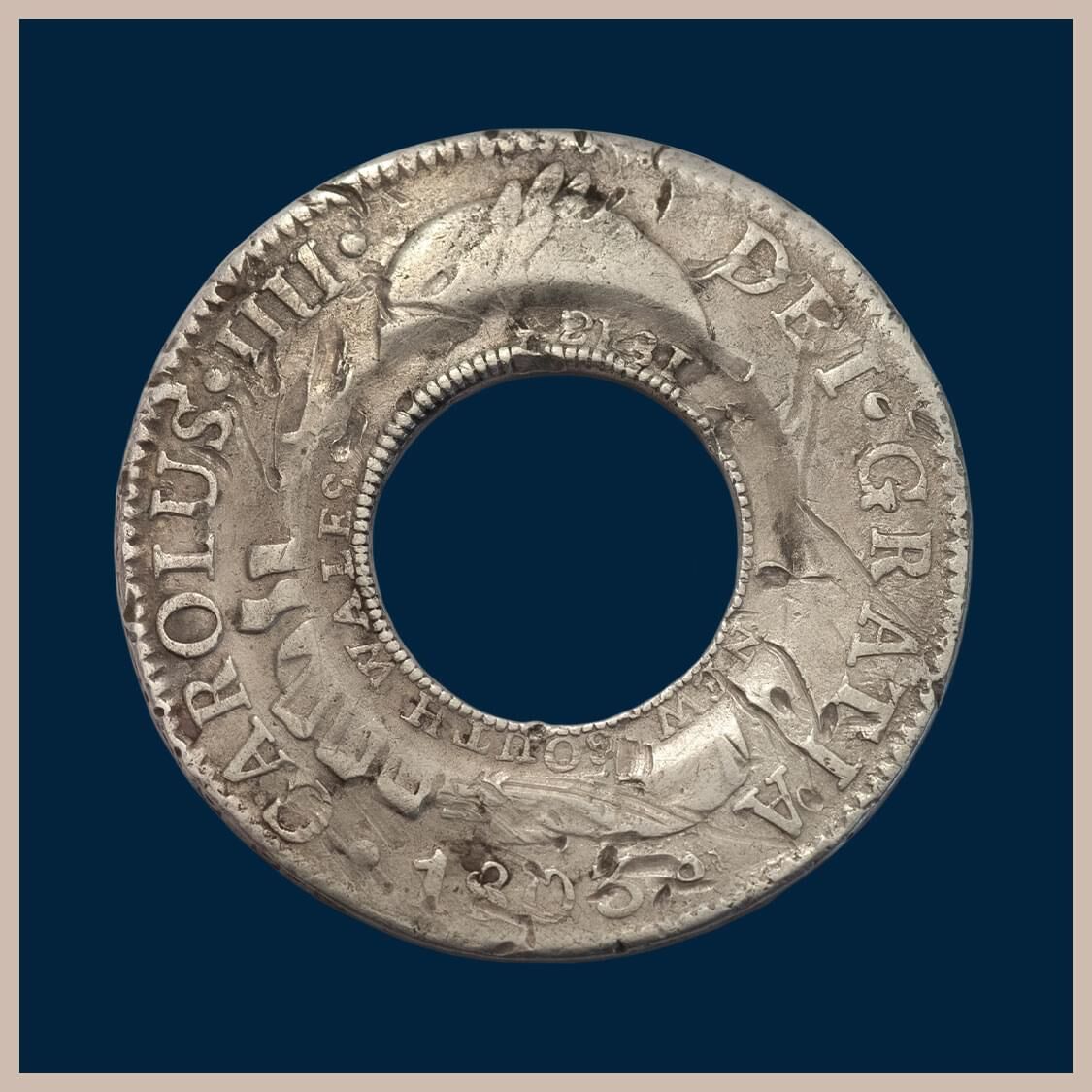
Dummy text dummy text
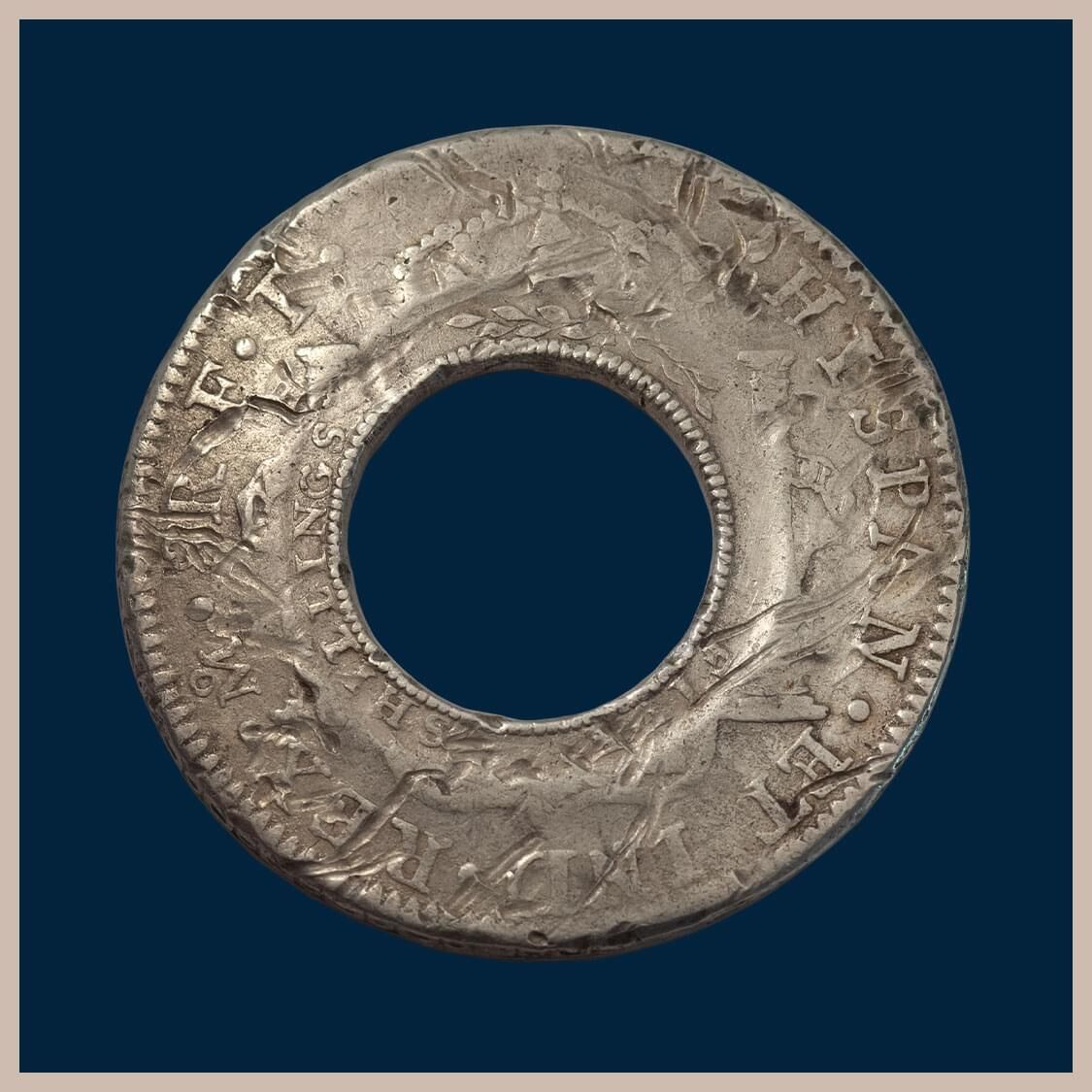
Dummy text dummy text
The Holey Dollar is a story. Its narrative, is as much about Australian history as it is about European history, charting the changing Spanish monarchs, Ferdinand VI, Charles III, Charles IV and Ferdinand VII. And reflecting the associated political and social turmoil that so often occurs when a monarch dies or abdicates.
As to why there are different dates and monarchs appearing on the Holey Dollars?
The simple answer is that the Holey Dollar was not created from a silver blank onto which a decorative pattern was stamped in a mass production process that produced thousands of uniformly struck coins, each featuring the same design.
The Holey Dollar was created from another coin, a Spanish Silver Dollar, and that coin came with different dates and in various levels of quality, most well used.
Forty thousand Spanish Silver Dollars were imported by Governor Lachlan Macquarie from the East India Company to convert into forty thousand Holey Dollars, the nation's first circulating currency.
The order for the dollars was not date specific, any date would suffice. Ferdinand VI reigned from 1746 to 1759. Charles III, 1759 to 1788. Charles IV was the reigning monarch from 1788 to 1808 and Ferdinand VII endured a disrupted reign, 1808 and again between 1814 and 1833.
And as each king ascended the throne, the design of the dollar was re-created with a re-styled legend and a re-styled portrait to record the new reigning monarch.
Holey Dollars are classified into types based on the legend and portrait of the monarch depicted on the original Spanish Silver Dollar.
There are eight distinct types of Holey Dollars as photographed above. And detailed here.
Some mints are rarer than others
Governor Lachlan Macquarie placed his order for the Spanish Silver dollars with the East India Company, the coins originating from various mints around the world.
The percentage of Holey Dollars converted from the mints in Mexico, Lima, Potosi and Madrid are noted below.
• Holey Dollars converted from Mexico Mint dollars - 81 per cent
• Holey Dollars converted from Lima Mint dollars - 10 per cent
• Holey Dollars converted from Potosi Mint dollars - 8 per cent.
• Holey Dollars converted from Madrid Mint dollars - 1 per cent
Dummy text dummy text dummy text dummy text dummy text dummy text dummy text dummy text dummy text. Dummy text dummy text dummy text dummy text dummy text dummy text dummy text dummy text dummy text.
Dummy text dummy text dummy text dummy text dummy text dummy text dummy text dummy text dummy text. Dummy text dummy text dummy text dummy text dummy text dummy text dummy text dummy text dummy text. Dummy text dummy text dummy text dummy text dummy text dummy text dummy text dummy text dummy text.
Dummy text dummy text dummy text dummy text dummy text dummy text dummy text dummy text dummy text.
© Copyright: Coinworks