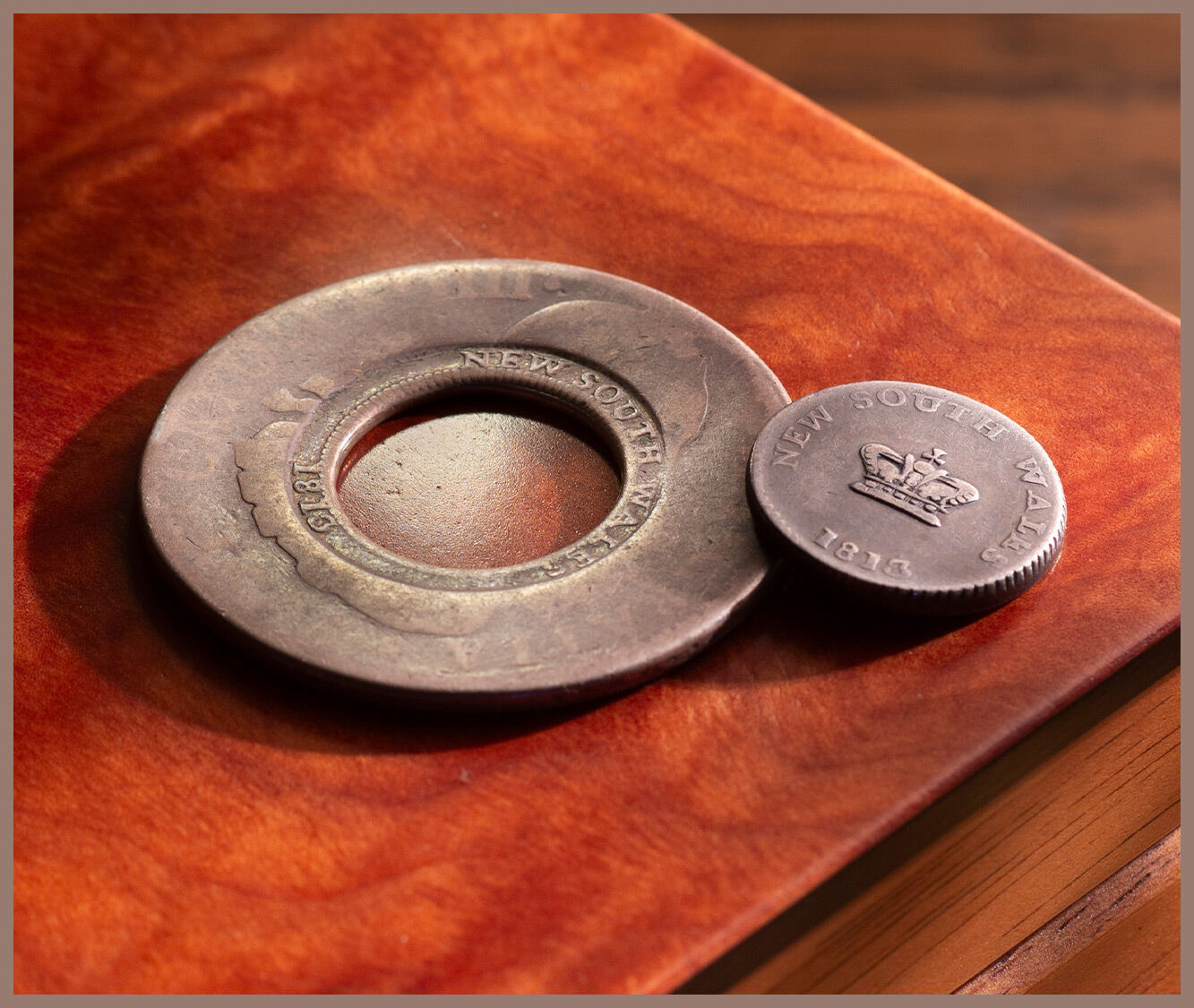
An exceptional offering, a pair of 1813 Holey Dollar and 1813 Dump. Macquarie would applaud!


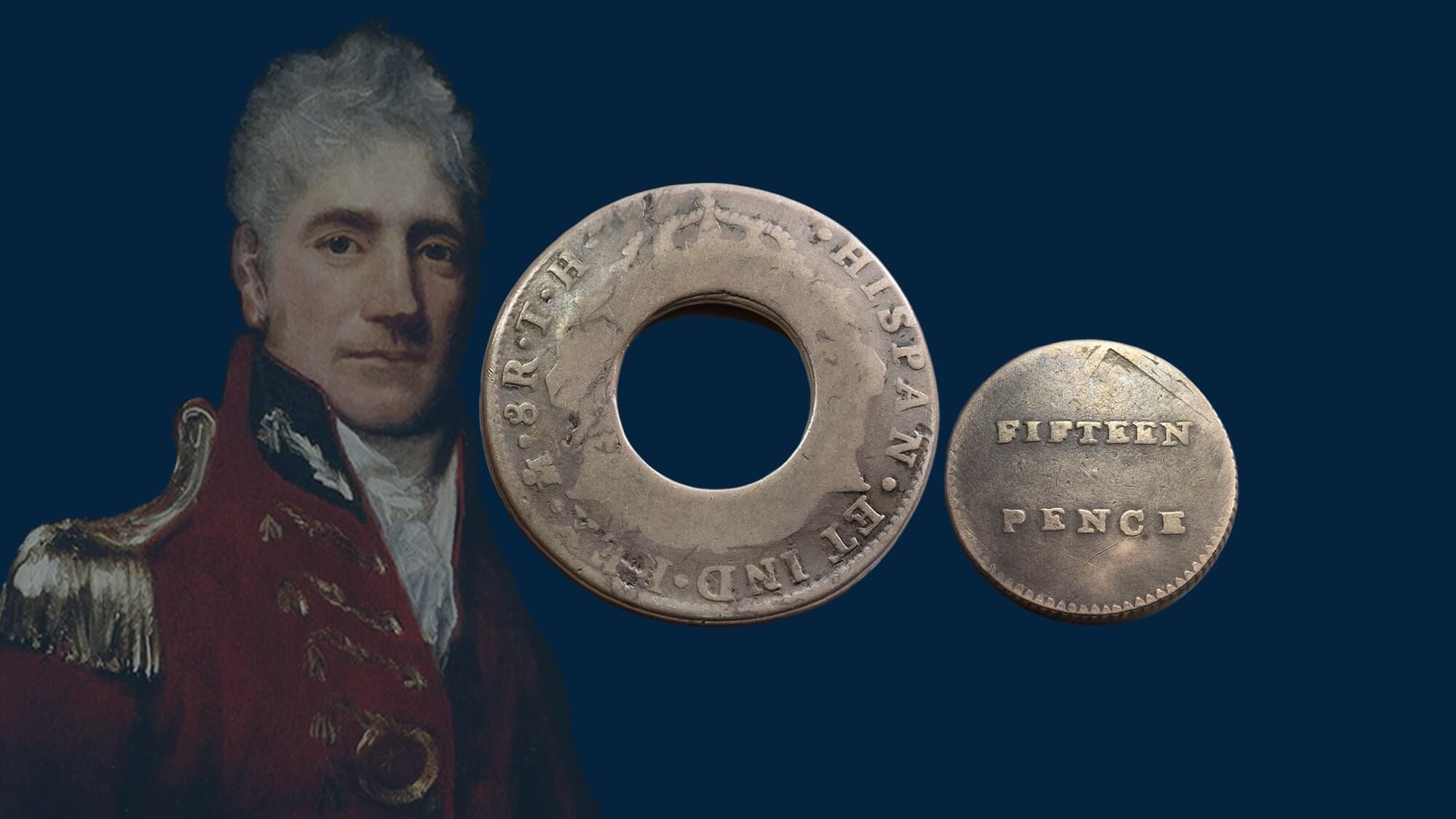
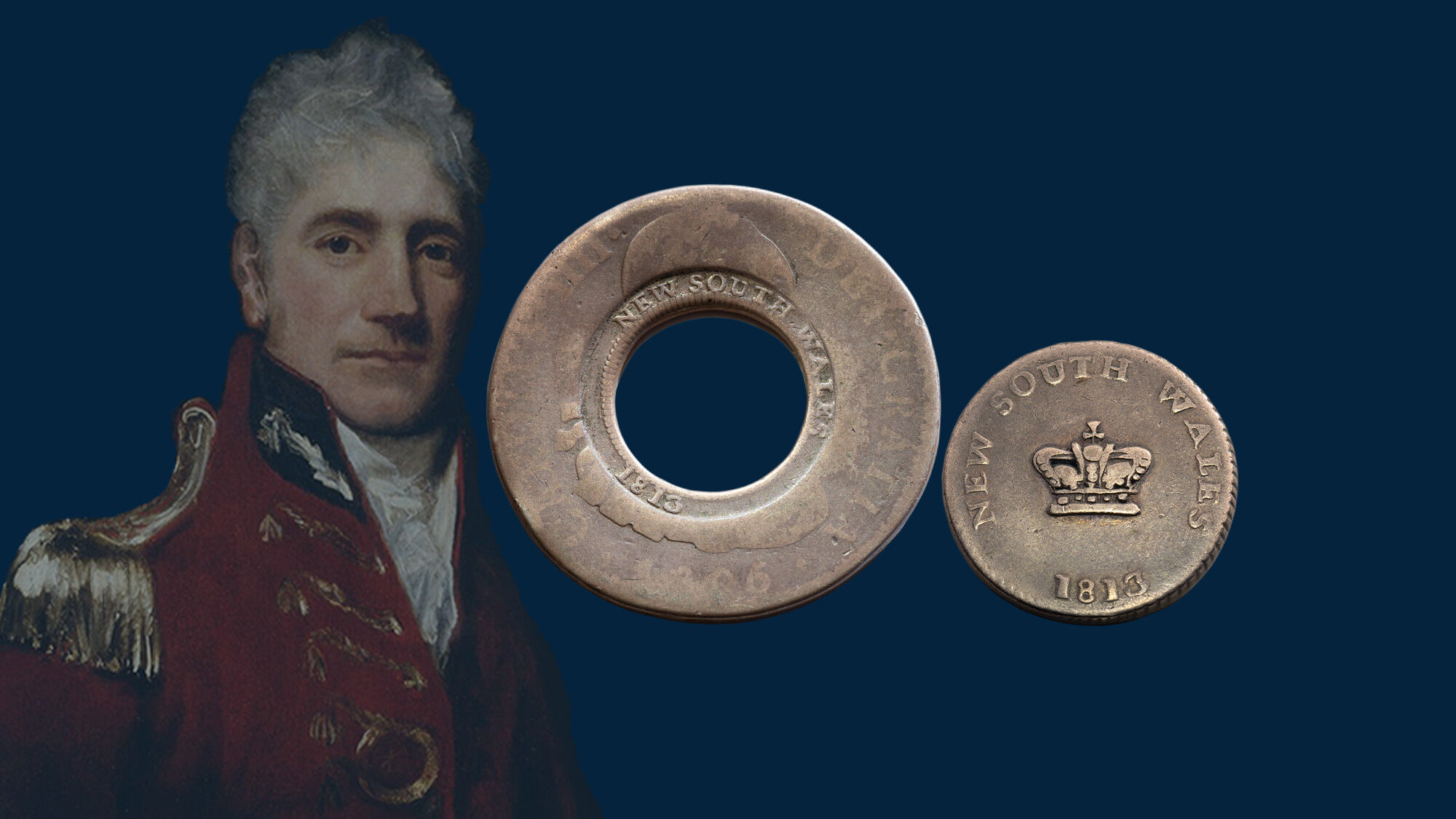
Coinworks has sold plenty of individual Holey Dollars in our time. And even more of the colonial Dump. But this is the second only occasion that we have had a well-matched pair of 1813 Holey Dollar and 1813 Dump to offer collectors.
What makes this offer even more special, the set is affordable. The sale price is $85,000, including the presentation case, hand-crafted from Australian timbers by award winning artisan, Anton Gerner.
The synergy between the two coins is profound for, despite their circulation, they are reasonably well matched tonally. And perfectly matched texturally. That's a rare occurrence. The surfaces are both smooth and highly reflective, there are no unsightly blemishes. Even rarer, the obverse Holey Dollar counter stamps are in the optimum position, displaying the issuing authority at the top of the hole and the date at the bottom. Mirroring the position of the issuing authority and date on the Dump.
The ultimate corporate gift? Family heirloom? Or the ultimate indulgence for the collector that is passionate about Australia's history. That both coins have circulated, has only made them more appealing by making them affordable and available to a wider collector audience.
The 1813 Holey Dollar and the 1813 Dump are the nation's first coins. Joined at the hip by way of the process that created them, the two coins together represent the complete narrative of Australia's first local currency.
Now, we have sold plenty of individual Holey Dollars in our time. And even more of the colonial Dump. But this is the second only occasion that we have had a well-matched pair of 1813 Holey Dollar and 1813 Dump to offer collectors. At an affordable price!
The sale price is $85,000, the two coins housed in a presentation case, hand-crafted from Australian timbers by award winning artisan, Anton Gerner.
The synergy between the two coins is profound for, despite their circulation, they are reasonably well matched tonally. And perfectly matched texturally. That's a rare occurrence. The surfaces are both smooth and highly reflective, there are no unsightly blemishes.
Even rarer, the obverse Holey Dollar counter stamps are in the optimum position, displaying the issuing authority at the top of the hole and the date at the bottom. Mirroring the position of the issuing authority and date on the Dump.
The ultimate corporate gift? Family heirloom? Or the ultimate indulgence for the collector that is passionate about Australia's history. That both coins have circulated, has only made them more appealing by making them affordable and available to a wider collector audience.
The Holey Dollar and Dump are the nation’s first coins, minted in 1813 by order of Governor Lachlan Macquarie. As the two coins were cut from one Spanish Silver Dollar, we know that the holed silver dollar and the circular disc that fell out of the hole were tonally and texturally, the same.
Once cut, the pieces would have been separated to embark upon their separate journeys, developing their own unique identifying characteristics.
The donut-like metal piece was over stamped around the edge of the hole to become the 1813 Holey Dollar. With a value of Five Shillings, the Holey Dollar underwent minimal usage and was primarily stored in the Bank of New South Wales, as records attest.
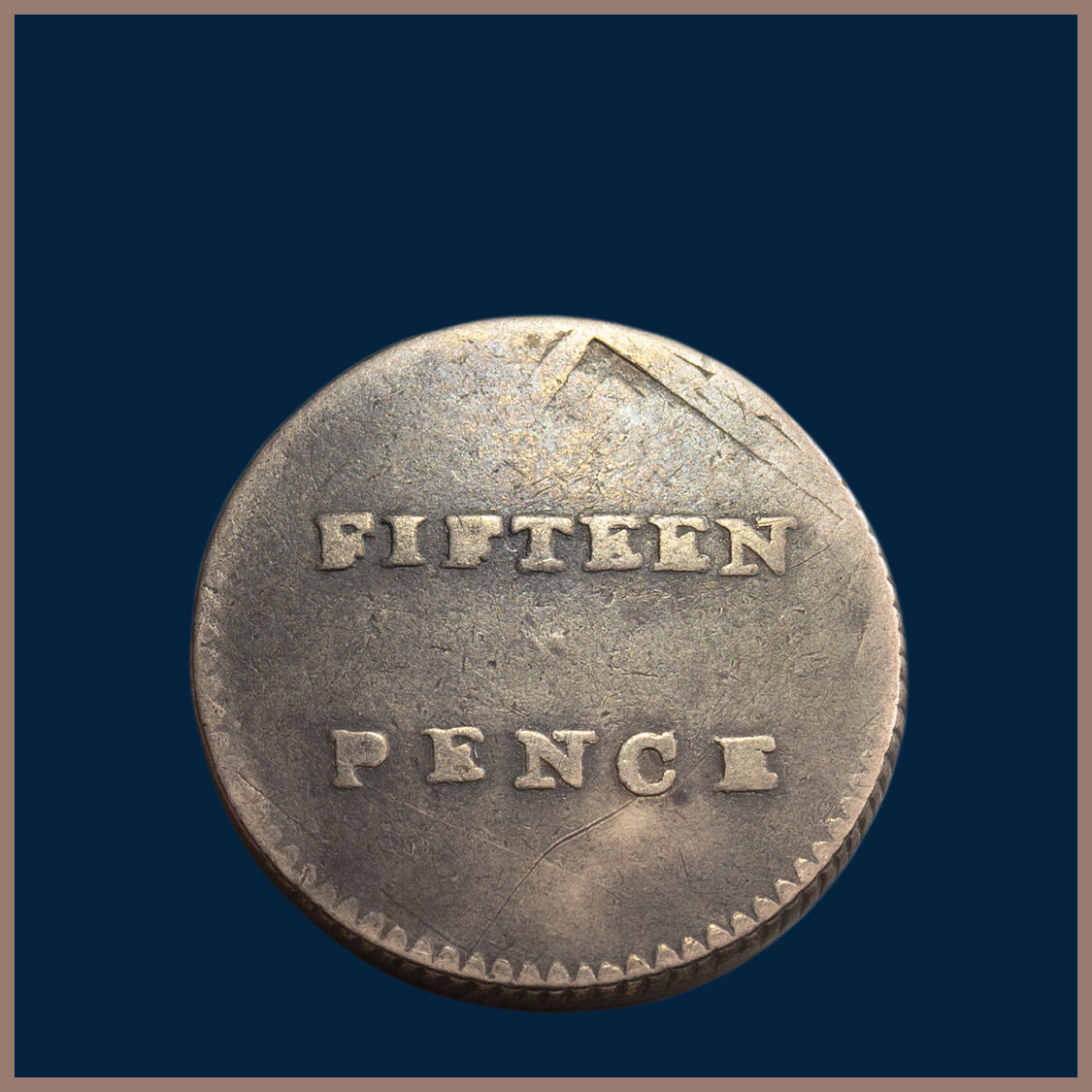
The metal disc that fell out of the hole went through a different process and was heated to remove the design elements of the original Spanish Dollar and was then over stamped to become the 1813 Dump. With a value of Fifteen Pence, the Dump was well used and became the work horse of the colony, introducing multi-opportunities for tonal changes and damage.
Today there are approximately two hundred Holey Dollars held by private collectors, and about eight hundred Dumps. You would think that with those numbers finding a Dump that is preserved in the same style and tone as a Holey Dollar would be a simple feat.
That could not be further from the truth.
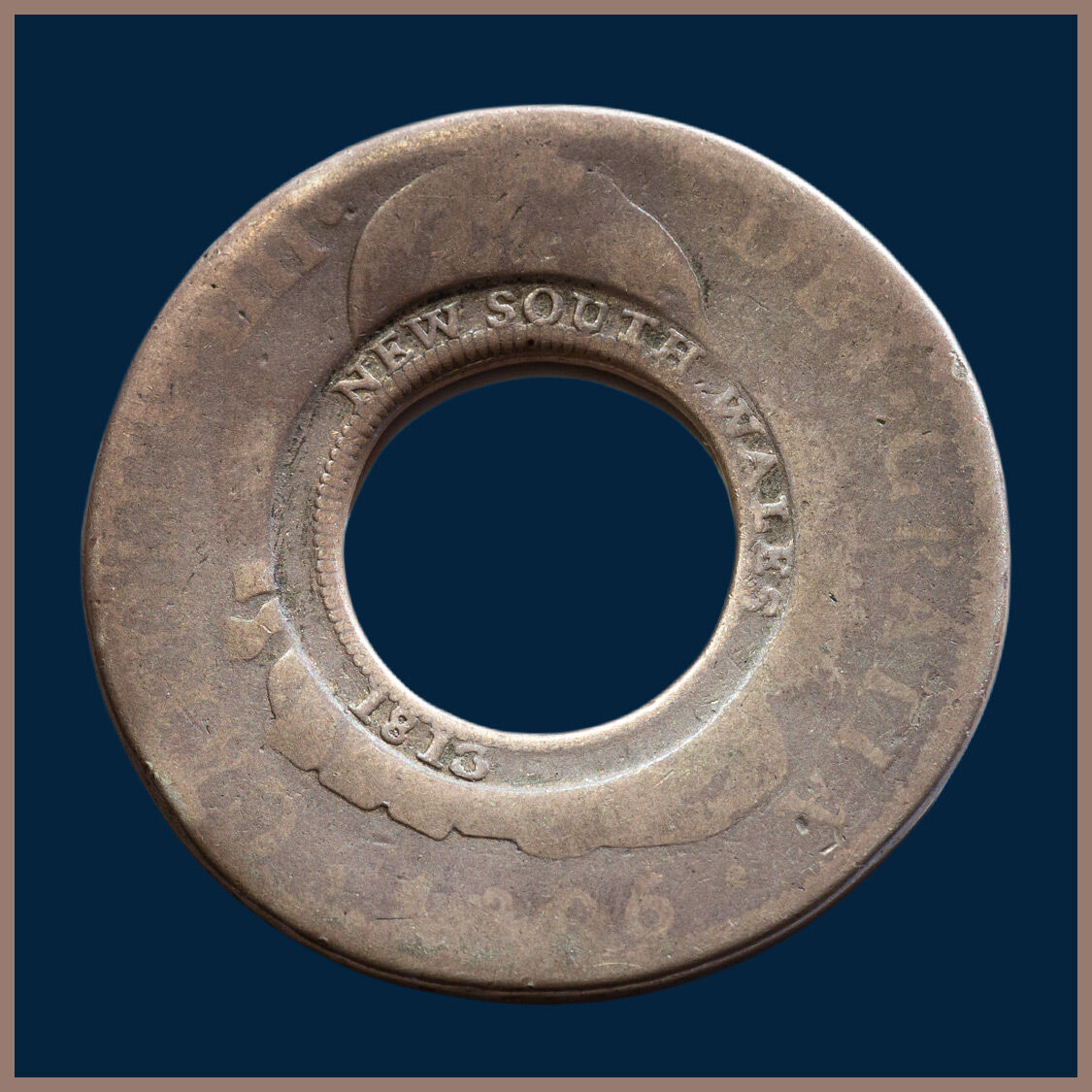
1813 Holey Dollar
Obverse
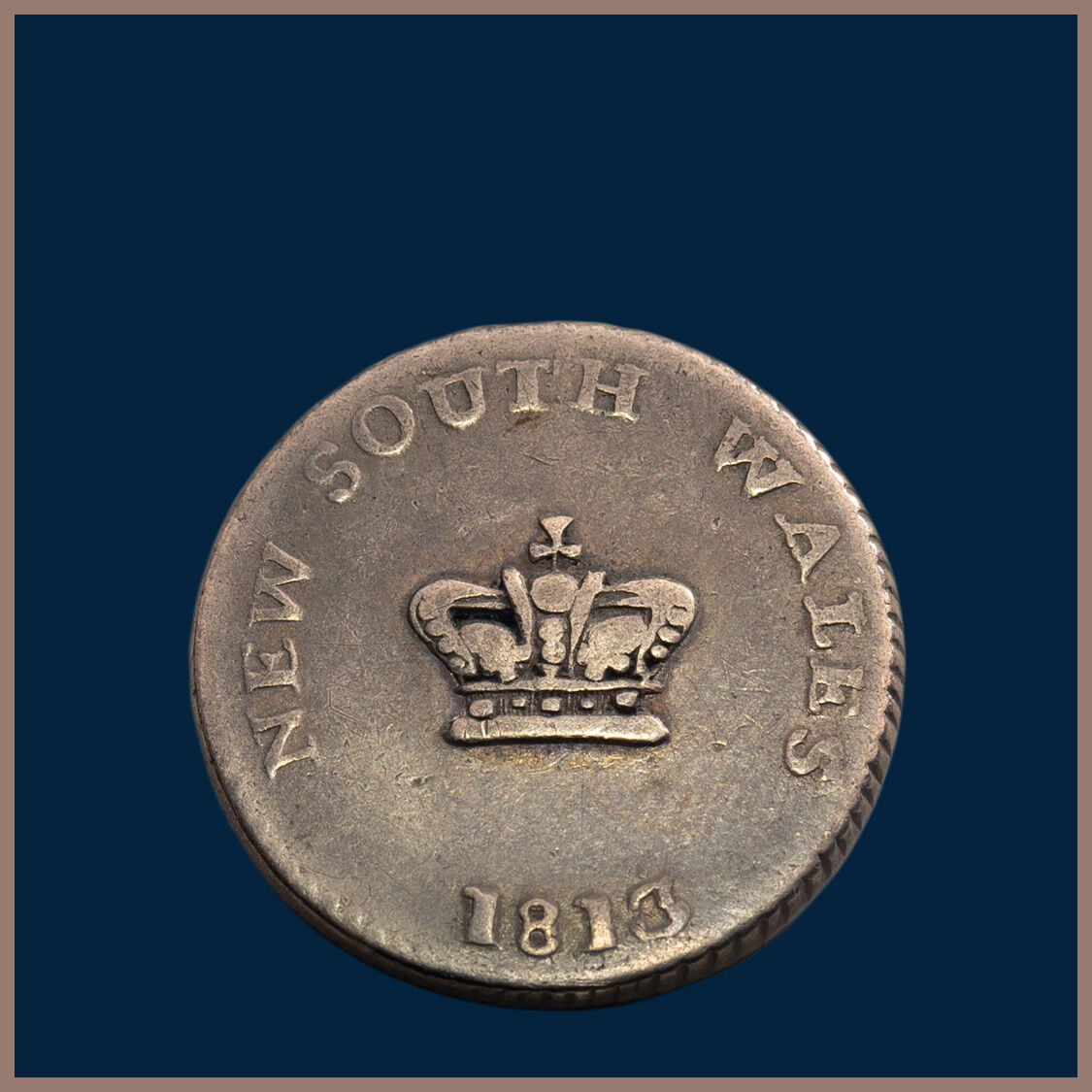
1813 Dump
Obverse
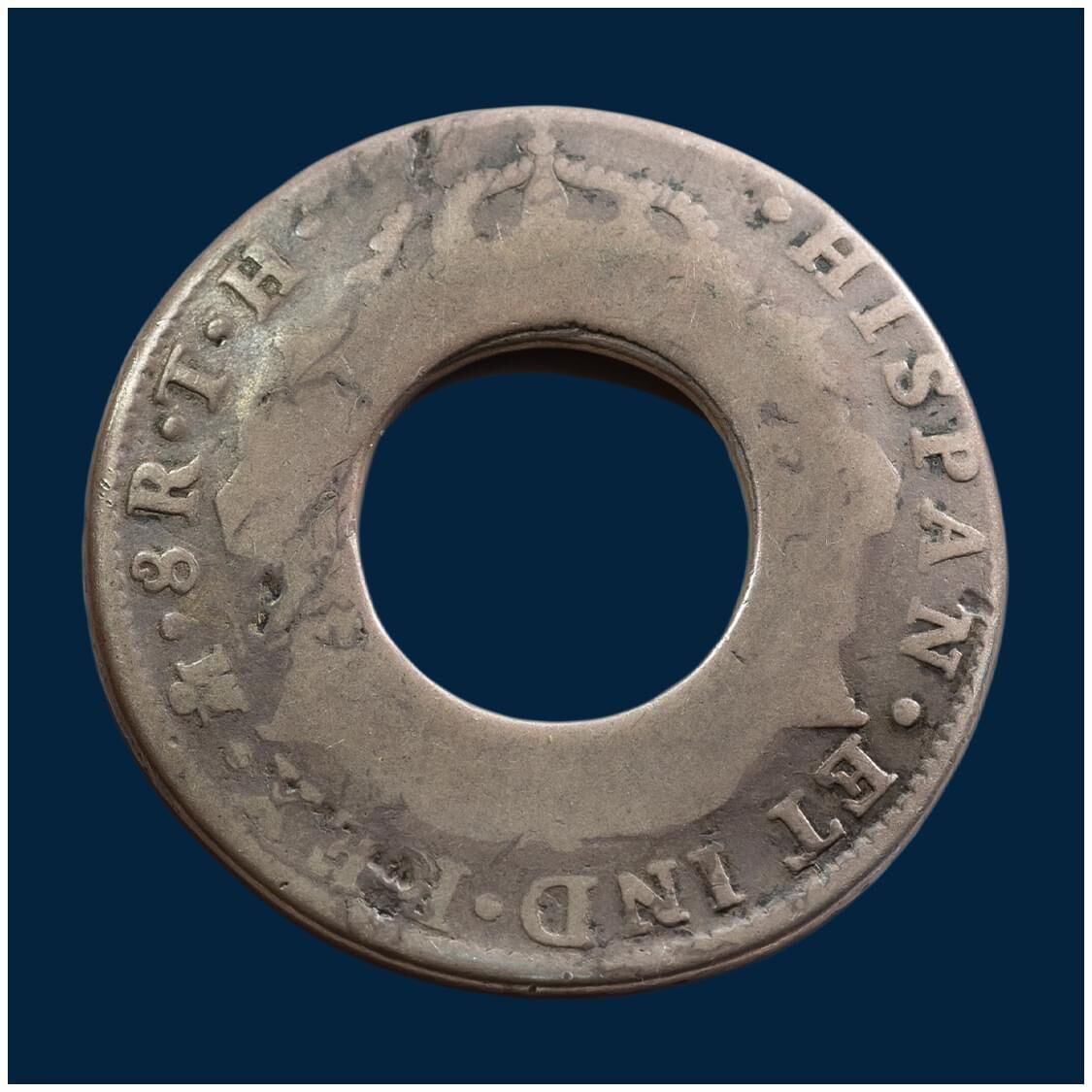
1813 Holey Dollar
Reverse
1813 Dump
Reverse
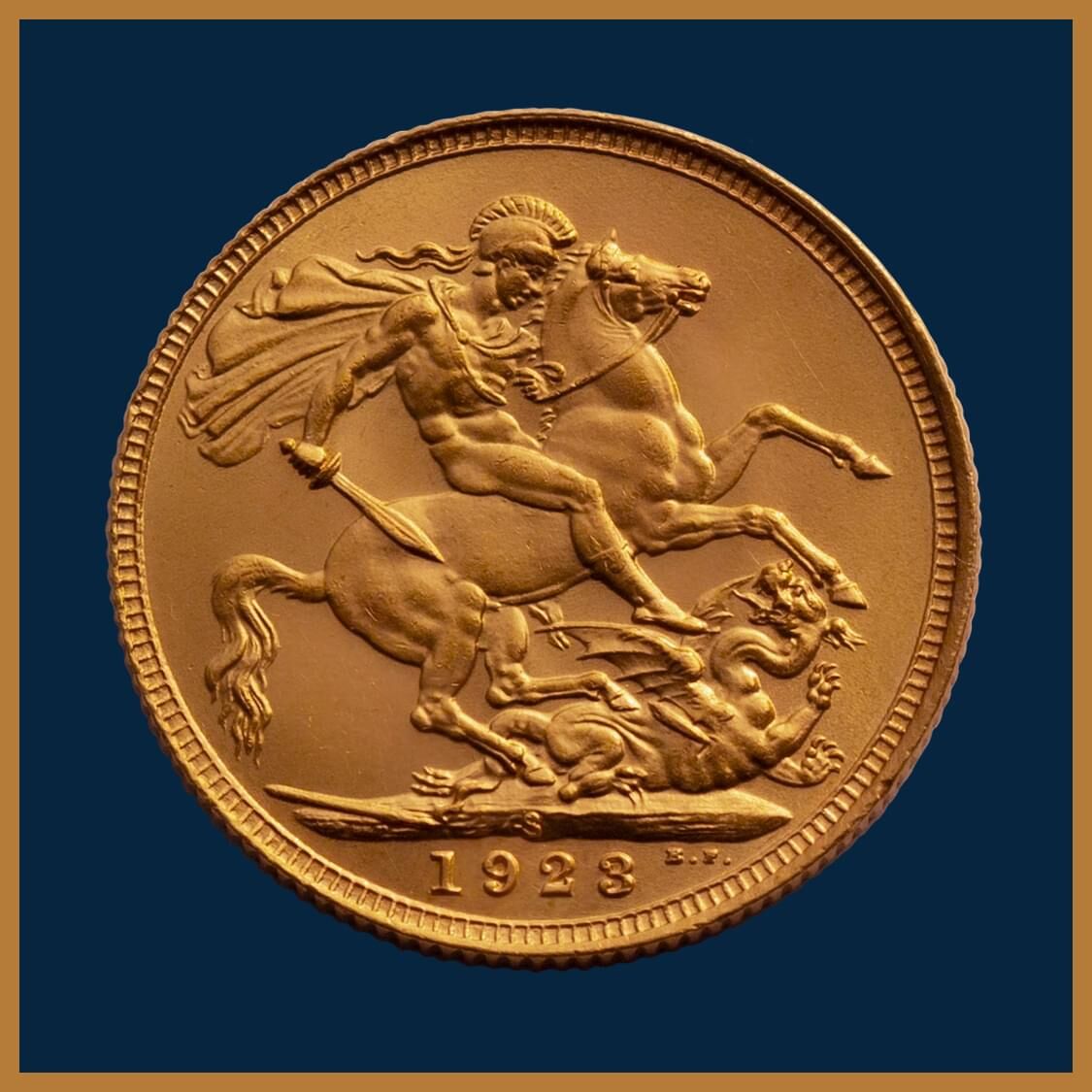
1923 Specimen Sovereign,
Sydney Mint Coin of Record
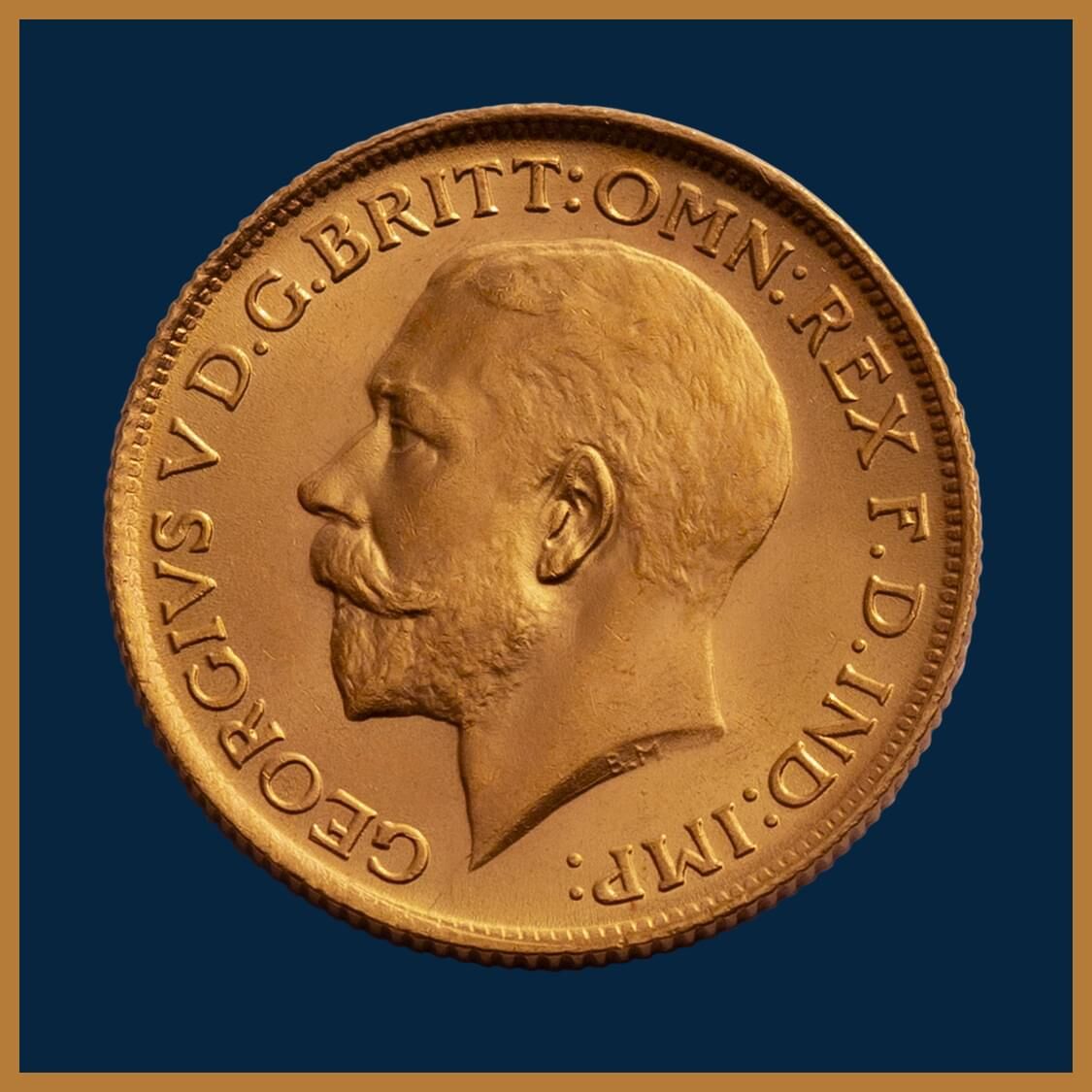
1923 Specimen Sovereign,
Sydney Mint Coin of Record
1813 Holey Dollar created from a Spanish Silver Dollar that had been struck at the Mexico Mint in 1806 (Mira/Noble reference 1806/4, Spalding reference 158). Ex A H Baldwin London, Spink Auctions March 1989, Lot 1412.
This Holey Dollar has one particular attribute that sets it apart from most others. The obverse counter stamps 'New South Wales' and '1813' are in the same vertical vista as the date of the silver dollar, '1806'. Only a handful of Holey Dollars exhibit such alignment. And it is a very impactful feature in this presentation, mirroring the position of the issuing authority and date on the Dump.
The application of the counterstamps is the point at which the holed silver dollar (and the circular disc) became the 1813 Holey Dollar (and 1813 Dump), the nation's first locally made coinage. Prior to that, they were just two pieces of metal. One like a donut. And the other a small metal disc.
A study of the surviving Holey Dollars reveals that Henshall's application of the counterstamps was wildly random, that the holed dollar was not placed in a particular position between the dies. And it obviously didn't matter which side of the holed dollar was facing up. The strike lacked a definite pattern or predictability.
Specifications of the Holey Dollar
Design type: 5
Date of the silver dollar: 1806
Reigning monarch: Charles IV (1788 - 1808)
Design of the silver dollar: colonial bust type
Portrait: Charles IV
Legend: Carolus (Charles) IIII
Counter stamp dies: I/11
Quality of silver dollar: Very Good
Quality counter stamps: About Fine / worn
1813 Dump struck with obverse die A and reverse die 1. Technically graded Good Fine, the design well centred.
This Dump has a design attribute that also sets it apart from other Dumps. The reverse shows extensive evidence of the original Spanish Dollar from which it was created, the area above the word 'FIFTEEN' particularly prominent.
While high temperatures were used to obliterate the original Spanish Dollar design from most examples, Dumps that retain their original dollar design elements and depict their origins are highly prized.
The Obverse Die 1 has the following characteristics: an imaginary line drawn along the base of the Crown cuts the 'N' of 'NEW' and passes above or through the top of the 'S' of 'WALES'. The cross is symmetrical and points between the 'T' and the 'H' of 'SOUTH'. The '3' in 1813 tilts to the left. Five jewels are detailed in the band, the left-most pearl touching the base of the band. The right-most jewel touching the top of the band.
The Reverse die 1 has the following characteristics: the upright stroke of 'F' in 'FIFTEEN' is to the left of the upright stroke of 'P' in 'PENCE. The vertical stroke of 'T' is over the centre of the 'N'. 'FIFTEEN' and 'PENCE' are 4.5mm apart.
Australia's first coinage. Macquarie's vision.
The Holey Dollar is the nation’s first coin, minted in 1813 by order of Governor Lachlan Macquarie.
The issuing of Australia’s first coinage symbolised the changing dynamics of the penal colony of New South Wales. The colony had started out in 1788 as a jail, a repository for convicts, under the governorship of Captain Arthur Phillip. It had emerged some twenty-five years later as a thriving economy requiring a formal medium of exchange to support a burgeoning commercial hub.
As Macquarie had no access to metal blanks to create his currency, he improvised and acquired 40,000 Spanish Silver Dollars as a substitute. To make his new coinage unique to the colony, and to inhibit their export, he employed emancipated convict William Henshall to cut a hole in each silver dollar.
Each holed silver dollar was then counterstamped on both sides, around the edge of the hole. On one side, the date 1813 and the issuing authority of New South Wales. And on the other side, the value 'Five Shillings' with some decorative embellishments of a fleur de lis, a double twig of six leaves and a tiny 'H' for Henshall at the junction of the twigs (on some, not all dies).
The metal disc that fell out of the hole was counter stamped on one side with the date, the issuing authority and a crown. And the other, the value 'Fifteen Pence'. Henshall declared his involvement in the creation of the Dump by inserting his initial, an 'H' for Henshall, on some - but not all - of the reverse dies of the Dump.
The application of the counterstamps is the point at which the holed silver dollar became the 1813 Holey Dollar, and the metal disc, the 1813 Dump. Prior to that, they were just a Spanish coin with a hole in it and a metal disc that fell out of the hole!
While the original intention was to create 40,000 Holey Dollars and 40,000 Dumps from 40,000 silver dollars, spoilage and the despatch of samples back to Great Britain saw a slightly reduced number of Holey Dollars and Dumps - 39,910 of each - released into circulation.
Today there are approximately two hundred Holey Dollars held by private collectors and perhaps eight hundred Dumps. Both coins are cultural and financial icons, with an appeal that extends far beyond numismatics, driven by its immense historical significance and tangible connection to a foundational moment in Australian history ... the creation of our first coinage.
Owning a set of Holey Dollar and Dump is about indulging in an experience, a fusion of history and prestige. And it's about savouring the moment.
© Copyright: Coinworks