A Presentation of two of Australia's most venerable Holey Dollars.


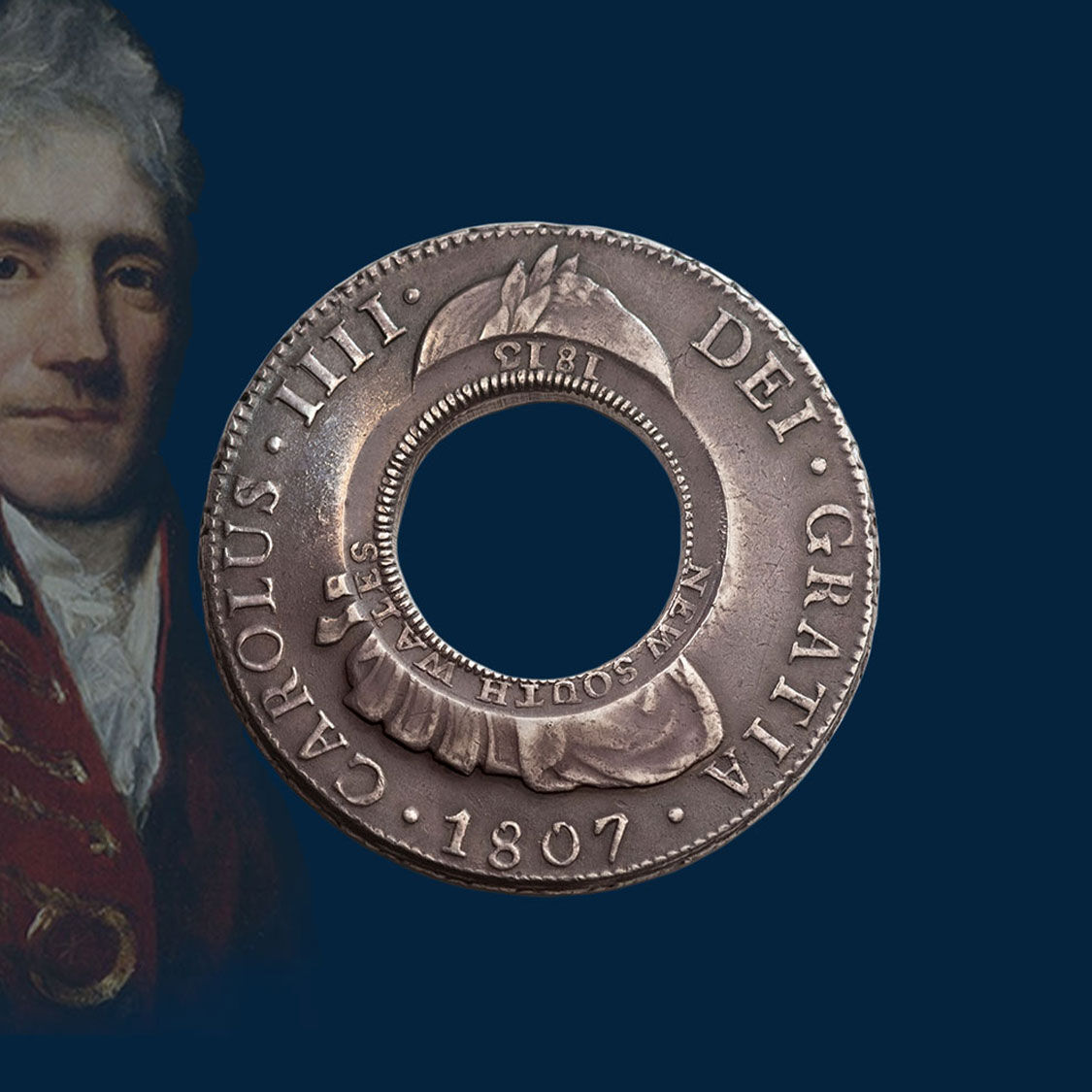
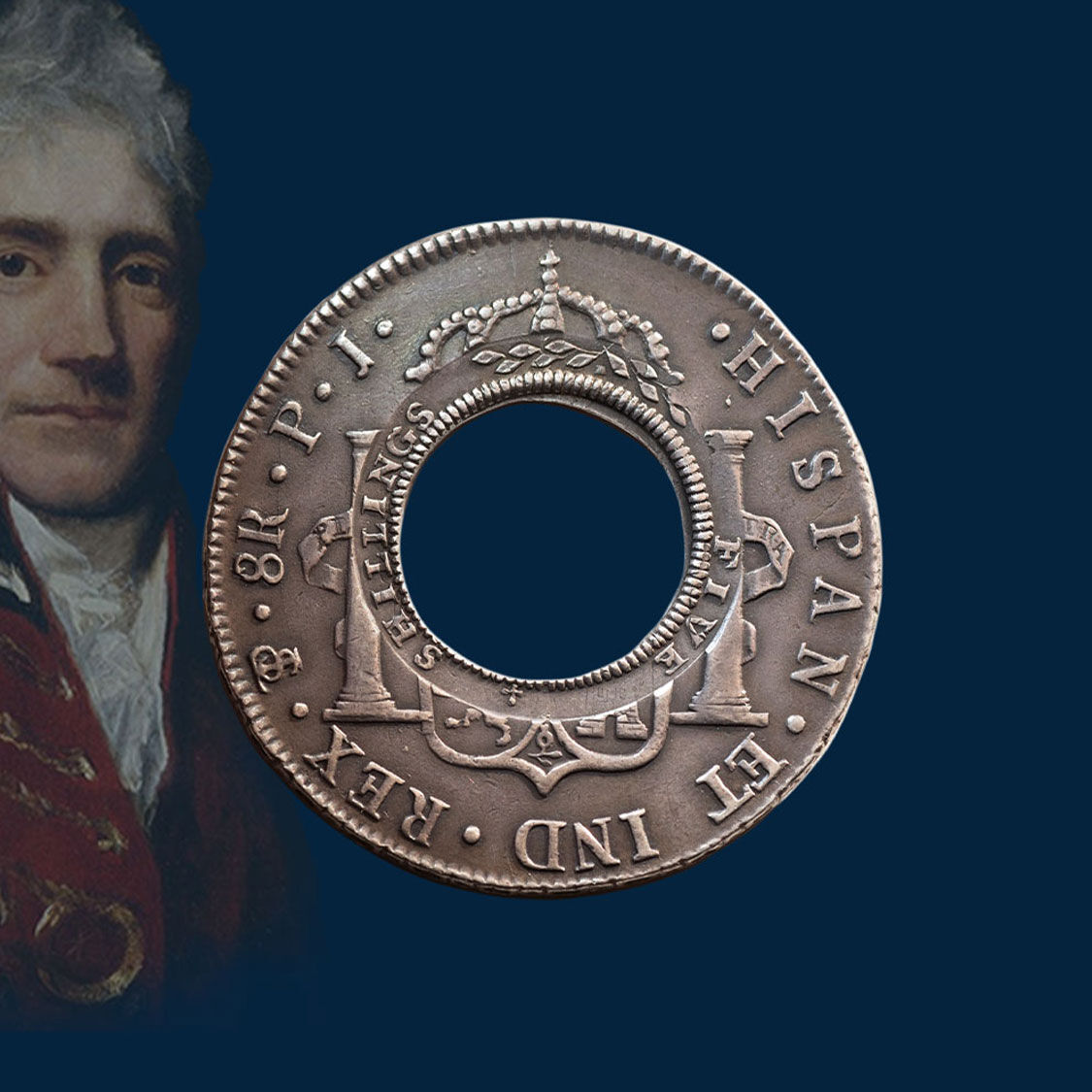


As the nation's first coin, the 1813 Holey Dollar is a cultural and financial icon. Classic and enduring, the Holey Dollar will always remain relevant and desirable.
It has been the inspiration and aspiration of many. Think Macquarie Bank and its logo! Museums, the world over. Historians, collectors, investors, both local and international.
The Holey Dollar began its life as a Spanish Silver Dollar. A coin that was produced at various mints around the globe. The Madrid Mint in the Spanish capital. And the Mexico-City Mint, Lima and Potosi Mints located in the silver-rich Spanish colonies of Mexico, Peru and Bolivia.
This presentation showcases two Holey Dollars, both of which are available for sale. The first originating from a Spanish Silver Dollar issued by the Potosi Mint in Bolivia, the second from the Lima Mint in Peru. Two coins that, by virtue of the mint where they were produced are the absolute finest of their type.
Two Holey Dollars that have been publicly celebrated. In 2013, at the Macquarie Bank, Sydney and in 2019 at the Royal Australian Mint Canberra, both coins featuring in Exhibitions that honoured Australia's first coinage.
And while each Holey Dollar can, and should, be individually savoured, they are especially significant to you, and your family. They are a pathway to something that most collectors could only ever dream of.
Place them with your Madrid Mint Holey Dollar and the Mexico Mint Montagu Holey Dollar and you will have a 'Mint Set' of Holey Dollars. A unique set with each component a trophy coin, the very best of the best.
A single coin is a moment in time. A complete set is the whole narrative. And this principle is being consistently taken up and is noted in our 2025 sales. Complete sets are naturally heirloom-worthy. They’re easier to pass down, easier to explain, and more likely to retain their identity over generations. Families understand the concept of the full set instantly.
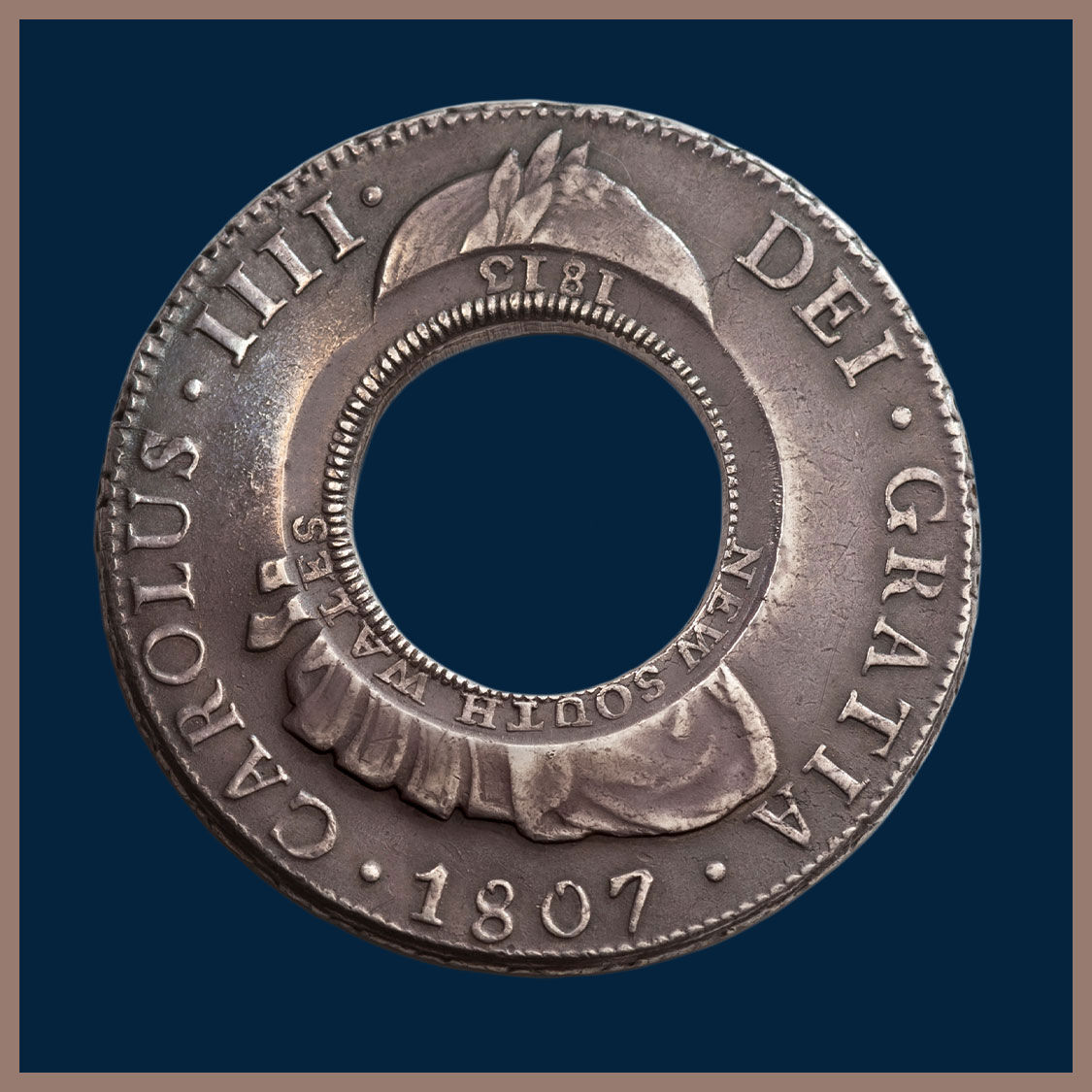
1813 Holey Dollar that began its life as a
Potosi Mint
1807 Spanish Silver Dollar
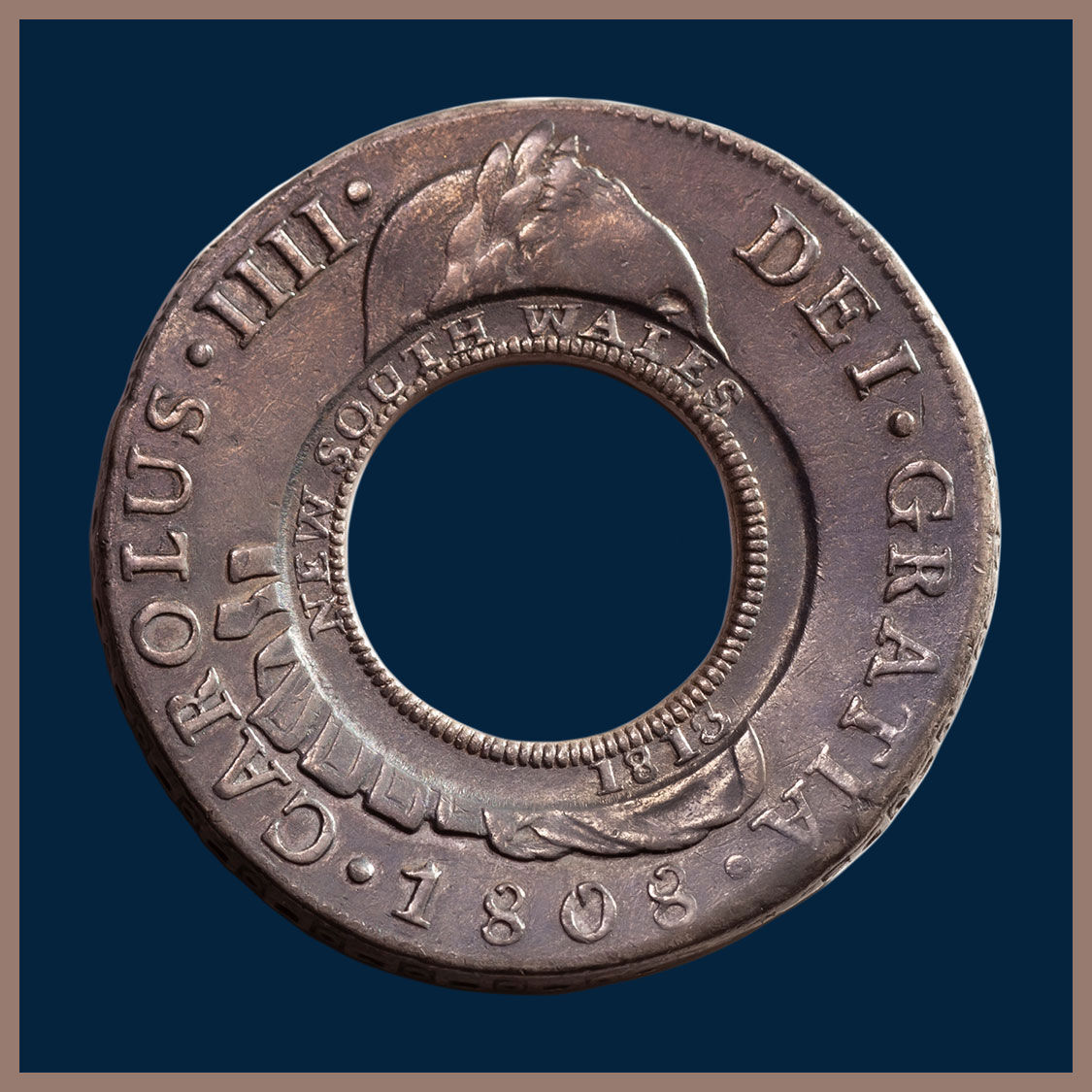
1813 Holey Dollar that began its life as a
Lima Mint
1808 Spanish Silver Dollar
The first coin in this presentation is a Holey Dollar created from an 1807 Spanish Silver Dollar that was struck at the Potosi Mint in Bolivia. Ex Ray Jewell, graded Extremely Fine, with counter stamps also Extremely Fine, it is the finest Holey Dollar to have had its origins as a Potosi Mint Spanish Silver Dollar.
Said to be Ray Jewell's favourite Holey Dollar amongst his holding of twenty nine such specie!
The second coin in this offering is a Holey Dollar created from an 1808 Spanish Silver Dollar that was struck at the Lima Mint in Peru. Graded at an even higher quality level of Good Extremely Fine, it is the finest Holey Dollar to have had its origins as a Lima Mint Spanish Silver Dollar. The counter stamps New South and 1813 are also well positioned in the same vista as the date 1808, adding further to its visual appeal. And it is noted that the counter stamps are graded at About Uncirculated, one of the highest quality rankings.
Ex Barrie Winsor, and also said to be his favourite!
This Lima Mint Holey Dollar attracts further acclaim because of its quality. Of the three hundred surviving Holey Dollars, publicly and privately held, this is probably the third or fourth finest. That a coin from this era literally sparkles is a miracle.
As the owner of the Madrid Mint Holey Dollar you are the only collector that has the opportunity of completing a ‘mint’ set of Holey Dollars. This is, as a consequence, an important offering and an exceptional opportunity.
There is a deep connection between the four coins shown below. Each is the very best of its type and each coin is highly valuable on its own. And while the absence of one does not diminish the other, their value to the market increases substantially as a set.
It is a unique set that would today have an estimated value exceeding $2.5 million dollars. Acquiring the two Holey Dollars is therefore an investment that delivers from day one.
A single coin is a moment in time. A complete set is the whole narrative. And complete sets are naturally heirloom-worthy that can be controlled by you and your children.
As a post-script I believe it is time that your coins were returned to you so that you can have control of them and more importantly, fully enjoy them. Lets diary that for some time in 2026, noting that you will require vault facilities!
Further details and photographs on the Potosi Mint Holey Dollar and Lima Mint Holey Dollar are shown below.
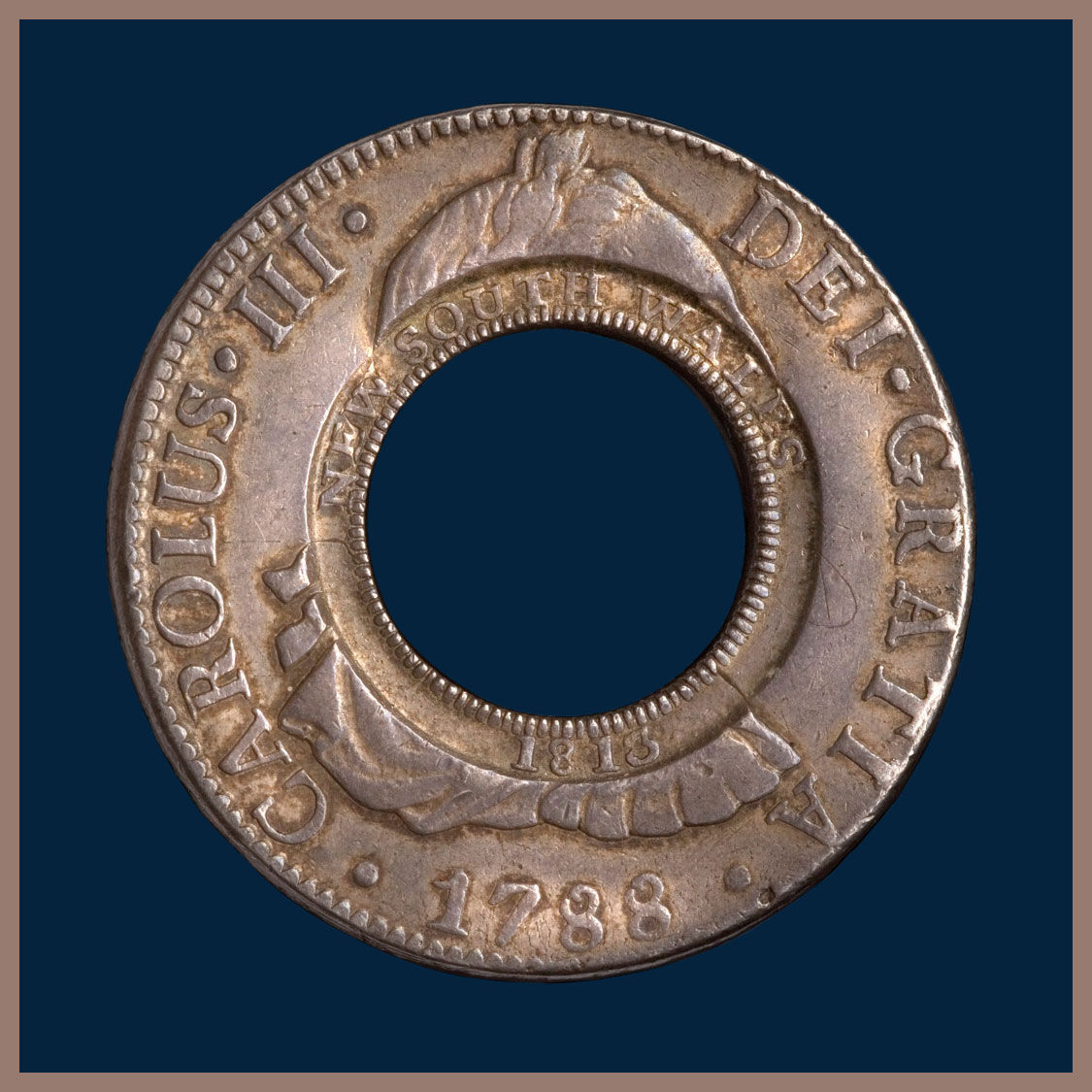
1813 Holey Dollar that began its life as a
Mexico Mint
1788 Spanish Silver Dollar
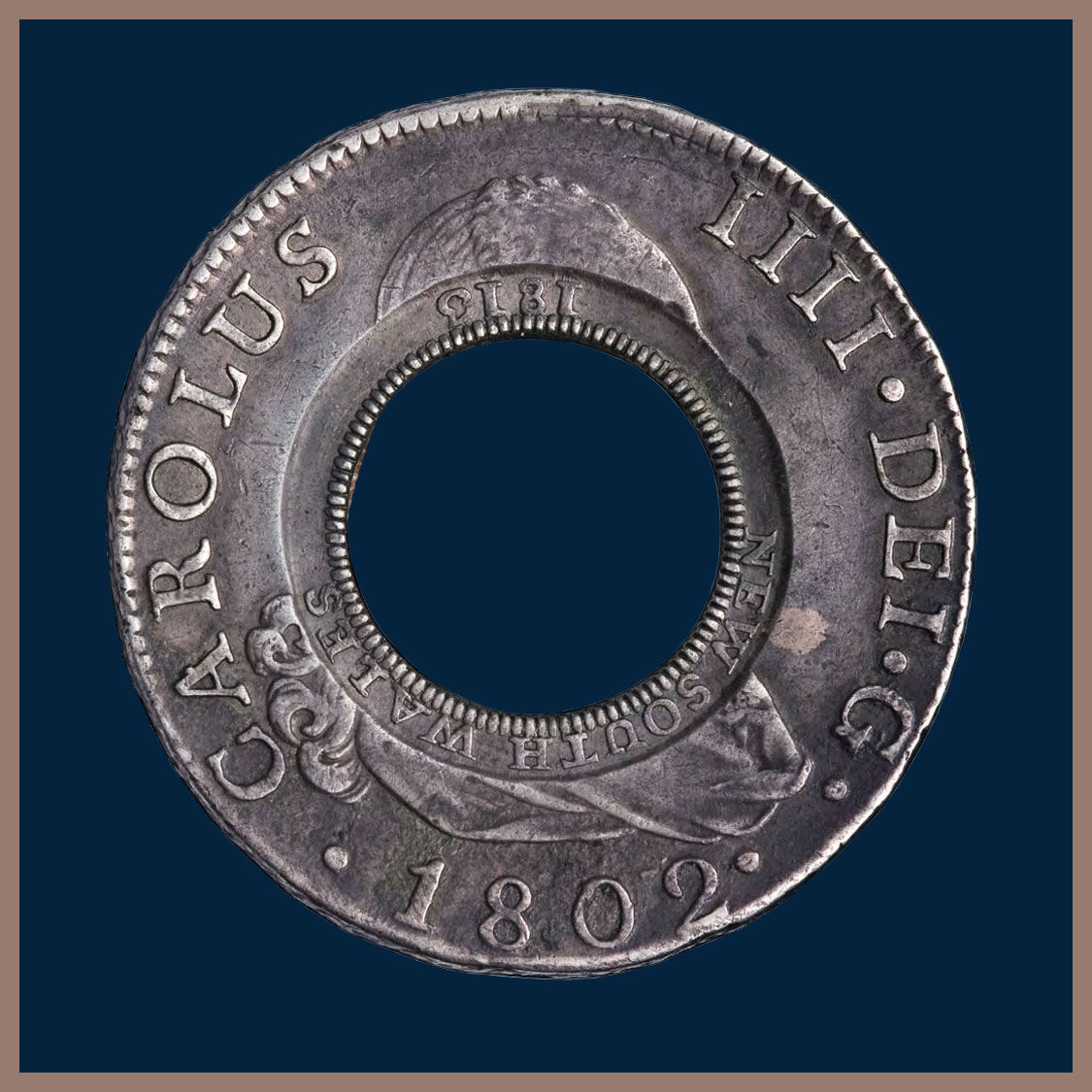
1813 Holey Dollar that began its life as a
Madrid Mint
1802 Spanish Silver Dollar
1813 Holey Dollar that began its life as a
Potosi Mint
1807 Spanish Silver Dollar
1813 Holey Dollar that began its life as a
Lima Mint
1808 Spanish Silver Dollar

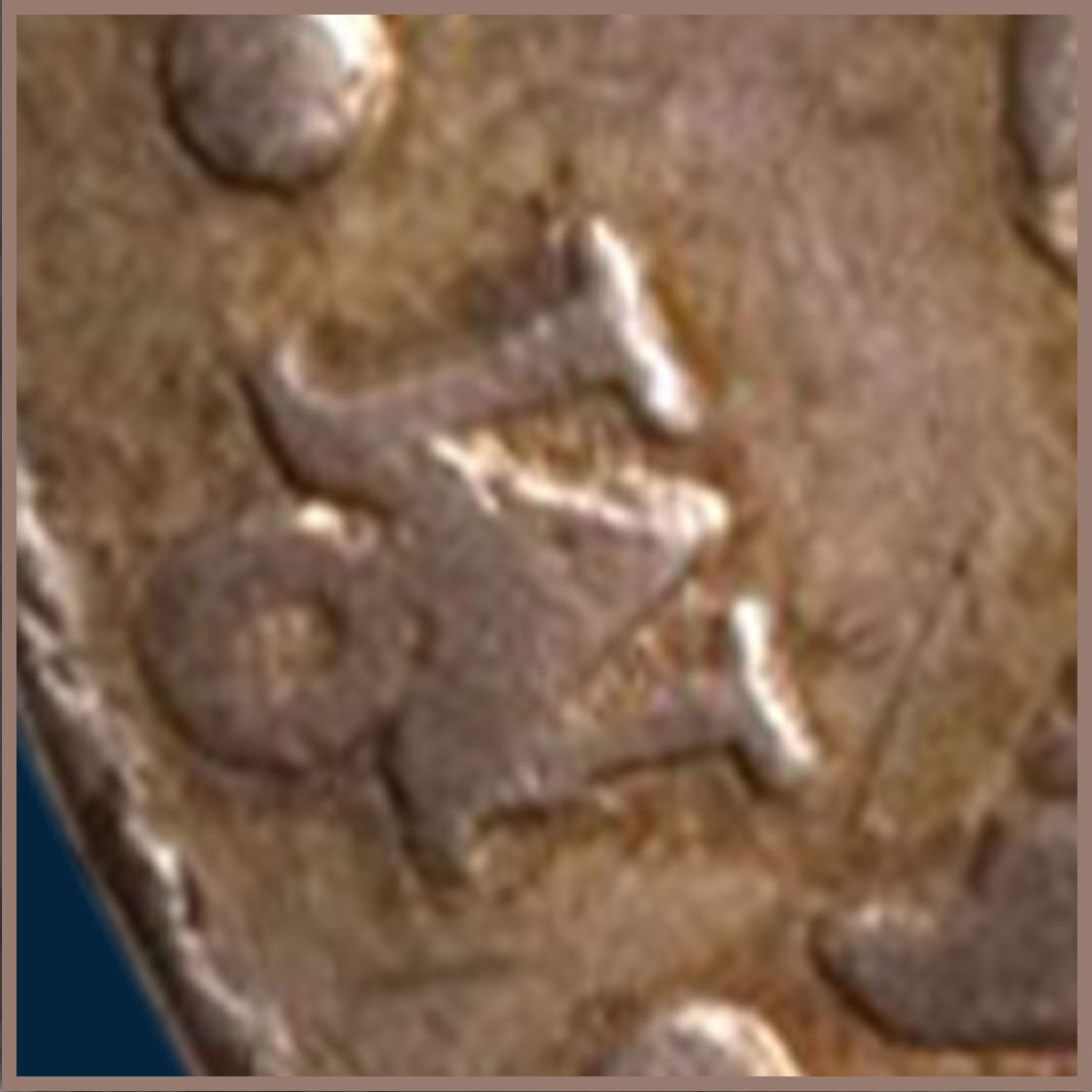
Mint-mark Mexico Mint
'M' with a small circle above it in the legend on the reverse
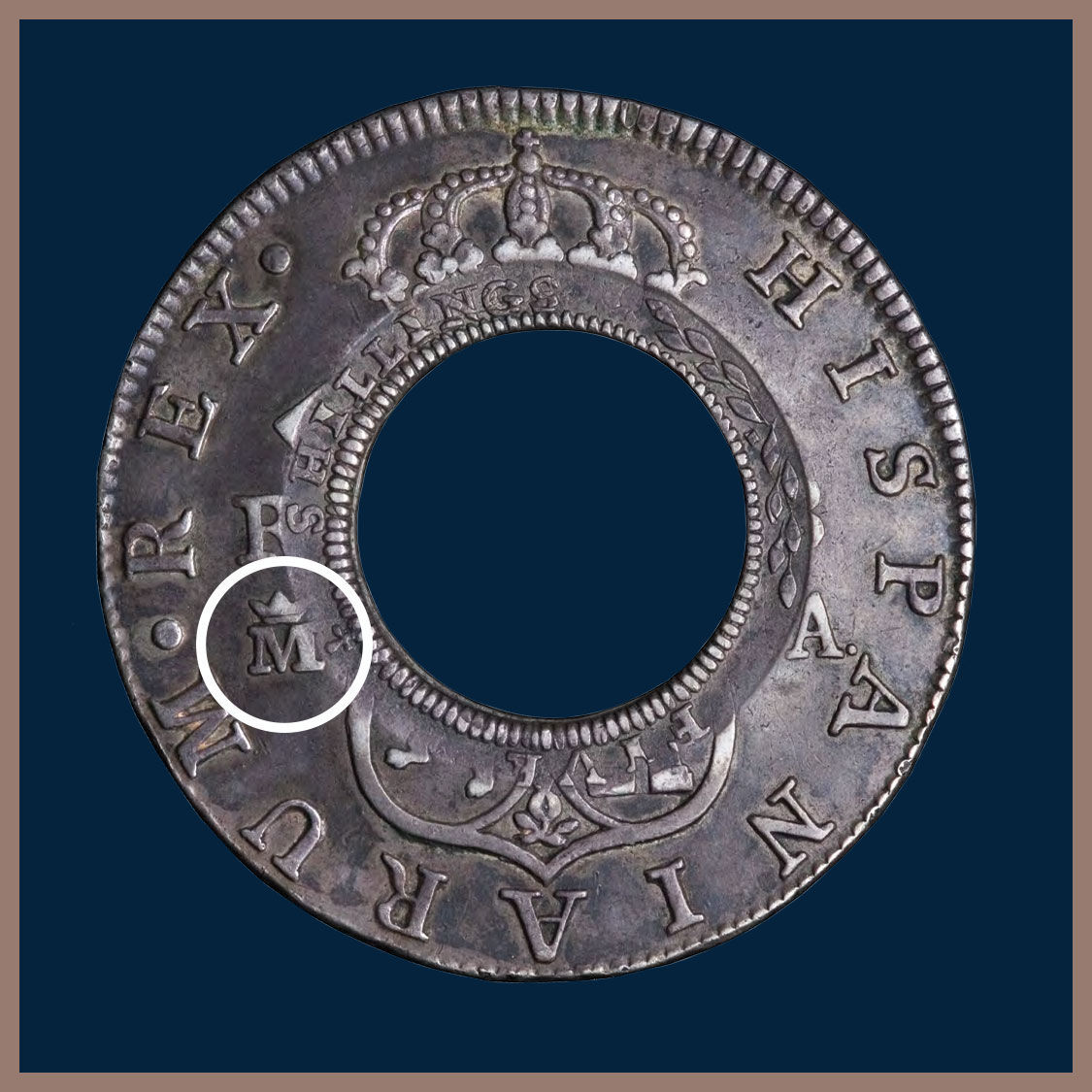
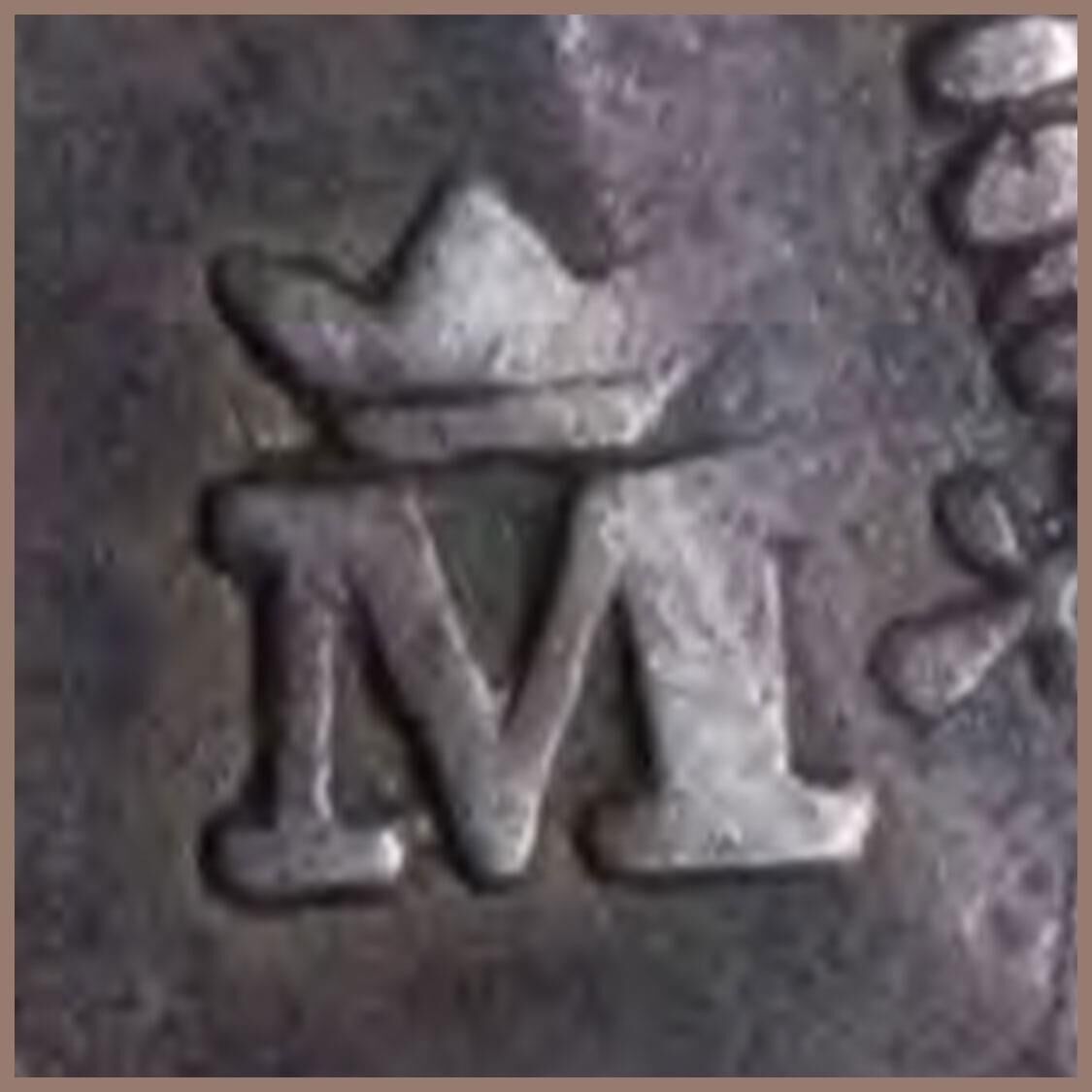
Mint-mark Madrid Mint
'M' underneath a crown on the reverse
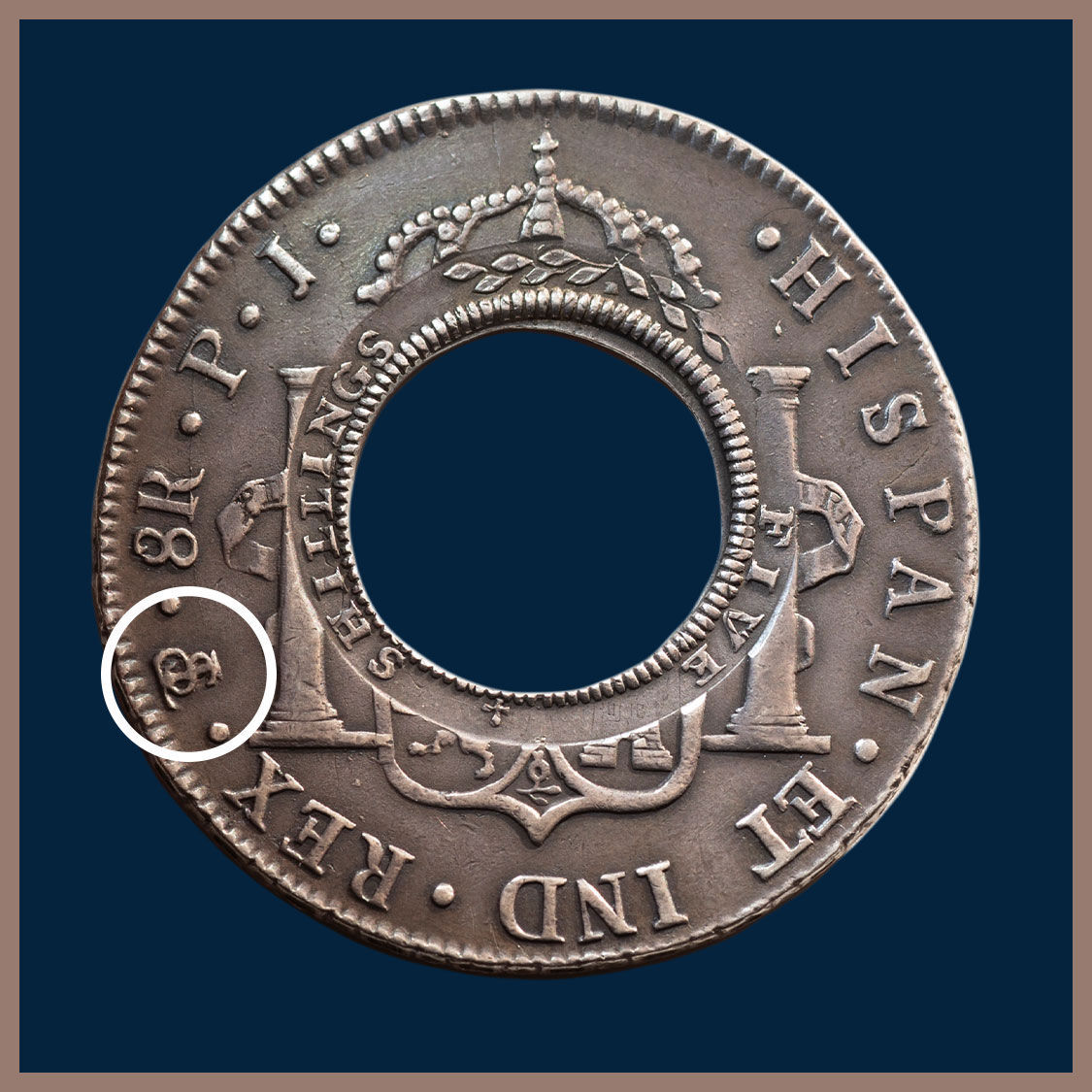
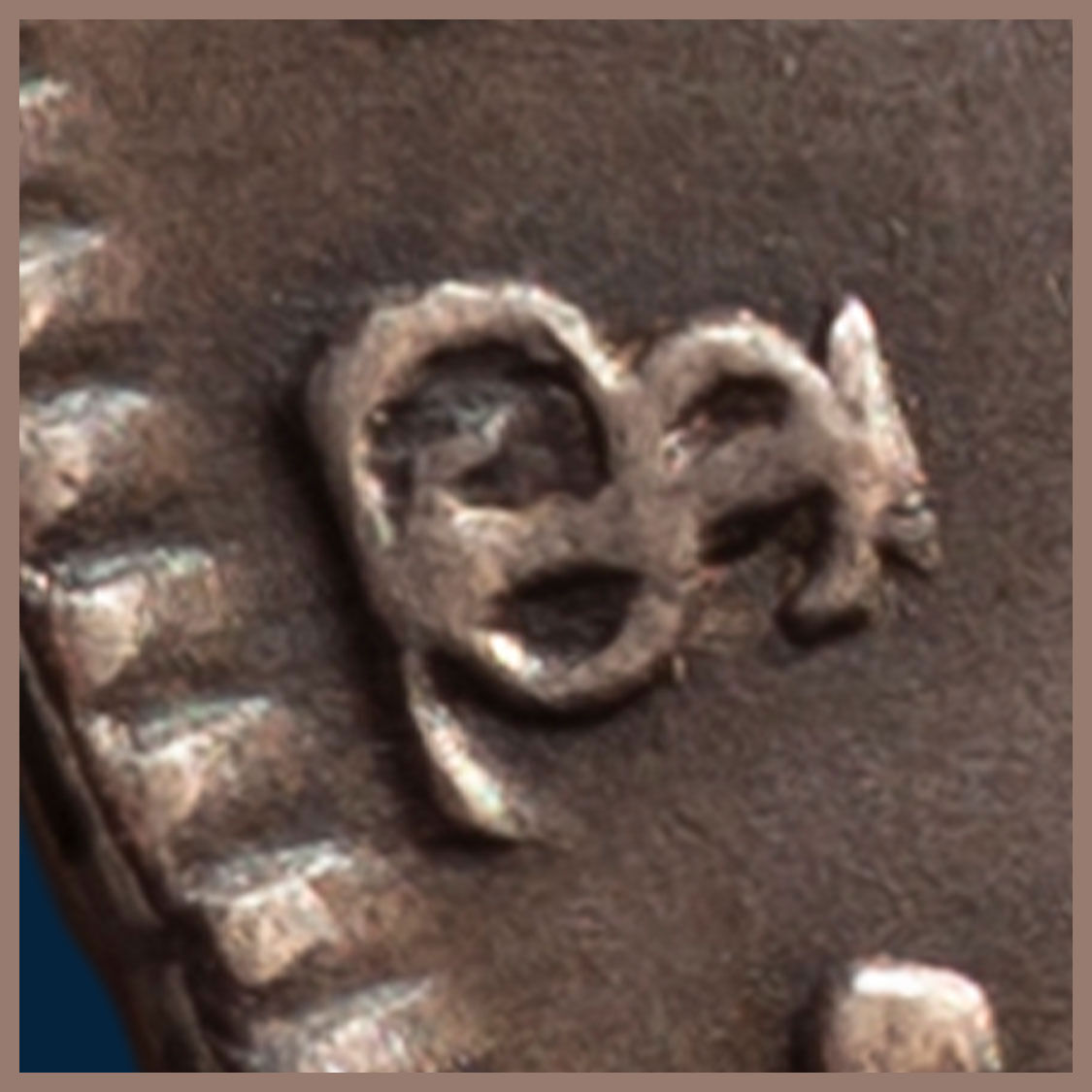
Mint-mark Potosi Mint
PTS monogram in the legend on the reverse said to be the inspiration of the '$' sign
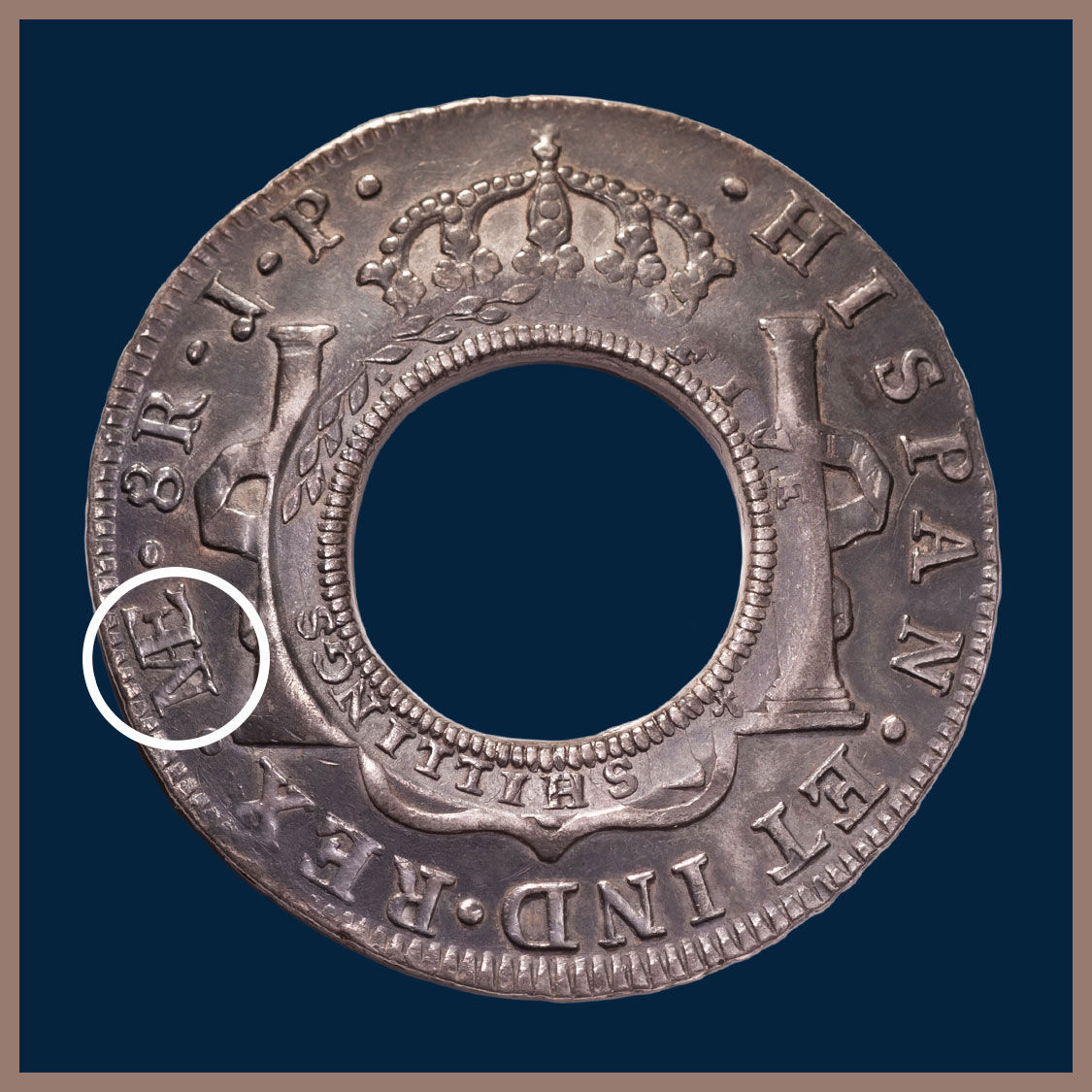
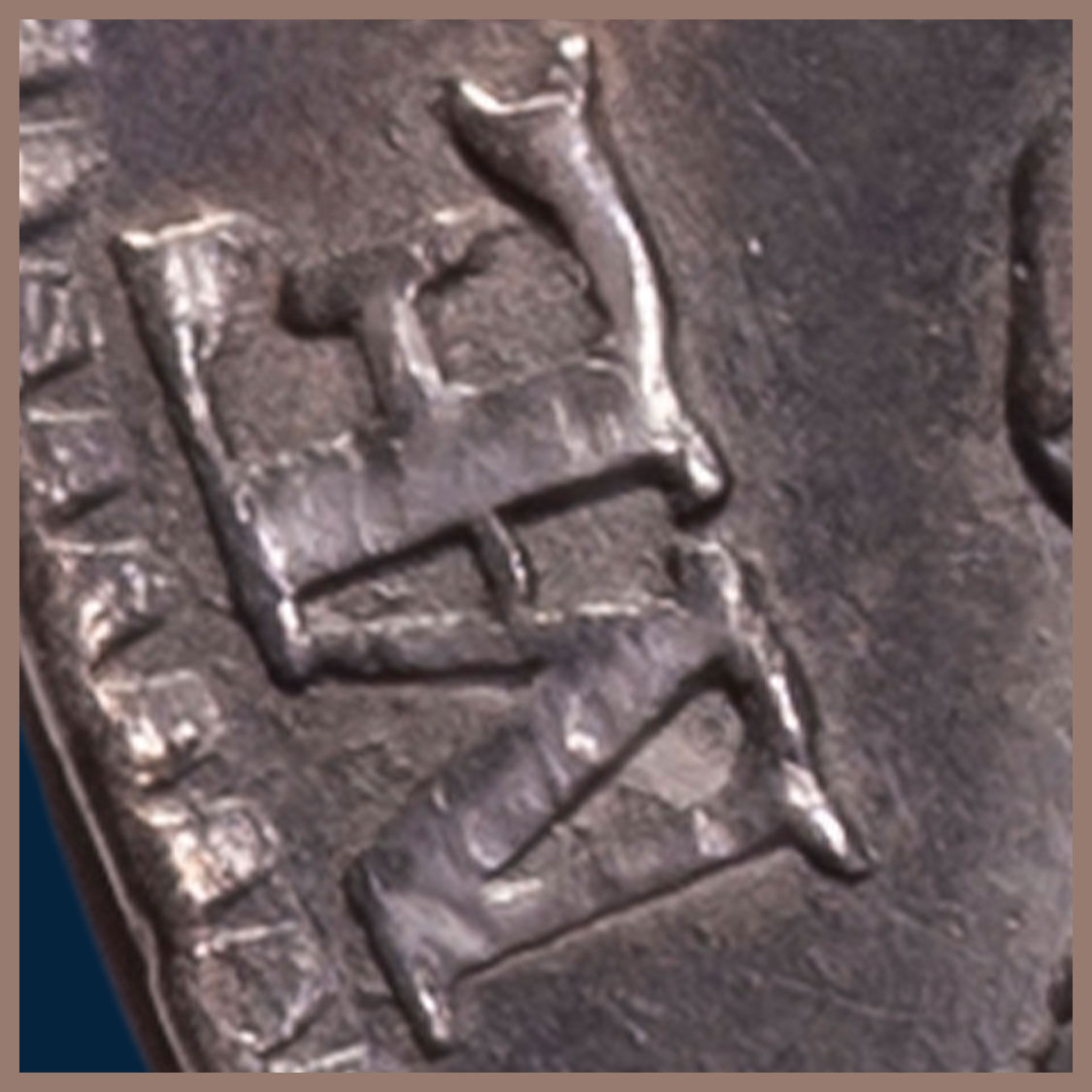
Mint-mark Lima Mint
LMAE monogram in the legend on the reverse. (We note its fine detail.)
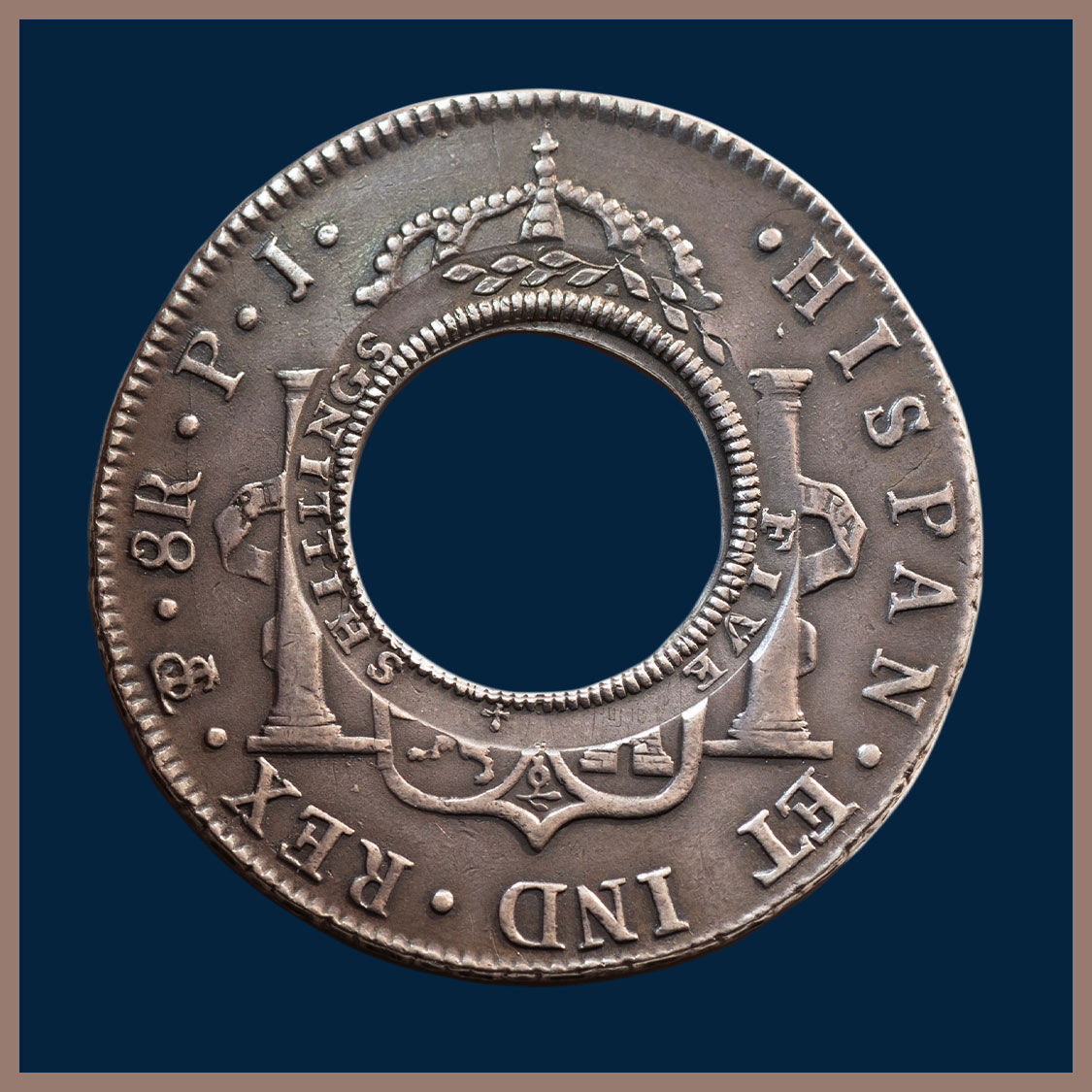
1813 Holey Dollar created from a Spanish Silver Dollar that was struck at the Potosi Mint in 1807.
Price: $500,000
Of the two hundred Holey Dollars available to collectors, only fifteen were converted from silver dollars produced at the Potosi Mint. And this is the finest.
Great force had to be exerted on the Spanish Silver Dollar to punch out the central hole. As a consequence, many Holey Dollars are found slightly dished and distorted. With this Holey Dollar, the silver dollar flan is flat and has not been distorted by the cutting process. And the coin does not exhibit any metal fatigue. This is simply a fabulous Holey Dollar, the even shape allowing the design details to be displayed to the max, ex Ray Jewell and John Chapman.
Date of the silver dollar: 1807
Reigning monarch: Charles IV (1788 - 1808)
Design of the silver dollar: colonial bust type
Portrait: Charles IV
Legend: Carolus (Charles) IV
Design type: 5
Mint mark: PTS monogram in the legend on the reverse said to be the inspiration of the '$' sign
Quality of the silver dollar : Extremely Fine
Quality counter stamps: Extremely Fine
Counter stamp dies: I/3: A/3
Exhibited: Macquarie Bank 2013, Royal Australian Mint 2019
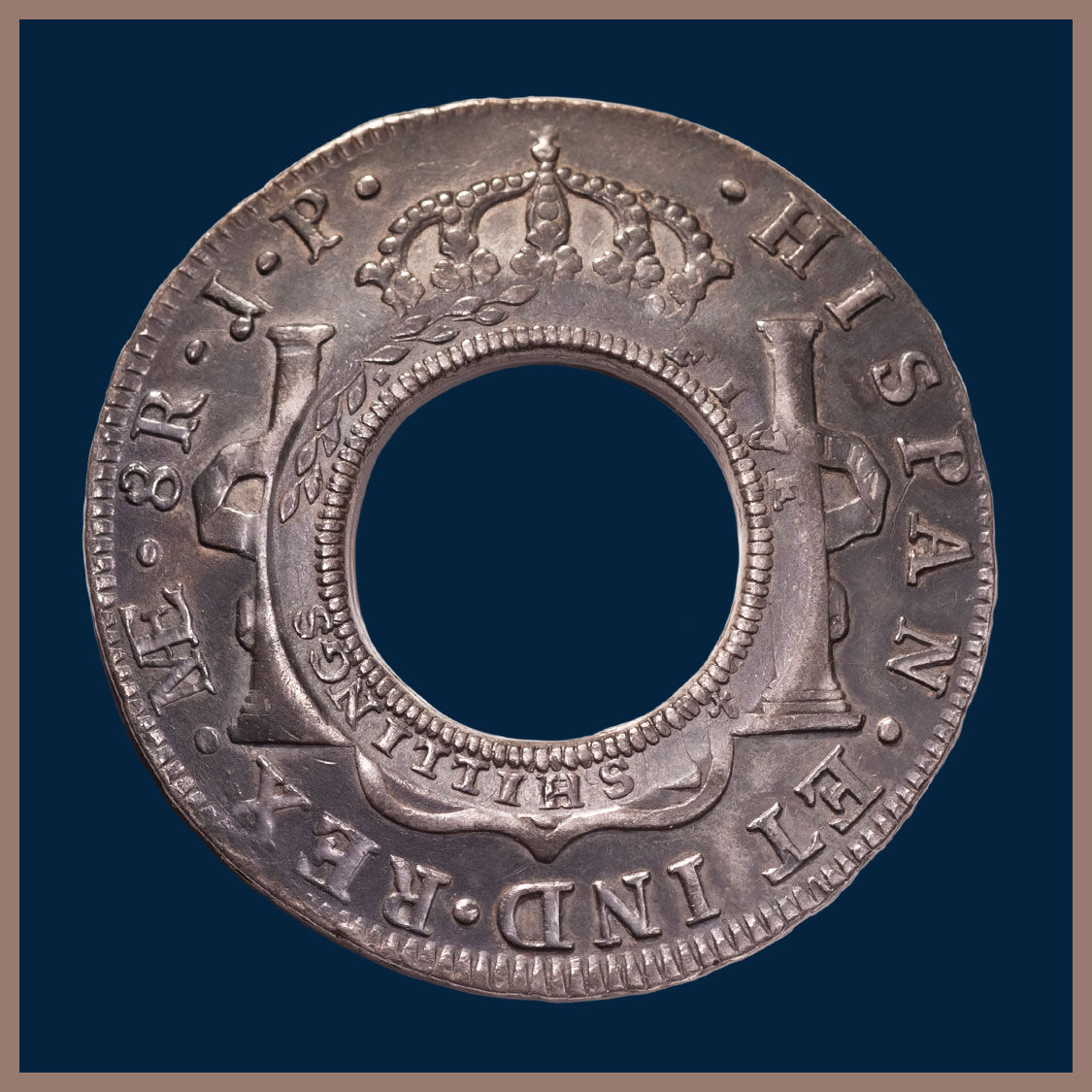
1813 Holey Dollar created from a Spanish Silver Dollar that was struck at the Lima Mint in 1808.
Price: $525,000
Created from a Spanish Silver Dollar of the 'bust' type depicting the portrait and legend of Charles IV, this coin is the finest of twenty two Holey Dollars with ties to the Lima Mint in Peru.
At Good Extremely Fine, and with counter stamps at About Uncirculated, this coin is in the top four of the three hundred Holey Dollars held in private collections and institutions, worldwide. We also note the counter stamps on the obverse, applied by William Henshall around the edge of the hole, are in the same vista as the date 1808. This is the optimum position of the counter stamps and was rarely ever achieved by mint master, William Henshall. And they look stunning! Almost sculpted.
Date of the silver dollar: 1808
Reigning monarch: Charles IV (1788 - 1808)
Design of the silver dollar: colonial bust type
Portrait: Charles IV
Legend: Carolus (Charles) IV
Design type: 5
Mint mark: LMAE monogram in the legend on the reverse
Quality of the silver dollar : Good Extremely Fine
Quality counter stamps: About Uncirculated
Counter stamp dies: I/8: A/1
Exhibited: Macquarie Bank 2013, Royal Australian Mint 2019
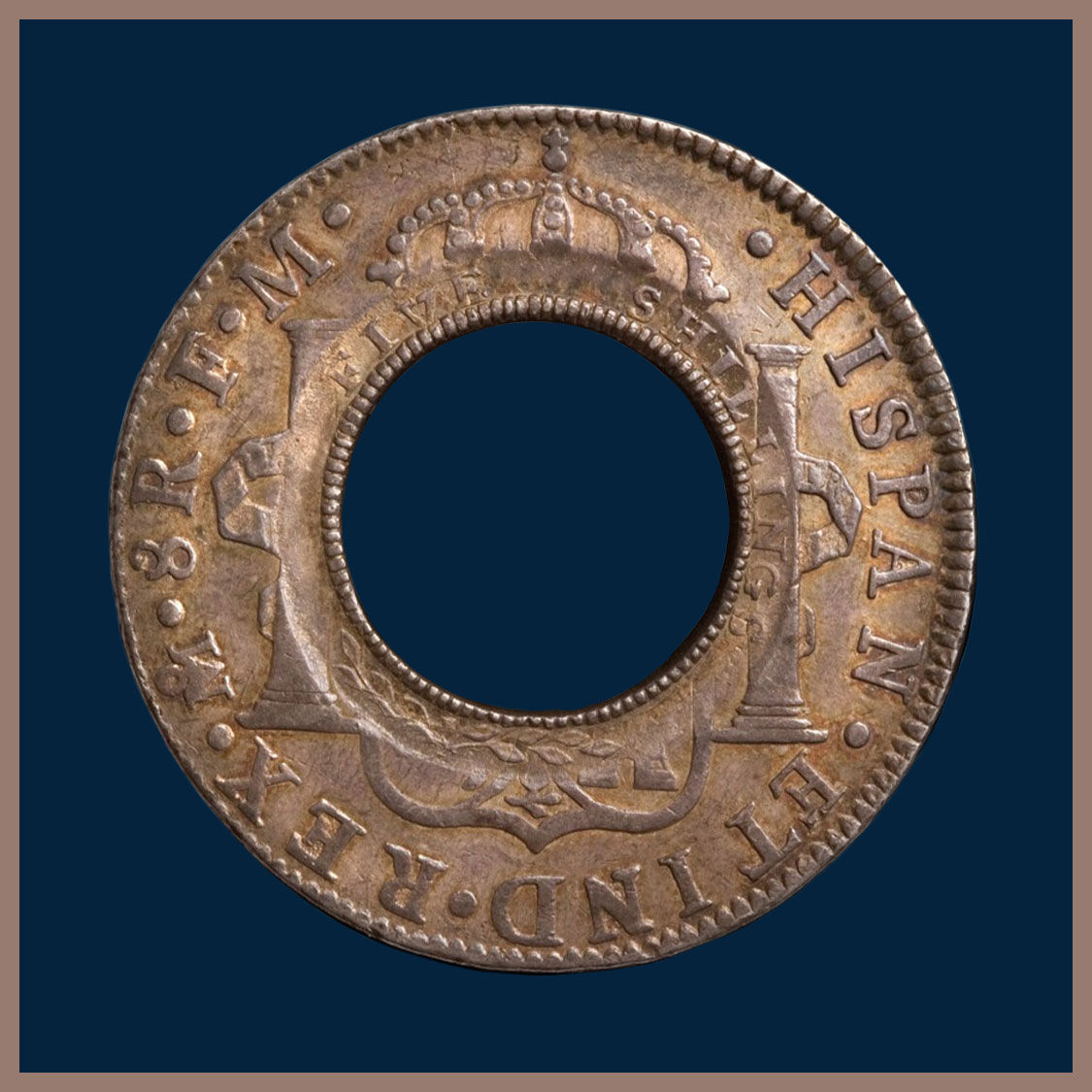
The Montague '1788' Holey Dollar
Created from a Spanish Silver Dollar of the 'bust' type depicting the portrait and legend of Charles III. This coin is the finest of twenty two Charles III Holey Dollars.
The quality of the Spanish Silver Dollar is amazing when you consider that it was minted in 1788 and had twenty five years of circulation before it was converted into a Holey Dollar in 1813. We also note that the counter stamps, applied by William Henshall around the edge of the hole are vertically aligned on both obverse and reverse. This is the optimum position of the counter stamps and was rarely ever achieved. Given the date of 1788, and its precise counter stamps, there is some suggestion that the coin may have been especially struck.
Design type: 2
Date of the silver dollar: 1788
Reigning monarch: Charles III (1759 - 1788)
Design of the silver dollar: colonial bust type
Portrait: Charles III
Legend: Carolus (Charles) III
Design type: 2
Mint and mint mark: Mexico Mint identified by the 'M' with a small circle above it in the legend on the reverse.
Quality of the silver dollar : About Extremely Fine
Quality counter stamps: About Extremely Fine
Counter stamp dies: I/9: B/10
Exhibited: Macquarie Bank 2013, Royal Australian Mint 2019
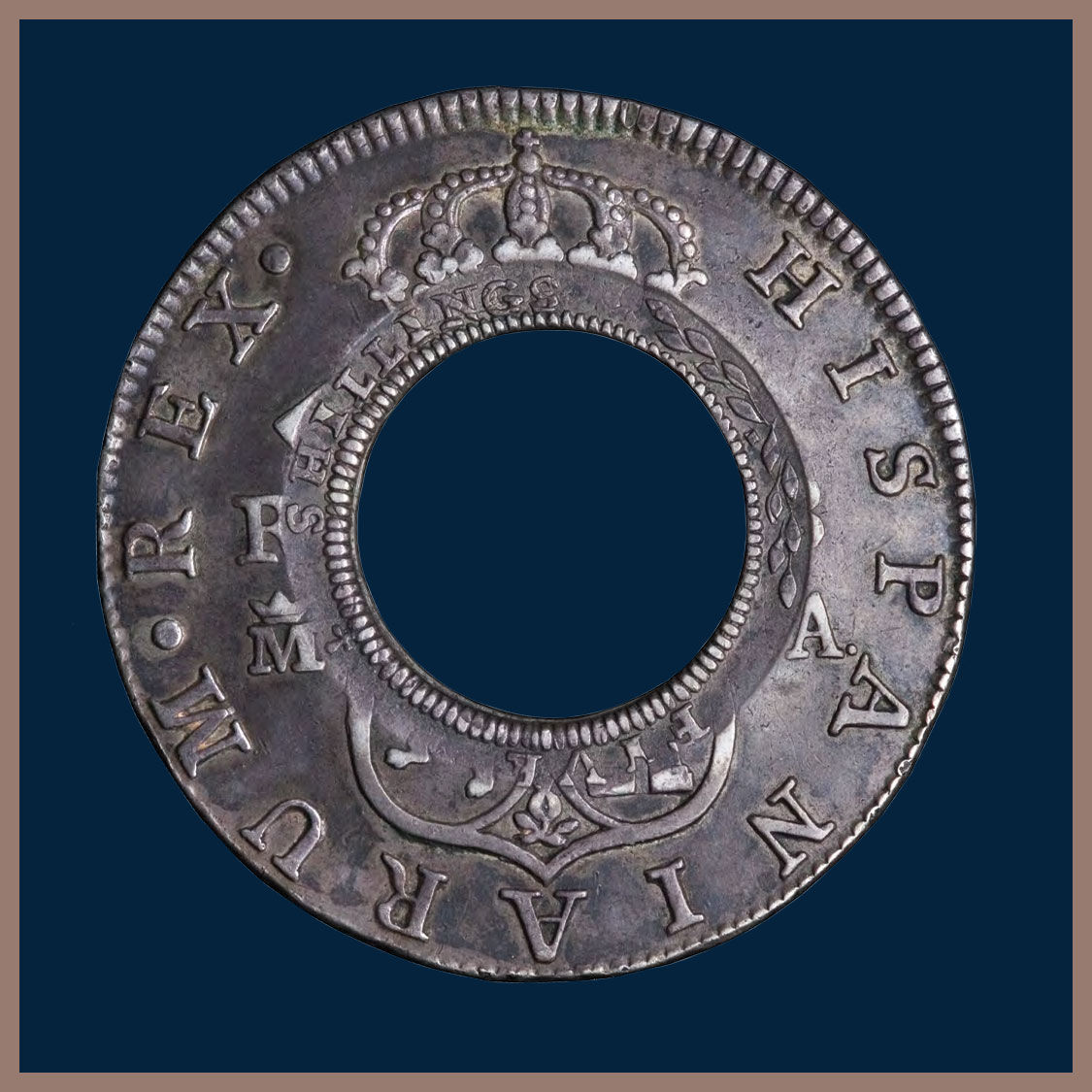
The Madrid Mint Holey Dollar, unique in private hands
This is the finest of six Continental Holey Dollars (two Seville Mint and four Madrid Mint) and the only example held in private hands. Noted in 1988 as 'the most desirable' of all Holey Dollars.
The Spanish Mints of Madrid and Seville produced silver dollars of a different design to those minted in the colonies and are referred to as Continental dollars. They were a status of Royalty, the Church and wealthy landowners and were as a consequence hoarded. Holey Dollars converted from Continental dollars are by default, exceedingly scarce.
Date of the silver dollar: 1802
Reigning monarch: Charles IV (1788 - 1808)
Design of the silver dollar: continental bust type
Portrait: Charles IV
Legend: Carolus (Charles) IIII
Design type: 6
Mint mark: 'M' underneath a crown on the reverse
Quality of the silver dollar : Good Extremely Fine
Quality counter stamps: Good Extremely Fine
Counter stamp dies: I/3: A/5
Exhibited: Macquarie Bank 2013, Royal Australian Mint 2019
Further reading .... how a penal colony established in 1788 was transformed into a commercial hub by 1813.
That Australia was settled in 1788, and the Holey Dollar and Dump not struck until 1813, raises the question about the medium of currency operating in the intervening years.
No consideration had been given to the monetary needs of the penal settlement of New South Wales. It was planned on the assumption that it would be self-supporting, with no apparent need for hard cash for either internal or external purposes.
Even if it had been theoretically planned for, it would have been physically impossible for the British Government to fund this new venture. Britain’s own currency was in a deplorable state and the Royal Mint’s priorities were clearly set at making improvements on the home front, not diverting hard cash off-shore.
Foreign coins arrived haphazardly in trade, and acquired local acceptability and brief legal recognition, but what was received quickly left the colony to pay for imports.
The essence of all business is a medium of exchange. Having very little hard cash, the inhabitants, from governor to free settlers and convicts, improvised by issuing hand-written promissory notes, in denominations as low as 3d, to settle their debts.
Commercial transactions were also facilitated through barter of goods and services. Philip Spalding, numismatist and author, presents an account of the style (and cunning) of barter in the colony circa 1800 in his literary works, ‘The World of the Holey Dollar’.
“One lover of the drama, not having rum or flour presented at the theatre door a neatly-dressed haunch of kangaroo, which was accepted. To the infinite disgust of the manager, it was discovered to be a haunch of a favourite greyhound, belonging to an officer, which the fellow had stolen, killed off and passed off as kangaroo meat at 9d per pound.”
Liquor was the prime commercial force and medium for barter in the colony and for almost forty years was part of the wages received by a considerable section of the population.
Governor Lachlan Macquarie’s communication to Viscount Castlereagh on the 30th April 1810 re-affirmed the financial plight of the colony. “In consequence of there being neither gold or silver coins of any denomination, nor any legal currency, as a substitute for specie in the colony, the people have been in some degree forced on the expedient of issuing and receiving notes of hand to supply the place of real money, and this petty banking has thrown open a door to frauds and impositions of a most grievous nature to the country at large.”
By 1812 the social fabric of Sydney as a community was emerging. It was no longer a redistribution point for convicts, with only the military as permanent residents.
Streets were being named. Macquarie, Phillip, Elizabeth, Castlereagh, Pitt and George Street. A post office was established and the common had been christened Hyde Park. Houses had to be aligned and numbered and heavy industry was being re-located out of the city centre to the suburbs.
Despite the social improvements, there was no bank and liquor remained the most commonly negotiated medium of currency exchange.
Rum, which cost 7/6 a gallon was being sold for up to £8 and its use as a negotiating medium was utilized by all sections of the community, including government. And the highest levels of Government at that. Even Lachlan Macquarie used rum to buy a house. The cost? 200 gallons.
He furthermore gave the Government contract to construct the Sydney Hospital in 1811 to Messrs. Riley and Blaxcell and paid for it by granting a three-year monopoly in the spirit trade and the right to import 45,000 gallons of rum.
By 1812, the penal colony of New South Wales had shaken off the shackles of being a receptacle for convicts. It was no longer a ‘jail’. And was emerging as a structured society and a commercial hub.
The stage was set for Governor Lachlan Macquarie to introduce Australia’s first currency.
Governor Lachlan Macquarie etched his name into numismatic history forever when in 1812 he imported 40,000 Spanish Silver Dollars to alleviate a currency crisis in the infant colony of New South Wales.
The British Government had no capacity to supply Governor Lachlan Macquarie with metal blanks to create Australia’s first coinage so, he improvised and ordered 40,000 Spanish Silver Dollars - foreign coinage - to use as his substitute for blanks.
Concluding that the shipment of 40,000 Spanish Silver Dollars would not suffice, and to hinder their export, Macquarie decided to cut a hole in the centre of each dollar, thereby creating two coins out of one, a ring dollar and a disc. It was an extension of a practice of ‘cutting’ coins into segments, widely used throughout the British colonies of the Caribbean and several African nation’s including Sierra Leone.
Macquarie needed a skilled coiner to carry out his coining project. William Henshall, acquired his skills as an engraver in Birmingham, where the major portion of his apprenticeship consisted of mastering the art of die sinking and die stamping for the shoe buckle and engraved button trades. He was apprehended in 1805 for forgery (forging Bank of England Dollars) and sentenced to the penal colony of New South Wales for seven years.
Enlisted by Lachlan Macquarie as the colony’s first mint master, Henshall commenced the coining process by cutting out a disc from each silver dollar using a hand-lever punch.
He then proceeded to re-stamp both sides of the holed dollar around the inner circular edge with the value of five shillings, the date 1813 and the issuing authority of New South Wales. Other design elements in this re-stamping process included a fleur de lis, a twig of two leaves and a tiny ‘H’ for Henshall.
The Holey Dollars were officially known as ring, pierced or colonial dollars and although ‘holey’ was undoubtedly applied to them from the outset, the actual term ‘holey’ dollar did not appear in print until the 1820s.
We refer to the coins today as the 1813 New South Wales Five Shillings (or Holey Dollar).
The silver disc that fell out of the hole wasn’t wasted. Henshall restamped the disc with a crown, the issuing authority of New South Wales and the lesser value of 15 pence and it became known as the Dump. The term ‘dump’ was applied officially right from the beginning; a name that continues to this day.
In creating two coins out of one, Macquarie effectively doubled the money supply. And increased their total worth by 25 per cent.
Anyone counterfeiting ring dollars or dumps were liable to a seven year prison term; the same penalty applied for melting down. Jewellers were said to be particularly suspect. To prevent export, masters of ships were required to enter into a bond of £200 not to carry the coin away.
Of the 40,000 silver dollars imported by Macquarie, records indicate that 39,910 of each coin were delivered to the Deputy Commissary General’s Office by January 1814 with several despatched back to Britain as specimens, the balance assumed spoiled during production.
The New South Wales colonial administration began recalling Holey Dollars and Dumps and replacing them with sterling coinage from 1822.
The Holey Dollar and Dumps remained as currency within the colony until 1829. The colony had by then reverted to a standard based on sterling and a general order was issued by Governor Darling to withdraw and demonetise the dollars and dumps.
The recalled specie were eventually shipped off to the Royal Mint London, melted down and sold off to the Bank of England for £5044.
It is estimated that 300 Holey Dollars exist today of which a third are held in public institutions with the balance owned by private collectors.
© Copyright: Coinworks