Kookaburra Penny, 1920, Type 9 • Distinctive Square Legend • $95,000
Struck in 1920, the glamour year of the numismatic industry, the coin is known as the 'Square Legend' Kookaburra Penny and is technically referenced the Type 9. An extremely rare coin, a Type 9 last appeared at an Australian public auction in 2016.
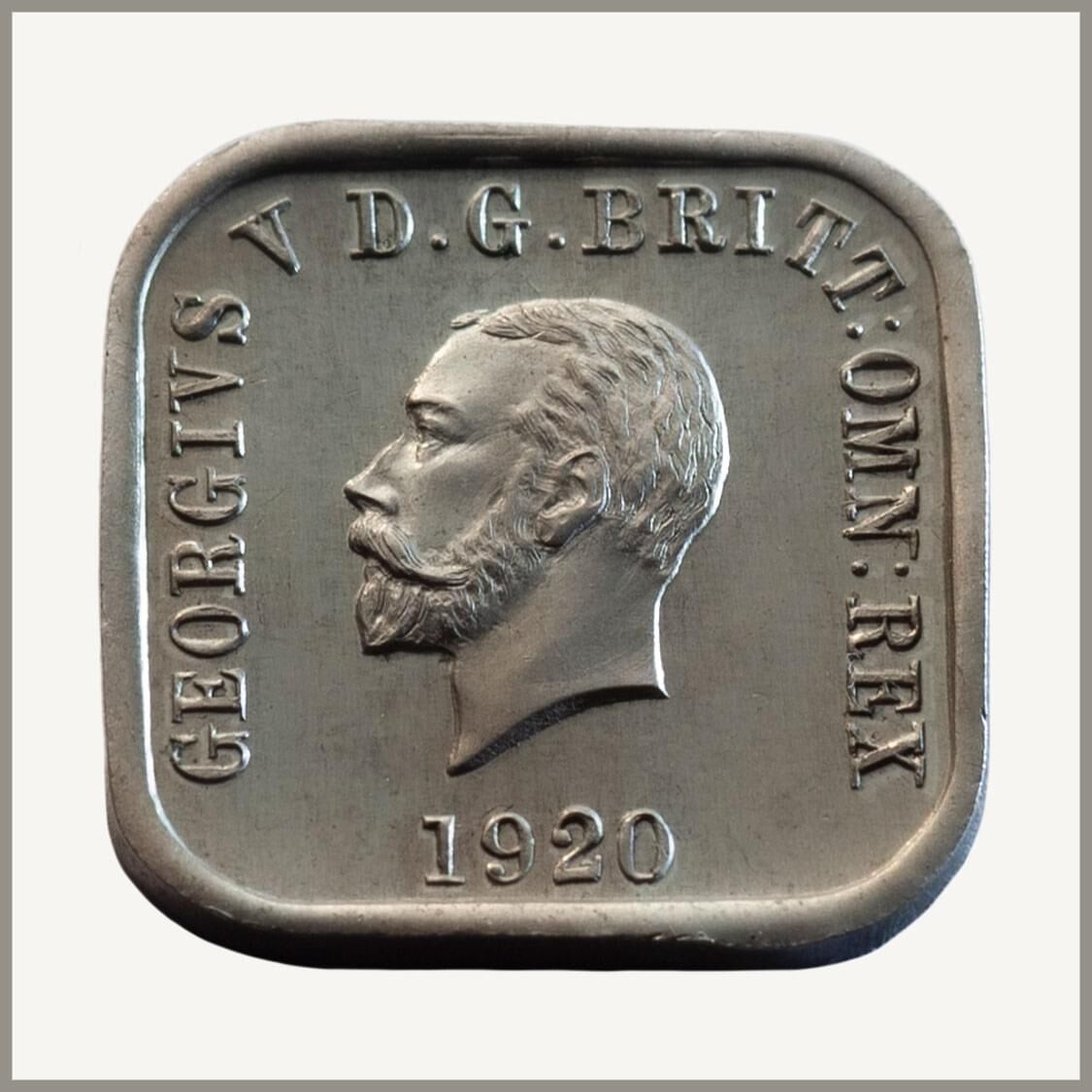
A traditional circular legend was used on the obverse of the Kookaburra Halfpennies, Type 1 and Type 2. And the Kookaburra Pennies, Type 3 to Type 8, Type 11 and Type 12. Perhaps this was simply an extension of the style featured on the round copper pennies and halfpennies that they were intended to replace. The Type 9 Kookaburra Penny obverse was re-designed to incorporate a square legend around the rim and parallel to the edge, mirroring the shape of the coin. It is an interesting exercise to compare obverses of the the Type 7 and the Type 9 for they are the same. The same portrait. And the same legend except for its positioning, the former circular, the latter square and along the edge. The re-configuration of the legend on the Type 9, mapping the legend to the shape of the coin has strengthened the character of the coin. It is impactful.
Rarity - One of seven known. We estimate an example would be offered every five to six years.
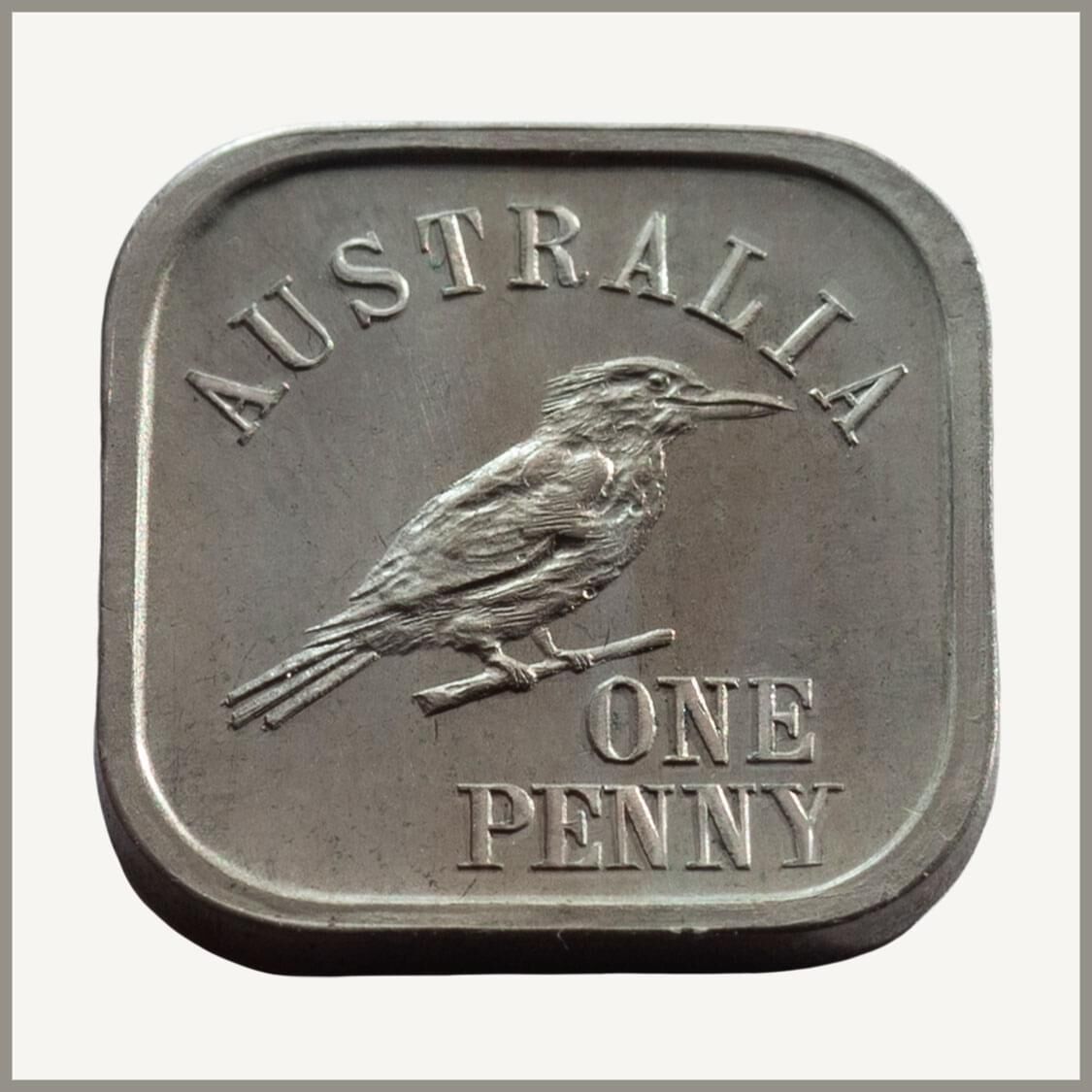
Reverse - A kookaburra with coarse plumage resting on a branch, the eye struck in relief, the tail with three feathers. The word 'AUSTRALIA' curved, the letters large and well spaced, the penny denomination over two lines. A reverse that is shared with the circular legend Type 7 and the Crowned Head Type 10
Obverse - Uncrowned effigy of George V, portrait prepared by Australian artist, Douglas Richardson, the portrait with a distinctive central part in the hair. A design shared with the Type 7 Kookaburra Penny. The date '1920' below portrait. The legend is unaltered in context, GEORGIVS D. G. BRITT: OMN:REX but has been re-positioned so that it runs parallel to the edge. The letters widely spaced.