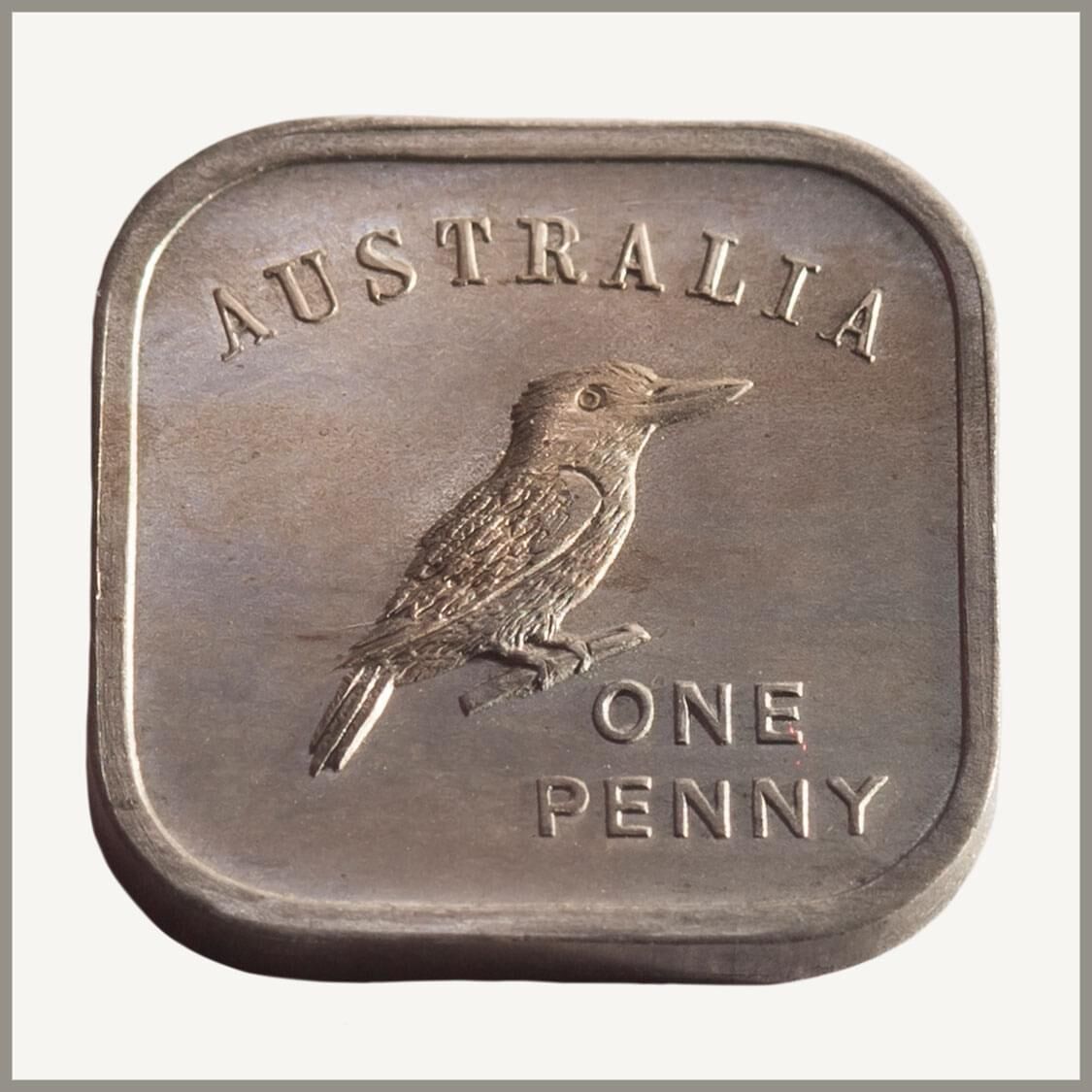
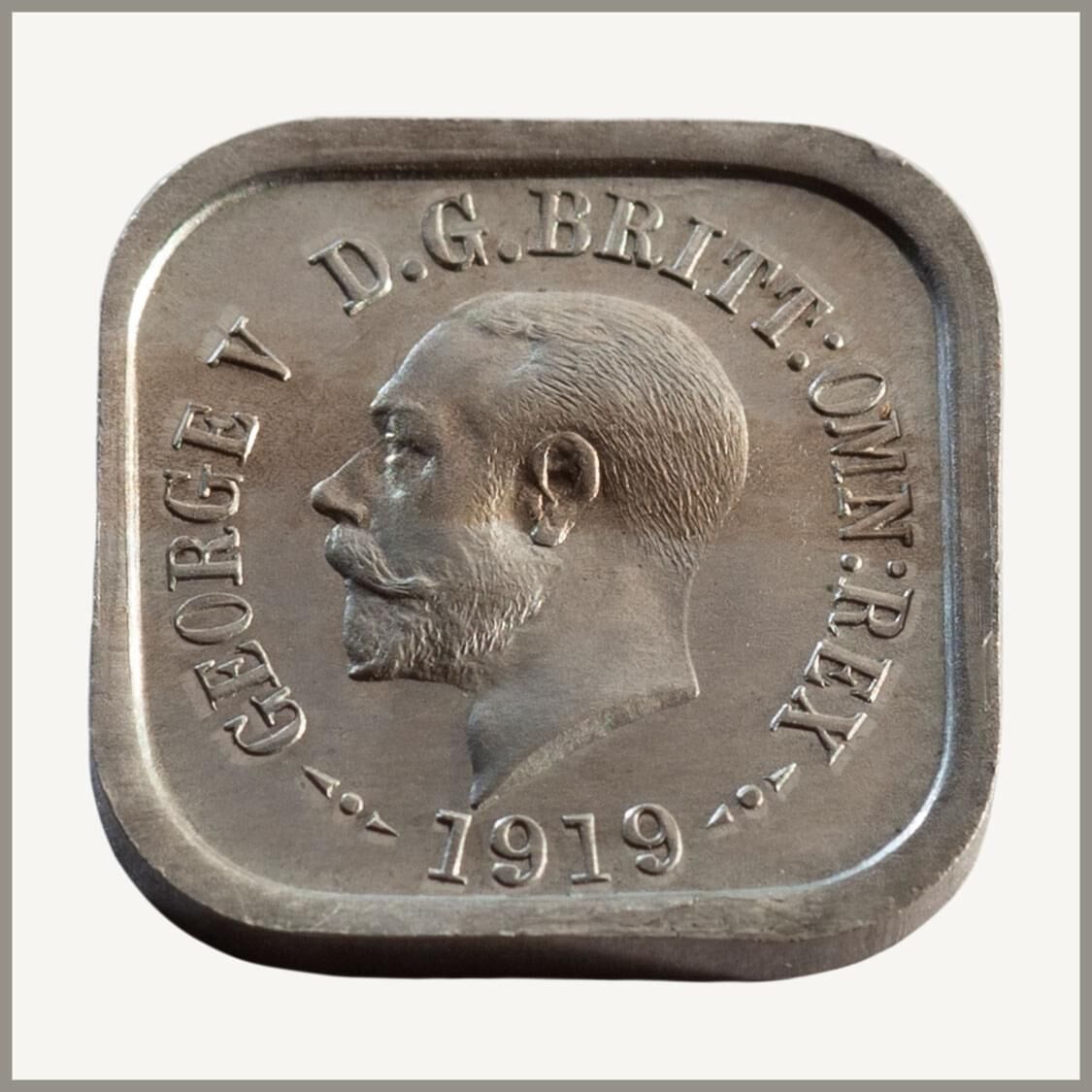
Kookaburra Penny, 1919, Type 3 • A unique kookaburra reverse • $45,000
At the request of Government, the Melbourne Mint began testing a square coinage in 1919, the intention to replace the British-styled copper penny and halfpenny in use at the time. The mint also trialed a new metal, cupro-nickel. The only denomination produced in 1919 was the square penny, crafted on one side with a kookaburra sitting on a branch. And on the other side, an uncrowned portrait of George V. Four variations on the one theme were produced in 1919 and they are designated the Type 3, Type 4, Type 5 and Type 6 Kookaburra Pennies.
The Type 3 Kookaburra Penny is the most available relative to the other 1919 designs and that is not a criticism. Simply a statement of fact. For the Type 3 is still extremely scarce with one example coming up for sale every eighteen months to two years. The remaining 1919 pennies, the Type 4, Type 5 and Type 6, are so scarce that a waiting time might range from four to ten years which would exasperate even the most patient of buyers and stifle market interest. A market is created when buyers and sellers interact, driven by a mutual interest in exchanging goods. This interaction establishes a price based on supply and demand. The reality is that you can't have a market without supply and it is the Type 3 that creates the market for the 1919 Kookaburra coins, and sustains and excites buyer interest in the series.
Rarity - One of fifteen to twenty known examples. We estimate a Type 3 Kookaburra Penny would be offered every eighteen months to two years.
Composition - Nickel 75% Copper 25%
Reverse - The Type 3 has a unique reverse, the kookaburra design only used on this coin. The bird is slender, three feathers in the tail, the eye incuse. And the issuing authority and value is presented in a unique style. The word 'AUSTRALIA' is slightly curved across the top of the coin, detailed in a serif font, the words 'ONE PENNY' over two lines in a contrasting modern, sleek sans serif font. This break from tradition in using two fonts was not used on any other coin.
Obverse - Uncrowned effigy of George V was reduced from a metal die supplied by Australian manufacturer, Stokes & Son. The legend reads, GEORGE V D. G. BRITT: OMN:REX. The date appears under the portrait with ornamental stops separating it from the legend. The obverse design, portrait and legend, is shared with the Type 4 and Type 5 Kookaburra Penny.